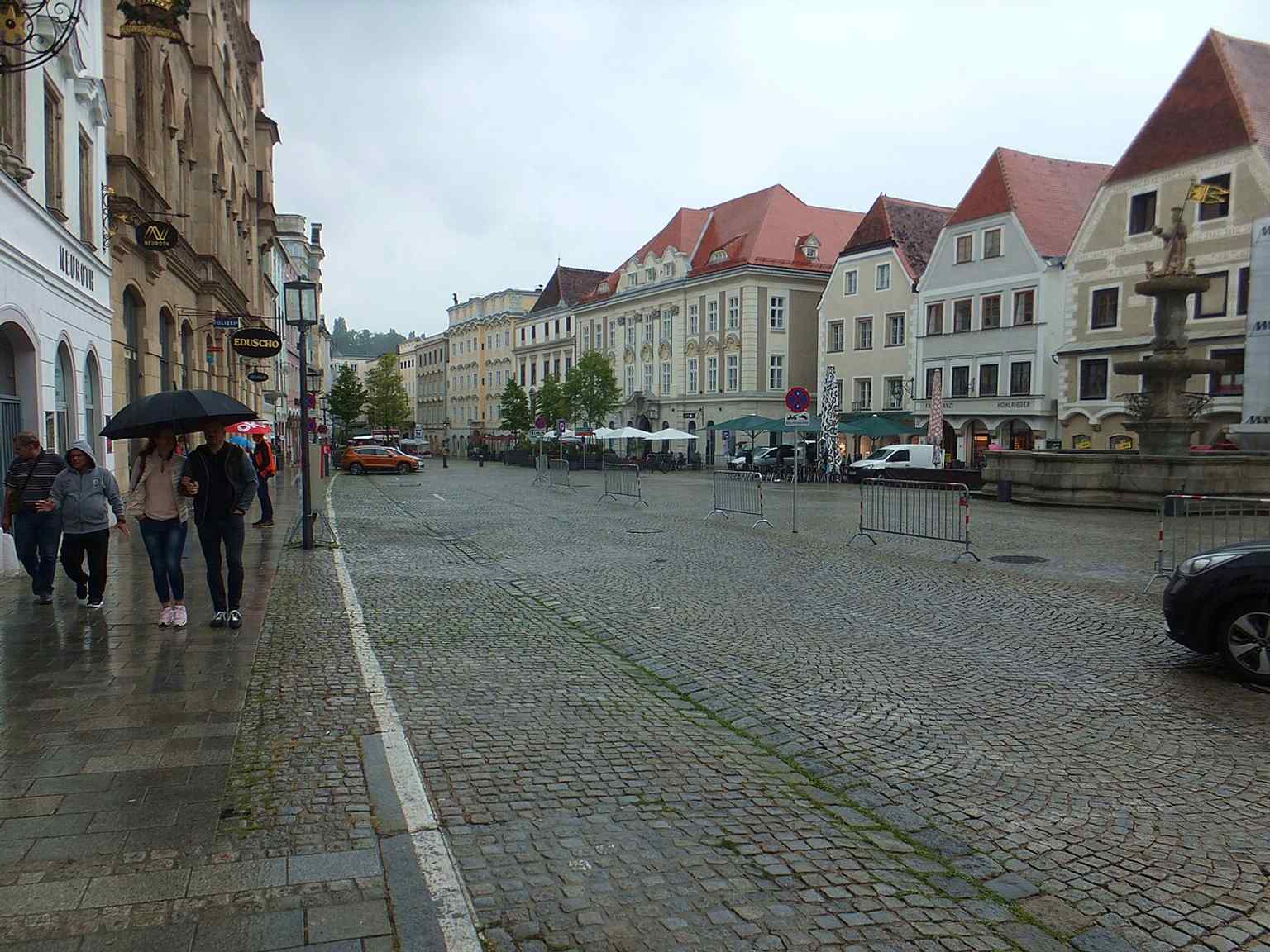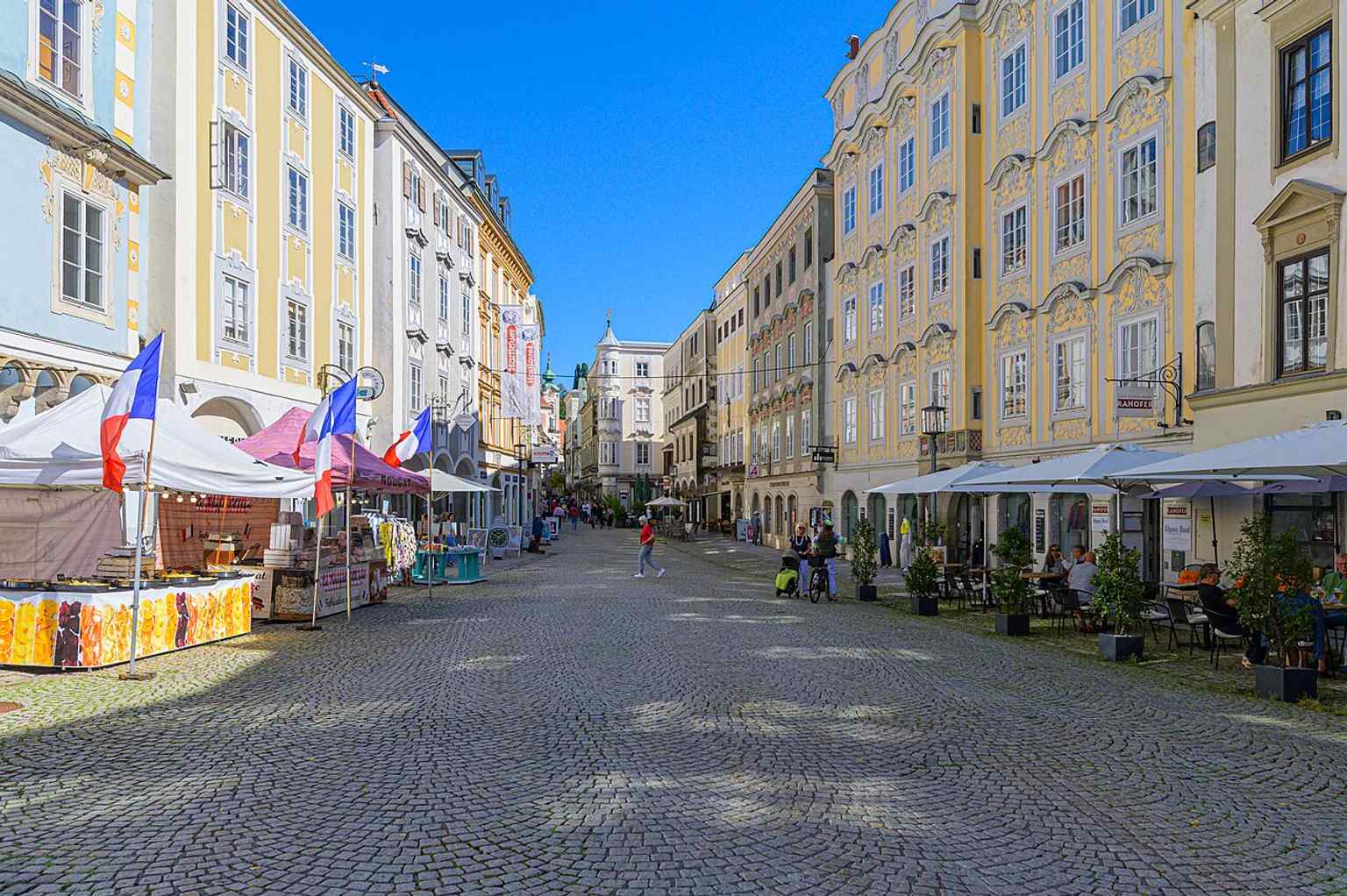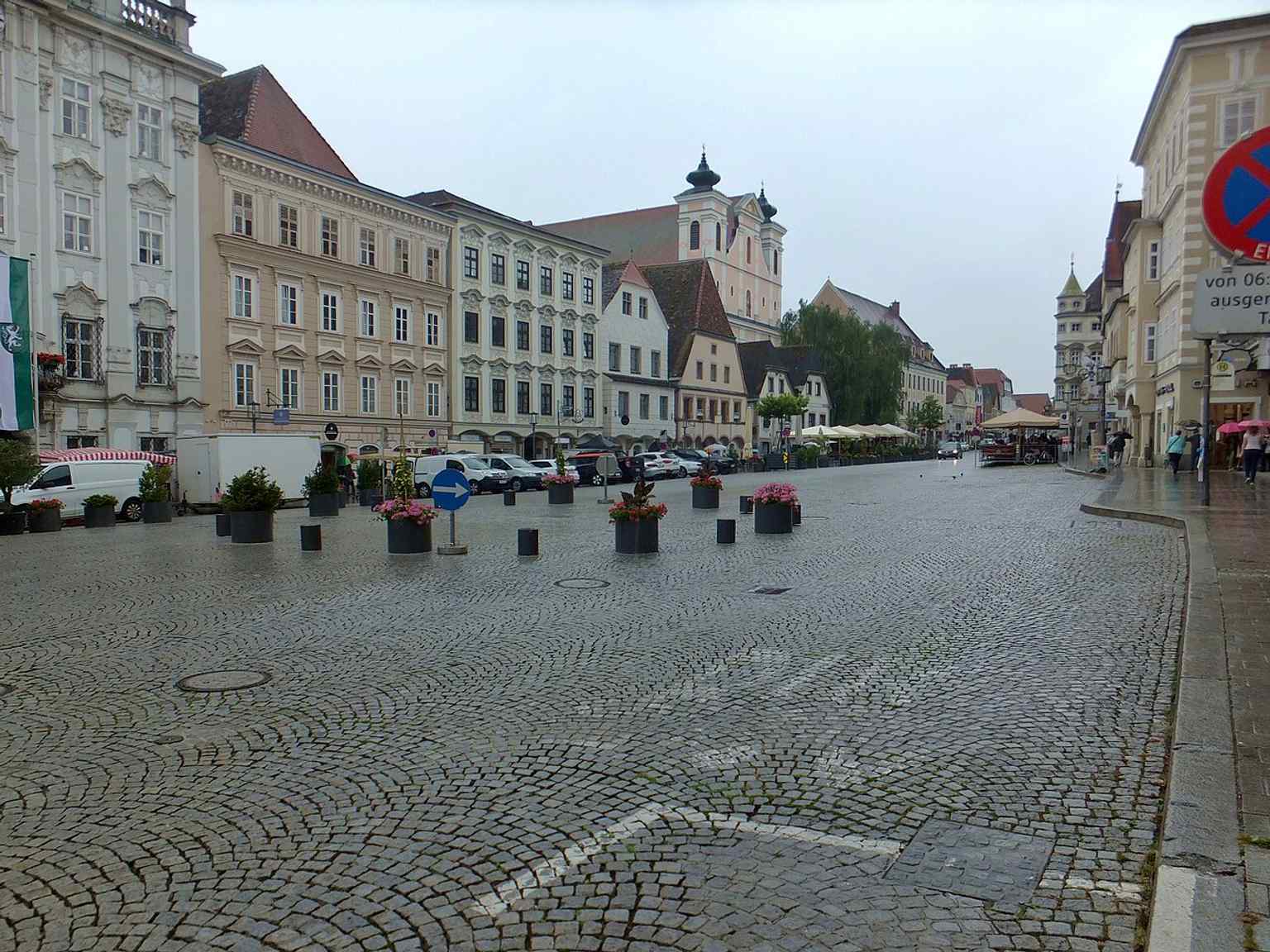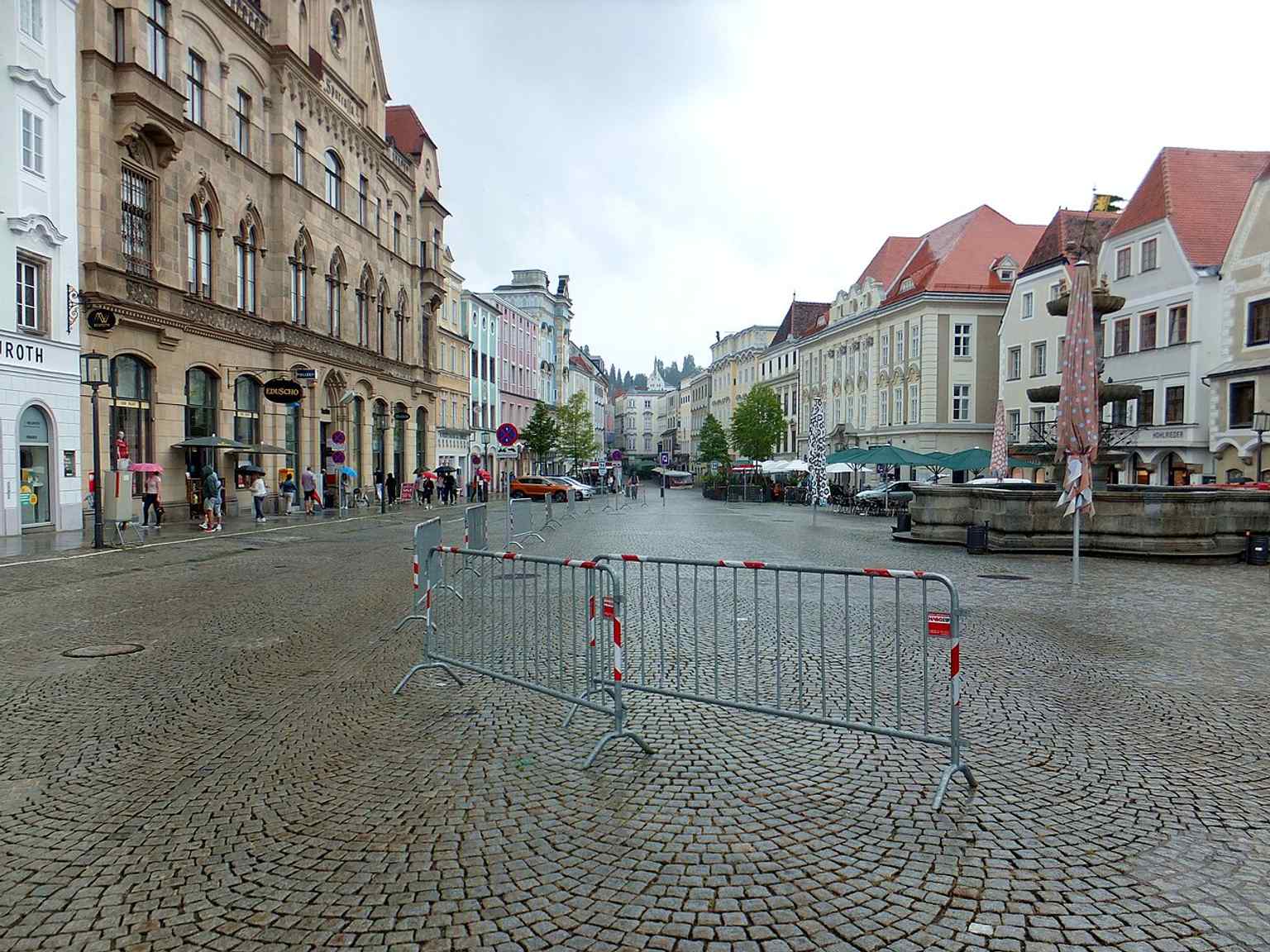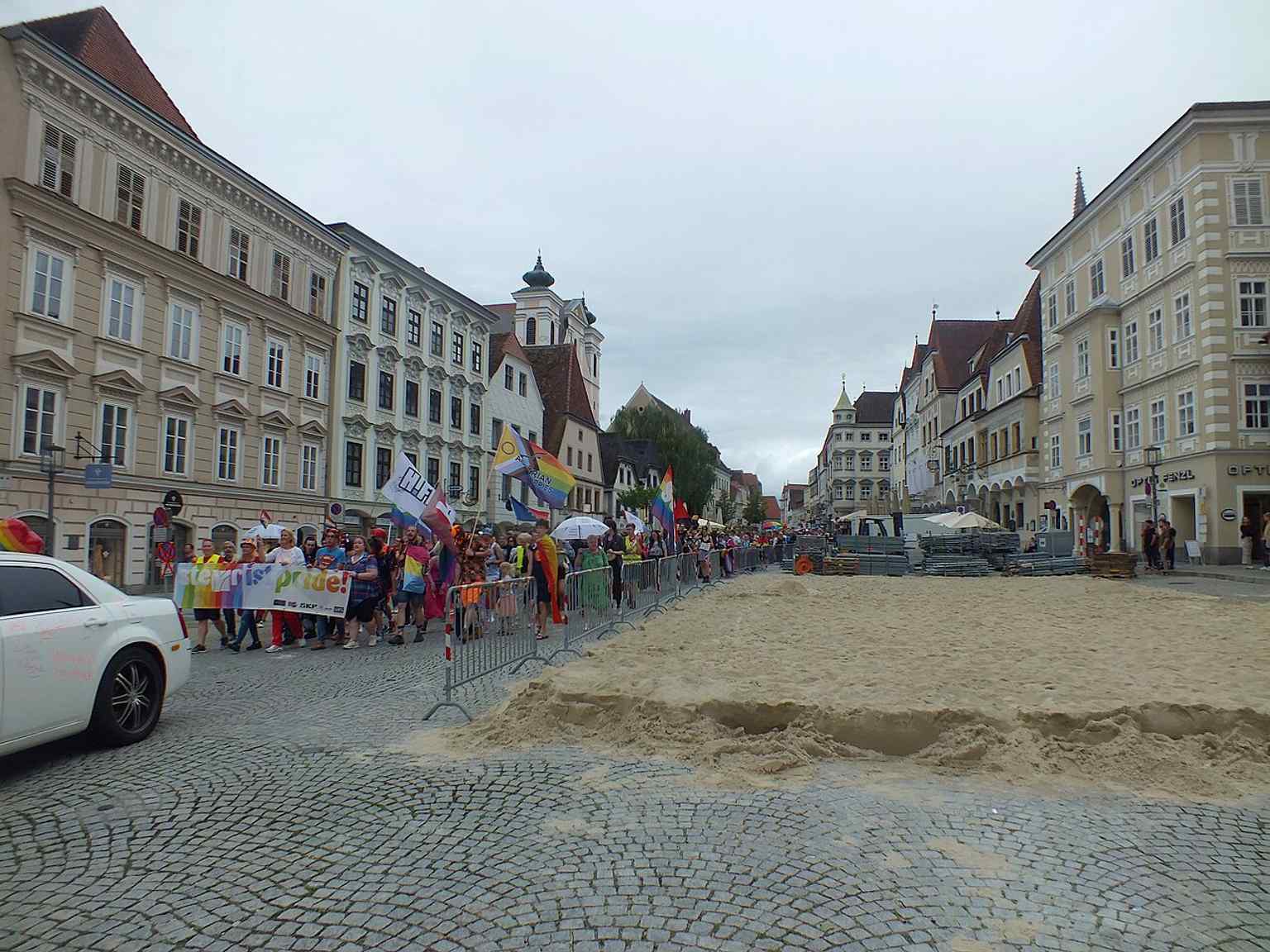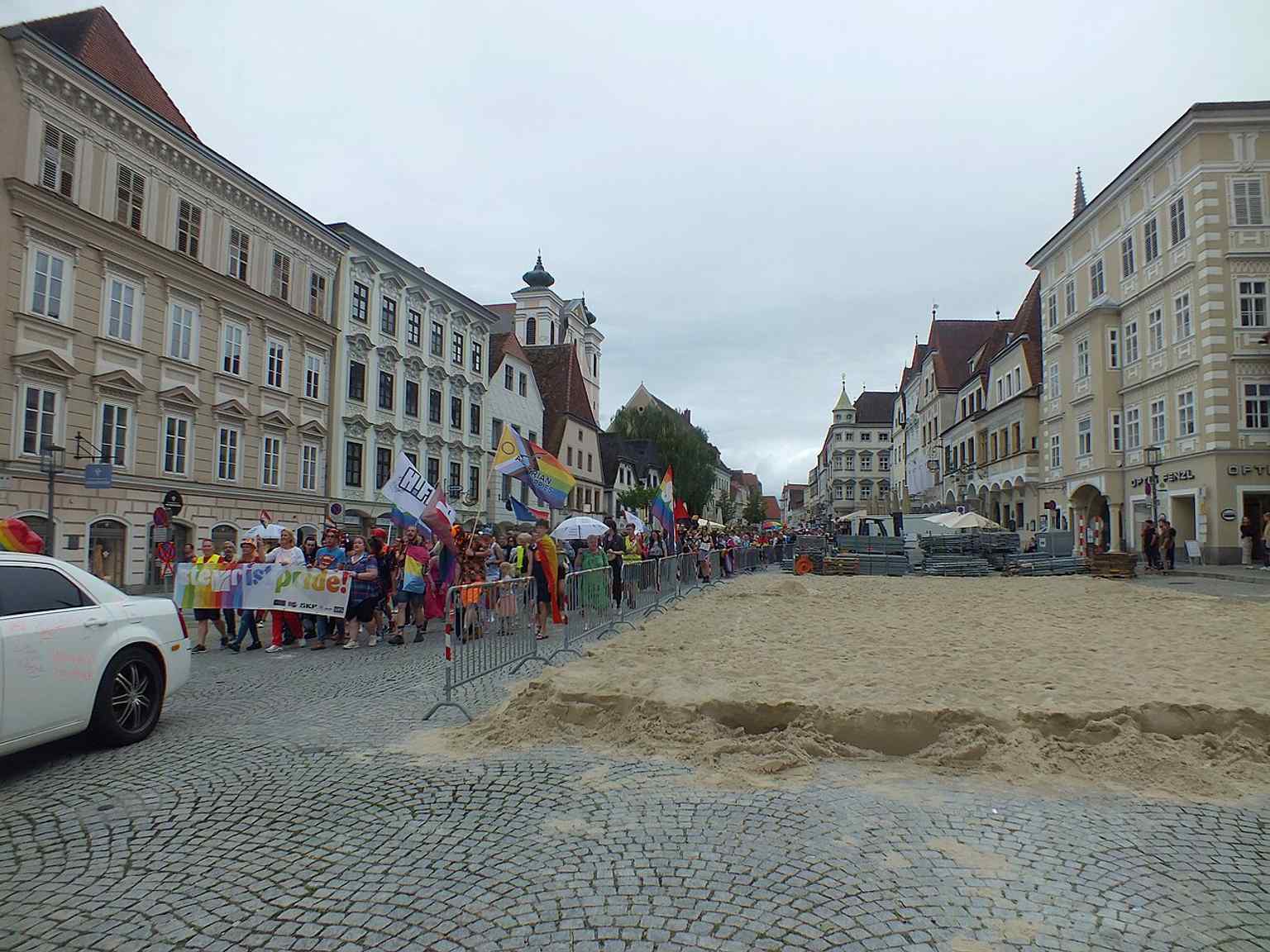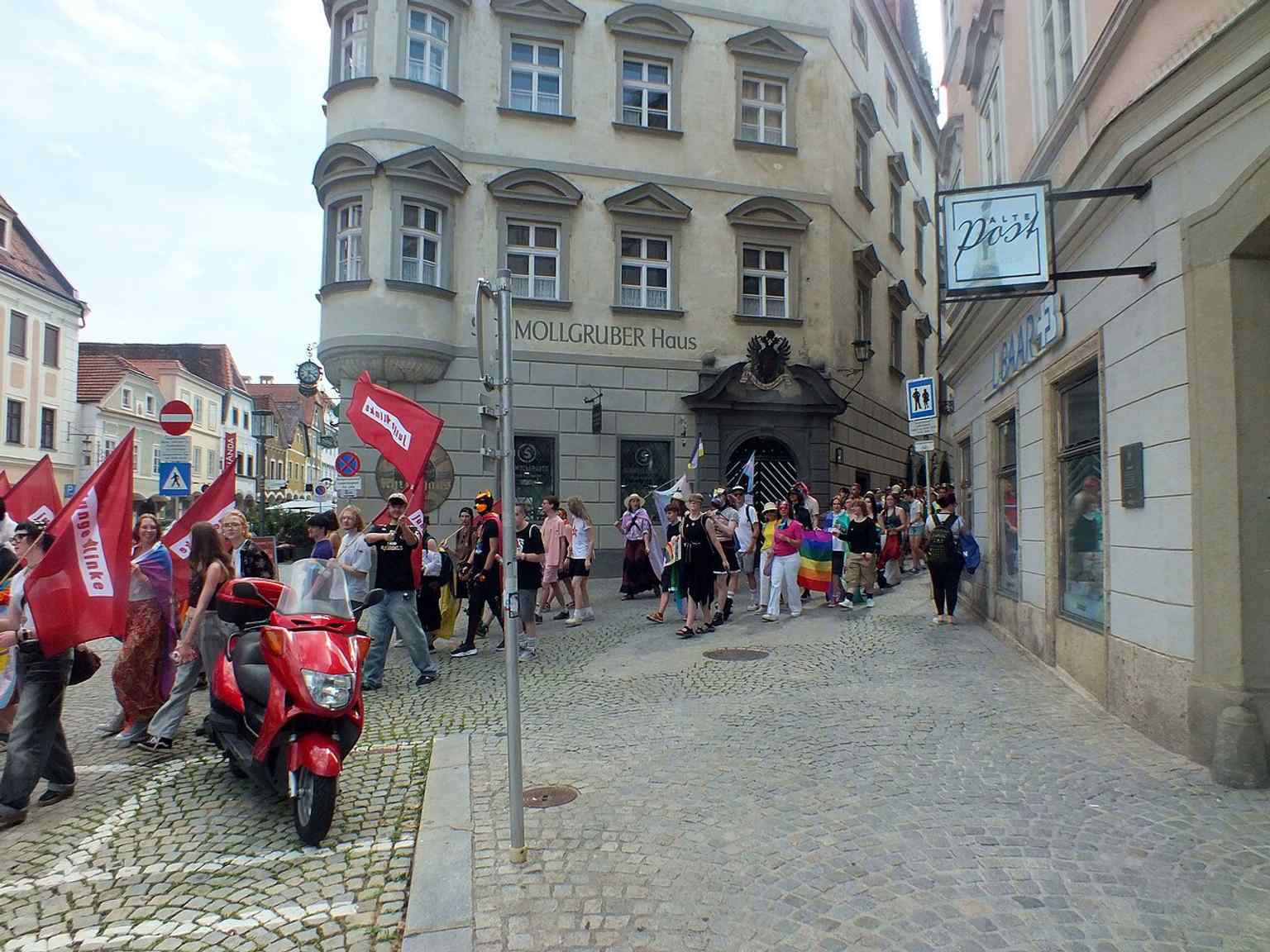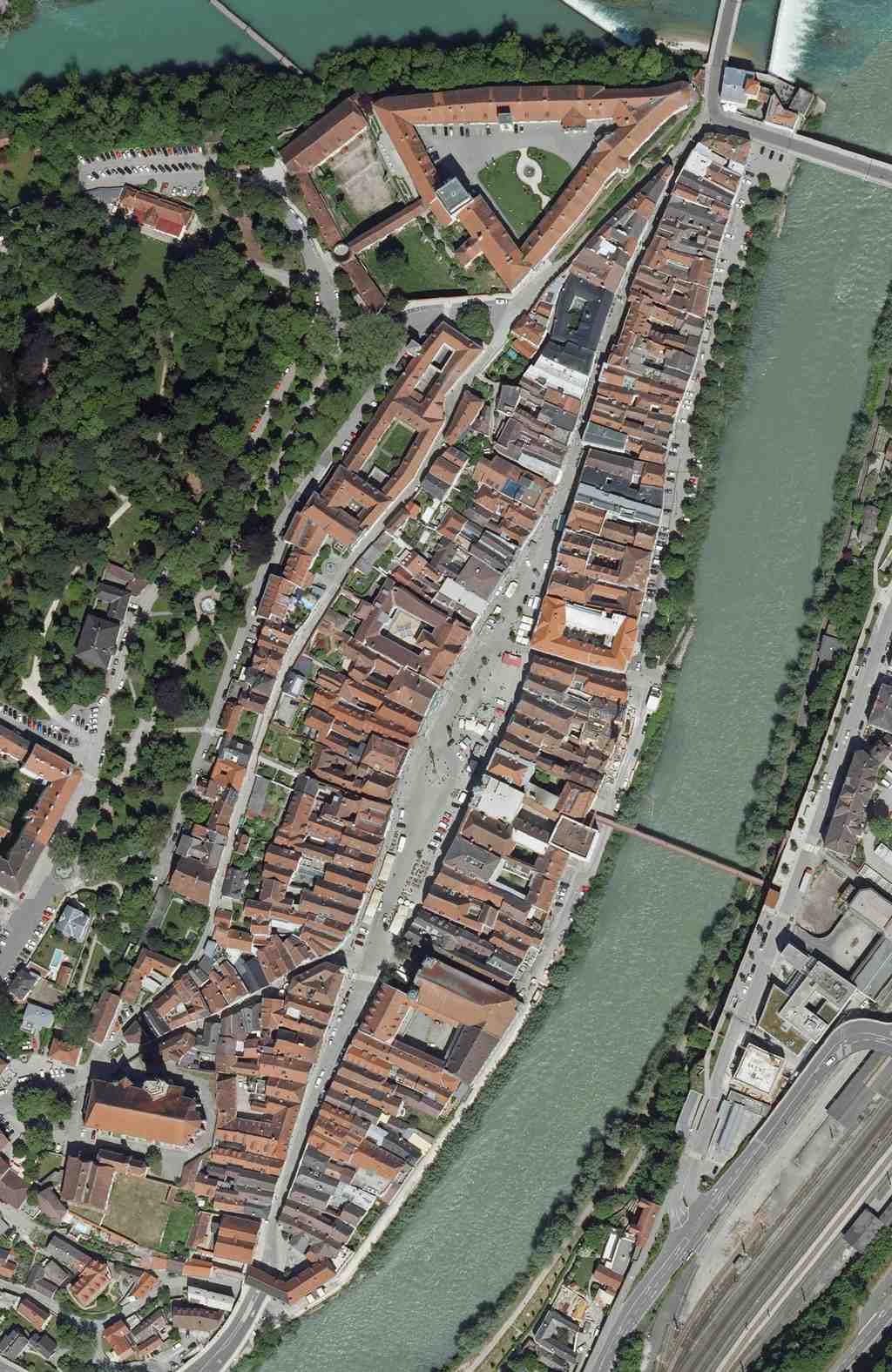
On your left, the square opens into a long, lens-shaped paved space lined with plaster townhouses, with the Rococo town hall and the Leopold Fountain acting as the easiest permanent markers.
This is Steyr’s Stadtplatz, the civic center of the city and one of the best-preserved old-town ensembles in the German-speaking world... which is an elegant way of saying medieval planners got a lot right and later generations, for once, mostly resisted the urge to ruin it.
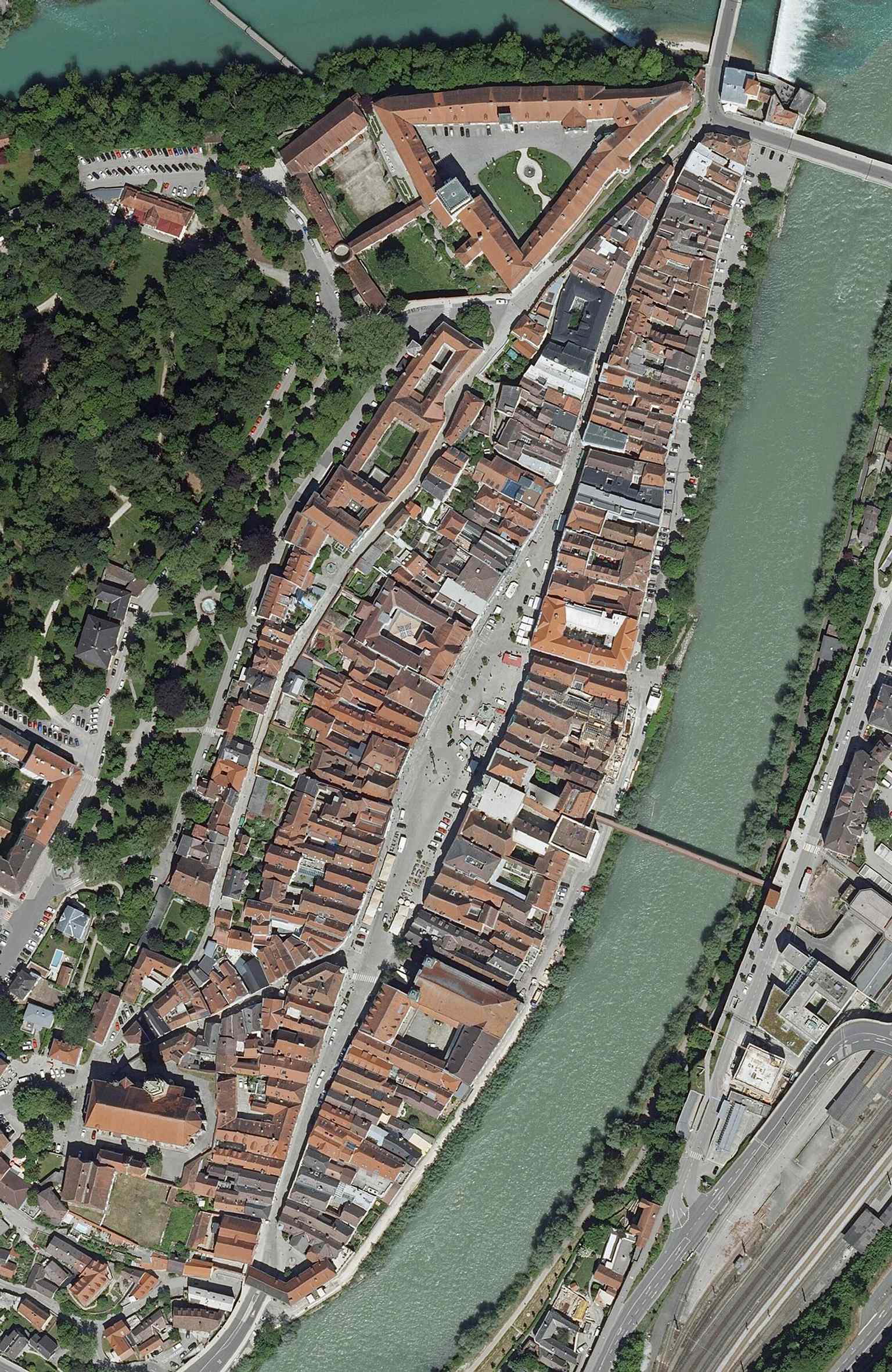
The square took shape in the middle of the thirteenth century, when two older settlement cores merged: one around Stirapurc and one around the parish church. Its odd lens shape came from an earlier road line and the slope of the ground. So no, it is not geometrically perfect. It is better than that... it is honest. If you glance at the aerial image in the app, you can see that stretched form clearly, linking the northern Enge with the southern end near Pfarrgasse and Grünmarkt.
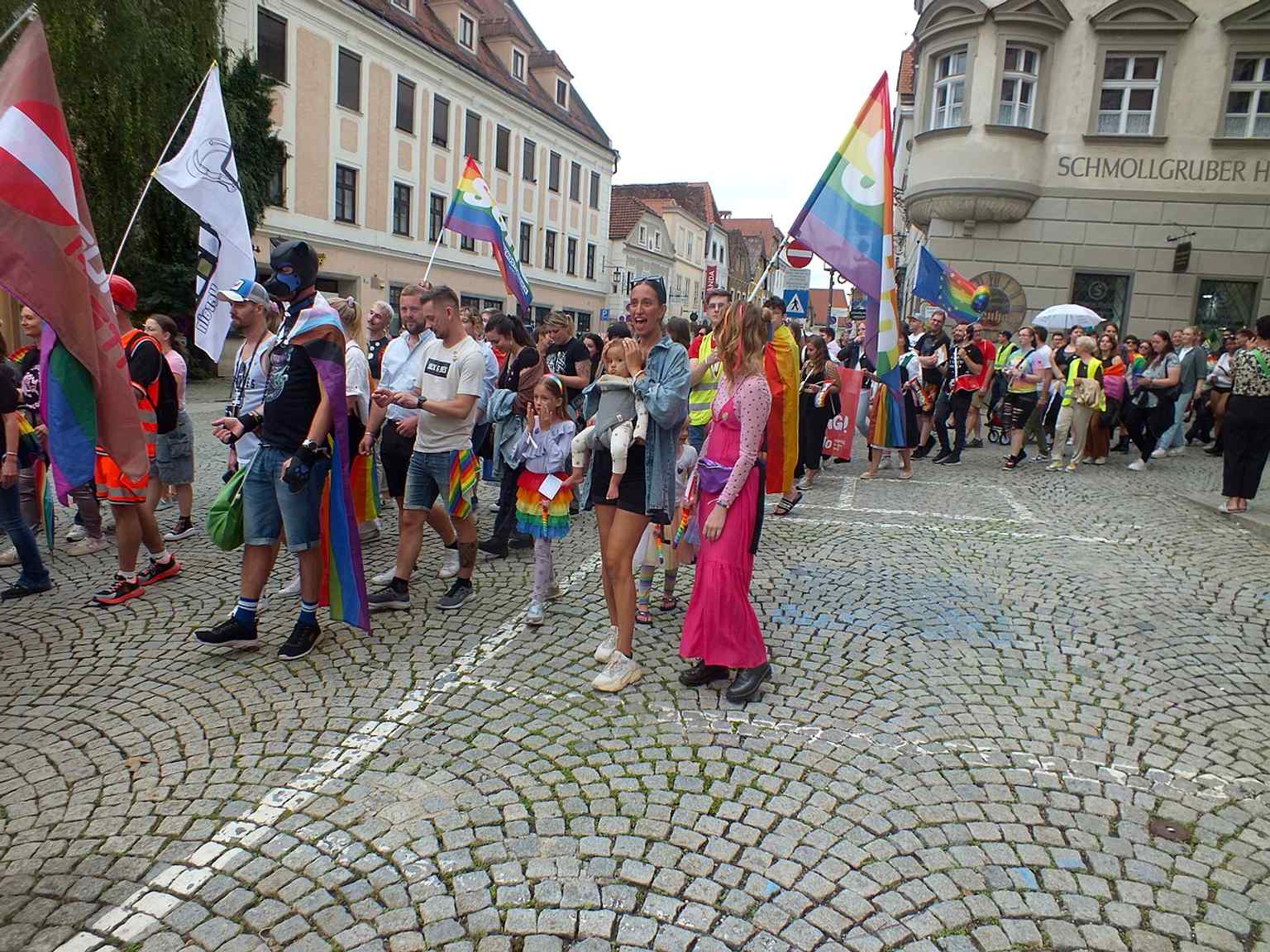
What makes this place so valuable is not just the façades, but the medieval plot lines still surviving underneath them. Many houses keep Gothic cores, even when later owners dressed them in Baroque clothes. On your screen, one of the street views shows that trick nicely: polished later façades in front, much older structure behind.
Several buildings here deserve a slow look. The Bummerlhaus, number thirty-two, is the oldest house on the square and Steyr’s architectural mascot, with a largely intact Gothic appearance from the fourteen nineties. The town hall, built between seventeen sixty-five and seventeen seventy-eight to plans by Johann Gotthard Hayberger, brings in Rococo, a style that enjoys curves, ornament, and a complete lack of restraint. The Sternhaus, number twelve, shows off a splendid Rococo façade with the five senses, though its core is Gothic; even the corbels, the stone brackets jutting from the wall, survived. Bombs destroyed part of that façade in the Second World War, and the city later rebuilt it true to the original.
This square also hosted Franz Schubert. He stayed here in eighteen nineteen, eighteen twenty-three, and eighteen twenty-five, first in the Stalzerhaus at number thirty-four, then in house number sixteen, now called the Schuberthaus. A plaque added in eighteen ninety still marks the visit.
In the middle stands the Leopold Fountain, installed in sixteen eighty-three with granite parts from the former Windhaag monastery. Another fountain once stood at the southern end near the Marienkirche, but workers removed the Dominican Fountain in eighteen eighty. Urban beauty, like office policy, can be brutally practical.
The city redesigned the square from twenty eighteen, widened the pedestrian area, and added more public space. During that work, someone arranged paving stones to spell “Hingerl,” the surname of a city official. He claimed the letters stood for nearby businesses. Naturally, that explanation convinced absolutely everyone. The city removed the stones.
Conveniently, this square never closes; it is open twenty-four hours a day.
Steyr’s town square is a rare thing: a market space that still shows eight centuries of urban memory without turning into a museum set.
Take your time here, and when you’re ready, we can continue to the next stop.