
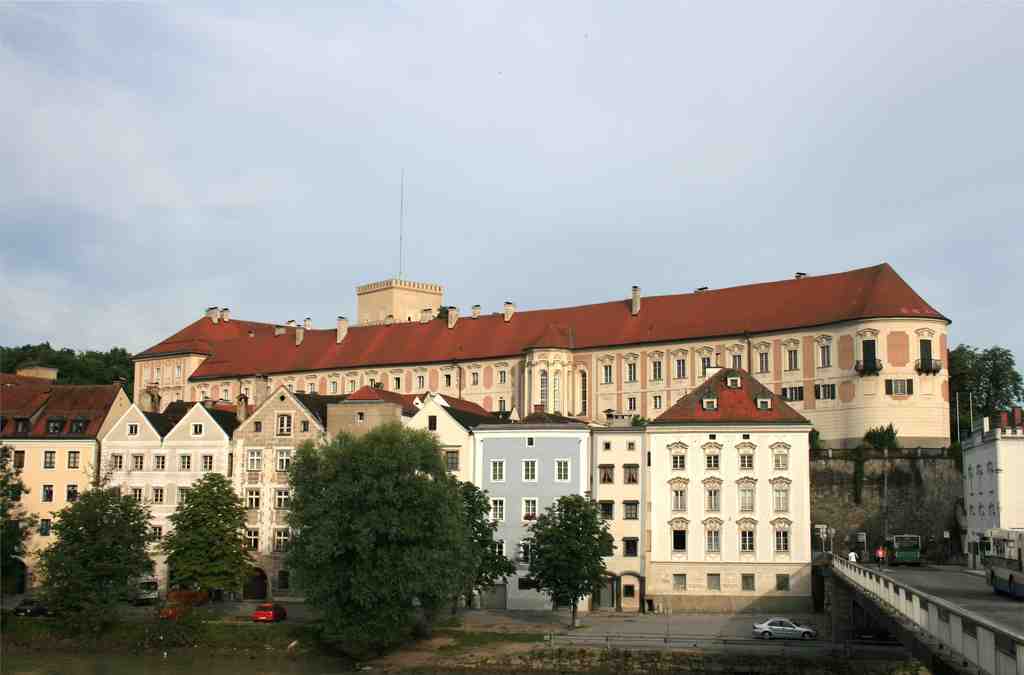
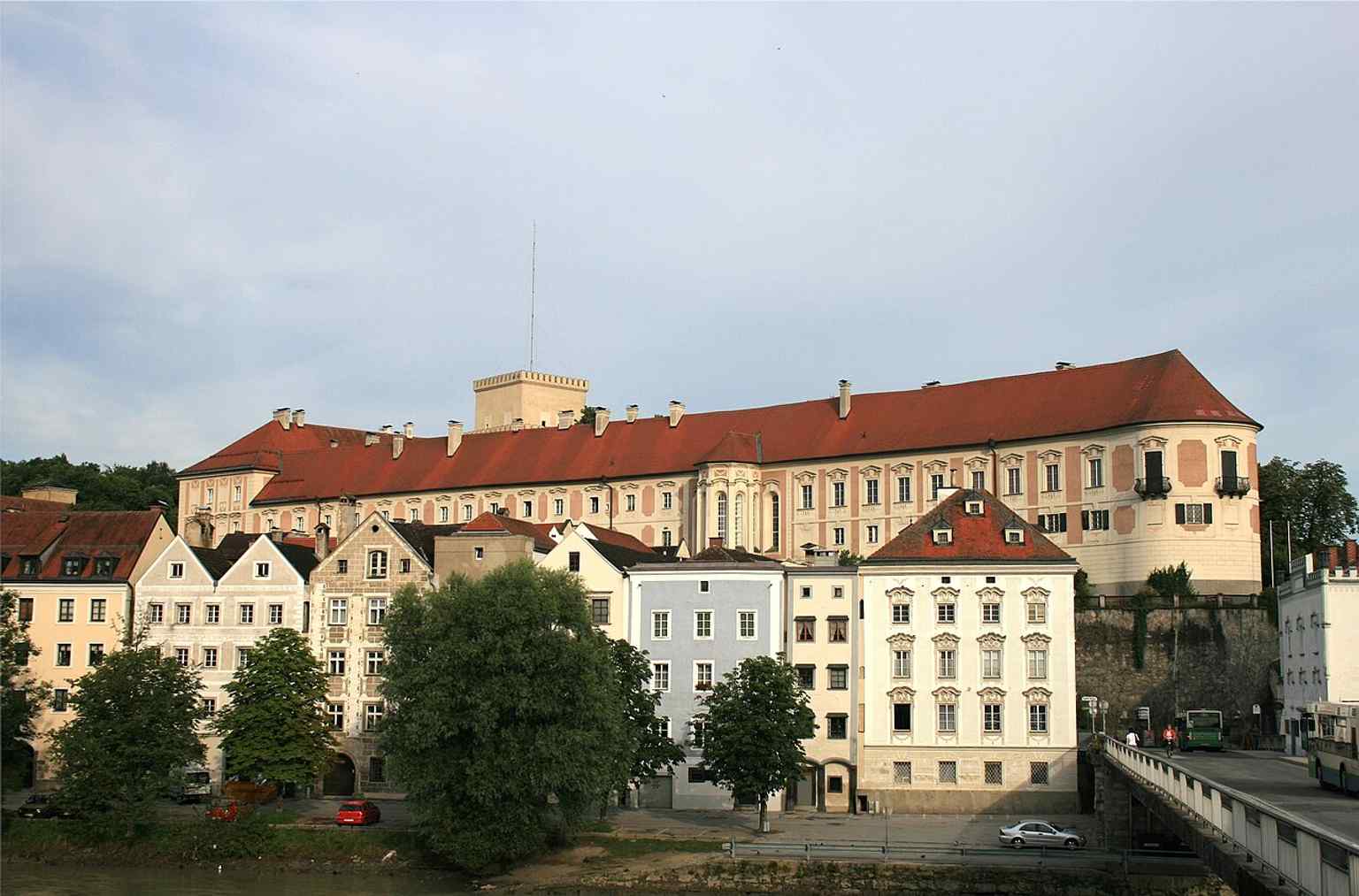
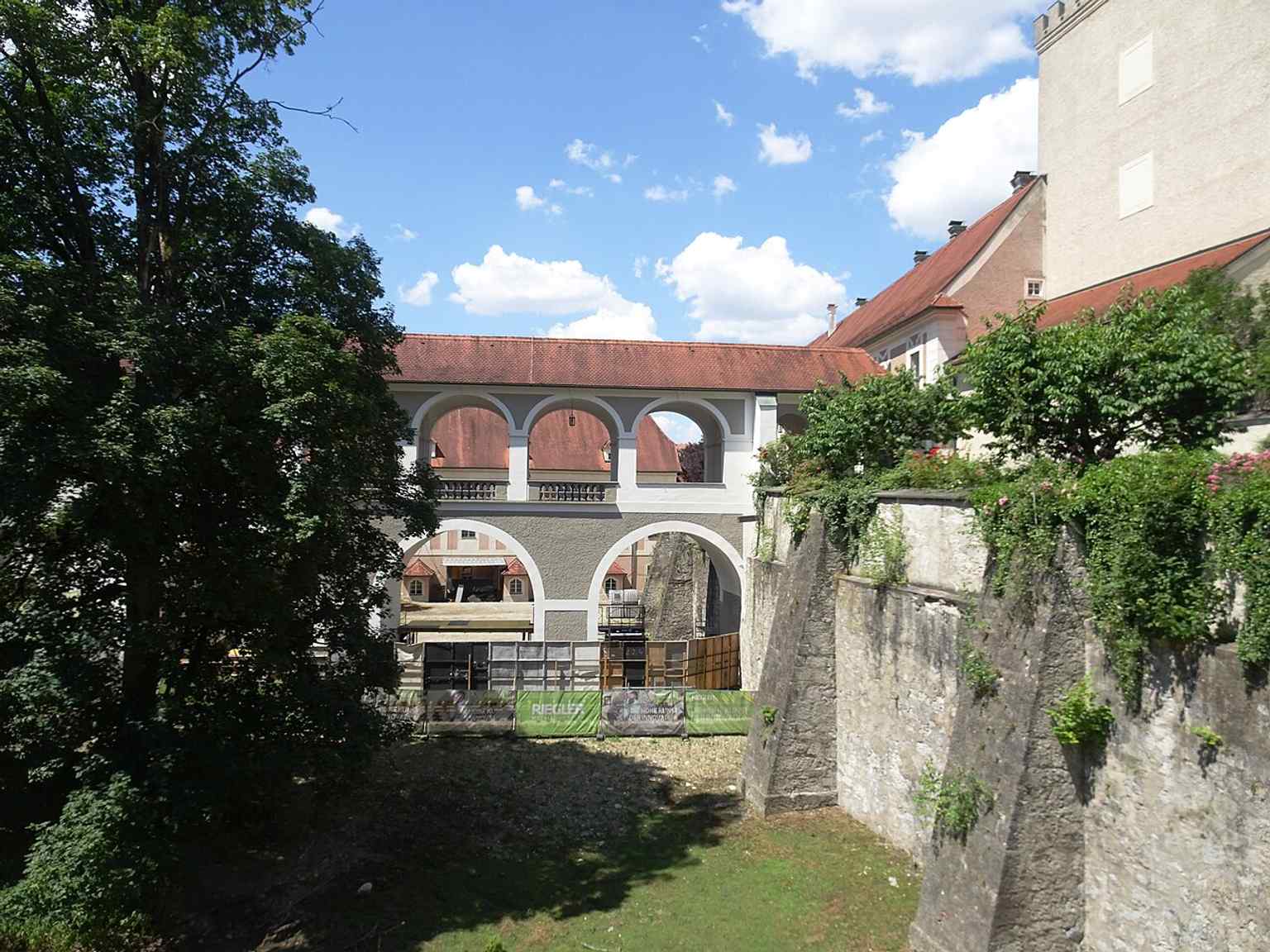
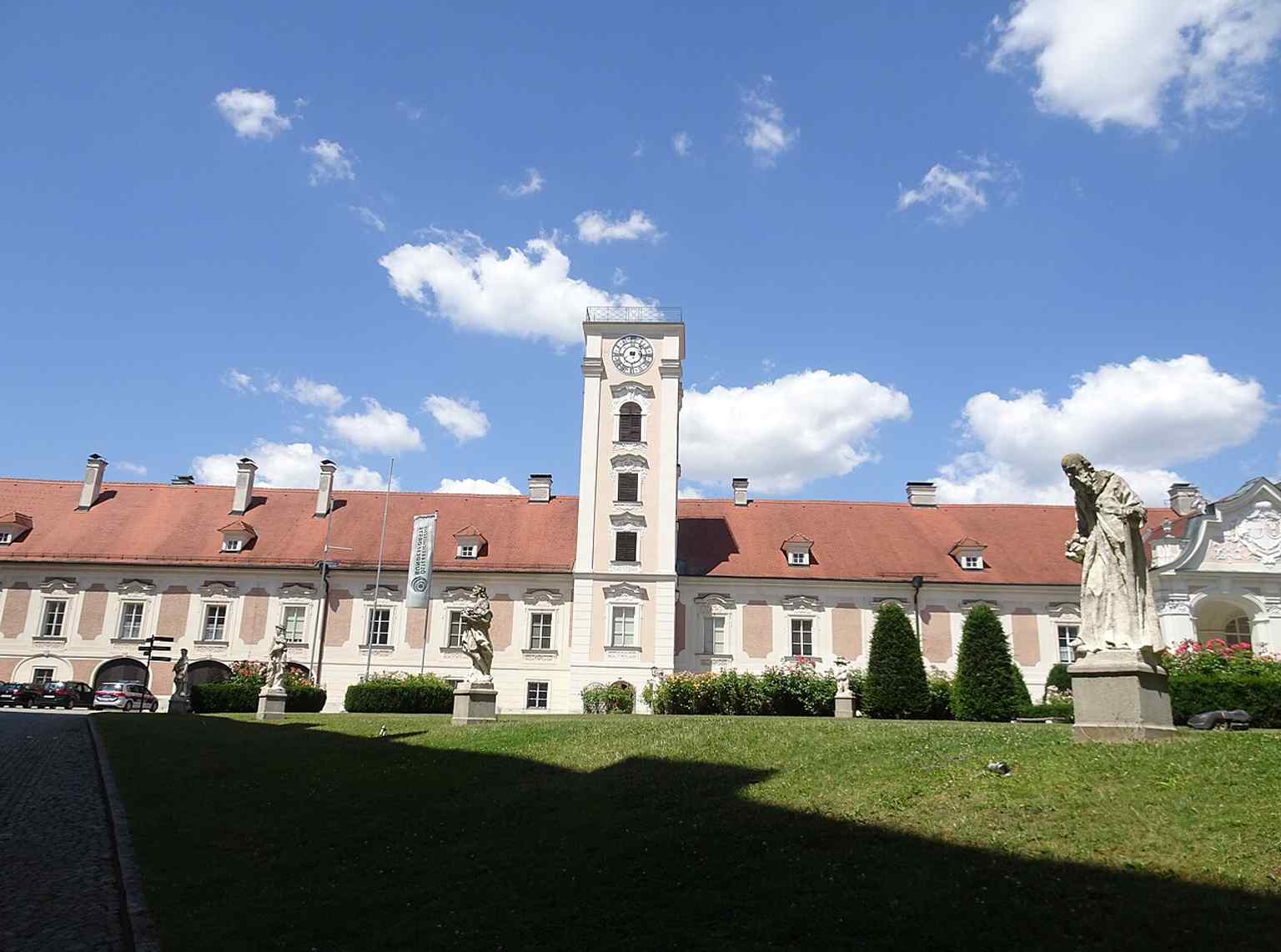
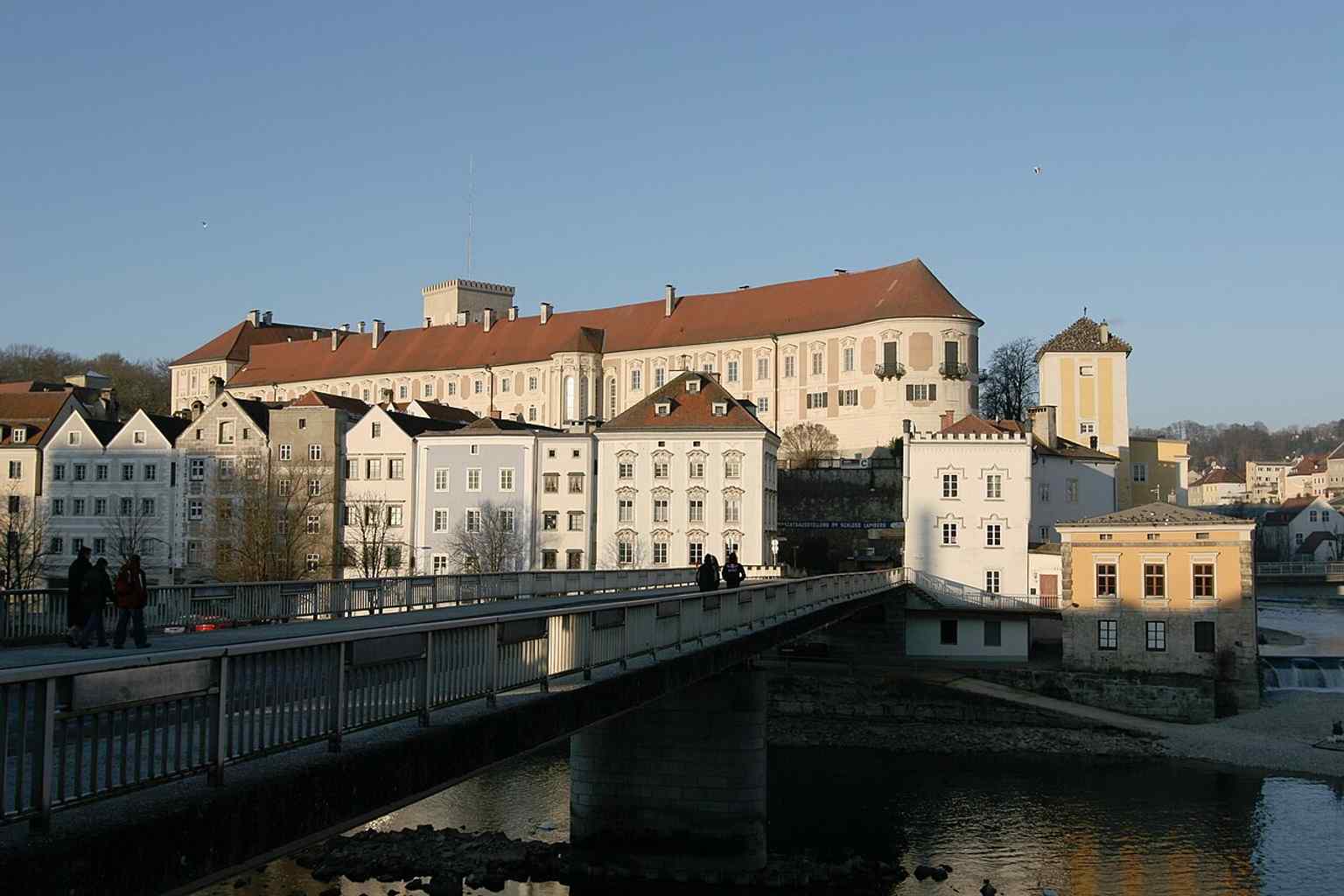
Look for the pale stuccoed baroque wings set on a triangular rocky spur, the broad moat crossed by an arcaded bridge, and the Roman Tower topped with a ring of crenellations.
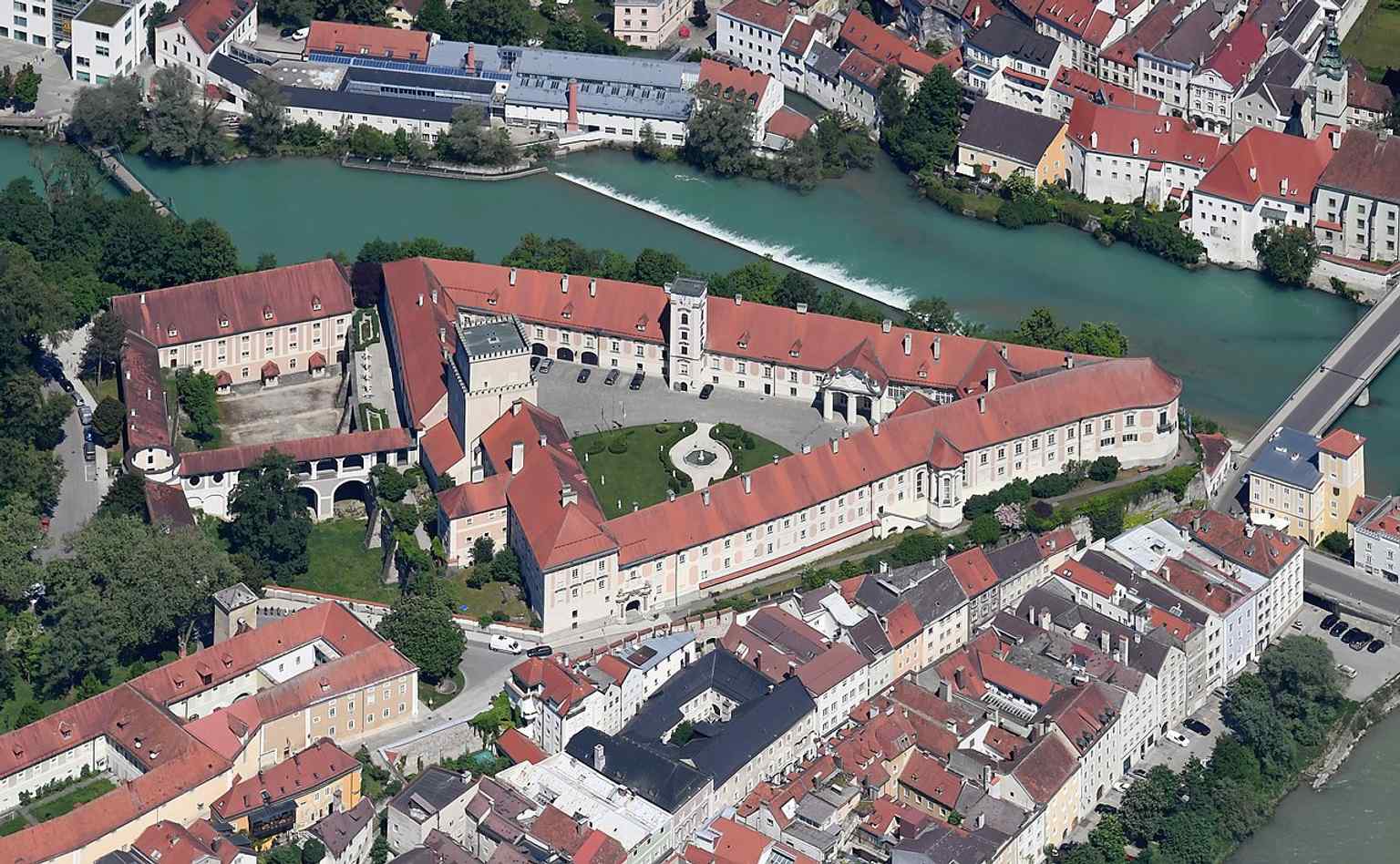
This is Schloss Lamberg, but it began as the Styraburg, the fortress that gave both Steyr and Styria their names. People raised the first stronghold here at the start of the tenth century, and a document mentions it by nine eighty-five. The site was pure strategy: a high terrace above the meeting of the Steyr and Enns, right where routes crossed and borders mattered. If you glance at the aerial view on your screen, the logic of the location becomes very obvious, which is rude to every less well-placed castle in Europe.
In ten seventy-nine, Otakar the Second made this his residence. In eleven ninety-two, the Georgenberg Pact transferred it to the Babenbergs, and later the Habsburgs took over. By then, the border role that made this place so valuable had already shaped the town below.
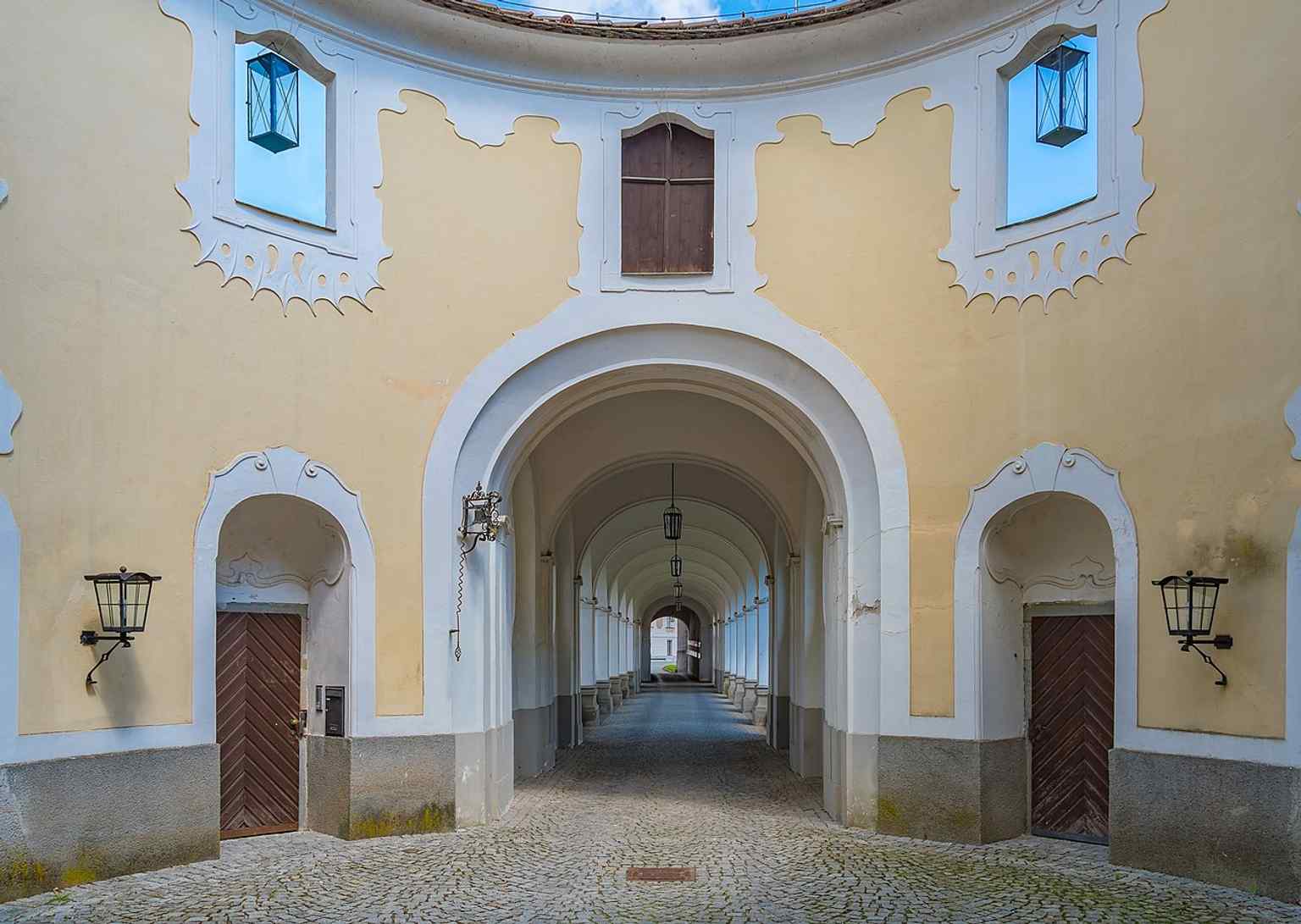
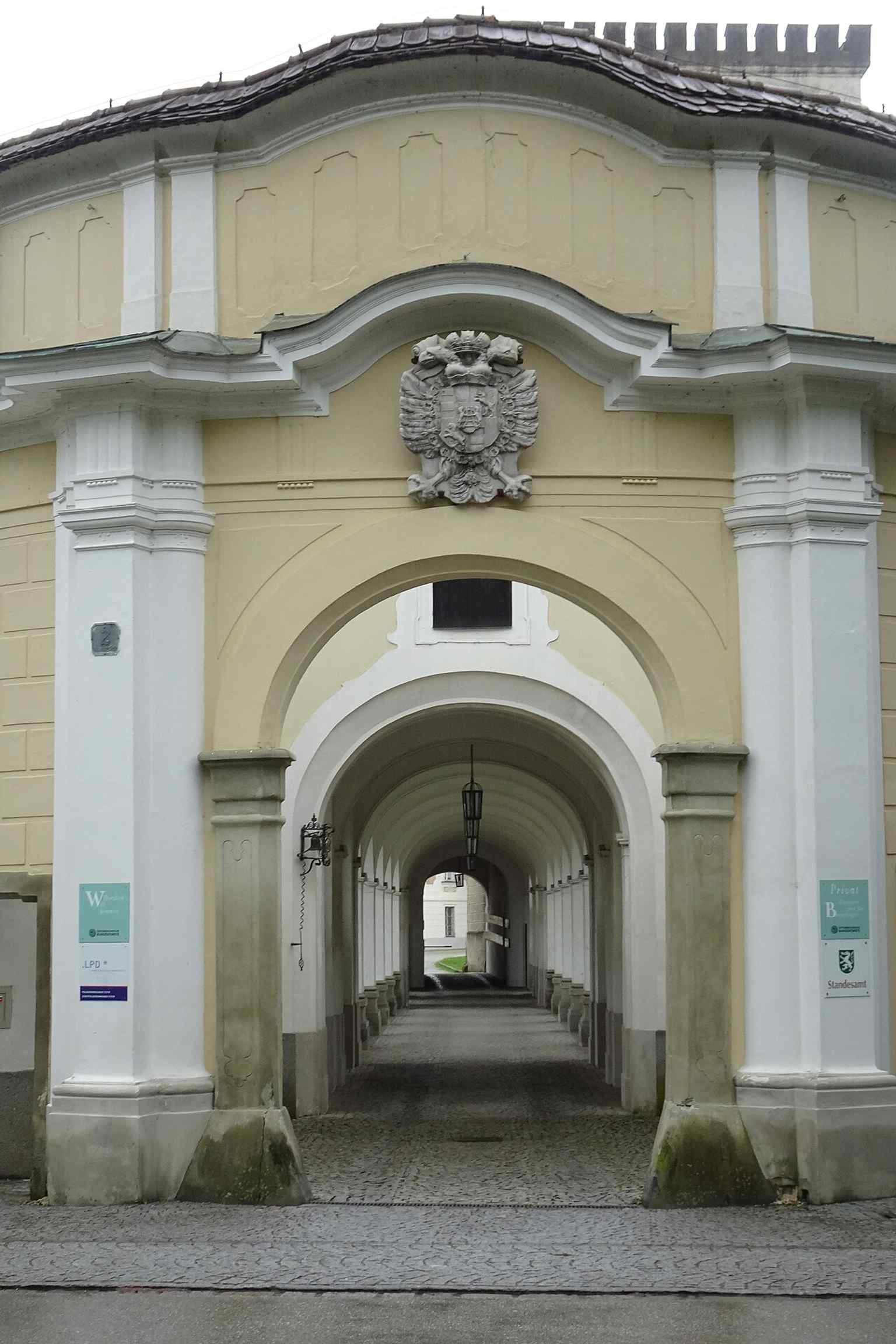
What you see now is mostly baroque, not medieval. In sixteen sixty-six, Count Lamberg acquired the castle and attached his family name to it for the next two hundred and seventy-two years. Then fire intervened in seventeen twenty-seven, because castles also enjoy dramatic reinventions. Architect Johann Michael Prunner rebuilt the complex in baroque form, giving it the more elegant face you see today.
Some older pieces survived. The Roman Tower, or Römerturm, is the oldest part, originally the keep, meaning the last defensive tower. Its base even includes granite blocks that may have come from the Roman legionary camp at Lauriacum. The moat is medieval too, a full defensive ditch, and the courtyard inside takes its odd triangular shape from this narrow rock spur.
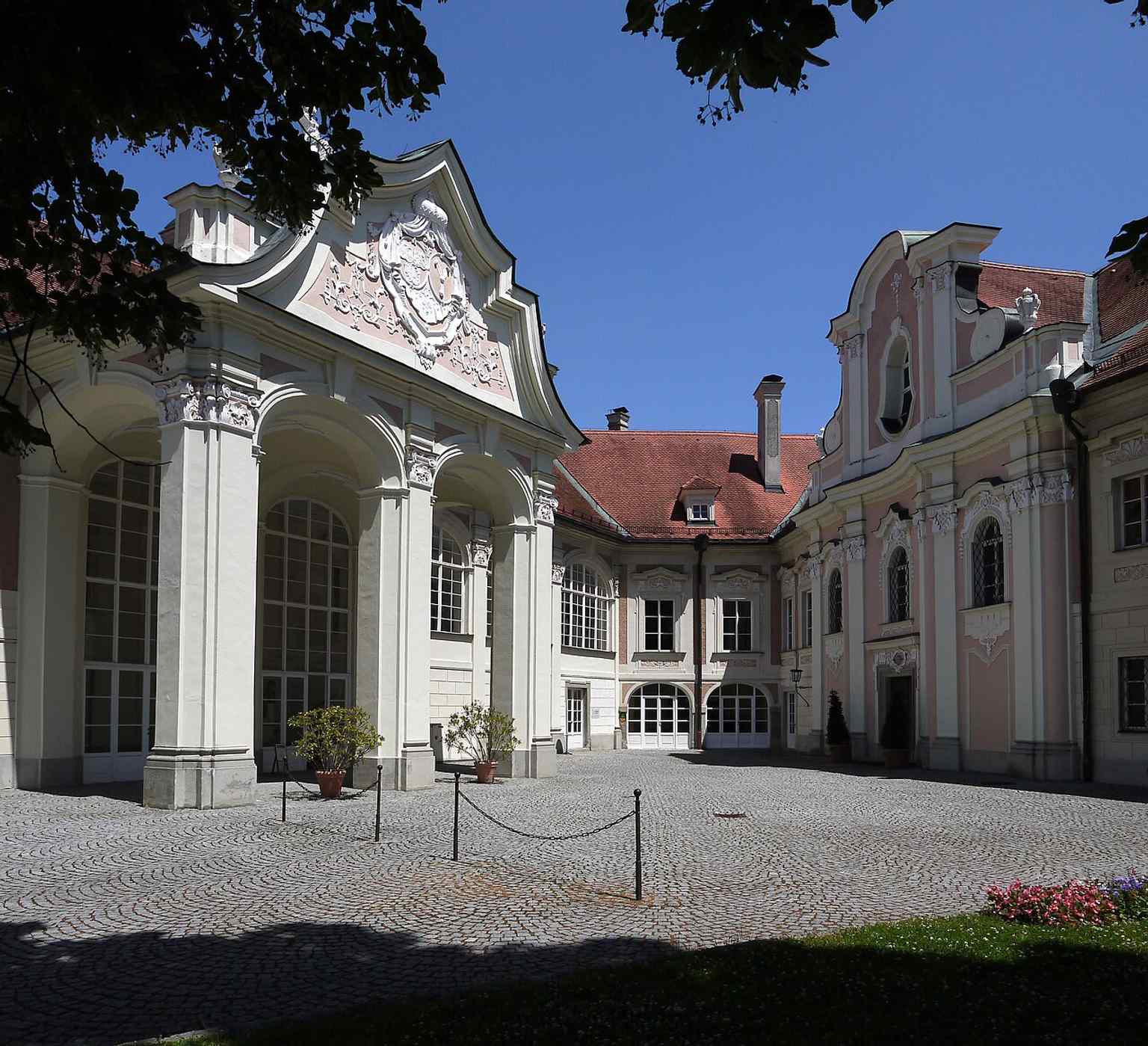
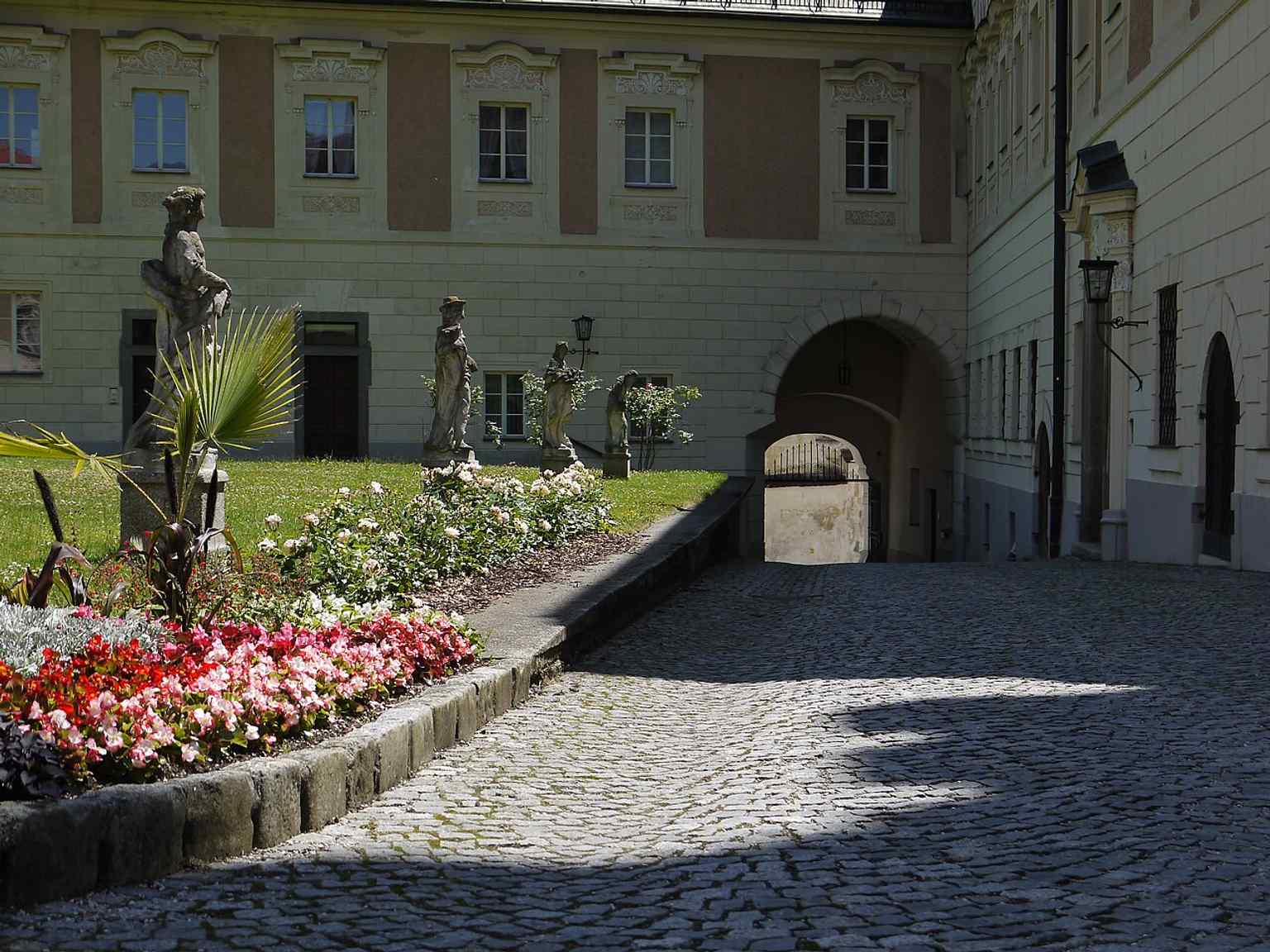
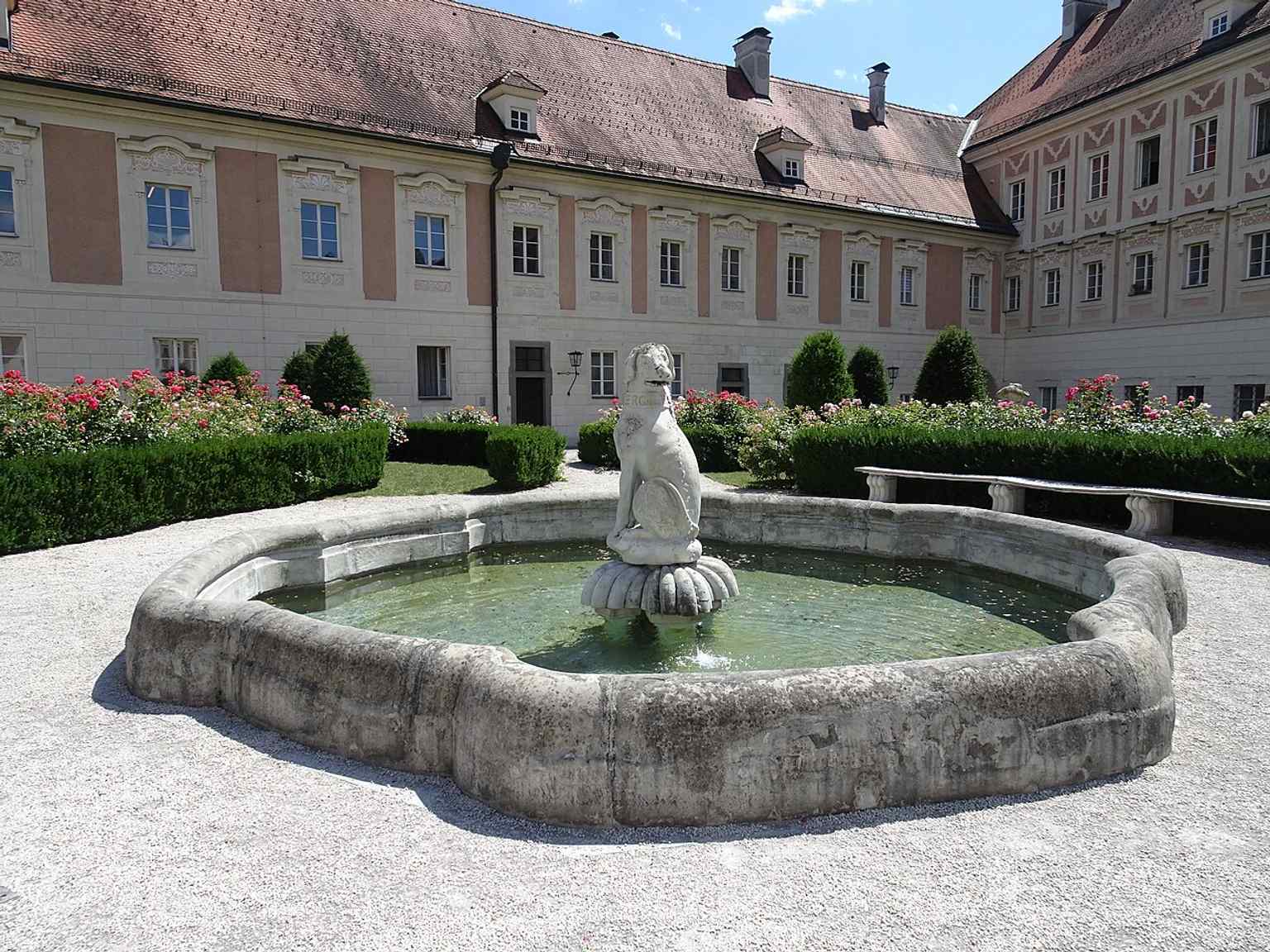
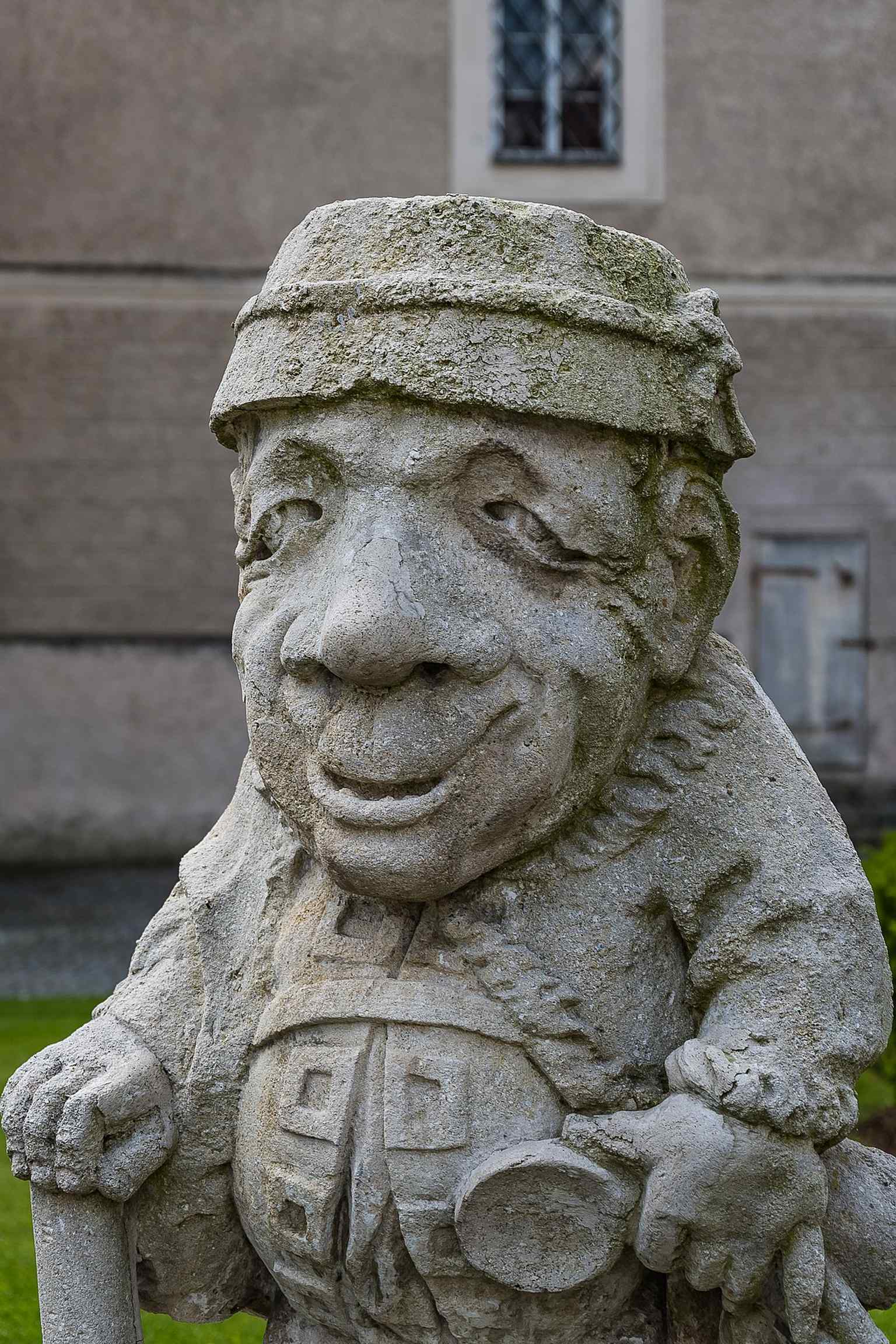
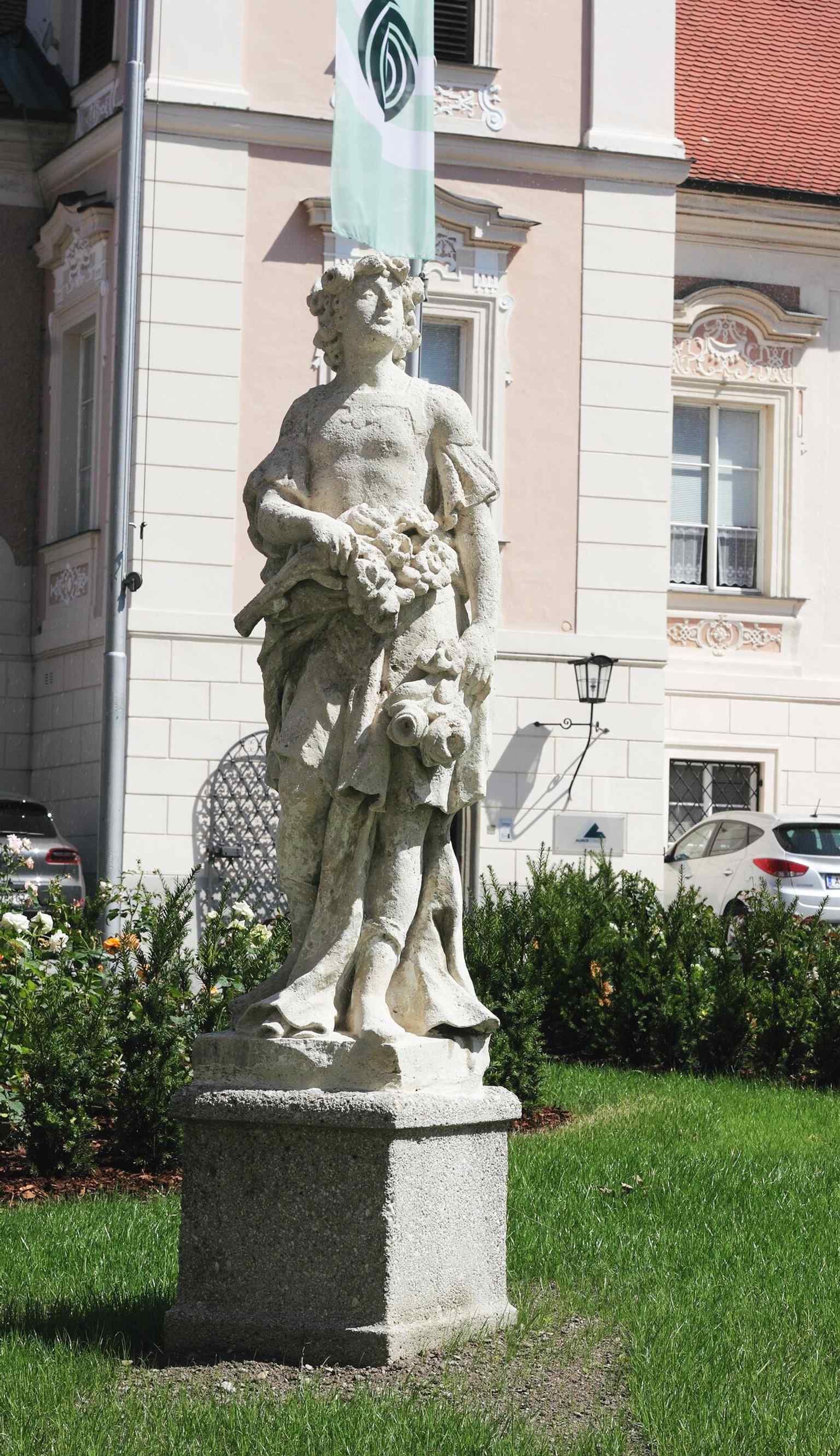
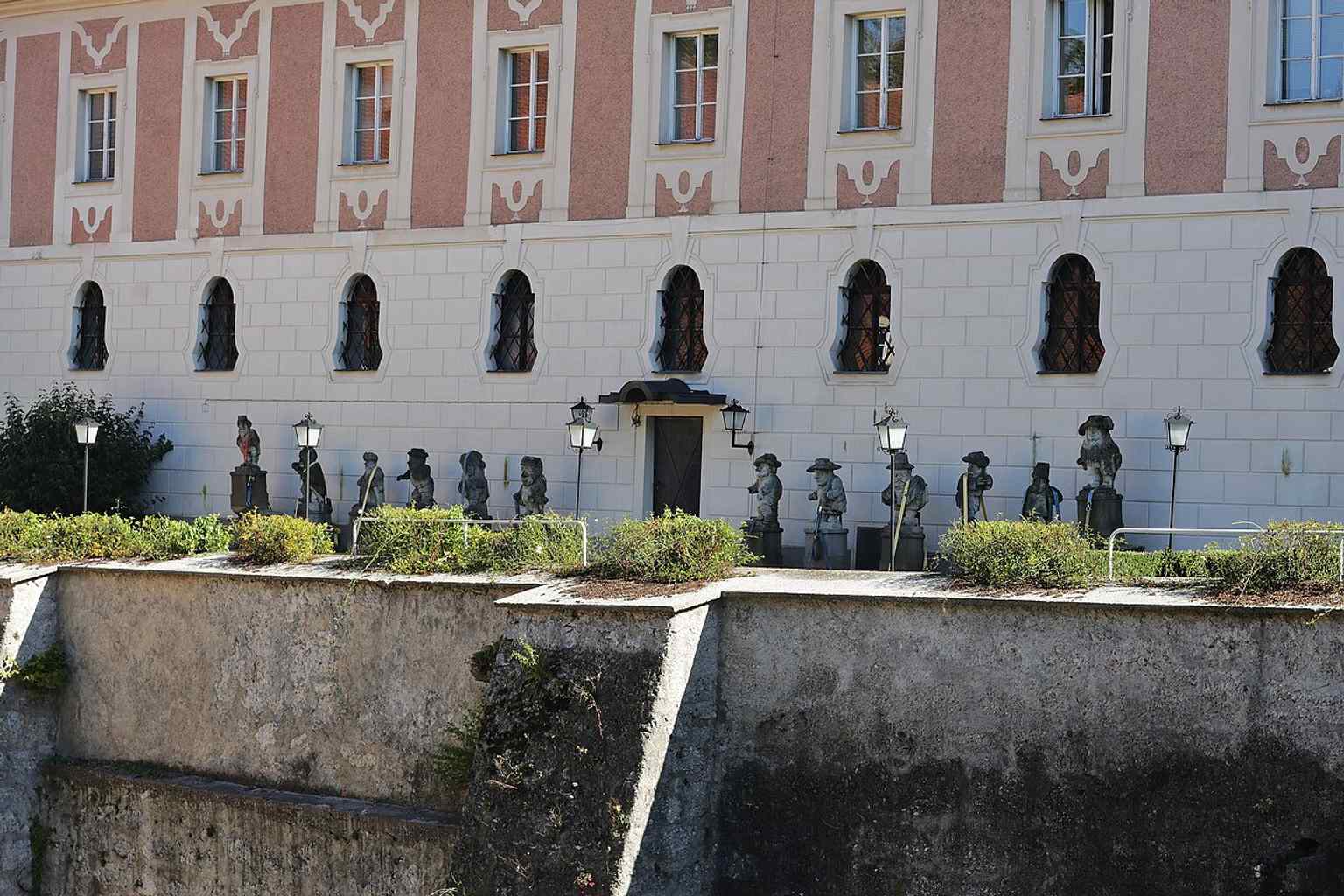
The courtyard changed again in twenty fourteen and twenty fifteen, when restorers repaired the fountain and sculptures and redesigned the whole space. If you want, check the before-and-after image; the difference is pleasantly surgical. At the center stands a fountain from sixteen sixty-six with the Lamberg heraldic animal, a dog spouting water, surrounded by sandstone dwarf figures originally carved around seventeen twenty at Gleink Abbey. They are satire in stone: little baroque insults aimed at social types, fashions, and professions. Civilized mockery... very Austrian.
This place also carries harder history. In February nineteen thirty-four, the stables briefly held around eight hundred prisoners, mostly members of the Schutzbund, because the city needed space fast. In nineteen forty-three, forced laborers from the Steyr-Münichholz concentration camp subcamp built an air-raid bunker here. Since twenty fifteen, it has housed the permanent exhibition called Stollen der Erinnerung, the Tunnel of Remembrance.
Today the castle serves as a police headquarters and a cultural venue, which is a tidy summary of European history: power, repair, paperwork.
The ridge and the tower still make plain why this castle is here. When you’re ready, we can continue on to Voglsang Castle.





.jpg)


.jpg)


