
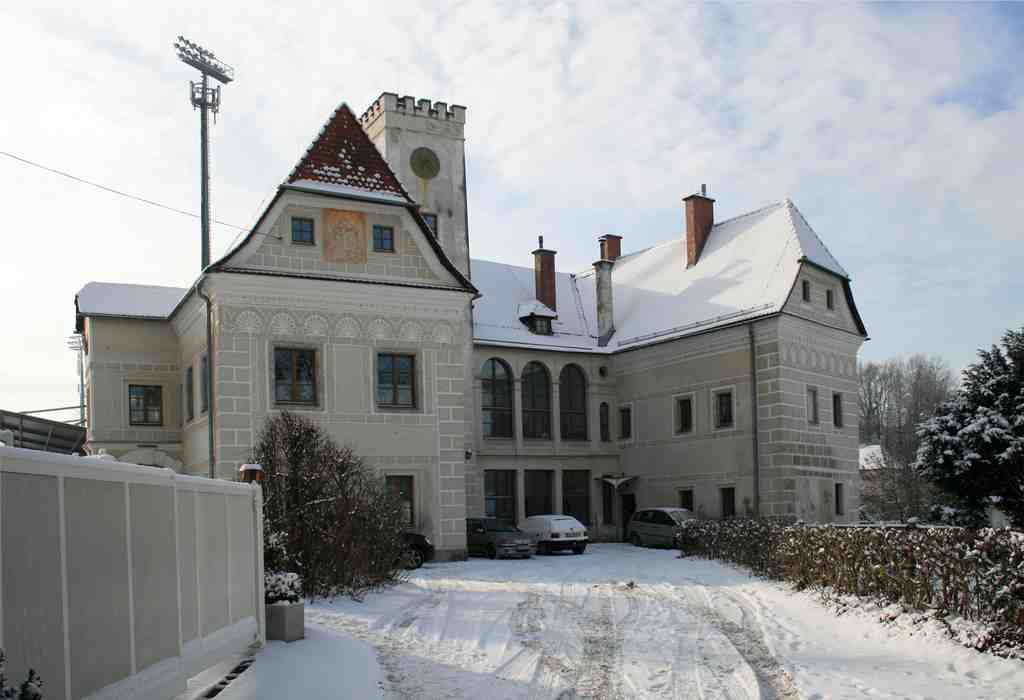
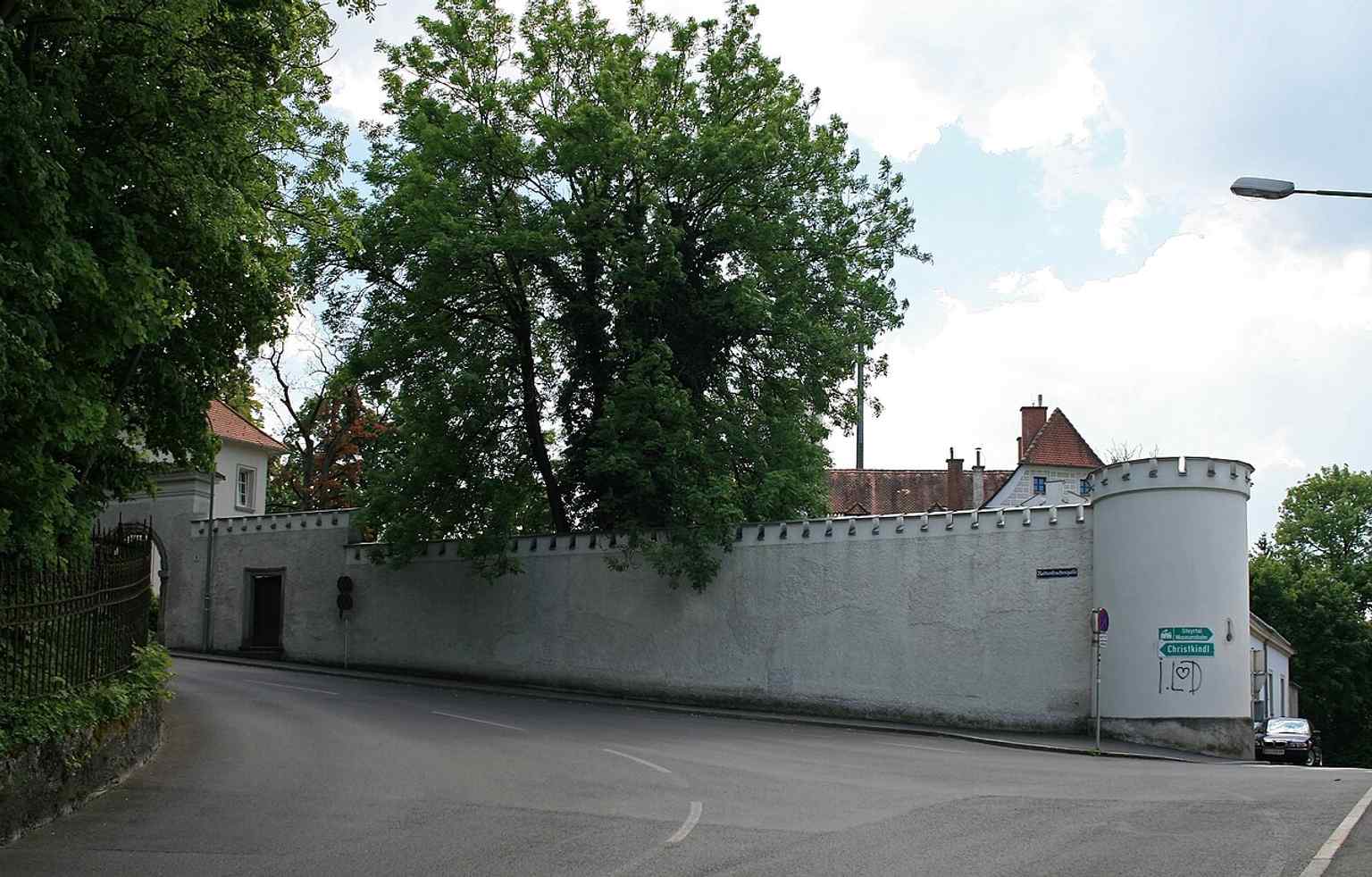
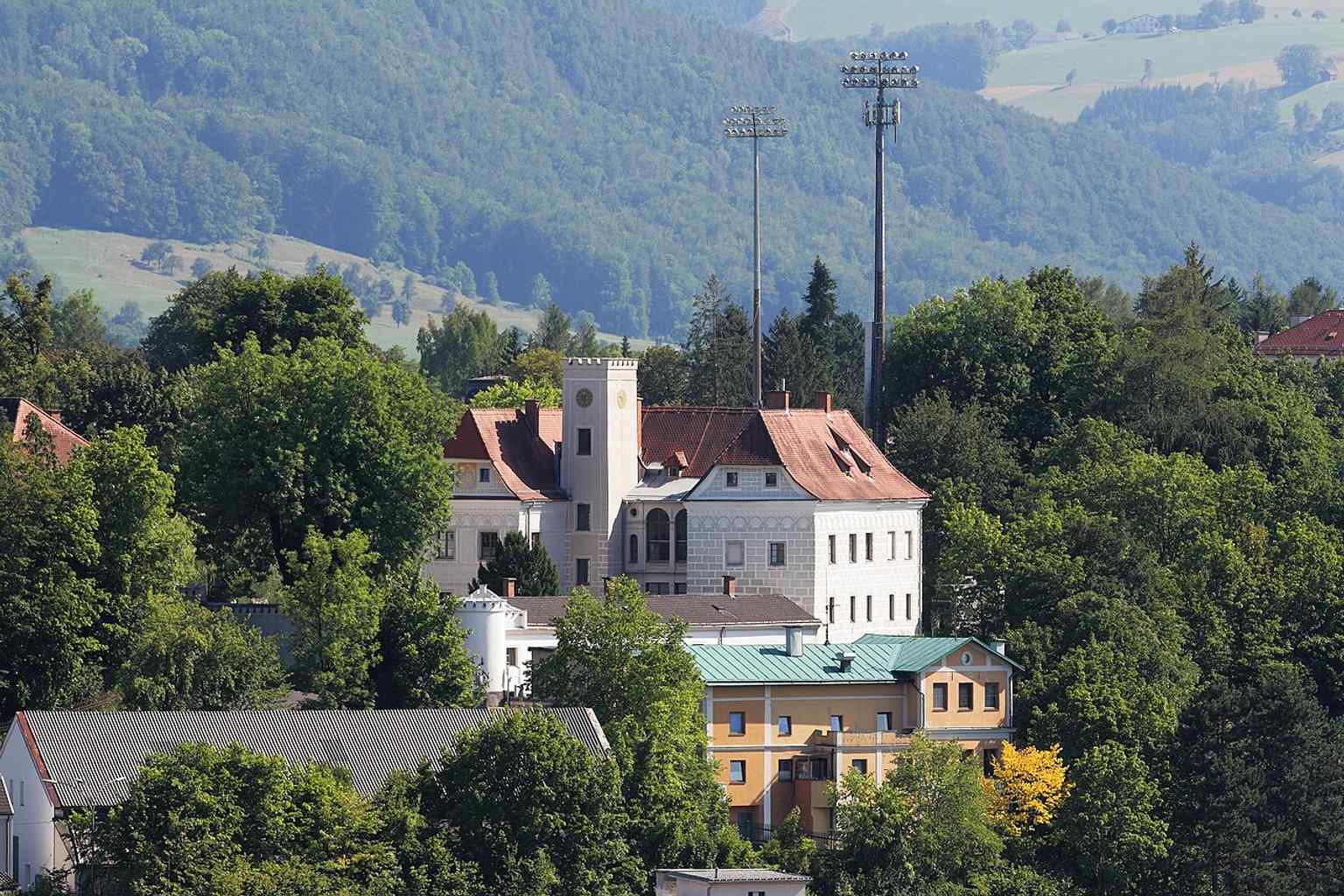
On your left, look for a pale two-story Renaissance house behind a toothed stone wall, marked by a tall central tower and a statue of Saint Nepomuk set above the masonry.
Engelseck looks orderly now, but for centuries it answered to a more dramatic name: Teufelseck, or Devil's Corner. That came from the Teufelsbach, a stream that runs partly underground here... which is a very efficient way to make a place sound haunted without doing any actual work. The site appears in records as early as the thirteenth century, and the core of the residence likely goes back to around fifteen hundred, probably under the wealthy cloth merchant Hans Fuchsberger, who also served as Steyr's mayor in fifteen twenty-five and fifteen twenty-six.
In sixteen forty-one, Josef Achtmarkt von Achtmarktstein bought the property, remodeled it in the Renaissance style, and in sixteen forty-two asked Emperor Ferdinand the Third to rename it Engelseck. Medieval branding, but tidier.
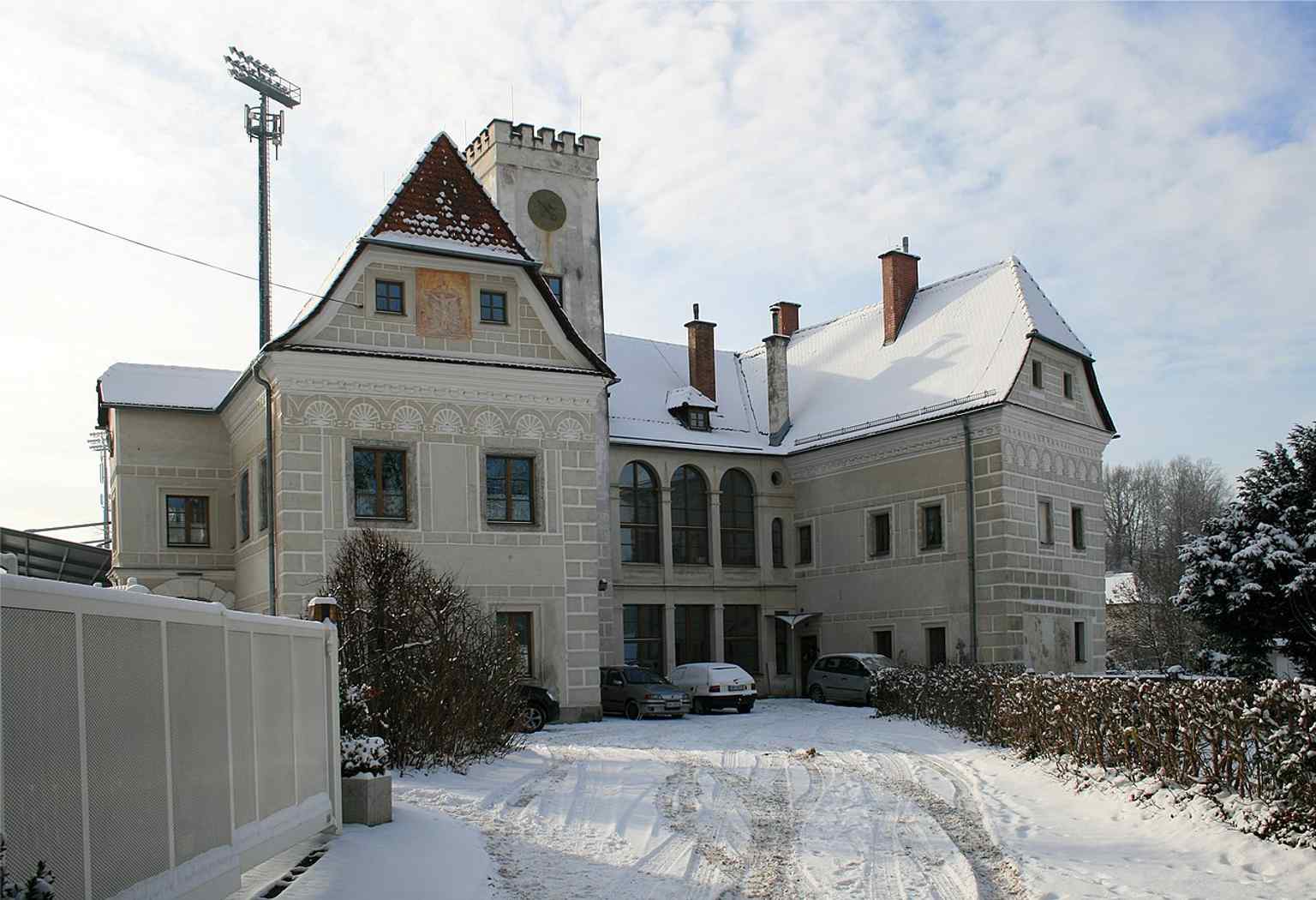
That redesign still shapes what you see: a three-wing layout opening the courtyard toward the front, a high central tower, and a fortified wall with battlements, those tooth-like cutouts along the top, plus two round towers. The tower once carried an onion-shaped dome; now it ends in a platform with a decorative ring of fake battlements. If you glance at the old engraving in the app, you can catch an earlier version of its self-confidence.
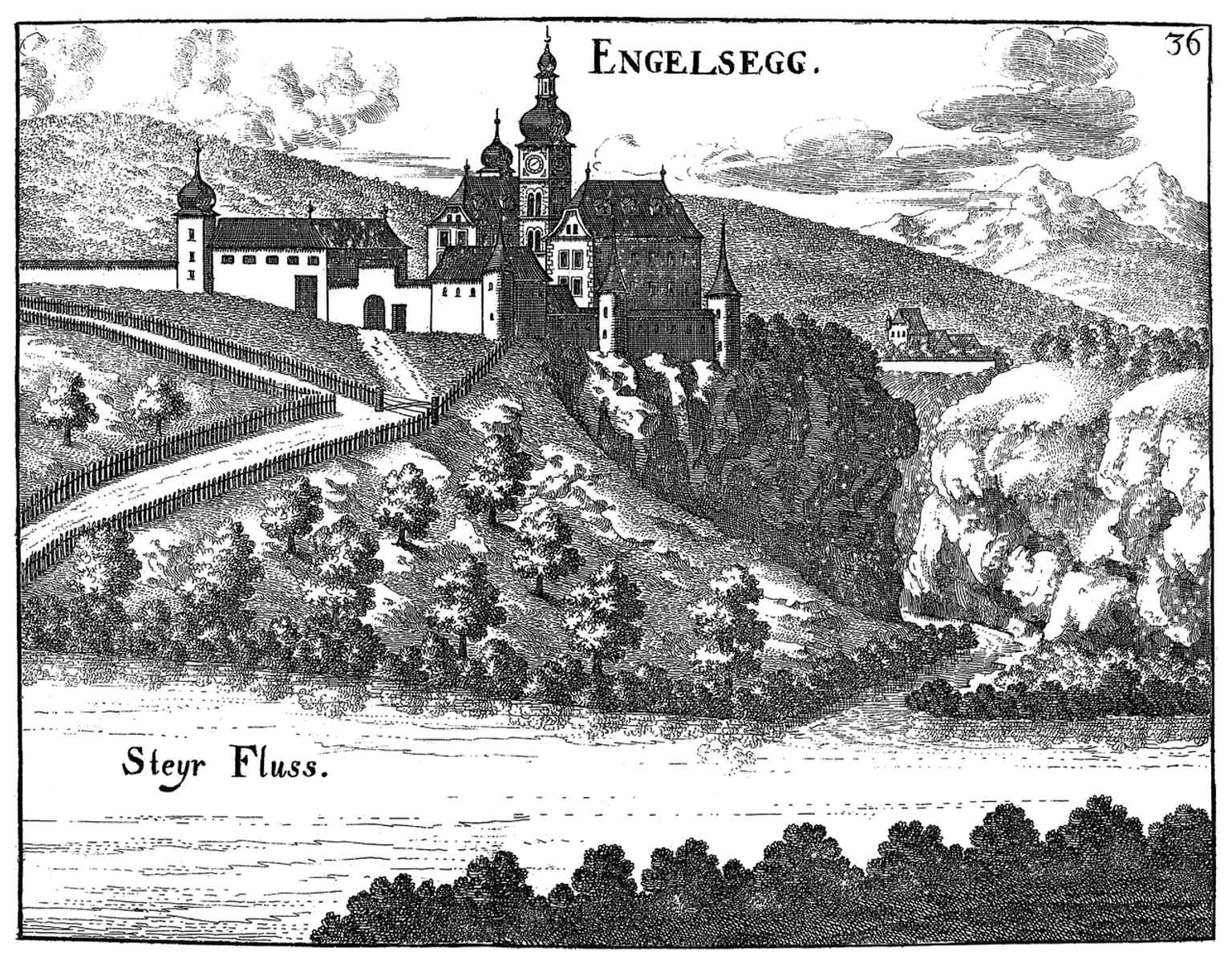
Later owners included the Riß von Risenfels family, Franziska von Rummel, Jakob Voith, Josef Werndl, and then the counts of Lamberg, before the city took over in nineteen eighteen. If you like, check the before-and-after image; it shows how Engelseck now sits more visibly inside Steyr's wider cityscape.
Engelseck is a small castle with a long memory and surprisingly successful public relations. When you're ready, we can continue on to the next stop.





.png)

.jpg)
