
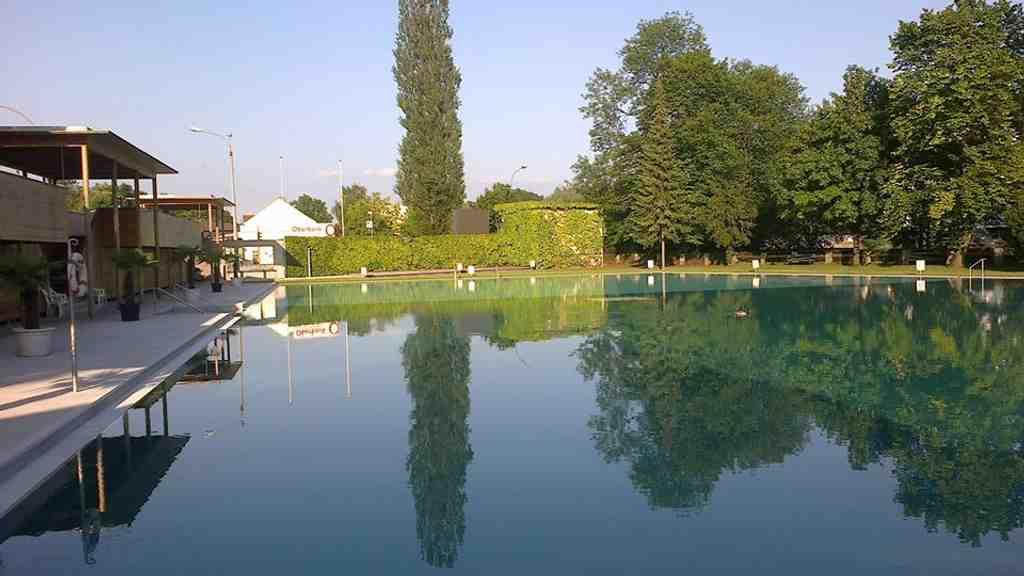
On your left, look for a low wooden-and-glass complex stretched in long horizontal lines, with a broad terrace and the unmistakable rank of changing cabins framing the pool.
This is the Steyr Swimming School, often described as one of the oldest open-air workers’ baths in Europe... which is a wonderfully modest title for a place with a remarkably stubborn survival instinct. Josef Werndl founded the first workers’ swimming school in eighteen sixty-three on another site nearby. Then the weapons factory expanded in eighteen seventy-three, so industry quite literally pushed swimming out of the way. In eighteen seventy-four, Werndl replaced it here as the Josef Werndl Swimming and Bathing Establishment.
If the Werndl Monument made him look grand, this place shows his more practical side. He gave workers a bath, a place to swim, and even a place to skate in winter. Efficiency never sleeps. The builder and designer Josef Huber planned a U-shaped complex with an entrance pavilion, a restaurant building, and a long row of cabins with a central salon, meaning a shared social hall. The original architecture mixed spa elegance with industrial discipline: a timber frame filled with brick, halfway between a health resort and a factory that had learned some manners.
Only the basin survives from that first layout, but the idea endured. In May of nineteen fifty, Steyr-Daimler-Puch reopened the bath after major repairs. Workers rebuilt the damaged wall along the River Steyr, added filtration for the children’s pool, and completely remade the swimming basins. Then, in nineteen sixty-one, architect Helmut Reitter modernized the place again, and the old entrance building on Schwimmschulstraße disappeared.
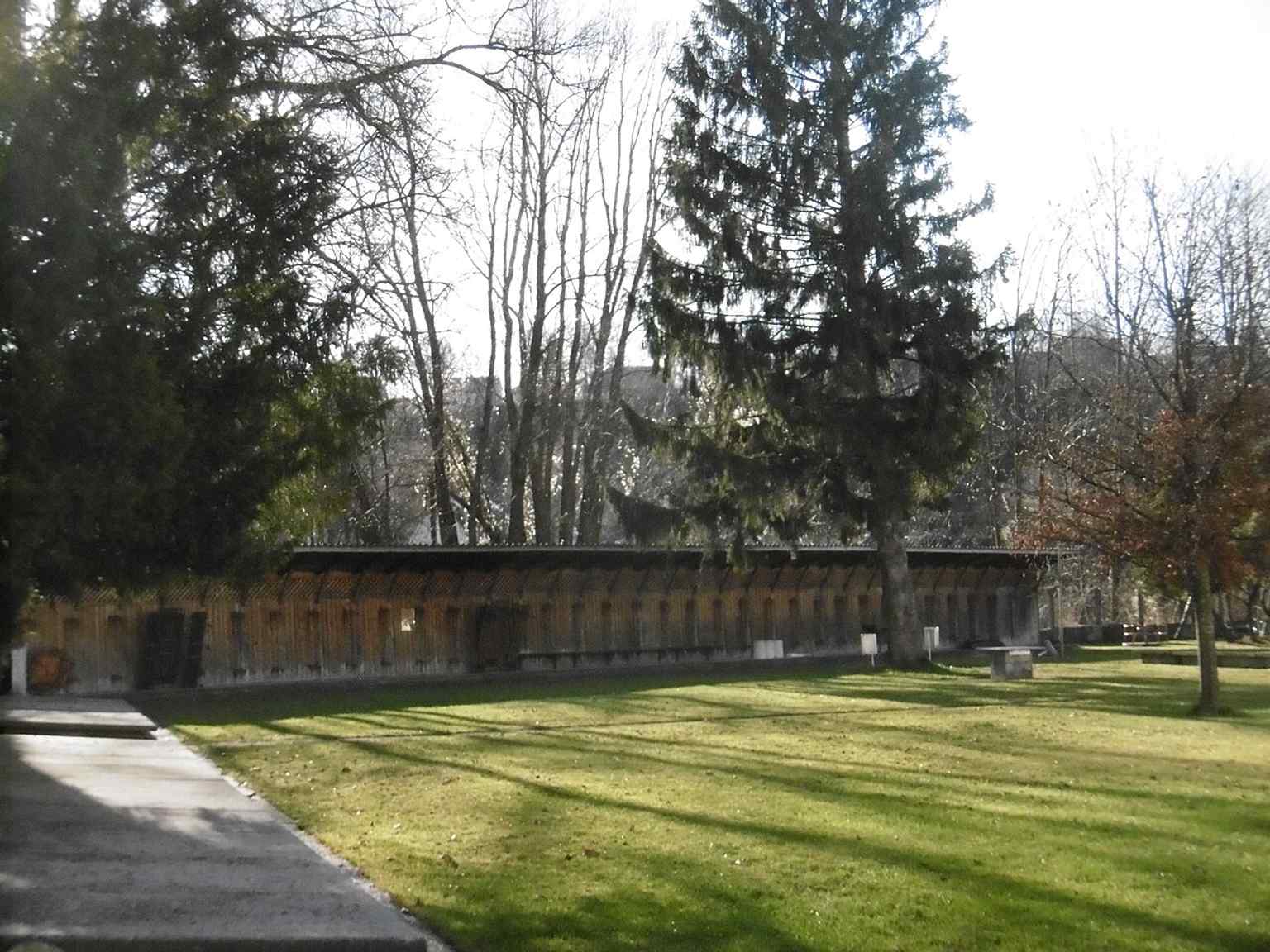
What nearly finished it was the great flood of two thousand and two. The water wrecked the changing cabins and forced a full rethink. The city’s mayor, Hermann Leithenmayr, pushed hard to save the bath, and architects Luger and Maul led a careful return to the site’s character while making it function for modern use. If you check the photo in the app, you can see that rebuilt identity taking shape in two thousand and eight. And the cabin block on your screen shows one of the key post-flood interventions: simple, clean, and much smarter than trying to argue with a river.
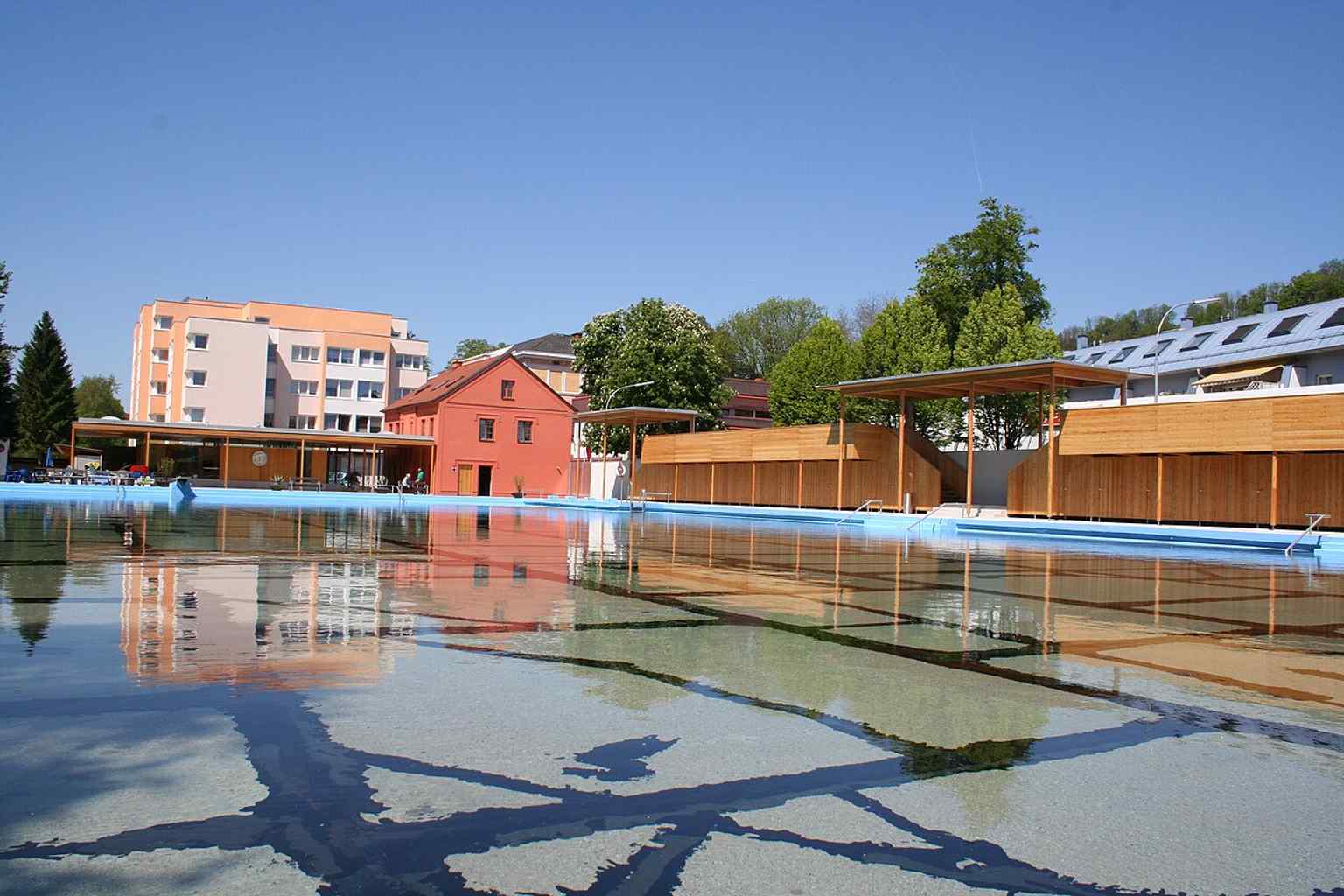
The revival came in stages: new cabins, new sanitary rooms, a revised entrance and ticket area, terraces, a children’s pool, a riverside buffet, and by two thousand and thirteen, a fully renovated main pool. In nineteen ninety-nine, the whole site even changed hands for one Austrian schilling, when the Friends of the Swimming School association bought it to keep it alive. Since then, this bath has collected architecture and preservation awards... not bad for a place built so people could stop sweating and start floating.
If you want to return properly equipped, it’s generally open every day from nine thirty in the morning until eight in the evening.






.jpg)