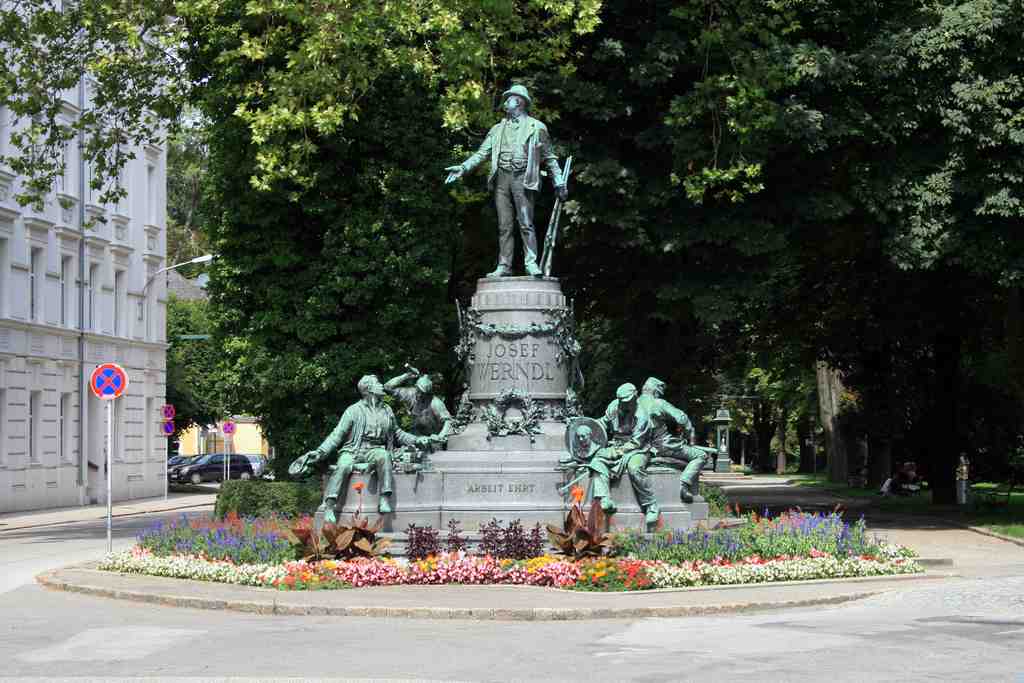
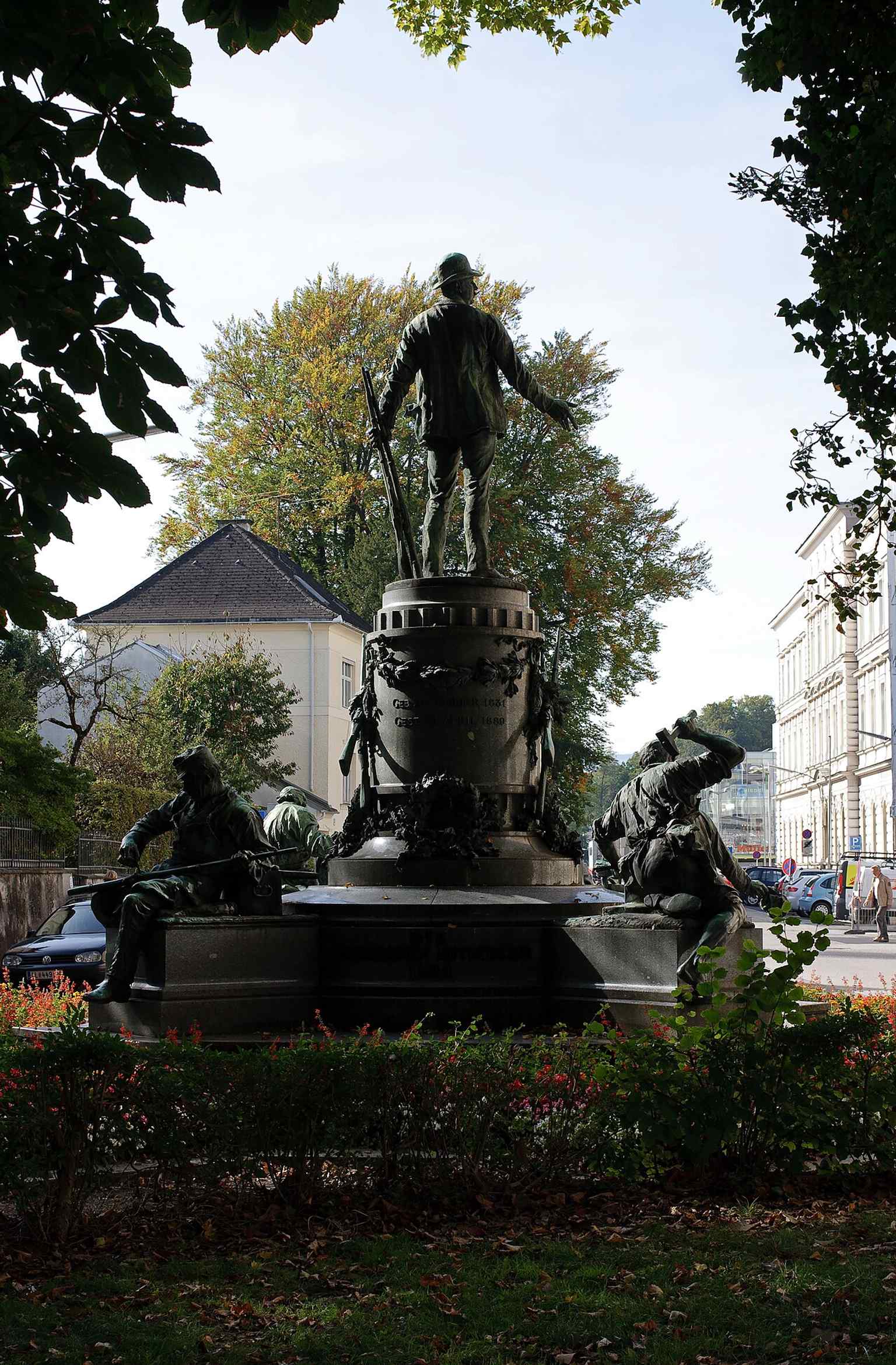
On your left stands a bronze figure group on tall gray granite plinths, with Josef Werndl raised above four workers and a carved band of oak leaves and weapons marking the base.
This monument looks like civic gratitude... with industrial muscle attached. Viktor Tilgner sculpted it in eighteen ninety-four to honor Josef Werndl, the arms manufacturer who reshaped Steyr. He stands in the middle like a secular ruler, holding rifles in his left hand while his right points toward the men below. That gesture has a formal name, allocutio: the classic pose of a leader addressing his people. Here, the marshal’s baton got replaced by firearms. Very Steyr.
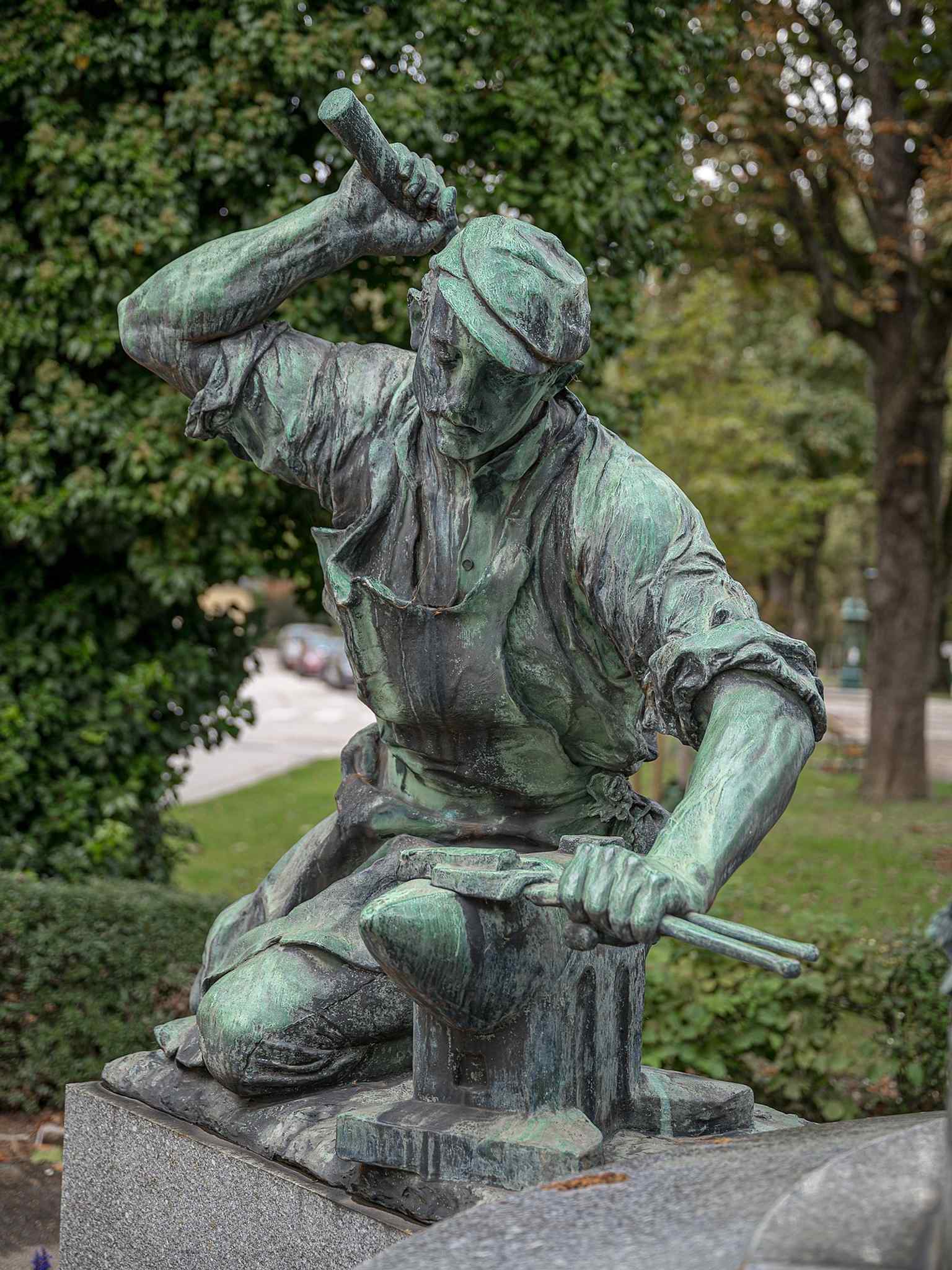
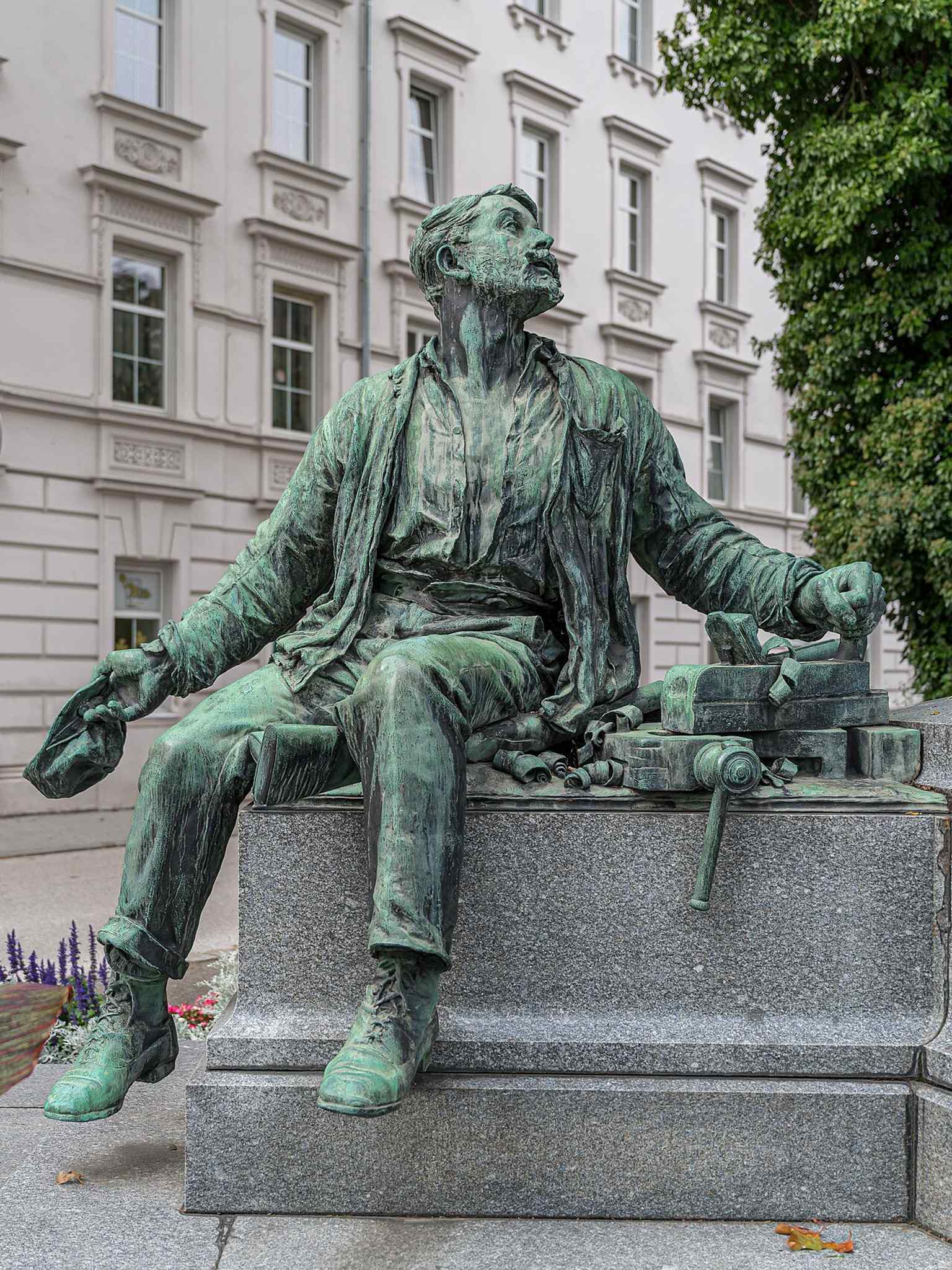
Look closely and Tilgner’s idea sharpens. The workers are not decoration. They are the point. You have a blacksmith, a fitter or assembler, an old saber maker, and a carpenter. The carpenter lifts his cap in greeting, while the saber maker holds a portrait of Werndl’s father, Leopold. If you glance at your screen, the carpenter detail makes that human note easy to catch. On the lower plinth, the inscription reads “Arbeit ehrt”... “Work honors.” Blunt, efficient, and difficult to argue with.
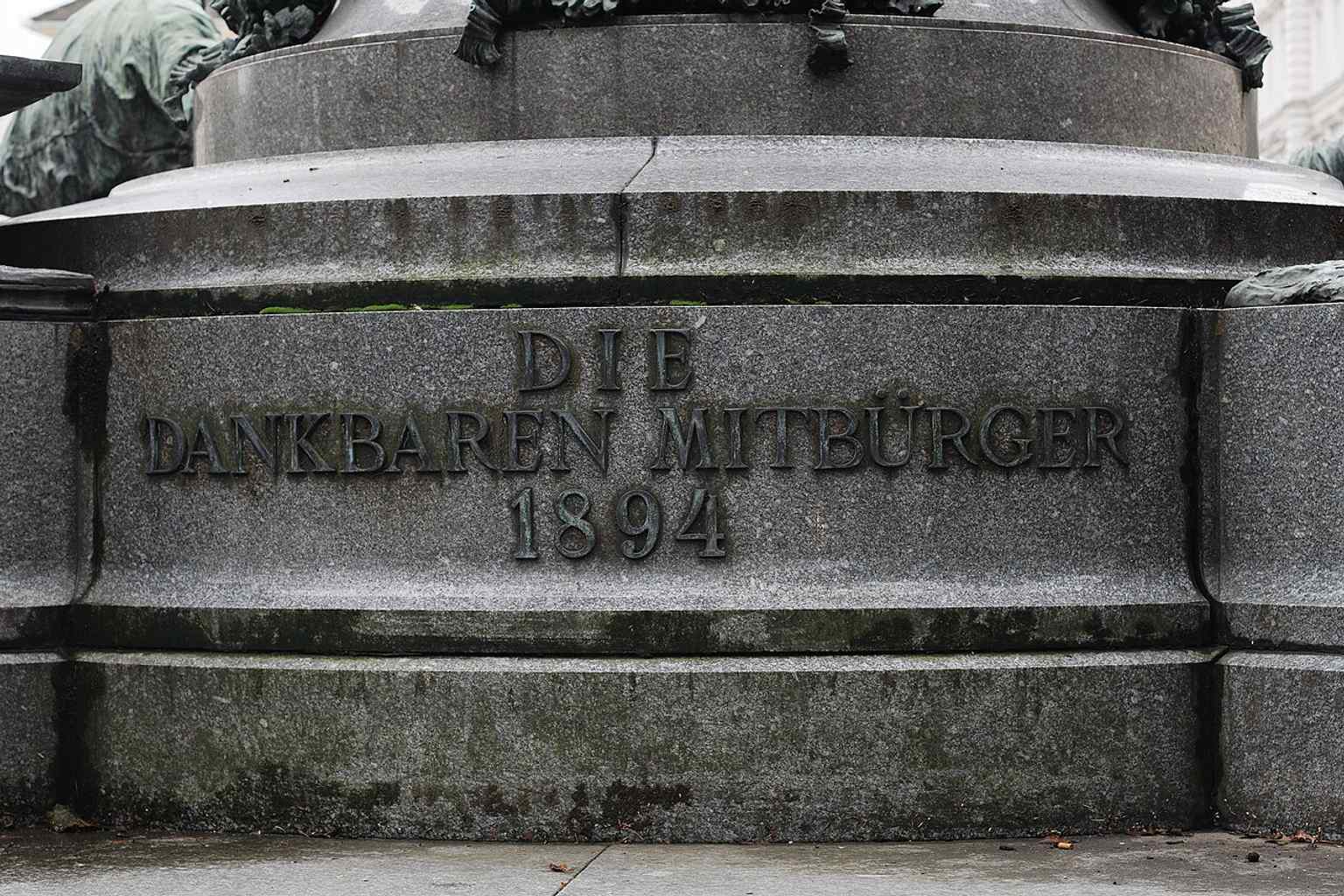
The city debated where to place this monument, including the town square and a hill overlooking the old weapons factory, but chose this promenade because Werndl had helped shape it himself. During the Second World War, workers removed the monument; in September nineteen forty-five, Steyr put it back. On the rear, as your app image shows, the citizens signed their thanks: “Die dankbaren Mitbürger, eighteen ninety-four”.
Conveniently, the monument is accessible at all hours.
It turns industry into public memory with almost alarming confidence. When you’re ready, we can continue toward the town square.