
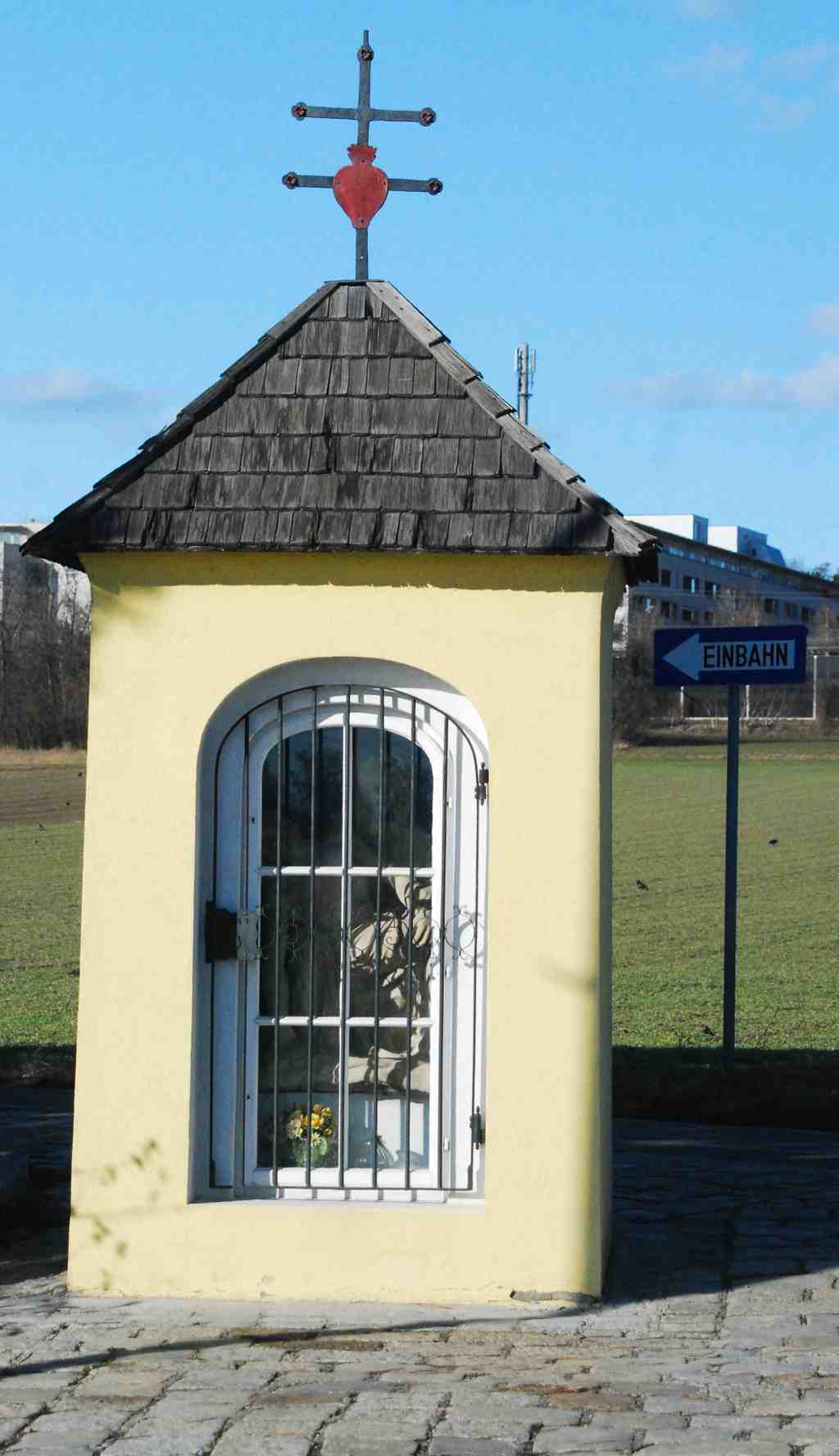
You are looking at a square, pale-yellow masonry shrine capped with a wooden shingle roof, topped by a distinctive double iron cross featuring a bright red flaming heart.
In centuries past, village borders were not just lines on a map, they were the frontline defense against the supernatural. According to local lore, this chapel was a key anchor in the village's spiritual perimeter. The strategy was to build a ring of sacred shrines to shield the inhabitants from plague, fire, and wandering spirits. Because nothing deters a ghost quite like solid stonework and a heavy iron gate.
The iron lock on that gate, along with the sculpture of the grieving Mary inside the niche, bears the year 1877. This marks a massive community effort to secure the boundary. Look up at that double-barred iron cross. That is a patriarchal cross, an architectural choice that signaled special spiritual rank, telling travelers they were entering a parish under serious divine watch. The red flaming heart on the lower beam symbolizes the Sacred Heart of Jesus, promising mercy and protection to the rural workers.
Long before this specific structure went up, an older shrine stood here, known simply as the cross below the village. It was the hub of the local Institute for the Poor, a social safety net established in the late eighteenth century. Farmhands returning from the vineyards would drop small coins into the Opferstock, an offering box at the base of the shrine. It was grassroots social welfare, directly funding care for the sick and elderly of the parish.
Even today, that agricultural bond holds firm. During an annual spring procession, the community pauses right here to pray for the wine harvest, specifically asking for protection against late frosts.
It is a quiet, enduring place, though its peace was violently interrupted in 1992 when a runaway truck completely obliterated the shrine. It went about as badly as you would expect, with the masonry reduced to rubble and only fragments of the original sculpture surviving the crash. But the community refused to let their boundary fall. Craftsmen used the original 1877 measurements to build a flawless replica from the ground up. They even took the opportunity to replace a highly practical but incredibly ugly tin roof added in the sixties, bringing back the historic wooden shingles. It was a stubborn act of resurrection by the local residents.
Since it sits right on the street corner, it is always accessible. Now, let us head toward the bridge to uncover more history at the Statue of St. John of Nepomuk, about an eight-minute walk away.


