
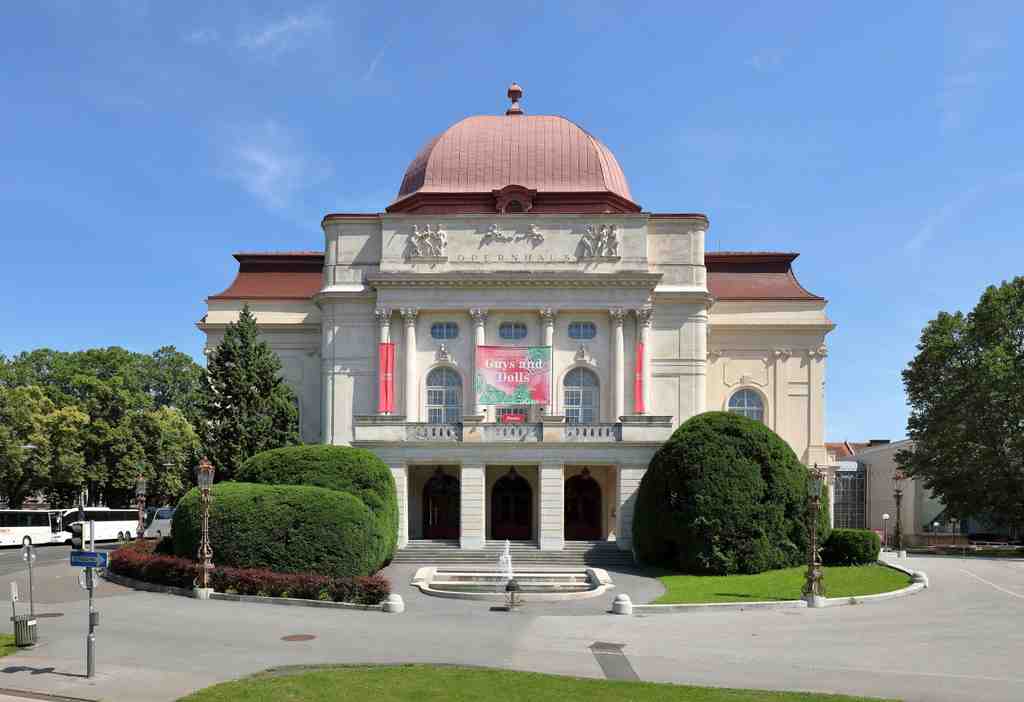
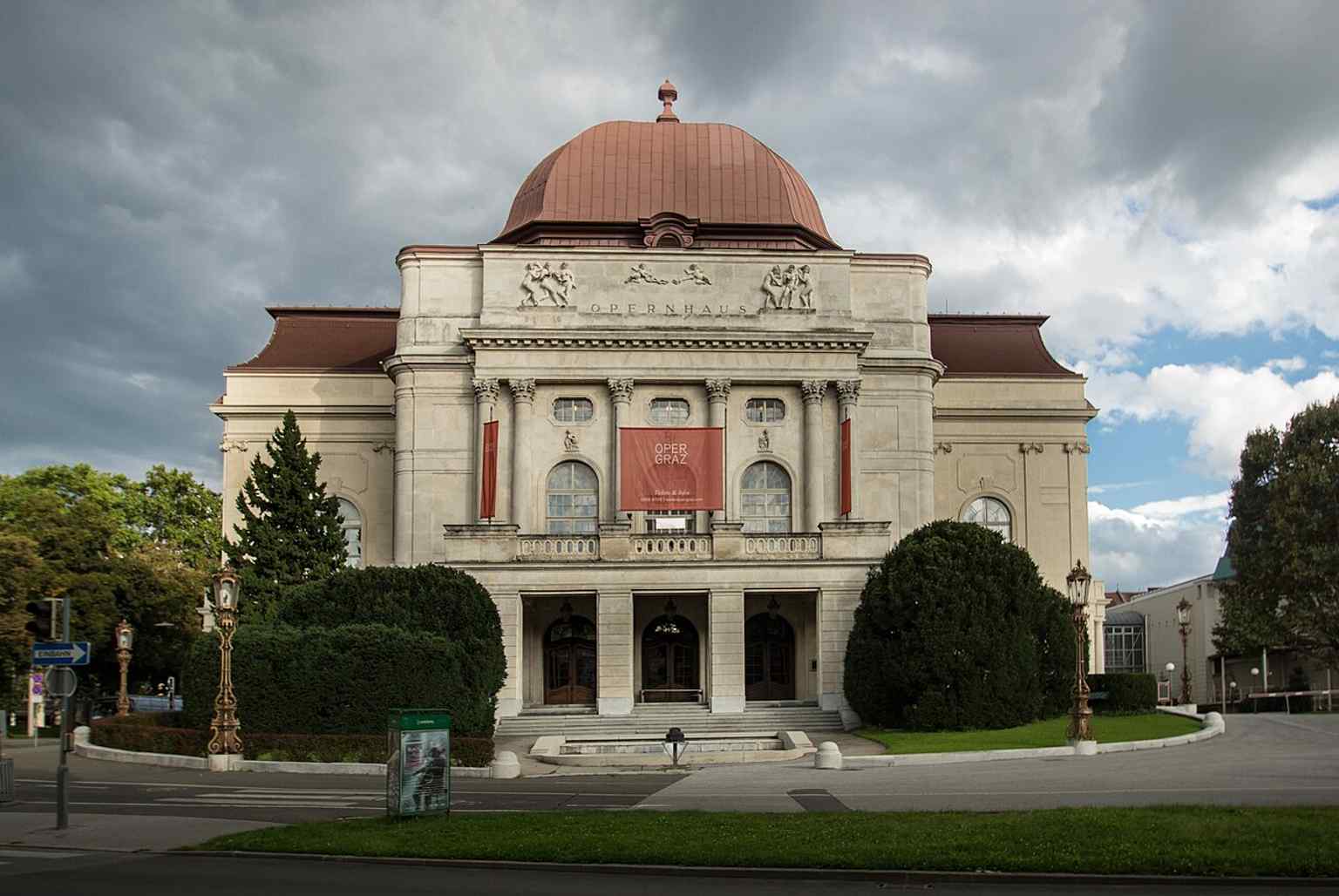
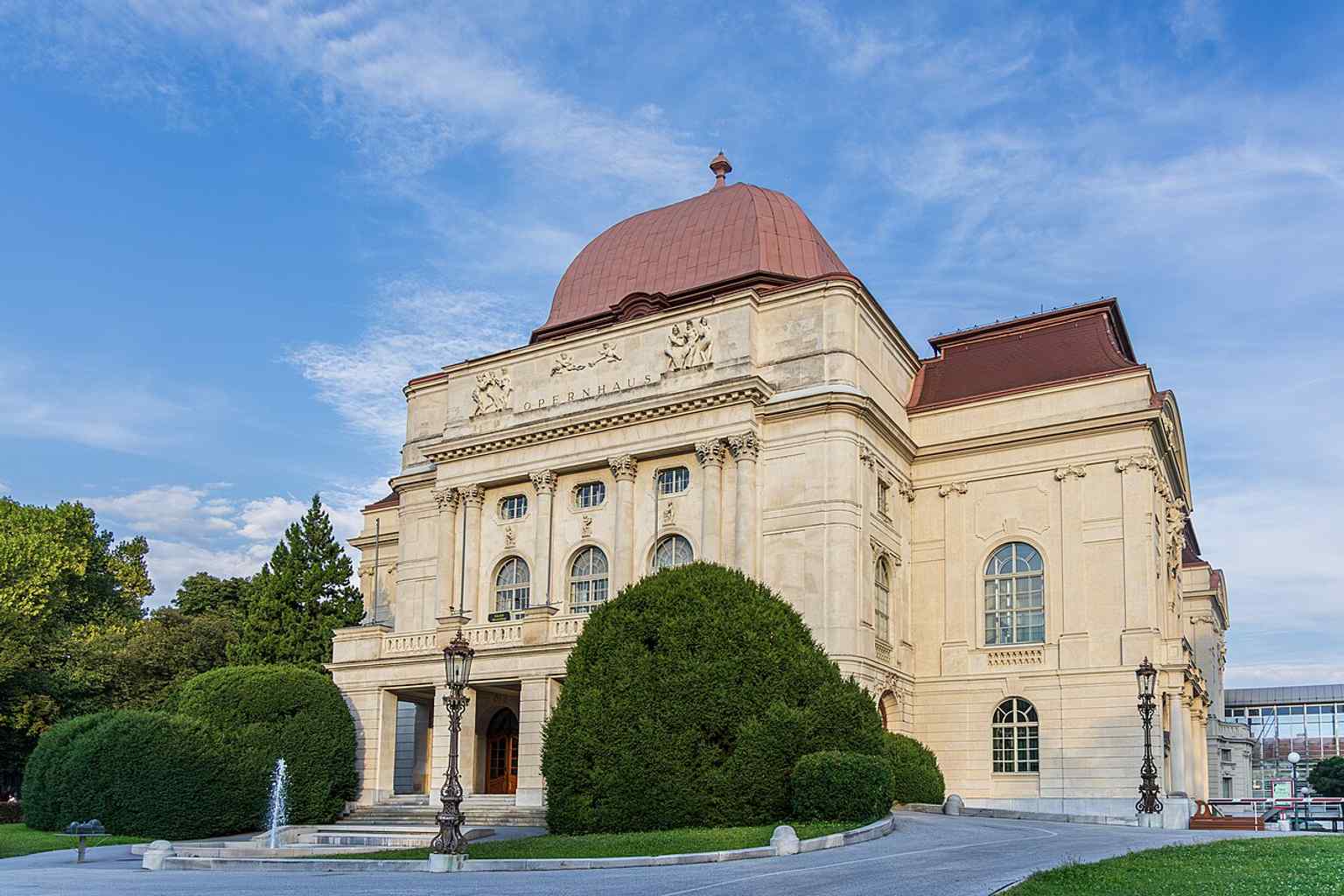
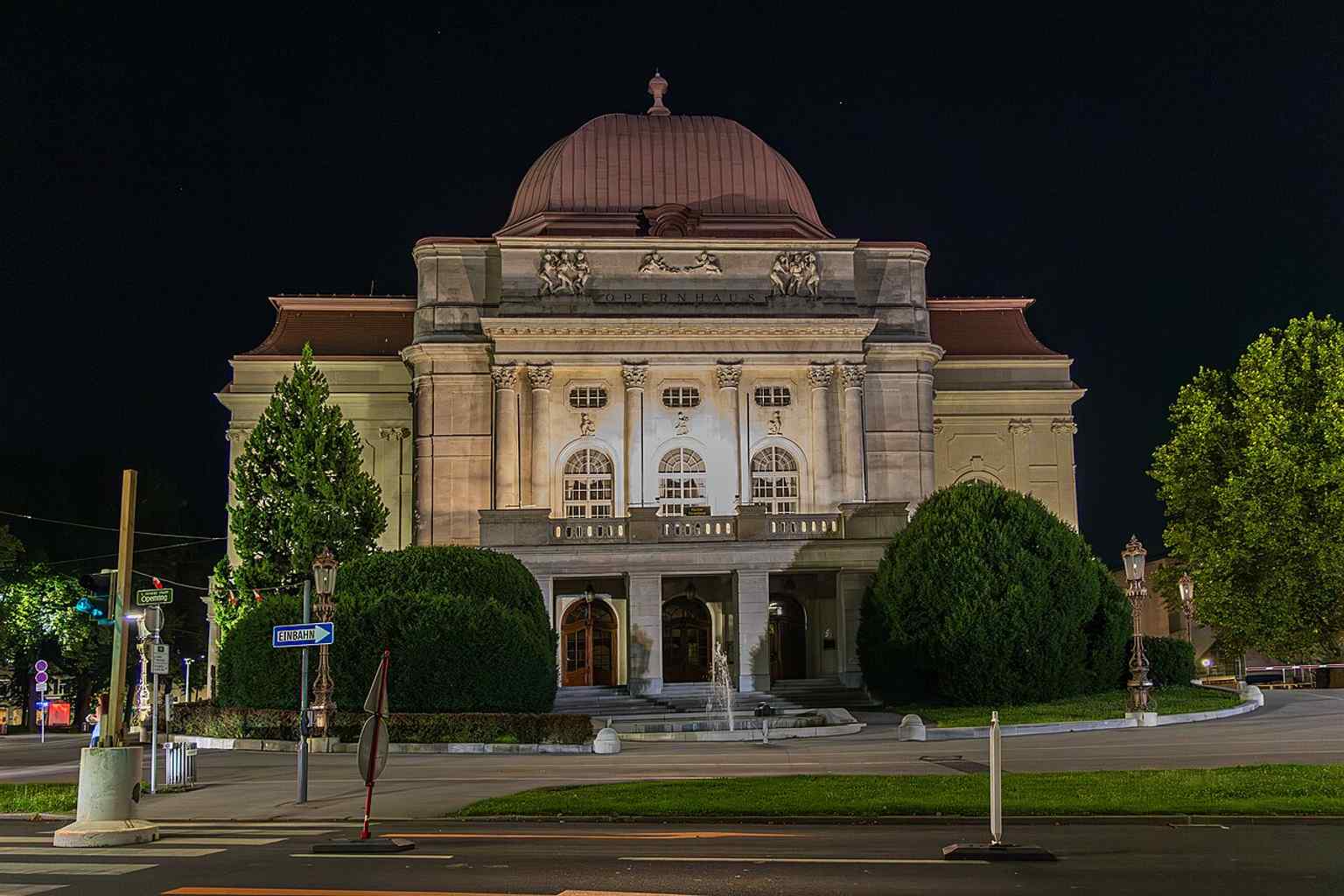
On your left stands a pale stone theatre with an octagonal dome over the entrance, a rounded roof over the audience hall, and a tall mansard-roofed stage block lifting behind it.
This is the Graz Opera House, opened in eighteen ninety-nine, and after the Vienna State Opera it remains the second-largest opera house in Austria. The Viennese theatre architects Ferdinand Fellner and Hermann Helmer designed it in the neo-Baroque style, part of what historians call Historicism, the nineteenth-century habit of borrowing the grandeur of earlier centuries and reshaping it for modern life.
Graz wanted more than a serviceable stage. By the eighteen nineties, the city had outgrown its older theatres. The Landständisches Theater stood where the Schauspielhaus stands now, and the immediate predecessor of this opera was the Thalia, an unusual twelve-sided circus building adapted for performances. Neither could meet modern technical demands, so the city council commissioned a new municipal theatre and treated it as a prestige project, a declaration that Graz intended to appear cultured, modern, and confident within the Habsburg world.
Construction began in eighteen ninety-eight during the jubilee marking fifty years of Emperor Franz Joseph the First’s reign. On the sixteenth of September, eighteen ninety-nine, builders laid the final stone. That same evening the house opened as the Grazer Stadttheater with Schiller’s Wilhelm Tell. The next day came the first opera, Wagner’s Lohengrin, conducted by Karl Muck. A brisk opening, and an ambitious one.
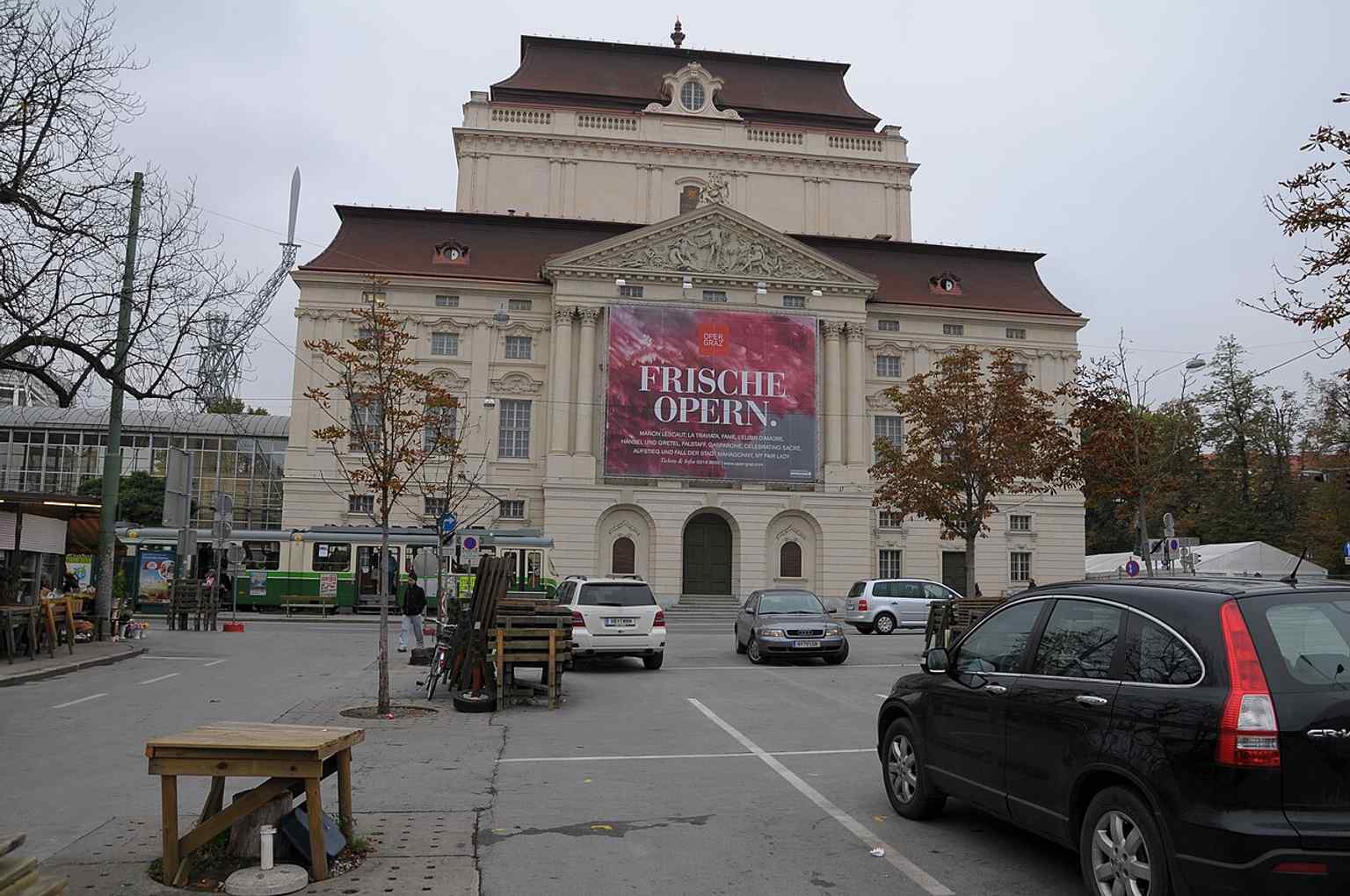
The building itself is arranged with almost theatrical clarity. In front, the entrance hall welcomes and displays. In the middle, the auditorium gathers the audience. Behind, the stage house rises higher than everything else. That separation followed practical rules as well as artistic logic: fire regulations required a safer division between audience and stage. Fellner and Helmer even gave each section its own roof, so the whole structure reads like a sequence of functions turned into stone.
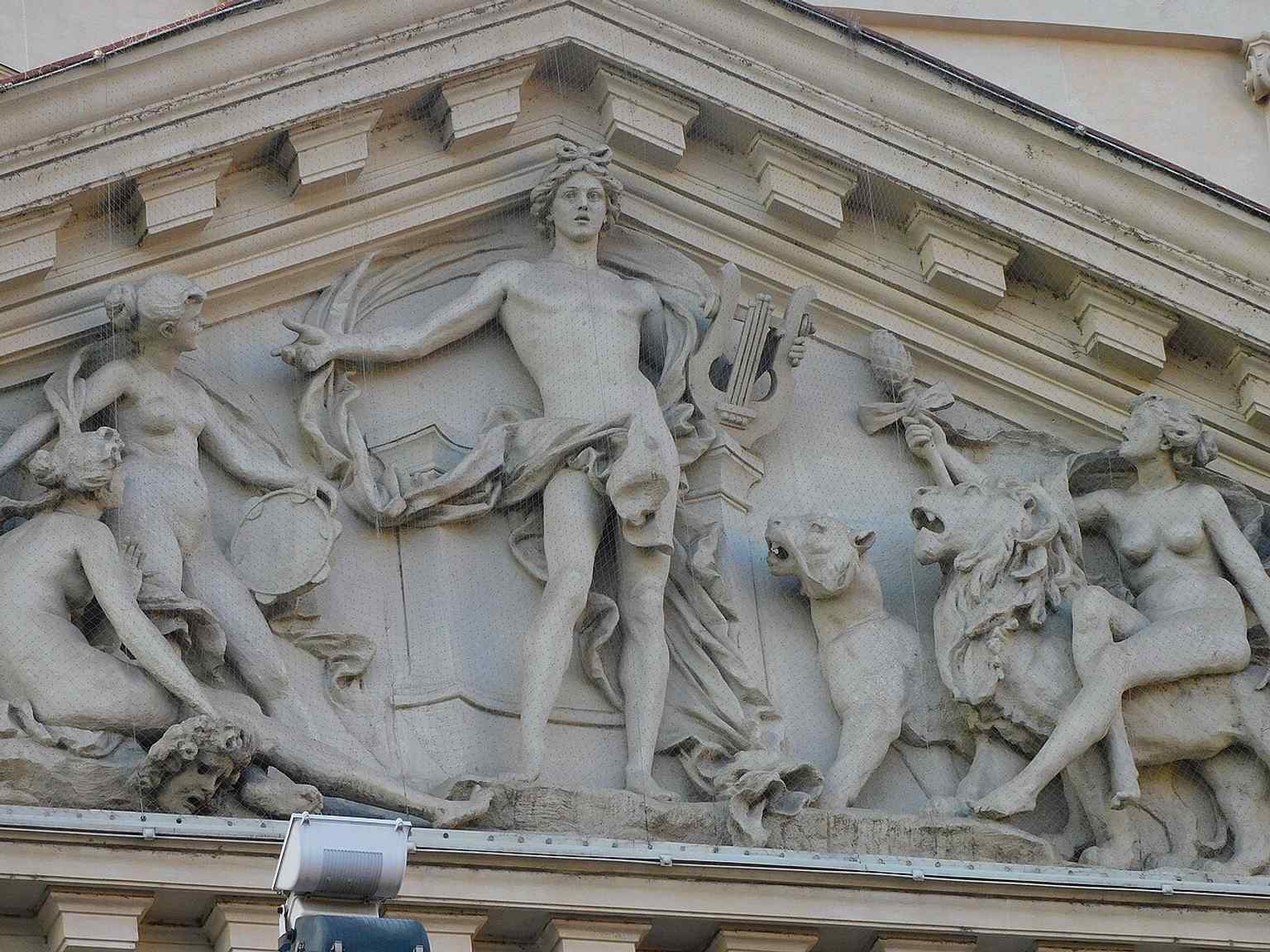
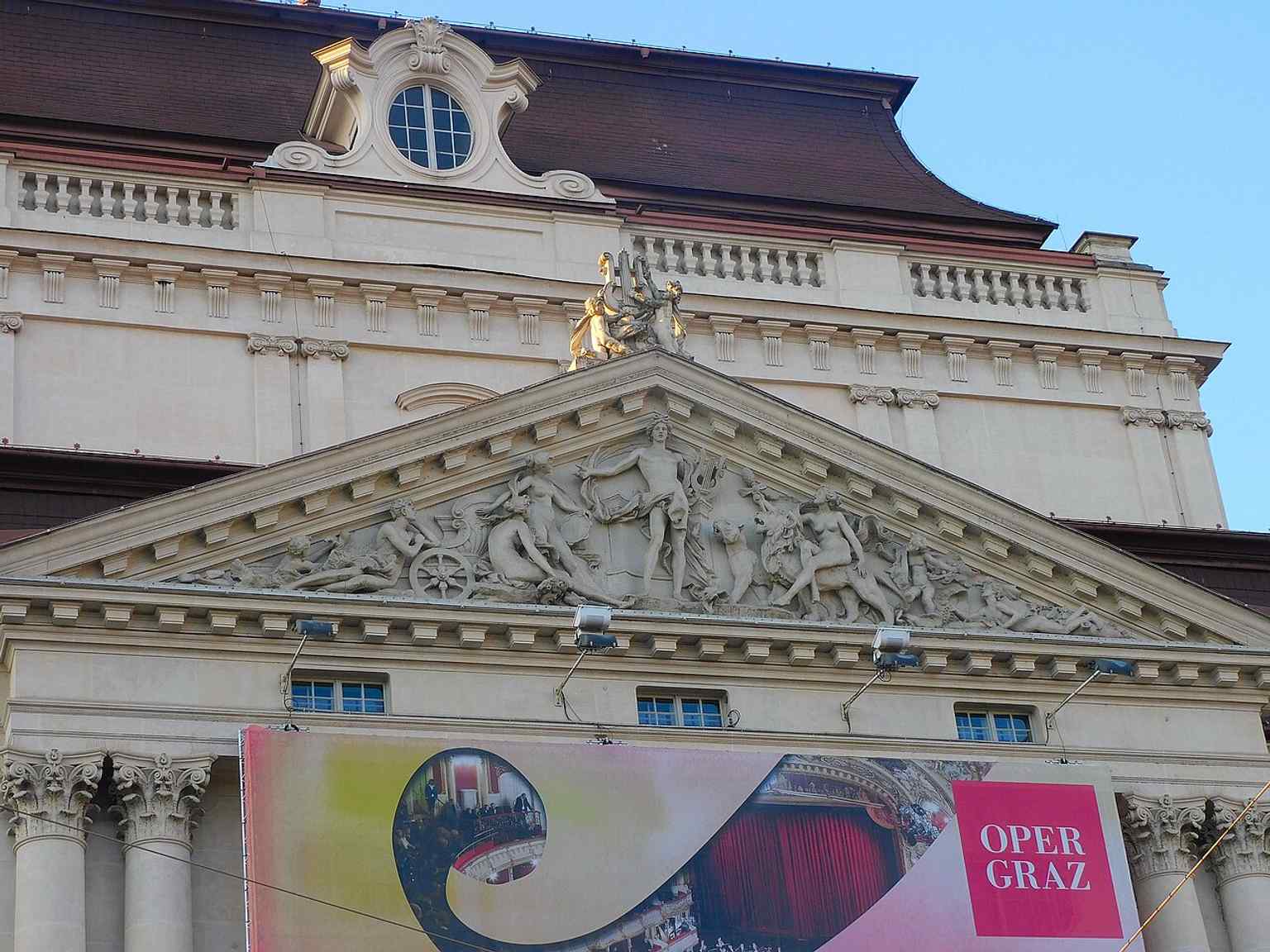
The image in the app makes the sculpted triangle above the entrance easier to read. In that pediment, Apollo, god of music and beauty, appears among figures of the performing arts. It is a very direct announcement: this is a house for spectacle, sound, and drama.
One important feature, however, is gone. The original front had a temple-like portico, meaning a grand porch of six columns supporting a decorated gable. A bomb in nineteen forty-four destroyed the upper foyer and that columned front. During the rebuilding, Graz did not reconstruct it, and that decision still provokes debate. Buildings, like opera lovers, can be wonderfully stubborn.
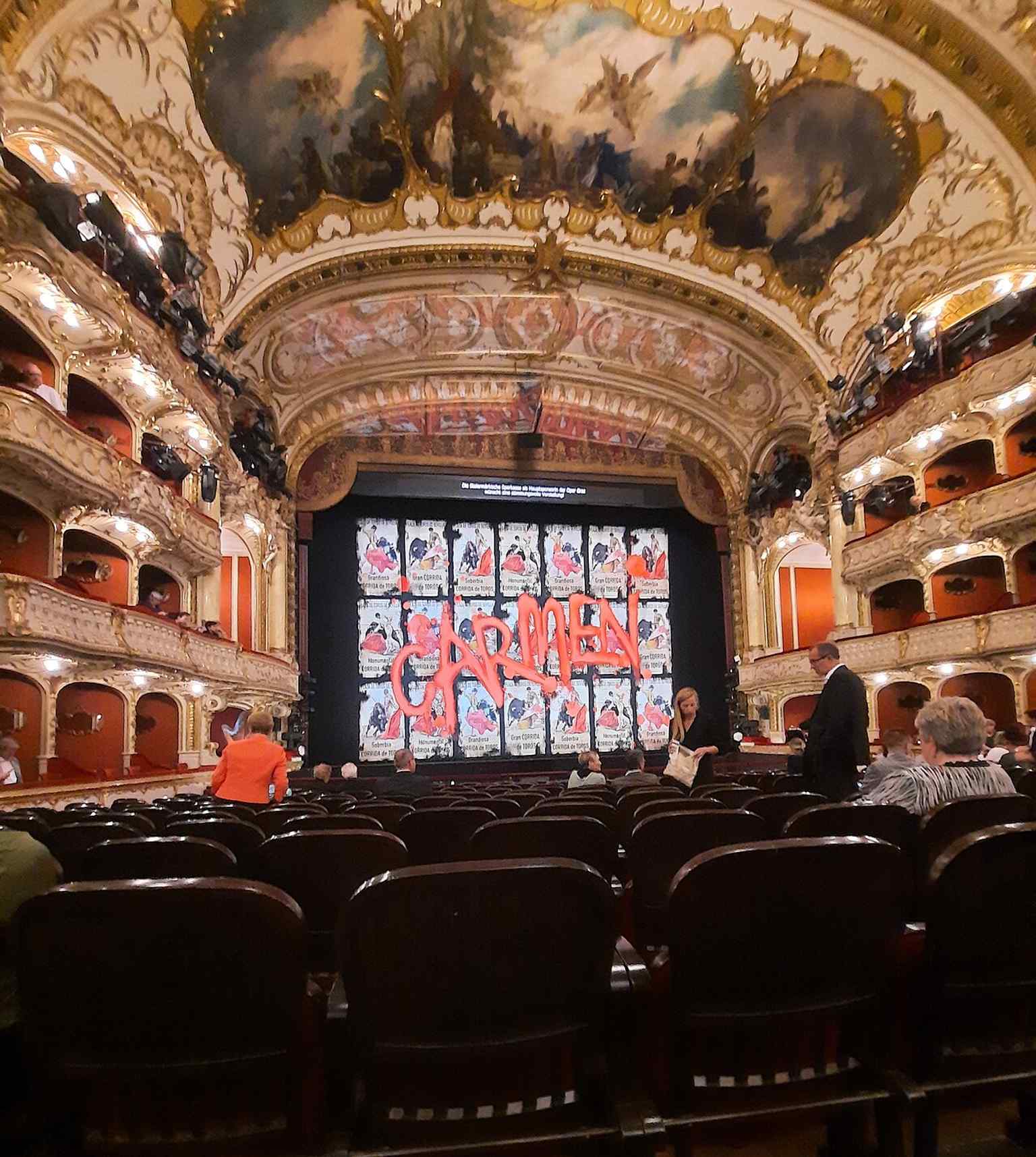
Inside, the mood turns opulent. The auditorium, if you care to look at the interior image, curves in a horseshoe shape around the stage. White, gold, and red dominate the room, with balconies, boxes, and elaborate plaster decoration framing roughly one thousand four hundred seats. Ceiling paintings even refer to Lohengrin, Wilhelm Tell, and Faust, tying the decoration to the repertoire that announced the house to the world.
And it has remained very much alive. Opera, ballet, operetta, and musicals still share this stage, and the Graz Philharmonic calls it home. That, in the end, is the real measure of the place: not only grandeur, but continued use, a civic building still doing exactly what it was meant to do.





.jpg)


