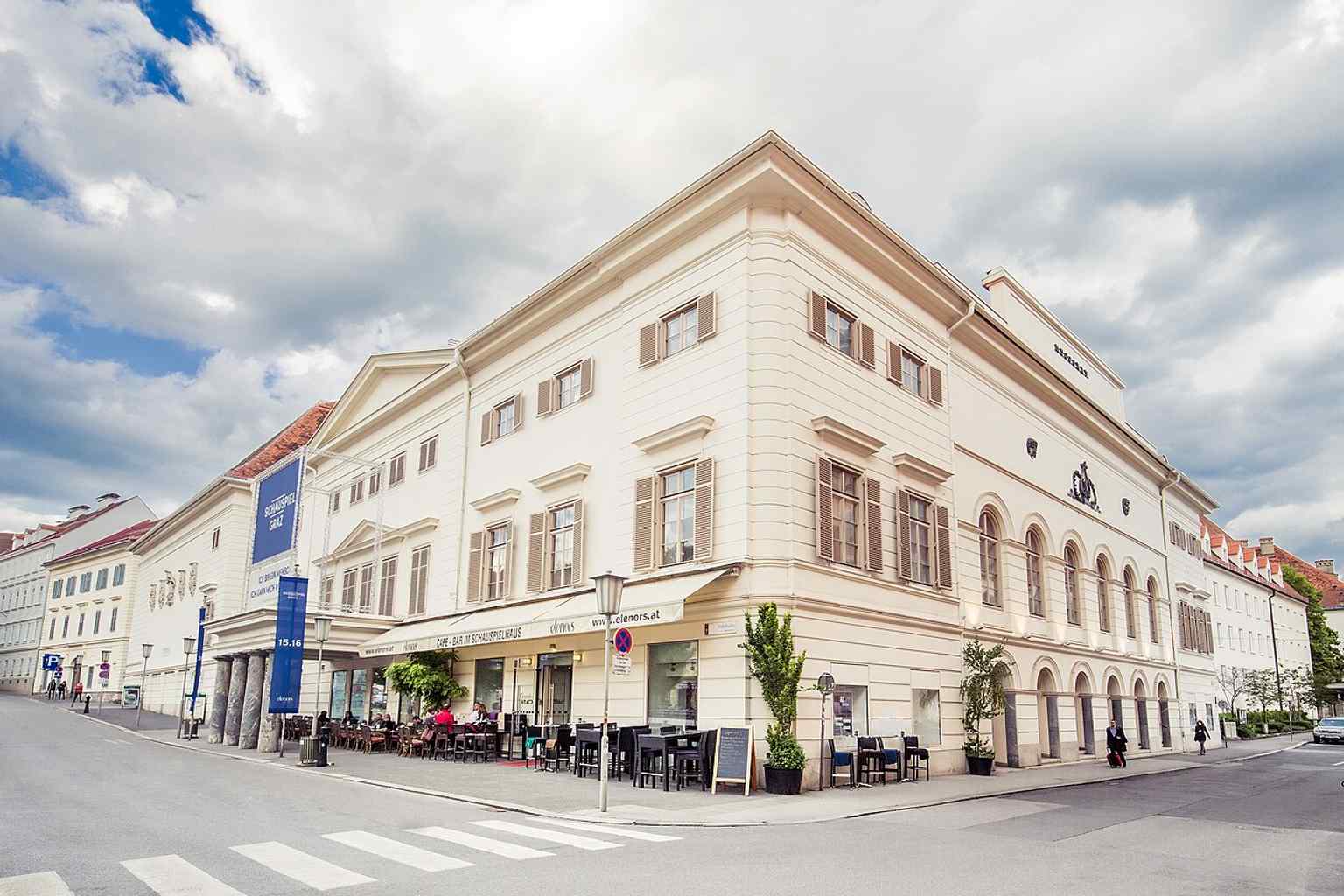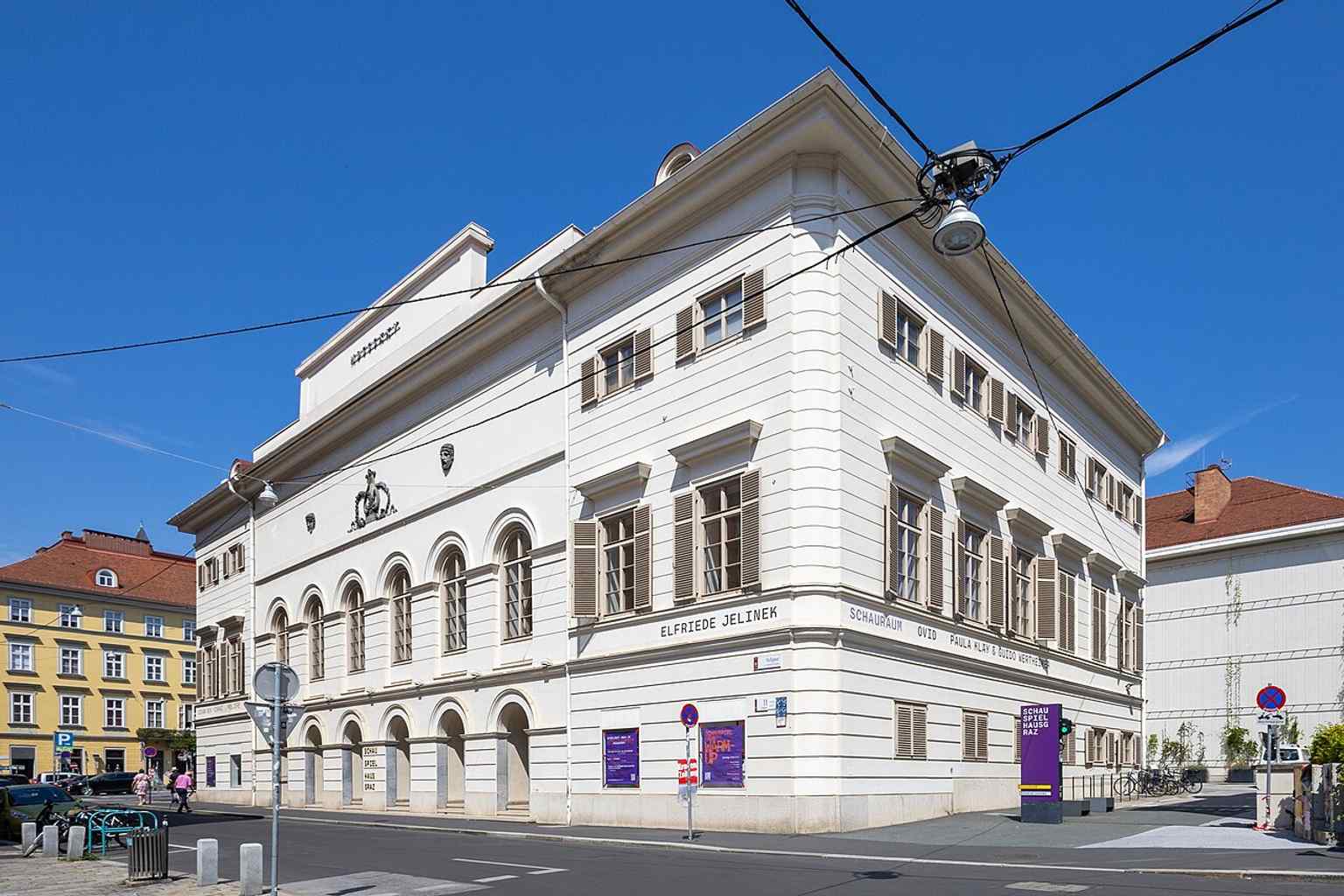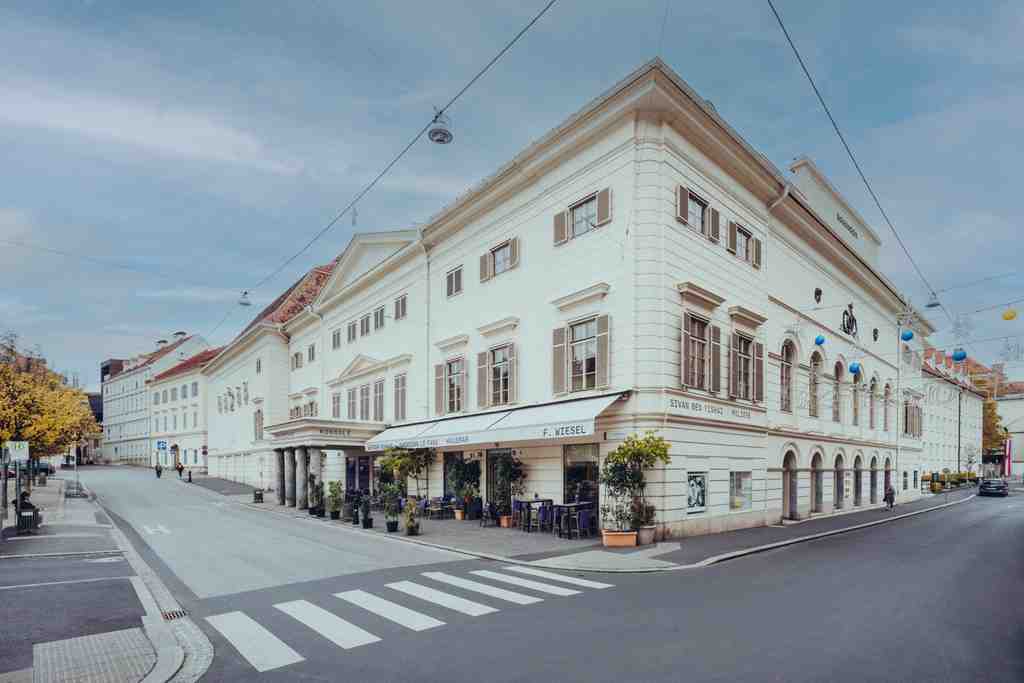
On your right stands a pale, three-storey classical theatre block, with rows of arches carried by pillars, a projecting balcony, and a dignified triangular crown above the main front.
This is the Schauspielhaus Graz, the city’s great house of spoken theatre, and its story begins with a rather earnest argument. In seventeen seventy, Count Orsini and the police president urged the Styrian estates to support a proper theatre, declaring that well-ordered drama could teach morals, courtesy, and language. A fine ambition, and not entirely wrong. After financial delays, builders finally broke ground on the twenty-fourth of October, seventeen seventy-four, and Joseph Hueber designed the first theatre here. It opened on the ninth of September, seventeen seventy-six.
That first building faced Hofgasse more directly, with a long ten-window front, four entrance doors, and balconies above the door pairs. But the house did not pass quietly from century to century. In eighteen twenty-three, fire struck. The estates decided not to abandon theatre, but to rebuild it on the same site. Money, however, proved awkward in an age of inflation. They scraped funds together by selling the last provincial cannons stored in Trieste to the King of Naples, drawing on a spa fund from Rohitsch, and advancing money from the estates’ deposit fund. It is a wonderfully improvised way to rescue a stage: part artillery, part mineral water, part administrative courage.
The rebuilt theatre reopened on the fourth of October, eighteen twenty-five, the name day of Emperor Franz the First. Theatre director Stöger drew the plans, Peter von Nobile in Vienna refined them, Professor Meißner designed a warm-air heating system to reduce fire risk, and Adam Roller supplied the stage machinery. In other words, they treated the theatre as both a temple of art and a machine.
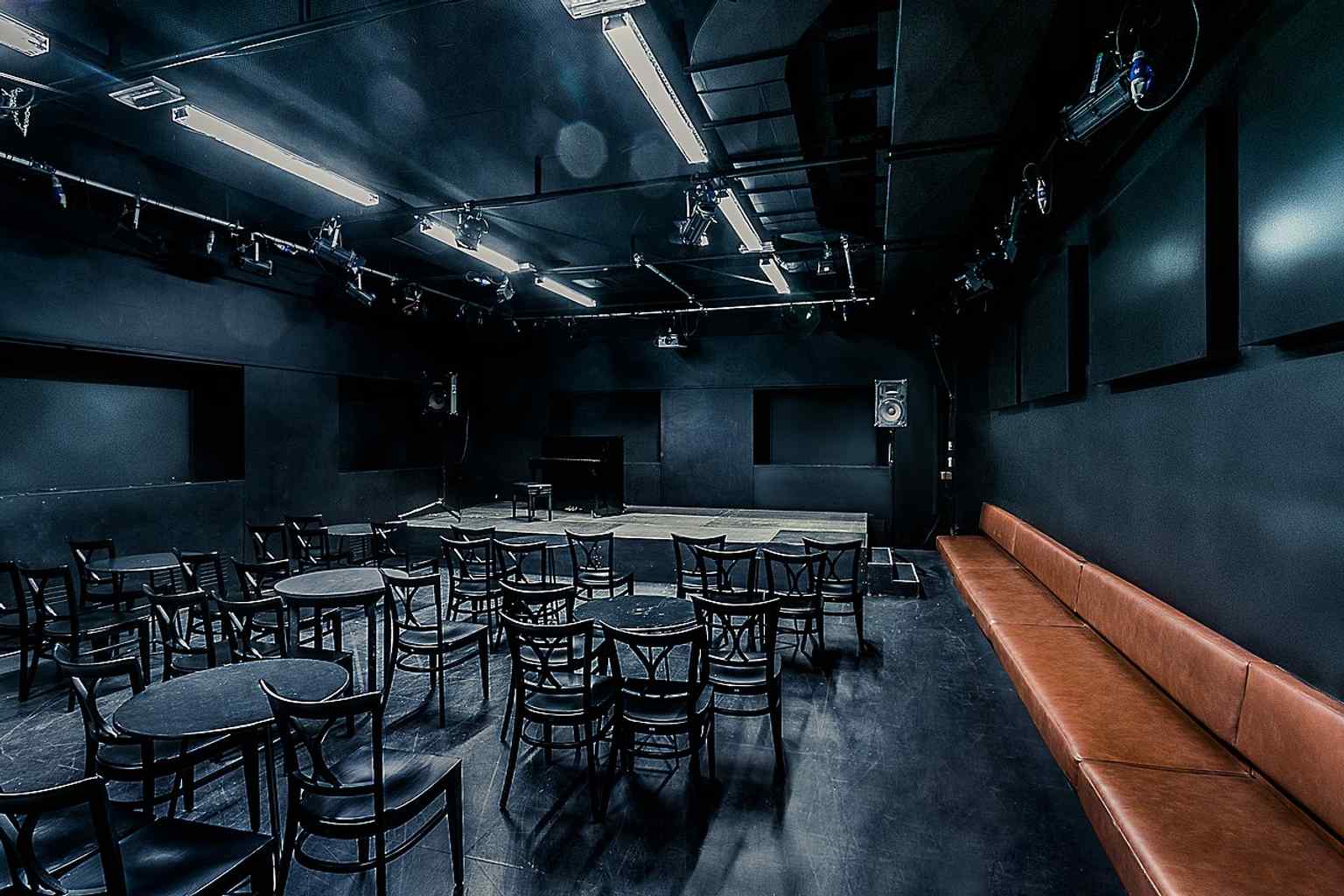
If you look closely at the building itself, you can still read that layered history. Along the Hofgasse side, cast-iron masks of comedy and tragedy sit beside a lyre, a neat declaration of purpose. On the Freiheitsplatz side, a building inscription recalls seventeen seventy-six, and five sandstone coats of arms commemorate the provincial patrons. If you open the exterior image in the app, you can see how the present façade still carries that restrained, late-classical confidence. The twentieth century brought another crisis. In nineteen fifty-three, authorities closed the theatre for structural safety reasons. Then, in nineteen sixty-four, Graz reopened it with Hamlet, starring Helmuth Lohner, after preserving the historic shell and adding a new stage house. Since then, the Schauspielhaus has remained devoted to spoken drama. Today it works not only with the main stage, House One, with about five hundred and forty seats, but also with smaller venues, including House Two and House Three. House Three, shown here, makes this theatre feel wonderfully intimate when it wants to whisper rather than proclaim. More recently, the house has kept one foot in tradition and the other in experiment. Under Andrea Vilter’s leadership, beginning in the twenty twenty-three to twenty twenty-four season, it has brought research into the repertoire, revived neglected women playwrights, and earned fresh recognition, including a Nestroy Prize for Von einem Frauenzimmer in twenty twenty-four.
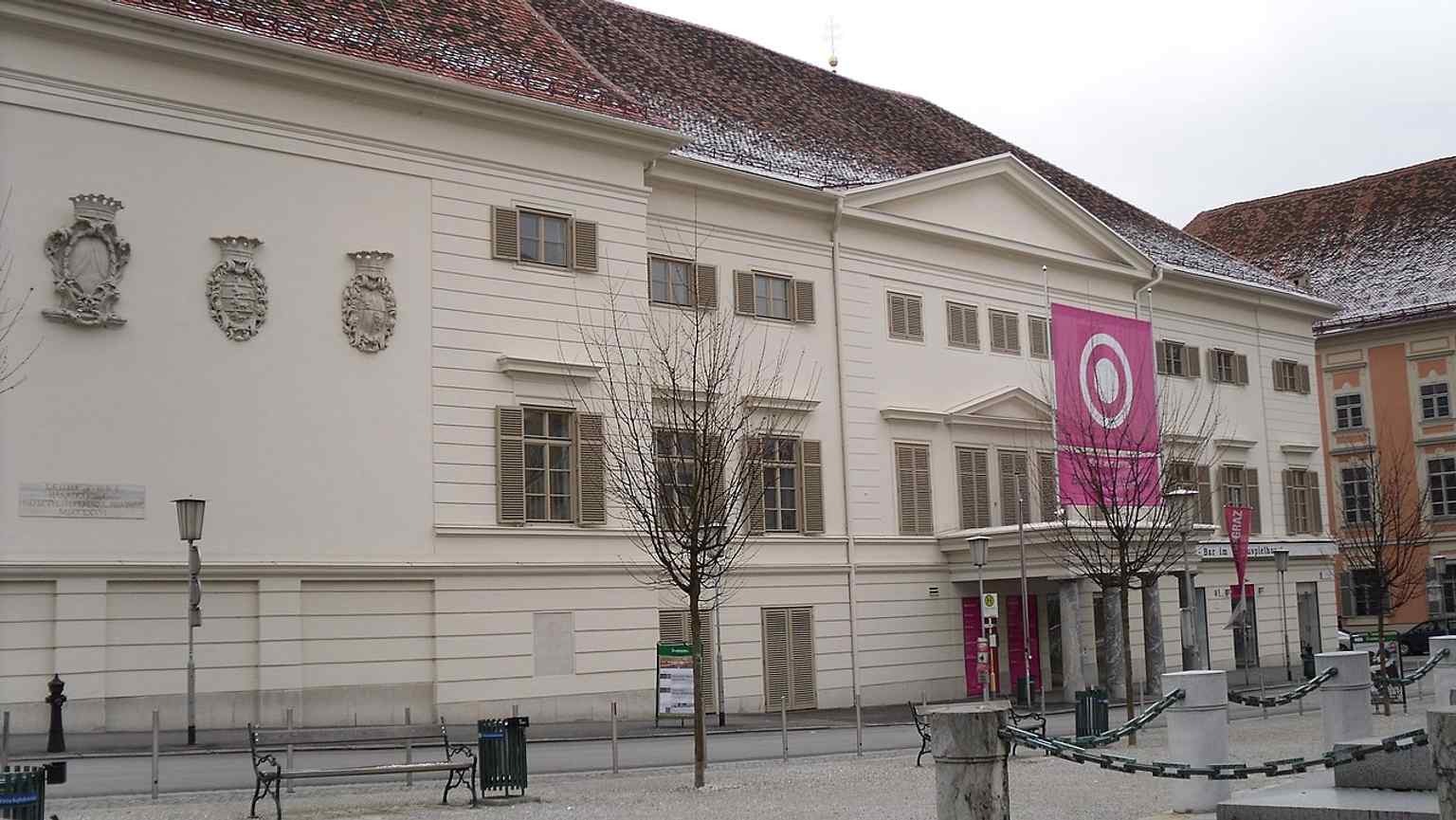
If you plan to return indoors, the theatre is generally open from nine in the morning until eleven thirty at night from Monday to Saturday, and closed on Sunday.
This theatre has survived fire, reinvention, and changing tastes because Graz never stopped believing that words spoken on a stage still matter.
When you are ready, continue on toward Forum Stadtpark, where the city’s cultural pulse grows a little more restless.