
Cordoba Audio Tour: Exploring Cordoba's Art, Nature, and Innovation
Beneath Córdoba’s sunlit boulevards, secrets echo from the city’s centuries-old classrooms and silent towers, waiting for curious minds. This self-guided audio tour unlocks hidden stories and forgotten corners as you move beyond the usual postcard views. What sparked a daring student rebellion within the Colegio Nacional de Monserrat’s hallowed halls? Who vanished behind the ornate stonework of Torre Elysée without leaving a trace? And why are rare creatures at the Biodiversity Park connected to an unsolved scientific scandal that shook Argentina? Wander through shaded arcades, mysterious courtyards, and leafy pathways as dramatic legends and whispered rumors swirl around you. Each step unearths layers of intrigue, turning Córdoba’s familiar streets into a living stage brimming with discovery. Curiosity already awake? Press play and let Córdoba reveal the unseen world beneath its beautiful façade.
Tour preview
About this tour
- scheduleDuration 110–130 minsGo at your own pace
- straighten5.1 km walking routeFollow the guided path
- location_on
- wifi_offWorks offlineDownload once, use anywhere
- all_inclusiveLifetime accessReplay anytime, forever
- location_onStarts at Eiffel wheel
Stops on this tour
lock_open 3 free previews · 11 unlock with purchase
Look up at that towering circle of deep green wrought iron, standing on sturdy lattice legs with twenty passenger cabins hanging from its rim. Welcome to the Eiffel Wheel! You…Read moreShow less
Look up at that towering circle of deep green wrought iron, standing on sturdy lattice legs with twenty passenger cabins hanging from its rim. Welcome to the Eiffel Wheel! You are looking at a true survivor of history. This massive structure, twenty-seven meters in diameter, is a classic example of iron architecture from the turn of the twentieth century. Now, I know what you are thinking. Eiffel? Like the tower in Paris? Well, that is the million-dollar question. Local tradition insists this wheel was built by the famous workshops of Gustave Eiffel. There was even a historian, Carlos Page, who claimed he saw a plaque on the original frame confirming it was prefabricated in the Eiffel workshops. However, that plaque is long gone, and other experts argue there is no paper trail proving the French engineer actually built fairground rides. Whether it is a genuine Eiffel or not, it has become an absolute icon here. Its journey started far from here, in the city of San Miguel de Tucumán. Back in 1916, it was the star attraction of the "Mundial Park" during the massive centennial celebrations of Argentina’s independence. Two years later, the government of Córdoba bought it for twenty-three thousand pesos-which was a small fortune back then-and brought it here to Parque Sarmiento. But here is where things went wrong. When they reassembled the wheel here, they made a critical engineering mistake. Originally, the iron spokes were crisscrossed, just like the spokes on a bicycle wheel, which creates tension and strength. But in Córdoba, the workers installed them concentrically, radiating straight out from the center. It looked fine, but physics had other plans. As the wheel turned, the lack of tension caused the iron to stretch and warp. The wheel actually stopped being a circle and started turning into an oval! It was slowly crushing itself. By 1938, the deformation was so dangerous they had to shut it down to prevent it from squashing the passengers. It stood silent for decades until 1992, when the structure finally gave up and collapsed, leaving a pile of twisted metal and broken cabins on the ground. But Córdoba refused to let it go. In 2003, after a complex study, it was rebuilt as a static sculpture. Then, just recently, the agency BioCórdoba performed a massive restoration. They installed a new motor and fixed the foundations, allowing this iron giant to spin again for the first time in years. Take a moment to admire this resilient piece of history. When you are ready, we can head to the next stop, the Biodiversity Park, just a short walk away.
Open dedicated page →Look for the wide entrance defined by tall metal gates set against the natural rise of the limestone ravine, with the dense canopy of native trees spilling over the perimeter…Read moreShow less
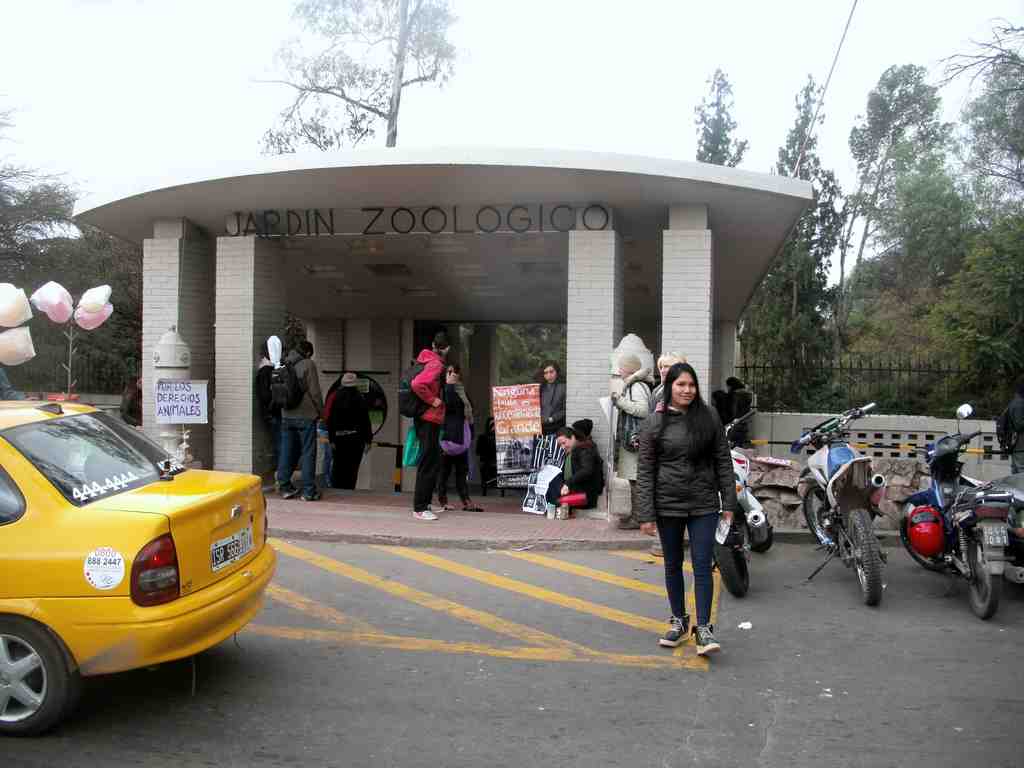
Look for the wide entrance defined by tall metal gates set against the natural rise of the limestone ravine, with the dense canopy of native trees spilling over the perimeter walls. Welcome to a place that has completely reinvented itself! This is the Biodiversity Park. For over a century, locals knew this simply as the Zoo, but recently, the city made a bold, heart-warming pivot. They decided that the old-school model of staring at animals in cages was... well, history. Since 2020, this massive seventeen-hectare space has transformed into a sanctuary focused strictly on rescue and rehabilitation. But the story of how this place began is wild. Back in the early 1900s, this specific area was known as the Barranca de los Loros, or the Ravine of the Parrots. It wasn't a manicured park then; it was a rugged, shadowy canyon where a specific type of burrowing parrot made its nests in the cliffs. It also had a reputation as a hideout for "chupineros"-a local slang term for kids playing hooky from school! Enter José Ricardo Scherer. He was a German-Argentine naturalist with a massive vision. He looked at this "shady den," as he called it, and saw the potential for a world-class attraction. He pitched the idea to the governor, aiming to turn the ravine into a landscaped jewel. On Christmas Day, 1915, the gates threw open. It was a sensation! Scherer gave a passionate speech about transforming a place of "malevolent beings"-he meant the truant kids-into a delightful garden. The design utilized the barrancas, those steep natural cliffs, to create vertical enclosures. They even installed a "Lilliputian train"-a miniature railway that chugged through the park tunnels-and the famous Eiffel Wheel you just visited was actually a star attraction located right here inside these grounds for decades. However, the animal habitats were very Victorian. That means small cages, concrete floors, and heavy iron bars. They wanted to show off lions, tigers, and elephants in the middle of the city. While it was a marvel for 1915, by modern standards, it became problematic. In later years, as private companies took over, the focus drifted toward entertainment, with sea lion shows and non-native species. There were even issues with wild dogs from the surrounding park sneaking in to attack the exhibits, or animals escaping their enclosures! That is why the recent change is so significant. When it reopened in 2023, the philosophy shifted to "respectful contemplation." The park stopped buying exotic animals for show. Now, it acts as a rescue center for wildlife seized from illegal trafficking. They are turning those old, concrete cages into healing spaces for native species from the Córdoba mountains. It is a powerful example of how our relationship with nature has matured from domination to care. Take a moment to appreciate how this rugged ravine has evolved from a truant’s hideout to a sanctuary for healing. When you are ready to move on, we can head toward the avenue for our next stop.
Open dedicated page →Look for the wide paved boulevard stretching out in front of you, with three steady lanes of traffic heading in each direction separating the high-rise buildings from the green…Read moreShow less
Look for the wide paved boulevard stretching out in front of you, with three steady lanes of traffic heading in each direction separating the high-rise buildings from the green park. You are standing on the edge of something special! This is Poet Lugones Avenue, or Avenida Poeta Lugones. It is a massive one-point-two kilometer stretch of paved energy that serves as the ultimate boundary line. To one side, you have the dense, urban vibe of the Nueva Córdoba neighborhood, the city center. But on the other side? You have the lush escape of Parque Sarmiento, which we just skirted past. This avenue runs all the way from Plaza España down to the Nudo Vial Mitre, home to the Urban Man landmark. And the name carries serious weight. It honors Leopoldo Lugones, who was a true Renaissance man of Argentina. He was a poet, an essayist, a journalist, and a politician! It feels right that a road connecting the city to nature is named after a man whose words connected the soul of the country to its people. Take a second to watch the city flow by on those three lanes. When you feel ready to move on, we can head toward our next stop just a few minutes away.
Open dedicated page →
Show 11 more stopsShow fewer stopsexpand_moreexpand_less
Look for the stark white corner building topped with red clay roof tiles, featuring a stunning dark wooden balcony wrapping around the upper level. You have found a true…Read moreShow less
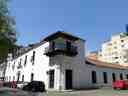
Look for the stark white corner building topped with red clay roof tiles, featuring a stunning dark wooden balcony wrapping around the upper level. You have found a true survivor! This is the Marquis of Sobremonte Provincial Historical Museum, and it is the absolute only house from the colonial era left standing in modern Córdoba. It took the builder, José Rodríguez, a staggering twenty years to finish it, finally wrapping up in 1772. Talk about a long construction project! The Third Marquis of Sobremonte, Rafael, actually lived here from 1783 to 1796 while he was the mayor. But this wasn't just a fancy home; it was a hub of commerce too. Picture the hustle of the 18th century, with people walking over floors of rough river boulders in the courtyards and smooth creole tiles inside. The walls are built from lime and adobe masonry, which is a sturdy mix of sun-dried earth and organic material that has kept this history safe for centuries. It is such a rare glimpse into the domestic and working life of the past. Take a second to admire those iron-barred windows before we move on. Whenever you are ready, let's head toward the Caraffa Fine Arts Museum.
Open dedicated page →Look for the modern concrete building with a wide overhanging roof draped with six tall, colorful banners featuring animal silhouettes. Welcome to the Arturo Illia Natural…Read moreShow less
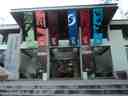
Look for the modern concrete building with a wide overhanging roof draped with six tall, colorful banners featuring animal silhouettes. Welcome to the Arturo Illia Natural Sciences Museum! It is named after a former Argentine president, but the real stars here are much, much older. This museum actually began its life way back in 1887 as part of a Polytechnic collection started by a reverend named Jerónimo Lavagna. But this collection was a bit of a nomad. It moved from a bank building to the Sobremonte Museum we visited earlier. Eventually, the collection got so big they had to split the human history from the natural science. While the colonial history stayed put, the science section-the bones, botany, and rocks-kept bouncing around the city! It moved to the city Cabildo, then a Ministry of Public Works building, and even an art academy. Finally, after closing for three years to regroup, it found its forever home right here in 2007. The building itself is part of the story. Inside, the floors are connected by a spiral structure, so you don't just walk up stairs; you flow through time. The ground floor is absolutely wild. It features the Megafauna of Cordoba-giant beasts that went extinct about ten thousand years ago. Imagine standing next to a life-sized Glyptodon. That is basically an armadillo the size of a small car. You can also see the Smilodon, the famous saber-toothed cat, right there in the gallery. As you spiral upward, you travel from the origin of the universe, seeing real meteorites and local geology, all the way to the top floor. There, you will find life-sized Pterosaurs-those massive flying reptiles-reconstructed and hanging above you. It is a brilliant mix of geology, biology, and pure wonder. Take a moment to admire those colorful banners hanging from the facade. When you are ready, we can start walking toward the Bicentennial Lighthouse.
Open dedicated page →Look for the towering concrete spire that twists upward like a corkscrew, topped with a thin antenna piercing the sky. This is the Bicentennial Lighthouse. And it is massive!…Read moreShow less
Look for the towering concrete spire that twists upward like a corkscrew, topped with a thin antenna piercing the sky. This is the Bicentennial Lighthouse. And it is massive! Reaching one hundred and two meters with that antenna, it is actually the third-tallest structural lighthouse in the world. It was designed to celebrate two hundred years of Argentine history and serve as a new icon for the city, intended to rival the famous Obelisk in Buenos Aires. But... there was a hiccup. When Governor Juan Schiaretti inaugurated it in 2011, the tower was essentially naked. The original plans called for sleek glass panels covering the outside, but they opened it with the raw concrete exposed. The locals immediately started poking fun at it. A group on Facebook campaigned to install a Bat-Signal on top! They joked that if the city was going to spend nine million pesos on a giant concrete flashlight, they might as well summon Batman to fight crime. It’s a perfect example of the sharp wit people have here. It definitely leaves a lasting impression, doesn't it? When you're done looking up, we can stroll over to the next museum nearby.
Open dedicated page →Look for the expansive paved avenue featuring a tree-lined central median and modern concrete bus shelters separating the traffic lanes. You are standing at a major urban artery!…Read moreShow less
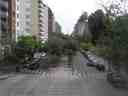
Look for the expansive paved avenue featuring a tree-lined central median and modern concrete bus shelters separating the traffic lanes. You are standing at a major urban artery! This is Bulevar Chacabuco. It stretches over a kilometer, running all the way from the historic center down to the green oasis of Parque de Las Tejas, which sits where the provincial government house used to be. If you look closely at the road layout, you will see a fascinating slice of modern city planning. Recently, the city decided to shake things up here. They installed a dedicated Solo Bus lane on the left side to speed up public transit, used by over fifteen different lines! It makes this intersection with Bulevar Arturo Illia the widest avenue in all of Córdoba. The center lane is for mixed use, while cars and taxis stick to the outside. It is a brilliant bit of choreography that keeps the city moving. It is amazing to see how the street adapts to the rhythm of the people living here. Take a minute to watch the traffic flow, and when you are ready, we will walk to the next spot.
Open dedicated page →Look for the grand French-style mansion featuring a steep slate mansard roof, an elegant central balcony, and sprawling manicured gardens behind the fence. Can you believe this…Read moreShow less
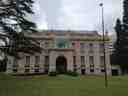
Look for the grand French-style mansion featuring a steep slate mansard roof, an elegant central balcony, and sprawling manicured gardens behind the fence. Can you believe this used to be a single family home? This stunning Beaux-Arts palace... that is a grand, classical French architectural style... was built in 1916 for Dr. Martín Ferreyra. Now, he was not just a prominent surgeon; he owned the biggest lime factory in Argentina! He hired a French architect, Ernest Sanson, to bring Parisian luxury right here to the edge of the park. Inside, it is just as lavish. They even had an Imperial Bedroom with furniture copied directly from pieces used by Napoleon Bonaparte! For decades, this was a private fortress, but in 2005, the governor expropriated it. That means the state legally took ownership to turn it into a public space. After a massive refurbishment, it opened in 2007 as the Evita Fine Arts Museum, honoring the famous First Lady Evita Perón. Today, those aristocratic halls host over 500 works by masters like Picasso and Goya. It is a breathtaking mix of high society history and incredible art. When you are ready to move on, we can head toward the church.
Open dedicated page →Focus your eyes on the massive wooden doors directly ahead, framed by an intricate, baroque stone portal that stands out sharply against the building's warm, reddish-pink stucco…Read moreShow less
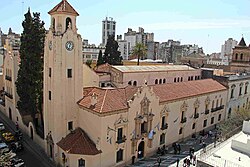
Focus your eyes on the massive wooden doors directly ahead, framed by an intricate, baroque stone portal that stands out sharply against the building's warm, reddish-pink stucco walls. We have arrived at the final jewel of our journey... the Colegio Nacional de Monserrat. Just a few minutes ago we were at the Ecipsa Tower, looking at the city’s modern face, but here? Here we are staring at the very soul of Córdoba. Founded in sixteen eighty-seven, this is the oldest school in Argentina that has never closed its doors. Just imagine the sheer weight of that history. For nearly two centuries, this wasn't just a regular school; it was a Convictorio. That is a term from Latin meaning "living together," essentially a boarding school. Students lived, ate, and prayed right here. Picture teenage boys in the seventeen hundreds, shuffling through these cloisters in a very specific uniform... a black cloak and a bright red sash. They rose at dawn for prayers, studied Latin and philosophy, and lived under strict Jesuit rules. No cards, no gambling, and definitely no weapons in the dorms. It sounds intense, but it was incredibly exclusive. You needed money and... disturbingly... a certificate proving "purity of blood" to even step inside. There is a heavier shadow here too. The school owned a massive rural estate called Caroya to fund itself, and that land was worked by enslaved people. When the administration was struggling for cash in the early eighteen hundreds, the rector... a man named Dean Funes... actually organized a manhunt. He made a list of twenty-two escaped slaves, describing their faces and heights in detail, and hired a bounty hunter to capture and sell them off to buy supplies for the school. It is a stark reminder that this beautiful architecture was supported by a very different, harsher reality. But do not think these halls were always quiet and obedient. Oh no. The students here have always had a rebellious streak. In nineteen twelve, fed up with strict rules and exams, they staged a massive strike. They didn't just shout... they threw bombs of valerian acid... which smells absolutely terrible... to disrupt the school! That wild energy actually helped spark the world-famous University Reform of nineteen eighteen. That fighting spirit appeared again, though perhaps less nobly, in nineteen ninety-seven. For over three hundred years, this was strictly a boys' club. When the university finally decided to admit women... chaos erupted. Hundreds of male students chained the doors shut! They barricaded themselves inside with padlocks, declaring a state of permanent assembly to keep the girls out. Parents protested, lawyers argued, but eventually... progress won. In nineteen ninety-eight, the first female students walked through those heavy doors. Now, if you could peek inside into the central courtyard, you would see a lovely fountain. Every year, the graduating seniors participate in a baptism... literally jumping into that water fully clothed to celebrate their freedom. It is a splash of joy that washes away the dust of centuries. Standing here, you are looking at where the history of Argentina was literally written... one exam, one protest, and one prayer at a time.
Open dedicated page →
Frequently asked questions
How do I start the tour?
After purchase, download the AudaTours app and enter your redemption code. The tour will be ready to start immediately - just tap play and follow the GPS-guided route.
Do I need internet during the tour?
No! Download the tour before you start and enjoy it fully offline. Only the chat feature requires internet. We recommend downloading on WiFi to save mobile data.
Is this a guided group tour?
No - this is a self-guided audio tour. You explore independently at your own pace, with audio narration playing through your phone. No tour guide, no group, no schedule.
How long does the tour take?
Most tours take 60–90 minutes to complete, but you control the pace entirely. Pause, skip stops, or take breaks whenever you want.
What if I can't finish the tour today?
No problem! Tours have lifetime access. Pause and resume whenever you like - tomorrow, next week, or next year. Your progress is saved.
What languages are available?
All tours are available in 50+ languages. Select your preferred language when redeeming your code. Note: language cannot be changed after tour generation.
Where do I access the tour after purchase?
Download the free AudaTours app from the App Store or Google Play. Enter your redemption code (sent via email) and the tour will appear in your library, ready to download and start.
If you don't enjoy the tour, we'll refund your purchase. Contact us at [email protected]
Checkout securely with 




