
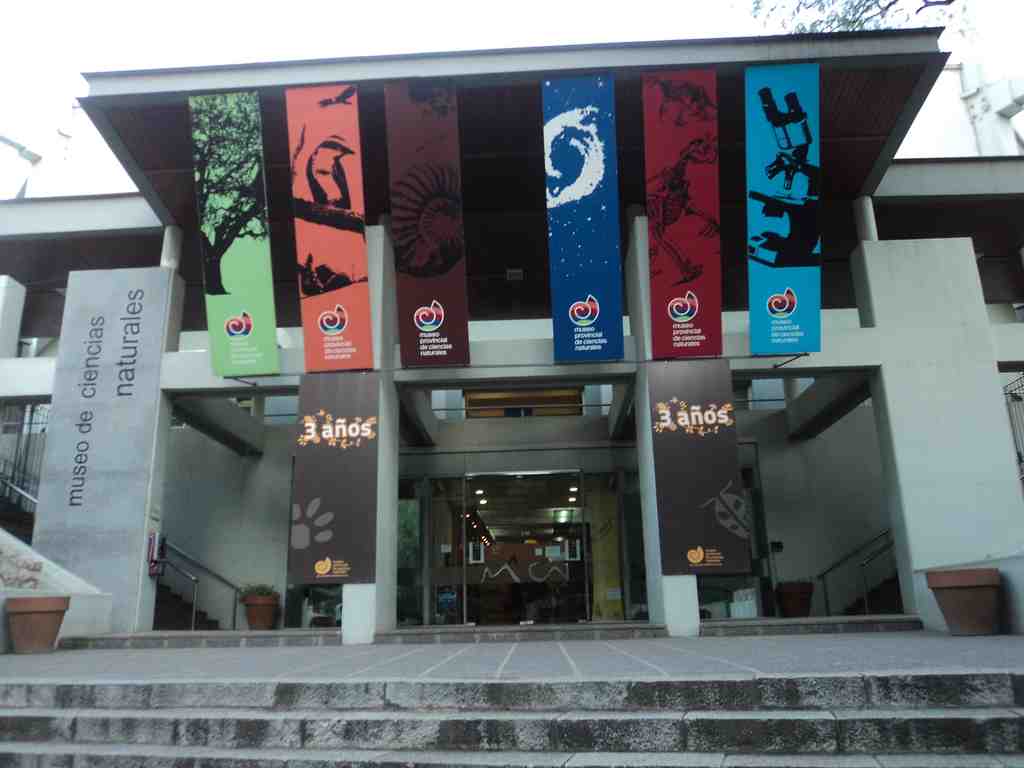
Look for the modern concrete building with a wide overhanging roof draped with six tall, colorful banners featuring animal silhouettes.
Welcome to the Arturo Illia Natural Sciences Museum! It is named after a former Argentine president, but the real stars here are much, much older. This museum actually began its life way back in 1887 as part of a Polytechnic collection started by a reverend named Jerónimo Lavagna. But this collection was a bit of a nomad. It moved from a bank building to the Sobremonte Museum we visited earlier. Eventually, the collection got so big they had to split the human history from the natural science.
While the colonial history stayed put, the science section-the bones, botany, and rocks-kept bouncing around the city! It moved to the city Cabildo, then a Ministry of Public Works building, and even an art academy. Finally, after closing for three years to regroup, it found its forever home right here in 2007.
The building itself is part of the story. Inside, the floors are connected by a spiral structure, so you don't just walk up stairs; you flow through time. The ground floor is absolutely wild. It features the Megafauna of Cordoba-giant beasts that went extinct about ten thousand years ago. Imagine standing next to a life-sized Glyptodon. That is basically an armadillo the size of a small car. You can also see the Smilodon, the famous saber-toothed cat, right there in the gallery.
As you spiral upward, you travel from the origin of the universe, seeing real meteorites and local geology, all the way to the top floor. There, you will find life-sized Pterosaurs-those massive flying reptiles-reconstructed and hanging above you. It is a brilliant mix of geology, biology, and pure wonder.
Take a moment to admire those colorful banners hanging from the facade. When you are ready, we can start walking toward the Bicentennial Lighthouse.




