
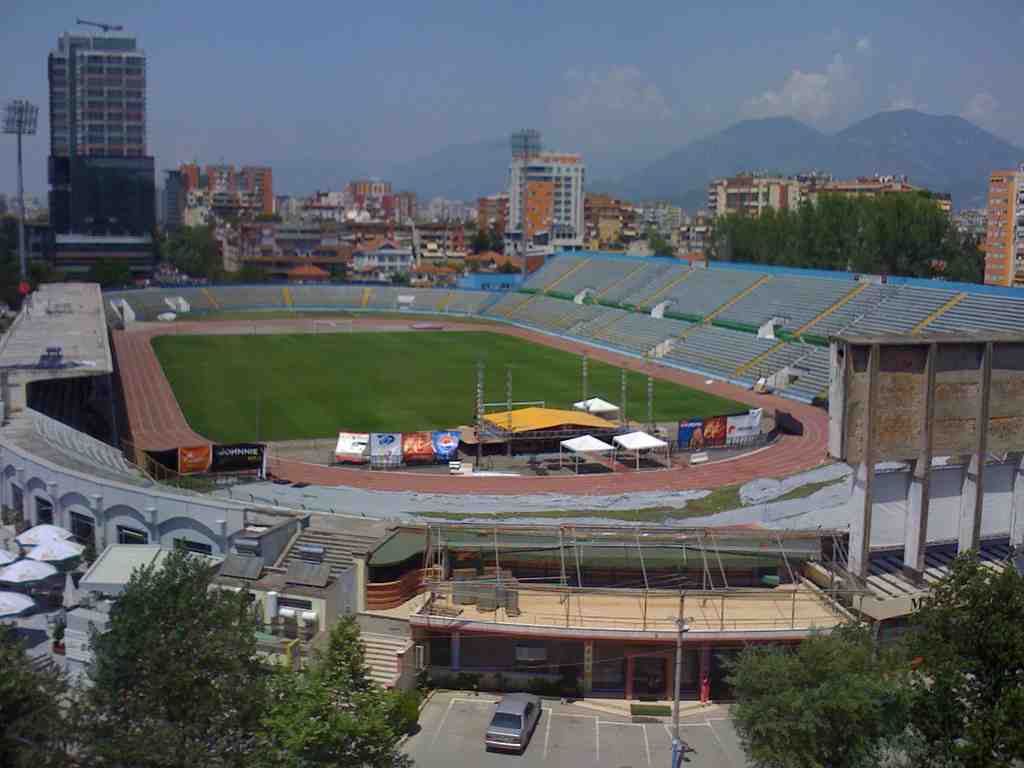
Look to your left and you will spot the sweeping elliptical bowl of the stadium, defined by its massive concrete tiered seating and the towering metal light masts rising proudly above the rim. This patch of earth perfectly captures a rhythm you will feel everywhere here, a constant desire to erase the grand visions of yesterday to pour the shiny foundations of tomorrow.
The story of this ground begins in 1939 with an ambitious young Italian fascist architect named Gherardo Bosio. He designed the original structure in a deeply idealized, monumental Olympic shape, intending for every single inch of the massive arena to be clad in gleaming white marble to project absolute imperial power. But history rarely respects architectural pride. Construction was interrupted when Italy surrendered during the Second World War, and soon occupying German forces were using the half-finished concrete shell simply to park their military vehicles.
When the war ended, the community took their city back. Four hundred workers and over a hundred daily volunteers finished the monumental task with their own hands, though resources were so scarce they only managed to install that luxurious marble cladding on a single stand. They inaugurated it in 1946, naming it after Qemal Stafa, a beloved local hero who died in the war. That same year, the grass here absorbed the joy of a newly liberated people when Albania won the Balkan Cup, defeating teams from much larger nations.
But a city is a living thing. Very quickly, the energetic and growing Youth of Tirana completely outpaced the old stadium's modest capacity of fifteen thousand. The city was expanding, and its passionate younger generations simply needed far more space to gather and roar for their teams. To meet this demand, the stadium was heavily modified and expanded in 1974 for the National Spartakiad, a massive, state-sponsored athletic pageant modeled after the Olympics, meant to showcase communist strength and unity.
For years, this raw concrete oval was an absolute fortress. In the early two thousands, the stadium developed a reputation for holding a curse over visiting teams. For an incredible stretch of three years, the Albanian national soccer team went completely undefeated at home. They trapped illustrious, world-class teams like Greece, who had just won the European championship, along with Sweden and Bulgaria, in an incredibly intimidating arena where the deafening cheers of the locals seemed to magically block the visitors from winning.
But even beloved fortresses eventually fall to the wrecking ball. In 2016, the historic Qemal Stafa Stadium was entirely demolished. The classic athletic track and those old concrete tiers were wiped away to make room for a brand new, sixty million Euro modern arena. It is a stunning, state-of-the-art facility shared by the government and the football association, built right on top of the old footprint. Yet again, the city sacrificed its physical past to build a bolder future.
Whenever you are ready, we will take a twelve-minute walk toward our next destination, the Pyramid of Tirana, which stands as perhaps the city's ultimate expression of architectural hubris. Oh, and you can wander the public grounds around this arena twenty-four hours a day, any day of the week.




