
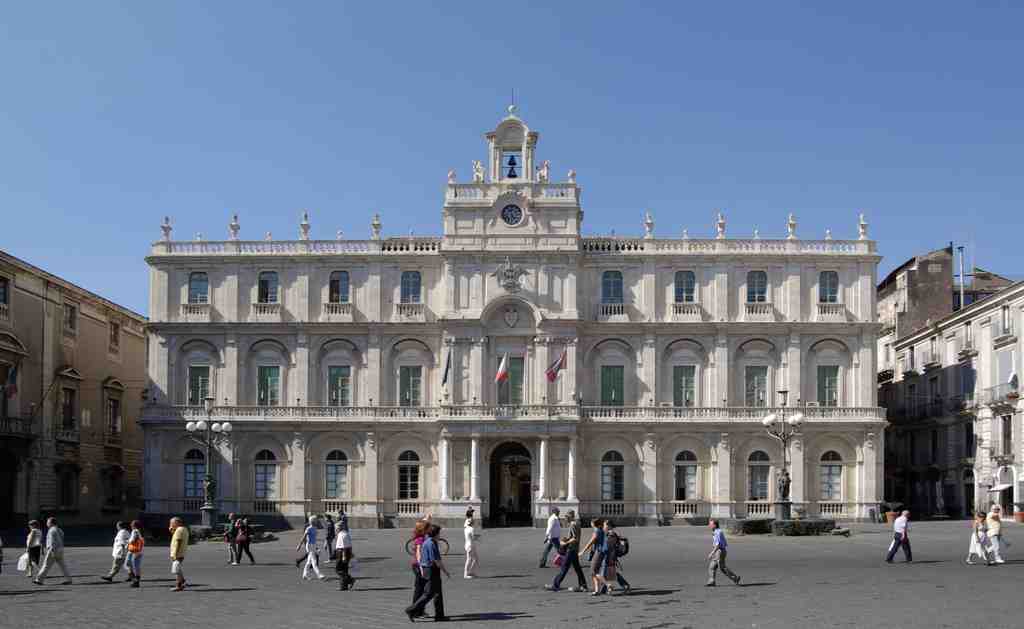
Wewnątrz, w ukryciu przed placem, Vaccarini nadał pałacowi efektowny czarno-biały kamienny dziedziniec, okazałe schody oraz Aula Magna, główną salę ceremonialną, ozdobioną freskami. Drugi obraz pomaga dostrzec tę po-trzęsieniową pewność sycylijskiego baroku w liniach i rytmie budynku.
Inside, hidden from the square, Vaccarini gave the palace a striking black-and-white stone courtyard, grand staircases, and an Aula Magna, the main ceremonial hall, dressed in frescoes. The second image helps you notice that post-earthquake Sicilian Baroque confidence in the building’s lines and rhythm.
The university’s life kept changing. In the late seventeen hundreds, student numbers climbed to around two thousand, and new chairs, meaning official teaching posts, opened in law, medicine, and even botany. In the eighteen hundreds, enrollment fell so sharply that by eighteen sixty-seven there were only one hundred forty-three students. Local leaders stepped in, supported the university, and helped restore its rank by eighteen eighty-five.
That stubborn survival matters. Today, this institution reaches far beyond this square, but this palace still feels like its heart... a place where centuries of ambition, loss, and renewal keep speaking.
This palace keeps Catania’s oldest promise: that learning belongs in the center of city life. When you’re ready, continue toward Elephant Palace for the next chapter.




