
Audiotour Baltimore: Vaar door Geschiedenis en Innovatie
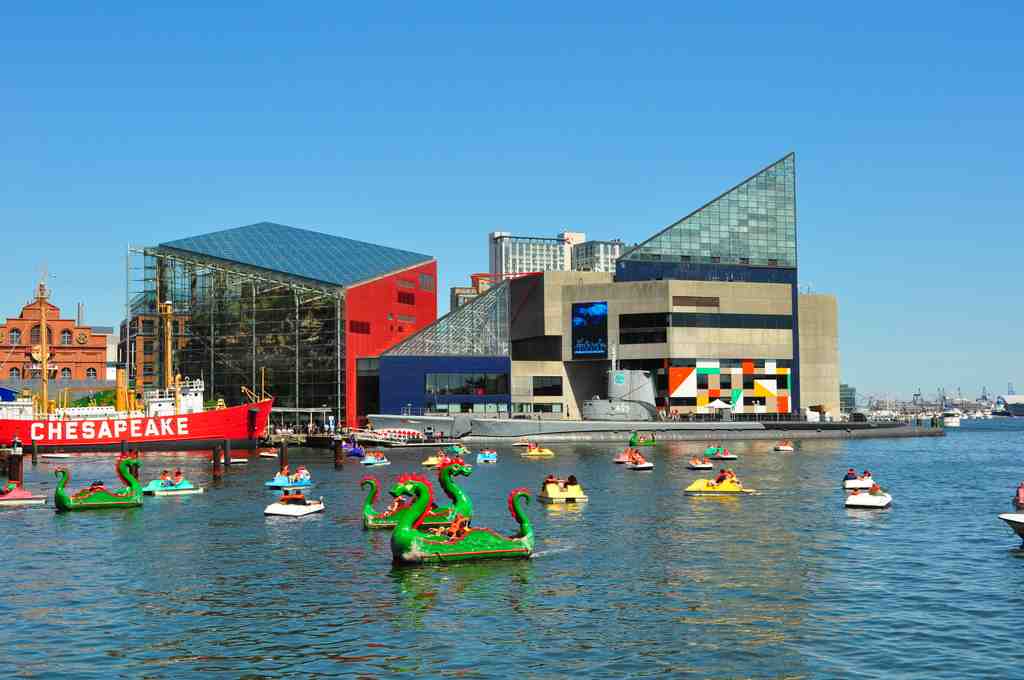
Een glinsterende glazen skyline verbergt de meest vurige geheimen van Baltimore, op slechts een steenworp afstand van de waterkant. Deze zelfgeleide audiotour leidt je voorbij de ansichtkaartwaardige uitzichten van Inner Harbor naar plekken waar rebellie uitbrak en fortuinen achter gesloten deuren werden ingezet – verhalen waar de meeste bezoekers gewoon voorbijlopen. Waarom was President Street Station getuige van de eerste bloedvergieten van de Burgeroorlog van de natie? Welke mysterieuze barrières hielden de glinsterende bovenste verdiepingen van Four Seasons jarenlang leeg? Welke beruchte zakendeal veroorzaakte bestuurskamergevechten hoog boven de haven in de Legg Mason Tower? Volg de reis van de stad door politieke onrust, architectonische intriges en momenten van stille spanning terwijl zonlicht danst op staal en baksteen. Elke bocht onthult nieuwe perspectieven en vergeten verhalen, en leidt je met wijd open ogen door het hart van Baltimore. Kom dichter bij de glinsterende gevel. Ontdek wat Baltimore in het volle zicht verbergt – jouw verhaal begint nu.
Tourvoorbeeld
Over deze tour
- scheduleDuur 40–60 minsGa op je eigen tempo
- straighten3.2 km wandelrouteVolg het geleide pad
- location_onLocatieBaltimore, Verenigde Staten
- wifi_offWerkt offlineEén keer downloaden, overal gebruiken
- all_inclusiveLevenslange toegangOp elk moment opnieuw afspelen, voor altijd
- location_onStart bij Legg Mason Tower
Stops op deze tour
To spot the Legg Mason Tower, just look up for a sleek, shimmering glass skyscraper with the big “LEGG MASON” name perched on top, standing tall right at the edge of the water and…Meer lezenToon minder
To spot the Legg Mason Tower, just look up for a sleek, shimmering glass skyscraper with the big “LEGG MASON” name perched on top, standing tall right at the edge of the water and overlooking the marina with its parade of white boats. Now, as you stand here, let me set the scene: it’s 2009 and this spot was buzzing with anticipation-almost like someone was unwrapping a giant present right by the water. Rising 24 stories and sparkling under the Baltimore sun, the Legg Mason Tower quickly became the new crown jewel of the harbor. The building’s grand, glassy façade almost begs for a superhero to leap from its roof (but don’t worry, Spider-Man hasn’t claimed this one… yet!). Designed by Beatty Harvey Coco Architects and HKS Architects, this isn’t just any old office tower-it’s a home for big dreams, sharp suits, and the unstoppable hum of business. It’s the headquarters for Legg Mason, who made the bold move from their old stomping grounds at 100 Light Street to stake a claim on the waterfront. But there’s more: Johns Hopkins Carey Business School calls this place home too-so you might just catch a future business leader grabbing coffee nearby. The tower joins forces with the Four Seasons next door, making quite the dynamic duo among Baltimore’s skyline. And get this: it’s environmentally friendly, pre-certified for LEED Silver, so behind all that gleaming glass, the planet is getting a little love too. The Urban Land Institute even gave it a Wavemaker Award, so you know it’s not just all sparkle-there’s substance behind that shine!
Open eigen pagina →Directly in front of you, you’ll spot the Four Seasons Baltimore as a stunning glass skyscraper with sharp, clean lines reaching high above the street, topped with modern…Meer lezenToon minder
Directly in front of you, you’ll spot the Four Seasons Baltimore as a stunning glass skyscraper with sharp, clean lines reaching high above the street, topped with modern balconies and gleaming windows that reflect the sky. Now, as you stand here gazing up at this elegant tower, imagine the sparkling glass catching the morning sun and reflecting a tapestry of clouds. The Four Seasons Baltimore, right in the heart of Harbor East, feels like it’s reaching up to touch the city’s ambition. But it wasn’t always so straightforward. The story of this building is a bit like a plot twist in a Hollywood blockbuster-developers first drew up plans for not one, but two towers back in 2007. Maybe they got overly excited by all the possibilities or perhaps just wanted to make sure no one confused this Baltimore treasure with a modest motel! The final version opened its doors in November of 2011, starting with just the hotel portion-a world of plush comfort, with 256 rooms (and 45 of those are suites, perfect for anyone who dreams of pillow-fighting in luxury). The companion tower next door became the Legg Mason headquarters, but the Four Seasons had its own surprise in store: eight extra floors of ultra-luxurious condos stacked right on top, separated from the hotel rooms by a mysterious, hidden mechanical floor. It took almost four years to build those top floors-some say the anticipation nearly drove real estate agents mad with curiosity. Picture guests and residents moving through a lobby that buzzes with energy, past oversized windows spilling sunlight across polished floors. Around you, the smell of fresh coffee drifts out from Lamill Coffee, a favorite local haunt for anyone in need of a caffeine pick-me-up (which, frankly, in this city is all of us). Foodies flock to the hotel’s signature restaurant, Wit & Wisdom, where you can savor a meal with a sweeping view of the harbor-if the water sparkling outside doesn’t distract you mid-bite. But it’s not just eating and sleeping-on the fourth floor, you find an infinity pool where the water looks like it just melts right into the harbor below. There’s a spa where the quiet is so deep you might forget the city exists. And for those who call this building home, the luxury runs even deeper: think private indoor pools, saunas, and penthouses so lavish that one sold for a whopping $8 million (I can only assume it comes with butlers trained to compliment your pajamas). So the Four Seasons isn’t just a hotel-it’s a slice of the high life, perched above the bustle of Baltimore. Stand here a moment longer and imagine slipping inside, away from the harbor breeze, and finding yourself swept up in a world where comfort meets Baltimore’s sparkling dreams.
Open eigen pagina →To spot President Street Station as you walk, look ahead for a grand, rectangular brick building with tall windows and a dramatic arched roofline, standing out boldly at the…Meer lezenToon minder
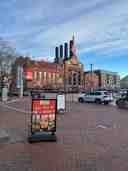
To spot President Street Station as you walk, look ahead for a grand, rectangular brick building with tall windows and a dramatic arched roofline, standing out boldly at the street corner. Now, let’s travel back in time together and bring President Street Station’s fascinating history to life. Imagine you’re standing right in front of this impressive Greek Revival building in the early morning mist. The year is 1850, and the station has just opened its doors. The air is buzzing with excitement as travelers hurry up and down the stone steps, carriages rumble by, and horses snort impatiently outside. This isn’t just any old building-this is the oldest surviving big-city railroad terminal in America! Picture the city back then: Baltimore was a booming hub, teeming with commerce, and the railroads were the arteries that kept everything moving. The Baltimore and Port Deposit Rail Road laid tracks all the way to the edge of the Inner Harbor, right here on President Street. But there was a twist-early city leaders were so afraid of wild horses and the risk of fire that they banned locomotives from running right into the city. So, believe it or not, passengers had to hop from their steam-powered train into horse-drawn cars for the last leg through downtown. It must have looked like a relay race-man versus technology! But the real drama came in the spring of 1861. Imagine the tension in the air as whispers of war blew through these very streets. President-elect Abraham Lincoln was trying to sneak through Baltimore under cover of darkness, hoping to dodge an assassination attempt before his inauguration. He slipped through the station in secret, switching trains on his way to save the Union. Just months later, on a Friday in April, the peaceful buzz turned into chaos. Union troops from Massachusetts, rolling through town to defend Washington, D.C., were suddenly set upon by an angry mob of Confederate sympathizers. Four soldiers and many civilians lost their lives just steps from where you stand, making this the site of the first bloodshed in the American Civil War. Back in those days, this station wasn’t just about passengers. There was a 208-foot-long train shed out back, huge roundhouses and bustling freight yards-six city blocks brimming with steam and the clang of iron. The station was alive with merchants, soldiers, and anxious families saying farewell or welcome home. But as railroad lines shifted and new stations sprang up further north, President Street Station quieted down. Passenger trains became fewer, until only freight rolled through. The grand old train shed was lost to a fire, leaving behind just this sturdy head house-a survivor with a thousand stories. The 20th century wasn’t always kind to the station. It became a lonely warehouse, then sat abandoned, the victim of snow and fire, even dodging city plans to bulldoze it for a highway. But Baltimore isn’t a city that forgets its heroes, and a determined band of locals and preservationists stepped in. Through the 1990s, they fought to save this landmark. After careful renovations, it reopened as the Baltimore Civil War Museum-allowing new generations to walk the halls where history was made. Even today, this building is still in the middle of a new chapter. Its future-whether as a museum, a landmark, or something else-is being decided with careful thought so that the echoes of the past aren’t drowned out by tomorrow’s noise. So as you stand before President Street Station, take a moment to imagine the chug of the trains, the surge of the crowd, and the anxious voices of a nation teetering on the brink. Not bad for a building that’s seen more drama than a whole season of TV, right? So, onward on our adventure! Don’t worry, there are no angry mobs on this tour-just your friendly digital guide with some history up my sleeve.
Open eigen pagina →
Toon 12 stops meerToon minder stopsexpand_moreexpand_less
To spot the Pier Six Pavilion, just look out toward the waterfront for a giant white tent-like structure with dramatic peaks-it almost looks like a circus tent landed right at the…Meer lezenToon minder
To spot the Pier Six Pavilion, just look out toward the waterfront for a giant white tent-like structure with dramatic peaks-it almost looks like a circus tent landed right at the edge of the harbor! Welcome to Pier Six Pavilion, Baltimore’s own seaside superstar for live music! Imagine it’s 1981: disco is still echoing through the air, and the city unveils what looks like a massive, festive tent right on the water. Back then, it was called the Harbor Lights Concert Pavilion and could squeeze in just over 3,000 fans. Not too shabby, but Baltimore had big dreams and even bigger bands knocking at its doors. So, fast-forward to the summer of 1991-a brand new, permanent pavilion rises out of the harbor, looking ready for anything from rock legends to orchestral fireworks. The city wasn’t messing around; they spent nearly $5 million making this place a showstopper. Over the years, everyone wanted in: from Cavalier Telephone-yes, even phone companies get starstruck!-to the latest chapter, where it took on the name MECU Pavilion after a sponsor grabbed the naming rights. But no matter what you call it, this place is all about the music. Imagine balmy summer nights, a salty breeze, and the sounds of epic guitar solos bouncing over the water. Today, thanks to glossy new seats and an even bigger tent, over 4,500 music lovers can gather and clap their hearts out under the stars. Try not to dance too hard; the harbor’s watching!
Open eigen pagina →Look for a massive brick building decked out with a giant red guitar on its rooftop and bold signs for Phillips Seafood and Hard Rock Cafe-it's right on the waterfront, so just…Meer lezenToon minder
Look for a massive brick building decked out with a giant red guitar on its rooftop and bold signs for Phillips Seafood and Hard Rock Cafe-it's right on the waterfront, so just scan for the most impressive old industrial building surrounded by lively people and umbrellas next to the water. Now, as you stand here in front of the Pratt Street Power Plant, let’s take a step back in time. In the early 1900s, this place would have been thundering with the rumble of coal trains, the clang of metal, and the hiss of steam. Imagine the smell of burning coal drifting across the harbor, the steady hum of dynamos spinning out electricity, and workers hustling in and out of those towering brick archways. Designed by the clever minds of Baldwin & Pennington, this building was part fortress, part cathedral, built to power Baltimore’s streetcars and, honestly, to survive just about anything-including the devastating Great Baltimore Fire of 1904! Out of all the buildings in the area, only 11 survived, and this powerhouse was one of them, standing strong while chaos reigned around it. Talk about being stubborn! Back then, Baltimore’s streetcars zipped neighborhoods awake, lighting up streets and making the city bustle. This place was the heart that kept the electricity flowing. Coal ships would glide into the harbor, unloading mountains of black fuel for the boilers inside. All that energy didn’t just keep the lights on-it gave Baltimore a chance to expand, helping the city grow out into the suburbs and beyond. But as time marched on, the world changed. By the 1970s, the equipment inside had become as ancient as the idea of hand-cranking your car windows. After a brief encore during World War II, the plant switched off for good in 1973. Then came the silence, the echo of its past glory lingering until someone had the brilliant idea to turn this industrial giant into a place for fun. The first tries? Let’s just say an indoor Six Flags theme park and a wild dance club didn’t quite electrify the crowds. It took a while, but today, the powerhouse buzzes again-this time with music, laughter, and delicious food instead of turbines and fire. Now you can grab a bite at Phillips Seafood, catch a live band at Hard Rock Cafe, or just look up at that giant neon guitar and marvel at how the bones of the industrial age pulse with new energy. This isn’t just a building; it’s proof that even the toughest, greasiest old workhorses can crank out a second life. And if those walls could talk, I bet they’d yell-over the music-about the good old days of coal, steam, and survival.
Open eigen pagina →Straight ahead, you’ll notice the bold, geometric National Aquarium building with its striking glass pyramids and colorful walls sitting right on the edge of the water-just look…Meer lezenToon minder
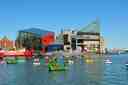
Straight ahead, you’ll notice the bold, geometric National Aquarium building with its striking glass pyramids and colorful walls sitting right on the edge of the water-just look for the giant angular roof and sparkling glass catching the sunlight, and you can’t miss it! Welcome to the National Aquarium-Baltimore’s crown jewel and, let’s be honest, the place where the fish probably have better homes than most New Yorkers! Step right up and imagine the bustling energy here on August 8th, 1981, when the doors swung open for the very first time. Back then, Baltimore’s Inner Harbor wasn’t the vibrant spot you see today, but a group of dreamers, including the mayor and his trusty commissioner, stood by the water and thought, “What if we filled this place with oceans of wonder?” Thanks to their vision-and a little inspiration from Boston’s own aquarium-the people of Baltimore voted to make it happen, and three years later, the National Aquarium was born. Picture construction workers on old Pier 3, racing against time, hammers clinking and cranes whirring, building what would become Maryland’s top attraction-drawing 1.5 million visitors every year and holding a whopping 2.2 million gallons of water. That’s enough to take a bath every day for, oh, a couple thousand years! The Aquarium is now the state's greatest tourist magnet, and it safeguards more than 17,000 aquatic creatures-sharks, rays, sloths, and even a few turtles who fancy themselves as local celebrities. Now, the outside may catch your eye, but wait until you picture the wonders inside-a towering rain forest under glass, shimmering coral reefs, a shark tank where the only job requirement is to swim in circles and look terrifying, and Australia: Wild Extremes, an award-winning exhibit that packs more drama than an Outback soap opera. Listen closely, and you might even imagine the thunder of a 35-foot waterfall echoing through the lobby. The National Aquarium hasn't just wowed visitors with its tanks; it’s led the charge on conservation, science, and green energy. Behind the scenes, teams rescue wayward dolphins, rehabilitate injured sea turtles, and make sure the Chesapeake Bay’s wetlands are as clean as a fish out of water. In fact, about 40% of the aquarium’s power comes from a solar farm in Cambridge, which saves thousands of metric tons of carbon dioxide every year-take that, polluting power plants! Oh, but the drama doesn’t end there! Over the years, the aquarium has transformed, expanded, and even joined forces for a time with Washington D.C.’s own historic aquarium, combining their fishy forces under one “National Aquarium” banner. There’s been intrigue, too: in the grand Atlantic Coral Reef exhibit, rare eels glide alongside colorful fish, and, until 2020, “Calypso” the three-flippered green sea turtle ruled the reef like royalty. In the shark alley, the only advice is-don’t volunteer to swim! Up in the Upland Tropical Rain Forest, golden lion tamarins and blue poison dart frogs hide in the leaves while, nearby, the Living Seashore touch pools wait for brave fingers to meet moon jellies and Atlantic rays. If you hear distant splashing, that’s just the aquatic residents putting on a show-not to mention the world’s most playful dolphins next door, who are set to move someday to a cutting-edge ocean sanctuary, giving them a seaside home fifty to a hundred times the size of their Baltimore digs. The building’s design is as striking as a shock from its electric eel-a creation of architects who weren’t afraid of bold lines and dizzying heights. With each glassy expansion and new exhibit, the Aquarium aimed to inspire not just “oohs” and “ahhs” but a bit of stewardship for the world’s waters. As a local nonprofit, it’s run by neighbors, powered by volunteers, and dedicated to educating all ages. So as you stand here, let your mind drift back to those first visionary city leaders, gazing across the harbor and seeing more than just old piers: they saw a whole underwater world waiting to be discovered. Today, with every splash, flutter, and dolphin laugh, the National Aquarium continues that adventure. And hey, at least here, the only sharks you’ll meet want a friendly wave-unless you’re a small fish, of course! Eager to learn more about the conservation, research, and green practices, exhibits or the relationship with the national aquarium, washington, d.c.? Simply drop your inquiries in the chat section and I'll provide the details you need.
Open eigen pagina →Right in front of you stands a tall, sleek tower with sharp angles and smooth lines, rising high above the water’s edge-if you look toward the harbor, it's the tallest and most…Meer lezenToon minder
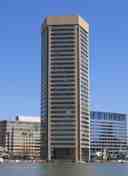
Right in front of you stands a tall, sleek tower with sharp angles and smooth lines, rising high above the water’s edge-if you look toward the harbor, it's the tallest and most striking five-sided building nestled right by the waterfront. Now, let’s step back in time for a moment. Picture yourself in Baltimore’s Inner Harbor in the late 1960s-a city bustling with anticipation, sharing whispers of a new project that would soon scrape the sky. The Baltimore World Trade Center, designed by the geniuses at Pei Cobb Freed & Partners, especially architects Henry N. Cobb and Pershing Wong, began its journey in plans and dreams all the way back in April 1966. Construction kicked off in October 1973. By January 1977, at a cost of $22 million, this epic skyscraper was finished-towering 405 feet and 30 stories above the one-acre plaza. Quite a skyline shakeup for a city known for its low, historic brick buildings! But this isn’t just your everyday tall building. No, if you squint, you’ll really notice-its five equal sides form a perfect pentagon shape, making it the tallest regular pentagonal skyscraper in the world. Well, unless you count the one in Houston, but their angles are just a bit off! On a clear night, this mighty tower becomes a beacon. At each corner, powerful 4,500-watt xenon spotlights shoot up into the sky, reflecting off giant parabolic mirrors at the top. The lights form five glowing V’s, inspired by lighthouses from the Chesapeake Bay. On some nights, those sparkling rays are visible seven to ten miles away-almost like the building is trying to signal mysterious sea creatures, or maybe just let lost late-night pizza delivery folks know where the party is! There’s cleverness in the building’s design too: its front corner points straight out over the harbor, just like the prow of a ship sailing boldly into the Chesapeake. Stand here at the edge, and it’s almost as if the structure is leaping out of the water, leading Baltimore into the world with serious style. The World Trade Center is home to organizations all about big business and world commerce, like the Maryland Port Administration and the World Trade Center Institute. But the heart-pounding highlight has to be the “Top of the World” observation level-up on the 27th floor. Take a deep breath and imagine stepping from the elevator into a dazzling perch offering 360-degree views, cityscapes in every direction, rotating art exhibits, local history, and the 9/11 Memorial of Maryland. And speaking of 9/11, this tower has its own chapter in those tense and tragic days. Just two hours after the attacks in New York, Baltimore’s building was abruptly evacuated, a “credible” threat sending everyone rushing for the exits. Concrete barriers and barges suddenly turned the usually open plaza into a fortress, and bomb threats rang out in the days that followed. Eventually, the city relaxed, the barriers came down, but the memory lingers. Right outside, on the pedestrian walkway, is a powerful memorial-three twisted steel beams salvaged from the North Tower in New York sit on a marble platform listing the names of sixty-eight Marylanders lost that day. And in a moving touch, the building’s shadow acts as a sundial, touching inscriptions at the exact times key events unfolded every September 11. This living reminder even features a glossy block to remember the Flight 93 passengers, and the windows above are inscribed with all of that day’s victims' names. Of course, this skyscraper’s story isn’t just one of tragedy or grandeur-it’s also one of resilience. Hurricane Isabel slammed Baltimore in 2003, filling the building’s basement with a jaw-dropping three million gallons of harbor water. Water sloshed and gurgled into the electrical equipment, shutting things down and leaving sixty tenants adrift for more than a month. Ownership dramas and questions of “sell or keep” have filled recent chapters. It costs a pretty penny to keep all that glass and concrete humming, and for a time, occupancy plummeted. But the state of Maryland has held on, streamlined leases, and even started thinking a bit more green: look down near the harbor’s edge, and you’ll spot floating gardens, built from trash and plastic bottles. These little marshes help clean the harbor and offer a cozy home to everything from barnacles and eels to (I’m not kidding) adventurous Baltimore crabs. So, when you look up, know that the Baltimore World Trade Center isn’t just a slab of stone and steel. It’s a lookout, a lighthouse, a memorial, and a symbol of Baltimore’s hope-and maybe even a secret meeting place for those clever harbor crabs. After all, in a city like this, you never know what kinds of stories are hiding behind glass and stone. To expand your understanding of the name, alignment and lighting or the top of the world, feel free to engage with me in the chat section below.
Open eigen pagina →Right ahead, you’ll spot a majestic black-and-white sailing ship with tall wooden masts and a forest of ropes, docked right on the waterfront-just keep an eye out for that proud…Meer lezenToon minder
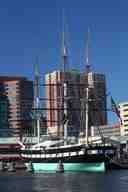
Right ahead, you’ll spot a majestic black-and-white sailing ship with tall wooden masts and a forest of ropes, docked right on the waterfront-just keep an eye out for that proud American flag fluttering at the stern. Welcome to the Historic Ships in Baltimore-a place where history quite literally floats! If you close your eyes for a second, you can almost hear the creak of wooden decks beneath your boots and the salty breeze snapping the sails. Here before you is the USS Constellation: the last all-sail warship built for the U.S. Navy, ready for adventure and danger on the high seas. But she’s not alone-at this dock you’ll also find the brave cutter WHEC-37, which actually survived the attack on Pearl Harbor, and the USS Torsk, a submarine that slyly hunted through silent waters and made the last kill for the US Navy in World War II. Don’t forget the Chesapeake lightship, once blinking her warning at the mouth of the Bay, and the round, red Seven Foot Knoll Lighthouse looking like it’s straight out of a storybook. These aren’t just old ships; they’re time travelers, each with epic tales and heart-pounding moments. Step closer, breathe in the tang of the water, and let your imagination set sail-because the stories you find here just might rock your world.
Open eigen pagina →To spot Harborplace, just look across the water for two low, glassy pavilions with greenish rooftops stretching along the waterfront, nestled between tall downtown buildings-the…Meer lezenToon minder
To spot Harborplace, just look across the water for two low, glassy pavilions with greenish rooftops stretching along the waterfront, nestled between tall downtown buildings-the action is right along the edge of the harbor, where the walkways are busiest. Ah, welcome to Harborplace! You’re standing before a piece of Baltimore’s soul, where the air often hums with chatter, footsteps, and maybe a stray seagull squawk. Imagine it’s 1980, and the city’s trying on a whole new look-the Inner Harbor was once a sleepy patch where the Baltimore Steam Packet Company’s steamships chugged in, bringing goods and dreams from afar. But here came Benjamin C. Thompson and the Rouse Company with a wild idea: why not turn this old dockland spot into a shiny, modern festival marketplace? Now, picture a crowd buzzing with excitement, Mayor William Donald Schaefer rallying Baltimoreans together, saying, “Shouldn’t our harbor be a celebration, not just a working dock?” It actually took a citywide vote to build Harborplace, with an amendment stating no part could rise higher than the masts of the historic USS Constellation-so don’t blame them for not reaching for the stars! With that, two cheerful pavilions sprang up: one on Pratt Street, the other on Light Street, both packed with everything Baltimore: blue crab treats, quirky Raven and Oriole gear, Poe-inspired oddities, and all sorts of University of Maryland souvenirs. When Harborplace opened on July 2, 1980, it didn’t just change Baltimore-it set a blueprint for the nation. Cities raced to copy it, from the sunny piers of Norfolk to the heart of Philadelphia. For Baltimoreans, this place was their living room by the water-part shopping paradise, part stage for countless festivals and surprises. Can you smell the Old Bay spice in the air and hear the murmur of shopping bags rustling as you wander through history? For its 25th birthday in 2005, Harborplace threw itself a party bigger than a flock of hungry seagulls: speeches, music, laughter-a real Baltimore reunion. Years later, in 2012, things got a little weird (even by Baltimore standards) as Ripley’s Believe It or Not! opened its odditorium here. Where else could you buy a Maryland crab magnet and see a shrunken head without leaving the same building? But life isn’t always so smooth. Ownership of Harborplace bounced around like a game of waterfront Monopoly. By 2019, the pavilions faced hard times: unpaid bills, broken benches, and a court battle that changed the locks. It took a New Jersey management team, IVL Group, to bring it back into order, guarding history as faithfully as old steamboat captains watched the harbor fog. Now, another chapter’s turning. In 2022, a local firm-MCB Real Estate-bought Harborplace, and dreams are swirling once again. If all goes to plan, the pavilions will soon make way for stunning new towers, sparkling shops, and a lively amphitheater, keeping that sense of waterfront fun alive for the next century of Baltimoreans. Talk about a comeback kid! So as you stand here, take a deep breath, feel the city’s heartbeat, and know you’re on ground that’s always changing-but never dull.
Open eigen pagina →Right in front of you, you’ll spot the shimmering skyline with tall glass buildings and angular architecture reflecting off the harbor’s rippling blue water-just look across the…Meer lezenToon minder
Right in front of you, you’ll spot the shimmering skyline with tall glass buildings and angular architecture reflecting off the harbor’s rippling blue water-just look across the water for the tallest tower and the spiky rooftop of the aquarium to know you’re gazing at the heart of the Baltimore metropolitan area. Welcome to the grand finale! Take in this lively view, because you’re not just looking at one building-you’re standing in front of a whole region full of stories, success, and a whole lot of Maryland personality! This area, known as Central Maryland, brings together seven bustling counties and over 2.9 million people. Imagine the hum of daily life-workers commuting, sports fans cheering, and families relaxing on weekends-all woven together across Baltimore, Columbia, Towson, and beyond. Now, it’s not all business here-but speaking of business, you might bump into someone from Under Armour, T. Rowe Price, or even McCormick & Company, since some big names call this place home. The median income is so high, you’d think folks around here were selling crabs dipped in gold! But the real richness is in the diversity-from the historic charm of Annapolis (Maryland’s capital) to the steady hum of the National Security Agency out at Fort Meade. But what’s that you hear? That’s Baltimore’s famous sports spirit! The Orioles, the Ravens, even the Charm City Roller Girls-this region has enough teams to keep you yelling “Go!” all year long. And don’t forget the colleges tearing up the field: from the Loyola Greyhounds to the Navy Midshipmen in Annapolis. It hasn’t always been easy, though. This region grew from port towns and farmland into the 20th-largest metro area in the country, sometimes facing the push and pull of big cities and quiet suburbs. And, just for the record, Baltimore doesn’t just draw locals-commuters roll in from as far as York, Pennsylvania, and even the nation’s capital. So whether it’s business, baseball, or just a beautiful walk by the water, the Baltimore metropolitan area is more than just buildings-it’s a symphony of people, ideas, and stories. Thanks for walking with me through these neighborhoods. And remember: in Baltimore, you’re never far from history, mystery, and maybe a crab cake or two!
Open eigen pagina →



Veelgestelde vragen
Hoe begin ik de tour?
Download na aankoop de AudaTours-app en voer je inwisselcode in. De tour is direct klaar om te starten – tik gewoon op afspelen en volg de GPS-geleide route.
Heb ik internet nodig tijdens de tour?
Nee! Download de tour voordat je begint en geniet er volledig offline van. Alleen de chatfunctie vereist internet. We raden aan om te downloaden via wifi om mobiele data te besparen.
Is dit een groepsrondleiding met gids?
Nee - dit is een audiotour met eigen gids. Je verkent zelfstandig op je eigen tempo, met audiovertelling via je telefoon. Geen tourguide, geen groep, geen schema.
Hoe lang duurt de tour?
De meeste tours duren 60-90 minuten, maar jij bepaalt het tempo volledig. Pauzeer, sla stops over of neem pauzes wanneer je wilt.
Wat als ik de tour vandaag niet kan afmaken?
Geen probleem! Tours hebben levenslange toegang. Pauzeer en hervat wanneer je wilt – morgen, volgende week of volgend jaar. Je voortgang wordt opgeslagen.
Welke talen zijn beschikbaar?
Alle tours zijn beschikbaar in meer dan 50 talen. Selecteer je voorkeurstaal bij het inwisselen van je code. Let op: de taal kan niet worden gewijzigd na het genereren van de tour.
Waar vind ik de tour na aankoop?
Download de gratis AudaTours-app uit de App Store of Google Play. Voer je inwisselcode in (verzonden per e-mail) en de tour verschijnt in je bibliotheek, klaar om te downloaden en te starten.
Als je niet tevreden bent met de tour, betalen we je aankoop terug. Neem contact met ons op via [email protected]
Veilig afrekenen met 


