AudaTours logoAudaTours

Sydney Audiotour: De Verborgen Juwelen van Millers Point

Audiogids14 stops

Onder de glinsterende skyline van Sydney sluimeren geheimen in de zandsteen: verhalen over bootleggers, verraad en lang vervlogen fortuinen echoën door stille straten die de meesten nooit verkennen. Deze zelfgeleide audiotour slingert door Millers Point en opent deuren naar verborgen geschiedenissen en over het hoofd geziene bezienswaardigheden zoals Dalgety's Bond Stores en Winsbury Terrace. Hoor verhalen die niet in reisgidsen staan en bewandel routes die de lokale bevolking als hun eigen schat bewaart. Wat leidde tot de nachtelijke inval die hier bijna een handelsimperium omverwierp? Welke fluisteringen uit Munn Street overtuigden buren om 's nachts te vluchten? Hoe werd een bescheiden terras het epicentrum van een merkwaardig specifieke juridische maas in de wet? Wandel door schaduwen en zonlicht waar drama zich ontvouwde, schandalen oplaaiden en opstanden ontstonden. De stad onthult zich bij elke stap: een levendig lappendeken geweven met intrige en verrassing. Durf de voetsporen te volgen die de geschiedenis probeerde te verbergen. Begin je reis – waar elke steen een verhaal vertelt.

Tourvoorbeeld

map

Over deze tour

  • schedule
    Duur 40–60 minsGa op je eigen tempo
  • straighten
    1.2 km wandelrouteVolg het geleide pad
  • location_on
  • wifi_off
    Werkt offlineEén keer downloaden, overal gebruiken
  • all_inclusive
    Levenslange toegangOp elk moment opnieuw afspelen, voor altijd
  • location_on
    Start bij 18-20a Munn Street, Millers Point

Stops op deze tour
  1. Notice the intricate Art Nouveau fretwork and the sturdy cast iron fencing. These details were the height of style when the terraces were built, dazzling passersby-and perhaps…Meer lezenToon minder

    Notice the intricate Art Nouveau fretwork and the sturdy cast iron fencing. These details were the height of style when the terraces were built, dazzling passersby-and perhaps intimidating the odd stray cat. Even the sandstone trims around the doors and windows have stood guard for over a century. Both ground floor and upper dwellings greet you via a verandah that seems made for a neighborly chat… or a bit of gossip about who’s late paying rent. Since 1986, these terraces have been in the care of the NSW Department of Housing. Yet, through all these changes, they are still anchored in the Millers Point Conservation Area, which has witnessed Sydney’s transformation since the 1830s. Imagine all those stories contained in these bricks-though don’t worry, I promised not to make the walls talk!

    Open eigen pagina →
  2. If you look to your left, you'll spot the Dalgety's Bond Stores by their sturdy sandstone and brick facades, with the taller, irregular gabled warehouse rubbing shoulders with a…Meer lezenToon minder

    If you look to your left, you'll spot the Dalgety's Bond Stores by their sturdy sandstone and brick facades, with the taller, irregular gabled warehouse rubbing shoulders with a lower, parapet-topped block, both facing out over what is now the grassy Munn Reserve. If you spy sawtooth rooftops and a pair of classic warehouse buildings, you’ve arrived-no hard hats required. Now, let’s time travel a little-imagine yourself in Sydney in the 1870s, with the heavy tang of sea-salt and wool wafting through the air, bells ringing from the nearby wharves, and the clang of shipbuilders hard at work. You’re standing right where life once bustled, goods arrived from around the world, and fortunes were made (and sometimes lost) in the shadows of these very walls. Dalgety’s Bond Stores was built way back in 1875, on a site that had already seen plenty of action since the 1820s-when this part of Millers Point was alive with shipbuilding. The place was taken over by John Cuthbert in 1853; he was the kind of guy who gave new meaning to “having a ship in every harbor.” His yard became one of the biggest in Sydney, with the clang and thud of craftsmen building sleek schooners and sturdy steamers, right here where you’re standing. But the winds of change began to blow in the 1870s. Wool, which I’d like to think of as Australia’s “white gold,” needed somewhere to rest between long journeys from sheep’s back to the rest of the world. The area was transformed, and these warehouselike fortresses sprang up, ready to swallow bales of wool and spit out riches. They were known affectionately as Blocks A, B, and C-though, to this day, only A and C are still with us. Block B, sadly, went the way of many old Sydney buildings in the 1970s-a bullet in the tale of Australian progress. Try to imagine the scene: musty, sweet-smelling wool stacked high, workers darting among the shadows, hydraulic lifts creaking. At their heart, these buildings were all about grit and innovation-Block A boasts thick sandstone walls and massive timber beams that could support an elephant or six (not tested, don’t worry), while Block C introduces shiny steel roof trusses and a signature sawtooth roof so distinctive, local pigeons probably gave guided tours themselves. These two buildings show us a mini-museum of warehouse design, evolving right before your eyes. By 1913, the mighty Dalgety & Co-think of them as Australia’s Amazon before the internet-leased the whole kit and caboodle from the Sydney Harbour Trust. Dalgety’s ran the place until 1969, moving bulging cargos and turning these blocks into a symbol of their booming business. If these walls could talk, they’d tell stories of roaring trade, the rush before ships sailed, and perhaps the occasional dropped bale of wool, much to everyone’s embarrassment. And, just so you know, things weren’t always smooth sailing here-even the bubonic plague made its mark in the early 1900s, prompting sweeping civil works that changed the face of Millers Point. These warehouses were witnesses to all of it: redevelopment, loss, and rebirth. As old as they feel, they’ve kept up with the times-a face-lift here, a marble tile there, and a medical centre popping up in one of the old shopfronts. You’ll notice, if you peek through the glass or under the eaves, the original timber beams and weighty roof trusses are still holding court inside. There’s also a beautiful old hydraulic lift mechanism-so ingenious it earned an “A” listing from the National Trust. The old bale lifts and cranes, built by Babcock & Wilcox, hang on as echoes of a time when muscle and machinery ruled the waterfront. Dalgety’s Bond Stores is so much more than just brick and stone-they’re a living scrapbook of Sydney’s working heart, a place that holds tight to secrets of shipbuilders, merchants, dockers, and a city forever in motion. If the ghost of a hardworking wharfie tips his cap to you as you pass, give him a smile-you’re walking through history. Ready for our next stop? Just be careful not to trip over any stray bales of imaginary wool!

    Open eigen pagina →
  3. Now, the Palisade you see here isn’t even the first hotel on this site. Back in the 1870s, a man named James Parle owned the land, and by 1880, a three-story brick hotel had…Meer lezenToon minder

    Now, the Palisade you see here isn’t even the first hotel on this site. Back in the 1870s, a man named James Parle owned the land, and by 1880, a three-story brick hotel had popped up here. Henry Taylor ran it until 1911 - and I’ll bet he could tell a few tales if these walls could talk! But Sydney was changing fast. After a rough dance with the bubonic plague at the turn of the century, the city basically needed a fresh start. The population was bouncing back, dockyards were thriving, and the demand for a pint - or maybe three - shot up. Enter the Sydney Harbour Trust. Not wanting Millers Point to go dry, they built four new hotels to keep the port workers and locals refreshed and spirited. The Palisade was their crown jewel, opening its doors in 1916. Picture those early days: the scent of fresh timber and brick dust fills the air, as five sweeping stories emerge from the ground, crowned with a rooftop big enough for drying laundry - or the occasional rooftop party, perhaps? The ground floor boasted a sprawling U-shaped bar, complete with a jug and bottle department (because even in 1916, takeaways were important!). There were two parlours warmed by crackling open fires, a hall, and a canopy greeting regulars as they strolled in after a long shift. Down in the basement, bottles crowded the cellar, while a mysterious floor hatch provided secret access to the bar. I know what you’re wondering - how many rooms did they really need? Quite a few, as it turns out: the new Palisade was practically a mini hotel, complete with 15 bedrooms, two parlours, a plush dining room, two sitting rooms, a laundry, kitchen, bathrooms, and even a fire escape on every floor. A 1949 report found that much hadn’t changed, with the licensee and staff enjoying the comfier double rooms, and the second and third floors packed with accommodations for weary travelers. Over the decades, ownership of the hotel passed hands as often as the tap was pulled. The iconic Tooth and Co. brewery took over the head lease from the 1920s, subletting to pint-pouring licensees. When the Maritime Service Board replaced the Harbour Trust in 1936, those frothy connections stayed strong until the 1950s before P.K. Armstrong, the on-site licensee, claimed the lease for himself. From the 1980s, the Palisade entered private ownership. After a major renovation closed the pub for seven long years, it reopened in 2015 with a brand-new swoon-worthy rooftop bar named “Henry Deane,” in memory of a city engineer (and, hopefully, a lover of city views). Stand back and take in its Federation free style, with touches of Arts and Crafts - rugged stone and brick climbing skywards, tall arched windows, bouquets of timber detailing, and wide verandahs offering a sweeping view of the skyline. Inside, relics of the past abound: original ceramic tiles on the ground floor, timber doors and windows framing the light, and that legendary fire escape curling slyly around the west wall. Through all these changes, the Palisade kept its spirit. Whether you were a dock worker looking for a cold one after a tough day, a local raising a glass to the city, or a visitor chasing sweeping city views, this hotel has always delivered a warm welcome - even if the wallpaper and bar stools have changed a bit over the years! So, pause and imagine the generations who’ve leaned against this bar, swapped stories, and watched Sydney transform. Ready to continue your journey? The next round of Millers Point history is just a few steps away! Exploring the realm of the description, modifications and dates or the significance? Feel free to consult the chat section for additional information.

    Open eigen pagina →
Toon 11 stops meerToon minder stopsexpand_moreexpand_less
  1. Right in front of you is a corner building with a distinctive two-tone look-its lower half is dark brown brick and the upper half is pale, rough-textured, and painted white, with…Meer lezenToon minder

    Right in front of you is a corner building with a distinctive two-tone look-its lower half is dark brown brick and the upper half is pale, rough-textured, and painted white, with a little row of shopfront windows along the street. Now, as you stand here, let your imagination whisk you back to early Sydney, when wagons rumbled across the cobbled streets and salty sea breezes tangled with the shouts of sailors heading up from the harbor. Millers Point is one of the city’s oldest neighborhoods, a hive of maritime hustle and-on this spot-Governor Macquarie once dreamt of a grand old London square. Of course, he would’ve had to wait for the noisy quarrying of the rock face, right behind you, to finish around 1865 before the real show could begin. Fast forward to 1906, and what do we get? This Edwardian beauty, built Federation-style with painted timber trims and textures that catch the afternoon sun-what a snappy dresser for a building, hey? It’s one of a handful of terraces lining Argyle Place, combining shops on the ground floor for the neighborhood’s daily dramas, and living quarters above so you’re never late for tea. Before Netflix, these windows probably saw plenty of street theatre, with locals popping down for bread or a pint or just to trade stories about the latest ship arrivals or-after the plague drama-about government health inspectors with very unwelcome clipboards! Take a good look at the corner: the little quirks, a few bricked-up spots or changed shopfronts. Since 1986, social housing tenants have called these rooms home, keeping voices echoing along Argyle Place. In 1999, the building earned its spot on the Heritage Register-so next time a friend walks by and says, “Hey, that looks historic!” you can grin and say, “Not just historic-this building is a true Aussie survivor.”

    Open eigen pagina →
  2. Look for a tall, red-brick building with big arched doors and bold “BOND” lettering carved right up at the roofline-it’s standing right next to the stone-faced Lord Nelson Hotel,…Meer lezenToon minder

    Look for a tall, red-brick building with big arched doors and bold “BOND” lettering carved right up at the roofline-it’s standing right next to the stone-faced Lord Nelson Hotel, so you really can’t miss it. Now, step closer and picture this street back in the 1890s-a time when Millers Point buzzed with sailors, stevedores, and the constant clatter of horse-drawn carts echoing up from the harbor. The Oswald Bond Store, looming before you, was once the heart of Sydney’s mighty wool trade. Imagine the smell of lanolin in the air, bales stacked up to the rafters, and men shouting over the din as wool from all over New South Wales made its stop right here before sailing overseas. The land beneath your feet has quite the tangled tale. In the 1830s it was wild and a bit lawless, with Crown grants and hopeful squatters jostling for space. By 1836, William Wells took charge here, building the Lord Nelson right next door-a landmark even then. Fast-forward to the 1850s and this very block was alive with mariners and tradesmen making their mark on old Sydney town. But come the 1880s, everything changed. Shipping grew faster-so fast that the city’s wealthy merchants skipped town for quieter suburbs, leaving Millers Point to the workers and traders. The shipping wharves were rebuilt, the wool trade boomed, and warehouses like this one started cropping up by the dozen. Constructed in 1892, the Oswald Bond Store-designed by the McCredie brothers-was built strong, with tough colonial brick and grand cement trimmings, intended to impress and withstand a busy world. The facades you see today are a blend of Victorian ambition and Federation flair, meant to look solid and stately. Now, picture a night in 1903. All is quiet-and suddenly, a roaring fire erupts from the upstairs rooms, unseen and unchecked until it’s grown wild. The flames, hungry for air, are fed by the bond store’s massive windows and open lift shafts. Firefighters-probably looking more like determined bakers than modern heroes-race in, saving the tough stone walls but losing most of the inside to the blaze. Thankfully, nobody was hurt, and the store’s structure held-but the rebuild had to be fireproof, so in came concrete stairs, some windows bricked up, and a few less stories reaching for the sky. By March 1904, the “new” Oswald Bond Store reopened, full of life again. Oddly enough, its success annoyed the Harbor Trust-complaints rolled in that this store was simply too good at its job! In the decades that followed, the bond store adapted to new times. Lifts rattled and groaned, timber doors swung for business, and the building shifted from wool to offices in the 1980s-one of its old lifts even remains, a silent testament to days when goods were king here. Take a closer look at the details: the irregular brickwork, sandstone kerbing, and those big timber driveway doors-each one a reminder of when Millers Point thrummed with industry. If you look up and around, you’ll notice this warehouse stands proud from many places-Observation Hill, the Harbor Bridge, and even Darling Harbour. No wonder it’s heritage-listed-it’s a living slice of Sydney’s rough-and-tumble story. So as you stand under the Oswald Bond Store today, just imagine those old mariners, the fire’s chaos, and a parade of wool-laden carts-the ghosts of Sydney’s busy past, still echoing in the brickwork.

    Open eigen pagina →
  3. You’re standing in front of Toxteth, number 94 Kent Street-a house that, if it had a passport, would be filling it with stamps from all the fascinating characters and changes it…Meer lezenToon minder

    You’re standing in front of Toxteth, number 94 Kent Street-a house that, if it had a passport, would be filling it with stamps from all the fascinating characters and changes it has witnessed over the years! This handsome two-storey residence, with its crisp rendered brickwork and those delicate cast iron filigree balcony details, rests on sandstone that once saw the clang and clatter of quarrymen’s tools. The whole area around here was, back in the day, one big stone quarry. Maybe that’s why the house looks like it’s sitting pretty and proud above its neighbors; it’s built on its own little hill of history. Now, the original owner in 1868 was David Brown, a merchant. He named it Kilrea House, probably hoping to bring a slice of Ireland to Sydney for his wife. Who needs postcards when you can name your house after home, right? By 1876, Frederick Gibbons was shaking the keys, followed in 1885 by Captain William Alexander Curphey, a true mariner. These halls have echoed with tall tales and business deals-a parade of merchants, sailors, and local bigwigs moved through its doors, probably all arguing about how many ships you need before you’re officially “wealthy.” Curphey, being a smart sea dog, put the property in his second wife’s name-maybe he figured the house was safer on dry land than out at sea. Sadly, he sailed into the sunset in 1893. While you stand here, just picture this place as it was in the late 1800s: a coach house and a stable faced the exposed cliff, a hay loft above, and a covered walkway to the main house holding the kitchen, laundry, and storeroom. I can only imagine the daily drama of tracking hay into the drawing room or arguing about stable smells versus sea breezes. By the late 1800s, the house had picked up the name Toxteth-changing names is always the sign of an interesting life, don’t you think? Then, around 1901, the Sydney Harbour Trust swooped in and took over the property, and by the 1980s, the house had swapped drawing rooms for communal kitchens; it turned into a boarding house for maritime workers. Call it the Airbnb of its time, minus the app and the awkward small talk. If you look up, notice the dormer windows-they’re a mix of old charm and 1980s do-it-yourself spirit! And check out the front entrance: the word “Toxteth” is still etched in the fanlight above the door, almost like a secret handshake for those in the know. Toxteth isn’t just a pretty face with a fancy balcony. Its story tracks Sydney from a merchant-and-mariner stronghold, to government housing for hardworking locals, right through today-a time capsule of people, change, and quirky plans. And let’s not forget its starring role in making this part of Millers Point a living slice of the city’s nineteenth-century character. So give Toxteth a little nod of respect-or maybe just wave. With a history like that, it probably won’t judge your greeting! Eager to learn more about the description, significance or the heritage listing? Simply drop your inquiries in the chat section and I'll provide the details you need.

    Open eigen pagina →
  4. Look for a square, reddish-pink brick building on the corner, with arched windows and a wavy-patterned roof parapet-its bright brickwork and sturdy, classical lines make it stand…Meer lezenToon minder

    Look for a square, reddish-pink brick building on the corner, with arched windows and a wavy-patterned roof parapet-its bright brickwork and sturdy, classical lines make it stand out just ahead on Kent Street. Alright, my friend, you’re standing in front of one of Millers Point’s most striking old-timers: the Millers Point Post Office. Take a deep breath-imagine, not so long ago, this very spot was busier than a Sunday market! Picture the year 1900: horses clopping by, kids dashing to post handwritten letters, and everyone waiting for news from the other side of the harbour. But wait-the story of this corner goes even further back. The community of Millers Point waited years for a post office they could truly call their own, after being shuffled from Argyle Street to George Street North, never quite at the heart of things. At last, the pressure-and probably a few sternly worded letters-paid off. By 1891, the government picked this very site, which was originally a watchhouse for the local police. Now, I don’t know about you, but I’d rather receive a postcard here than a pair of handcuffs! Once the police moved out and a new, quieter house was built for the sub-inspector, the community’s dream edged closer. Eventually, with much shuffling and negotiating, this building officially opened as the new post office on New Year’s Eve in 1900. Imagine the excitement-fireworks above, and Millers Point folks finally posting their New Year cards from their own neighborhood office. Now, if you look up, you’ll see the playful Federation Free Classical Style. Those reddish bricks laid in Flemish bond, the cream-painted wavy parapet like icing on a gingerbread house-this was designed by none other than Walter Liberty Vernon, one of Sydney’s architectural wizards. See those chunky chimneys up top and the round arched porch into Kent Street? It’s almost as if the building is puffing up its chest with pride. Next time anyone tells you a post office can’t look elegant, you send them here! This corner became the heartbeat of the neighborhood for much of the 20th century, connecting the people of Millers Point to the rest of Sydney and the world. The sound of the door swinging open and shut, the slap of rubber stamps, and the rattle of coins at the counter were as familiar as the rustle of gum trees outside. But the times, they do change. By the late 1990s, only part of the building was still doing postal duty; the rest went to offices-one of which, for a while, belonged to a lobbying firm known for its fancy handshakes and big opinions. Eventually, the post office shrank, and by 2009, after a bit of scandal that rocked the local headlines, it closed its doors entirely. From then on, no more letters, just memories echoing in the old brick corridors. Since 2017, this place has been a residence, but its past still brims under every arch and window. Historical quirks remain: evidence of filled-in doorways from when the building divided up its business, newer bathrooms sneaking in where fireplaces once warmed ticked-off postmasters, and even modern ducting twining about those brick walls like a confused vine. And let’s not forget-the very style of this building is rare. The Federation Free Classical look, right here in your face, isn’t something you see just anywhere in New South Wales. Heritage, architecture, and community spirit: all wrapped up in one proud red package. No matter who lives here now, it’s still a local landmark, and an anchor point in the swirl of Millers Point life. So next time you walk by, give a quiet nod to all the letters, hopes, and secrets that have passed through that doorway. Just don’t try posting a letter here-you’ll get some very confused looks!

    Open eigen pagina →
  5. To spot the Lord Nelson Hotel, look for a grand, smooth-faced three-storey sandstone building right on the street corner, with large arched timber doors and rows of timber…Meer lezenToon minder

    To spot the Lord Nelson Hotel, look for a grand, smooth-faced three-storey sandstone building right on the street corner, with large arched timber doors and rows of timber double-hung windows-it’ll stand out with its L-shaped design and charming Old Colonial Regency details. Alright, ready for a tale with a twist of hops and a splash of history? Standing before you is the oldest working licensed hotel in Sydney-the one and only Lord Nelson Hotel. Built way back in the late 1830s-rumor has it the stone came right from the quarries at Observatory Hill-this stately pub has seen more stories than a barrel’s got beer. If you listen hard, you might even hear footsteps crunching on gravel as stonemason James Dempsey and his mates hauled these thick sandstone blocks into position, laying the foundations for generations of laughter, mischief, and the occasional argument about rugby. In this corner of Millers Point-once called Cockle Bay Point, then “The Quarries” for all the stone hewn from these bluffs-William Wells, a handy plasterer, took over and finished what Dempsey had started. Imagine dusty workers filing in for a pint after a day in the quarries, their boots leaving marks on the same steps you see today. By 1842, the Lord Nelson had its liquor license and became the official home for tales and tankards. And since then, it’s outlasted plagues, redevelopments, and rental disputes-making it the only continuously operating pub from that era. The Lord Nelson isn’t just old, it’s resilient. In the early 1900s, this patch was nearly swept clean during Sydney’s plague, when most old hotels were bulldozed for fear of rats. Instead of rats, the Lord Nelson had a lucky star-or maybe just a really persuasive landlord-and survived when only one other hotel in the neighborhood did. Each new owner or publican left their quirks. Some, like Robert Drysdale and Patrick Powell, pulled pints for most of their lives here, passing the secret handshake (or maybe just the key to the beer cellar) down the line. Over the decades, changes have echoed through these halls. The 1930s brought strict inspectors demanding fly-proof kitchens and working electric lights-honestly, who wants to swat flies while raising a glass? By the 1950s, the keg slide-a sort of beer “fun park ride”-was built on the Kent Street side so barrels could zoom straight to the basement. There were fires (the 1988 one almost took out the second floor), renovations, and ever-changing paint jobs. Rumor has it that with each new layer of paint, an old regular gained yet another tale to tell. If these bricks could recall, they’d whisper about secret renovations, extended cellars, and a whirlwind of live debates over which rugby team truly reigns supreme. Not to mention, the Lord Nelson found itself at the heart of the community, offering affordable beds upstairs for sailors, travelers, and the “just one more pint” crowd. By the late 1980s, the pub really leveled up. It became home to its very own in-house brewery-talk about having beer travel the shortest distance ever, from brewing vat straight to your glass-and racked up so many “Best Pub” awards in the 1990s, its shelf space must have been a challenge for the bartenders. The lordly building even managed to keep its Old Colonial Regency good looks. Its smooth sandstone face, ornate parapets, and those elegant arched doors are striking reminders of Sydney’s early days. Today, the Lord Nelson is more than a watering hole-it’s a living cornerstone of Sydney’s story. It represents the spirit of Millers Point and the waterfront, where pubs weren’t just for drinking-they were town squares, places of cheer, comfort, and community. So next time you sip a cool, frothy pint here, remember: you’re not just having a drink. You’re toasting with the ghosts of everyone who’s come through these doors-stonemasons, sailors, and story-spinners alike. Cheers to the Lord Nelson-Sydney’s oldest licensee, and maybe its friendliest face!

    Open eigen pagina →
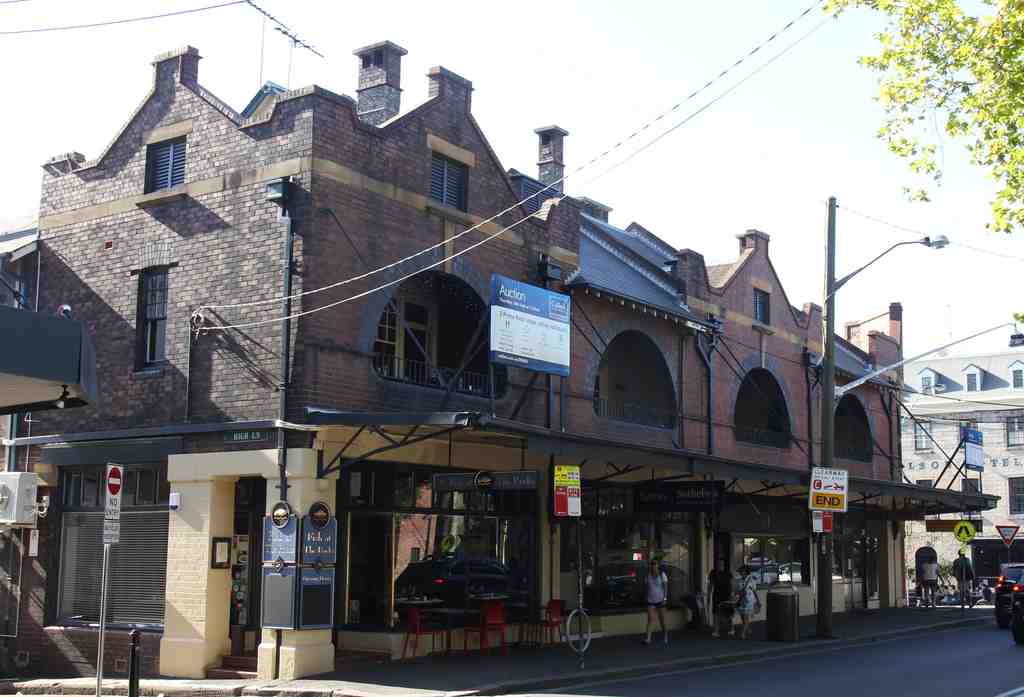
  6. You’re looking for a striking row of brown brick shops with grand arched verandahs and a slate roof, right along Kent Street-just spot the deep, shaded arches and old shopfronts…Meer lezenToon minder

    You’re looking for a striking row of brown brick shops with grand arched verandahs and a slate roof, right along Kent Street-just spot the deep, shaded arches and old shopfronts nestled together. Alright, grab your imaginary bowler hat because you’re standing in front of 21-29 Kent Street, where history’s got more layers than a good lasagne! Imagine it’s 1911: Millers Point is bustling, memories of the bubonic plague still fresh, and the government is on a mission to clean up the area-cue the Sydney Harbour Trust swinging in like urban superheroes. These Edwardian shops spring up, not just as places to buy bread or newspapers, but with cozy homes tucked above, echoing every creak and clatter of city life below. The stone and brickwork gleam in the morning sun, the gable ends showing off fancy ventilators, and iron rods anchor the awnings over your head. Think of the shopkeepers-do they suspect their “shop-homes” would one day be heritage-listed, or that folks would be getting audio tours out front? These buildings, with their altered shopfronts and lively footpaths, are more than architecture-they’re survivors, part of a precinct holding secrets from the 1830s to today. Now, go ahead and touch the old brick-just avoid thinking about all the hands it’s seen!

    Open eigen pagina →
  7. To spot St Brigid’s Roman Catholic Church, look for the sturdy two-storey sandstone building with a simple cross perched on top and big square windows, nestled between red-brick…Meer lezenToon minder

    To spot St Brigid’s Roman Catholic Church, look for the sturdy two-storey sandstone building with a simple cross perched on top and big square windows, nestled between red-brick and weathered buildings on Kent Street. Now, take a deep breath and imagine the year is 1835-Sydney is still dust and bustle, and here, right where you’re standing, the rhythmic clinks of chisels chip away at sandstone pulled straight from the hill behind you. What you see before you is the oldest surviving Catholic church in Australia, and it’s stood its ground since before state schools were even a glint in someone’s eye. Back in those early days, St Brigid’s wasn’t just a church. It was also a lively schoolroom, sometimes echoing with children’s laughter and, let’s be honest, the occasional mischief-can you imagine the Sisters of Mercy trying to keep a straight face at some of their wild ideas? The clever bit: the interior was split in half by folding doors. So, while it was a chapel for Mass on Sundays, by Monday morning those same doors slid away, transforming the floor into bustling classrooms for boys and girls (with just a hint of rivalry, I suspect). The original design is credited to Bishop Ullathorne, the trailblazing Catholic leader who rolled up his sleeves and helped put the Church on a firm footing in this wild new colony. He built this place to serve as solid shelter for faith and learning, and not just for Sunday best. The stone was quarried right here, making the church a true child of Millers Point. Years rolled on, chalk dust turning into history. By the 1870s, the Christian Brothers gave way to the formidable Sisters of Mercy, who ran the show with iron discipline and kind hearts. Then came the 1930s, an era of new ideas and new storeys. The community decided that one floor just wasn’t enough, so up went another-now, the upper floor rang with the sounds of schooldays, while below, the original stones kept their sacred hush for worshippers. Through storms, laughter, prayers, and protests, this sturdy building became an unbreakable thread through generations, its sandy walls still cool to the touch on a hot Sydney day. Even when the school finally closed in 1992, and restoration scaffolding wrapped the building for urgent care in the early 2000s, St Brigid’s never lost its pulse. If you listen closely, maybe you’ll catch the distant echoes of students’ feet dashing across the yard, nuns scolding with a wink, or the soft murmur of prayer winding up those thick stone walls. And despite changes all around, St Brigid’s stands tall-a quiet reminder that here in Millers Point, history doesn’t just live in books: it stands right in front of you, as real as the sandstone beneath your feet. Now, who’s ready to step into the next chapter of the story?

    Open eigen pagina →
  8. Look to your left for a sturdy, cream-colored two-storey building on the corner, with a simple yet bold facade, tall sash windows set in pairs on the upper floor, a strong…Meer lezenToon minder

    Look to your left for a sturdy, cream-colored two-storey building on the corner, with a simple yet bold facade, tall sash windows set in pairs on the upper floor, a strong rectangular parapet above, and a cantilevered awning stretching over the sidewalk-it’s hard to miss once you spot its classic pub silhouette. Standing here on Kent Street, you’d never know that the Captain Cook Hotel has been through more plot twists than a soap opera. Picture this spot back in the 1860s-a rough track, maybe some stray sheep, the distant, and great clouds of dust stirred up by quarrymen slinging sandstone from the rocky outcrops nearby. The Australian Gas Light Company owned this patch, but by 1867, two bold little terraces popped up, ready for business. Shop? Residence? Or pub? By 1870, that was no question-the splayed corner proudly displayed a painted sign proclaiming: “Captain Cook Hotel,” and rumor has it the beer was cold even then. Now, imagine the crescendo of voices every night. Millers Point quickly turned into one of Sydney’s busiest, tightest neighborhoods. Shipping, sailors, birthdays, weddings, wakes-even the odd police inquiry-unfolded in these walls. The Captain Cook was the very beating heart of the community, the place where wharfies, laborers, and locals all rubbed elbows...often literally, since there was barely room to swing a cat or even stir your drink! But not everyone loved this social stew: as the temperance movement grew, some of the more “genteel” residents grumbled about the lively goings-on. Fast forward to 1900, and you’d witness a city in chaos-a bubonic plague outbreak turned life upside down. The government swooped in, resuming huge chunks of land and cutting roads right through the old neighborhood. Streets disappeared, new houses went up, and right at the top of a newly carved cliff, the Captain Cook survived, overlooking a much-changed scene. It was the pub that couldn’t be killed. The 20th century brought its own drama-pubs across Sydney faced strict licensing laws, and the infamous “six o’clock swill.” Six o’clock hit, and suddenly the place would fill with thirsty souls gulping down as much ale as possible. No leisurely sipping here-a race against the clock! The government hoped to curb bad habits, but let’s just say the result was...spirited. Through the decades, landlords and licensees came and went-each leaving their mark, like layers of paint on the old bricks. Some say the best stories were told by the regulars from the Waterside Workers Federation, who made the Captain Cook their second home after long, tough shifts down at the docks. And in the “anything can happen” 1940s, the facade was given a makeover: windows narrowed, arches bricked up, and that signature parapet added-a style that’s stuck. Even as the world changed outside, inside was often the same-laughter, cheers, new friends (or the same old faces) meeting over a pint. The old basement, hidden from all but the most adventurous, might still hold the secrets of 19th-century builders. Some say if you listen closely, you can hear the echoes of a thousand stories-of triumph, disaster, arguments about footy, or love found and lost over frothy mugs. The Captain Cook stands as a reminder of Millers Point’s wild, working-class past-a beacon for the everyday folk who made this place their own. It’s not Sydney’s fanciest pub, but its walls have soaked up all the highs, lows, and the honest laughter of a community that refused to be erased, even as the city rose and changed around it. So, next time you’re inside, raise a glass-and imagine those old sailors, laborers, and locals, toasting life just as you can today. Cheers to survival, reinvention, and a good story well told!

    Open eigen pagina →
  9. Winsbury Terrace is standing proud in front of you, dressed to impress in ornate Victorian Italianate fashion-think of it as a whole row of houses that would never say no to a…Meer lezenToon minder

    Winsbury Terrace is standing proud in front of you, dressed to impress in ornate Victorian Italianate fashion-think of it as a whole row of houses that would never say no to a fancy hat or an extra flourish. Built way back in 1875, this row of three terrace houses knows how to turn heads. Just look at those curvy cast iron lace balconies and those triple-arched windows on the ground floor. Number 77 even goes a little further with elaborate stucco work on the parapet, just in case the neighbors needed a reminder of who had the finest cornices on the block! As you scan the striking Kent Street facade, it’s easy to forget this grand design also has a softer, more generous side. For a time in the 1880s, it became a House of Providence, with the Sisters of Saint Joseph running things here. Mary MacKillop, Australia’s first saint, called this very place home for a short while. Just picture her, living amongst all this beautiful iron lace, probably wishing the Wi-Fi had better signal. And speaking of enduring style, pay special attention to those “rear wings”-in the world of terrace housing, these are apparently kind of a big deal, considered by many to be some of the most significant in all of Sydney. Not bad for what’s basically a fancy house extension. Winsbury Terrace has weathered plenty of change. The 20th century saw the area transition to mostly public housing, and then, with new hands taking over, fresh restoration with authentic materials breathed new life into these buildings. All those handsomely restored details you see today are the work of skilled craftspeople making sure the old charm shines through. You’re standing in a slice of Millers Point’s colorful patchwork-where shipbuilders, saints, architects, and everyday families have each left a mark. Winsbury Terrace proves that heritage isn’t just about being old-it’s about carrying the stories of those who lived, laughed, and maybe even lost their keys here. Onwards to our next stop!

    Open eigen pagina →
  10. Now, let’s travel back to 1796-imagine this hill covered in native bush, when it was called Windmill Hill. Early settlers slapped up a windmill here, hoping it would revolutionize…Meer lezenToon minder

    Now, let’s travel back to 1796-imagine this hill covered in native bush, when it was called Windmill Hill. Early settlers slapped up a windmill here, hoping it would revolutionize bread-making. Turns out, it was more a lesson in why you don’t build windmills with dodgy sails-locals pinched the canvas, storms wrecked the machinery, and by 1800, the poor thing was already falling apart. That’s right, even in its first fifteen years, Sydney was already struggling with infrastructure! By 1804, Governor King, worried about rebellious Irish convicts (known as the “Death or Liberty” boys-never a dull moment), began building Fort Phillip. This was supposed to be an invincible citadel, but it was never finished. It did, however, sport heavy cannons-just in case an army of croissants-wielding French or some fiery Irishmen came storming in. Over the years, flags went up, signaling stations were installed, and semaphore arms flapped about trying to send secret messages across the city and harbour. The place became known as Flagstaff Hill, and trust me, nobody could complain about their reception up here. But the real magic began mid-19th century. In 1857, construction started on the Observatory thanks to a duo of architects: William Weaver drew the plans, Alexander Dawson made sure nobody squashed the building with a telescope. The Observatory was finished in 1859, looking elegant but with function at heart. Beyond its stylish façade were rooms for telescopes, calculations, and even a swanky astronomer’s residence that probably made other scientists jealous. One of its wildest features is the time-ball tower. Each day at exactly 1 pm, a large black ball would drop from the top-signaling to all the ships in the harbour and everyone across Sydney, “Set your watches!” No iPhones in the 1800s, folks. Back in the day, this was high-tech-until someone had to climb up by hand to hoist the ball. Nowadays, an electric motor helps, but the drop still happens-with all the tension of a New Year’s countdown. Sydney Observatory has seen it all: comet-hunting astronomers, anxious military commanders, and even a few garden-planting botanists. For more than a century, scientists here mapped the southern stars, photographed the night sky, and kept Sydney’s clocks ticking. Through wars, depressions, and debates about relocating away from city lights, the Observatory stood stubbornly on this hill, playing host to dazzling events-like the return of Halley’s Comet or Mars in close encounter. Sometimes, it was nearly closed, but public outcry kept it alive-and thank goodness! Otherwise, where would all those school groups learn why Pluto didn’t have a seat at the planet table? Inside, you’ll find treasures like the 29-centimeter refractor telescope from 1874-the oldest telescope in Australia still in regular use-and the 7.25-inch Merz refractor, which traveled all the way from Germany in the 1860s. And while the astronomical science has mostly moved to cleaner, clearer skies, the Observatory survived as a museum, public venue, and a stellar hub for curious visitors. So whether you’re gazing through a cutting-edge telescope or just appreciating the skill of those early stonemasons, know that you’re part of a legacy that connects sky-watchers, scientists, and everyday Sydneysiders across the centuries. And remember, every time you check your watch, somewhere in Sydney a time ball just might be dropping.

    Open eigen pagina →
  11. Here you are, standing right in the heart of the Millers Point & Dawes Point Village Precinct-a place with more stories layered into its sandstone than there are flavors at an ice…Meer lezenToon minder

    Here you are, standing right in the heart of the Millers Point & Dawes Point Village Precinct-a place with more stories layered into its sandstone than there are flavors at an ice cream shop! Picture it: a peninsula jutting into Sydney Harbour, with steep drops, rocky terraces, and winding lanes. You’re atop history itself-where the city’s fate, fortune, and flavor have been shaped since 1788, before they even knew Vegemite would exist. Long, long before anyone in a tricorn hat set foot here, this area belonged to the Cadigal people. Imagine the salty breeze mingling with the shout of seagulls and the splash of paddles on water. The Cadigal fished and gathered shellfish near what’s now Cockle Bay, leaving behind thick piles of shells called middens. Eventually, those middens were pinched by settlers and put into lime kilns to help build Sydney’s first houses-so you could say the Cadigal quite literally laid the foundation for the city! The early European settlers, let’s be honest, weren’t exactly looking for adventure. The rocky ridges and steep hills were enough to scare off anyone who’d already had a tough day’s sail from Britain. Their priorities were simple: somewhere to get water, somewhere not too hilly, and somewhere to stick a flag. By July of 1788, a flagstaff went up-a flag-waving “I was here first!” moment-on what became Flagstaff Hill. From there, Millers Point became home to some ingenious entrepreneurship: Sydney’s first government windmill spun up on Windmill Hill in 1797. Jack “the Miller” Leighton, with his fleet of windmills, basically turned this shoreline into an 1800s version of Silicon Valley-but with more sails and less Wi-Fi. The area’s name grew, with nicknames like Goodye, Jack the Miller’s Point, Tar-ra, and even just “the Point.” Apparently, settlers loved variety almost as much as they loved confusing future historians. The high ground and breathtaking views made this spot perfect for forts. In 1804, Fort Phillip rose to the task-well, for a while at least, before its remains were reused for the Observatory. Of course, Millers Point was never just military marches and cannonballs. It quickly sprouted jetties and wharves, busy with the sounds of merchants and laborers. By the 1830s, this place had swagger-merchants, artisans, sailors and their families all jostling for space and opportunity. The nickname “Quality Row” marked out Argyle and Lower Fort Streets for the wealthy, while “The Quarries” echoed from the stone dust below, cut for houses and services. Throughout the 19th century, it was a vibrant, multicultural hub. Picture the markets humming, pubs alive with gossip, church bells calling in the faithful-even if the Hero of Waterloo Hotel occasionally called in the unruly as well. So much was packed into these winding streets: churches rose, ships unloaded wool, and new streets like Kent and Argyle were carved through ancient rock. And navigating here was so tricky, they had to get convicts to cut the Argyle Cut-a massive engineering project dug through solid rock with nothing but hand tools and, probably, a lot of convincing grumbling. Fast forward to the 20th century and things weren’t always easy. The area was hit by a plague-the literal kind, not just a bad run of colds-with panicked officials tossing dead rats straight into the harbor. The government swooped in, took control of the waterfront, and began demolishing whole streets to modernize the port. Hickson Road was created, new wharves sprang up, and Millers Point even became a “company town,” with worker housing rising to keep up with booming trade-or, in slower times, with the lack of it. World wars, strikes, unemployment, and the slow-march of Sydney’s modernization all left their mark. But the sense of community remained. Locals rallied to stop unwanted high-rises and later, Green Bans protected the neighborhood's heritage. In the late 20th century, buildings became shops and galleries, new homes popped up, and the precinct finally gained the official recognition it so long deserved-complete with a spot on the State Heritage Register by 2003. Today, look around-those city sounds, the breeze off the harbor, the mix of old terraces and gleaming modern life. You’re part of the latest chapter in a story hundreds of years old. In Millers Point & Dawes Point, history isn’t locked away in a museum; it’s lived, right here, every day. And just think: if Jack the Miller came back now, he’d probably be completely lost… but at least he could grab a coffee!

    Open eigen pagina →

Veelgestelde vragen

Hoe begin ik de tour?

Download na aankoop de AudaTours-app en voer je inwisselcode in. De tour is direct klaar om te starten – tik gewoon op afspelen en volg de GPS-geleide route.

Heb ik internet nodig tijdens de tour?

Nee! Download de tour voordat je begint en geniet er volledig offline van. Alleen de chatfunctie vereist internet. We raden aan om te downloaden via wifi om mobiele data te besparen.

Is dit een groepsrondleiding met gids?

Nee - dit is een audiotour met eigen gids. Je verkent zelfstandig op je eigen tempo, met audiovertelling via je telefoon. Geen tourguide, geen groep, geen schema.

Hoe lang duurt de tour?

De meeste tours duren 60-90 minuten, maar jij bepaalt het tempo volledig. Pauzeer, sla stops over of neem pauzes wanneer je wilt.

Wat als ik de tour vandaag niet kan afmaken?

Geen probleem! Tours hebben levenslange toegang. Pauzeer en hervat wanneer je wilt – morgen, volgende week of volgend jaar. Je voortgang wordt opgeslagen.

Welke talen zijn beschikbaar?

Alle tours zijn beschikbaar in meer dan 50 talen. Selecteer je voorkeurstaal bij het inwisselen van je code. Let op: de taal kan niet worden gewijzigd na het genereren van de tour.

Waar vind ik de tour na aankoop?

Download de gratis AudaTours-app uit de App Store of Google Play. Voer je inwisselcode in (verzonden per e-mail) en de tour verschijnt in je bibliotheek, klaar om te downloaden en te starten.

verified_user
Tevredenheid gegarandeerd

Als je niet tevreden bent met de tour, betalen we je aankoop terug. Neem contact met ons op via [email protected]

Veilig afrekenen met

Apple PayGoogle PayVisaMastercardPayPal

AudaTours: Audiotours

Vermakelijke, budgetvriendelijke wandeltours met eigen gids

Probeer de app arrow_forward

Geliefd bij reizigers wereldwijd

format_quote Deze tour was een geweldige manier om de stad te zien. De verhalen waren interessant zonder te gekunsteld aan te voelen, en ik vond het heerlijk om op mijn eigen tempo te verkennen.
Jess
Jess
starstarstarstarstar
Tbilisi-tour arrow_forward
format_quote Dit was een prima manier om Brighton te leren kennen zonder je als toerist te voelen. De vertelling had diepgang en context, maar overdreef het niet.
Christoph
Christoph
starstarstarstarstar
Brighton-tour arrow_forward
format_quote Begon deze tour met een croissant in de ene hand en nul verwachtingen. De app gaat gewoon mee met je, geen druk, gewoon jij, je koptelefoon en gave verhalen.
John
John
starstarstarstarstar
Marseille-tour arrow_forward

Onbeperkte audiotours

Ontgrendel toegang tot ELKE tour wereldwijd

0 tours·0 steden·0 landen
all_inclusive Onbeperkt verkennen

