
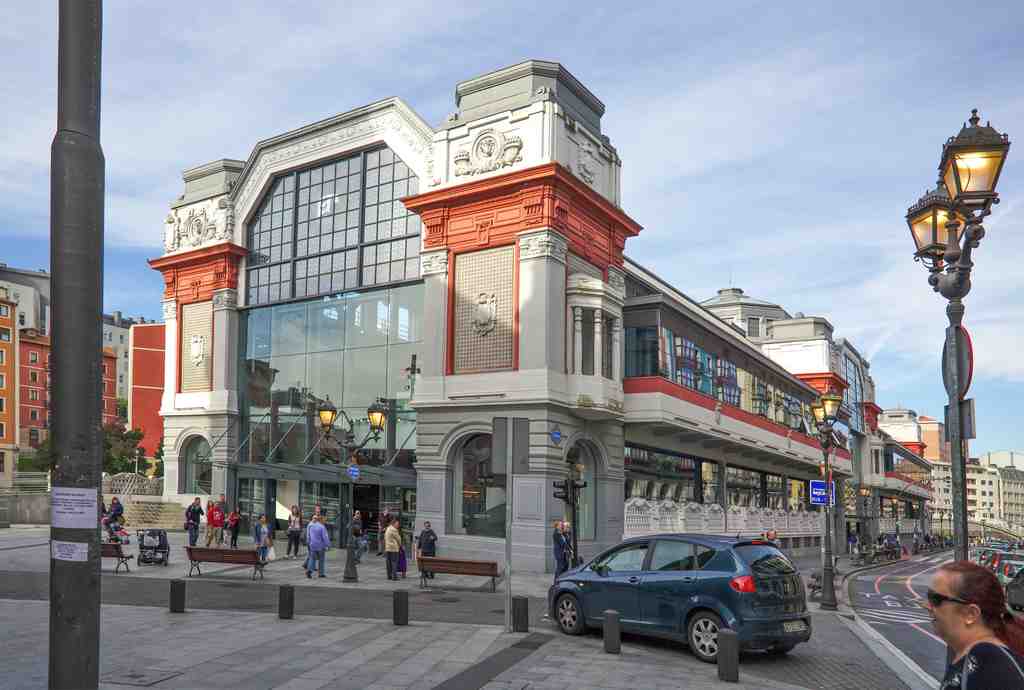
빌바오 오디오 투어: 구시가지의 전설, 시장, 다리
황금빛 종탑이 빌바오 강어귀 위로 반짝이고, 스테인드글라스 아래에는 시장 가판대가 북적이며, 다리는 세기를 가로질러 우아하게 뻗어 있습니다. 카스코 비에호는 어디를 봐야 할지 아는 이들에게 그 비밀을 드러냅니다. 이 셀프 가이드 오디오 투어에서 빌바오 구시가지의 숨겨진 길을 따라가며 대부분의 여행자들이 놓치는 회복력, 스캔들, 그리고 재탄생의 이야기를 발견해보세요. 어떤 재앙이 한때 신성한 교회를 하룻밤 사이에 침수된 피난처로 만들었을까요? 19세기 시장은 왜 쇠사슬로 다리를 건설해야 한다고 주장했으며, 어떤 폭발적인 사건이 다리의 붕괴로 이어졌을까요? 지역 해변의 소금은 유럽에서 가장 완벽한 시장 건물의 기반을 어떻게 위협하고 있을까요? 강변을 걷고, 유서 깊은 다리를 건너고, 불빛이 비치는 예배당과 울려 퍼지는 시장 통로를 지나보세요. 각 랜드마크는 반란, 건축적 야망, 그리고 일상적인 생존에 대한 전설 속으로 여러분을 더 깊이 빠져들게 할 것입니다. 빌바오의 과거가 새로운 빛으로 펼쳐지는 것을 목격하며 발밑에서 역사의 맥박을 느껴보세요. 반짝이는 탑을 따라가며 카스코 비에호 벽 안에 숨겨진 알려지지 않은 이야기들을 들을 준비가 되셨나요? 여러분의 여정은 지금 시작됩니다.
투어 미리보기
이 투어에 대하여
- schedule소요 시간 40–60 mins나만의 속도로 이동
- straighten2.3 km 도보 경로안내 경로 따라가기
- location_on
- wifi_off오프라인 작동한 번 다운로드, 어디서든 사용
- all_inclusive평생 이용언제든지 다시 재생 가능
- location_on성 안토니오 대성당에서 시작
이 투어의 정류장
lock_open 3개 무료 미리보기 · 12개 구매 시 잠금 해제
Look across the river for a stone church with a tall, lit-up bell tower, standing almost right on the water’s edge-if you spot a bridge and a golden glow, you’re in the right…더 보기간략히 보기
Look across the river for a stone church with a tall, lit-up bell tower, standing almost right on the water’s edge-if you spot a bridge and a golden glow, you’re in the right place. Welcome to the Church of Saint Anthony the Great, or as the locals call it, San Antón-the church so special it made its way onto the coat of arms of Bilbao! Imagine standing here in the 1400s: the river’s right below your feet, and there’s only a single-naved church perched on land that once stored goods for three centuries straight. Before it was a church, this spot was all about hustle and bustle-think medieval Amazon warehouse, but with more chainmail and fewer delivery trucks. When you look up at this grand building, set right by the flowing estuary of Bilbao, you’re staring at a living survivor. The church was first consecrated all the way back in 1433, but even then, it was just a humble, rectangular space. But the people of Bilbao? They’re not so easily satisfied. As the city grew, so did their church. By the 16th century, the building had blossomed into a full-fledged Gothic beauty, with pointed arches and dramatic ribbed vaults that still whisper stories of the past if you listen carefully enough. Gothic art may have started in fancy France, but it took its sweet time crossing the Pyrenees to reach Biscay. The Basque Country had its own ideas about how grand ‘grand’ should be! Unlike towering French cathedrals, the Gothic style here got a local twist: more cozy, more humble, but still breathtaking-like a cathedral that downsized after too many years on Airbnb. Swing your eyes to the front façade and-surprise!-it’s not Gothic at all but pure Renaissance splendor, built in 1548 with Corinthian columns and cheeky angel faces peeking out from around the arches. You’ll spot two niches, once empty, now with statues of Saint Peter and Saint Paul added in the 19th century. Back in the Renaissance, the more human heads carved into the stone were all the rage-nothing says “I’m ahead of my time” like an angel with attitude. Let’s step inside the story for a moment. Through centuries, this church weathered it all-wars, fires, and especially floods. The river, as pretty as it looks tonight, has sent water right through the doors more times than you’d think. The most recent flood in 1983 left the furniture floating like ducks in a bathtub. And during the Carlist war, the church briefly ditched its holy duties for a less glamorous role as a military warehouse. Twice in history, the whole place had to close up for repairs-once in 1881 because, frankly, it was falling apart faster than my willpower at a pintxos bar. Restoration changed some of the original magic, but you can still spot signs of every era if you look closely. Peek inside-if you can-and you’ll find three chapels, each with history tucked into every corner. The Chapel of Provost is the first and grandest, separated once by a passageway linking to a family’s old tower house. You’ll find silver lamps gifted in 1621 (no batteries required), and intricate stained glass. Then there’s the Chapel of Piety, with its own ancient ironwork and coats of arms; and finally, the petite Chapel of San Roque, which once served as the original entrance, now transformed into an artistic mausoleum, altars, and sculptures watching over borrowed time. Look up at that shining belfry tower-it’s not just tall, it’s dramatic, built in 1774, topped with a Baroque dome and a whirling weathercock, which has braved the winds since 1775. Talk about job stability! If you’re wondering, there’s a bell with a Latin inscription that rings out, keeping the heartbeat of the city in time with local life. Step back from the river and listen for the distant tolling bell, echoing across the water. That’s not just a sound, that’s centuries of Bilbao’s history calling out to you. Every stone, every rebuilt wall and flooded nave, the laughter and sorrow within-you’re at the heart of the Old Town, and Saint Anthony the Great is still keeping a watchful eye over all who pass by. So, what do you think: would you rather rebuild a church for centuries, or just try to keep your socks dry in a flood? Onward to our next stop!
전용 페이지 열기 →In front of you, stretching gracefully over the river, is the Bridge of La Ribera-a pale-colored pedestrian bridge with a wide parabolic arch, white railings, and a staircase at…더 보기간략히 보기
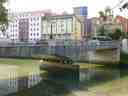
In front of you, stretching gracefully over the river, is the Bridge of La Ribera-a pale-colored pedestrian bridge with a wide parabolic arch, white railings, and a staircase at each end, perfectly set against the colorful facades of the old town. Alright, take a deep breath of that river air and look up at the curved bridge ahead, because you’re about to cross one of Bilbao’s most storied routes-a spot where generations have walked, worried, cheered, and, if we’re honest, probably argued about the best pintxos. But this isn’t just any bridge, oh no! The Bridge of La Ribera, also known for centuries as the San Francisco Bridge, is maybe the most accident-prone celebrity in town. Let’s turn the clocks back-way, way back. Picture it: the late Middle Ages. Just nearby, the grand Convento de San Francisco stood, bustling with friars, and even showing off the imperial crest of Carlos V from the 1500s. The area was so famous for this monastery, even the street and the bridge you’re on took its name. That’s a lot of billing for one holy spot! Over the years, that old convent was abandoned, reoccupied, and finally demolished in the 1800s, but its ghost still lingers under nearby plazas, and recent excavations even dug up ancient church stones, silent and weathered. Now, about the bridge itself... few have had such a dramatic life. In 1506, the Franciscans, keen on an easy shortcut to the city (lazy or clever-you decide!), tried to build their own bridge, but Bilbao’s powerful leaders stood in the way. Despite getting approval from a royal court in Valladolid, all they managed to complete was one lonesome abutment on the right side, which was soon swept away by the river’s fury. Fast forward to 1735: at last, a sturdy stone bridge! Or so they thought. Two years later, on a November morning, a flood crashed through Bilbao, and the proud bridge collapsed with a rumbling splash. Witnesses said it was like watching a pair of great stone arms sink beneath the waves. But Bilbao’s folks have never been quitters-by the late 1700s, they tried again with a wooden bridge using robust oak and bits of limestone, constructed with all the care of a Basque grandmother’s stew. Still, in 1813, French troops burned it down for firewood during their retreat. Talk about adding insult to injury! Did Bilbao give up? Absolutely not! Through the 1800s, the bridge was reborn again and again-sometimes with chains, sometimes with iron cables, sometimes with stone, and sometimes just as a floating bridge of boats. In 1827, a chain suspension bridge went up. But that too soon gave way to a version with wire cables, and later an iron arch built by a mayor who thought "pasadera" sounded more authentically Spanish than the French-sounding "pasarela." If nothing else, Bilbao’s bridges are as stubborn as the people! By the time of the Carlist Wars in the late 1800s, bridge after bridge was attacked or destroyed. In 1874, bombardment severed the cable of a suspension bridge, leaving only Saint Anton’s bridge intact for the city to use. Eventually, Pablo de Alzola, a former mayor, designed a new iron bridge, which opened in 1881. Zig-zagging between innovation and disaster, it’s a wonder anyone dared cross at all! There were talks, and even a catchy tune was sung about the bridge that once dangled over the river. But don't be fooled-while some believed the song was about Portugalete’s famous transporter bridge, it was actually for the San Francisco Bridge that once held center stage here. Today’s Bridge of La Ribera dates from 1938, built in the tough times just after older bridges were blown up in the Spanish Civil War. Architect Fernando Arzadun gifted the city this elegant arch, connecting San Francisco and Casco Viejo in a way that’s lasted-though if you look up close, you might see some clunky pipes and lines strapped on for modern needs. Not so glamorous, but hey, even celebrities age! As you cross, listen for your footsteps echoing against metal and stone-imagine past centuries of river floods, galloping hooves on the streets, shouts of builders and friars, and the great sigh of Bilbao each time the river calmed after a storm. The soul of the city flows under this bridge, restless and resilient, always ready for the next rebuild. Fascinated by the current bridge, origin or the historical background? Let's chat about it
전용 페이지 열기 →
12개 정류장 더 보기정류장 적게 보기expand_moreexpand_less
To spot the Flour Factory The Ceres, look just across the river for a large, elegant cream-colored building with neat rows of windows and a steeply pitched, grayish roof-its…더 보기간략히 보기
To spot the Flour Factory The Ceres, look just across the river for a large, elegant cream-colored building with neat rows of windows and a steeply pitched, grayish roof-its distinct grid-like facade sets it apart from its neighbors. Now, as you’re standing here, imagine yourself over a hundred years ago, when this bustling quarter was all about industry and hard work. The year is 1899, and in a tide of excitement and flour dust, the brand-new Ceres Flour Factory is rising up right here. The neighborhood buzzes with gossip. Who’s behind this giant new factory? Meet Toribio Ugalde, the founder, who decided to name his mill after Ceres, the Roman goddess of harvests. Good choice, because if anyone could keep your breadbasket full, it was her! This was no ordinary building-oh no! It was the first in all of Spain to use a groundbreaking technique called Hennebique reinforced concrete. Picture the engineers, led by Ramón Grotta and Palacios and the architect Federico Ugalde, scratching their heads, pouring concrete, and hoping the whole thing wouldn’t topple into the river. Luckily, it stood strong, with a smart brick-and-artificial-stone facade that gleamed in the sunlight. Those windows with their graceful, arched frames let in clouds of flour and laughter alike. Originally, the building wore a fancy mansard roof like a French hat, but in the 1950s, someone decided it needed a haircut... and it lost its top, making room for two more floors. As flour mills go, The Ceres was as stylish as they come, with grand arches and detailed molding so nice, even the bricks seemed to be showing off. Through the years, its concrete bones held steady, earning it historic status as a technological star in Basque architecture. And just when it thought its story was over, a clever architect came along in 2001, transforming the old mill into homes, while keeping its proud, sturdy look. Imagine the stories this place has seen-harvest festivals, flour deliveries, and now, someone’s morning coffee by the window. What a transformation!
전용 페이지 열기 →To spot the Bridge of Mercy, just look ahead for a sturdy concrete structure with elegant old-style lamp posts stretching across the river, right in front of a cluster of…더 보기간략히 보기
To spot the Bridge of Mercy, just look ahead for a sturdy concrete structure with elegant old-style lamp posts stretching across the river, right in front of a cluster of pastel-colored buildings and a Baroque church. Now, as you stand here by the water, take a good look at the Bridge of Mercy-known as Mesedeetako zubia in Basque. Imagine the gentle lapping of the river against the stone pillars, and let’s jump back in time. This bridge links San Francisco and Casco Viejo, Bilbao’s bustling Old Town. Its name comes from the Church of La Merced tucked right at one end, which also lends its title to the nearby quay and tiny street. The story really starts centuries back. Picture it: back in 1567, cloaked mercedarian nuns shuffled across the river to settle here. Their grand Baroque convent, still standing nearby, began rising in the 1660s, and soon the area buzzed with life-and maybe the occasional nun giving directions to lost fishermen. By the 1800s, Bilbao faced a crisis. After a brutal siege during the Carlist Wars, in May 1874, only one bridge was left in town. People desperately needed a new crossing. The solution? A wobbly, provisional wooden bridge appeared, clattering with horses and carts as it opened in early 1875. It needed so many repairs, locals probably joked it had more patches than a pirate’s trousers. But progress never sleeps! In the 1880s, a smart engineer, Ernesto Hoffmeyer Zubeldia, designed a sleek, double-arched bridge out of stone and brick. Picture workers hammering away, dust flying, steam rising from the river. By 1887, the Bridge of Mercy, strong and elegant, was ready. It stood until war again swept Bilbao. In 1937, as enemy forces approached, the defenders of Bilbao had no choice-they blew up the bridges, including this one. Imagine the crash and rumble as stone plunged into the river. After chaos, calm. The new bridge you see was built of concrete in 1938 by Manuel Gil de Santibañez, its arches lower and broader to handle the modern world. The dictatorship named it after a general, but Bilbao’s spirit wouldn’t have it-by 1980, it was once again the Bridge of Mercy. And here’s a twist worthy of a detective film: someone spread a rumor that the fancy lamps on the bridge came from another old bridge after the 1983 floods. It was a trick! A classic urban legend, and even today, people still repeat the tale-proof that stories, much like bridges, love to travel. So as you cross, imagine the echoes of centuries-nuns, soldiers, booming blasts and clever pranks-held safely above the rippling water.
전용 페이지 열기 →To spot Barrenkale Barrena, just look straight ahead down the narrow, cobblestone street lined with tall, colorful buildings and charming balconies on each side-it’s like stepping…더 보기간략히 보기
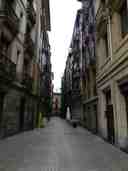
To spot Barrenkale Barrena, just look straight ahead down the narrow, cobblestone street lined with tall, colorful buildings and charming balconies on each side-it’s like stepping right into the heart of old Bilbao! Now, let me take you on a little journey! Picture yourself centuries ago, as you stroll these same stones, maybe dodging a runaway chicken or two-this street has seen it all! Barrenkale Barrena is not just any street; it’s one of the famous Siete Calles, or “Seven Streets,” the true soul of Casco Viejo. These are the oldest streets in Bilbao, where everything began. Imagine the air buzzing with the sounds of merchants shouting out their best deals and the scent of fresh bread mixing with the salty river breeze. Stories of love, rivalry, laughter, and even a little mischief have echoed off these stone walls for hundreds of years. Maybe a mystery or two remains unsolved here-was that just the wind or a friendly ghost of a baker who forgot his midnight snack? As you stand in Barrenkale Barrena, you are literally surrounded by layers of Bilbao’s history, where every building and every stone has a tale to whisper. So take a deep breath and let the atmosphere soak in-who knows, you might just feel the heartbeat of Bilbao under your feet!
전용 페이지 열기 →Look to your left and spot the grand stone building with arched windows, intricate carvings, and a large, elegant wooden door right at street level- that’s the Bidebarrieta…더 보기간략히 보기
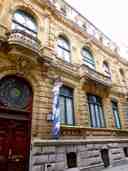
Look to your left and spot the grand stone building with arched windows, intricate carvings, and a large, elegant wooden door right at street level- that’s the Bidebarrieta Municipal Library! Now, let’s imagine you’re walking these narrow Bilbao streets in the late 1800s. Suddenly, you find yourself in front of this marvelous building, all ornate and proud, with stone faces peeking out from under the archways-almost as if the library itself is whispering the secrets of its past. This isn’t just any library: our friend Severino Achúcarro, a local architect with a flair for mixing styles, dreamed it up between 1888 and 1890 to be more than just a home for books. It began as “El Sitio,” a lively spot for locals to gather, honor the brave defenders of Bilbao from the Carlist Wars, and probably tell a joke or two about Don Quixote-no sword fighting in the reading room, though! Fast forward, and it wasn’t until 1956 that the stories began stacking up as bookshelves took over. But in 1983, disaster struck: a huge flood swept through Bilbao, water rushing where only whispers and page turns belonged. Five years of silence followed, until-like a plot twist in a novel-the building returned in 1988, shining brighter after its 2015 facelift. So, as you stand here, see if you can sense all the chapters hidden in these walls-echoes of laughter, friendship, and the occasional soggy bookmark!
전용 페이지 열기 →Miguel de Unamuno Square is right in front of you-just look for the wide, open plaza with stone steps leading down into a lively space, surrounded by colorful historic buildings…더 보기간략히 보기
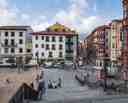
Miguel de Unamuno Square is right in front of you-just look for the wide, open plaza with stone steps leading down into a lively space, surrounded by colorful historic buildings and a tall obelisk rising up in the center. Imagine you’re standing at the heart of old Bilbao, where the air buzzes with the sound of footsteps and chatter. This square is named after the famous philosopher and writer, Miguel de Unamuno, who was born just a stone’s throw away-close enough that if he were alive today, he could pop by for a quick coffee (and probably start a debate too). All around you, history peeks from every corner. There’s the Basque Museum right here, filled with stories and secrets of ancient Bilbao, and next to it, the Archaeological Museum-can you feel the mysteries waiting just behind those walls? And if you look to the steps leading up, those are the Calzadas de Mallona, built way back in 1745, connecting the bustling Casco Viejo with the grand Basilica de Begoña. During Semana Santa, the museum here keeps the memory of dramatic processions alive. At the very center of it all is the monument to Unamuno himself, as if he’s keeping one watchful eye on the square while pondering life’s big mysteries. So, take a deep breath and let the energy of centuries-old debates, processions, and everyday moments sweep over you-this is the soul of Bilbao!
전용 페이지 열기 →To spot the Basque Museum, look for a grand, ochre stone building with three levels of elegant arches wrapped around a quiet inner courtyard, a bit like a secret palace tucked…더 보기간략히 보기
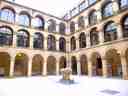
To spot the Basque Museum, look for a grand, ochre stone building with three levels of elegant arches wrapped around a quiet inner courtyard, a bit like a secret palace tucked away from the city’s bustle. Imagine standing right where the Jesuits once strolled, their black robes swishing quietly against the stone as they moved through the cool, echoing cloister. The Basque Museum began its life in 1921 in this very spot, where the ground floor once buzzed with scholarly whispers and the clack of ancient shoes on old tiles. But wait-long before it held treasures of Bilbao’s past, these walls belonged to the Colegio de San Andrés, run by the Jesuits, until a royal order in 1767 sent them packing from Spain, leaving their future to mystery. Later, the humble museum started with the help of the city itself, slowly growing, like a collector with a never-ending attic, into every nook and cranny of the building. Inside, waiting just behind those arches, are relics of Vizcaya’s archaeology and the wild, wonderful tales of Basque traditions. The museum is under renovation, so you might hear a bit of modern hum, but the magic of the past lingers-can you feel the chill of ancient secrets and the pride of countless generations? It’s no wonder that since 1962, this place has been a National Historic-Artistic Monument-a keeper of stories, laughter, sorrow, and maybe, just maybe, a ghostly Jesuit or two checking up on their old school!
전용 페이지 열기 →To spot the Line 3 (Bilbao Metro) station, look for a futuristic, bright, tunnel-shaped space with silver curved walls, glowing blue signs, and sleek staircases leading up from…더 보기간략히 보기
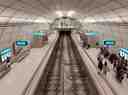
To spot the Line 3 (Bilbao Metro) station, look for a futuristic, bright, tunnel-shaped space with silver curved walls, glowing blue signs, and sleek staircases leading up from the platforms on either side of the train tracks. Welcome to the state-of-the-art Line 3 of the Bilbao Metro! If you’re feeling a little like you’ve stepped onto a spaceship, you’re not too far off-most of the stations here were designed by the world-famous architect Norman Foster. His signature style is all over the smooth curves, clean lines, and smart lighting you see around you. Now, if only we could convince him to install a chocolate vending machine at every platform! But back to our trains. The Line 3 isn’t just a pretty face. It was inaugurated on April 8, 2017, with a fanfare that echoed across the north of Bilbao-literally connecting neighborhoods like Ocharcoaga, Churdínaga, Zurbaran, and Uribarri before winding its way to the stations of Matiko and Kukullaga. Imagine being able to zip from the quiet hillsides of San Antonio in Echévarri right into the bustling Casco Viejo in just a handful of minutes. Suddenly, that last-minute dash for pintxos in the Old Town became a lot more possible! There’s some clever engineering going on under your feet. Line 3 shares every inch of its track with Euskotren’s suburban lines-E1, E3, and E4-bringing together travelers from as far as San Sebastián and Bermeo. This blending of routes means that people coming from seaside towns, garden suburbs, and even industrial hubs all converge here, in the heart of Bilbao, making the city feel like one big, buzzing neighborhood. It wasn’t always this smooth, you know. The early plans for Line 3 started buzzing around back in 2007. At first, the line was supposed to snake through just six stations-then, with some classic Basque determination, they added Matiko to make seven. There were debates, reroutes, and a few head scratches about whether to link more neighborhoods or not. The first groundbreaking didn’t even come until 2009, and more than a few politicians probably lost some hair over the delays (or maybe that’s just metro stress). One dramatic moment-picture this-was the start of the great Artxanda tunnel: nearly two kilometers of rock and soil had to be conquered to make way for the trains. And while that was underway, old stations like Loruri-Ciudad Jardín were closed down, and the beloved Zazpikaleak/Casco Viejo station was demolished and rebuilt into a glittering, modern hub. Now, this is more than just functional steel and concrete. The design isn’t just about looking cool-Foster’s “cavern” stations, with rounded ceilings and hidden lighting, actually make the underground feel bright and welcoming. Each stop has become a little world of its own, joining residents, students, and the odd flustered tourist searching for a map. Speaking of trains, keep your eyes peeled for those sleek CAF class 900 and 950 models that glide through here; sometimes they’ve got four cars, sometimes three, but always with smart screens, good lighting, and even onboard toilets. These beauties not only ferry more than 70,000 people daily, but they do it using less energy, and with enough doors that you’re never squashed like a sardine in a can-unless, of course, you’re traveling at rush hour, when a sense of humor might be your best carry-on. And get this: the journey from a hillside like Otxarkoaga down into Casco Viejo takes barely five minutes-about enough time to listen to a single song, unless you’re into prog rock epics! The core of the action is the Zazpikaleak/Casco Viejo station, where you can transfer between Line 1, Line 2, and tram services-a true crossroads that’s drawn more energy and life into Casco Viejo than a Saturday night party. Looking to the future, urban dreamers are planning to stretch Line 3 west to the airport-imagine being able to hop onto a train at Matiko and arrive at your gate at La Paloma terminal in only seven minutes. You might just make your flight even if you’re a last-minute packer. So next time you ride, whether you’re heading for the seaside, a Basque festival, or just back home, remember: you’re gliding through one of the region’s most ambitious pieces of public art and engineering-a living, rumbling, people-moving vein at the heart of Bilbao. And don’t worry, this is the only subway in Spain where you’re guaranteed not to meet a mole. Or at least not a very big one. Wondering about the rolling stock, operator and service or the architecture? Feel free to discuss it further in the chat section below.
전용 페이지 열기 →To spot the Church of San Nicolás, just look straight ahead for a grand stone building with two impressive towers on either side of its wide, symmetrical façade, a central doorway…더 보기간략히 보기
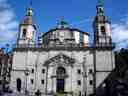
To spot the Church of San Nicolás, just look straight ahead for a grand stone building with two impressive towers on either side of its wide, symmetrical façade, a central doorway crowned by sculpted decorations, and a clock right above the main entrance. Welcome to the Church of San Nicolás-this isn’t just a church, it’s one of Bilbao’s most stubborn survivors! Picture this: the year is 1490, this spot was once the heart of a bustling fishing neighborhood right on the city’s edge. Local fishermen would walk up to a humble hermitage dedicated to San Nicolás de Bari, hoping he’d keep their boats afloat. The only storms they wanted to face were in their tea! But Bilbao isn’t Bilbao without a bit of drama. One day, the river had other plans-a massive flood smashed the old hermitage to bits. Now, you’d think the story might end there, but instead, the locals rolled up their sleeves and went even grander: in 1756, this stunning Baroque church rose from the ruins, courtesy of the architect Ignacio Ibero and a crowd of hopeful parishioners. If you close your eyes, you can almost hear the echoes of hammers and chisels ringing out through the Old Town. Walk closer and take in the details. This church is shaped like a Greek cross, all set neatly into a square. Right above you, a dome soars overhead, disguised from outside by a spire and the symmetrical towers framing the entrance. But don’t get too lost in the beauty-San Nicolás has seen quite a few wardrobe changes! It had to shut its doors during the Napoleonic invasion, and at one point in 1816, a bolt of lightning crashed down and gave the church a pretty literal shock. Not to be left out of history, during the Carlist wars it was even used as a military storehouse-imagine storing cannonballs and gunpowder under the same roof as sacred statues! And there’s even more inside: the chapels and sacristy fill the church’s corners, but the real showstopper’s the Baroque-Rococo altarpieces, created by Juan Pascual de Mena-the same sculptor who worked for the Spanish court. When he and his team got to work, they didn’t just pack up their chisels and head home, they actually moved to Bilbao. Soon, every chapel was home to swirling angels, saints (from San Pedro and San Pablo to San Crispín and Santa Bárbara), and polychrome figures so vivid they must have seemed to sing under the candlelight. Surviving wars, lightning, floods, and maybe the odd impatient parishioner or two, the church refused to bow down-even when it was used as a powder magazine. Amazingly, nothing blew up! In 1882, they expanded the church, adding a new sacristy and a tiny oratory called the Comulgatorio, designed by Julio Saracíbar. And in 1891, the main portal was spruced up, complete with a bronze tympanum by master Josep Llimona, topped with the city’s coat of arms and two watchful lions. And here we are, centuries later, standing before a church that’s as much a survivor as a sanctuary. You might say San Nicolás has seen almost everything-except, perhaps, someone walking in looking for fishing advice! If you're keen on discovering more about the description, altarpieces or the subsequent alterations, head down to the chat section and engage with me.
전용 페이지 열기 →
자주 묻는 질문
투어는 어떻게 시작하나요?
구매 후 AudaTours 앱을 다운로드하고 교환 코드를 입력하세요. 투어를 바로 시작할 수 있습니다 - 재생을 탭하고 GPS 안내 경로를 따라가시면 됩니다.
투어 중 인터넷이 필요한가요?
아닙니다! 시작 전에 투어를 다운로드하면 완전히 오프라인으로 즐길 수 있습니다. 채팅 기능만 인터넷이 필요합니다. 모바일 데이터 절약을 위해 WiFi에서 다운로드하시는 것을 권장합니다.
이것은 가이드가 안내하는 단체 투어인가요?
아닙니다 - 이것은 셀프 가이드 오디오 투어입니다. 폰을 통해 오디오 나레이션을 들으며 나만의 속도로 독립적으로 탐험합니다. 투어 가이드도, 단체도, 일정도 없습니다.
투어는 얼마나 걸리나요?
대부분의 투어는 60-90분이 소요되지만, 속도는 전적으로 본인이 조절합니다. 원할 때 언제든지 일시정지하거나, 정류장을 건너뛰거나, 휴식을 취하세요.
오늘 투어를 끝낼 수 없으면 어떻게 하나요?
괜찮습니다! 투어는 평생 이용이 가능합니다. 원할 때 언제든지 일시정지하고 다시 시작하세요 - 내일, 다음 주, 또는 내년에도. 진행 상황이 저장됩니다.
어떤 언어를 이용할 수 있나요?
모든 투어는 50개 이상의 언어로 이용 가능합니다. 코드를 교환할 때 원하는 언어를 선택하세요. 참고: 투어 생성 후에는 언어를 변경할 수 없습니다.
구매 후 투어는 어디에서 이용하나요?
App Store 또는 Google Play에서 무료 AudaTours 앱을 다운로드하세요. 교환 코드(이메일로 전송됨)를 입력하면 라이브러리에 투어가 나타나며, 다운로드하여 시작할 수 있습니다.
투어가 마음에 들지 않으시면 환불해 드립니다. 문의: [email protected]
안전한 결제 




