
피렌체 오디오 투어: 피렌체의 역사적인 오디오 투어
한때 메디치 공작들은 아래 거리에서 위험이 도사리는 동안 피렌체를 가로질러 숨겨진 통로를 통해 도망쳤습니다. 이제 도시는 여러분을 그들의 그림자를 따라오도록 초대합니다. 이 셀프 가이드 오디오 투어는 대부분의 방문객이 결코 볼 수 없는 비밀스러운 역사와 간과된 경이로움을 엮어냅니다. 전쟁의 파괴가 휩쓸고 간 후 왜 베키오 다리만이 유일하게 남아있었을까요? 어떤 반항적인 예술가가 로지아 데이 란치(Loggia dei Lanzi) 아치 아래에서 페르세우스를 청동으로 주조하기 위해 모든 것을 걸었을까요? 그리고 피렌체의 고대 돌들 사이에서 어떤 스캔들 같은 실수가 마라톤 전체를 거의 망칠 뻔했을까요? 수세기가 여러분 주위를 맴도는 동안 승리에서 음모로 나아가세요: 정치적 음모, 예술적 전투, 환호하는 군중, 그리고 발걸음마다 속삭이는 전설들. 여러분이 움직일 때마다 도시는 변하고, 그 드라마는 매 턴마다 펼쳐집니다. 생존 이야기가 울려 퍼지고 모든 돌이 비밀을 간직한 곳을 걸을 준비가 되셨나요? 지금 모험을 시작하고 피렌체의 숨겨진 깊이를 탐험하세요.
투어 미리보기
이 투어에 대하여
- schedule소요 시간 40–60 mins나만의 속도로 이동
- straighten3.6 km 도보 경로안내 경로 따라가기
- location_on
- wifi_off오프라인 작동한 번 다운로드, 어디서든 사용
- all_inclusive평생 이용언제든지 다시 재생 가능
- location_on베키오 다리에서 시작
이 투어의 정류장
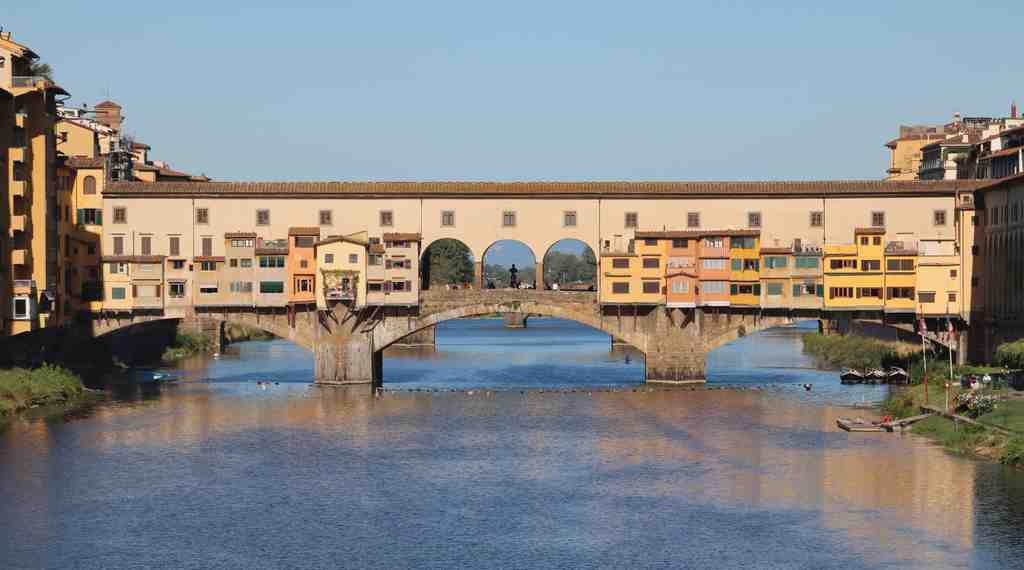
This bridge connects the Via Por Santa Maria to Via de' Guicciardini, and its neighboring bridges are the Ponte Santa Trinita and the Ponte alle Grazie. Talk about neighborhood…더 보기간략히 보기
This bridge connects the Via Por Santa Maria to Via de' Guicciardini, and its neighboring bridges are the Ponte Santa Trinita and the Ponte alle Grazie. Talk about neighborhood vibes! The Ponte Vecchio is not just a pretty face - it's got some serious historical value too. It played a central role in the city's road system, connecting the Roman Florentia with the Via Cassia Nova. You could even say it was like the Tinder of bridges, bringing people from different areas of Florence together. Nowadays, the bridge may be closed to vehicles, but it's still buzzing with activity. It's like a pedestrian party in here! Tourists flock here because it connects some of the city's most famous landmarks like Piazza del Duomo and Piazza della Signoria to the area of Palazzo Pitti and Santo Spirito in the Oltrarno. It's like a highway for sightseers! Speaking of sightseeing, did you know that the Ponte Vecchio is a national artistic treasure? It's even on the General Directorate of Antiquities and Fine Arts' list. Impressive, huh? The bridge has been a part of Florence's history for a long time, starting from its Roman origins and surviving floods and reconstructions. It's like the Energizer Bunny of bridges - it just keeps going and going! Legend has it that the bridge's design was masterminded by Taddeo Gaddi, which is pretty cool because his name is still remembered, even after 200 years. But some experts think it might have actually been Neri di Fioravanti who built it. Whoever the mastermind was, they did a great job because this bridge has stood the test of time. Don't forget to check out the Torre dei Mannelli, which was built to defend the Ponte Vecchio. Safety first, even in medieval times! The bridge itself consists of three segmental arches, with the main arch spanning a whopping 30 meters. That's like the distance from one end of a swimming pool to the other. The rise of the arches, which is the height from the bottom to the highest point, is between 3.5 and 4.4 meters. No need to be a math whiz to appreciate that! Oh, and did I mention the large piazza at the center of the bridge? It's quite the showstopper, according to the architect Leon Battista Alberti. He called it a prominent ornament, and if a famous architect says something is fancy, you better believe it! So, get your cameras ready and let's soak in the beauty and history of the Ponte Vecchio before we move on to our next stop!
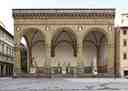
전용 페이지 열기 →Now, take a look at those wide arches! They are absolutely mesmerizing. In fact, the Florentines loved them so much that Michelangelo suggested they should be continued all around…더 보기간략히 보기
Now, take a look at those wide arches! They are absolutely mesmerizing. In fact, the Florentines loved them so much that Michelangelo suggested they should be continued all around the Piazza della Signoria. Can you imagine how that would look? It would be like an archway wonderland! Oh, and here's a little fun fact for you: this place was once wrongly believed to have been designed by an artist named Orcagna. But the architects behind this stunning structure were actually Benci di Cione and Simone di Francesco Talenti. They built it between 1376 and 1382, possibly following a design by Jacopo di Sione. These guys knew a thing or two about creating a seriously impressive assembly space. Speaking of impressive, take a look at those sculptures! The Loggia dei Lanzi is like an open-air gallery, showcasing amazing works of antique and Renaissance art. And let me tell you, it's quite a sight to behold. Notice those trefoils with allegorical figures of the four cardinal virtues? Fortitude, Temperance, Justice, and Prudence are all there, adding a touch of wisdom and inspiration to this already fantastic place. They were created by Agnolo Gaddi, with the background work done by Leonardo, the monk. The golden stars you see were painted by Lorenzo de' Bicci. Talk about a collaborative effort! Now let's talk about those lions. They are the Medici lions, and they're not just any ordinary lions. They're marble statues that represent the heraldic symbols of Florence. The one on the left was sculpted by Flaminio Vacca in 1598, while the one on the right is even older, dating back to Roman times. These lions have seen it all! And over there, on the side of the Loggia, you'll find a bronze statue of Perseus by the one and only Benvenuto Cellini. Look at him, holding his sword in one hand and the severed head of Medusa in the other. Talk about a conversation starter! Now, Cellini worked on this masterpiece for almost a decade, from 1545 to 1554. He faced countless challenges along the way, including an overheated furnace that almost ruined the casting of the bronze. But our dedicated artist wasn't about to give up. He even sacrificed some of his household furniture and around 200 pewter dishes and plates to get the bronze to flow properly. Now that's dedication! Alright, folks, that concludes our little adventure at the Loggia dei Lanzi. I hope you enjoyed learning about the history and marveling at the incredible art found here. Next up, we'll be making our way to the Roman Theatre of Florence! Let's go, everyone!
전용 페이지 열기 →Just imagine, in the very first marathon edition, there were only 462 brave souls who embarked on this epic journey. Fast forward to 2010, and we had a whopping 10,211 runners…더 보기간략히 보기
Just imagine, in the very first marathon edition, there were only 462 brave souls who embarked on this epic journey. Fast forward to 2010, and we had a whopping 10,211 runners hitting the streets of Florence. It's like an army of marathoners invading the city! Well, maybe not an army, but you get the idea. The Florence Marathon has a pretty cool claim to fame. It's the second largest marathon in Italy, right after the Rome City Marathon. So, you can say that we're pretty huge and a force to be reckoned with! Now, let's talk about the course. In the early days, the route was slightly shorter than the official marathon distance. But don't worry, the organizers realized this and made sure to fix it for all the future editions. Nobody likes a marathon that falls short, right? And let's not forget about the tough challenges that runners faced in the early years. Bends, cobblestone roads, oh my! It's like running through an obstacle course. No wonder they decided to make the race a bit easier and faster in 2011. We want our runners to enjoy the sights and not worry about tripping over cobblestones. The course itself is absolutely stunning, my friend. You'll be running through Florence's historical town center, witnessing the breathtaking architecture that dates all the way back to the 13th century. Picture this: Piazza della Signoria, Ponte Vecchio, and the magnificent Basilica of Santa Croce. It's like a historical sightseeing tour mixed with a marathon. Who says you can't have it all? Now, let me introduce you to the record holders of this incredible race. In 2006, a remarkable man named James Kutto set the men's record with a time of 2 hours, 8 minutes, and 41 seconds. Talk about speed! And in 2018, a phenomenal woman named Lonah Chemtai Salpeter dominated the course with a record-breaking time of 2 hours, 24 minutes, and 17 seconds. These two athletes are true legends of the Florence Marathon! So, my friend, whether you're a professional runner or simply enjoying a leisurely stroll, the Florence Marathon is an experience like no other. Lace up your shoes, hydrate, and get ready to conquer the streets of this beautiful city. And hey, maybe one day your name will be etched in the record books too! Let's keep our fingers crossed. Are you ready for the next stop on our tour? It's going to be a grand spectacle of art and history. Let's head over to Santa Croce, Florence!
전용 페이지 열기 →
10개 정류장 더 보기정류장 적게 보기expand_moreexpand_less
Legend has it that St Francis himself founded this place. I guess he wanted to be surrounded by greatness. The construction of this church began back in 1294, and it took a while…더 보기간략히 보기
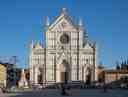
Legend has it that St Francis himself founded this place. I guess he wanted to be surrounded by greatness. The construction of this church began back in 1294, and it took a while to complete. But hey, they say good things take time, right? Now, let's talk about the design of this place. It's got a floorplan that looks like an Egyptian cross. Not something you see every day, huh? And it's the largest Franciscan church in the world. Impressive, huh? Inside, you'll find sixteen chapels, all decked out with beautiful frescoes by the one and only Giotto. This guy and his pupils really knew how to make a place look fancy. But watch your step, because some parts got damaged during the Counter-Reformation. Oops! Oh, and check out the bell tower. It was rebuilt in the 19th century after being struck by lightning. Talk about a shocking situation! The façade of the church is also worth mentioning. It's a neo-Gothic marvel that was designed by a Jewish architect named Niccolò Matas. He even snuck in a Star of David into the composition, just to keep things interesting. But wait, there's more! In the complex, you'll find the Museo dell'Opera di Santa Croce, where you can explore even more art and history. And don't forget to say hi to the monument of Florence Nightingale in the cloister. She's like the Florence Nightingale superstar, born and named after this very city. Now, let's keep moving and see what other treasures Florence has in store for us. Next stop: Ospedale degli Innocenti! Don't worry, it's not a hospital for innocent tourists. It's actually a beautiful Renaissance building with an interesting history. Let's go!
전용 페이지 열기 →Ah, the Bargello! This place has quite a history, my friend. It used to be a barracks and a prison, but now it's home to the Museo Nazionale del Bargello. Quite a transformation,…더 보기간략히 보기
Ah, the Bargello! This place has quite a history, my friend. It used to be a barracks and a prison, but now it's home to the Museo Nazionale del Bargello. Quite a transformation, wouldn't you say? Now, let's talk about that name - Bargello. It may sound a bit peculiar, but it actually comes from the late Latin word "bargillus," which means "castle" or "fortified tower." In the Italian Middle Ages, a bargello was a military captain who kept the peace and justice during riots and uproars. Kind of like a Chief of police, you know? No favoritism allowed! The Bargello was originally built in 1255 to house the Capitano del Popolo and later the highest magistrate of the Florence City Council. Talk about an important address! It's actually the oldest public building in Florence, and it served as a model for the construction of the famous Palazzo Vecchio. But wait, there's more! In the 16th century, the Medici family decided to repurpose the Bargello as a prison - executions and all. Yikes! Thankfully, that all came to an end in 1786 when Grand Duke Peter Leopold abolished it. Phew! The building then became the headquarters of the Florentine police until 1859. After all that drama, the Bargello got a makeover and became a national museum in 1865. Ta-da! Inside, you'll find an impressive collection of Gothic and Renaissance sculptures from the 14th to 17th century. They've got Michelangelo's masterpieces, like the Bacchus, Pitti Tondo, Brutus, and David-Apollo. Donatello's David is also here, along with works from the Della Robbia family and a bust of Cosimo I by Benvenuto Cellini. The museum even has ceramics, textiles, tapestries, silver, armor, coins - you name it! Oh, and here's a quirky fact for you: the formerly lost right-hand panel of the Franks Casket is actually found here. Talk about a treasure hunt! So, ready to explore the Bargello and discover its incredible art collection? Let's go!
전용 페이지 열기 →Originally, this place served as a children's orphanage. The Silk Guild of Florence, known as the "Arte della Seta," built and managed the hospital. They must have been feeling…더 보기간략히 보기
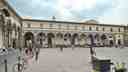
Originally, this place served as a children's orphanage. The Silk Guild of Florence, known as the "Arte della Seta," built and managed the hospital. They must have been feeling pretty generous because they were one of the richest guilds in the city and took on philanthropic duties. Good on them! Now, when you look at the building, you'll notice a glorious nine-bay loggia facing the Piazza SS. Annunziata. Those semicircular arches and columns are quite the sight, don't you think? And check out those glazed blue terracotta roundels with reliefs of babies designed by Andrea della Robbia. It's like a little hint of what the building was all about - taking care of the little ones. Inside, you'll find a museum showcasing Renaissance art. Artists like Luca della Robbia, Sandro Botticelli, and Piero di Cosimo have their works on display here. Oh, and there's also a fantastic Adoration of the Magi by Domenico Ghirlandaio. Talk about a star-studded lineup! You know, back in the day, people would sometimes abandon their babies in a basin at the front portico. But over time, they swapped that basin for a secret refuge wheel. It's like something out of a spy movie! A rotating horizontal wheel would bring the baby into the building without the parent being seen. Stealthy, huh? Brunelleschi's vision for this place was a mix of Classical Roman, Italian Romanesque, and late Gothic architecture. He really pulled out all the stops. The loggia, with its round columns and dosserets (or impost blocks), created a fresh look. And let's not forget those circular arches and segmented spherical domes. It's like a history lesson wrapped in awesome architecture. So take a stroll around, enjoy the art, and be impressed by this breathtaking example of early Italian Renaissance architecture. And remember, if you need to leave something behind, you might want to consider the rotating wheel. Kidding, of course! Let's head to our next stop and continue the adventure!
전용 페이지 열기 →Back in the day, in 1563 to be exact, Cosimo I de' Medici had a bright idea and decided to establish this fine institution. He was inspired by the talented artist Giorgio Vasari,…더 보기간략히 보기
Back in the day, in 1563 to be exact, Cosimo I de' Medici had a bright idea and decided to establish this fine institution. He was inspired by the talented artist Giorgio Vasari, and together they started the Accademia e Compagnia delle Arti del Disegno. Now that's a mouthful! But what does all this mean, you ask? Well, the academy was like a special club for the cream of the crop artists, while the company was more like a guild for all the hardworking artists out there. Picture it like an artistic Avengers team, protecting the Medici state with their masterpieces! Can you imagine Michelangelo and Benvenuto Cellini teaming up? Talk about a dynamic duo! Originally, they set up shop at the Basilica della Santissima Annunziata, but later moved to their current digs on via Ricasoli. They even have their very own gallery next door called the Galleria dell'Accademia, which is not to be confused with the academy, but it does house the one and only original David by Michelangelo. No pressure, David! Now, let's talk about the members of this exclusive club. Most of them were male, but they did let some fierce females in on the fun. Artemisia Gentileschi was the trailblazer, becoming the first woman to join, and later on, Angelika Kauffmann joined the ranks in 1762. You go, girls! In 1784, the academy underwent some changes and merged with all the other drawing schools in Florence, forming the Accademia di Belle Arti. It's been going strong ever since, offering art education to budding talents and producing some incredible artists. So there you have it, the Accademia di Belle Arti di Firenze, where ancient traditions and contemporary creativity come together. It's like Hogwarts for artists, minus the flying broomsticks. But hey, who needs those when you can create your own magic on canvas? Now, onto the next stop on our tour! Off we go to the magnificent Florence Cathedral, where you'll be blown away by its architectural beauty. And don't worry, I won't leave you hanging like Michelangelo's David! Shall we?
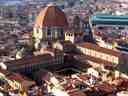
전용 페이지 열기 →Alright, my friend, welcome to the Laurentian Library! This place is not your average library, oh no. It's a historic gem that will take you back in time to the days of the Medici…더 보기간략히 보기
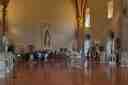
Alright, my friend, welcome to the Laurentian Library! This place is not your average library, oh no. It's a historic gem that will take you back in time to the days of the Medici family. Picture this, it's the 16th century and the Medici family, who were once just merchants, want to show off their smarts and ecclesiastical elegance. So, they decide to build this library, right here in the cloister of the Medicean Basilica di San Lorenzo di Firenze. Talk about making a statement! Now, hold on to your seats, because I'm about to drop some knowledge. This library has over 11,000 manuscripts and 4,500 early printed books. That's a lot of reading material! And get this, it houses the private library of the Medici family. These guys were serious about their books. But what makes the Laurentian Library extra special is its jaw-dropping architecture. Can you guess who was the mastermind behind it? Yep, you got it. None other than Michelangelo himself! This dude was a genius in more ways than one. He designed the building in a style called Mannerism, which was all about embracing boldness and grace. Just like me, right? Now, let's talk about the inside. The reading room is a sight to behold. It's only the walls that were completed by Michelangelo before he left Florence in 1534. But fear not, his apprentices and other architects, like Tribolo, Vasari, and Ammannati, picked up where he left off. They followed his plans and the library finally opened its doors in 1571. One of the most impressive features is the Vestibule, also known as the ricetto. It has some fancy columns, big windows, and a magnificent staircase. Oh, and fun fact, Michelangelo originally planned for a skylight, but it was vetoed because the pope thought it would cause leaks. Gotta keep those books dry, right? The stairs in this place went through quite the makeover too. Originally, they were on the side walls and formed a bridge in front of the reading room door. But then, someone had a lightbulb moment and shifted them to the center of the vestibule. It's like musical stairs! So, my friend, take a moment to soak in the architectural brilliance and immerse yourself in the history within these walls. The Laurentian Library is a testament to the vision and creativity of Michelangelo, and you're lucky to be standing right here, right now. So, let's keep exploring, because our adventure doesn't end here!
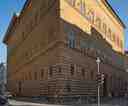
전용 페이지 열기 →Now, the Strozzi family, who commissioned this palace, had a little feud going on with the Medici family. They wanted to show off their prominence and make a political statement,…더 보기간략히 보기
Now, the Strozzi family, who commissioned this palace, had a little feud going on with the Medici family. They wanted to show off their prominence and make a political statement, so they decided to build the most magnificent palace in town. Take that, Medici! To make room for this grand palace, a whole bunch of other buildings were acquired and demolished. Talk about a palace on a mission! Giuliano da Sangallo even provided a wood model of the design because, you know, they had to make sure everything was on point. But here's where things get interesting. Filippo Strozzi, the guy who started all this, unfortunately passed away in 1491, way before the palace was completed in 1538. Bummer, right? But wait, it gets even more dramatic. Duke Cosimo I de' Medici swooped in and confiscated the palace the same year it was completed. No fair, Duke Cosimo! The Strozzi family had to wait a good 30 years before they could reclaim their magnificent palace. I can only imagine the look on their faces when they finally got it back. Victory dance, anyone? Now, let's talk about the architecture itself. Palazzo Strozzi is a prime example of civil architecture. It's got those rustic stone walls, inspired by the Palazzo Medici, but with even more harmonious proportions. It's all about that symmetry, baby. The ground plan is like a perfectly organized symphony, with clearly differentiated scales in its principal rooms. I don't know about you, but that sounds pretty fancy to me. And let's not forget about the magnificent courtyard, inspired by none other than Michelozzo. It’s surrounded by an arcade and has this central courtyard vibe going on. I mean, who doesn't love an arcade? It's like having your own personal entertainment center right in your palace. Now, keep an eye out for the ferro, these wrought-iron objects that adorn the building. They were created by a talented ironsmith named Niccolo Grosso, who also went by the name Il Caparra. Think flagpoles, torch stands, and lanterns. Stylish AND functional, just the way I like it. After serving as the Strozzi family's seat for centuries, Palazzo Strozzi became home to the Institute of Humanist Studies and the Fondazione Palazzo Strozzi. It’s now a hub for cultural and artistic events, including international expositions and fashion shows. So, get ready to strut your stuff, because this palace knows how to party! That concludes our tour of Palazzo Strozzi, and what a ride it has been. I hope you've enjoyed this adventure through Florence's fascinating history. Remember, when you visit Florence again, look out for the ferro and give them a nod for their stylish contribution to this magnificent palace.
전용 페이지 열기 →
자주 묻는 질문
투어는 어떻게 시작하나요?
구매 후 AudaTours 앱을 다운로드하고 교환 코드를 입력하세요. 투어를 바로 시작할 수 있습니다 - 재생을 탭하고 GPS 안내 경로를 따라가시면 됩니다.
투어 중 인터넷이 필요한가요?
아닙니다! 시작 전에 투어를 다운로드하면 완전히 오프라인으로 즐길 수 있습니다. 채팅 기능만 인터넷이 필요합니다. 모바일 데이터 절약을 위해 WiFi에서 다운로드하시는 것을 권장합니다.
이것은 가이드가 안내하는 단체 투어인가요?
아닙니다 - 이것은 셀프 가이드 오디오 투어입니다. 폰을 통해 오디오 나레이션을 들으며 나만의 속도로 독립적으로 탐험합니다. 투어 가이드도, 단체도, 일정도 없습니다.
투어는 얼마나 걸리나요?
대부분의 투어는 60-90분이 소요되지만, 속도는 전적으로 본인이 조절합니다. 원할 때 언제든지 일시정지하거나, 정류장을 건너뛰거나, 휴식을 취하세요.
오늘 투어를 끝낼 수 없으면 어떻게 하나요?
괜찮습니다! 투어는 평생 이용이 가능합니다. 원할 때 언제든지 일시정지하고 다시 시작하세요 - 내일, 다음 주, 또는 내년에도. 진행 상황이 저장됩니다.
어떤 언어를 이용할 수 있나요?
모든 투어는 50개 이상의 언어로 이용 가능합니다. 코드를 교환할 때 원하는 언어를 선택하세요. 참고: 투어 생성 후에는 언어를 변경할 수 없습니다.
구매 후 투어는 어디에서 이용하나요?
App Store 또는 Google Play에서 무료 AudaTours 앱을 다운로드하세요. 교환 코드(이메일로 전송됨)를 입력하면 라이브러리에 투어가 나타나며, 다운로드하여 시작할 수 있습니다.
투어가 마음에 들지 않으시면 환불해 드립니다. 문의: [email protected]
안전한 결제 


