
트빌리시 오디오 투어: 디두베, 트빌리시의 문화적, 역사적 보석
한때 비단 정원에는 왕실의 비애와 어린이 철도가 숨겨져 있었습니다. 트빌리시의 궁전과 광장은 화려한 외관 뒤에 비밀을 품고 있으며, 각 모퉁이는 고요한 모습과는 다른 이야기를 속삭입니다. 이것은 자가 안내 오디오 투어를 통해 트빌리시를 탐험하고, 소수의 방문객만이 발견하는 극적인 사건과 숨겨진 보석을 밝혀낼 수 있는 초대장입니다. 이 거리에서 어떤 잔혹한 사건이 카르틀리-카헤티 왕국의 운명을 영원히 바꾸었을까요? 어떤 금지된 사랑이 조지아에서 가장 호화로운 궁전 중 하나를 탄생시켰을까요? 그리고 누에 사육장이 트빌리시 엘리트들 사이에서 스캔들과 과학적 승리를 동시에 불러일으킨 이유는 무엇일까요? 어두운 반란에서 위대한 예술 혁명에 이르는 발자취를 따라가 보세요. 잃어버린 사랑을 위해 지어진 정원, 망명으로 형성된 궁전, 반란으로 탄생한 박물관을 거닐어 보세요. 이 고대 도시가 상상하지 못했던 방식으로 생동감 넘치게 살아나는 것을 보면서 모든 랜드마크에서 반전을 기대하세요. 트빌리시가 숨겨둔 이야기를 풀어보세요. 당신의 여정은 지금 시작됩니다.
투어 미리보기
이 투어에 대하여
- schedule소요 시간 30–50 mins나만의 속도로 이동
- straighten1.1 km 도보 경로안내 경로 따라가기
- location_on
- wifi_off오프라인 작동한 번 다운로드, 어디서든 사용
- all_inclusive평생 이용언제든지 다시 재생 가능
- location_on무슈타이드 정원에서 시작
이 투어의 정류장
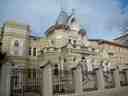
The building itself has historical value, having once been the palace of Duke Constantine Petrovich of Oldenburg. Designed by Paul Stern, a prominent architect of the time, the…더 보기간략히 보기
The building itself has historical value, having once been the palace of Duke Constantine Petrovich of Oldenburg. Designed by Paul Stern, a prominent architect of the time, the structure exhibits an interesting blend of Gothic and Islamic architectural styles. The interior features contributions by Polish architect Aleksander Rogojski. The palace was a testament to Duke Constantine’s affection for Agrippina Japaridze, whom he met and fell in love with in Kutaisi in 1882. After their elopement, they settled in Tiflis, where he commissioned this palace. In 1927, the Museum of Theatre, established by David Arsenishvili, was relocated to this building. Now, the museum comprises over 300,000 objects that chronicle the evolution of Georgian theater, cinema, circus, folklore, opera, and ballet. Among the notable exhibits is an ancient mask unearthed in Vani, offering a glimpse into classical-era artistry. The museum’s vast collection includes works from Georgian and Russian artists, providing a comprehensive view of regional scenic design evolution. The fine arts depository features portraits, stage decoration sketches, and costumes. Of particular interest are works by Russian Silver Age painters like Konstantin Korovin, Lev Bakst, and Alexander Benua. Additionally, the museum houses a significant collection of Persian Fine Arts, including Qajar miniatures from the 19th century and a painting of King Solomon, revered in both Christian and Islamic traditions. The Art Palace thus serves as a monumental repository of Georgia’s cultural history, offering insight into the artistic and cultural landscape that has shaped the nation. You are currently standing at a location enriched with a deep tapestry of historical and cultural narratives, symbolizing the confluence of love, art, and history.
전용 페이지 열기 →You are now standing at the landmark commemorating the Kingdom of Kartli-Kakheti, a significant historical union in Georgian history. This kingdom was formed in 1762 by the…더 보기간략히 보기
You are now standing at the landmark commemorating the Kingdom of Kartli-Kakheti, a significant historical union in Georgian history. This kingdom was formed in 1762 by the unification of the two eastern Georgian kingdoms of Kartli and Kakheti. The unification was initiated under the rule of Heraclius II following the death of his father, Teimuraz II. The event marked the first political unification of eastern Georgia in three centuries. Historically, both kingdoms had been under Iranian control since the Peace of Amasya in 1555. However, after the death of Nader Shah of Iran in 1747, Heraclius II exploited the subsequent instability in Iran to assert de facto independence. Although he formally submitted to the newly established Zand dynasty, his kingdom operated autonomously for the next 30 years. One of Heraclius II's noteworthy achievements was the Treaty of Georgievsk in 1783 with the Russian Empire. This treaty formally recognized Russian protection over Kartli-Kakheti, offering nominal security against other powers, particularly Iran, which had long sought dominance over the region. However, the rise of the Qajar dynasty in Iran under Agha Mohammad Khan Qajar led to renewed conflict. In the 1790s, Agha Mohammad Khan Qajar reasserted Iranian control over the Caucasus, culminating in the invasion and sacking of Tbilisi. Heraclius II's subsequent death in 1798 and the assassination of Agha Mohammad Khan further destabilized the kingdom. By 1801, the geopolitical instability and changing dynamics led to the formal annexation of Kartli-Kakheti by the Russian Empire under Paul I, bringing an end to its brief period of political unity and autonomy. This transition was part of a broader pattern of Russian expansion in the Caucasus, confirmed by the Russo-Persian War of 1804-1813, which saw Iran cede its claims to the territory. As you stand here, recognize the historical significance of this site in the ongoing narrative of Georgia’s complex and multifaceted history.
전용 페이지 열기 →

4개 정류장 더 보기정류장 적게 보기expand_moreexpand_less
The Kingdom of Kartli, where you are now standing, represents a significant epoch in Georgian history. This late medieval and early modern monarchy was centered in the province of…더 보기간략히 보기
The Kingdom of Kartli, where you are now standing, represents a significant epoch in Georgian history. This late medieval and early modern monarchy was centered in the province of Kartli with Tbilisi as its capital. The Kingdom emerged in 1478 following the tripartite division of the Kingdom of Georgia. It existed until 1762 when it merged with the Kingdom of Kakheti through dynastic succession under the Kakhetian branch of the Bagrationi dynasty. During much of its existence, Kartli was a vassal to successive Iranian dynasties and, to a lesser extent, the Ottoman Empire. However, it experienced periods of greater independence, especially post-1747. The genesis of the Kingdom of Kartli is marked by intense feudal competition, civil war, and separatism. The disintegration of a unified Georgian kingdom began in earnest after George VIII’s defeat at the Battle of Chikhori in 1463 by the rebellious nobleman Bagrat VI. Bagrat’s subsequent declaration as King of Imereti splintered the Georgian monarchy further. After his defeat in 1465, George VIII was captured, allowing Bagrat VI to claim kingship over all Georgia by 1466. Released from captivity, George VIII formed the rump state of Kakheti. His nephew, Constantine, then emerged as a contender for the throne in Kartli in 1469, leading to additional turmoil. Bagrat VI was continuously challenged until losing control in 1478 when Constantine, aided by local dukes, temporarily restored Kartli's integrity with Western Georgia by 1481, proclaiming himself King of All Georgia. Yet, this unity was short-lived due to ongoing feudal struggles. The complex interplay of regional powers and noble factions defined Kartli’s historical landscape, reflecting the broader fracturing and political instability of the period. As you gaze upon this landmark, consider the turbulence and shifting alliances that shaped the Kingdom of Kartli, an essential chapter in the history of Georgia.
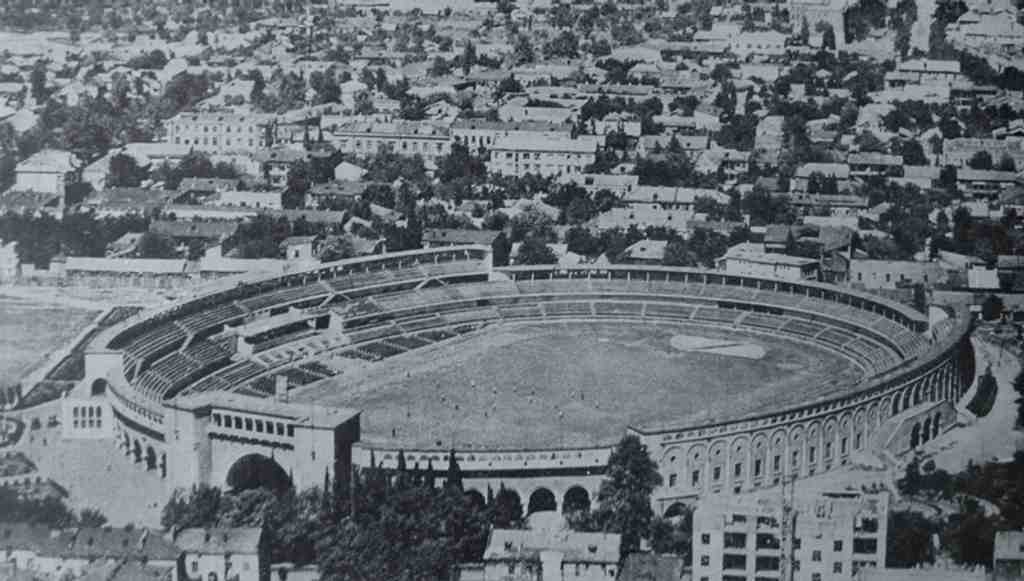
전용 페이지 열기 →You are now standing before the Central Stadium, a significant multi-purpose venue in Tbilisi, Georgia. Its official designation from 1937 until 1953 was the Beria Dinamo Stadium,…더 보기간략히 보기
You are now standing before the Central Stadium, a significant multi-purpose venue in Tbilisi, Georgia. Its official designation from 1937 until 1953 was the Beria Dinamo Stadium, named in honor of the influential Soviet politician Lavrentiy Beria. Before its closure, this site served as the home ground for FC Dinamo Tbilisi, one of Georgia's foremost football clubs, until they transitioned to the current Boris Paichadze Stadium in 1976. The Central Stadium was capable of accommodating 35,000 spectators, making it a prominent location for various sporting events and gatherings. Though it no longer serves its original purpose, its historical importance remains notable in the annals of Georgian sports heritage.
전용 페이지 열기 →You are now standing before the Boris Paichadze Dinamo Arena. This landmark, known in Georgian as ბორის პაიჭაძის ეროვნული სტადიონი, is one of the hallmark locations in Tbilisi.…더 보기간략히 보기
You are now standing before the Boris Paichadze Dinamo Arena. This landmark, known in Georgian as ბორის პაიჭაძის ეროვნული სტადიონი, is one of the hallmark locations in Tbilisi. Initially constructed in 1976 by Georgian architect Gia Kurdiani, this stadium has solidified its place as the largest in Georgia with a capacity of 54,202 seats. The stadium's original name was Vladimir Ilyich Lenin Dinamo Stadium, paying homage to the Russian Communist leader. However, in 1995, it was renamed to honor Boris Paichadze, a renowned Georgian football player. Before its construction, Dinamo Tbilisi's home ground was the Central Stadium, which could accommodate approximately 35,000 spectators. The necessity for a larger venue arose due to Dinamo Tbilisi's impressive performances during the mid-1970s. Upon its inauguration, this stadium was among the largest in the Soviet Union, boasting an initial capacity of 74,354. The first match held here was on September 29, 1976, between Dinamo Tbilisi and Cardiff City, resulting in a 3-0 win for Dinamo. The stadium has witnessed many significant events, including Dinamo Tbilisi's triumphs in 1978 and 1979, and hosted 80,000 fans in 1981 to celebrate the team's victory in the European Cup Winners' Cup. The Dinamo Arena has consistently been used for important national and international matches. The record attendance was in 1979 when 110,000 spectators watched Dinamo defeat Liverpool 3-0 in the European Champion Clubs' Cup quarter-finals. The venue was also pivotal for the USSR national football team and hosted memorable matches for clubs like Spartak Moscow and Dynamo Kiev. In 2006, the Dinamo Arena underwent refurbishment, transitioning to an all-seater stadium which adjusted the capacity to its current 54,549 seats. Notably, on August 11, 2015, the stadium hosted the UEFA Super Cup match between FC Barcelona and Sevilla FC. The architectural design has evolved significantly over time. The original 1936 stadium designed by Archil Kurdiani included additions in 1956 that expanded capacity. The current structure, inaugurated in 1976, retained elements from the initial design but enhanced its capacity to accommodate over 74,000 spectators thanks to a complex architectural solution involving a console system supported by 58 pylons. These innovations have allowed the Dinamo Arena to stand as an enduring symbol of Georgian sports and architectural prowess.
전용 페이지 열기 →

자주 묻는 질문
투어는 어떻게 시작하나요?
구매 후 AudaTours 앱을 다운로드하고 교환 코드를 입력하세요. 투어를 바로 시작할 수 있습니다 - 재생을 탭하고 GPS 안내 경로를 따라가시면 됩니다.
투어 중 인터넷이 필요한가요?
아닙니다! 시작 전에 투어를 다운로드하면 완전히 오프라인으로 즐길 수 있습니다. 채팅 기능만 인터넷이 필요합니다. 모바일 데이터 절약을 위해 WiFi에서 다운로드하시는 것을 권장합니다.
이것은 가이드가 안내하는 단체 투어인가요?
아닙니다 - 이것은 셀프 가이드 오디오 투어입니다. 폰을 통해 오디오 나레이션을 들으며 나만의 속도로 독립적으로 탐험합니다. 투어 가이드도, 단체도, 일정도 없습니다.
투어는 얼마나 걸리나요?
대부분의 투어는 60-90분이 소요되지만, 속도는 전적으로 본인이 조절합니다. 원할 때 언제든지 일시정지하거나, 정류장을 건너뛰거나, 휴식을 취하세요.
오늘 투어를 끝낼 수 없으면 어떻게 하나요?
괜찮습니다! 투어는 평생 이용이 가능합니다. 원할 때 언제든지 일시정지하고 다시 시작하세요 - 내일, 다음 주, 또는 내년에도. 진행 상황이 저장됩니다.
어떤 언어를 이용할 수 있나요?
모든 투어는 50개 이상의 언어로 이용 가능합니다. 코드를 교환할 때 원하는 언어를 선택하세요. 참고: 투어 생성 후에는 언어를 변경할 수 없습니다.
구매 후 투어는 어디에서 이용하나요?
App Store 또는 Google Play에서 무료 AudaTours 앱을 다운로드하세요. 교환 코드(이메일로 전송됨)를 입력하면 라이브러리에 투어가 나타나며, 다운로드하여 시작할 수 있습니다.
투어가 마음에 들지 않으시면 환불해 드립니다. 문의: [email protected]
안전한 결제 


