Tour Audio di Sydney: Echi del Tempo nel Cuore della Città
L'oro un tempo scorreva nelle vene di Sydney, ma sotto le sue graziose facciate si nascondono storie ben più strane di ricchezze favolose. Fili di ribellione, ingiustizia e scandali opulenti cuciono insieme cortili acciottolati e segreti di arenaria, nascosti in bella vista. Questo tour audio autoguidato si snoda attraverso la Zecca di Sydney, le Caserme di Hyde Park e il cuore verde di Hyde Park, permettendoti di aggirare l'ovvio e di immergerti nelle storie che pochi visitatori scoprono. Chi ha rischiato tutto per sfuggire alla ferrea disciplina delle Caserme, scatenando il panico in tutta la Sydney coloniale? Quali messaggi segreti riposano sotto i marmi consumati della Zecca? Perché un'intera città fu messa in subbuglio per la piantumazione di un singolo ulivo? Muoviti tra ombre e luce solare, ogni passo aprendo un altro strato del drammatico passato della città. Senti il battito di ribellioni perdute, sussurri clandestini e le impronte spettrali che ancora echeggiano sopra le strade della città. Svela i segreti di Sydney: il tuo viaggio inizia ora.
Anteprima del tour
Informazioni su questo tour
- scheduleDurata 40–60 minsVai al tuo ritmo
- straighten3.1 km di percorso a piediSegui il percorso guidato
- location_on
- wifi_offFunziona offlineScarica una volta, usa ovunque
- all_inclusiveAccesso a vitaRiascolta quando vuoi, per sempre
- location_onParte da Stazione ferroviaria del Museo
Tappe di questo tour
Oi mate, to spot Museum railway station, keep your peepers open for a sandstone entryway at the corner of Elizabeth and Liverpool Streets, or right across from Hyde Park…Leggi di piùMostra meno
Oi mate, to spot Museum railway station, keep your peepers open for a sandstone entryway at the corner of Elizabeth and Liverpool Streets, or right across from Hyde Park South-just look for the vintage “MUSEUM” roundel signs, cream tiles with maroon highlights, and a structure that looks like it’s popped outta old London or Paris! Alrighty, take a squiz around-reckon you’re standing on a slice of Sydney’s hidden history here, right above the country’s first ever underground railway station! Now, back in the late 1800s, if you hopped off a train, you’d have to slog it on foot or catch a clattery old tram to get into the city centre, which was packed tighter than a tin of sardines. The streets were chokkers every morning-imagine the hustle and bustle, horse-drawn trams, smoke, the lot. For decades, there were wild plans to tunnel under the city, but every time the bigwigs were close to cracking it, someone chucked a spanner in the works-change of government, moaning about tram noise, fights over Hyde Park land, or just plain old penny-pinching! Now, push on to 1915, and in barrels Dr John Bradfield-bit of a legend, he was. After gallivanting around Europe and New York, he cooked up this wild scheme: underground stations, electric trains, tunnels, and even dares to dream about a Harbour Bridge. People thought he was bonkers! Sydney had about 800,000 punters by then, so he reckoned we needed a slick, modern city railway. They said “nah, too pricey!” but Bradfield wasn’t one to chuck a wobbly and walk away; he talked up his grand plan everywhere he could. Honestly, if Bradfield did a sausage sizzle, he’d be chatting train tunnels while handing you a snag. By the early twenties, they started digging this very tunnel you’re standing near. Picture it: whole crowds of stickybeaks gathered in Hyde Park to watch the diggers at work-big “cut and cover” trenches, mountains of earth, steam and sweat everywhere. Imagine the rattle of shovels, the clang of steel beams, and the buzz of Sydneysiders crowding round to peek at the wonders below. All up, cost more than two million quid-not bad in 1920s cash! They built Museum station in the Inter-War Stripped Classical style, with those creamy tiles and maroon stripes, and arches over the two platforms-a nod to the London Tube but with a whiff of Paris Métro classiness, minus the pigeons. Have a little squiz at the signs: those roundels? Bit of a wink to London, but altogether Sydney’s own. Oh, and they almost named the place Liverpool Street station, but figured “Museum” was snazzier since the Australian Museum is just up the road. Museum station’s mate, St James (which we’ll see soon), actually has two tunnels they never used for trains-back in World War II, turns out they became makeshift air raid shelters. Blokes and sheilas would dash underground during air raids, hearts thumping as the city rattled above. The station opened with a bang in December 1926. The joint was so packed in the first few weeks, newspapers joked families came to see “Dr Bradfield’s super Christmas box.” Sure, not all his epic plans got built, but you couldn’t wipe the grin off folks’ faces as those first trains rolled in. For yonks, Museum and St James were full of commuters, until the City Circle loop opened in 1956 and trains could get round without reversing. Bit of a treat too-the interiors have mostly stayed original, right down to the period adverts and metal stair railings. There’s even a bit of old-school flair left in the sandstone entry building; it’s one of just two leftovers of its kind. And, if you cop a look at the portals and tiles, that’s the “stripped classical” style through and through-simple, strong, but still sharp as a tack. So stand here, feel the cool air puffing up from the tunnels, the distant rumble of the trains, and think about the sheer grit, hope, and good-old Aussie stubbornness that got this thing built. From crowded trams to sleek electric trains in less than a century-now that’s classic Sydney, mate. Ready for the next stop? Let’s leg it! For a more comprehensive understanding of the design, platforms and services or the gallery, engage with me in the chat section below.
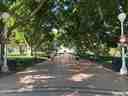
Apri pagina dedicata →Righto, mate! To spot Hyde Park, just look for a wide, paved walkway lined with towering fig trees arching overhead, forming a leafy tunnel as far as the eye can see. Strewth,…Leggi di piùMostra meno
Righto, mate! To spot Hyde Park, just look for a wide, paved walkway lined with towering fig trees arching overhead, forming a leafy tunnel as far as the eye can see. Strewth, you’ve landed smack bang in the beating green heart of Sydney-Hyde Park! Take a deep breath of that fresh park air, ‘cos you’re strolling through the oldest public park in all of Australia! Imagine it’s the late 1700s: local Aboriginal mobs are huntin’ ducks in the mucky marshes, and this very ground is a site for legendary contest battles-full-on showdowns with spears and fists to settle big-time disputes. The air would’ve been thick with the shouts of a hundred warriors, keen to settle scores Aussie style. By the early 1800s, with the colony just finding its feet, this place was the “Common”-where settlers grazed their animals, cut firewood, and even dug out the odd saw pit. It was a wild, open patch on the edge of town, perfect for rounding up soldiers if a convict rebellion kicked off-proper frontier vibes out here! Then in 1810, good ol’ Governor Macquarie rolled in and decided Sydney needed a bit of fancy town planning-named this great stretch after London’s Hyde Park and declared it open to all. Since then, it’s belonged to the people, not the bigwigs in Government House, so you could say it’s always been the people’s backyard! Now picture this: early mornings would see mobs kicking up the dust in a game of cricket-Brit officers brought that over, and suddenly, everyone was mad for it. After Governor Macquarie made Hyde Park official with a grand proclamation, horse races thundered up and down here, turning the joint into Australia’s first proper sports ground. But it wasn’t just sport and scrapping here. There were big, boofy plans for Hyde Park. Francis Greenway, the colony’s architect, dreamed of a “grand garden for the people, laid out in style like the best London squares,” fences and all. Through the years, the city almost lost it-a couple of governors tried to flog it off for housing in the 1830s, but the next bloke, Governor Bourke, dug his heels in and kept it as a park for everyone, not just the toffs. Through the 1800s, Hyde Park kept evolving-first it was a bare, windswept field; then came the era of planting, with grand avenues of Moreton Bay figs (the absolute legends that give you that sweet tunnel of green above your head now). Sunday speakers would roll up to have a crack at politics or spin their wildest yarns, and eventually, Hyde Park turned into the perfect spot for a lazy stroll, a cheeky picnic, or a massive public gathering-kinda like Sydney’s own backyard BBQ. All around the park, history keeps on piling: massive department stores popped up, grand museums, and even the odd cannon from the Fort Macquarie days. The city’s protest marches and Jubilee celebrations have all echoed through these trees. And crikey, in the 1920s, they made a proper mess with the new underground railway-they ripped the place up for years, felling those big fig trees and burying train lines underneath. But it survived, thanks to city planners with vision. Out of all that chaos, Hyde Park got a makeover-fancy gardens, fountains, the famous Archibald Fountain up north, and memorials like the mighty ANZAC Memorial down south. Today, mate, you’re walking paths that have seen more than two centuries of yarns, scrapes, parties and protests. It’s a living, breathing timeline of Sydney, from Aboriginal contest ground to colonial cricket oval, and now a sanctuary for office workers scarfing pies and kids chasing pigeons. So take a sec, soak it in-‘cause you’re standing on a patch of grass that’s seen it all, and will keep on keeping on for centuries to come! For further insights on the sporting activities, description or the monuments, feel free to navigate to the chat section below and inquire.
Apri pagina dedicata →You’ll spot the HMAS Sydney I - SMS Emden Memorial by looking just ahead-right on the corner of Liverpool and College Streets-where a big old grey naval gun sits proudly on an…Leggi di piùMostra meno
You’ll spot the HMAS Sydney I - SMS Emden Memorial by looking just ahead-right on the corner of Liverpool and College Streets-where a big old grey naval gun sits proudly on an octagonal stone base, all fenced in and pointing its long barrel towards Whitlam Square. Alrighty, legend, take a squiz at that serious bit of kit in front of you! That’s not just any random cannon parked in the park, nah-uh-this is the famous Emden Gun, salvaged from the German warship SMS Emden, and crikey, has it got a yarn to tell. Painted storm grey and mounted strong on a chunk of Bowral trachyte, it’s sitting on what looks like the sturdiest stone barbie you’ve ever seen, surrounded by a pointy black fence and golden inscriptions all about the epic clash it survived. Let me set the scene: It’s 1914, and the First World War’s just heating up. The SMS Emden, a slick Dresden-class German cruiser, is cutting loose in the Indian Ocean-ten big guns blazing, scurrying around, sneaking up on Allied shipping. Over just a couple of months, she raised absolute havoc-sinking or capturing 21 vessels, even blowing up the oil tanks at Madras in ten minutes flat! Ships were going missing, merchants were as twitchy as a roo in a dog park, and before long, there were 78 Allied warships after her-proper needle-in-a-haystack stuff. Now, let’s talk Aussie heroes-the HMAS Sydney I. She was fresh, one of Australia’s proudest new fleet, packed with eight big six-inch guns and plenty of Aussie grit. The Sydney’s gig was to protect the first ANZAC troop convoy heading for war, but when an SOS crackled in from the Cocos Islands, the crew were off in a flash to sniff out the trouble. What they found? The sly Emden, her landing party away doing mischief on shore, still bristling and ready. The stage was set for a fair dinkum showdown at sea. Bang! At nine kays apart, the Emden opened up, knocking out Sydney’s range finder and giving her a real shake-up. The Sydney copped a few licks-fire licking the decks, a gun out of action-but Aussie tenacity isn’t something you take lightly. She fought back, scoring over a hundred hits in half an hour! The Emden, battered and burning, chose to beach herself on North Keeling Island rather than sink beneath the waves. The smoke, the chaos, the roar on deck-it must’ve been bedlam. The victory? It wasn’t just a win for the Royal Australian Navy; it was proof that the young Aussie fleet could stand tall among the world’s sea powers. For the four sailors lost from Sydney and the 134 from Emden, their sacrifice is still remembered right here, on these golden plaques. Prisoners from the battle ended up in the sandstone walls of Berrima Gaol back in NSW-a world away from the searing sun of the Indian Ocean. Now here’s a bit of fun-Aussies are notorious for collecting trophies, and this big barrel was the first official war trophy ever nabbed by the new Royal Australian Navy. The Commonwealth offered it to Sydney as a special nod-the city’s namesake for the triumphant ship. It was plonked right here in 1917, with the Lord Mayor, half the city, and a whole lotta pride on display. Wreathed in gold lettering, the base names those who fought, died, and earned glory in that famous battle. But don’t just think of it as a hunk of metal-this gun is rare as hen’s teeth. Only three others like it are left in Australia, and this beauty’s sat protected, barring the odd spot of rust, thanks to Sydney’s knack for looking after its treasures. It’s even linked up to Australia’s rich tradition of public memorials-trophy guns like this were meant to honour everyone, not just the officers, so every cobber could feel the pride. Since the war, the way we remember’s changed a bit-pools, parks, and halls started popping up too-but this gun hangs on. Wreaths land here every ANZAC Day, and whether you’re a sailor, history buff, or just a curious wanderer, pausing here is a tip-top way to pay respect to courage, loss, and the guts it took to carve out a nation’s place in wars far from home. So, next time you walk past this big beaut, give it a nod. It’s not just a chunk of steel-it’s a chunk of Aussie pride and world history, smack bang in the middle of old Sydney town. Onwards, mate!
Apri pagina dedicata →
Mostra altre 12 tappeMostra meno tappeexpand_moreexpand_less
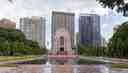
Alright, mate, look straight ahead through the line of gum trees and you’ll spot the Anzac Memorial-it's that massive, pale pink Art Deco building with a wide staircase and tall,…Leggi di piùMostra meno
Alright, mate, look straight ahead through the line of gum trees and you’ll spot the Anzac Memorial-it's that massive, pale pink Art Deco building with a wide staircase and tall, narrow windows, right at the end of the long reflection pool. Now, let’s paint a picture for ya: You’re standin’ on ground that was once home to the Gadigal people, part of the Darug nation, with roots runnin’ back 25,000 years, and this bit of Hyde Park was where they’d have fierce battles-that’s proper ancient turf you’re on, not just a patch of green! Fast-forward to the 1900s, it’s World War I, and young Aussies are gettin’ shipped off under the banner of “ANZAC”-that’s the Australian and New Zealand Army Corps, but let’s be honest, everyone just knows it as the spirit of the digger: brave, tough, and never backs down. Imagine the tension in the air as blokes crowded the streets, signing up, and those left behind started thinking, “How the heck do we remember ‘em all?” That’s where this memorial comes in. They kicked off fundraising on Anzac Day in 1916-just a year after Gallipoli-hopin’ to build more than just a statue; they wanted a whole shebang: a place for remembering, a spot to help grieving families, offices for returned soldiers, and a living monument etched with every sacrifice. It took years of argy-bargy between government, soldiers, and the many passionate women’s groups (who weren’t shy about speakin’ up, by the way). The big compromise? To make it a shrine of remembrance-somethin’ solid and beautiful, standing right here in Hyde Park. Spot the building? That Art Deco style with all the sharp angles and the grand steps was whipped up by Bruce Dellit-young, Aussie-born, and mad keen on making somethin’ striking. On the outside, it’s all covered in amazing sculptures by Rayner Hoff-figures showing all the branches of the services, not just the fellas but the nurses, too. Hoff wanted everyone to know the sacrifice wasn’t just on the battlefield, but at home as well. Inside, if you ever get a squiz, there’s a golden dome glittering with over 120,000 tiny stars-one for every New South Welshman or woman who served. Down below is the striking sculpture “Sacrifice,” showing a fallen digger carried by womenfolk, raw with grief and strength. You’ve got the Pool of Reflection out front-stand close, mate, and you might just catch your own mug in the glassy water, like all those souls remembered here. Opening day in 1934 was a cracker: 100,000 punters packed the park, the Duke of Gloucester made the speech, and you would’ve heard everything from the thump of boots marching to the sniffs of those remembering loved ones. But this spot ain’t set in stone-well, it is, but you know what I mean. Over the years it copped a bit of controversy, like when anti-war protesters sat right here in the ‘70s, or feminists gave it a spray in ‘75 saying it stood for more than just the blokes. It’s been a rallying point, a stage for peace, and a living heart of the city. Take a moment, listen for the birds or distant city hum, and picture those generations-from fierce Aboriginal warriors to ANZAC troops to everyday Aussies-each carving a bit of their story into this sacred patch. It’s not just a memorial, it’s a yarn of old ghosts, big dreams, and the stubborn Aussie spirit that refuses to be forgotten.
Apri pagina dedicata →Alright, legend, you’ll spot the Hyde Park Obelisk standing proud and tall right in front of ya at the corner of Elizabeth and Bathurst Streets - just keep your eyes peeled for a…Leggi di piùMostra meno
Alright, legend, you’ll spot the Hyde Park Obelisk standing proud and tall right in front of ya at the corner of Elizabeth and Bathurst Streets - just keep your eyes peeled for a massive sandy-coloured needle soaring into the sky, with a snazzy bronze tip at the top. Now, sidle on up and have a squiz, ‘cause you’re looking at one of Sydney’s finest oddballs! Believe it or not, this grand old spike isn’t just for show - she’s actually a fancy-pants sewer vent. Yep, that’s right! Built in 1857, back when Sydney was a scrappy young city with more pong than polish, the city council realised they needed a better way to deal with all those, ahem, ‘urban aromas.’ So what did they do? They built this beauty, crafted by the mob at the New South Wales Department of Public Works, and plonked her right here in Hyde Park. Picture it: workmen in flat caps and braces, chipping away at solid sandstone while horse-drawn carts rattled past. Inspired by Cleopatra’s Needle over in London, the Hyde Park Obelisk’s got all the trimmings - she’s 22 metres high, capped with a jazzy bronze filigree, and her base is a stout square of sandstone nearly taller than most footy players. Some old-timers cheekily nicknamed it “Thornton’s Scent Bottle,” after Mayor George Thornton who figured Sydney could do with a splash of fresh air. Only in Australia could a sewer vent become a landmark! Back in the day, Sydney’s sewer system was doing it tough - all the waste used to empty out into the harbour or bubble up through street grates, making the city reek to high heaven. This obelisk, though? She was a proper game changer. The structure is what you call an ‘educt vent,’ which means all the nasty gases - lighter than air, mind you - could rise up and bugger off out the top, rather than drifting along the streets and causing a stink. Smart thinking, that. The funny thing is, before this vent was built, poor ventilation meant those dangerous gasses just built up underground, eating away at the pipes and anyone fixing ’em copped a real nasty whiff, if not worse. From the moment she was unveiled, folks could breathe a bit easier - well, at least above ground. Later on, health boards ran all sorts of experiments to keep the city’s lungs clear, and this vent shaft became a test case. It’s the only one built fully of sandstone, and in her time, stood out as an absolute stunner. Over the decades, vent technology changed - smaller pipes here, fancy cast iron traps there - but none really packed the same punch, visually speaking, as this whopper. Here’s another cracker of a yarn: in 2014, Sydneysiders woke up to find the obelisk absolutely covered by a giant pink condom. No joke! It was a cheeky stunt raising awareness for HIV in the city’s LGBTIQ community. Talk about giving history a shake-up - the old gal scrubbed up alright with her new, flashy outfit! This sort of quirky moment is exactly what keeps the spirit of the city humming. Even though Sydney’s sewer system has since been split, and this vent now lets out only stormwater gases, the obelisk still stands tall and proud. She’s the last of her kind - the only sandstone vent shaft in the whole Sydney Water system - and a proper piece of local engineering history. Added to the State Heritage Register in 2002, she’s more than a relic: she’s a monument to good old-fashioned ingenuity and the fight to keep this growing city breathable. So as you stand here, surrounded by the hustle and bustle, take a moment to imagine Hyde Park in the 1850s. The streets are dirt, the city’s a patchwork of hope and hardship, and right here, the Obelisk gleams in the sun, a beacon for a cleaner, fresher, and fair dinkum future. Not bad for what’s basically Sydney’s fanciest fart pipe, eh? Wondering about the description, heritage listing or the gallery? Feel free to discuss it further in the chat section below.
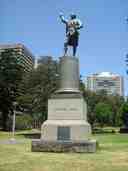
Apri pagina dedicata →Alright, legend, keep your eyes peeled ahead for a towering bronze bloke standing high and mighty atop a chunky granite pillar-he’s holding a spyglass in one hand, the other hand…Leggi di piùMostra meno
Alright, legend, keep your eyes peeled ahead for a towering bronze bloke standing high and mighty atop a chunky granite pillar-he’s holding a spyglass in one hand, the other hand pointed dramatically towards the sky, right there in the middle of Hyde Park. Now, you’re standin’ face-to-face with one of Sydney’s larger-than-life yarn-spinners: Captain James Cook, cast in bronze and immortalised smack-bang in Hyde Park. Picture this-back in the 1860s, every Sydneysider and their dog was yakkin’ about putting up a big statue of this famous British explorer, but turning big talk into cold hard cash was a mission. They passed the hat around for yonks, collecting coins and notes, and finally scraped together a tidy £1,777 thanks to the Australia Patriotic Association. That’s a fair few bob to honour a fella who never even set foot in Sydney Harbour! But then comes a good dose of drama-on March 27, 1869, Prince Alfred himself, Queen Vic’s second son, gets in on the act, laying down the foundation stone in Hyde Park while crowds turn up in their Sunday best for the spectacle. They were probably hopin’ for a statue any day now, but mate, it took them another nine years and a serious case of empty pockets to actually finish the job-most of the money ended up coming from the New South Wales Government, not just from public donations like the shiny inscription would have you believe. The big ask for the actual statue went all the way to London, and Thomas Woolner, a top sculptor and member of the Pre-Raphaelite Brotherhood (not a bikie gang, just a bunch of arty types), got the gig. Now, he knew Cook’s spot was windier than a southerly buster, so he went for solid bronze-a statue so tough it could survive anything Sydney could throw at it. Woolner’s Cook is a real showpiece: the explorer holds a telescope in his left mitt, a look of satisfaction on his face like he’s just spotted the world’s biggest barbie on Botany Bay, and his right hand shoots towards the clouds as if to say, “Cop a look at this new Southland, would ya?” But the adventure didn’t stop in the sculptor’s studio. Before Cook could lord it over Hyde Park, the statue got a cheeky debut in London; it even stole the show near the Athenaeum Club, earning rave reviews for being full of “force and spirit.” Meanwhile, the granite block for the base had its own bush adventure-dragged out of a quarry in Moruya, rolled on rattly rails for six miles, and then shipped to Sydney on a schooner called Settler’s Friend. Just outside Jervis Bay, there’s a late-night barnacle buster: gets clipped by a 400-ton barque. Out comes the axe, they hack the boats free, and against all odds the Settler’s Friend limps into Port Jackson, block still on board, not even a kangaroo in sight. Come February 25, 1879, all of Sydney turns out for the grand unveiling. The day’s declared a public holiday, and let me tell ya, about 60,000 folks-marines, volunteers, society bigwigs, thirteen bands, and two hundred kids belting out the anthem-packed the park in a two-mile-long parade. The statue, hidden behind a Union Jack, is finally revealed by six soldiers in a scene that’d make a Rainbow Serpent blush. Boffins and bishops, pollies and punters, nearly everyone you could name turned up to help make it the most patriotic hoedown New South Wales had ever seen. That night, to top off the spectacle, they whacked an electric light atop the post office to shine down on Cook’s bronzed mug. The light was so bright, they reckoned you could read a newspaper two miles away-talk about making headlines! Of course, there’s a bit of bother in the fine print. The inscription says Cook “discovered this territory” in 1770, but anyone who’s checked a map knows old mate landed at Botany Bay, not Sydney Harbour. And Cook wasn’t even the first European to spot Australia-Dutch, Portuguese, name a nation, they all had a squiz. Even the origin story of the funding’s a bit sus; most of the cash came from the government, only a bit from the good people. But however you cut it, Cook’s statue is a monster chunk of Sydney’s history, perched on a fifteen-odd-ton block of granite. If you take a squiz at the plinth, you’ll see inscriptions on every side-Cook’s birthplace, his fateful end at Owhyee, and a tribute from the Yorkshire Society. The statue’s been standing here ever since, a bit of a show-off with his spyglass and sky-pointing, reminding every Aussie of grand adventures, heated debates, and a city that loves a good celebration. So, have a proper gander and imagine yourself in the middle of that roaring 19th-century crowd-bit different from the buskers and joggers of Hyde Park today, eh?
Apri pagina dedicata →Righto, if you’ve got your sunnies on, look straight ahead and you’ll spot a big ol’ sandstone building with a dramatic, glassy entrance that juts out like a glimmering jewel box…Leggi di piùMostra meno
Righto, if you’ve got your sunnies on, look straight ahead and you’ll spot a big ol’ sandstone building with a dramatic, glassy entrance that juts out like a glimmering jewel box on William Street - that’s the Australian Museum, mate! Now, let your imagination run wild, because you’re standin’ out front of the oldest natural history museum in all of Australia and one of the oldest in the world! Picture this: It’s the 1820s. Old Sydney town’s full of dirt roads and rickety wooden buildings, and the local bigwigs are dreamin’ about a place to stash and show off all sorts of weird and wonderful critters collected from this bonza continent. Fast forward to 1827, and with a bit of a push from a bloke called Earl Bathurst-and some cold hard cash from the Brits-the Colonial Museum was born. Back in the day, the museum bounced around town, crammed in odd rooms, until it landed right here in its current home in 1849. Its earliest wings, built from classic Sydney sandstone, give the place a proper old-school vibe - just soak in those tall columns and the regal air! But don’t let the old bones fool ya: this place has kept growing and modernising, hence you can’t miss that flash ‘Crystal Hall’ entryway, all angles and shining glass, opened in 2015. That’s where you walk in these days, suspended above College Street like you’re on a catwalk for science. This joint was never just for fun, though - from the very beginning it was about collecting all the curiosities, live or fossilised, wriggling or ancient, and showing them off like nobody’s business. Back in the early years, swapping stuff with British and European museums was the go. Gerard Krefft, one legend of a scientist, ran the joint in the 1860s and really put the Aussie Museum on the global map - he was the go-to bloke for all things that slither, swim, or stomp. Even today, the museum is buzzing with research. If you’ve ever fancied yourself a Steve Irwin wannabe, get this: since ’73, the museum has a cracking research station on Lizard Island up on the Great Barrier Reef, where scientists study corals, critters, and climate change - talk about livin’ the dream! In the city, their flash Australian Museum Research Institute is crawling with boffins, exploring everything from biodiversity disasters to backyard frogs. Speaking of, their FrogID project turned Aussies into citizen scientists, recording frog croaks in the wild to help save our slippery little mates. Over the years, this place survived wars, renovations, and the odd bit of drama. They once had a train - yep, a full-on Aussie Museum Train - chugging around New South Wales in the ’70s and ’80s, bringing the magic of the museum to country kids. The museum’s always been a battler, sometimes getting mixed up in politics, like the time a single word in an Ancient Egypt exhibit sparked a full-blown stoush. But that’s Sydney - never dull, eh? Oh, and don’t reckon this place is just a museum! On some nights, you can rock up for ‘Night at the Museum’, explore the dark corners after hours, meet live animals, or catch one of their flash talks about how the world’s changing. And in the exhibition halls? You’ll find everything from mummies and dinosaur bones to Pacific treasures and Aboriginal artefacts, like a real sled from Mawson’s Antarctic adventure, and a feathered cape gifted to Captain Cook. The building itself is a living timeline - walk along the outside and you’ll spot stately Greek Revival bones from the 1840s right next to cool modern wings from the 1960s and 2010s. It’s a treasure chest built by generations of passionate curators, scientists, and even a few unfortunate souls, like its first custodian William Holmes, who accidentally shot himself collecting specimens (unlucky, mate). Through fires, floods, and fads, the museum's always been Sydney's home for wild, weird, and wonderful discovery. So have a squiz through those glass doors. You’re about to step into two centuries of adventure - from ancient fossils to cutting-edge climate science. Not bad for a place that started with just a handful of curiosities and the wildest dreams in the colony! Exploring the realm of the building, research or the other activities? Feel free to consult the chat section for additional information.
Apri pagina dedicata →Alright mate, just up ahead on your left, keep your eyes peeled for a grand old sandstone façade with two mighty towers and a huge, intricate rose window above three arches-if you…Leggi di piùMostra meno
Alright mate, just up ahead on your left, keep your eyes peeled for a grand old sandstone façade with two mighty towers and a huge, intricate rose window above three arches-if you see the dark wrought-iron gates under that fancy stonework, you’ve found the Great Synagogue! Now, settle in and soak up this cracker yarn-because the Great Synagogue isn’t just some run-of-the-mill building, it’s a bonza slice of Sydney’s story, bursting with heart, heritage, and a fair whack of drama. Picture yourself back in the 1870s, when the harbour city was buzzing with change. Jewish families were growing in number, but they were split-one mob worshipped up York Street, the other down Macquarie. A fair dinkum solution for unity was needed, and after a round of heated cuppas and fundraising, they finally landed this prized spot on Elizabeth Street. In 1871, builder John Solomon snapped up the land for £2,000-no small paddock in those days-then patiently waited for the community to cough up the cash. Old mate Thomas Rowe, a proud Cornish architect, was handpicked after a tight contest, and in he waltzed with a vision: something grand and solid, a bit flash with Romanesque and Gothic touches-all those arches and spires you see now, plus a touch of Moorish magic inside. It was said to be based on Sydney’s big brother synagogues in London and Liverpool. And if you squint, you’ll spot those fancy bits of stained and etched glass, the golden touches, and, stone the crows, that glorious blue ceiling with its painted stars. Imagine standing there on Australia Day, 1875, when the first stone was laid. Would’ve been a right hullabaloo-kids dodging brick dust, ladies in their finery running a cheeky bazaar down at Martin Place, and everyone from the postie to the Postmaster General, Saul Samuel, lending a hand. Now, this joint isn’t just a pretty face. Since its consecration in 1878, it’s been the beating heart of Jewish life in Sydney, serving up daily traditional Orthodox worship, save for Sundays. Services are a feast for the senses-imagine the sound of a professional choir belting out songs on Shabbat as sunlight slants through coloured glass windows, while families gather for baptisms, weddings, and all the proper life milestones. If you’re nosy enough, peek into the history-it’s packed. The Great Synagogue keeps records going back to 1826. Births, marriages, deaths, every tear and tickle-they all echo in these walls. As you look closer, check out the details that old Sydney hands like-those fancy cast-iron gates out front? Banged together by Fletcher Brothers back in 1878, and kept spick-and-span with a bit of restoration just last year. And get this: the timber inside is original, some of it carved so ornately you’d think a wizard did it! There’s even a rare menorah made by their own Rabbi L. A. Falk, shining in the candlelight when things get festive. But the show’s just getting started-this place is no fossil. Over the decades, it’s changed and adapted without losing its soul. At first, the women’s gallery soared high above, with the central bimah as the focus, like tradition demands. Bit by bit, the seating was shuffled, the choir moved, and electricity sent those old gasoliers buzzing. Downstairs, there’s a secret hall, a cheeky museum, and stacks of ceremonial treasures. Modern upgrades too-offices, classrooms, meeting rooms, and a Shabbat elevator! Even the glass security screens and cast iron gates added in the 21st century keep this joint humming and safe. It’s also the headquarters of the AM Rosenblum Jewish Museum, where you’ll find a treasure-trove of old documents, precious objects and an unbroken link to the earliest days of Sydney’s Jewish mob. Deep below your feet, the Rabbi Falk Library is stacked with wisdom-a true old-school page-turner. The roster of characters here is a proper who’s who: Reverend Alexander Bernard Davis ruled the roost for 25 years, then came legal eagles, prophets, cantors, and the odd rabbi from Jerusalem, London, or Durban. Some brought in new tunes, others started bat mitzvahs or restored lost traditions. Each added a little flavour-like adding extra sauce to your meat pie. So, as you stand here, with Hyde Park waving just across the street and Sydney’s towers looming overhead, take a moment. You’re looking at more than stone and stained glass; you’re standing at the crossroads of faith, family, and Sydney’s wild, ever-changing story-a place where every note sung, every candle lit, and every foot through those iron gates echoes with over a century and a half of pure Aussie spirit. Exploring the realm of the architecture, people or the gallery? Feel free to consult the chat section for additional information.
Apri pagina dedicata →Oi, have a squiz just ahead-see that grand ol’ building struttin’ its stuff on the corner, with all those arched windows and fancy turret bits? That’s the Queen’s Club for ya,…Leggi di piùMostra meno
Oi, have a squiz just ahead-see that grand ol’ building struttin’ its stuff on the corner, with all those arched windows and fancy turret bits? That’s the Queen’s Club for ya, right on Elizabeth Street, mate. Now picture this: It’s 1912, and Sydney’s bustle fills the air with the clatter of trams and the clop of horses. But tucked away from the chaos, the Queen’s Club swings open its doors for the crème de la crème of Sydney’s ladies-think big hats, gloves, and hushed gossip over tea. This place wasn’t just any sheila’s hangout, nah, it was the domain of the wives, daughters, and mums of the country’s heavy-hitters-politicians, judges, and captains of industry. Leadin’ the charge was Jane Barton, who reckoned if her hubby could be the first PM, she’d run the show for women with just as much style. In those early days, the club was king-or should I say queen!-at The Towers in Queens Square, which is actually where the club copped its name. With membership ballooning to 350 well-heeled ladies by 1914, the club started spreadin’ like Vegemite on toast, snappin’ up buildings on either side. But just when things seemed cruisy, in rolled a bit of drama in the ‘50s-the NSW government wanted the land for new law courts, so the Towers had to go. No worries, though, these legendary ladies just packed up their pearls and moved into the St James Hotel down the road, which they actually bought outright in ‘59. Talk about bein’ ahead of the game! By 1975, they even joined forces with the Macquarie Club, bringing even more movers and shakers into the fold. The Queen’s Club is still goin’ strong, tradin’ secrets, sharing laughs, and rubbing shoulders with swanky clubs from London to San Francisco. So there you have it-a spot with more history and cheek than a game of backyard cricket at Christmas!
Apri pagina dedicata →Righto, mate! If you’re lookin’ for the Archibald Fountain, just cast your eyes dead ahead into the park - you’ll spot a ripper of a water feature with a big bronze bloke standin’…Leggi di piùMostra meno
Righto, mate! If you’re lookin’ for the Archibald Fountain, just cast your eyes dead ahead into the park - you’ll spot a ripper of a water feature with a big bronze bloke standin’ proud in the middle, surrounded by spraying water, statues of mythic characters, and flanked by green trees and park benches all around. Now, let me spin you a yarn as you stand here, with the sound of splashing water mixing with the city’s hum. This stunner of a fountain is more than just a pretty face - it’s one of Sydney’s real treasures with a wild backstory that’s got everything from French flair to wartime mateship and even a bit of cheeky local mischief. See, this beaut’s full name is the J. F. Archibald Memorial Fountain. J. F. Archibald was a big deal back in the day - the boss of The Bulletin magazine, which was like the beating heart of Aussie publishing at the turn of the century. Old Archibald reckoned Sydney could use a touch more class, somethin’ to make our city look a bit more like Paris, no less. When he popped his clogs, he left a decent wad of cash with strict instructions: “Get a proper French artist in, none of this homegrown stuff. And I want it to remind folks of the partnership between Aussies and the French during World War I.” No pressure, hey? So off they sent for François-Léon Sicard, a top-notch sculptor from Paris. This bloke never even made it Down Under, mind you - he finished the fountain over there in Paris in 1926, but it was another six years before it finally got put together here in Hyde Park. Sicard was a proper classicist - loved his Greek and Roman myths, which is why you’ll see so many legendary figures here. Take a squiz at the main statue - Apollo, the sun god himself, arm outstretched like he’s just finished a set at Bondi and ready to bless the whole place with a bit of sunshine. Have a good look around Apollo’s feet - you’ll see the Star of Day, a semicircle of rays spittin’ water out all over the shop. Then check out the horses, representin’ Apollo’s chariot, and out of their noses water gushes into the basin below, tumblin’ down in ripples and cascades. Watch for the tortoises, too - they’re not just for show, they’re shootin’ jets of water straight into the big basin, making the whole thing glisten, especially at night when the lights hit just right and the whole area turns magic. But don’t stop there, because there’s a trio of legendary groups ‘round this pond - Diana, goddess of moonlight and purity, keeping the nights peaceful; Pan, cheeky young god of the fields, celebrating every good thing that grows; and Theseus, fresh from knockin’ over the Minotaur, showin’ that a bit of pluck and courage goes a long way. Between them, dolphins shoot more jets, and the whole spot turns into a wonderland, especially when the arvo sun catches all the water and kids have a field day. But here’s where it gets wild: for years, the Archibald Fountain hasn’t just been about art and history. It’s a spot for all sorts of Sydneysiders - a lunchtime hideaway for workers, a stage for buskers, and the backdrop for a thousand tourist selfies. But from World War II till the '50s, it was also a known beat - a spot where blokes could find each other in secret, back when that sort of thing was hush-hush. It’s even had its moments in Aussie novels - Kylie Tennant brings it to life in “Tell Morning This,” where she calls out what everyone in the know, knew. So as you’re standin’ here, listen for the splash, soak up the spark of life that old mate Archibald wanted Sydney to have, and remember - this fountain’s seen cheers, whispers, protests and secrets. Go on, pull up a pew, and enjoy the magic - you’re standin’ in the beating heart of Sydney’s history.
Apri pagina dedicata →Alright, mate, feast your eyes ahead and you’ll spot St Mary’s Cathedral-she’s the massive golden sandstone beauty with twin spires shooting up into the sky, all lit up like a…Leggi di piùMostra meno
Alright, mate, feast your eyes ahead and you’ll spot St Mary’s Cathedral-she’s the massive golden sandstone beauty with twin spires shooting up into the sky, all lit up like a show-stopper right at the top of a grand staircase. Just look straight ahead-you can’t miss those towering spires and the stunning round rose window in the middle. So, here’s the yarn, right from the heart of Sydney! You’re standing outside the Cathedral Church and Minor Basilica of the Immaculate Mother of God-yeah, that’s a mouthful, so we Aussies just call her St Mary’s Cathedral. She’s the big cheese for Catholic Aussies and the seat of the Archdiocese of Sydney, dedicated to the Blessed Virgin Mary, “Our Lady, Help of Christians”-and she’s the true Patroness of Australia. Roll back to colonial Sydney and picture the scene: convicts, redcoats, and hopeful settlers out in the bush, doing it tough. No proper church for Catholics-just a few prayers in secret. In fact, the first Irish priest, Father O’Flynn, got the boot 'cause he rocked up without permission. But then, in 1820, in strolls Father Therry, official as they come, who reckons he’s had a vision-right here-a mighty golden church with twin spires towering above Sydney. Now, that dream took nearly two hundred years to come good, with fires and drama along the way. The first church was just a humble sandstone jobbie, but up it went in smoke in 1865, with flames roaring sky-high and bells tolling their sadness. The rebuild? Oh mate, it’s a tale of big vision, stubborn grit, and a bit of Aussie luck. They roped in the legendary Gothic Revival architect William Wardell who, in true grand style, was told to “make it beautiful and grand.” Wardell went all out-think golden sandstone from the local quarries, grand arched windows, and a layout that’s not your standard east-west, but north-south along College Street. You’re looking at English cathedral style on a whole new level, inspired by the likes of Lincoln Cathedral and even the famous Notre Dame in Paris. That rose window up there is near-on a replica of Lincoln’s and let me tell you, it catches the morning sun like you wouldn’t believe. The towers soared up, but the spires-those stunning pointy hats on top-took over a century to finish, only going up for the new millennium in 2000! Inside, the sensory feast continues. When you step in, you’ve got golden sandstone everywhere, warm timber vaults, and stone bosses carved with Aussie waratahs, putting a local spin on all that gothic finery. The stained glass windows-every single one crafted by Hardman & Co.-tell stories from the mysteries of the rosary to scenes of Aussie saints, shifting from classic gothic to lush painterly style as the years rolled by. Once upon a time, if you crawled under the pulpit as a kid, you’d find a hidden carved boss-like a secret treasure for the curious! Music? St Mary’s is packed with choir and organ action. You’ve got blokes and lads belting out Gregorian Chant and all sorts, with the country’s oldest choir echoing through the grand nave. And those mighty pipe organs-including a Canadian-built monster-can rattle your bones; they’re played from a fancy electronic console nowadays for good measure. And don’t even get me started on the bells! The first peal back in the 1840s were the first-ever change-ringing bells Down Under. These days the central tower’s got twelve bells that'll set your teeth chattering on a Sunday morning or when there’s something big going down in Sydney. During the finale of the Symphony in the Domain, those bells bang out Tchaikovsky’s 1812 Overture, joining in the city’s celebration. This spot’s not just a looker-it’s tangled up in Sydney’s story. Prime Ministers lay in state here, Popes have prayed here, and it’s seen everything from mighty Eucharistic Congresses to tearful memorials for tragic events like the Sydney siege. The crypt’s home to archbishops and the city’s early Catholic clergy-a fair chunk of Aussie history right under your feet. You’re standing at the real home of Australia’s Catholic story-the spot where faith, resilience, and no small dose of drama have built a true icon. St Mary’s is still the fourth tallest church in the country, still the seat of the Archbishop, and still, after all these years, whispering a mighty yarn to anyone who stops to listen. Alright, legend, catch your breath and take it all in. When you’re ready, we’ll wander on to the next stop! Want to explore the architecture, treasures or the music in more depth? Join me in the chat section for a detailed discussion.
Apri pagina dedicata →Oi, have a stickybeak over there-you're lookin' for a massive sand-coloured building with three pointy gables, flashy gothic turrets, and a load of intricate stone carvings right…Leggi di piùMostra meno
Oi, have a stickybeak over there-you're lookin' for a massive sand-coloured building with three pointy gables, flashy gothic turrets, and a load of intricate stone carvings right by the intersection; you can’t miss it, ‘cause it looks fair dinkum like a medieval castle dropped smack in the city! Alright, now plant your feet and soak this one in-it’s the Registrar General's Building, mate, a real gem from the early 1900s! Picture Sydney back in 1913: the city’s buzzing, horses clopping across cobblestones, and here’s this beauty going up, designed by Walter Liberty Vernon, who clearly nicked a few tricks from old-school Gothic castles. The whole joint was built with big slabs of sandstone that catch the arvo sun, shining golden along College and Macquarie Streets. Now, wandering past all those fancy gables and turrets, you might spot some secret codes: initials of the stonemasons and architects are cheekily carved into the stone, and up above the main arch, the numbers 1912 are wound together like a mystery only locals understand. But this place isn’t just for show-it was the nook for all the official business that made New South Wales tick. This is where every birth, death, and marriage got scribbled down, right through the meat of the twentieth century. Imagine thousands of Sydneysiders legging it here with wedgie suits and hopeful grins-maybe to tie the knot, stake a claim on some dirt, or to make sure their bub officially existed. The vaults under your boots hold ancient registers and the paperwork for just about every land title in the state. If those walls could yack, reckon they’d have a yarn or two about wild family squabbles or lost fortunes! And it’s more than just a stack of files: look around-this building’s got its crew of mates beside it. You’ve got the grand spires of St. Mary’s Cathedral just next door, Queen’s Square not far, Hyde Park Barracks with its convict tales, and the mighty Sydney Mint echoing jingling coins. All these heritage legends form a proud lineup, and this building caps off the lot right at the end of College Street. So next time you’re legging it past, spare a thought for all the dramas, heartbreak, new beginnings, and dodgy dodgers whose stories live inside these walls. Good on ya for taking it in-most folks just breeze by, but now you know, right here’s where a good chunk of Sydney’s history was inked for keeps!
Apri pagina dedicata →Alright, legend-right in front of ya stands the Banco Court: just look for that striking red brick building with loads of sandstone trim, and some pretty fancy carvings around the…Leggi di piùMostra meno
Alright, legend-right in front of ya stands the Banco Court: just look for that striking red brick building with loads of sandstone trim, and some pretty fancy carvings around the doors and windows, right beside St James’ Road and peeking through the gums. Now, mate, park yourself here and let’s take you for a ripper stroll back in time. Picture this spot in the late 1800s-Sydney’s getting flashier, the population’s booming, and there’s a thirst for order in the busy streets. Right here, in 1895, they decide to slap up a courthouse that wouldn’t just do the job, but would also show off a bit. Old Walter Liberty Vernon, our Government Architect at the time (top bloke, good with a pencil), rolled up his sleeves and designed this beauty. Just imagine the clang of hammers, blokes in moleskins lugging bricks, all while the city roared around them. Two years of hard yakka and, fair dinkum, the Banco Court was ready to take on the city’s biggest legal dramas. Now, don’t go thinking this is any old brick-and-mortar. The style is called Federation Free Classical, but the locals just reckon it’s a bloody work of art. Those sandstone bits? Proper posh, with intricate carvings that make you want to reach out and run your hands along ‘em. And if you ever get a peek inside-mate, the plasterwork and cedar joinery’d have even the toughest judge forgetting their poker face. It was all about giving justice the respect she deserves, but with a bit of Sydney flair, ya know? The Banco Court was built to hold all the judges, right? That’s what “in banco” means-a full bench, everyone in their robes, probably sweating buckets, staring down a room packed with cranky lawyers, flustered witnesses, and a jury wondering what’s for lunch. There are chambers out back to keep the judges out of mischief, plus rooms for barristers to practice their arguments and even a cheeky little side garden that the Chief Justice could gaze at while dreaming up verdicts. That garden was meant to feel like the old English Inns of Court-a calm patch to let your nerves settle before you had to go in and face the music. But Sydney kept growing, and by the late ‘70s, they’d built a modern sky-high version just across Queen’s Square. Everything moved up to level 13-because of course they’d pick an unlucky number-and this old girl was put to use by the District Court for a while. She’s back in Supreme Court hands now, holding tight to her dignity and never letting the hustle of the modern city swallow her up. In 2004, she even copped a National Trust Heritage Award for looking so sharp after all these years-go on, give her a nod. The Banco Court isn’t just a building; it’s the soul of Sydney’s justice system. She stands shoulder to shoulder with other heavyweights-St James’ Church and the old Greenway Court House-and together they form this mighty little pocket where you can almost hear the echoes of years gone by. If these brick walls could talk, you’d get tales of legal triumphs, heartaches, scandals, and moments when the fate of a bloke-or the whole city-hung in the balance. Through fires, floods, and a city growing sky-high around her, she’s stood true-a quiet guardian of the law. So next time you’re walking past, take a breath and picture the barristers in their wigs and gowns, the earnest jurors pacing out front, nerves shot, and the judges giving one last look at their garden before the next big case. Only in Sydney do ya get a bit of bush, baggy history, and the law, all tied together in red brick and sandstone. Bloody magic, isn’t it?
Apri pagina dedicata →Alright mate, have a squiz straight ahead for a big, three-storey Georgian brick building with a classic clock right at the top, framed by old sandstone gates and a tall roof vent…Leggi di piùMostra meno
Alright mate, have a squiz straight ahead for a big, three-storey Georgian brick building with a classic clock right at the top, framed by old sandstone gates and a tall roof vent in the middle-it’s hard to miss! You’re standin’ in front of the legendary Hyde Park Barracks-this beauty’s seen more drama than your local footy club on a Saturday night. Picture it: 1819, Sydney’s streets were crawling with convicts, blokes and boys lookin’ for trouble or a feed. Governor Macquarie reckoned things were gettin’ outta hand, so he got his star player, Francis Greenway-a fair-dinkum convict turned architect-to whip up this barracks for the lot of ‘em. Can you imagine Macquarie pickin’ up a brick with the convicts? Not likely, mate, but he did lay the first stone-talk about hands-on management! Now, back in its prime, you’d hear the rattle of chains and the heavy stomp of boots on flagstones as nearly 600 men were packed into those rooms. The hammocks swung so close together, a bloke’d nearly be breathing down his mate’s neck all night. Still, Macquarie thought this’d sort them out-give ‘em some discipline, slow the robberies, and keep Sydney a bit safer after dark. And crikey, he was so stoked with Greenway’s handiwork, he gave him a full pardon! But it wasn’t all ‘harden up’ inside. Even with the walls, some convicts were cheeky as! They’d pinch whatever they could and toss it over the fence to mates waiting outside. It got so crook inside, they started painting arrows on everything-shirts, blankets, you name it-so the thieves couldn’t flog ‘em as easy. And let’s not forget, when the numbers swelled, you could have up to 1400 men crammed in, all swinging in hammocks or scheming up their next daylight scam. The place was a mix of punishment and privilege, depending if you toed the line during the week or copped a hiding for slacking off. Saturdays were gold-convicts could work for a few shillings, maybe upgrade their feed, unless they got caught gambling or on the turps, then straight back to the Barracks they’d go. As Sydney grew up and knew fewer convicts, the Barracks switched roles. By the late 1840s, it was filled with the hopeful chatter of young immigrant women from famine-stricken Ireland, drawn here by the promise of a better life. There were orphans too, hearts pounding with nerves, arriving with little but the hope of safety between these same walls. You’d have copped the smell of new arrivals, maybe a whiff of disinfectant, a chef’s attempt at Irish stew, and always the clatter and murmur of too many people under one roof. But the dramas didn’t stop there! The old Barracks turned into courts-judge’s wigs, stiff collars, legal shouting matches, all unfolding where convicts once strung their hammocks. Decisions made here changed lives: the first basic living wage, the long fight for equal pay for women, and cases that echoed through the years. Then government offices moved in-everything from the Stamp Office to the Vaccine Institute called these buildings home at one point. Talk about reinventin’ yourself! This old place even moonlighted as a hospital-the famous Rum Hospital next door was built in exchange for a monopoly on the colony’s booze supply, and when gold fever struck, the Mint churned out coins like a larrikin flips sausages. If those brick walls could talk, mate, you’d never hear the end of it. Through all the drama, sorrow, and a fair whack of Aussie mischief, the Hyde Park Barracks survived. When Sydney started respecting its history a bit more, the joint got a hefty facelift and archaeological digs dug up bits of convict life-buttons, scraps of handwritten notes, you name it-all tucked away under the floorboards for yonks. Today, you can poke around inside, try out a hammock, and cop a feel for convict life, thanks to the museum’s ripper exhibitions. It’s recognised world-wide, mate-UNESCO even gave it a gold star as one of the best surviving sites showing how convicts built this wild young country. So while you’re standing here under the Aussie sun, just think about all the footsteps that echoed through these halls-from old lags, hopeful immigrants, and judges gaveling away, to you rockin’ up for a stickybeak. The Barracks is an absolute ripper-a real survivor, and one of Sydney’s top bits of living history! Exploring the realm of the description, museum or the heritage listing? Feel free to consult the chat section for additional information.
Apri pagina dedicata →Alright, have a squiz straight ahead at that grand old two-storey sandstone beauty with the double verandah and chunky columns-it’s perched just behind those big iron gates on…Leggi di piùMostra meno
Alright, have a squiz straight ahead at that grand old two-storey sandstone beauty with the double verandah and chunky columns-it’s perched just behind those big iron gates on Macquarie Street, right across from the footpath. That’s the Sydney Mint, mate, shining in the sun like a proper slice of colonial history. Now, picture Sydney in the early 1800s: the bush was thick, the heat was relentless, and old Lachlan Macquarie-our governor at the time-had a wild idea to build a world-class hospital smack bang in the middle of this rough’n’tumble colony. Only problem? Macquarie didn’t have enough dosh, so he struck a deal with a few sly merchants, paying for the gig with, wait for it-45,000 gallons of rum! Deadset. That’s why locals started calling it the Rum Hospital, and mate, you can just imagine the trading and cheeky wheeling and dealing echoing through these very verandahs. Now, if you look up at those cedar columns holding up the verandah, they’re on a bit of a lean inward-just like the Parthenon back in Greece! Macquarie reckoned it’d look flash and even give an optical illusion of straightness. But, truth be told, the builders cut a few too many corners. There were dodgy beams and dodgier foundations. One fella who had a squiz at the work reckoned you’d think they were built just so people could see how fast they’d fall to ruins! Still, for all its mishaps, this is the oldest building in Sydney’s CBD to survive, and it’s still standing proud. Now, fast forward a few decades to the golden days-literally. The gold rush hit hard, and Sydney was awash in unrefined gold. It was chaos: blokes pocketing nuggets, shopkeepers struggling to make change with coins and clumps of gold. By 1854, the British finally let us have our very own mint-the first in the Empire outside Blighty itself! The old hospital building was converted to house the mint workers, and a shiny new coining factory sprang up just behind it. You’d have heard the clatter of machinery and shouts of workers as they churned out brand new sovereigns and half-sovereigns, turning raw Aussie gold into proper Queen’s currency. As the years rolled on, this place saw everything from grand experiments with burning coal and testing local timbers, to becoming the beating heart of Sydney’s scientific scene. At one point, it was all go with coin makers, scientists, surgeons, and even courts of law shuffling through those doors. After almost a century of making coins, the Sydney Mint finally closed its presses in 1927, outshone by the flash new mints down in Melbourne and Perth. But, of course, the story doesn’t end there-this old girl’s tougher than a sack of rusty nails. After coins stopped rolling out, the building got passed around like the office rugby ball: insurance agencies, government offices, court reporters, even emergency services-everyone wanted a bit of that prime Macquarie Street real estate. Plenty of rooms in there have seen more paperwork and bureaucracy than an outback town council on rates day! By the mid-20th century, a lot of the old buildings out the back had been knocked down for carparks and modern courtrooms, but the main Mint building survived, even after folk suggested knocking it down. There was a groundswell to protect it-Aussie battlers and history buffs steering pollies away from bulldozers in the nick of time. These days, the Sydney Mint is the central command for the Historic Houses Trust, with some cracking museum bits and even a cheeky little cafe. If you could step back in time, you’d hear the rum-fuelled chatter of convicts, the clank of mint presses, the judgy hush of courtrooms…every brick in those walls bursting with stories. And just think, you’re standing on some of the most important-and, let’s be honest, most drama-filled-real estate in the whole colony. So, whack on your imaginary tricorn hat, mate, and give a nod to the ghosts of gamblers, goldsmiths, and governors who once walked these verandahs. The Sydney Mint isn’t just a building-it’s a battler, a survivor, and a deadset legend in the heart of the city. Chalk it up as a proper piece of Aussie heritage, still holding its own against the sky.
Apri pagina dedicata →
Domande frequenti
Come inizio il tour?
Dopo l'acquisto, scarica l'app AudaTours e inserisci il tuo codice di riscatto. Il tour sarà pronto per partire immediatamente – tocca play e segui il percorso guidato dal GPS.
Ho bisogno di internet durante il tour?
No! Scarica il tour prima di iniziare e goditelo completamente offline. Solo la funzione chat richiede internet. Ti consigliamo di scaricare tramite WiFi per risparmiare dati mobili.
È un tour guidato di gruppo?
No – è un tour audio autoguidato. Esplori in autonomia al tuo ritmo, con la narrazione audio riprodotta dal tuo telefono. Nessuna guida, nessun gruppo, nessun orario.
Quanto dura il tour?
La maggior parte dei tour richiede 60–90 minuti, ma sei tu a controllare il ritmo. Metti in pausa, salta le tappe o fai pause quando vuoi.
E se non riesco a finire il tour oggi?
Nessun problema! I tour hanno accesso a vita. Metti in pausa e riprendi quando vuoi – domani, la prossima settimana o il prossimo anno. I tuoi progressi vengono salvati.
Quali lingue sono disponibili?
Tutti i tour sono disponibili in oltre 50 lingue. Seleziona la lingua preferita quando riscatti il codice. Nota: la lingua non può essere cambiata dopo la generazione del tour.
Dove accedo al tour dopo l'acquisto?
Scarica l'app gratuita AudaTours dall'App Store o Google Play. Inserisci il codice di riscatto (inviato via email) e il tour apparirà nella tua libreria, pronto per essere scaricato e avviato.
Se il tour non ti piace, ti rimborseremo l'acquisto. Contattaci a [email protected]
Pagamento sicuro con