
ब्रातिस्लावा ऑडियो टूर: इतिहास और संस्कृति के माध्यम से एक यात्रा
शहर के ऊपर एक गहरे लाल छत वाला महल मंडराता है, जिसके चार बुर्ज सदियों के शाही रहस्यों और तूफानी विद्रोहों पर नज़र रखते हैं। यह ब्रातिस्लावा है—जहाँ हर घुमावदार गली साज़िश की एक और परत छिपाती है। एक स्व-निर्देशित ऑडियो टूर के लिए अपने हेडफ़ोन पहनें और मौसम की मार झेल चुकी दीवारों और अलंकृत अग्रभागों के पीछे छिपी कहानियों को खोलें, उन कोनों तक पहुँचें जहाँ से अधिकांश आगंतुक सीधे गुजर जाते हैं। आधी रात को एक उग्र भीड़ ने इन कोबलस्टोन्स पर हमला क्यों किया था? गुड शेफर्ड के घर से कौन सा रहस्यमय घोटाला अभी भी जुड़ा हुआ है? और घड़ियों के संग्रहालय में एक अजीबोगरीब घड़ी हमेशा तेरह क्यों बजाती हुई लगती है? गौरव, उथल-पुथल और विलक्षण किंवदंतियों के युगों से गुज़रें, जैसे ही आप मनोरम प्राचीरों से गुप्त आंगनों और गूँजते गिरजाघरों की ओर बढ़ते हैं। हर नए कदम के साथ ब्रातिस्लावा के नाटक को उसकी चमकदार सतह के नीचे अनुभव करें। शहर को अपने गहरे रहस्यों को प्रकट करने दें—अज्ञात में आपका साहसिक कार्य अब शुरू होता है।
टूर पूर्वावलोकन
इस टूर के बारे में
- scheduleअवधि 40–60 minsअपनी गति से चलें
- straighten4.4 किमी पैदल मार्गगाइडेड पथ का पालन करें
- location_onस्थानब्रातिस्लावा, स्लोवाकिया
- wifi_offऑफ़लाइन काम करता हैएक बार डाउनलोड करें, कहीं भी उपयोग करें
- all_inclusiveलाइफ़टाइम एक्सेसकभी भी, हमेशा के लिए फिर सुनें
- location_onब्रातिस्लावा कैसल से शुरू होता है
इस टूर के स्टॉप
Legend has it that there are all sorts of secrets hidden within these walls. I won't spoil them all, but just imagine what kind of stories are lurking in a place that housed…और पढ़ेंकम दिखाएँ
Legend has it that there are all sorts of secrets hidden within these walls. I won't spoil them all, but just imagine what kind of stories are lurking in a place that housed Hungary's crown jewels for a couple hundred years! Now, let's talk about the castle itself. It's a massive rectangular building with four impressive towers at each corner. The Crown Tower is the superstar here, standing at 47 meters tall like a true crown on the southwest corner. If you're up for some adventure, take a walk through the corridors and you might catch glimpses of old Gothic and Renaissance elements. And if you're feeling extra brave, head down 80 meters into the courtyard and check out the water well. Just make sure you bring a ladder in case you want to come back up! Now, let's move inside. You'll find the Slovak National Museum exhibiting fascinating artifacts on the second floor and a treasure chamber that houses some of the most precious archaeological finds in Slovakia. Watch out for the Venus of Moravany, she's a prehistoric statue that still knows how to turn heads! On the first floor, you'll discover the rooms of the Slovak parliament. Imagine the debates that have taken place here, people arguing so passionately they might need a medieval "calm down" spell from time to time. The castle courtyard is a sight to behold as well. You've got the Knights Hall entrance and a couple of flavorful gates like the Sigismund Gate and the Vienna Gate. They used to keep people out, but now they just make great doorstop selfies! All in all, Bratislava Castle is a true piece of history with panoramic views that will leave you in awe. And hey, who knows what hidden treasures you might find during your visit? Just don't be surprised if you end up starting your own legend! Shall we head to our next stop, the House of the Good Shepherd? They've got some adorable Bratislava history waiting for us there!
समर्पित पेज खोलें →Ah, the House of the Good Shepherd! This charming little building is like a hidden gem in the heart of Bratislava's Old Town. Imagine a narrow, Rococo-style townhouse, standing…और पढ़ेंकम दिखाएँ
Ah, the House of the Good Shepherd! This charming little building is like a hidden gem in the heart of Bratislava's Old Town. Imagine a narrow, Rococo-style townhouse, standing proudly below the magnificent Bratislava Castle. It was built between 1760 and 1765 by the talented master-mason, Matej Hollrigl. Now, this house wasn't just any ordinary house. No, no, it was built for a local merchant. The ground floor was used for commercial purposes, while the upper part served as a living space. Talk about work-life balance, huh? But here's the fun part! Today, this historic building is home to the Museum of Clocks. You guessed it right, it's all about clocks in there. Antique clocks from the 17th to the beginning of the 20th century are proudly displayed, with a special focus on the 18th and 19th century timepieces made by Bratislava clockmakers. Time really flies in this place! And don't worry, hungry and thirsty travelers, because on the ground floor and in the basement, there's a pub waiting for you. So, after you've admired all the beautiful clocks, you can take a rest and grab a pint. How convenient is that? Now, the House of the Good Shepherd gets its name from the statue of Christ, the Good Shepherd, that sits on its corner. It's like a spiritual guardian watching over this lovely building. Isn't that sweet? Speaking of lovely, this house is considered one of the most beautiful examples of Rococo architecture in Central Europe. Its trapezium contour gives it a unique shape, and the extremely narrow frontal face is only as wide as one room and a staircase. It's like the house is saying, "I may be small, but I'm packed with charm!" So, my friend, take a moment to appreciate the beauty and history of the House of the Good Shepherd. It's a true Bratislava treasure that will make you feel like you've stepped back in time. Enjoy your visit! Alrighty then, it's time to move on to our next stop. Let's head over to St Martin's Cathedral, Bratislava. Follow me!
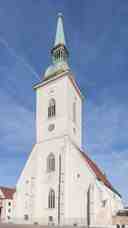
समर्पित पेज खोलें →Now, back in the day, St Martin's Cathedral was a pretty big deal. It was the coronation church of the Kingdom of Hungary between 1563 and 1830. Can you imagine being crowned a…और पढ़ेंकम दिखाएँ
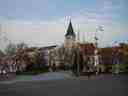
Now, back in the day, St Martin's Cathedral was a pretty big deal. It was the coronation church of the Kingdom of Hungary between 1563 and 1830. Can you imagine being crowned a king or queen right here? Talk about a regal ceremony! Speaking of regal, the cathedral shares some striking similarities with the nearby Bratislava Castle. They both have these stunning Gothic lines and colors that dominate the skyline of the Old Town. Trust me, you won't miss this place when you're strolling around. And wait until you see the tower! It's a whopping 85 meters tall, making it a real powerhouse in the city's skyline. Fun fact: it was actually part of the city's fortifications back in the day. That's one way to defend a church, right? But the fun doesn't stop there. The surroundings of St Martin's Cathedral are just as impressive. The courtyard is like a picturesque movie set, with these charming remains of outbuildings. And if you're lucky, you might even catch a glimpse of the robed students from the nearby seminary. Just imagine their daily commute to class along those cobblestone side-streets. Now, there used to be a synagogue right next door, but unfortunately, it got demolished in the 70s to make room for a bridge. Talk about sacrificing history for transportation. But don't worry, we'll still pay homage to its memory when we pass by. Inside the cathedral, you'll find the remains of Saint John the Merciful. No, he wasn't called that because he went around handing out discounted groceries. He actually lived in the 7th century and was known for his generosity. Quite the saintly fella, wouldn't you say? The structure itself is a traditional cruciform basilica, with three aisles divided by rows of columns. It's like walking into a history lesson, my friend. And keep your eyes peeled for the equestrian statue group depicting St Martin. He's busy dividing his cloak to give part to a beggar. Talk about a fashion-forward act of kindness! So, my eager explorer, now that you know all about St Martin's Cathedral, let's continue our adventure through Bratislava. Next stop, the Slovak National Archives. Let's go!
समर्पित पेज खोलें →
9 और स्टॉप दिखाएँकम स्टॉप दिखाएँexpand_moreexpand_less
Alright, ladies and gentlemen, welcome to stop number 4 on our fantastic tour of Bratislava! We find ourselves in front of the marvelous Slovak National Archives. Don't let the…और पढ़ेंकम दिखाएँ
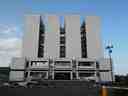
Alright, ladies and gentlemen, welcome to stop number 4 on our fantastic tour of Bratislava! We find ourselves in front of the marvelous Slovak National Archives. Don't let the name scare you - there's nothing spooky about this place, except maybe the sheer amount of historical documents stored inside! The Slovak National Archives came to life in the year 1928, making it nearly a century old. It falls under the authority of the Minister of the Interior, so you know it's got some serious importance. Think of it like a treasure chest filled with valuable information about Slovakia's past. Now, as much as we'd love to dive headfirst into these archives like Indiana Jones, unfortunately, we'll have to settle for marveling at the building's beautiful exterior. But hey, who said history had to be all serious and no fun? Just imagine, inside those walls are records of long-lost stories, forgotten legends, and even some juicy gossip from centuries gone by. You might find yourself uncovering secret admirer letters from the 1800s or stumbling upon an ancient recipe for grandma's famous strudel. Who knows what secrets are locked away? So, take a moment to appreciate the grandeur of this place, let your imagination run wild with what lies within, and get ready for our next stop on this historical adventure!
समर्पित पेज खोलें →The theater's history dates back to the establishment of the first Czechoslovak Republic in 1918, making it a pretty oldie but a goodie. It's located right here in the heart of…और पढ़ेंकम दिखाएँ
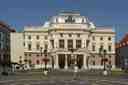
The theater's history dates back to the establishment of the first Czechoslovak Republic in 1918, making it a pretty oldie but a goodie. It's located right here in the heart of Bratislava, the capital city. Now, the Slovak National Theatre is like a double-header, with two separate buildings. We've got the historic Neo-Renaissance building on Gorkého 2 (Hviezdoslavovo námestie), which is grand and majestic. And then we have the newer SND building in the Old Town, which opened its doors in 2007 on Pribinova 17. Performances are like popcorn at the movie theater - happening most days of the year. And let me tell you, this theater doesn't just stay in Slovakia. Oh no, it packs its bags and goes on tour to represent Slovak culture all around the world. Talk about a theater trouper! Back in the day, after the Czechoslovak Republic was established, the idea of a professional Slovak theater started to take shape. And lucky for us, the SND Cooperative stepped in and made it happen. They even brought in Bedřich Jeřábek, the director of the East Bohemian Company, to lead the theater into its glory days. The opera ensemble got the ball rolling on March 1, 1920, with a captivating performance of The Kiss by Czech composer Bedřich Smetana. The drama and ballet ensembles joined in soon after, presenting plays and dances that wowed the audiences. In the early days, most of the performances were in Czech because there weren't enough Slovak plays, translations, actors, or singers. But as time went on, more and more Slovak talent bloomed, and they worked their magic on the stage. The SND ensembles used to perform in different buildings, like a theater version of a long-distance relationship. The drama ensemble had its shows at the Pavel Országh Hviezdoslav Theatre building, while the opera and ballet found their homes in the gorgeous historic building on Hviezdoslav Square. But in 2007, all three ensembles waved goodbye to their separate buildings and moved in together like one big, happy artistic family. Now they share a brand new building on Pribinova Street, fittingly equipped with 1,700 seats. It's like they're living in the ultimate theater commune! Don't worry, though. Just because they have a new home doesn't mean they abandoned the old one. The SND still uses the historic Neo-Renaissance building for performances. It's like having two houses - one for the old-school charm and one for the modern vibes. Oh, and speaking of the Neo-Renaissance building, it's a real stunner. Built back in 1885-1886 during the Austria-Hungary days, this place has history oozing out of its walls. Designed by the famous Viennese architects Fellner & Helmer, it's a true work of art. When it first opened, the gala performance was conducted by none other than Ferenc Erkel himself, a legendary figure in Hungarian opera. And let me tell you, they went all out with the decorations. Frescoes by local painter Kornél Spányik, paintings by Munich artist Willibald Leo von Lütgendorff-Leinburg, and even a fancy chandelier with 64 lights! They restored the building in the late 60s and early 70s, giving it a modern touch with a new technical building. And get this, the new chandelier has a mind-blowing 2,532 light bulbs! It's like a light show extravaganza waiting to happen. So, prepare to be dazzled by the beauty and talent of the Slovak National Theatre. It's a place where art comes alive, where stories are told, and where audiences are left in awe. Who's ready for a standing ovation? Alright, let's head on to our next stop, the charming Old Town of Bratislava!
समर्पित पेज खोलें →Legend has it that the church was built by King Ladislaus IV of Hungary to celebrate his victory over the Czech King Ottokar II of Bohemia. Apparently, victory calls for some…और पढ़ेंकम दिखाएँ
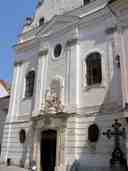
Legend has it that the church was built by King Ladislaus IV of Hungary to celebrate his victory over the Czech King Ottokar II of Bohemia. Apparently, victory calls for some serious architectural skills! Now, let's talk about the impressive architecture of this place. The church was originally built in Gothic style between 1280 and 1297, but over the years, it underwent some serious makeovers. It became a Renaissance church in the 17th century and then transformed into a Baroque beauty in the 18th century. It's like the church just couldn't resist trying out different fashion trends! Inside the church, you'll find some stunning altars and statues. The main altar stands tall, flanked by statues of Saint Stephan and Saint Emeric. It's all bricks and pillars, dating back to the 18th century. And if you're a fan of stained glass, you're in for a treat! There's a beautiful glass painting representing the Annunciation. Talk about some divine artwork! One of the most fascinating things about this church is the relic it houses. Yes, you heard me right, a relic! Inside a specially designed reliquary, you'll find the torso of Saint Reparat, a 4th-century Christian martyr. Not only is he a reminder of the church's rich history, but he's also the patron saint of those who want to change their lives for the better. I might have to borrow some of his powers after this tour! Next to the church, you'll see the Chapel of Saint John the Evangelist. This Gothic beauty was built in the 14th century and was the funeral chapel of the Jakubovec family. Inside, you'll find statues of saints like Francis of Assisi, Anthony of Padua, Louis IX, Clare of Assisi, and Elizabeth of Hungary. It's like a holy reunion in there! So take your time, my friend, and enjoy the beauty and history that surround you in the Franciscan Church. And don't forget to snap a picture for the 'gram, because this place is definitely #churchgoals!
समर्पित पेज खोलें →Ah, welcome to SNP Square, my friend! Or should I say, Slovak National Uprising Square, because that's what it stands for. It's like a little piece of history right here in the…और पढ़ेंकम दिखाएँ
Ah, welcome to SNP Square, my friend! Or should I say, Slovak National Uprising Square, because that's what it stands for. It's like a little piece of history right here in the heart of Bratislava. In the 20th century, this square played a pretty important role. It was the place where people gathered to show their support for independence and sovereignty. You can almost feel the energy still lingering in the air! Think about it. People from all walks of life, standing together, united by a common cause. It's a powerful image, isn't it? And it's a reminder that unity and determination can bring about change. But hey, don't let me get all serious on you. Did you know that in the winter, SNP Square turns into a winter wonderland? They set up a big ice rink where you can show off your skating skills or, you know, try not to slip and embarrass yourself. It's all in good fun! So take a moment to soak in the history and the atmosphere here at SNP Square. And if you're feeling adventurous, come back in winter and show off your ice dancing moves!
समर्पित पेज खोलें →The synagogue is a stunning example of Cubist style, which means it's all about sharp lines and geometric shapes. It's like a work of art come to life! In fact, it's considered an…और पढ़ेंकम दिखाएँ
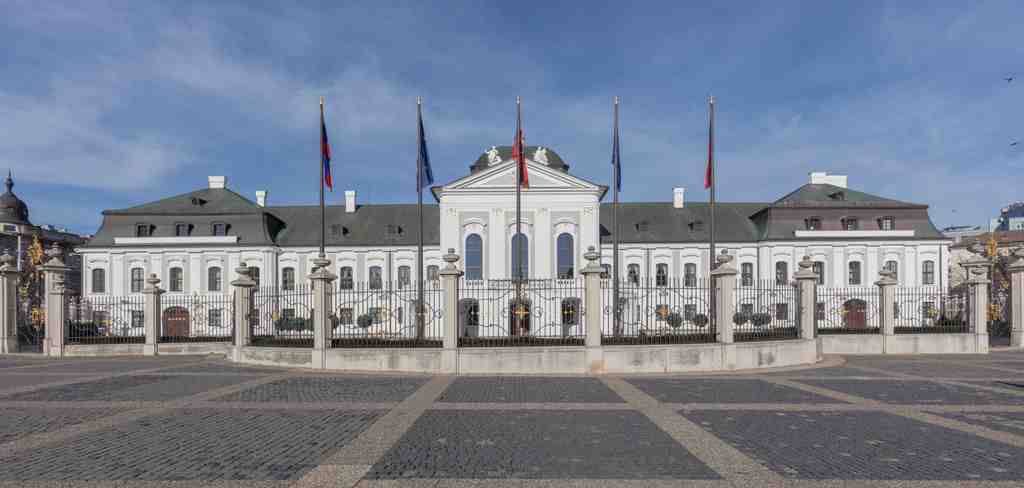
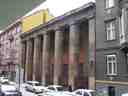
The synagogue is a stunning example of Cubist style, which means it's all about sharp lines and geometric shapes. It's like a work of art come to life! In fact, it's considered an important piece of 20th-century religious architecture and is even listed as a Slovak National Cultural Monument. No wonder it's so impressive! Now, get this: the Heydukova Street Synagogue is one of just four active synagogues in all of Slovakia, and historically, it was one of three synagogues in Bratislava. Sadly, the other two didn't make it through World War II and were demolished in the 1960s. So this synagogue is not only stunning, but also quite special and worth protecting. Now, let me take you inside. The building is also home to the Bratislava Jewish Community Museum, which you'll find upstairs. During the summer season, they open their doors to the public and showcase a fantastic exhibition called "The Jews of Bratislava and Their Heritage." It's a great opportunity to learn more about the local Jewish community. Let's talk about the design of the synagogue. Artur Szalatnai won a competition for this project, which was quite a big deal for him at the time. You see, it was his first major work after completing his studies in Budapest. Talk about starting with a bang! The synagogue's exterior is really unique. It features a towerless, seven-pillared colonnade that faces Heydukova Street. It's like a welcome party for all the visitors. The entrance is on the eastern side of the building, accessible through a corridor that connects the street with the inner yard. So, it's like a secret entrance, making you feel like you're part of a special club. Inside the synagogue, you'll find a large sanctuary that combines modern steel-and-concrete construction with sleek Cubist details. It's a perfect blend of old and new, and it creates a truly awe-inspiring atmosphere. I'm sure you'll stop and stare at the beautiful details all around you. Well, that wraps up our visit to the Heydukova Street Synagogue. I hope you enjoyed exploring this architectural gem! Next, we'll make our way to the Grassalkovich Palace, the official residence of the President of Slovakia. Get ready for some regal vibes!
समर्पित पेज खोलें →Built in 1760, this palace is the epitome of elegance. It was designed by architect Anton Mayerhofer for a fancy Hungarian aristocrat named Antal Grassalkovich. And let me tell…और पढ़ेंकम दिखाएँ
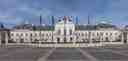
Built in 1760, this palace is the epitome of elegance. It was designed by architect Anton Mayerhofer for a fancy Hungarian aristocrat named Antal Grassalkovich. And let me tell you, Grassalkovich knew how to live the high life. Not only did he have an impressive orchestra, but he also had a close friendship with Maria Theresa, the legendary ruler of the Habsburg dynasty. Talk about rubbing shoulders with the big shots! The palace itself is a masterpiece of Rococo-late Baroque architecture, complete with a French garden. Inside, you'll find luxurious rooms and a jaw-droppingly beautiful staircase. Make sure to check out the chapel, adorned with frescoes by the talented Joseph von Pichler. It's like stepping into a musical dreamland! Speaking of music, did you know that the Grassalkovich Palace was a hot spot for Baroque musical performances back in the day? The legendary composer Joseph Haydn even premiered some of his works here. And guess what? Haydn's "colleague" and good buddy, Prince Esterházy, would "lend" him his favorite conductor for the performances. Talk about some serious musical connections! Throughout its history, this palace has seen its fair share of balls, parties, and royal shindigs. It was even the venue for Maria Theresa's daughter's wedding to Albert of Sachsen-Teschen. Imagine dancing the night away in such a grand setting! But it wasn't all fun and games. The Grassalkovich Palace has been through some tough times too. During the Communist era, it had various uses, including serving as the seat of the Council of Commissioners and later becoming the "Klement Gottwald House of Pioneers and Youth." The palace suffered extensive damage during this time, thanks to all those enthusiastic schoolchildren. But fear not, my friends! After the Velvet Revolution in 1989, the palace was lovingly restored to its former glory by Slovakia's inaugural First Lady, Emília Kováčová. Since 1996, this stunning palace has once again become the official residence of Slovakia's president. And if you're a fan of green spaces, you'll be pleased to know that the palace grounds have been turned into a public park. Take a stroll and enjoy the beauty of the gardens, complete with a statue of the talented composer Jan Nepomuk Hummel, who was born right here in Bratislava. Well, my friends, I hope you enjoyed our little royal escapade at the Grassalkovich Palace. Get ready, because our next stop is the Old Cathedral of Saint John of Matha and Saint Felix of Valois. Let's go!
समर्पित पेज खोलें →
समीक्षाएँ
अक्सर पूछे जाने वाले प्रश्न
मैं टूर कैसे शुरू करूँ?
ख़रीदारी के बाद, AudaTours ऐप डाउनलोड करें और अपना रिडेम्पशन कोड दर्ज करें। टूर तुरंत शुरू करने के लिए तैयार होगा - बस प्ले टैप करें और GPS-गाइडेड रूट का पालन करें।
क्या टूर के दौरान मुझे इंटरनेट चाहिए?
नहीं! शुरू करने से पहले टूर डाउनलोड करें और पूरी तरह ऑफ़लाइन इसका आनंद लें। केवल चैट फ़ीचर को इंटरनेट की ज़रूरत है। मोबाइल डेटा बचाने के लिए WiFi पर डाउनलोड करने की सिफ़ारिश है।
क्या यह एक गाइडेड ग्रुप टूर है?
नहीं - यह एक सेल्फ-गाइडेड ऑडियो टूर है। आप अपनी गति से स्वतंत्र रूप से खोजते हैं, आपके फ़ोन से ऑडियो कथन बजता है। कोई टूर गाइड नहीं, कोई ग्रुप नहीं, कोई शेड्यूल नहीं।
टूर में कितना समय लगता है?
अधिकांश टूर पूरा करने में 60-90 मिनट लगते हैं, लेकिन गति पूरी तरह आपके नियंत्रण में है। जब चाहें रुकें, स्टॉप छोड़ें, या ब्रेक लें।
अगर मैं आज टूर पूरा नहीं कर सकता/सकती तो?
कोई समस्या नहीं! टूर की लाइफ़टाइम एक्सेस है। जब चाहें रोकें और फिर शुरू करें - कल, अगले हफ़्ते, या अगले साल। आपकी प्रगति सेव रहती है।
कौन सी भाषाएँ उपलब्ध हैं?
सभी टूर 50+ भाषाओं में उपलब्ध हैं। अपना कोड रिडीम करते समय अपनी पसंदीदा भाषा चुनें। नोट: टूर जेनरेट होने के बाद भाषा बदली नहीं जा सकती।
ख़रीदारी के बाद मैं टूर कहाँ एक्सेस करूँ?
App Store या Google Play से मुफ़्त AudaTours ऐप डाउनलोड करें। अपना रिडेम्पशन कोड (ईमेल द्वारा भेजा गया) दर्ज करें और टूर आपकी लाइब्रेरी में दिखेगा, डाउनलोड और शुरू करने के लिए तैयार।
अगर आपको टूर पसंद नहीं आया, तो हम आपकी ख़रीदारी वापस करेंगे। हमसे संपर्क करें [email protected]
सुरक्षित चेकआउट 


