AudaTours logoAudaTours

Visite audio de Cuenca : Légendes de foi, de pierres et de maisons suspendues

Guide audio15 arrêts

Les murs de pierre murmurent et les ombres s'étirent sur Cuenca — sous ces rues sinueuses, des légendes couvent depuis des siècles, juste hors de vue. Cette visite audio autoguidée est votre invitation à aller au-delà des vues de carte postale et à découvrir des chapitres secrets que seules les façades silencieuses de la ville se souviennent. Quel noble osa se rebeller sur la place alors que la foudre déchirait la nuit au-dessus de la cathédrale de Cuenca ? Quel serment chevaleresque fut prêté sous une sculpture cachée dans les ruines hantées de San Pantaleón ? Et qui s'est glissé par la solide porte de Saint Nicolas avant l'aube, pour ne plus jamais être revu ? À chaque arrêt, vous effleurerez des batailles politiques, des mystères séculaires, des scandales gravés dans la pierre et des détails étranges perdus pour les yeux du quotidien. Promenez-vous à travers des couches de pouvoir et de foi où la rumeur se mêle à l'histoire et où des moments oubliés resurgissent. Écoutez attentivement — le prochain secret vous attend au bout de vos doigts. Votre voyage à travers le cœur voilé de Cuenca commence maintenant.

Aperçu du tour

map

À propos de ce tour

  • schedule
    Durée 40–60 minsAllez à votre propre rythme
  • straighten
    Parcours à pied de 2.2 kmSuivez le sentier guidé
  • location_on
    EmplacementCuenca, Espagne
  • wifi_off
    Fonctionne hors ligneTéléchargez une fois, utilisez n'importe où
  • all_inclusive
    Accès à vieRéécoutez n'importe quand, pour toujours
  • location_on
    Commence à Église de Saint Nicolas de Bari

Arrêts de ce tour
  1. To spot the Church of Saint Nicholas of Bari, look for a sturdy, simple stone building facing the Plaza de San Nicolás, with weathered beige walls, barred windows, and a pointed…Lire plusAfficher moins

    To spot the Church of Saint Nicholas of Bari, look for a sturdy, simple stone building facing the Plaza de San Nicolás, with weathered beige walls, barred windows, and a pointed arch doorway just up a few stone steps. Welcome to the Church of Saint Nicholas of Bari, one of Cuenca’s quiet legends! Picture it: the 15th century, a time of knights and cloaks, but here in front of you stands a church that breaks all the rules for its age. While many buildings then dressed up in Renaissance style, this one stubbornly clung to older, Romanesque bones-a rectangular plan, strong stone walls, and a main doorway that faces south for maximum sunshine. The thick masonry walls (go ahead, touch them if you like!) are the real-deal, finished with mortar as rough as a monk’s robe, and if you look at the corners, you’ll see solid stone blocks holding everything together, just in case medieval mischief-makers got any funny ideas. Imagine walking into the church centuries ago, the hustle and bustle of the plaza behind you, and stepping into a peaceful, echoing nave divided by grand pilasters. The floor under your feet would creak as you made your way to the main altar, where a statue of Saint Nicholas would quietly watch you-legend has it, the real Nicholas is buried far away in Italy, but this statue isn’t letting that stop him from keeping a stern eye on Cuenca’s flock. Now, here’s a little secret for you: below today’s church, hidden under houses that cozied up to the old stone apse, are remnants of the original building, lost to sight but not to legend! And if you really wanted to ring in the morning, take the spiral stone stairs up to the bell-the only thing trickier than climbing them is making your way down after celebrating too much at one of Monday’s special masses. All together, this church is a survivor, a bit mysterious, and quietly charming, much like Cuenca itself. Shall we head to the next stop? The adventure is just beginning!

    Ouvrir la page dédiée →
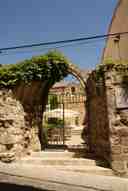
  2. If you look just ahead, you’ll see a charming stone archway draped with ivy and guarded by a black gate-this is the entrance to the evocative ruins of the Iglesia de San…Lire plusAfficher moins

    If you look just ahead, you’ll see a charming stone archway draped with ivy and guarded by a black gate-this is the entrance to the evocative ruins of the Iglesia de San Pantaleón. Now, step closer and imagine you’re traveling back in time. The sun warms the rough stone beneath your feet, and the faint echo of ancient prayers lingers in the air. This was once a lively little church, nestled at number 10, San Pedro Street, a place where neighbors gathered and secrets were whispered among stone walls. Originally, San Pantaleón was a humble church, just one cozy hall stretching out beneath a peaked roof, with a sturdy facade held strong by stone buttresses. The doorway you see before you? That’s the relic of the proud, abocinado arch, shaped in the 12th century-a time when dragons in stories sometimes felt just as real as those carved in stone. Picture it: inside, narrow and slightly chilly, sunlight might have sneaked in through a small, simple Romanesque window high above the altar. The nave, though single, was cleverly crafted-arched ceilings above, the comforting smell of old timbers and candle wax below. The space stretched about twenty meters deep, just wide enough for a close-knit community, narrowing slightly toward the altar as if gently nudging worshippers closer to the sacred. If you peek through today’s iron grilles, you’ll spot weathered square columns and the remains of powerful supporting arches. It’s said these arches were added later, transforming the space to connect with a narrow alley; perhaps the church even stretched a bit, squeezing into Cuenca’s winding streets like an old friend making room at the table. Now, here’s a little mystery for you: carved into one of the worn jambs, a secret still lingers-the image of a horseman slaying a dragon, an ancient nod to the rituals and adventures of the medieval Knights Templar. Imagine a young initiate, heart pounding, facing this very symbol as he prepared for a life sworn to courage and faith! Adding to the church’s aura, think of the Byzantine touch in the masonry-light stones, ceramic fragments, and the echoes of artisans gossiping as they built for eternity. In the last century, while cleaning up these evocative ruins, workers uncovered graves carved into the rock near the altar-a quiet reminder that this place was as much about endings as beginnings. Look for carved stones too: a capstone with the mystical lamb, a rather rough-looking skull in a winged helmet, hints of the secrets kept by time and stone. The church was declared a Cultural Interest Monument in 1992, so even in ruin, it holds the heart of Cuenca’s memory. Who knows? If you stand very still, you might even hear the whisper of a dragon, or catch a wink from a cheeky Templar knight.

    Ouvrir la page dédiée →
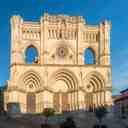
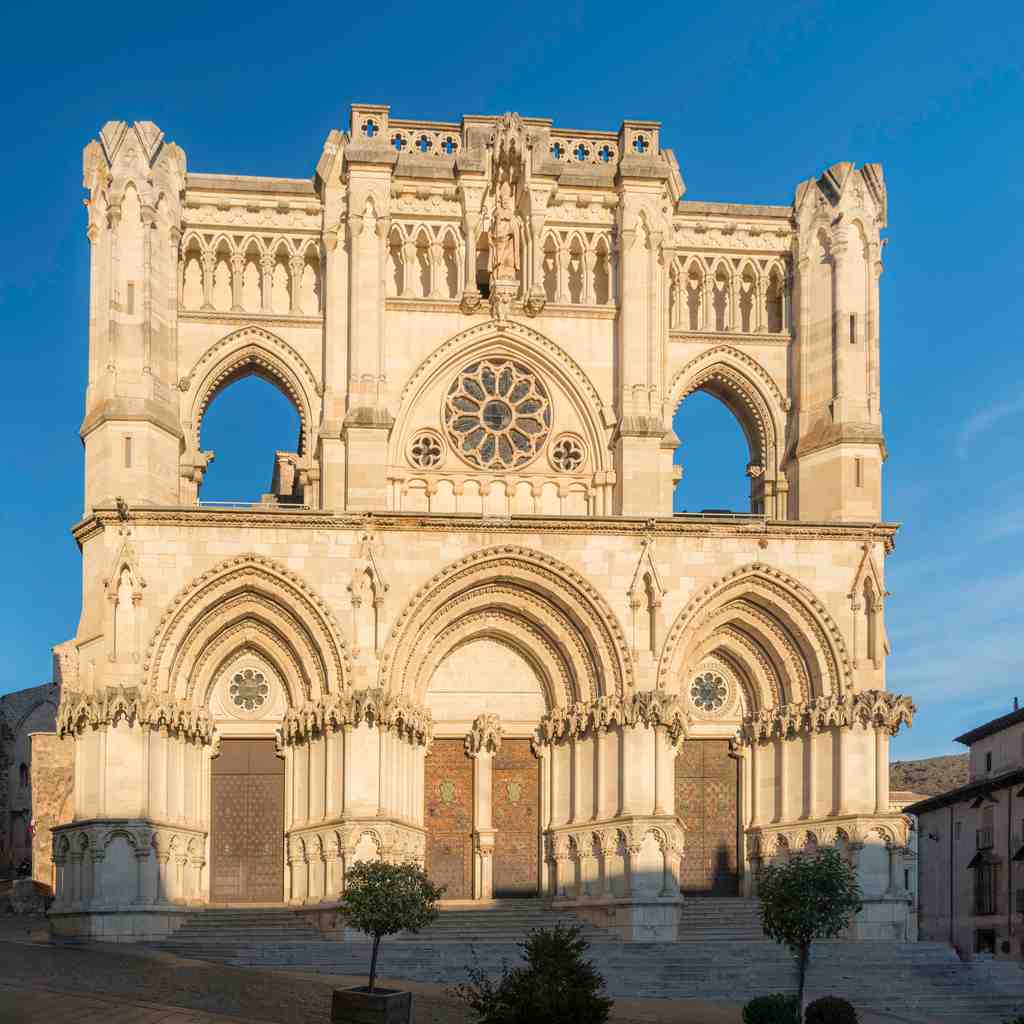
  3. Directly in front of you is the impressive Cuenca Cathedral, a grand stone building with three dramatic arched doorways and rows of carved arches topped by a round rose window;…Lire plusAfficher moins

    Directly in front of you is the impressive Cuenca Cathedral, a grand stone building with three dramatic arched doorways and rows of carved arches topped by a round rose window; just look for the striking blend of Gothic spires rising against the sky, and you can’t miss it! Welcome to one of the crown jewels of Cuenca-the Cathedral of Saint Mary and Saint Julian! Right now, you’re standing where centuries of drama, mystery, and devotion have played out. The story of this cathedral starts in 1177, when King Alfonso VIII, also known as “The Noble,” decided Cuenca would be the next big thing on the cathedral map. After a siege that lasted nine months-imagine the snack bill-they took the city from the Moors, and, in a plot twist fit for a movie, built this cathedral right on top of the old mosque. Talk about extreme makeovers! What you see before you has roots stretching back to the time when castles, knights, and queens weren’t just something on Netflix. In the late 12th century, the rest of Spain was still all about the heavy and round Romanesque look, but thanks to Eleanor Plantagenet, the English queen with a Norman vibe, Cuenca got its own taste of soaring French Gothic. If you’ve ever dreamt of visiting Notre-Dame in Paris, you might sense a family resemblance right here, especially in those towering façades and the remarkable arches above. The mighty stonework, built mostly between 1182 and 1257, was shaped by skilled French stonemasons. They didn’t just stack rocks-they sculpted stories into every corner. Picture yourself almost 850 years ago. The sound of chisels, the smell of fresh stone dust, the echo of monks’ chants echoing through empty halls-it must have been both magical and exhausting. When Saint Julian, the second bishop (and later patron saint), consecrated it in 1196, he did so inside a still-unfinished shell. That’s dedication! Fast forward through the centuries, and you’ll find the cathedral went through quite the wardrobe change. In the 15th century, builders transformed the eastern end to add a sweeping double ambulatory-picture a medieval traffic circle for processions. Inside, if you peek around, you’ll spot glorious stained glass, including sunlight playing tricks behind the altar of Saint Julian, a showpiece rivaled only by the famous “Transparente” in Toledo. But this place has seen tragedy, too. If you’re wondering why some sections look newer, blame it on the spectacular showdown in 1902, when lightning struck the Giraldo tower. The crash didn’t just take out the tower; it battered the main façade and heartbreakingly, some children lost their lives. Restoration work was a heroic feat, mainly in neo-Gothic style, and the job is still not one hundred percent finished-a bit like when you keep promising to tidy your room. Now, let’s talk about the real show-stopper-the wild and wonderful carvings that decorate the cathedral. Unlike most churches, which stick to lions and eagles, here you’ll catch glimpses of armadillos, turtles, and puffer fish, creatures unknown in Europe at the time. Why? Well, Cuenca’s masons were caught up in the thrill of the New World after 1492, sprinkling fresh discoveries onto age-old stones. The result? A menagerie out of legend-and maybe a hint that the original builders had a sense of humor. There’s more: some say the cathedral hides secret messages. One legend claims the Holy Grail itself was protected here, and if there’s ever an apocalypse, we’ll all be fine as long as we’re inside these walls. That’s a guarantee you won’t get from most buildings! Look closely above, to the twelve stone angels perched on the entry arches-there’s a mysterious one holding a goblet, while the rest clutch books with somber faces. Fancy a puzzle? Some scholars think that’s your Holy Grail clue, right there. Over nearly a thousand years, this cathedral has served as Cuenca’s spiritual core, the seat of its bishop, and a canvas for countless artists and architects. It withstood lightning, wars, and the tick-tock of time-an unforgettable blend of Norman daring, Castilian pride, and a few surprises hidden in plain sight. So, before you stroll onward, take a deep breath and let your mind wander back through centuries. Imagine the crowds, the kings and queens, the endless building and renewing, and the quiet promise carved into each arch: that here, at Cuenca Cathedral, every stone tells a tale, and every tale is waiting to be discovered.

    Ouvrir la page dédiée →
Afficher 12 arrêts de plusAfficher moins d'arrêtsexpand_moreexpand_less
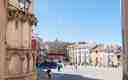
  1. Take a look straight ahead and you’ll spot the Plaza Mayor easily-it’s that big, open square surrounded by colorful buildings and the impressive, arched city hall at the far…Lire plusAfficher moins

    Take a look straight ahead and you’ll spot the Plaza Mayor easily-it’s that big, open square surrounded by colorful buildings and the impressive, arched city hall at the far end. Welcome to the very heart of Cuenca! Can you hear the echoes of busy footsteps and the gentle buzz of daily life? That’s centuries of history playing out right under your feet. Imagine this spot back in the 15th century-horse-drawn carts rumbling across the cobblestones, vendors shouting about fresh bread, maybe even a lost sheep or two trying to dodge through the crowd. Most of these beautiful Baroque buildings sprang up around the square thanks to visionary minds like Jaime Bort y Meliá, who left his touch right here for all of Cuenca to admire. And see that grand building with the arches? That’s the home of the city council-a place where city secrets, heated debates, and dramatic decisions have been whispered about for generations! They say if you listen closely on a quiet afternoon, you might still hear a heated argument about whether the plaza’s best kept secret is its hidden passageways or the taste of coffee in the morning sun. Soak it in, take a twirl, and remember, you’re standing where thousands before you have laughed, planned, and lived-this isn’t just the center of Cuenca, it’s the very stage of its life.

    Ouvrir la page dédiée →
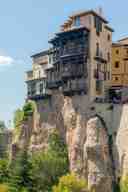
  2. To spot the Hanging Houses, just look up and ahead-these daring, wooden-balconied homes jut right out from the rocky cliff’s edge over the Huécar River gorge, looking as if…Lire plusAfficher moins

    To spot the Hanging Houses, just look up and ahead-these daring, wooden-balconied homes jut right out from the rocky cliff’s edge over the Huécar River gorge, looking as if they're clinging on for dear life! Welcome to the legendary Hanging Houses of Cuenca! Imagine standing here hundreds of years ago-wind swirling around you, looking up at buildings that seem to float in thin air. No, you’re not dizzy from the walk; those houses really do stick out over the cliff! These aren’t just any old homes; they’re the boldest acrobats of Spanish architecture, perched so dramatically you’d swear they were built by daredevils with a thing for dramatic views! Back in the day, these houses weren’t the lone survivors you see now. The whole eastern edge of ancient Cuenca was lined with homes peering bravely over the abyss. Time and gravity have claimed most of them, but three have refused to budge: two royal houses and the delightfully named Casa de la Sirena-the House of the Mermaid. Built between the 13th and 15th centuries, these wooden balconies have seen nearly everything: royal parties, city council meetings, fancy dinners, more than a few wild storms, and probably a few nervous glances from guests afraid of heights! Can you picture a painter standing here in 1565, squinting into the sun, sketching the panorama that would include these marvels in his masterpiece “Cuenca from the East”? Centuries passed, and the houses mostly stood together, a little community on the edge of reason. Old photos from the late 1800s show them nearly untouched, bravely facing the gorge like guardians of a forgotten era. Over the years, they saw every kind of use: cozy homes, town hall, even a lively restaurant. I’d like to imagine a waiter nervously carrying soup near the edge-talk about living on the edge at your job! But let’s not get carried away-by the 1920s, even these sturdy structures began to wobble with age and weather. Only eight of the original houses survived long enough for a big renovation in the 1960s, but just three remain today. When they were reopened after another facelift in 1966, it was quite the party, with ministers and bishops clinking glasses in celebration. Even today, they keep reinventing themselves-hosting the Spanish Abstract Art Museum, expanding and updating as fresh ideas and new generations pass through. These cliffhanging wonders aren’t alone in their gravity-defying tricks; you’ll spot similar buildings in other Spanish towns, and even far-off Florence, where the famous Ponte Vecchio has its own take on the “hanging house” style. But none are quite as dramatic as Cuenca’s trio. They helped earn Cuenca its spot on the UNESCO World Heritage list in 1996, proudly watching the world spin from their impossible perch. So as you stand here, let yourself feel the thrill these old walls have felt for centuries-clinging to life, to history, and to the sky itself.

    Ouvrir la page dédiée →
  3. Imagine a room filled with 25 councilors, half from the Socialist party and half from the Popular party, almost like two rival families at a wedding, arguing about who gets…Lire plusAfficher moins

    Imagine a room filled with 25 councilors, half from the Socialist party and half from the Popular party, almost like two rival families at a wedding, arguing about who gets custody of the city’s best festivals. The mayor, since 2023, is Darío Dolz, who surely needs all his patience to manage everything from ancient urban corners to bustling fiestas and street lights that refuse to stay on. Each area of city life-urban planning, education, partying (officially called “Tourism and Festivities”), new technology, and even the ever-important cleanliness of the streets-is split into committees. No wonder things stay so lively in here! A decade ago, in 2010, the city launched its own television channel-8 Televisión Cuenca. It broadcasted everything locals love: parades, festivals, and dramatic processions. For a moment, it felt like every citizen had their moment of fame, but sadly, the TV channel’s story had more plot twists than a telenovela-closed due to money troubles just a year later. So as you gaze at the City Hall, picture a place that has weathered heated debates, election-night nerves, and the joyful chaos of San Julián festivities. If these walls could talk, they’d probably ask you to vote, then invite you in for churros. Now, onward-there’s more of Cuenca’s tales waiting just around the corner!

    Ouvrir la page dédiée →
  4. To spot the Church of San Miguel, look straight ahead for a light stone building with sturdy, rustic walls, red-tiled roofs, and a square bell tower peeking over the trees, right…Lire plusAfficher moins

    To spot the Church of San Miguel, look straight ahead for a light stone building with sturdy, rustic walls, red-tiled roofs, and a square bell tower peeking over the trees, right at the edge of the cliff above the Júcar river gorge. Imagine yourself stepping back in time as you face the ancient Church of San Miguel. It stands proudly atop its stone platform, hugging the edge where the city meets the sheer drop of the gorge. You might even feel a thrill in your stomach if you peer over the side-don’t worry, you’re perfectly safe! Built in the 13th century, this church started off simple: just a single, sturdy hall with rough masonry walls, a semicircular apse, and, of course, the proud tower rising at the end. As the centuries rolled by, the church had a few “makeovers.” In the 15th century, workers hauled stone and timber to expand it northwards, adding another nave and finishing it off with an incredible Mudejar wood ceiling. Later in the 16th century, master stonemasons and artists gave the apse a dramatic overhaul. Esteban Jamete designed a stunning oval dome, bursting with floral decorations that must have been quite the surprise for visitors used to plain stone. Inside, if you could step through those heavy wooden doors, you’d see how the 18th century swept through with flair, swapping out the old wooden roofs for elegant vaulted ceilings. Corinthian columns topped with angel faces, and playful rococo swirls peek out on the arches and ceilings, as if the building itself can’t help but dance. The doorway out here keeps secrets too: pillared, softly cushioned stone from the 1700s, crowned by little niches holding mysterious donors-almost as if they’re guarding the entrance, daring you to guess their stories. These walls have heard centuries of whispers, prayers, and, more recently, the sweep of violin bows, as today this place echoes not just with history, but with music. So who knows? Maybe if you listen closely, you’ll catch the gentle strains of a forgotten medieval hymn swirling on the breeze.

    Ouvrir la page dédiée →
  5. To spot the Museum of Sciences of Castilla-La Mancha, look for a creamy beige building with an arched entrance, a round window above the doorway, and a sign to your right that…Lire plusAfficher moins

    To spot the Museum of Sciences of Castilla-La Mancha, look for a creamy beige building with an arched entrance, a round window above the doorway, and a sign to your right that reads “Museo de las Ciencias de Castilla-La Mancha.” Alright explorer, welcome to one of Cuenca’s most mind-bending stops! Imagine walking into a world where time stretches back millions of years-right through these doors is where science really comes alive. This museum, which opened its doors in 1999, is packed with wonders that would make even the most serious scientist do a happy dance. Picture fossils-14,000 of them!-taken straight from the treasure trove of Las Hoyas, including 24 special holotypes, the celebrity VIPs of the fossil world. But it’s not just about old bones. Head inside-don't worry, there are no roaming dinosaurs!-and you’ll find a planetarium where you’ll fly through galaxies, and a hall that takes you on a journey all the way from the dawn of astronomy to the wildest dreams of the future. The “Treasures of the Earth” room lets you explore how the cosmos and life itself evolved, with rocks and relics whispering secrets of ancient planets and prehistoric beasts. And for a pinch of drama, don’t miss the “History of the Future” exhibit, showing the wild ride of a human life and all the twists science and medicine might add. So, step in and let your imagination run wild-because here at the Museum of Sciences, every fossil and star has a story, and none of them are boring!

    Ouvrir la page dédiée →
  6. Look up ahead to spot a tall, square stone tower with a chunky fortress-like top and a clock face, rising high above the rooftops-there’s no way you’ll miss this sentinel! Now,…Lire plusAfficher moins

    Look up ahead to spot a tall, square stone tower with a chunky fortress-like top and a clock face, rising high above the rooftops-there’s no way you’ll miss this sentinel! Now, let’s travel through time as you stand before the mighty Torre de Mangana! Picture yourself centuries ago, in the heart of old Cuenca, with the stone walls of the city humming with secrets and wind whistling around the heights-right where you’re standing now. The first Mangana Tower was born with a square plan, much like what you see, and if you had sharp eyes like a hawk in 1565, you might have caught Antón Wyngaerde, a famous painter, sketching it from just about this angle. But here’s the twist: back then, it didn’t have the glaring clock or the iron rooster that once spun restlessly on top, making sure no one overslept for market day! Fast forward to the late 16th century, and the tower had already seen some expert handiwork by the architect Juan Andrea Rodi. It barely changed appearance-so much so that drawings of Cuenca made two centuries apart look almost identical. Now, don’t get bored; the tower’s story is just warming up! Imagine a dramatic storm flashing over the rooftops in the late 1700s-a lightning bolt cracks across the sky and BOOM! The tower takes a direct hit, suffering real damage. Add to this the unstoppable march of French soldiers a bit later, and the poor old tower needed serious repairs by architect Mateo López. Just when it started to recover its dignity, the 19th century descended, and it ended up with a roof in such bad condition, even the pigeons complained. By 1926, change was in the air! Imagine a Spanish architect with a flair for the dramatic, Fernando Alcántara, giving the tower a neomudejar makeover-Islamic-inspired patterns, a fancy bell-square up top, and even stepped battlements like something from the mosque of Córdoba. It was jazzy, colorful, almost exotic-a tower ready to party! But hold on, because the 1970s rolled in with even more changes. Architect Víctor Caballero thought the Mangana Tower needed to reclaim its medieval muscle. He made it tougher and chunkier, almost like it could star in its own action movie, with a fortress look and a dramatic matacán at the top. Some folks loved it, and some grumbled, but today, Torre de Mangana stands tall, a proud symbol and a must-see for everyone in Cuenca.

    Ouvrir la page dédiée →
  7. To spot the Iglesia de Santa Cruz, just look for a stone church with a simple, pale-facade set into the street and a large wooden doorway framed by a classical arch and topped…Lire plusAfficher moins

    To spot the Iglesia de Santa Cruz, just look for a stone church with a simple, pale-facade set into the street and a large wooden doorway framed by a classical arch and topped with a niche, nestled right against the winding wall to your right. Right here before you stands the Iglesia de la Santa Cruz, one of Cuenca’s earliest parish churches. Imagine stepping onto this street hundreds of years ago: no cars, just the echo of footsteps and a brisk mountain wind rolling up the gorge. The church was quite modest at first, with only one nave, its rough stone walls blending right into the rocky landscape. The roof above your head? Originally wood, fitted by skilled carpenters whose hammers filled the air with. Now, around the mid-1500s, Cuenca was buzzing with the news: the church was getting a makeover! A master builder named Juanes de Mendizábal the Elder led the charge for three whole years, but the real excitement happened when the energetic Bishop Fresneda decided things needed a total facelift. He called in Francisco de Goycoa, the city’s star architect, so important he was known as the Big Boss of Church Building. But, between you and me, Goycoa was more of a delegator-he let his trusted apprentice, young Mendizábal (the nephew!), do the heavy lifting. With each new plan, the church grew grander. They made the walls taller, tossed up sturdy arches, and lined them with elegant Doric columns. Picture the scene: stone dust flying, the sharp ring of chisels echoing through the church as two generations of builders argued-“Your arch leans left!” “No, that’s the old-fashioned way!” By the eighteenth century, the church got another major update-a beautiful barrel vault of stone to replace the now-old-wooden ceiling. But alas, gravity plays no favorites. The new roof, built from lighter stone, eventually gave way because those medieval walls couldn’t quite cope. Oops! The entrance you see-a simple, rounded arch flanked by columns-has welcomed Cuenca’s faithful for centuries. For a quirky twist, the sacristy had to be tucked right under the main chapel, squeezed in by the edge of the Huécar gorge. Step inside and-if you listen carefully-you can almost hear those old carpenters and stonemasons chatting away as they worked. In recent years, the church found new life as part of the region’s top modern art center. So the next time you walk in, let your imagination straddle the old and new-one foot in the dust of medieval Spain, the other in the colorful world of contemporary art.

    Ouvrir la page dédiée →
  8. Behind the façade, this palace offers even more surprises. The rear drops dramatically down the hillside, revealing two extra stories and a patchwork of windows and balconies…Lire plusAfficher moins

    Behind the façade, this palace offers even more surprises. The rear drops dramatically down the hillside, revealing two extra stories and a patchwork of windows and balconies clinging to the rock, overlooking the Huécar gorge and Santa Catalina street. Just picture grand banquets being held inside, servants hurrying up the stairs crowned by an octagonal skylight-doesn’t every home need a lantern on top?-all decorated with swirling flowers and little chubby angels, the Rococo style at its cheekiest. As you stand here, you can almost feel the hustle and bustle of a noble household, the drama of family secrets echoing in the halls-maybe even a ghost or two hiding in those winding staircases, waiting for the perfect moment to make a creaking entrance. Who knows, maybe they’re still peeking out from the balconies, just waiting for the next visitor!

    Ouvrir la page dédiée →
  9. You’ll spot the Iglesia de San Andrés right in front of you by its sturdy pale stone facade, arched wooden door, and a statue of Saint Andrew peeking out from a small niche just…Lire plusAfficher moins

    You’ll spot the Iglesia de San Andrés right in front of you by its sturdy pale stone facade, arched wooden door, and a statue of Saint Andrew peeking out from a small niche just above the entrance-look past the tree branches and you’ll see the simple tower rising up behind the wall. Imagine yourself back in the 1500s, standing on this very spot. The air is thick with the sound of chisels and hammers--because a determined architect named Pedro de Alviz, along with the talented stonemason Sebastián de Arnani, have just started work on a brand-new church. But nothing is simple in Cuenca! After all that excitement, the construction grinds to a halt, almost as if time itself took a siesta, and the site falls quiet for years. It wasn’t until much later, thanks to Juanes de Mendizábal and his son-in-law Pedro de Aguirre, that work finally picks up again. I’d like to imagine them walking up to the half-finished shell of the church, rolling up their sleeves, and saying, “Let’s get this show on the road!” Yet the ground beneath their feet had other plans-it was so damp you could almost feel the squelching with every step. The walls and arches were rapidly wearing out, and it seemed like even the very foundation might throw in the towel. Fast-forward, and a man named Domingo Ruiz is now the hero of the day, arriving with ambitious new blueprints in hand to rescue the struggling building. If you listen closely, you might just hear the echo of hammers as he calls out instructions--battling leaks, swelling walls, and endless repairs. The church has a rather quirky shape, almost like it’s squeezed into place by invisible hands-look down and imagine a trapezoid instead of a neat rectangle. Space was tight, so everything was built to fit a tricky little plot of land, and the sacristy was tucked behind the altar-a daring twist that left some craftsmen scratching their heads. Pedro de Alviz, used to more traditional buildings, must have felt a bit like a chef who suddenly has to make a feast with just a frying pan and a teaspoon. Take a look at the windows, cut high above those elegant columns. Originally, the builders didn’t even have a roof to close them off! And the grand vault overhead? That wasn’t added until many, many years later, after a few more chapters of waiting and worry. Even now, you can see the difference-the first part of the nave stands out from the last, as they were finished decades apart. Now, look at the entrance: above you, two sturdy Tuscan columns rise from their pedestals, with decorative balls popping up like surprised eyes between the layers of the portal. There’s a sense of playfulness here, as if the builders wanted to show just how clever post-Herrerian architecture could be. And right in the center is Saint Andrew himself, peeking from his tiny niche while two slender supports, called estipites, keep him company on either side. At the very top, a proud triangular fronton laughs in the face of gravity-and it has the balls (literally) to prove it. This church, though, has not only survived tough times, but also tough crowds. In the 1930s, during the Spanish Civil War, it was seriously damaged. When the dust settled< sfx>heavy wooden door creaking open</sfx>, its fate changed once again-it was handed over to Cuenca’s brotherhoods. No longer a sacred church, it became a home for the Easter processional floats, holding some of the city’s most treasured religious traditions. Today, Iglesia de San Andrés stands as a survivor’s story written in stone, a place that’s been rebuilt, repurposed, and restored more than once. Its windows are still locked behind sturdy iron grilles, hand-forged by Cuenca’s legendary smiths back in the 1500s. And every spring, with the coming of Easter, this church bursts back into life, holding the secrets and splendours of a city that never gives up-even if its churches do like to take the occasional nap!

    Ouvrir la page dédiée →
  10. You’re looking for a sturdy pinkish stone building with lots of tall, rectangular windows covered in strong black metal bars-head up the street and you’ll spot its main wooden…Lire plusAfficher moins

    You’re looking for a sturdy pinkish stone building with lots of tall, rectangular windows covered in strong black metal bars-head up the street and you’ll spot its main wooden door and a simple coat of arms above it. Now, let’s take you back in time to the birth of the Monasterio de Madres Benedictinas-if these ancient stones could whisper, they’d have quite the tales to tell. Picture yourself in the biting chill of December 1448: Cuenca’s cobblestone streets echo underfoot, and the ambitious canon Pedro Arias de Vamonde, with parchment and determination in hand, decides it’s time to build a sanctuary hearty enough to defy centuries-and not even the steep hillside by the river Huécar would stop him. He teamed up with another local bigwig, Nuño Álvarez de Fuente Encalada, and together they summoned up what you now see brooding before you: a fortress-like five-story monastery that’s held strong on this oddly shaped block for generations. Stand here, and you can almost sense the mix of seriousness and peace that’s marked the life of the Benedictine sisters within these walls. The main face of the monastery-the one you’re looking at with its stonework and iron-barred windows-radiates both protection and calm. Every window, regardless of size or placement, is armed with sturdy ironwork, as if the nuns were expecting a medieval heist or perhaps just a very persistent salesman. Don’t let the fortress vibes fool you-the inside hummed with the rhythm of daily devotion, learning, service, and even a bit of mystery. Imagine the hush at dawn as young students crept from their beds in the residence that filled the lower floors, their slippers scuffing ancient timber as they headed to their lessons. The staircase spiraled between levels, linking all five floors: the lower ones bustling with students and guests, and the upper ones reserved for the secluded, contemplative life of the cloistered sisters. At the heart of the complex lay the beautiful church with its stunning 16th-century ribbed vaulted ceiling, crafted by the master architect Pedro de Alviz-a ceiling that surely drew many upward gazes and perhaps a bit of daydreaming during silent prayers. But every layer of this place tells a story. The southwestern façade-you’re seeing it front and center-was built for strength and elegance. It had the dignity of cut stonework, though someone got a bit lazy centuries later and popped a modern, uninspired coat of arms above the door. If that stone plaque could talk, I wonder if it would sigh about the good old days. Meanwhile, the González Francés side of the building, with its severe gray stone and unevenly placed windows, almost looks like it’s trying to be a castle-ready to defend its treasures, or perhaps, just a particularly valuable batch of homemade jam. Take a stroll along the Esperanza side, and you’ll notice how the building seems to change personalities-here it’s a patchwork of styles and renovations, the result of centuries of tinkering and expansion. It almost seems to argue with itself, each era of construction vying for attention. But at the highest corner, where the hill crests, the true prize peeks out: two sections of the church whose plaster-banded walls and modest cornices step up in graceful levels, a visible nod to changing times and needs. In the lower wing, a bricked-up pointed Romanesque arch and a sealed oculus hint at the secrets of a former chapel, now hidden from view-what stories might be locked away, you think? Above it all, the whisper of history is occasionally drowned out by more recent additions: second-story expansions thrown up for practical reasons, poking up like a hat that doesn’t quite fit. But step back and let your gaze climb the facade-can you feel the flow of centuries? Here, nuns in black habits once bustled about, climbing higher and higher into the house’s secretive upper reaches, where the refectory, cells, and cloisters formed a quiet world unto themselves. So next time you hear a bell or catch a whisper of wind swirling around the old stone corners, you’ll know it’s just the Monasterio de Madres Benedictinas keeping its centuries of stories alive, waiting for the next curious soul to listen. And don’t worry-if the walls ever do start talking, I promise they’ll have nothing but good things to say about you!

    Ouvrir la page dédiée →
  11. Right ahead of you is the Iglesia del Santísimo Cristo del Amparo-just look for its simple, pale façade with a charming twin-bell arch peeking over a stone wall, backed by the…Lire plusAfficher moins

    Right ahead of you is the Iglesia del Santísimo Cristo del Amparo-just look for its simple, pale façade with a charming twin-bell arch peeking over a stone wall, backed by the hillside. Imagine standing here in the late 1500s: the neighborhood of Los Tiradores buzzed with people who had just arrived, pockets mostly empty but hearts full of hope, looking for work and a new start in Cuenca. The air would have smelled of wood fires and fresh bread, and the streets echoed with stories in many tongues. Now, here’s where things get intriguing-under your feet, some say, was once an old synagogue, long before this humble pinkish church stood. It’s like this place was always meant to bring people together, no matter their background! The church first sprang up as part of a kind-hearted mission; it wasn’t just for prayers, but also a hospital for poor souls too proud to beg. Santa Catalina was the original star of the church, her name echoing in every corner, until an ancient statue of Christ, tucked away in a side chapel, quietly stole the show. Bit by bit, people’s hearts attached to this image of Christ, until his name-Cristo del Amparo-became the one everyone used, gently pushing poor Saint Catalina into the background. So, as you stand here, imagine centuries of hopeful whispers and changing stories, all hidden behind those simple stone walls. And hey, if these bells ring while you’re here, I promise that’s just the church saying hello-and not a time-travel portal opening up. Or is it?

    Ouvrir la page dédiée →
  12. To spot the Monasterio de la Concepción Franciscana, stand facing the pale, almost fortress-like façade with few windows, a round stone-framed opening above a simple arched…Lire plusAfficher moins

    To spot the Monasterio de la Concepción Franciscana, stand facing the pale, almost fortress-like façade with few windows, a round stone-framed opening above a simple arched doorway, and a bell-gable topping the roof. Now that you’re here, take a moment to look up at the quiet, sun-warmed walls-can you imagine the bells ringing above your head on a crisp morning? This monastery has watched over Cuenca since 1504, back when it was founded by Alvar Pérez de Montemayor-a canon with big dreams and an even bigger heart for legacy. Don’t let the plainness of the exterior fool you. Like a good mystery novel, what’s plain on the cover hides countless stories and secrets within. Montemayor didn’t just establish a home for the nuns of the Order of the Immaculate Conception-he went all out and declared that the grand chapel inside would be the final resting place for him and his family. Picture a cool, candlelit interior, the air thick with quiet prayer, and in the center, a brilliant alabaster tomb crafted by Diego de Flandes in 1512. The founder’s statue lay there, ever so regal, flanked by a loyal page, with lions crouched beneath-like a medieval security system, only hairier! If you look along the worn stone, you’ll notice odd, scattered tiny windows and small carved shields. These details, for all their randomness, each reflect the needs and memories of the nuns inside. The entrance itself is a slice of local history-a simple semicircular arch leading to spaces once bustling with daily routines: hushed footsteps, whispered conversations, and, probably, a lot of bread baking and whispered gossip behind hands. Step closer to the doorway and you’ll find the grand, yet delightfully quirky, Plateresque entrance from the 16th century. Imagine its creator, Pedro de Alviz, hurrying to finish his carvings as curious townsfolk peered over his shoulder. Medallions, chubby little angels-each holding shields-flaunt the founder’s legacy, while in the triangular top, the Virgin calmly stands, flanked by fruit-offering angels. For a final (and slightly spooky) touch, look up-a lone stone figure sits with a skull as company, perhaps musing on the fleeting nature of time, or, just maybe, keeping the monks from midnight snack raids. By the 18th century, changes swept in under the direction of José Martín, who rebuilt with a flair for drama. Picture soaring domes and a central space soaked in bright, Rococo light. Even the choir sits above the entrance, giving the place a sense of unity, as if the monks above and the people below sang together. Light spills through, and cherubs carved between the columns grin down, as if daring anyone to take things too seriously. Today, while the monastery is still a place of quiet reflection-accessible to the nuns alone-the church doors are open to those who wander in. It’s a living puzzle: part medieval fortress, part Baroque fantasy, and always-a story waiting for its next chapter. So as you rest here, take a breath and listen. The stones around you have seen centuries of secrets, celebrations, and perhaps, the odd wayward monk sneaking out for a walk.

    Ouvrir la page dédiée →

Foire aux questions

Comment commencer le tour ?

Après l'achat, téléchargez l'application AudaTours et entrez votre code de réduction. Le tour sera prêt à commencer immédiatement - il suffit d'appuyer sur lecture et de suivre l'itinéraire guidé par GPS.

Ai-je besoin d'Internet pendant le tour ?

Non ! Téléchargez le tour avant de commencer et profitez-en pleinement hors ligne. Seule la fonction de chat nécessite Internet. Nous recommandons de télécharger en WiFi pour économiser vos données mobiles.

S'agit-il d'une visite de groupe guidée ?

Non - il s'agit d'un audioguide en autonomie. Vous explorez indépendamment à votre propre rythme, avec une narration audio diffusée par votre téléphone. Pas de guide, pas de groupe, pas d'horaire.

Combien de temps dure le tour ?

La plupart des tours durent entre 60 et 90 minutes, mais vous contrôlez totalement le rythme. Faites des pauses, sautez des arrêts ou arrêtez-vous quand vous le voulez.

Et si je ne peux pas finir le tour aujourd'hui ?

Pas de problème ! Les tours disposent d'un accès à vie. Faites une pause et reprenez quand vous le souhaitez - demain, la semaine prochaine ou l'année prochaine. Votre progression est sauvegardée.

Quelles sont les langues disponibles ?

Tous les tours sont disponibles dans plus de 50 langues. Sélectionnez votre langue préférée lors de l'utilisation de votre code. Note : la langue ne peut pas être changée après la génération du tour.

Où accéder au tour après l'achat ?

Téléchargez l'application gratuite AudaTours sur l'App Store ou Google Play. Entrez votre code de réduction (envoyé par e-mail) et le tour apparaîtra dans votre bibliothèque, prêt à être téléchargé et commencé.

verified_user
Satisfaction garantie

Si vous n'appréciez pas le tour, nous vous rembourserons votre achat. Contactez-nous à [email protected]

Paiement sécurisé avec

Apple PayGoogle PayVisaMastercardPayPal

AudaTours : Audioguides

Des tours à pied en autonomie, divertissants et économiques

Essayer l'application arrow_forward

Adoré par les voyageurs du monde entier

format_quote Ce tour était un excellent moyen de voir la ville. Les histoires étaient intéressantes sans paraître trop scénarisées, et j'ai adoré pouvoir explorer à mon propre rythme.
Jess
Jess
starstarstarstarstar
Tour de Tbilissi arrow_forward
format_quote C'était un bon moyen de découvrir Brighton sans se sentir comme un touriste. La narration était profonde et contextuelle, sans en faire trop.
Christoph
Christoph
starstarstarstarstar
Tour de Brighton arrow_forward
format_quote J'ai commencé ce tour avec un croissant dans une main et zéro attente. L'application vibre tout simplement avec vous, pas de pression, juste vous, vos écouteurs et quelques histoires sympas.
John
John
starstarstarstarstar
Tour de Marseille arrow_forward

Audioguides illimités

Débloquez l'accès à TOUS les tours du monde

0 tours·0 villes·0 pays
all_inclusive Explorer Unlimited