Visite audio de Florence : Une visite audio historique de Florence
Un passage secret permettait autrefois aux ducs Médicis de fuir à travers Florence tandis que le danger rôdait dans les rues en contrebas. Aujourd'hui, la ville vous invite à suivre leurs traces. Cette visite audio autoguidée vous fera découvrir des histoires secrètes et des merveilles méconnues que la plupart des visiteurs n'aperçoivent jamais. Pourquoi le Ponte Vecchio fut-il le seul pont à rester debout après les destructions de guerre ? Quel artiste rebelle a tout risqué pour couler Persée en bronze sous les arches de la Loggia dei Lanzi ? Et quelle erreur scandaleuse a failli condamner un marathon entier au milieu des pierres antiques de Florence ? Passez du triomphe à l'intrigue alors que les siècles tourbillonnent autour de vous : complots politiques, batailles artistiques, foules rugissantes et légendes murmurées à chaque pas. La ville se transforme à mesure que vous avancez, son drame se déroulant à chaque tournant. Prêt à marcher là où les histoires de survie résonnent et où chaque pierre recèle un secret ? Commencez votre aventure et débloquez les profondeurs cachées de Florence dès maintenant.
Aperçu du tour
À propos de ce tour
- scheduleDurée 40–60 minsAllez à votre propre rythme
- straightenParcours à pied de 3.6 kmSuivez le sentier guidé
- location_on
- wifi_offFonctionne hors ligneTéléchargez une fois, utilisez n'importe où
- all_inclusiveAccès à vieRéécoutez n'importe quand, pour toujours
- location_onCommence à Ponte Vecchio
Arrêts de ce tour
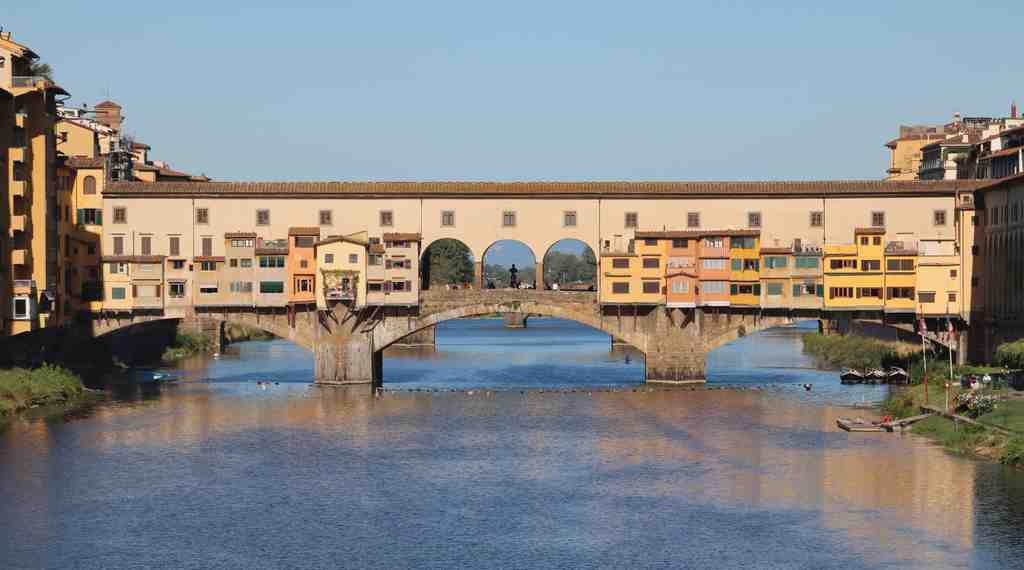
This bridge connects the Via Por Santa Maria to Via de' Guicciardini, and its neighboring bridges are the Ponte Santa Trinita and the Ponte alle Grazie. Talk about neighborhood…Lire plusAfficher moins
This bridge connects the Via Por Santa Maria to Via de' Guicciardini, and its neighboring bridges are the Ponte Santa Trinita and the Ponte alle Grazie. Talk about neighborhood vibes! The Ponte Vecchio is not just a pretty face - it's got some serious historical value too. It played a central role in the city's road system, connecting the Roman Florentia with the Via Cassia Nova. You could even say it was like the Tinder of bridges, bringing people from different areas of Florence together. Nowadays, the bridge may be closed to vehicles, but it's still buzzing with activity. It's like a pedestrian party in here! Tourists flock here because it connects some of the city's most famous landmarks like Piazza del Duomo and Piazza della Signoria to the area of Palazzo Pitti and Santo Spirito in the Oltrarno. It's like a highway for sightseers! Speaking of sightseeing, did you know that the Ponte Vecchio is a national artistic treasure? It's even on the General Directorate of Antiquities and Fine Arts' list. Impressive, huh? The bridge has been a part of Florence's history for a long time, starting from its Roman origins and surviving floods and reconstructions. It's like the Energizer Bunny of bridges - it just keeps going and going! Legend has it that the bridge's design was masterminded by Taddeo Gaddi, which is pretty cool because his name is still remembered, even after 200 years. But some experts think it might have actually been Neri di Fioravanti who built it. Whoever the mastermind was, they did a great job because this bridge has stood the test of time. Don't forget to check out the Torre dei Mannelli, which was built to defend the Ponte Vecchio. Safety first, even in medieval times! The bridge itself consists of three segmental arches, with the main arch spanning a whopping 30 meters. That's like the distance from one end of a swimming pool to the other. The rise of the arches, which is the height from the bottom to the highest point, is between 3.5 and 4.4 meters. No need to be a math whiz to appreciate that! Oh, and did I mention the large piazza at the center of the bridge? It's quite the showstopper, according to the architect Leon Battista Alberti. He called it a prominent ornament, and if a famous architect says something is fancy, you better believe it! So, get your cameras ready and let's soak in the beauty and history of the Ponte Vecchio before we move on to our next stop!
Ouvrir la page dédiée →Now, take a look at those wide arches! They are absolutely mesmerizing. In fact, the Florentines loved them so much that Michelangelo suggested they should be continued all around…Lire plusAfficher moins
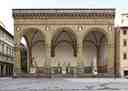
Now, take a look at those wide arches! They are absolutely mesmerizing. In fact, the Florentines loved them so much that Michelangelo suggested they should be continued all around the Piazza della Signoria. Can you imagine how that would look? It would be like an archway wonderland! Oh, and here's a little fun fact for you: this place was once wrongly believed to have been designed by an artist named Orcagna. But the architects behind this stunning structure were actually Benci di Cione and Simone di Francesco Talenti. They built it between 1376 and 1382, possibly following a design by Jacopo di Sione. These guys knew a thing or two about creating a seriously impressive assembly space. Speaking of impressive, take a look at those sculptures! The Loggia dei Lanzi is like an open-air gallery, showcasing amazing works of antique and Renaissance art. And let me tell you, it's quite a sight to behold. Notice those trefoils with allegorical figures of the four cardinal virtues? Fortitude, Temperance, Justice, and Prudence are all there, adding a touch of wisdom and inspiration to this already fantastic place. They were created by Agnolo Gaddi, with the background work done by Leonardo, the monk. The golden stars you see were painted by Lorenzo de' Bicci. Talk about a collaborative effort! Now let's talk about those lions. They are the Medici lions, and they're not just any ordinary lions. They're marble statues that represent the heraldic symbols of Florence. The one on the left was sculpted by Flaminio Vacca in 1598, while the one on the right is even older, dating back to Roman times. These lions have seen it all! And over there, on the side of the Loggia, you'll find a bronze statue of Perseus by the one and only Benvenuto Cellini. Look at him, holding his sword in one hand and the severed head of Medusa in the other. Talk about a conversation starter! Now, Cellini worked on this masterpiece for almost a decade, from 1545 to 1554. He faced countless challenges along the way, including an overheated furnace that almost ruined the casting of the bronze. But our dedicated artist wasn't about to give up. He even sacrificed some of his household furniture and around 200 pewter dishes and plates to get the bronze to flow properly. Now that's dedication! Alright, folks, that concludes our little adventure at the Loggia dei Lanzi. I hope you enjoyed learning about the history and marveling at the incredible art found here. Next up, we'll be making our way to the Roman Theatre of Florence! Let's go, everyone!
Ouvrir la page dédiée →Just imagine, in the very first marathon edition, there were only 462 brave souls who embarked on this epic journey. Fast forward to 2010, and we had a whopping 10,211 runners…Lire plusAfficher moins
Just imagine, in the very first marathon edition, there were only 462 brave souls who embarked on this epic journey. Fast forward to 2010, and we had a whopping 10,211 runners hitting the streets of Florence. It's like an army of marathoners invading the city! Well, maybe not an army, but you get the idea. The Florence Marathon has a pretty cool claim to fame. It's the second largest marathon in Italy, right after the Rome City Marathon. So, you can say that we're pretty huge and a force to be reckoned with! Now, let's talk about the course. In the early days, the route was slightly shorter than the official marathon distance. But don't worry, the organizers realized this and made sure to fix it for all the future editions. Nobody likes a marathon that falls short, right? And let's not forget about the tough challenges that runners faced in the early years. Bends, cobblestone roads, oh my! It's like running through an obstacle course. No wonder they decided to make the race a bit easier and faster in 2011. We want our runners to enjoy the sights and not worry about tripping over cobblestones. The course itself is absolutely stunning, my friend. You'll be running through Florence's historical town center, witnessing the breathtaking architecture that dates all the way back to the 13th century. Picture this: Piazza della Signoria, Ponte Vecchio, and the magnificent Basilica of Santa Croce. It's like a historical sightseeing tour mixed with a marathon. Who says you can't have it all? Now, let me introduce you to the record holders of this incredible race. In 2006, a remarkable man named James Kutto set the men's record with a time of 2 hours, 8 minutes, and 41 seconds. Talk about speed! And in 2018, a phenomenal woman named Lonah Chemtai Salpeter dominated the course with a record-breaking time of 2 hours, 24 minutes, and 17 seconds. These two athletes are true legends of the Florence Marathon! So, my friend, whether you're a professional runner or simply enjoying a leisurely stroll, the Florence Marathon is an experience like no other. Lace up your shoes, hydrate, and get ready to conquer the streets of this beautiful city. And hey, maybe one day your name will be etched in the record books too! Let's keep our fingers crossed. Are you ready for the next stop on our tour? It's going to be a grand spectacle of art and history. Let's head over to Santa Croce, Florence!
Ouvrir la page dédiée →
Afficher 10 arrêts de plusAfficher moins d'arrêtsexpand_moreexpand_less
Legend has it that St Francis himself founded this place. I guess he wanted to be surrounded by greatness. The construction of this church began back in 1294, and it took a while…Lire plusAfficher moins
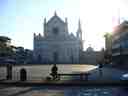
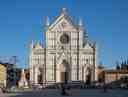
Legend has it that St Francis himself founded this place. I guess he wanted to be surrounded by greatness. The construction of this church began back in 1294, and it took a while to complete. But hey, they say good things take time, right? Now, let's talk about the design of this place. It's got a floorplan that looks like an Egyptian cross. Not something you see every day, huh? And it's the largest Franciscan church in the world. Impressive, huh? Inside, you'll find sixteen chapels, all decked out with beautiful frescoes by the one and only Giotto. This guy and his pupils really knew how to make a place look fancy. But watch your step, because some parts got damaged during the Counter-Reformation. Oops! Oh, and check out the bell tower. It was rebuilt in the 19th century after being struck by lightning. Talk about a shocking situation! The façade of the church is also worth mentioning. It's a neo-Gothic marvel that was designed by a Jewish architect named Niccolò Matas. He even snuck in a Star of David into the composition, just to keep things interesting. But wait, there's more! In the complex, you'll find the Museo dell'Opera di Santa Croce, where you can explore even more art and history. And don't forget to say hi to the monument of Florence Nightingale in the cloister. She's like the Florence Nightingale superstar, born and named after this very city. Now, let's keep moving and see what other treasures Florence has in store for us. Next stop: Ospedale degli Innocenti! Don't worry, it's not a hospital for innocent tourists. It's actually a beautiful Renaissance building with an interesting history. Let's go!
Ouvrir la page dédiée →Ah, the Roman Theatre of Florence! You've stumbled upon a hidden gem, my friend. This ancient theater, which dates all the way back to the 1st century, was like the Broadway of…Lire plusAfficher moins
Ah, the Roman Theatre of Florence! You've stumbled upon a hidden gem, my friend. This ancient theater, which dates all the way back to the 1st century, was like the Broadway of its time. Can you believe it? It was located right under the current Palazzo Vecchio and Palazzo Gondi. Talk about a convenient location! Now, picture this: the auditorium of this fantastic theater faced the bustling Piazza della Signoria, and it stretched along the lively Piazza San Firenze and Via dei Leoni. I bet the ancient Romans loved grabbing a snack and finding their seats before watching a thrilling performance, just like we do today before a blockbuster movie. The first remains of this theater were actually unearthed way back in 1876. Can you imagine the excitement of the archaeologists when they discovered this hidden treasure? But the fun didn't stop there! In 1935, they dug even deeper into the underground of the Palazzo Vecchio, uncovering more treasures and secrets. Recent years have seen more archaeological digs, led by the talented Riccardo Francovich. They've been able to piece together a pretty clear picture of what the theater must have looked like. It was a massive semicircular structure with a jaw-dropping capacity of about 15,000 spectators. That's right, folks, you heard it correctly - 15,000! Just imagine the wild applause and laughter echoing through those ancient walls. The theater was about 100 meters long and 35 meters wide. That's quite the size, isn't it? It's as if they knew they had to accommodate all of Florence's eager theatergoers. Who wouldn't want to witness the spectacle of the Roman era right here in the heart of Florence? So, my friend, take a moment to let the history and grandeur of this ancient theater sink in. Isn't it fascinating how our love for entertainment has stood the test of time? Now, let's move on to our next stop and uncover more wonders of Florence!
Ouvrir la page dédiée →Ah, the Bargello! This place has quite a history, my friend. It used to be a barracks and a prison, but now it's home to the Museo Nazionale del Bargello. Quite a transformation,…Lire plusAfficher moins
Ah, the Bargello! This place has quite a history, my friend. It used to be a barracks and a prison, but now it's home to the Museo Nazionale del Bargello. Quite a transformation, wouldn't you say? Now, let's talk about that name - Bargello. It may sound a bit peculiar, but it actually comes from the late Latin word "bargillus," which means "castle" or "fortified tower." In the Italian Middle Ages, a bargello was a military captain who kept the peace and justice during riots and uproars. Kind of like a Chief of police, you know? No favoritism allowed! The Bargello was originally built in 1255 to house the Capitano del Popolo and later the highest magistrate of the Florence City Council. Talk about an important address! It's actually the oldest public building in Florence, and it served as a model for the construction of the famous Palazzo Vecchio. But wait, there's more! In the 16th century, the Medici family decided to repurpose the Bargello as a prison - executions and all. Yikes! Thankfully, that all came to an end in 1786 when Grand Duke Peter Leopold abolished it. Phew! The building then became the headquarters of the Florentine police until 1859. After all that drama, the Bargello got a makeover and became a national museum in 1865. Ta-da! Inside, you'll find an impressive collection of Gothic and Renaissance sculptures from the 14th to 17th century. They've got Michelangelo's masterpieces, like the Bacchus, Pitti Tondo, Brutus, and David-Apollo. Donatello's David is also here, along with works from the Della Robbia family and a bust of Cosimo I by Benvenuto Cellini. The museum even has ceramics, textiles, tapestries, silver, armor, coins - you name it! Oh, and here's a quirky fact for you: the formerly lost right-hand panel of the Franks Casket is actually found here. Talk about a treasure hunt! So, ready to explore the Bargello and discover its incredible art collection? Let's go!
Ouvrir la page dédiée →Originally, this place served as a children's orphanage. The Silk Guild of Florence, known as the "Arte della Seta," built and managed the hospital. They must have been feeling…Lire plusAfficher moins
Originally, this place served as a children's orphanage. The Silk Guild of Florence, known as the "Arte della Seta," built and managed the hospital. They must have been feeling pretty generous because they were one of the richest guilds in the city and took on philanthropic duties. Good on them! Now, when you look at the building, you'll notice a glorious nine-bay loggia facing the Piazza SS. Annunziata. Those semicircular arches and columns are quite the sight, don't you think? And check out those glazed blue terracotta roundels with reliefs of babies designed by Andrea della Robbia. It's like a little hint of what the building was all about - taking care of the little ones. Inside, you'll find a museum showcasing Renaissance art. Artists like Luca della Robbia, Sandro Botticelli, and Piero di Cosimo have their works on display here. Oh, and there's also a fantastic Adoration of the Magi by Domenico Ghirlandaio. Talk about a star-studded lineup! You know, back in the day, people would sometimes abandon their babies in a basin at the front portico. But over time, they swapped that basin for a secret refuge wheel. It's like something out of a spy movie! A rotating horizontal wheel would bring the baby into the building without the parent being seen. Stealthy, huh? Brunelleschi's vision for this place was a mix of Classical Roman, Italian Romanesque, and late Gothic architecture. He really pulled out all the stops. The loggia, with its round columns and dosserets (or impost blocks), created a fresh look. And let's not forget those circular arches and segmented spherical domes. It's like a history lesson wrapped in awesome architecture. So take a stroll around, enjoy the art, and be impressed by this breathtaking example of early Italian Renaissance architecture. And remember, if you need to leave something behind, you might want to consider the rotating wheel. Kidding, of course! Let's head to our next stop and continue the adventure!
Ouvrir la page dédiée →Back in the day, in 1563 to be exact, Cosimo I de' Medici had a bright idea and decided to establish this fine institution. He was inspired by the talented artist Giorgio Vasari,…Lire plusAfficher moins
Back in the day, in 1563 to be exact, Cosimo I de' Medici had a bright idea and decided to establish this fine institution. He was inspired by the talented artist Giorgio Vasari, and together they started the Accademia e Compagnia delle Arti del Disegno. Now that's a mouthful! But what does all this mean, you ask? Well, the academy was like a special club for the cream of the crop artists, while the company was more like a guild for all the hardworking artists out there. Picture it like an artistic Avengers team, protecting the Medici state with their masterpieces! Can you imagine Michelangelo and Benvenuto Cellini teaming up? Talk about a dynamic duo! Originally, they set up shop at the Basilica della Santissima Annunziata, but later moved to their current digs on via Ricasoli. They even have their very own gallery next door called the Galleria dell'Accademia, which is not to be confused with the academy, but it does house the one and only original David by Michelangelo. No pressure, David! Now, let's talk about the members of this exclusive club. Most of them were male, but they did let some fierce females in on the fun. Artemisia Gentileschi was the trailblazer, becoming the first woman to join, and later on, Angelika Kauffmann joined the ranks in 1762. You go, girls! In 1784, the academy underwent some changes and merged with all the other drawing schools in Florence, forming the Accademia di Belle Arti. It's been going strong ever since, offering art education to budding talents and producing some incredible artists. So there you have it, the Accademia di Belle Arti di Firenze, where ancient traditions and contemporary creativity come together. It's like Hogwarts for artists, minus the flying broomsticks. But hey, who needs those when you can create your own magic on canvas? Now, onto the next stop on our tour! Off we go to the magnificent Florence Cathedral, where you'll be blown away by its architectural beauty. And don't worry, I won't leave you hanging like Michelangelo's David! Shall we?
Ouvrir la page dédiée →Alright, my friend, welcome to the Laurentian Library! This place is not your average library, oh no. It's a historic gem that will take you back in time to the days of the Medici…Lire plusAfficher moins
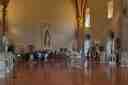
Alright, my friend, welcome to the Laurentian Library! This place is not your average library, oh no. It's a historic gem that will take you back in time to the days of the Medici family. Picture this, it's the 16th century and the Medici family, who were once just merchants, want to show off their smarts and ecclesiastical elegance. So, they decide to build this library, right here in the cloister of the Medicean Basilica di San Lorenzo di Firenze. Talk about making a statement! Now, hold on to your seats, because I'm about to drop some knowledge. This library has over 11,000 manuscripts and 4,500 early printed books. That's a lot of reading material! And get this, it houses the private library of the Medici family. These guys were serious about their books. But what makes the Laurentian Library extra special is its jaw-dropping architecture. Can you guess who was the mastermind behind it? Yep, you got it. None other than Michelangelo himself! This dude was a genius in more ways than one. He designed the building in a style called Mannerism, which was all about embracing boldness and grace. Just like me, right? Now, let's talk about the inside. The reading room is a sight to behold. It's only the walls that were completed by Michelangelo before he left Florence in 1534. But fear not, his apprentices and other architects, like Tribolo, Vasari, and Ammannati, picked up where he left off. They followed his plans and the library finally opened its doors in 1571. One of the most impressive features is the Vestibule, also known as the ricetto. It has some fancy columns, big windows, and a magnificent staircase. Oh, and fun fact, Michelangelo originally planned for a skylight, but it was vetoed because the pope thought it would cause leaks. Gotta keep those books dry, right? The stairs in this place went through quite the makeover too. Originally, they were on the side walls and formed a bridge in front of the reading room door. But then, someone had a lightbulb moment and shifted them to the center of the vestibule. It's like musical stairs! So, my friend, take a moment to soak in the architectural brilliance and immerse yourself in the history within these walls. The Laurentian Library is a testament to the vision and creativity of Michelangelo, and you're lucky to be standing right here, right now. So, let's keep exploring, because our adventure doesn't end here!
Ouvrir la page dédiée →Ah, the Florence Baptistery! Also known as the Baptistery of Saint John, this religious building is quite the ultimate octagon. It stands proudly in both the Piazza del Duomo and…Lire plusAfficher moins
Ah, the Florence Baptistery! Also known as the Baptistery of Saint John, this religious building is quite the ultimate octagon. It stands proudly in both the Piazza del Duomo and the Piazza San Giovanni, gazing across at Florence Cathedral and the Campanile di Giotto. Talk about a match made in architectural heaven! This ancient beauty holds the title of being one of the oldest buildings in the city, dating all the way back to between 1059 and 1128. Can you believe that? It's like a time capsule of the Florentine Romanesque style, which had a big influence on future architectural marvels. Talenti, Alberti, Brunelleschi, and other master architects of the Renaissance took notes from this very baptistery. And let me tell you, their notes were absolutely worth it! But let's not forget about the main event-the doors! The Florence Baptistery has not one, not two, but three sets of stunning bronze doors with relief sculptures. The south doors were crafted by Andrea Pisano, while Lorenzo Ghiberti took care of the north and east doors. And you know what Michelangelo called those east doors? He called them the "Gates of Paradise." Now that's what I call a grand entrance! Back in the day, this baptistery was the only spot in town for Florence locals to get baptized. Imagine that! Poet Dante Alighieri, the famous Renaissance artists, Amerigo Vespucci, the Medici family, and many more influential figures all experienced their holy water moments right here. Now there's a bit of history for you! Oh, and did you know that there's even a monumental tomb inside? Donatello's masterpiece commemorates Antipope John XXIII. I mean, who wouldn't want their eternal resting place in such a beautiful place, right? Now, some legends say that this baptistery was once a Roman temple dedicated to Mars, the protector of old Florence. But after some excavations in the 20th century, it seems that it may have originally been an octagonal baptistery built in the late 4th or early 5th century. And get this-it was said to be the brainchild of Theodelinda, queen of the Lombards, to celebrate her husband's conversion. Isn't that sweet? All in all, the Florence Baptistery is a true gem of Florence. With its rich history, stunning doors, and serene atmosphere, it's definitely a must-visit spot on your journey through this magnificent city. So, let's move on, shall we? Our next stop awaits!
Ouvrir la page dédiée →Ah, the Florence Cathedral, or as the Italians say, Duomo di Firenze! It's like the queen of all the churches in Florence. It's so big and impressive, it's like it's saying, "Hey,…Lire plusAfficher moins
Ah, the Florence Cathedral, or as the Italians say, Duomo di Firenze! It's like the queen of all the churches in Florence. It's so big and impressive, it's like it's saying, "Hey, don't forget about me, I'm here to steal the show!" This magnificent cathedral was started way back in 1296 in the Gothic style by a guy named Arnolfo di Cambio. But you know how construction projects go, it took a while to finish. It wasn't until 1436 that it was finally completed. And let me tell you, it was worth the wait! One of the most striking features of the cathedral is the dome. Can you believe it was designed by an architect named Filippo Brunelleschi? I guess he really knew how to make a statement. This dome, my friend, was the largest in the world at the time it was built. Talk about bragging rights! Now, let's talk about the exterior. It's a real showstopper! The basilica is covered in these beautiful polychrome marble panels in shades of green and pink, bordered by white. It's like a colorful patchwork quilt, don't you think? And to top it off, there's this fancy Gothic Revival facade added in the 19th century by Emilio De Fabris. He wanted to give the cathedral a modern makeover, I guess. But wait, there's more! The cathedral is part of a whole complex in Piazza del Duomo. You've got the Baptistery, which is this round building right next door, and Giotto's Campanile, which is like a fancy word for a bell tower. These three buildings together are a UNESCO World Heritage Site, and a major tourist attraction. Florence really knew how to make a statement. Oh, one more thing before we move on. The cathedral is actually the mother church of the whole Archdiocese of Florence. I guess that means it's like the boss church, right? And the archbishop in charge is Giuseppe Betori. I wonder if he ever gets to climb up to the top of the dome and shout, "I'm the king of the world!" Just kidding, of course. Alright, enough joking around. It's time to move on and explore more of this amazing city. So, buckle up and get ready for the next stop on our tour!
Ouvrir la page dédiée →Now, let's talk about the campanile itself. Giotto really outdid himself with this one. It's a freestanding bell tower, standing tall and proud at a whopping 84.7 meters (277.9…Lire plusAfficher moins
Now, let's talk about the campanile itself. Giotto really outdid himself with this one. It's a freestanding bell tower, standing tall and proud at a whopping 84.7 meters (277.9 ft). Imagine the views from up there! You'll definitely need a good pair of binoculars to see everything. Giotto, the artistic genius, carefully designed this campanile in harmony with the polychromy, or colorful marble, of the cathedral. Instead of a plain ol' Gothic skeleton, he covered it in beautiful geometric patterns made of white marble from Carrara, green marble from Prato, and red marble from Siena. I have to say, it gives the tower a real artistic flair, like it's been painted by a master. But here's a fun fact for you: when Giotto passed away in 1337, he had only managed to finish the lower floor. That's right, he was a busy man. However, he did decorate it with bas-reliefs in hexagonal panels. There are seven panels on each side, making a total of 28 fabulous creations. These panels depict the history of mankind, inspired by the book of Genesis. I guess Giotto was a big fan of biblical symbolism. Now, brace yourself for some steps because if you want to enjoy the breathtaking panorama of Florence from the top, you'll have to climb 414 steps. But don't worry, it's totally worth it. Just think of it as a little workout to balance out all those delicious gelatos you'll be having later. Oh, and one last thing. The works of art you see inside the campanile are actually copies. The originals were moved to the Museo dell'Opera del Duomo, which is conveniently just behind the cathedral. So don't try to snatch any souvenirs. We wouldn't want you to get in trouble, now would we? Alright, ready to climb those steps? Let's go and get those panoramic views of Florence that will take your breath away! And if the climb gets too exhausting, just think of the amazing photos you'll get to show off to your friends. Let's do this!
Ouvrir la page dédiée →Now, the Strozzi family, who commissioned this palace, had a little feud going on with the Medici family. They wanted to show off their prominence and make a political statement,…Lire plusAfficher moins
Now, the Strozzi family, who commissioned this palace, had a little feud going on with the Medici family. They wanted to show off their prominence and make a political statement, so they decided to build the most magnificent palace in town. Take that, Medici! To make room for this grand palace, a whole bunch of other buildings were acquired and demolished. Talk about a palace on a mission! Giuliano da Sangallo even provided a wood model of the design because, you know, they had to make sure everything was on point. But here's where things get interesting. Filippo Strozzi, the guy who started all this, unfortunately passed away in 1491, way before the palace was completed in 1538. Bummer, right? But wait, it gets even more dramatic. Duke Cosimo I de' Medici swooped in and confiscated the palace the same year it was completed. No fair, Duke Cosimo! The Strozzi family had to wait a good 30 years before they could reclaim their magnificent palace. I can only imagine the look on their faces when they finally got it back. Victory dance, anyone? Now, let's talk about the architecture itself. Palazzo Strozzi is a prime example of civil architecture. It's got those rustic stone walls, inspired by the Palazzo Medici, but with even more harmonious proportions. It's all about that symmetry, baby. The ground plan is like a perfectly organized symphony, with clearly differentiated scales in its principal rooms. I don't know about you, but that sounds pretty fancy to me. And let's not forget about the magnificent courtyard, inspired by none other than Michelozzo. It’s surrounded by an arcade and has this central courtyard vibe going on. I mean, who doesn't love an arcade? It's like having your own personal entertainment center right in your palace. Now, keep an eye out for the ferro, these wrought-iron objects that adorn the building. They were created by a talented ironsmith named Niccolo Grosso, who also went by the name Il Caparra. Think flagpoles, torch stands, and lanterns. Stylish AND functional, just the way I like it. After serving as the Strozzi family's seat for centuries, Palazzo Strozzi became home to the Institute of Humanist Studies and the Fondazione Palazzo Strozzi. It’s now a hub for cultural and artistic events, including international expositions and fashion shows. So, get ready to strut your stuff, because this palace knows how to party! That concludes our tour of Palazzo Strozzi, and what a ride it has been. I hope you've enjoyed this adventure through Florence's fascinating history. Remember, when you visit Florence again, look out for the ferro and give them a nod for their stylish contribution to this magnificent palace.
Ouvrir la page dédiée →
Foire aux questions
Comment commencer le tour ?
Après l'achat, téléchargez l'application AudaTours et entrez votre code de réduction. Le tour sera prêt à commencer immédiatement - il suffit d'appuyer sur lecture et de suivre l'itinéraire guidé par GPS.
Ai-je besoin d'Internet pendant le tour ?
Non ! Téléchargez le tour avant de commencer et profitez-en pleinement hors ligne. Seule la fonction de chat nécessite Internet. Nous recommandons de télécharger en WiFi pour économiser vos données mobiles.
S'agit-il d'une visite de groupe guidée ?
Non - il s'agit d'un audioguide en autonomie. Vous explorez indépendamment à votre propre rythme, avec une narration audio diffusée par votre téléphone. Pas de guide, pas de groupe, pas d'horaire.
Combien de temps dure le tour ?
La plupart des tours durent entre 60 et 90 minutes, mais vous contrôlez totalement le rythme. Faites des pauses, sautez des arrêts ou arrêtez-vous quand vous le voulez.
Et si je ne peux pas finir le tour aujourd'hui ?
Pas de problème ! Les tours disposent d'un accès à vie. Faites une pause et reprenez quand vous le souhaitez - demain, la semaine prochaine ou l'année prochaine. Votre progression est sauvegardée.
Quelles sont les langues disponibles ?
Tous les tours sont disponibles dans plus de 50 langues. Sélectionnez votre langue préférée lors de l'utilisation de votre code. Note : la langue ne peut pas être changée après la génération du tour.
Où accéder au tour après l'achat ?
Téléchargez l'application gratuite AudaTours sur l'App Store ou Google Play. Entrez votre code de réduction (envoyé par e-mail) et le tour apparaîtra dans votre bibliothèque, prêt à être téléchargé et commencé.
Si vous n'appréciez pas le tour, nous vous rembourserons votre achat. Contactez-nous à [email protected]
Paiement sécurisé avec