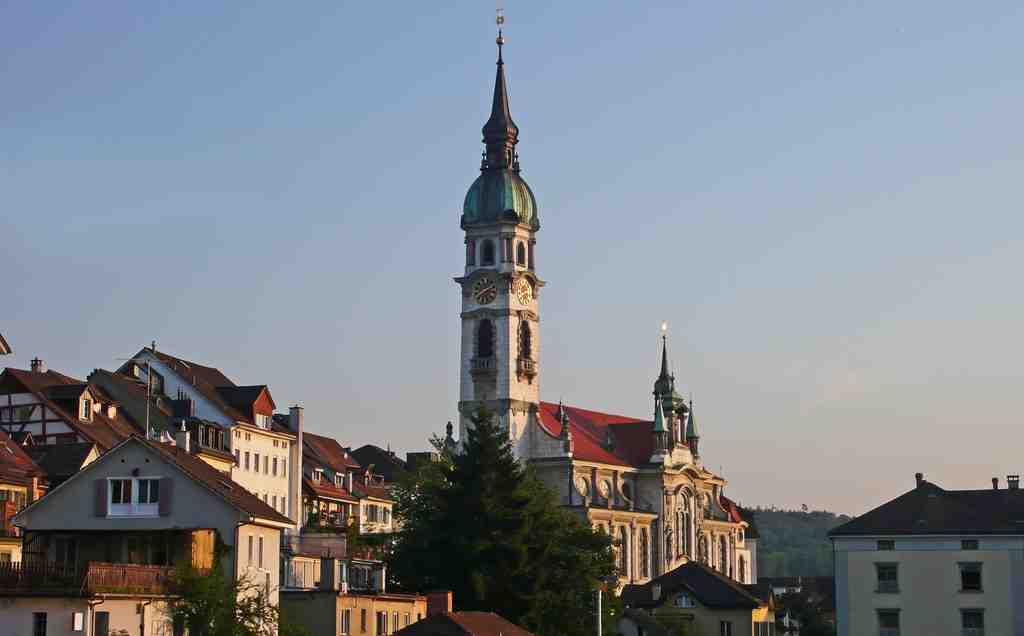
Zu Ihrer Linken steht eine helle Steinkirche mit breiter Fassade, einem hoch aufragenden Turm über dem Hauptportal und Reihen heiliger Figuren über den Eingängen.
St. Nikolaus ist eine der großen steinernen Aussagen von Frauenfeld, doch ihre wahre Geschichte ist weniger ruhig, als es ihre Fassade vermuten lässt. Dieser Hügel aus Molassegestein über der Biegung der Murg beherbergte seit mindestens dem neunten Jahrhundert heilige Gebäude, und eine Kapelle ist hier sicher seit dem späten dreizehnten Jahrhundert belegt. Bis vierzehn dreiundsechzig war der Schutzpatron klar benannt: der heilige Nikolaus von Myra.
Dann wurde der Glaube hier zu etwas Gemeinsamem, aber auch Umstrittenem. Nachdem die Reformation fünfzehn neunundzwanzig Frauenfeld erreicht hatte, einigten sich Katholiken und Protestanten fünfzehn einunddreißig darauf, diese Kirche und die Kirche in Oberkirch gemeinsam zu nutzen. Stellen Sie sich das für einen Moment vor: ein Gebäude, das zwei Konfessionen und zwei Überzeugungen beherbergt, und eine Stadt, die versucht, sich nicht zu zerreißen. Diese Vereinbarung dauerte bis zur Eröffnung der protestantischen Kirche sechzehn siebenundvierzig, und selbst dann hatte die Anspannung den Ort bereits geprägt.
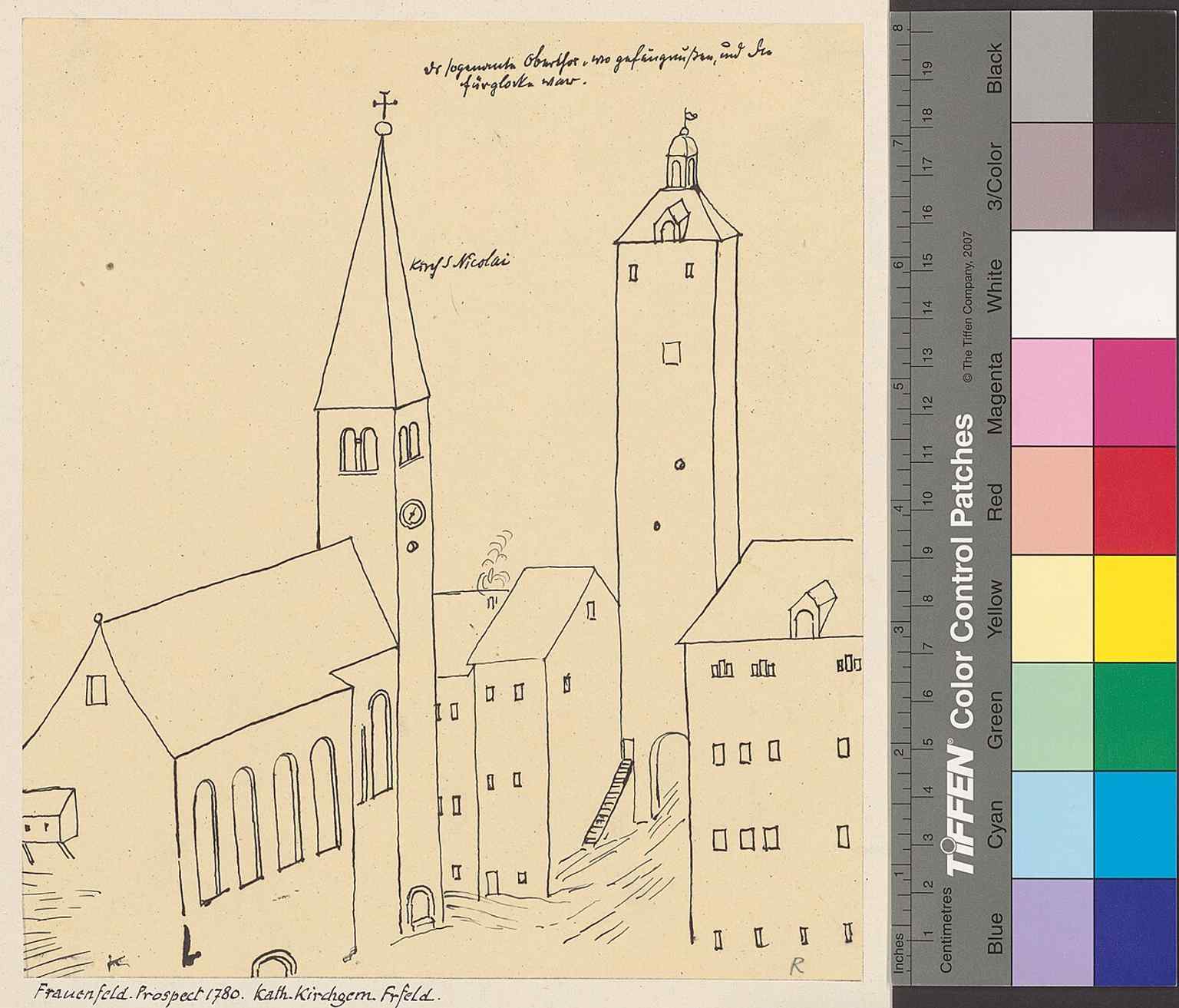
Wenn Sie einen Blick auf das Bild auf Ihrem Bildschirm werfen, können Sie eine frühere Version der Kirche im alten Stadtbild sehen, lange bevor der heutige Entwurf die Skyline dominierte. Das ist die erste Überraschung hier: Kontinuität bedeutet in Frauenfeld selten Stillstand. Sie bedeutet Wiederaufbau.
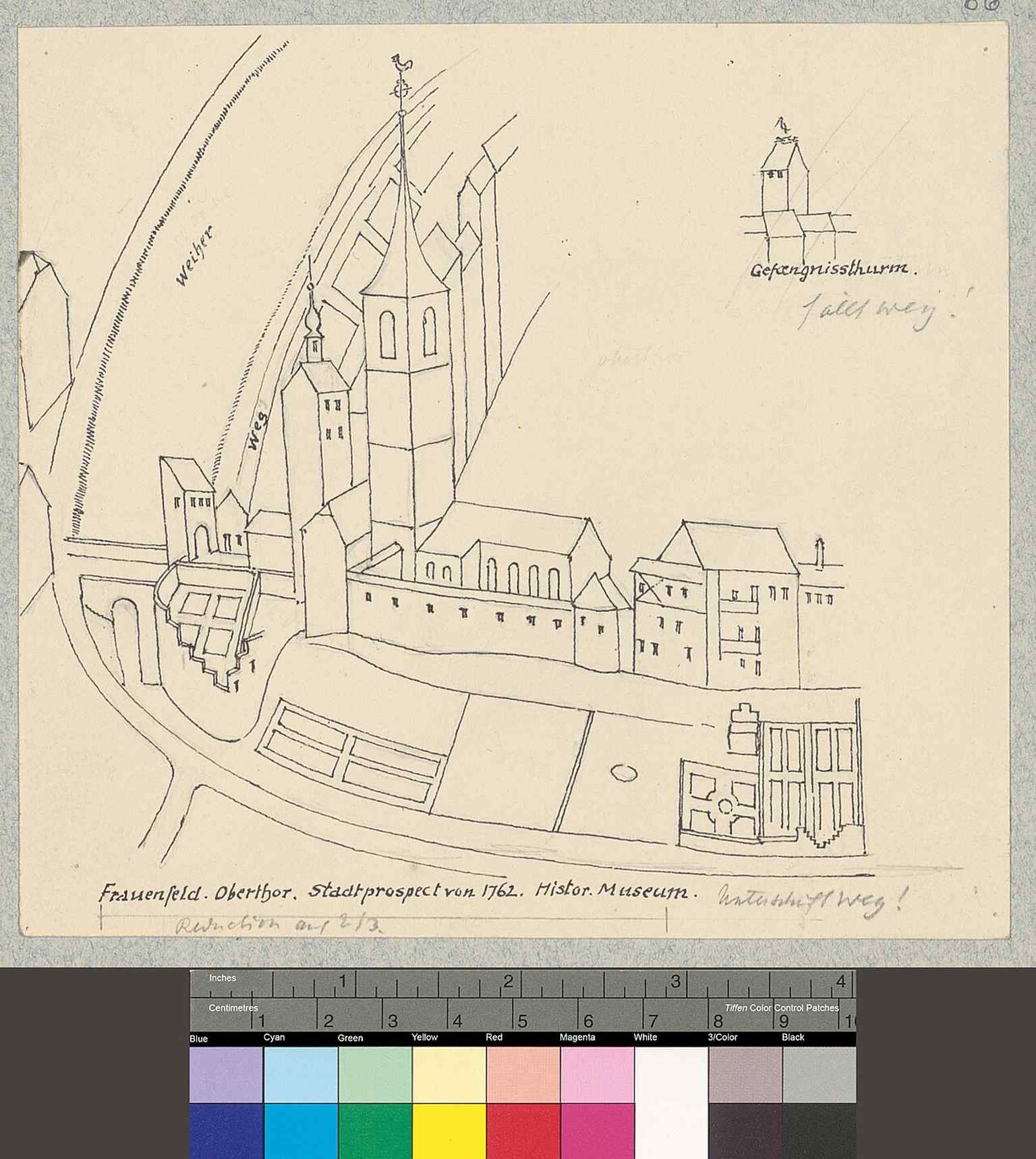
Fire proved that brutally. In the first city fire of seventeen seventy-one, half the town burned, and of St. Nicholas, almost nothing survived except the shaft of the tower. Peter Bein then raised a new late Baroque church on the old foundations, and when it opened in seventeen eighty-one, its clock did not belong only to parish clergy or wealthy patrons. Citizens across the town paid for that “city clock” together. Even in ruin, this church remained entangled with civic life.
And yet the church you see now is not that one either. In the late nineteenth century, the congregation outgrew the old building. Architect August Hardegger proposed one solution, but money stalled the plan. Then politics entered through the side door. When the city planned a new access road from the station to the cantonal government building, church land stood in the way. Dean Konrad Kuhn pushed hard for a new church, partly to solve overcrowding and partly to keep the site from being cut apart. Suddenly this was not only about worship. It was about who could shape the town itself.
The decisive figure became Albert Rimli. In bitter arguments, he outmanoeuvred Hardegger with a richly varied design and a persuasive perspective drawing that showed people exactly what could rise here. His church, built between nineteen oh four and nineteen oh six, gave Frauenfeld this striking tower and this blend of Neo-Baroque drama and Art Nouveau softness. Look at the sculpted portals, the layered stonework, the scroll-like volutes. This building does not hide that it fought to exist.
And perhaps that is the question the church presses on you: how can one place belong to more than one confession, more than one generation, even more than one version of the city?
There is one more quietly moving detail. In nineteen oh six, St. Nicholas received a new ring of six bronze bells from Aarau, tuned in harmony with the Protestant church’s bells, an early, deliberate gesture of cooperation. The parish called it a small gesture of Christian cooperation. Even the sound above Frauenfeld learned to share.
If you want a glimpse of the church before this reinvention, the second image shows the late Baroque predecessor that stood here after the fire. So no, sacred space in Frauenfeld was never simple; it was argued over, rebuilt, funded together, and made to endure. In about one minute, we’ll step to the Bernerhaus, where shared ground turns from sacred to civic and political. If you plan to return later, the church is generally open daily, with hours varying across the week.