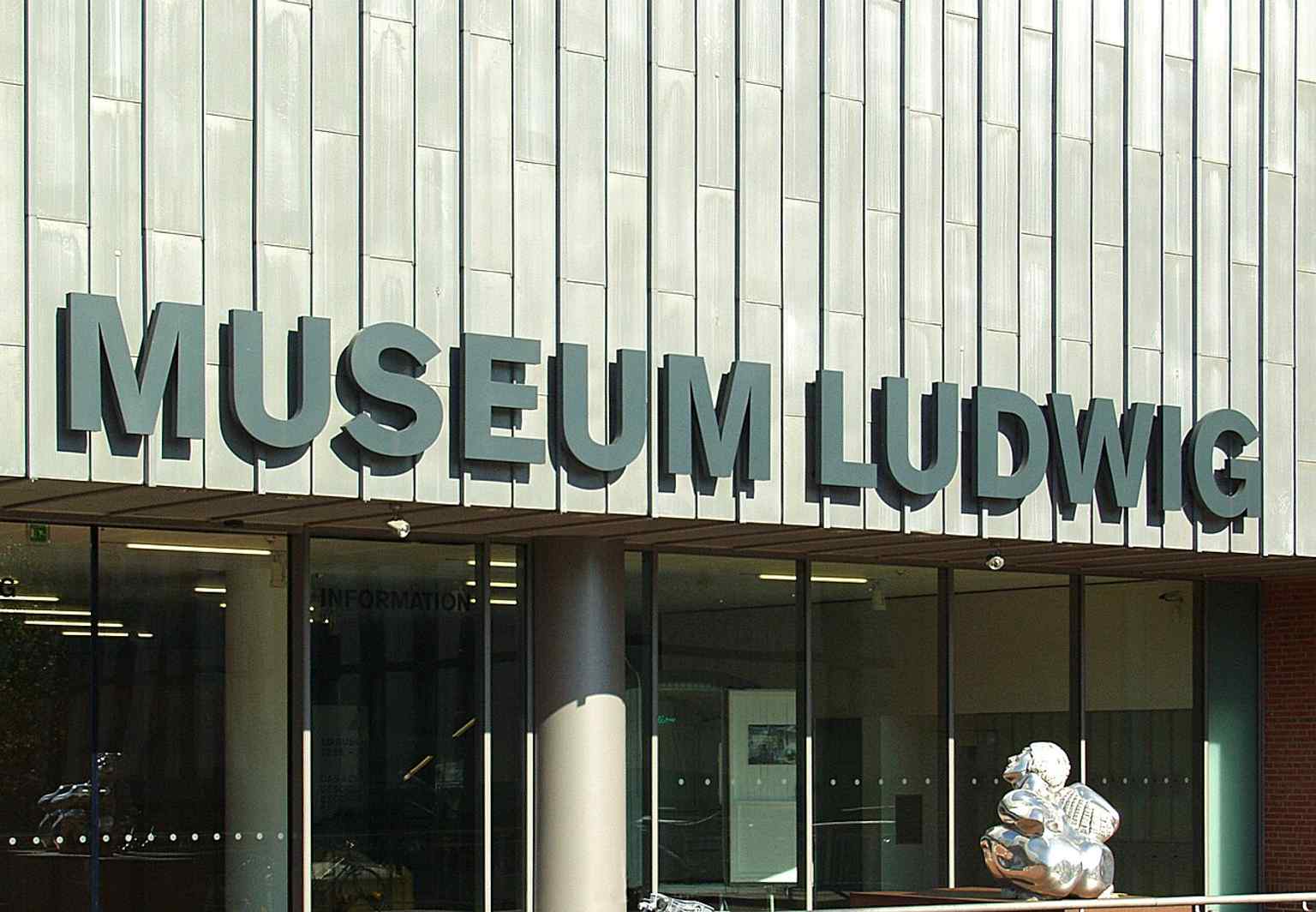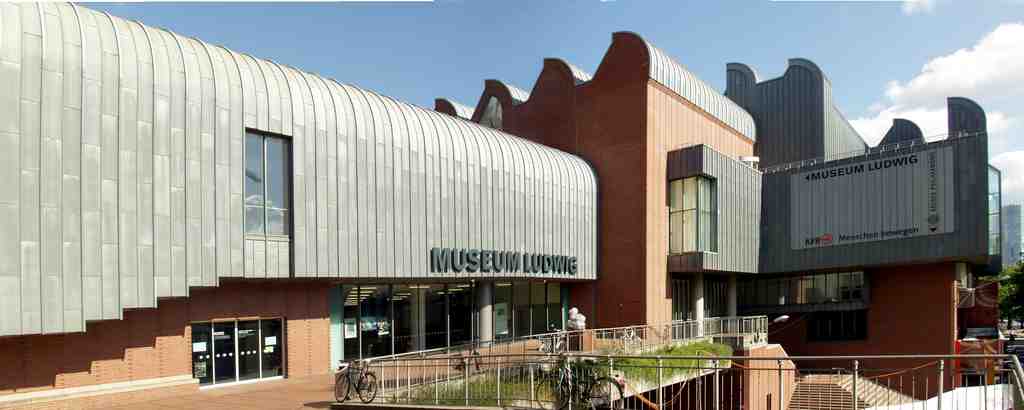
Es ist schwer zu erfassen, wie groß dieses Gebäude wirklich ist. Es umschließt tatsächlich zweihundertsechzigtausend Kubikmeter Raum. Das ist exakt dasselbe Innenvolumen wie der hoch aufragende Kölner Dom, den Sie zuvor gesehen haben. Dennoch wirkt das Museum nicht erdrückend oder überwältigend. Das war der brillante Kniff der Architekten Peter Busmann und Godfrid Haberer, die neunzehnhundertsechsundsiebzig den Architekturwettbewerb gewannen. Werfen Sie einen Blick auf Ihre App, um zu sehen, wie diese rollenden, wellenartigen Strukturen oben das immense visuelle Gewicht auflockern. Das nennt man Sheddächer, ein sich wiederholendes Spitzdesign, das aus der Fabrikarchitektur entlehnt wurde, um große Innenräume mit gleichmäßigem, natürlichem Licht zu fluten.
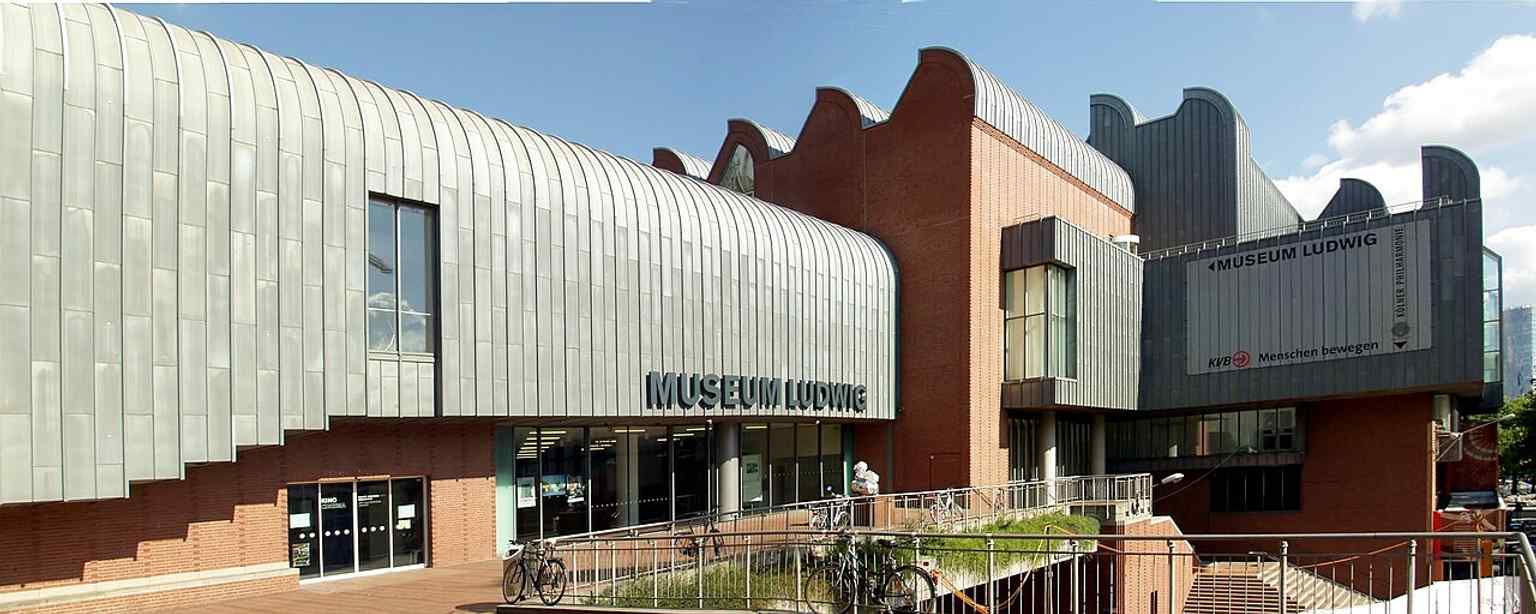
The true starting point for this museum was a collection of German Expressionist art gathered by a local citizen named Josef Haubrich. But the push for this dedicated building came from an extraordinary act of generosity. In nineteen seventy-six, art collectors Peter and Irene Ludwig offered the city of Cologne a massive gift of about three hundred and fifty pieces of contemporary art, mostly American Pop Art.
The city decided to create a monumental new space. However, they wanted to include a brand-new symphony hall alongside the art galleries, and the plot of land between the Cathedral and the Rhine River was simply not big enough. The architects solved this by building the concert hall, known as the Kölner Philharmonie, deep underground beneath the surrounding brick plaza.
It was an elegant structural solution, but it created an unexpected acoustic complication. The seamless ceiling of the underground concert hall functions almost like the skin of a drum. If you walk across the plaza above while an orchestra is playing below, the sound of your footsteps echoes right down into the music hall. Because of this architectural quirk, the plaza outside must be guarded and completely closed to pedestrians during rehearsals and concerts.
Inside these walls today is a staggering archive of human creativity. Beyond holding the largest collection of Pop Art in Europe, it houses the third-largest collection of Pablo Picasso's art in the world. It also preserves vital works from the Russian Avant-Garde movement from nineteen oh five to nineteen thirty-five, and an incredible photography collection boasting over seventy thousand images.
If you wish to explore the galleries, the museum is closed on Mondays, but generally open from ten A-M to six P-M, staying open until eight P-M on Fridays through Sundays. Take your time observing this quiet giant of modern art. Whenever you feel ready, we will continue our walk to the next destination.