

希洛语音导览:遗产回响与隐藏的石头
当雨水落在希洛光亮的榕树上时,这座城市最古老的秘密就在你的脚下苏醒。这个自助语音导览将带你穿梭于蜿蜒的街道和隐蔽的角落,揭示大多数游客擦肩而过的史诗般的故事。 S. Hata大楼里哪个令人不寒而栗的决定在城市中心引发了混乱?在卡拉卡瓦公园里,政治斗争早已归于沉寂,又留下了哪些幽灵般的痕迹?谁在太平洋海啸博物馆留下了最微小的线索,暗示着一场塑造了希洛未来的丑闻? 当你揭开失落的反叛、低语的秘密以及一个不愿遗忘的城市节奏时,感受每一步都回荡着戏剧性。从宏伟的纪念碑到宁静的小巷,跟随其流淌,以鲜明的色彩看到希洛的灵魂。 在雨水和故事永不停歇的地方开始你的旅程,让希洛展现出它鲜为人知的一面。
导览预览
关于此导览
- schedule持续时间 30–50 mins按照自己的节奏
- straighten1.7 公里步行路线跟随引导路径
- location_on
- wifi_off离线工作一次下载,随处使用
- all_inclusive终身访问随时重播,永久有效
- location_on从 S. Hata 大楼 开始
此导览的景点
To spot the S. Hata Building, just look for a pale blue and white two-story building with a row of tall, arched windows above a line of specialty shops and a bright red awning,…阅读更多收起
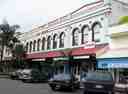
To spot the S. Hata Building, just look for a pale blue and white two-story building with a row of tall, arched windows above a line of specialty shops and a bright red awning, sitting right along Kamehameha Avenue near a cluster of palm trees. Now, let me sweep you back in time-imagine standing on this very spot over a century ago, when Hilo was booming from the relentless work of the sugarcane plantations and the busy shuffling of immigrant workers. The story of this building begins with the determined Hata Sadanosuke, born in Hiroshima in 1868, who made the journey to Hawaii with big dreams and not much more than a suitcase and a hope for something better. When he arrived in Honolulu, he worked as an agent, striding from one sugarcane plantation to the next-talk about mileage! Inspired by the growing community, he founded his own business right here in Hilo in 1896, selling fine Japanese silks, kimonos, and exotic souvenirs. Business was slow at first-so slow, in fact, that Mr. Hata briefly transformed into an early Uber by renting out his horse and carriage for taxi service! The tides changed after Hawaii became a U.S. territory in 1898, and suddenly both the plantations and Mr. Hata’s shop flourished. Hata’s once modest store outgrew its shell, and he decided to make a bold move. In 1912, on what was then squishy wetlands, Hata poured $25,000 into building this massive concrete structure-at a time when almost everything else around was made of wood. Not only was it big, but it was strong, designed to last. Imagine the clamor and echoing of workers pouring concrete, the wet slap and scrape of shovels-it was the sound of progress in Hilo! The first floor burst with bustling shops, while twelve grand arches watched over the street, and the second floor filled up with offices. The Hata Building quickly became the pride of the town’s Japanese community. Sadanosuke’s younger brother Yoichi joined him and they spread the business as far as Honolulu and Osaka. Even the Hilo Sake Brewing Company opened here for thirsty locals (cheers to them!). But the Hata family’s journey wasn’t all smooth sailing. After the attack on Pearl Harbor, they faced internment and in 1942, the U.S. government seized the very building you’re looking at now. But the Hata spirit wouldn’t be kept down-Kasujiro, Sadanosuke’s daughter, won it back at auction. The building’s strength was tested again in 1946, when a mighty tsunami battered Hilo. While so much around it washed away, the Hata Building stood firm-a lucky break, but maybe also thanks to all that concrete! The trains rattling past were washed away, too, leaving a new waterfront road and a new chapter for Kamehameha Avenue. The basement, once deep and cool, was filled in after yet another tsunami in 1960-sometimes it feels like this building has seen just about everything! By 1990, the beautiful old structure looked tired and was close to being torn down. Luckily, David Levenson saw the historic charm and lovingly restored it, bringing back the classic iron brackets and polishing its vintage glow. Today, it’s a lively bundle of specialty shops and the famous Cafe Pesto (if you get hungry, you’re already in the right place). It’s also housed cool science exhibits-a giant aquarium and even life-sized sea creatures! And if you visit on a Wednesday or Saturday, poke your head into the legendary Hilo Farmers Market right at the end of Mamo Street, where you’ll catch the buzz of local vendors and fresh tropical fruit. So there you have it-a Japanese immigrant’s dream, a bold leap into concrete, laughter echoing in the shops, and a survivor of tsunamis and wars. If you listen close, you might just catch a whisper of history-though don’t worry, the only thing ghostly here these days is maybe an echo from old horse hooves. Ready to stroll to our next stop?
打开独立页面 →
再显示 7 个站点显示更少站点expand_moreexpand_less
In front of you is a charming two-story cream-colored building with blue-trimmed windows and a shaded porch held up by sturdy columns - just look for the bold sign that says "East…阅读更多收起
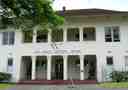
In front of you is a charming two-story cream-colored building with blue-trimmed windows and a shaded porch held up by sturdy columns - just look for the bold sign that says "East Hawaii Cultural Center" above the entrance. Now, picture this: you’re standing where Hilo’s stories stack up like art supplies on opening day. This building, made of reinforced concrete but filled with the warmth of wood, once wore a very different badge - it used to be the police station, keeping a watchful eye on Kalākaua Park just across the street. Since around 1817, this very spot has been a stage for Hilo’s big civic moments, from royal park openings by King Kalākaua in 1877, to courtroom dramas that ended in 1969. In 1975, when the police packed up for a bigger place, the building was nearly left to crumble. But wait! Just when the wrecking ball was warming up, a group of local arts lovers swooped in, signing a lease to save it from demolition. Ta-da! The East Hawaii Cultural Center was born. Today, exhibitions, performers, and community dreams fill these halls-often for free or just the price of a friendly donation. If these walls could talk, they’d tell you tales of old sirens, courtroom whispers, and laughter echoing from a new era of art and culture.
打开独立页面 →To spot the Hilo Masonic Lodge Hall-Bishop Trust Building, look for a large, pale-colored building on the busy corner of Keawe and Waianuenue Streets-just look for the strong…阅读更多收起
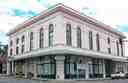
To spot the Hilo Masonic Lodge Hall-Bishop Trust Building, look for a large, pale-colored building on the busy corner of Keawe and Waianuenue Streets-just look for the strong rectangular shape with tall, arched windows and a green awning wrapping around the corner. Now, imagine you’re standing right here in front of an architectural heavyweight with a real “can’t knock me down” vibe-this monument has been through its share of drama! Close your eyes for a moment and picture downtown Hilo, over a century ago: horses and carriages clopping by, shopkeepers sweeping their stoops, and-where you’re standing now-a team of Freemasons staring hopefully at a pile of dirt, waiting to turn an idea into Hilo’s very first Masonic hall. Let’s rewind to wild 1896, when Hawaii was still ruled by sugar and steam. William W. Goodale, a bold fellow with an eye for the future, hosted the first talks of a Masonic lodge right in his own house. A year later, Kilauea Lodge #330 (named after the fiery volcano nearby) became Hawaii Island’s first. Their meetings began in the homey Lyman building, but you know how leases are-never quite safe when your landlord might want to build a school! Fast forward: John Troup Moir, plantation boss by day, Mason master by night, and also the county’s very first bigwig, gathered a dream team to buy land uphill, betting that Hilo would someday sprawl in that direction. They almost swapped their plot for federal land, only to be shouted down by public protests-sometimes, city politics is just one big game of musical chairs. In a twist of fate, they finally landed a more central lot in 1906, thanks to some smooth talking with Governor Carter-and yes, they had to pay the price difference. Picture it: the plans were set, the sketches done by fellow Mason William McKay, and Henry F. Starbuck, a seasoned lodge architect was on call from Oakland. Just as the construction clock was about to tick, disaster struck. A rumble and a roar-the 1906 San Francisco earthquake-sent the price of building materials sky high. The Masons watched as their timeline and budget did a vanishing act. Still, you can’t keep a good lodge down. By May 1908, they broke ground with Starbuck leading, only for him and his team to be swapped out a few months later. Hey, nobody said building a temple would be a cakewalk! The cornerstone was triumphantly set in 1909. When the hall finally opened in 1910, it wasn’t just up to code-it was double the price and twice as grand as anyone expected, with Moir proudly declaring it fireproof, earthquake-proof, the whole works! Picture townsfolk gawking at the brand-new Renaissance Revival masterpiece-three stories tall, reinforced with concrete, with a sweeping stairway of granite and oak balusters, glowing with brass fittings and a hint of organ music. The ground floor buzzed with commerce, and upstairs, the Masons filled the high-ceilinged ceremonial rooms with secrets, laughter, and plenty of mystery. Years later, their traditions were cut short-not by fire or quake, but by a liquor license! Their rules wouldn’t let them share space with a bar, so the Masons departed in the 1980s. Through the decades, this building has worn many hats: bank, restaurant, gallery, bar. It even survived bankruptcy, closed kitchens, and changes in ownership. In the ’90s, it got a facelift-fresh restrooms, a new elevator, all the bells and whistles (well, original fixtures, anyway). The Kaikodo restaurant came and went, followed by another short-lived grill, as tenants changed, but this building remains a bold survivor. Standing on this corner for more than a century, it’s seen Hilo’s story unfold-the hustle, hard times, wild dreams, and more than a little aloha. So as you look up at those tall, arched windows, remember: under this roof, legends built their future-one cautious, earthquake-proof brick at a time.
打开独立页面 →Right in front of you, the Volcano Block Building stands tall and proud with its striking cream facade, red accents, and three grand arched windows looking out over Waianuenue…阅读更多收起
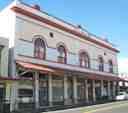
Right in front of you, the Volcano Block Building stands tall and proud with its striking cream facade, red accents, and three grand arched windows looking out over Waianuenue Avenue-just watch for the sign that says “1914 VOLCANO BLOCK” at the top. Alright, let’s set the clock back to a Hilo that’s in the middle of an epic growth spurt. In 1914, while most buildings were still cozy single-purpose wooden shops, this grand two-story structure burst onto the scene like a fashion-forward friend at a family reunion! Reinforced concrete in elegant Italian Renaissance style, it became Hilo’s modern marvel-its very first commercial building to host several businesses under one roof. Imagine, bustling entrepreneurs, fresh paint, and maybe the odd horse looking over from the old Volcano Stables, which once stood right where you’re standing. Step inside (well, in your mind for now), and you’d once find separate retail shops, each with its own entrance, while upstairs, busy office workers haggled away as ocean breezes drifted through open windows. For extra drama, the ground floor even had a bank vault. The People’s Bank of Hilo set up shop here in 1916-perhaps thinking their new fireproof home would bring fortune. But by 1922, a “bank disaster” swept through town and the vault grew quiet, as the Peoples Bank closed its doors. Rumor has it, Hawaii’s powerful “big five” sugar and banking families may have had a hand in their troubles. Drama, intrigue, and a bit of sugar dust! As decades passed, the building saw new tenants-from C. Brewer & Co. moving in, to the Hilo Chamber of Commerce settling upstairs, to a mattress company calling it home. It’s been a silent witness to Hilo’s fortunes, always adapting-proof you should never underestimate a building with good bones and a touch of old-school Italian style. And don’t worry, that roof is definitely volcano-proof!
打开独立页面 →Right in front of you is Kalākaua Park-a wide open green space at the heart of Hilo, easily spotted by its sweeping lawn, massive old banyan tree on the left, and the striking…阅读更多收起
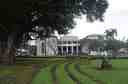
Right in front of you is Kalākaua Park-a wide open green space at the heart of Hilo, easily spotted by its sweeping lawn, massive old banyan tree on the left, and the striking white columns of a historic building across the way. Picture yourself stepping onto this soft green grass where the breeze rustles those huge banyan leaves overhead-trust me, you can’t miss the thick, twisting roots or those hanging branches! This park is like Hilo’s living scrapbook, packed with stories from long ago to today. Let's rewind nearly two centuries. Back in 1825, this very ground was the site of the first Christian Mission in the area, set up by hopeful missionaries at Queen Kaʻahumanu’s urging. The land was later handed over to the territorial government, and soon, the sheriff himself was living in a grass house right here-before he upgraded across the street, where the East Hawaii Cultural Center stands now. Imagine, if you will, a Maine-built, wooden courthouse popping up in 1868, shipped all the way across the ocean and pieced together here. Kings and queens, like Queen Emma and King David Kalākaua, once stood on its lanai to make royal proclamations. If you glimpse the old sundial in the park, that’s a direct link to those moments of royal history. As Hilo grew, this spot took on the flavor of a New England town square, surrounded by grand civic buildings and busy streets. Old courthouse walls were pulled down and the stones repurposed to build Waianuenue Avenue-Hilo folks have always been resourceful, and maybe even a bit thrifty! By the early 1930s, the courthouse and the old sheriff’s place were replaced, paving the way for today’s East Hawaii Cultural Center. Hilo’s own park commissioners wanted to turn this place into a community heart, so they brought in expert help to shape the land-keeping that giant banyan tree at the west end. Funny story: that banyan tree, planted in 1882, almost faced the axe after busting a water main. It survived, of course, because even a chainsaw knows better than to mess with a 140-year-old tree! As World War II stormed the world, bomb shelters crowded the park, and after the war, a beautiful white marble monument rose up on the east end, inscribed with the names of local heroes who gave their lives. The main figure, a winged fighting man, stands watch, his wings spreading the promise of peace. At its dedication in 1948, hundreds gathered in silence as a father who lost two sons gently unveiled the memorial, making it a powerful place of memory. But don’t miss the park’s star: the bronze statue of King Kalākaua himself, dedicated in 1988. Unlike most statues, Kalākaua sits, holding a taro leaf and an ipu-symbols of his bond with the land and his love for ancient Hawaiian culture. The sculptor, Henry Bianchini, worked nonstop to finish the piece before the big reveal, even shipping parts between Hawaii and California. There's even a time capsule tucked beneath the king, waiting patiently to be opened at a future solar eclipse. That pond you see was once threatened with disco-era colored lights, but Hilo’s traditional side won out-so you get quiet reflections and lily pads instead. And all around, you’ll see markers and plaques from later wars, each name a story, each stone a memory, showing why this park isn’t just grass and trees-it’s Hilo’s heart, holding centuries of joy, loss, and island aloha. So soak it all in, listen for echoes of royal footsteps or the quiet hope for a peaceful future, and just imagine who else might’ve stood right where you are now.
打开独立页面 →To spot the Naha Stone, just look for an enormous, dark volcanic rock slab resting right on the grass near the roadside beside the Hilo Public Library-it’s hard to miss, given its…阅读更多收起
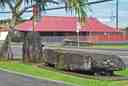
To spot the Naha Stone, just look for an enormous, dark volcanic rock slab resting right on the grass near the roadside beside the Hilo Public Library-it’s hard to miss, given its massive size and ancient presence. Picture yourself hundreds of years ago, deep in the Hawaiian islands. The Naha Stone began its journey on the lush banks of the Wailua River over on Kauai, and traveled on a daring double canoe ride across the ocean to Hilo. But it’s no ordinary rock-this was a test of royal blood! When a baby claimed to be of the Naha royal line was born, they’d be set gently onto this gigantic slab. If the little one stayed quiet, congratulations-they were royal! If they cried, sorry, your royal dreams were dashed faster than you could say “lava flow.” Only true Naha were said to even move this sacred stone. Then came a twist of legend: whoever could flip this massive boulder would someday unite all Hawaii. Young Kamehameha, built like a superhero in training, made several attempts before finally moving it at about age 14. Imagine the grunts, the sweat, the drama! Today, the Naha Stone sits peacefully, heavy with secrets and legends, right in front of the library-its story firmly rooted in the ground of Hilo.
打开独立页面 →You’re looking for a tall, pale pink church with a clock tower and bell, surrounded by coconut palms and a line of cheerful potted palms leading up the steps to its…阅读更多收起
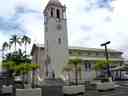
You’re looking for a tall, pale pink church with a clock tower and bell, surrounded by coconut palms and a line of cheerful potted palms leading up the steps to its entrance. Standing in front of Saint Joseph Catholic Church, pause and take in the tropical sunlight bouncing off its pastel walls! This parish-part of the Roman Catholic Diocese of Honolulu-is a spiritual anchor for Hilo, watched over by Bishop Clarence “Larry” Silva. Whisper a quick hello to Saint Joseph, the Worker, whose humble guidance is said to keep the parish industrious and maybe a little extra lucky during big bake sales. The church isn't just about Sunday service-it’s at the heart of a lively campus, with Saint Joseph School and a library both buzzing with the laughter and dreams of students. From the smell of incense drifting through stained-glass windows to the echoes of children’s feet hurrying to class, the building is a living mosaic of faith, study, and celebration. Locals claim the front steps have seen everything from festival parades to dramatic rainstorms that had everyone-priests included-rushing inside, robes flying! Whether you’re seeking quiet reflection or just curious about the next chapter in Hilo’s story, Saint Joseph’s doors (and parking lot coconuts) have probably seen it all.
打开独立页面 →To spot the Lyman House Memorial Museum, look for a large white two-story house with green shutters, a wraparound balcony, and a white picket fence surrounded by palm…阅读更多收起
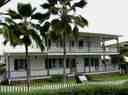
To spot the Lyman House Memorial Museum, look for a large white two-story house with green shutters, a wraparound balcony, and a white picket fence surrounded by palm trees. Imagine it’s 1838, and this house is brand new-built by Reverend David Lyman and his wife Sarah, both fresh off the boat from chilly New England, probably sweating in woolen clothes as they hammered together Hawaii’s very first wood-framed house on the island! Constructed with beautiful native koa and ohia wood, their home soon became a busy crossroads for travelers like Mark Twain and Isabella Bird, where stories and laughs floated out those old shutters. Just across the street, the Haili Church was rising, shaking off its thatched past and swapping grass for grandeur. Fast-forward to the 1960s: a shiny new building next door was designed by architect Vladimir Ossipoff to hold the growing collection-by then, the Lyman family legacy had gone full museum mode, showing off treasures like sparkling minerals, shells, and the only piece of orlymanite named for Orlando Lyman himself. Even the mighty Smithsonian wanted in, so in 2002 they linked up. Today, as you stand here, this is not just the oldest wood house around-it’s living proof that big ideas (and occasionally big bugs) can outlast centuries.
打开独立页面 →
常见问题
如何开始导览?
购买后,下载 AudaTours 应用并输入您的兑换码。导览将准备好立即开始--只需点击播放并按照 GPS 引导的路线行驶即可。
导览期间我需要互联网吗?
不需要!开始前下载导览并完全离线享受。只有聊天功能需要互联网。我们建议在 WiFi 下下载以节省移动数据。
这是导游带领的团体游吗?
不是--这是自助语音导览。您按照自己的节奏独立探索,通过手机播放音频解说。没有导游,没有团体,没有时间表。
导览需要多长时间?
大多数导览需要 60-90 分钟才能完成,但您完全控制节奏。随时暂停、跳过站点或休息。
如果我今天无法完成导览怎么办?
没问题!导览具有终身访问权限。随时暂停和恢复--明天、下周或明年。您的进度已保存。
有哪些语言可用?
所有导览均提供 50 多种语言版本。在兑换代码时选择您的首选语言。注意:导览生成后无法更改语言。
购买后我在哪里访问导览?
从 App Store 或 Google Play 下载免费的 AudaTours 应用。输入您的兑换码(通过电子邮件发送),导览将出现在您的资料库中,准备下载并开始。
如果您不喜欢该导览,我们将退款。请联系我们 [email protected]
安全结账使用 


