

尤里卡语音导览:豪宅、杰作与航海故事
仰望尤里卡卡森豪宅盘旋的塔楼,你凝视的是美国被拍摄次数最多的维多利亚式建筑——但在那些华丽的尖顶之下,隐藏着相机从未捕捉到的秘密。 这个自助语音导览将带你穿梭于尤里卡历史悠久的街道,解锁许多旅行者擦肩而过的隐秘角落、大胆故事和艺术天堂。探索每个地标骨子里跳动的戏剧性、古怪和神秘。 为什么一个简单的建筑商会在E.詹森大楼内突然成为权力掮客?卡森豪宅吊灯下曾发生过怎样的令人不寒而栗的背叛,导致联盟破裂?洪堡艺术委员会的一件艺术品能否颠覆城市政治? 穿梭于绿荫斑驳的大道和精致的立面之下,尤里卡在反叛、阴谋和艺术痴迷的闪光中展现自我。每一次转弯都带来重新认识这座城市的机会。 按下播放键,直面彩绘木制品背后的一切。
导览预览
关于此导览
- schedule持续时间 30–50 mins按照自己的节奏
- straighten2.9 公里步行路线跟随引导路径
- location_on
- wifi_off离线工作一次下载,随处使用
- all_inclusive终身访问随时重播,永久有效
- location_on从 洪堡艺术委员会 开始
此导览的景点
Just to your left, you will spot a two-story wood-sided house with striking dark red trim highlighting its stacked, boxy bay windows. Built in 1885 for Thomas and Eva Ricks,…阅读更多收起
打开独立页面 →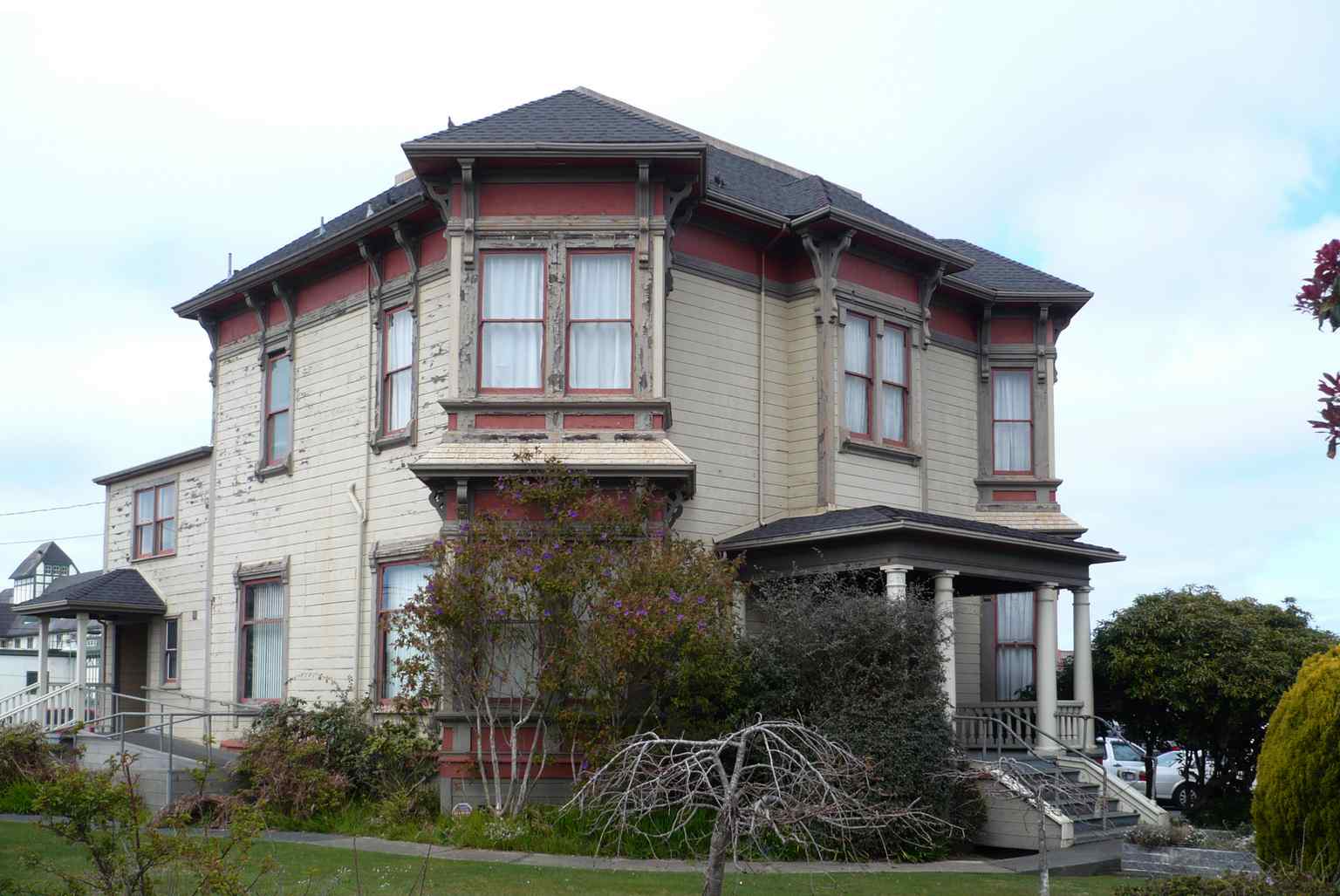
The Eastlake style exterior of the Thomas F. Ricks House, showcasing its intricate wooden details and bay windows. (2012)Photo: Ellin Beltz, Wikimedia Commons, Public domain. Cropped & resized. Just to your left, you will spot a two-story wood-sided house with striking dark red trim highlighting its stacked, boxy bay windows. Built in 1885 for Thomas and Eva Ricks, this home is Eureka's best surviving example of Eastlake style, an architectural trend famous for elaborate, geometric wooden ornamentation that mimics the look of finely crafted furniture. Notice those squared-off, angled windows pushing out from the wall. That is a symmetrical stacked canted square bay window. It is a highly technical architectural term for a perfectly balanced, mirror-image design meant to project absolute sophistication and order. But beneath this polished veneer of Victorian elegance lies the much messier story of how this town actually kept itself going. Thomas's father, Caspar Ricks, was a gritty forty-niner whose early water wells literally kept the booming, thirsty city alive. As Eureka expanded rapidly, those localized wells simply could not pump enough water to sustain the population. So, Thomas's brother Hiram stepped up to tackle the crisis. Hiram took over the family's water company and commissioned a massive thirteen-inch pipe to bring an unlimited flow of water from the Elk River, six miles away. It sounded like a brilliant solution, but the public response went horribly wrong. For the next two decades, residents furiously protested the Elk River supply, absolutely convinced that animal waste from numerous dairy farms upstream was seeping straight into their drinking water. It was a fierce, ongoing clash between the desperate need for a municipal water system and massive public panic.
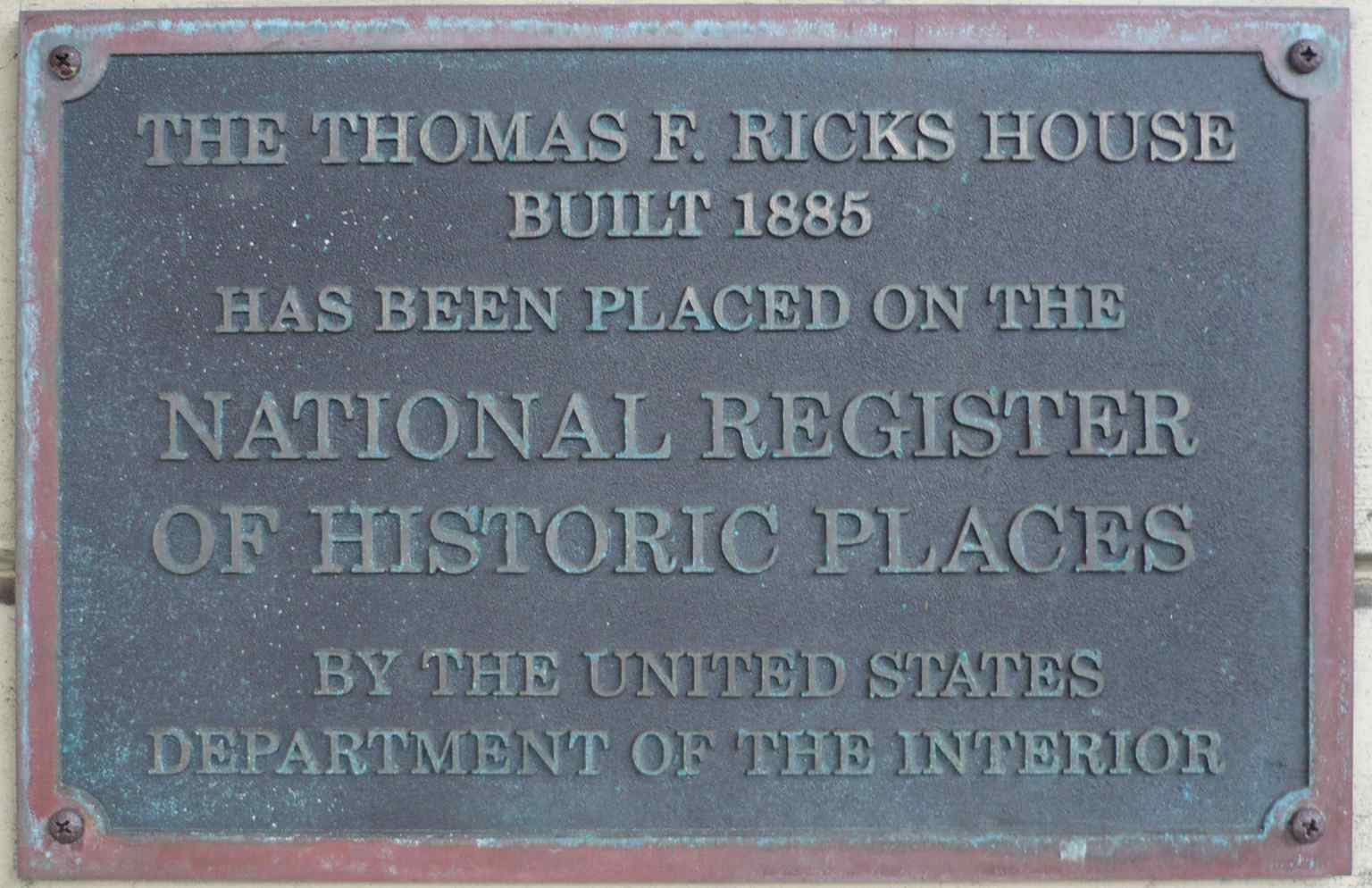
The National Register of Historic Places plaque commemorating the 1885 construction of the Thomas F. Ricks House. (2012)Photo: Ellin Beltz, Wikimedia Commons, Public domain. Cropped & resized. That constant tension between maintaining a grand facade and making difficult choices just to survive played out inside this very house, too. In 1907, the property was converted into St. Francis Hospital. Those immaculate, symmetrical Victorian parlors were immediately gutted to make room for medical wards. The facility became famous for treating injured mill workers and successfully performing groundbreaking surgeries, but behind the scenes, it suffered from terrible financial management. To avoid going entirely bankrupt, the hospital formed a radically progressive alliance. They merged with a competing clinic and gave seats on their board of directors to local labor unions, including the rough-and-tumble sawmill workers. It was a practical, gritty compromise that saved the institution and kept the doors open. Decades later, the building adapted yet again, eventually becoming the beloved permanent headquarters for the local Y.W.C.A. Now, let us head over to another historic home that stands today as the dedicated guardian of the county's fascinating memories. The Humboldt County Historical Society is just a short one-minute walk away.
再显示 7 个站点显示更少站点expand_moreexpand_less
Look to your left and you will spot a massive rectangular brick building topped with a broad roof and defined by a striking row of tall arched windows along the second floor. This…阅读更多收起
打开独立页面 →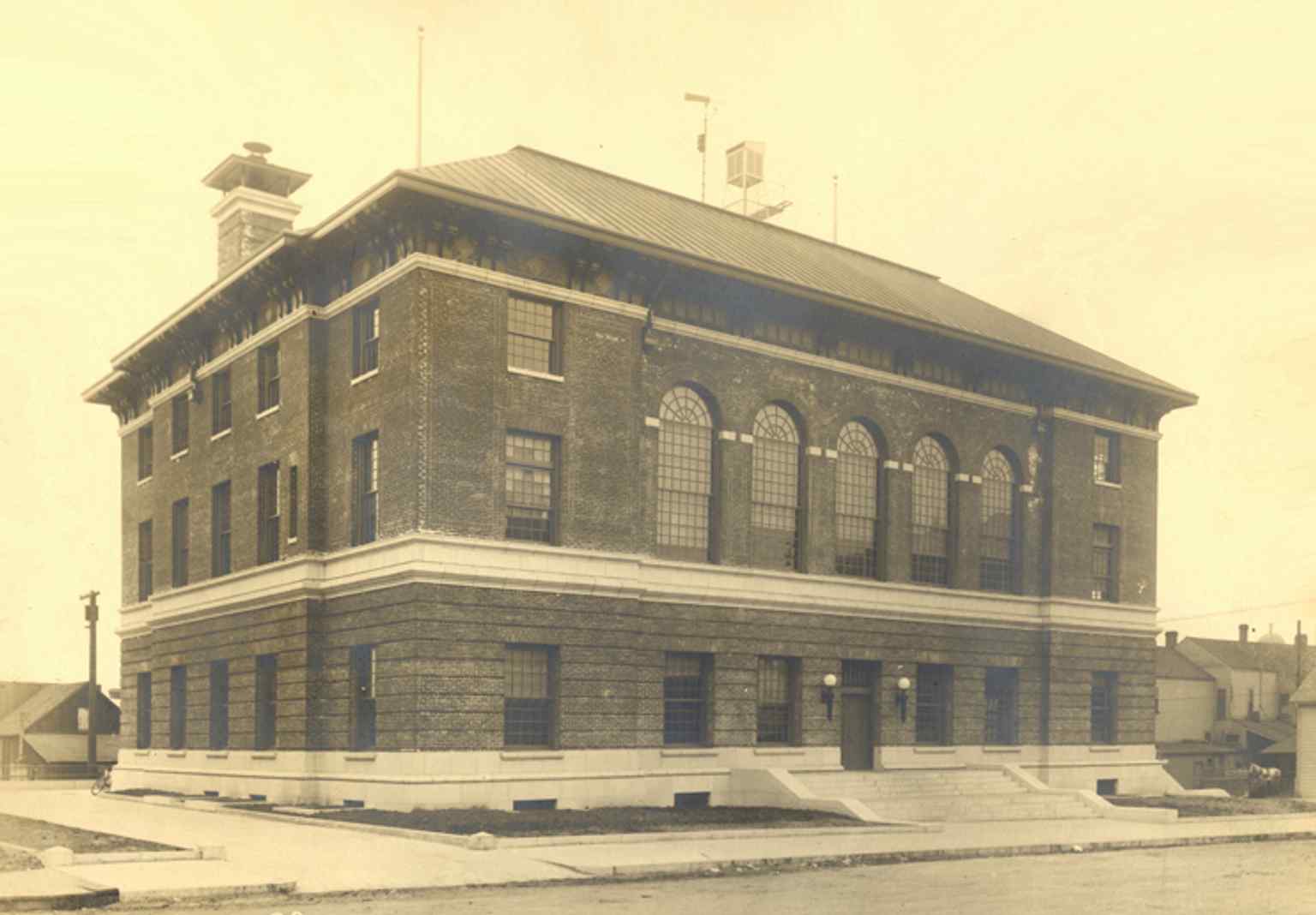
Post Office Eureka CA 1911Photo: National Archives, Wikimedia Commons, Public domain. Cropped & resized. Look to your left and you will spot a massive rectangular brick building topped with a broad roof and defined by a striking row of tall arched windows along the second floor. This is the United States Post Office and Courthouse, completed in 1910. Its architect, James Knox Taylor, designed this to be a towering example of good taste for the growing city. He used a mix of Roman Renaissance Revival and Beaux-Arts Classicism, which basically means he borrowed the grand symmetry, arched columns, and monumental presence of ancient European palaces to make the building feel completely permanent. Though, permanence is a funny thing here. It housed the United States Circuit Court for exactly two years before Congress abruptly abolished the entire circuit court system in 1912. That early architectural optimism eventually hit a wall. By the 1930s, the booming economy that built this place had collapsed. The Great Depression devastated communities nationwide, forcing the government to step in with massive relief efforts just to keep people surviving. Initiatives like the Works Progress Administration funded huge infrastructure and public art projects to ease the crushing social problems of the era. That is how this building got its most famous art. In 1938, a federal relief project commissioned artist Thomas Laman to paint five tempera murals, using a fast-drying paint mixed with a binder like egg yolk. These social realist works highlighted the region's raw economic lifelines, featuring scenes of agriculture, deer, lumbering, mining, and pelicans. Decades later in 2002, the government sold this building to a private company. Quiet plans formed to sell off those historic public murals. But a concerned citizen caught wind of the secret sale and tipped off a federal agent. The General Services Administration swooped in, launched a full investigation, and legally reclaimed the art for the public trust. The murals are safely displayed in nearby McKinleyville today, while a post office and district court still operate right inside these brick walls. Now, let us head into the heart of Old Town, a six minute walk away, where the incredible booms and crushing busts of the timber industry shaped the very streets we are about to explore.
Look to your right and spot that ornate dark metal street clock standing sentry in front of a row of painted wooden Victorian storefronts, especially that distinctive pale…阅读更多收起
打开独立页面 →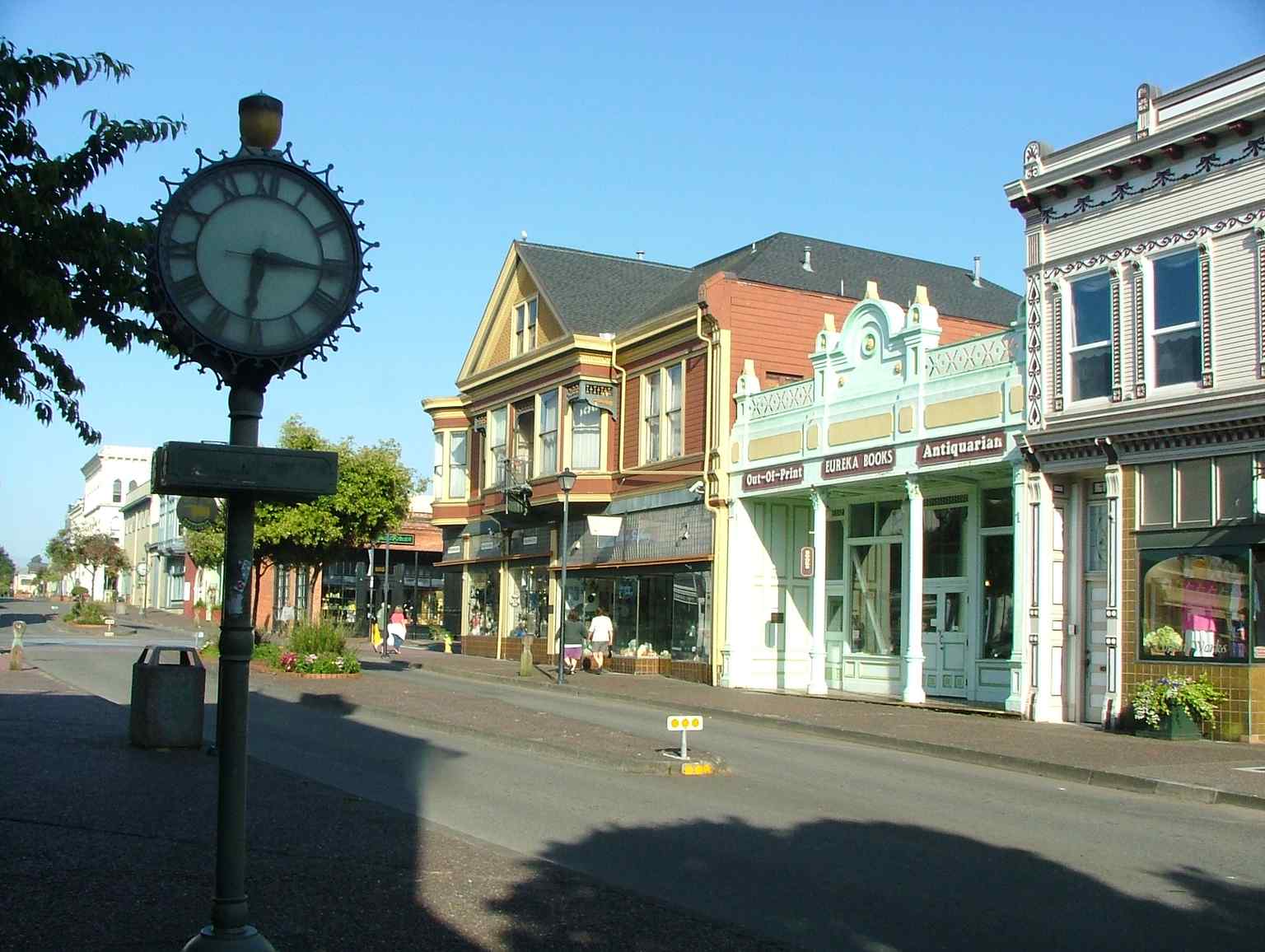
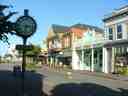
The iconic street clock stands sentry in Old Town Eureka, surrounded by meticulously preserved Victorian storefronts. (2006)Photo: Jan Kronsell, Wikimedia Commons, Public domain. Cropped & resized. Look to your right and spot that ornate dark metal street clock standing sentry in front of a row of painted wooden Victorian storefronts, especially that distinctive pale mint-green building with the elegant curved roofline. Welcome to the heart of Old Town Eureka. Long before European settlers sketched out these streets, this coastal homeland was known as Jaroujiji, inhabited by the indigenous Wiyot people for thousands of years. The eighteen fifties brought a wave of settlers hoping to supply inland gold miners. When the gold ran dry, they found a different kind of treasure standing right in front of them... the towering redwood forests. Let me introduce you to William Carson. He was a Canadian immigrant who arrived seeking Gold Rush glory, but after his mining efforts completely failed, he pivoted to the timber industry and felled what is considered the first commercial redwood tree on Humboldt Bay. That pivot worked out. By nineteen twelve, Carson had amassed a twenty million dollar fortune, equivalent to over five hundred and fifty million dollars today.
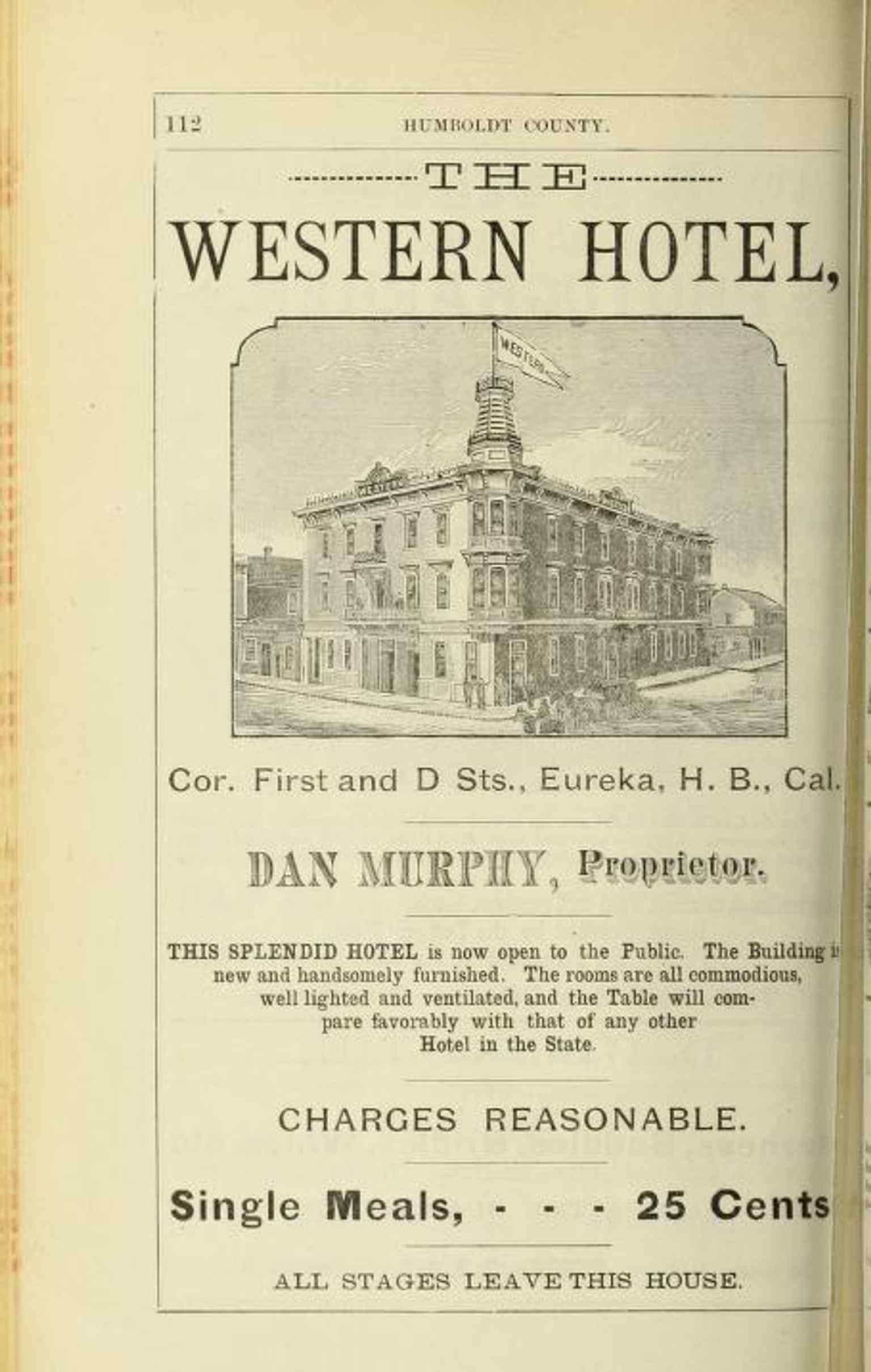
An 1885 view of the Italianate Western Hotel, complete with a horse-drawn stagecoach navigating the unpaved streets of early Eureka.Photo: Unknown authorUnknown author, Wikimedia Commons, Public domain. Cropped & resized. That massive influx of lumber money funded the incredible architecture you see up and down these streets. We are talking over one hundred and fifty buildings in styles like Queen Anne and Eastlake, which basically means they are covered in elaborate decorative wood trims, bay windows, and steep roofs. The app has a neat side-by-side showing what this place looked like back in eighteen eighty-five. You can see how quickly the muddy, stump-filled roads and horse-drawn stagecoaches transformed into modern paved streets.
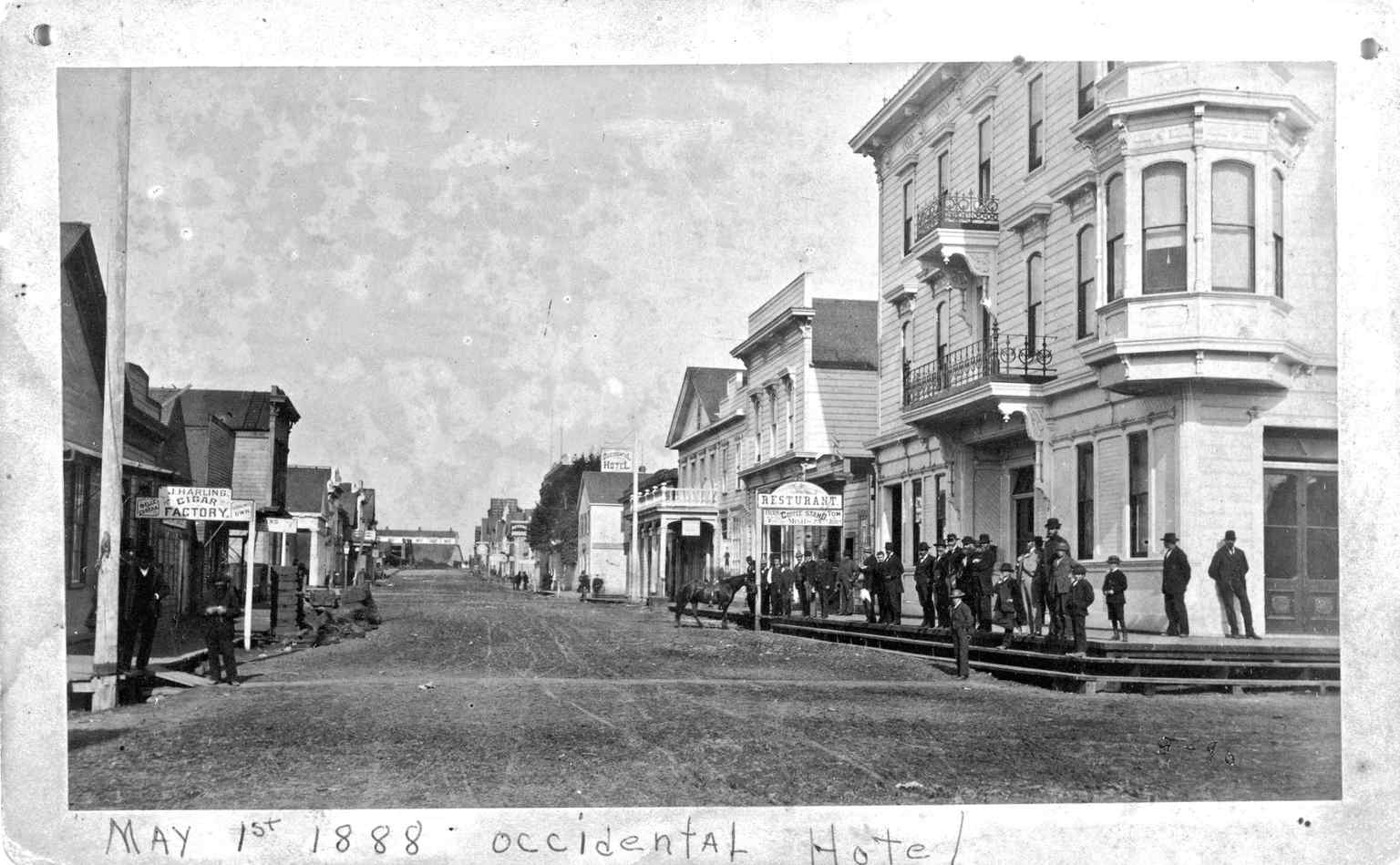
A bustling but rough 2nd Street in 1888, showcasing the volatile reality of Eureka's booming seaport days.Photo: Unknown authorUnknown author, Wikimedia Commons, Public domain. Cropped & resized. But building a grand city from raw wilderness brought intense, volatile growing pains. The booming seaport attracted diverse workers, but it also bred severe racial prejudice. In February eighteen eighty-five, a tragic accident occurred when a stray bullet from a shootout between rival Chinese gangs killed a city councilman. Local leaders seized on this tragedy. An angry mob of six hundred white vigilantes erected gallows and gave all four hundred and eighty Chinese residents just forty-eight hours to leave. They were forced onto steamships bound for San Francisco, completely erasing Eureka's Chinatown. This brutal, coordinated expulsion became known as the Eureka Method. But the expelled residents did not just accept this quietly. Fifty-six of them partnered with the Chinese consul in San Francisco to file the Wing Hing Suit. This was California's first reparation lawsuit, which is a formal legal demand for financial compensation for a suffered wrong. Though it failed because the plaintiffs were denied citizenship rights, local groups today are finally memorializing this erased community with monuments right here in Old Town.
The pursuit of wealth built these gorgeous wooden facades, but wood has one major enemy. Our next stop, the E. Janssen Building, is just a four minute walk away, and it was designed specifically to survive the most terrifying threat of the nineteenth century... fire.
Look for the two-story brick building across the street with the tall ground-floor windows separated by dark iron columns and that crisp white signboard at the top reading E.…阅读更多收起
打开独立页面 →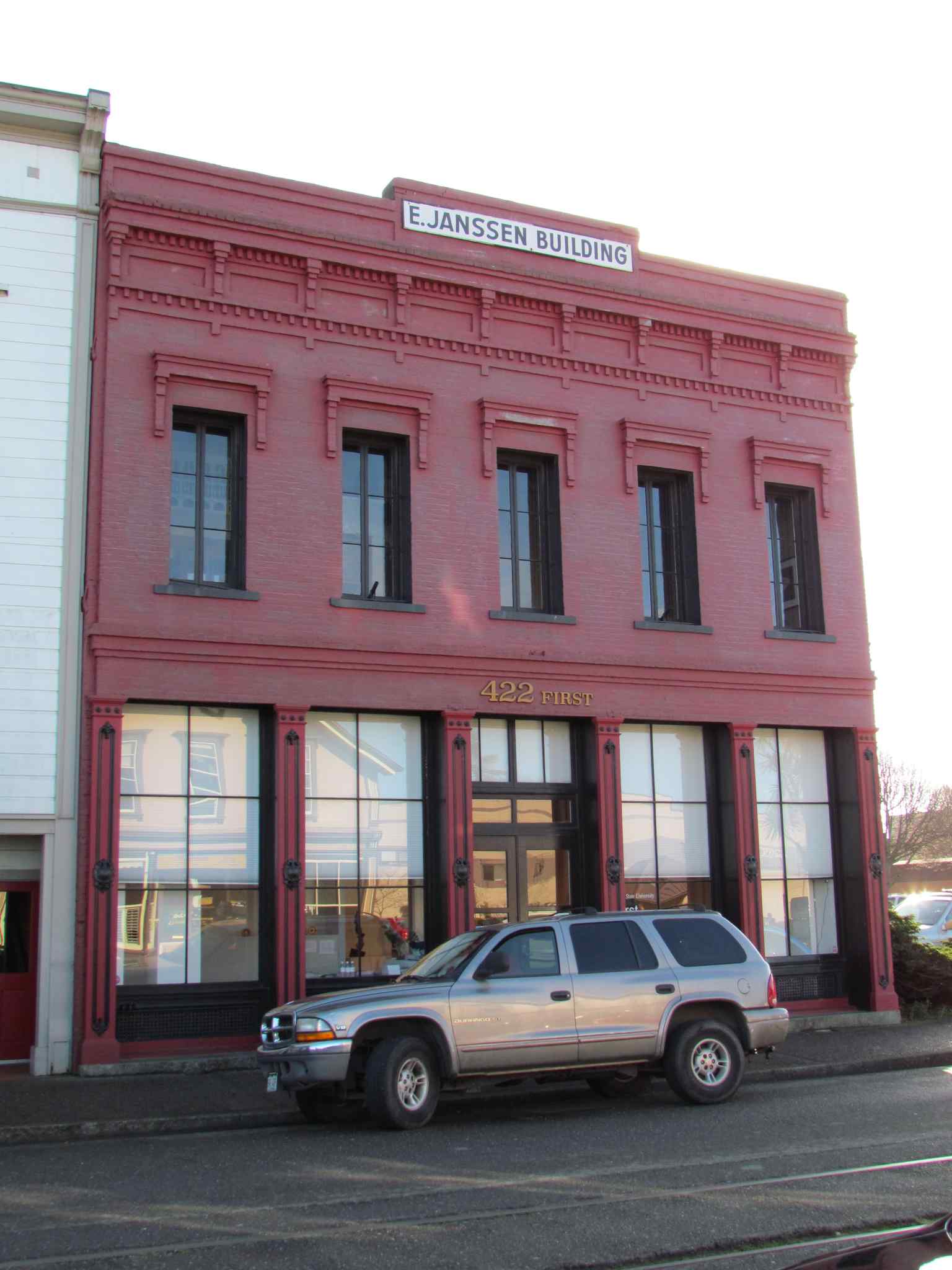
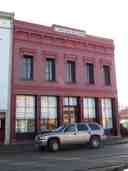
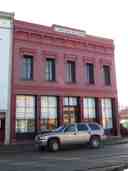
The impressive E. Janssen Building facade in 2010, showcasing its historic cast-iron columns and heavy brick exterior.Photo: JP Smith, Wikimedia Commons, Public domain. Cropped & resized. Look for the two-story brick building across the street with the tall ground-floor windows separated by dark iron columns and that crisp white signboard at the top reading E. Janssen Building.
Imagine early Eureka as a wooden tinderbox. Devastating fires routinely roared through early Western boomtowns, turning entire blocks of businesses to ash in mere minutes, which meant true survival required serious engineering. Built in 1875, this hardware and general merchandise store was a fortress, using heavy brick construction and thick metal shutters to become what was considered the very first fireproof commercial building in Eureka.
When flames advanced through the streets, shopkeepers could quickly slam those heavy metal shutters closed, instantly blocking the fire from reaching the valuable merchandise stored inside. It was a brilliant combination of industrial strength and high style. Look closely at those dark, decorative pillars separating the large glass windows. Those are cast-iron pilasters, which are essentially flattened columns built into a wall to provide support, and these were forged far to the south by the San Francisco Iron Works. They gave the storefront a sophisticated look while acting as impenetrable armor. Check your screen for a historical photo of the building in 1912.
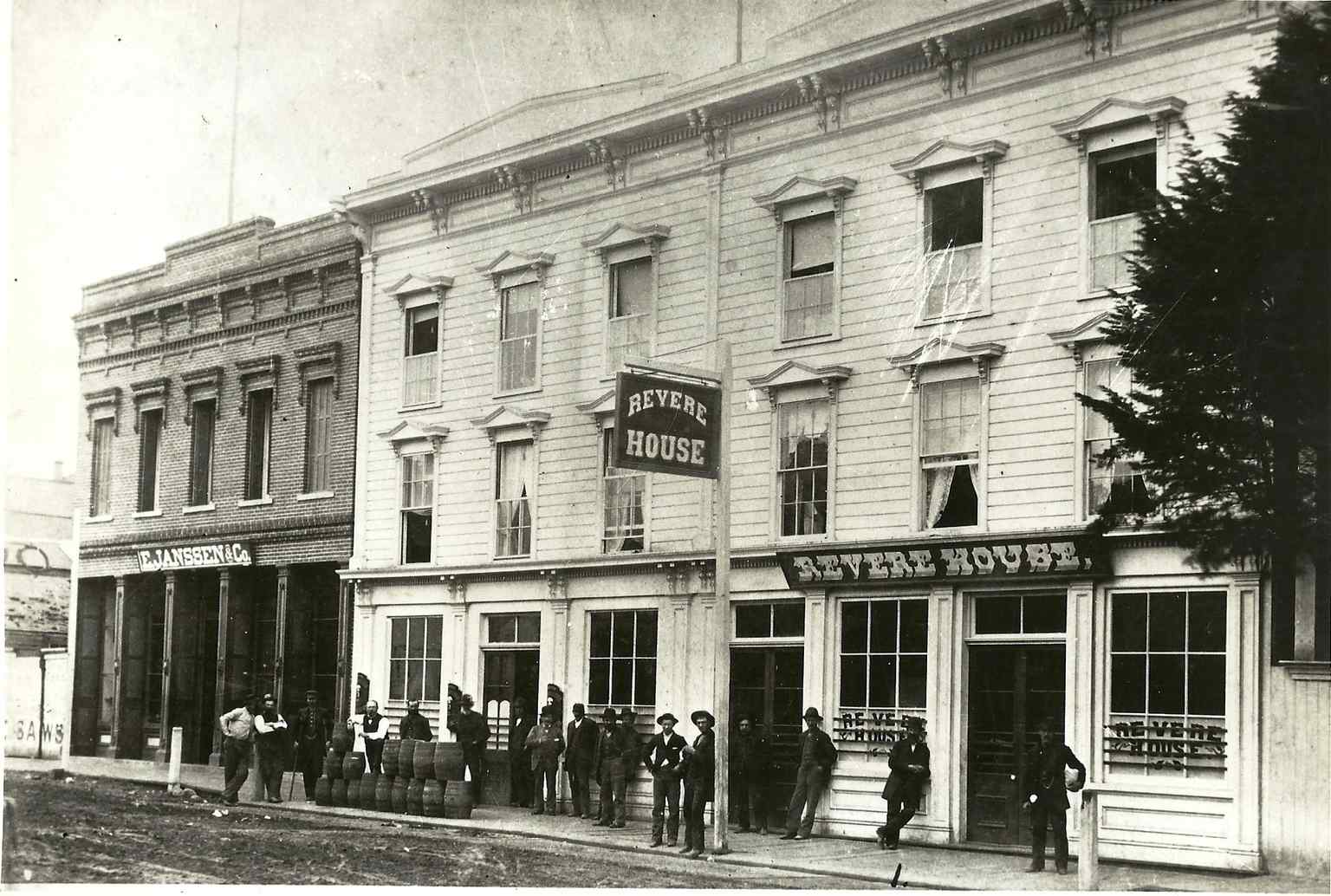
A historic glimpse of the E. Janssen Building in 1912, operating as a commercial hardware hub in early Eureka.Photo: Unknown authorUnknown author, Wikimedia Commons, Public domain. Cropped & resized. The innovations inside were just as impressive. To move massive crates of hardware up to the second-floor storage loft, this place utilized a water-operated hydraulic elevator. That was actually the very first elevator ever installed in Northern California! In 1889, a famous sea captain named Hans Henry Buhne bought the building to sell maritime supplies. His connection to the space was so strong that neighboring shopkeepers swear he never left, reporting the distinct sound of heavy, unseen footsteps echoing through the empty halls long after hours.
But while those thick brick walls could protect this magnificent structure from catastrophic fires, they could not shield it from modern financial realities. For nearly two decades, this building enjoyed a spectacular second act as Humboldt State University's First Street Gallery. It was a vibrant, hands-on laboratory where college students learned to curate professional art exhibitions, drawing thousands of visitors to Old Town. Sadly, severe university budget cuts struck in recent years, and the university was forced to vacate the historic space. The struggle to keep these grand historic buildings alive is constantly shifting from physical survival to economic survival.
But the artistic spirit of this neighborhood is incredibly resilient. We are going to follow that creative trail next, with just a short four-minute walk to our next stop, the HSU First Street Gallery.
Look to your right for the striking two-story red brick structure with tall rectangular windows and the E. yan-suhn Building sign perched proudly right on top. We just talked…阅读更多收起
打开独立页面 →Look to your right for the striking two-story red brick structure with tall rectangular windows and the E. Janssen Building sign perched proudly right on top.
We just talked about the beautiful bones of this 1875 hardware store, but starting in 1998, it housed something truly magical. For two decades, this space was the HSU First Street Gallery. It brought vibrant new life to the historic brick walls, transforming an old commercial space into Eureka's cultural epicenter.
The gallery director, Jack Bentley, had a brilliant vision. He wanted to bridge what he called the town gown divide. That is a phrase used to describe the social and cultural gap between a university campus and the everyday residents of the town it sits in. Bentley believed art belonged right here on the bustling streets, not just locked away in academic ivory towers. And the community completely agreed. The gallery drew over twenty six thousand visitors every single year.
The exhibitions were incredibly powerful. In 2015, they hosted a visiting artist named Ana Teresa Fernandez. She performed a haunting piece called Erasure, where she slowly painted her entire body black against a black background. It was a devastating act of mourning for forty three college students from Ayotzinapa, Mexico, who had recently been kidnapped and murdered. Through shows like this, the students running the gallery tackled heavy themes like social justice and racism. They also celebrated local traditions, highlighting the region's famous ceramic arts movement led by university faculty.
But sometimes a rich culture crashes hard into harsh financial realities. Just like the historic economic downturns that emptied out so many grand Victorian buildings in the past, a modern financial crisis hit the university. In early 2018, faced with a sweeping nine million dollar budget cut, the university announced the gallery would close. The administration argued that the high rent in Old Town and the expensive supplies needed for professional art shipping were just too much to sustain. The grand old rhythm of economic highs and lows continues even today, eventually sweeping away places we love.
The community was completely heartbroken. During the farewell exhibition in September 2018, devastated visitors covered the gallery walls with sticky notes expressing their sorrow. A gallery assistant noted that while the university promised to show student art in on campus galleries, those spaces just did not have the vital foot traffic that this downtown spot provided for aspiring young artists. The tension between needing money to survive and wanting to maintain a grand public space is a story as old as Eureka itself.
Let us keep walking. We are heading toward a fascinating spot a nine minute walk away. I will meet you at the Carter House Inn, where we will explore a modern building that perfectly mimics the past.
Look to your left for a towering pale yellow wooden building with peach trim, distinguished by its steep gabled roof and a grand staircase leading up to heavy double wooden doors.…阅读更多收起
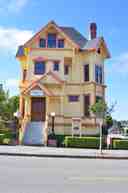
打开独立页面 →Look to your left for a towering pale yellow wooden building with peach trim, distinguished by its steep gabled roof and a grand staircase leading up to heavy double wooden doors. This is the Carter House Inn, and its story is absolutely incredible. You might look at this elegant structure and assume it has stood here since the eighteen hundreds, but this Queen Anne style Victorian is actually a modern replica completed in nineteen eighty two.
The house that inspired it was originally designed by the famous nineteenth century builder architects Samuel and Joseph Cather Newsom. That original structure stood in San Francisco until it was completely destroyed by the devastating fires following the nineteen oh six earthquake. Fast forward to nineteen seventy eight, when a young local remodeler named Mark Carter was browsing through a Eureka thrift store. Miraculously, he stumbled across the original blueprints. Rebuilding it here became a unique form of historical dedication. He bought a plot of land and spent four painstaking years building his dream family home from scratch.
But bringing that lavish aesthetic back to life came with a heavy cost. Sourcing and recreating the intricate Victorian wood moldings, those highly decorative wooden trims that frame the walls and ceilings, was incredibly expensive. The project quickly spiraled over budget. To save his massive investment from financial ruin, Carter had to reluctantly open his five bedroom home to paying guests. That tough pivot launched an entire hospitality empire.
Today, the Carter House Inn has expanded into five gorgeous buildings. It maintains cozy traditions like a welcoming wood fire and evening wine, making it a quiet refuge for celebrities like Morgan Freeman and Dustin Hoffman during the filming of the movie Outbreak. The inn also houses Restaurant Three Oh One. Almost thirty years ago, it became an early pioneer of the farm to table movement, pulling fresh ingredients from its own organic garden down the street. Celebrity chef Curtis Stone even made his initial mark on the American culinary scene right in that very kitchen. They also boast a massive thirty eight hundred bottle wine collection that inspired the owners to launch their own highly rated Carter Cellars wine.
Of course, balancing high end luxury and business can be complicated. In twenty twenty four, the founders entered a bitter, highly publicized divorce, leading to a fierce legal battle over hundreds of thousands of dollars and corporate control of the properties.
Through it all, the inn remains a breathtaking homage to Victorian beauty, welcoming guests twenty four hours a day, seven days a week. Now, remember those original architects, the Newsom brothers? Carter inadvertently built his replica just a short stroll away from their most famous creation. Let's head there now, because a quick three minute walk will bring us to the steps of the most legendary house in the city.
On your right, look for the towering, multi-story wooden mansion with a striking central steeple roof and an ornate wrap-around porch painted in dark green and cream. Just three…阅读更多收起
打开独立页面 →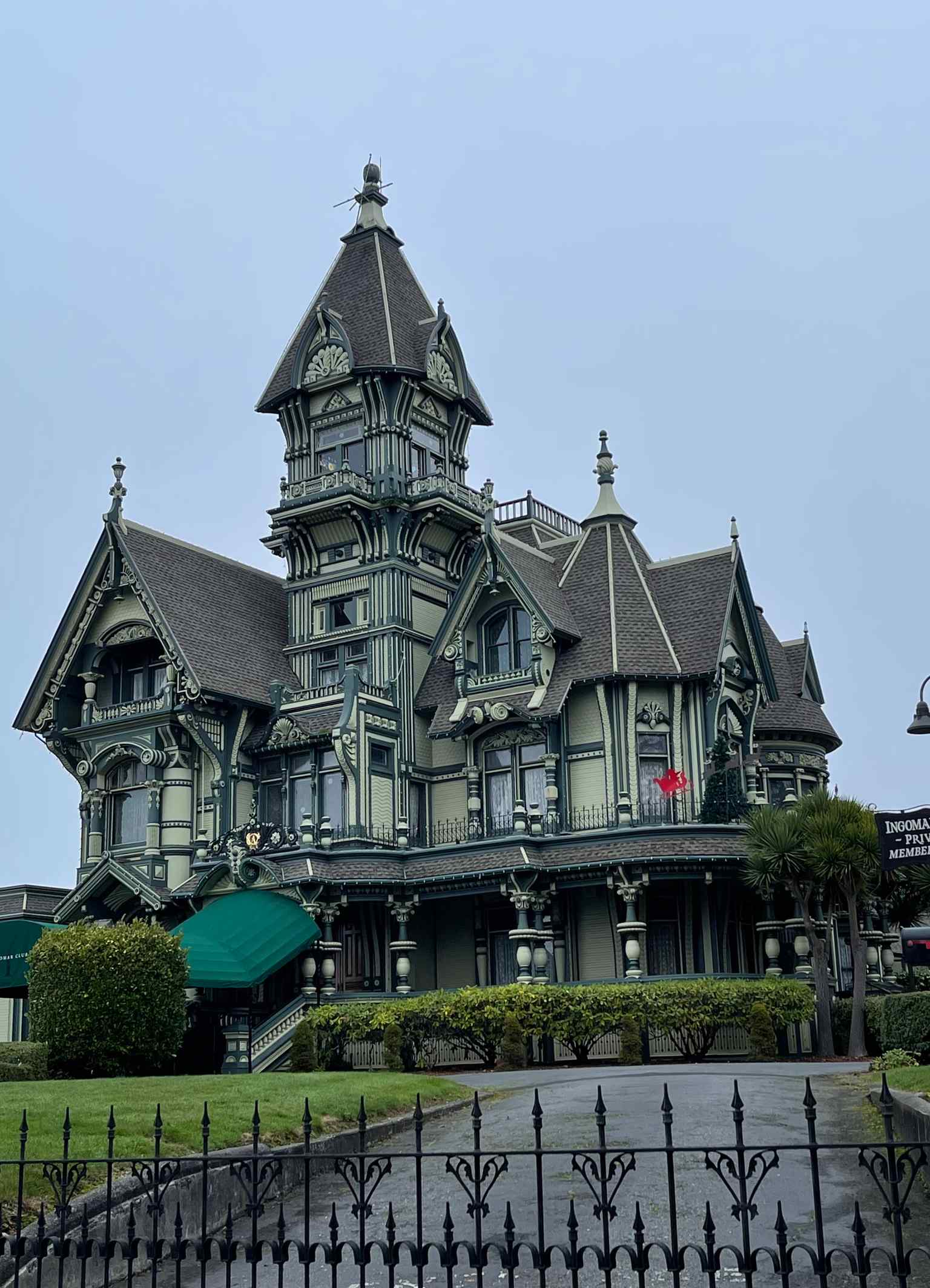
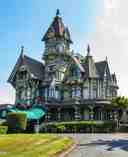
The magnificent exterior of the Carson Mansion, an intricate Queen Anne Victorian marvel photographed in 2021.Photo: Missvain, Wikimedia Commons, CC BY 4.0. Cropped & resized. On your right, look for the towering, multi-story wooden mansion with a striking central steeple roof and an ornate wrap-around porch painted in dark green and cream. Just three minutes ago we admired the Carter House Inn, which was actually designed by the very same architects who created this jaw-dropping masterpiece. This is the Carson Mansion, often called the most grand Victorian home in America. It looks like a baronial castle made entirely of redwood. It was built for the lumber baron we met earlier, William Carson. You might expect the guy who built this to be a massive show-off his whole life. But he actually lived a surprisingly quiet, unassuming life for decades. He did not even marry until he was thirty-eight, and he raised his four kids in a totally modest, simple two-story house right across the street from his lumber mill. So why did he suddenly build this sprawling, wildly extravagant palace in 1884? Well, here is the incredible twist. In 1884, the timber industry crashed into a severe economic slump. Mills were shutting down everywhere. Instead of laying off his loyal mill workers and carpenters, Carson commissioned this massive residential project specifically to keep over one hundred of his men employed. He used his seemingly unlimited budget and global shipping network to create an ultimate make-work project. To keep those skilled hands busy, he did not just use local redwood. He shipped in ninety-seven thousand feet of primavera, which is a pale, beautiful wood often called white mahogany, straight from Central America. He brought in Mexican onyx and rare woods from the Philippines. It took his crew over two years of painstaking, three-dimensional carving to finish it. Out of a brutal financial bust, they crafted an absolute explosion of Gilded Age opulence. The design is mostly Queen Anne style, which means it has an asymmetrical, highly decorative look with a lively roofscape and a mix of completely different textures. Carson supposedly said that if he built it poorly, people would call him a miser, and if he built it expensively, they would call him a show-off, so he just built it to suit himself. Today, it is owned by a private group called the Ingomar Club. For decades, it was a strict men-only establishment. That all crashed to a halt in 1974 when Ellen Stern Harris, the vice chairman of the California Coastal Commission, was flat-out denied entry at the door during a tour. She did not back down. Her refusal to be turned away sparked a four-year legal battle that finally forced the club to open its doors to women for civic and business functions. It is amazing to think how this monument of extreme wealth was actually born out of a desperate effort to save working-class jobs. Now, let us leave the grandest, most elaborate mansion in Eureka and head toward one of the humblest, oldest surviving homes in the city, the George McFarlan House, which is just a seven-minute walk away.
Look to your left for a simple, light-beige wooden house with a steeply pitched triangular roofline and a broad front porch supported by square wooden columns. Welcome to the…阅读更多收起
打开独立页面 →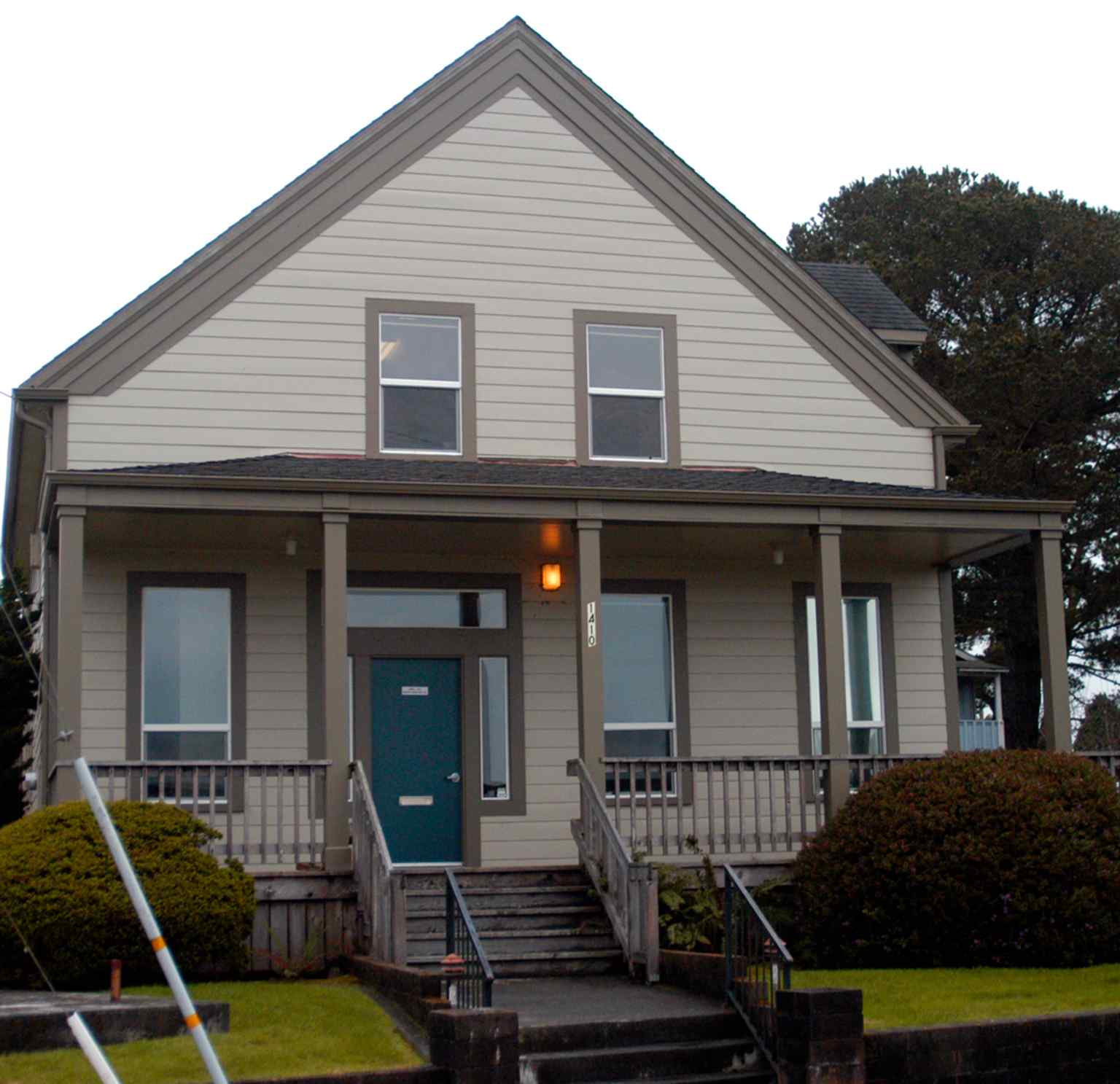
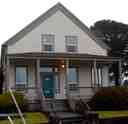
The modest George McFarlan House, one of Eureka's oldest remaining pioneer structures, pictured in 2011.Photo: Ellin Beltz, Wikimedia Commons, Public domain. Cropped & resized. Look to your left for a simple, light-beige wooden house with a steeply pitched triangular roofline and a broad front porch supported by square wooden columns. Welcome to the George McFarlan House. Just seven minutes ago we were staring up at the towering, opulent Carson Mansion, and now we are looking at something completely different. This house was built around 1857, when Eureka was just a four-year-old settlement resting on traditional Wiyot land. George McFarlan actually arrived here with William Carson. They were both pioneers from Canada who originally chased gold on the Trinity River before realizing the real wealth was in the redwood forests. But while Carson later built a sprawling redwood palace, McFarlan and his wife Catharine lived right here. It perfectly captures that early pioneer struggle, where just getting a sturdy roof over your head was a massive victory. This modest structure is designed in a salt-box style, a traditional New England seacoast design characterized by a long, asymmetrical roof sloping down the back. It was a practical choice imported by the early pioneers. But the way it was built is absolutely fascinating. The wooden boards of this house are actually numbered. That means it was either brought to Eureka in pieces like a giant puzzle, or built somewhere else and moved here. And instead of using a standard wooden frame with internal studs, builders nailed vertical one-by-twelve rough-sawn redwood boards directly onto horizontal boards to form the walls. Inside, they skipped fancy plaster and just stuck wallpaper directly onto cheesecloth, a loose woven cotton fabric, right over the rough wood. Later, an eastern wing was added using V-rustic siding, which consists of wooden planks with beveled edges that lock together to form a V-shaped groove. McFarlan was an industrial powerhouse. He helped pioneer one of the region's first logging railroads before 1858, a massive infrastructure leap that moved timber far faster than floating logs down rivers. He even owned the land that would become Sequoia Park. But his story ended in tragedy. On Christmas Eve of 1875, McFarlan was found mysteriously drowned in the frigid waters of Humboldt Bay. Catharine passed away just three years later. Yet, their humble home endured. It survived the decades, even when it fell into severe disrepair by the 1970s. In 1982, a devastating fire broke out, destroying its later additions. It is a miracle this simple wooden structure survived the kind of fires that destroyed so much else in Eureka's history. Instead of bulldozing the ruins, the community rallied. They carefully reconstructed it, honoring this pioneer artifact with the exact same dedication usually reserved for grand mansions. For years after its restoration, it even served as a maritime museum, sheltering the nautical history of the very bay that claimed its owner. Take a long look at this enduring piece of Eureka's foundation. As we wrap up our walk together, let us take a moment to reflect on all the incredible layers of history we have uncovered today.
常见问题
如何开始导览?
购买后,下载 AudaTours 应用并输入您的兑换码。导览将准备好立即开始--只需点击播放并按照 GPS 引导的路线行驶即可。
导览期间我需要互联网吗?
不需要!开始前下载导览并完全离线享受。只有聊天功能需要互联网。我们建议在 WiFi 下下载以节省移动数据。
这是导游带领的团体游吗?
不是--这是自助语音导览。您按照自己的节奏独立探索,通过手机播放音频解说。没有导游,没有团体,没有时间表。
导览需要多长时间?
大多数导览需要 60-90 分钟才能完成,但您完全控制节奏。随时暂停、跳过站点或休息。
如果我今天无法完成导览怎么办?
没问题!导览具有终身访问权限。随时暂停和恢复--明天、下周或明年。您的进度已保存。
有哪些语言可用?
所有导览均提供 50 多种语言版本。在兑换代码时选择您的首选语言。注意:导览生成后无法更改语言。
购买后我在哪里访问导览?
从 App Store 或 Google Play 下载免费的 AudaTours 应用。输入您的兑换码(通过电子邮件发送),导览将出现在您的资料库中,准备下载并开始。
如果您不喜欢该导览,我们将退款。请联系我们 [email protected]
安全结账使用 


