

比尤特语音导览:豪宅、谜团与矿工遗产
在比尤特饱经风霜的砖砌外墙背后,隐藏着鲜为人知的丑闻、叛乱和阴谋的遗产。 这个自助语音导览将带您穿梭于这座城市的底层和意想不到的角落,揭示大多数游客擦肩而过的故事。 究竟是怎样的黑暗秘密导致臭名昭著的杜马斯妓院被迫关闭?当城市濒临混乱之际,谁在庄严的迈克·曼斯菲尔德联邦大楼的法庭门后密谋?为什么一家简单的面馆会成为午夜交易和传奇盛宴的场所? 穿梭于阴暗的小巷和金碧辉煌的大厅,每一站都让您沉浸在关于罪恶、政治动荡和窃窃私语的背叛的扣人心弦的故事中。体验比尤特,它不是一座博物馆,而是一座鲜活的城市,每一块石头都值得您再三审视。 解锁比尤特的隐藏深处,开启您的冒险之旅。按下播放键——这座城市最精彩的秘密正等待着您。
导览预览
关于此导览
- schedule持续时间 30–50 mins按照自己的节奏
- straighten3.1 公里步行路线跟随引导路径
- location_on
- wifi_off离线工作一次下载,随处使用
- all_inclusive终身访问随时重播,永久有效
- location_on从 圣约翰圣公会教堂 开始
此导览的景点
You’re standing in front of the grand Mike Mansfield Federal Building and United States Courthouse, right in Butte’s historic heart-a place where federal justice, postal packages,…阅读更多收起
You’re standing in front of the grand Mike Mansfield Federal Building and United States Courthouse, right in Butte’s historic heart-a place where federal justice, postal packages, and a bit of wild frontier drama all converged! Before you is a Renaissance Revival masterpiece, completed in 1904 when Butte was buzzing with copper miners, hopeful immigrants, and enough excitement to make even the courthouse’s granite steps a bit jittery. Step back in your imagination to the early 1900s. The city thrummed with activity: miners’ shouts from nearby shafts, the clatter of horse carriages on Main Street, and the chatter of people from all over the world coming to seek their fortunes. Butte was no ordinary boomtown-it was the fourth-largest immigration center in the country. The government needed a serious building to handle all those new arrivals, legal disputes, and letters from worried mothers back in Ireland or Italy. The Supervising Architect of the U.S. Treasury, James Knox Taylor, designed this building to impress-with a façade of pale terra cotta, rusticated first stories, and decorative details carved from stone and brick that truly say, “Yes, we take our post offices very seriously!” Let your eyes wander up. See those formal rows of windows and the grand entrance steps made from coursed, cut granite? That’s the federal government making sure everyone knew who was boss in this wild copper town. Over the years, the building expanded, especially during the 1930s, when James A. Wetmore doubled its size. But don’t worry-they made sure to keep the style as sharp as a new judge’s robe. Back in the day, this building wasn’t just about stamping letters or holding court. Thousands of immigrants packed the grand courtroom, hearts pounding and palms sweaty, as they took the oath of American citizenship. You can almost hear the mix of languages, the happy shouts, and maybe a few relieved sighs. But not every moment here was filled with smiles and new beginnings. On May 21, 1924, during the height of Prohibition-yes, that grand experiment when the country tried to go booze-free-a convicted bootlegger named John O’Leary had his own dramatic plans. In a crowded courtroom, he wildly fired a gun before turning it on himself. By some miracle, the only casualty was an innocent courtroom door, still showing its bullet hole today. The judge probably needed a stiff drink, which would’ve technically been illegal. Sometimes, history writes itself with a bit of suspense and a whole lot of irony. Inside, the grandeur continues: vaulted ceilings lush with decorative plaster and marble pilasters, solid oak doors, a staircase with rose-colored marble treads, and original terrazzo floors that have weathered the footprints of postal workers, judges, and lots of worried defendants. The lobby still features marble wainscot, a testament to the elegance that once greeted letter carriers and litigants alike. The building also witnessed the city’s evolution. After the big post office moved out in 1965, the main lobby was modernized, but the courthouse’s architectural dignity survived. In 2002, the building received its current name to honor Mike Mansfield-Montana’s legendary statesman, whose career spanned from house representative to senator. You know you’ve left a mark when you earn a federal building, right? As you look at the eagle above the entrance, imagine all the comings, goings, and stories told within these sturdy walls. From wild West drama to immigrant dreams, federal decisions to local gossip-this building has seen it all. Ready to head to the next stop? Let’s keep going, but just watch out for any bootleggers with itchy trigger fingers-history has a habit of repeating itself when you least expect it!
打开独立页面 →

再显示 5 个站点显示更少站点expand_moreexpand_less
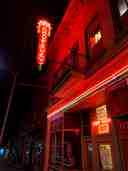
To spot the Pekin Noodle Parlor, just look up for the glowing red neon sign that says "PEKIN CHOP SUEY" hanging from the building above a narrow glass storefront on South Main…阅读更多收起
To spot the Pekin Noodle Parlor, just look up for the glowing red neon sign that says "PEKIN CHOP SUEY" hanging from the building above a narrow glass storefront on South Main Street. Now, be sure to give that neon sign a nod-it’s no ordinary sign, and this isn’t just any restaurant. You’re standing in front of the Pekin Noodle Parlor, the oldest continually operating Chinese restaurant in the entire United States. That bright glow first lit up Butte’s night sky back in 1916, and if neon could talk, it might argue it’s nearly as famous as the food inside. But let’s rewind to the late 1800s, when the hills around Butte were teeming with gold miners and the clang of pickaxes could be heard. Chinese immigrants flocked here for a chance at fortune, only to be met with suspicion and anti-Chinese sentiment. Driven out of the mines, many Chinatown families settled just steps away from where you’re standing now, turning this neighborhood into “China Alley”-a bustling stretch filled with markets, laundries, noodle parlors, and as legend would have it, the odd underground game or two. By its peak, maybe 600 people called Chinatown home, though relentless boycotts from the local labor unions forced most to leave, and by 1940, fewer than 100 remained. Amidst these challenges, two determined relatives, Hum Yow and Tam Kwong Yee, came together to open a little eatery dedicated to serving comfort to everyone from miners with pockets full of dust, to tuxedoed theater-goers. In 1911, they settled into this very spot, right on top of a storefront that once hosted herbal shops-and, depending on who you ask, some not-at-all-legal gambling in the basement. Upstairs, the entire restaurant would have looked quite different: pale green walls, lush green curtains, and an almost-tropical vibe. These days? Walk up the stairs and step into a corridor flush with salmon-orange walls, hand-built partitions, and cheery red lanterns, all designed to whet your appetite before you even see a menu-talk about color psychology! The heart of Pekin has always been its family. The Tam clan has stuffed fortune, flavor, and a little humor into every plate of chow mein or yaka mein, their famous “wet noodles.” When immigrants like Ding Kuen Tam-better known around here as Danny Wong-took up the reins, he and his wife Sharon Chu welcomed everyone like long-lost cousins. Drop in on any weekend during their reign, and you might have heard diners giggling in the semi-private booths, with servers carting out trays that boasted the taste of better times. In recent years, the Pekin Noodle Parlor has been celebrated as an American Classic by the James Beard Foundation, but some say you haven’t truly found glory until you’ve seen Danny’s original 1916 dining tables-still here, creaky and proud. This neon-lit noodle parlor is proof that even as eras change and flavors come and go, the warmth of good food and the hope of a better future still shine brightest-just like that red neon sign above you. Are you ready for the next stop, or hungry for a plate of noodles yet?
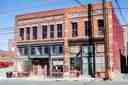
打开独立页面 →Look ahead for a two-story red-brick building with faded signs that read “Mai Wah Noodles & Chop Suey” along the top-its green and red window trims will help you spot it right on…阅读更多收起
Look ahead for a two-story red-brick building with faded signs that read “Mai Wah Noodles & Chop Suey” along the top-its green and red window trims will help you spot it right on West Mercury Street. Imagine you’re walking through Butte in the early 1900s: the smell of sizzling noodles coming from the Mai Wah Noodle Parlor, conversations drifting in English and Chinese, and stacks of imported goods crowding the Wah Chong Tai Mercantile next door. These historic storefronts were once the busy heart of America’s largest Chinatown between Minneapolis and Seattle-and if you think Montana isn’t the place for a plate of classic chop suey, you might be surprised! Chin Hin Doon traveled all the way from Guangdong, escaping famine, and by 1894 had carved out a thriving spot in Butte’s wild mix of copper and culture. His son Albert ran the shop through the decades, selling everything from tea to silk, and even offering beds to Chinese miners and merchants in need of a home (it wasn’t exactly the Hilton, but it did the trick). Today, the museum overflows with 2,500 artifacts, and the Wah Chong Tai building remains the country’s only original Chinese store of its kind. Thanks to a wave of modern support-like a grant for restoration in 2018-the spirit of Butte’s Chinatown is alive, resilient, and ready to serve up some stories with those noodles.
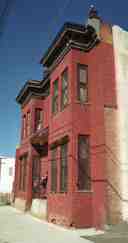
打开独立页面 →To spot the Dumas Brothel, just look for the bold red, two-story brick building with tall iron-barred windows and a small entrance stoop-right here on Mercury Street, standing out…阅读更多收起
To spot the Dumas Brothel, just look for the bold red, two-story brick building with tall iron-barred windows and a small entrance stoop-right here on Mercury Street, standing out from its pale neighbors. Welcome to one of Butte’s most notorious landmarks-and probably the only place in town where the phrase “red light district” comes with a historical tour! The Dumas Brothel, founded in 1890 by two French-Canadian brothers, Joseph and Arthur Nadeau, has seen more wild nights and tight-lipped days than most museums could ever dream of. Picture this street in the late 1800s: the city was booming, the copper mines roaring, and miners poured into town, pockets heavy with fresh wages and spirits high. The Dumas Brothel quickly became the centerpiece of Mercury Street, right in the thick of Butte’s “twilight zone.” Back then, East Galena and Mercury Street were lined with dance halls, saloons, and gambling houses, a real-life Wild West backdrop. You’re gazing at what was once the classiest-and definitely the most infamous-brothel in Butte, called the Dumas after Joseph’s wife, Delia Nadeau, née Dumas. Its bright facade housed more than just secrets; it saw decades of miners, politicians, and lovers slip through those doors. Brothels weren’t just tolerated here, they contributed good money to the city, paying the police five-dollar “fines” so often, you’d think it was a membership fee. Even mayors and senators, like Lee Mantle, had a stake in the brothel business. By 1903, the Dumas was thriving so much, they had to dig out a whole basement of “cribs”-tiny rooms for quick visits-connected by tunnels to Butte’s business corridor. Some clients arrived through the infamous Venus Alley behind the building, others snuck in directly from the sidewalk via stairs. Inside, working girls leaned out of their windows in “varying degrees of undress,” calling out to passing miners. Newspaper reports called it “abandon that has no trace of modesty”-basically, don’t expect to hear shy voices in the archives! Even reformers tried to clean up the area with new ordinances requiring longer skirts and “no indecent exposures,” but all that resulted in was “long dresses and long faces,” as grumbled in the local paper. Police, meanwhile, were a little less concerned with reform and a little more interested in their cut. Through crackdowns, World War I, Prohibition, and even a government order to shut all brothels in the 1940s, the Dumas kept its doors open-now disguised as a boarding house with a secret steel door, code words, and a “peek-and-you’re-in” policy. By the 1950s, services cost five bucks, and after a bit of tragedy involving madams and star-crossed lovers, the place ended up in Ruby Garrett’s hands. She famously paid off the cops monthly and kept the place going until 1982, making the Dumas the longest-running brothel in America-a true 92-year streak. If only loyalty cards had been a thing! When it finally shut down, the brothel changed hands: first as a museum, then an antiques shop, and now it’s being slowly restored. The Dumas is open for tours-every other Saturday, paranormal investigations included. Some say the ghost of Elinore Knott, one of its most memorable madams, never left. Guests report cold spots and mysterious footsteps in those infamous tunnels. Maybe she’s making sure no one cuts corners on the renovation! So, whether you’re into Victorian architecture, scandalous history, or just want a souvenir from arguably the naughtiest museum in Montana, the Dumas is open for curiosity-and maybe a ghost story or two. I wouldn’t recommend leaning out the windows, though; you might end up in someone’s future audio tour!
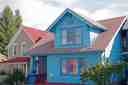
打开独立页面 →Look for a bright blue house with a brick lower story, wooden shingles up top, and a welcoming porch recessed to the left-it's set a little back from the sidewalk with a big,…阅读更多收起
Look for a bright blue house with a brick lower story, wooden shingles up top, and a welcoming porch recessed to the left-it's set a little back from the sidewalk with a big, three-section window looking right out at you. Now, as you’re standing here, imagine this street packed with the sounds of miners heading home from a tough shift, boots stomping the concrete paths on either side of this blue house. This is the Burton K. Wheeler House, home to one of America’s most independent-minded politicians. Back in the early 1900s, this wasn’t just any neighborhood-it was a tight-knit working-class community, where the next U.S. senator lived shoulder-to-shoulder with folks wielding pickaxes instead of pen and paper. Wheeler bought this house around 1908, right before taking Washington by storm. Though he quickly made enough as a lawyer to move somewhere fancy, he loved this spot-and joked it helped him score votes. It wasn’t all plain sailing. Picture Wheeler here in the 1920s, the Teapot Dome scandal rocking the headlines, as he went after corrupt prosecutors with the tenacity of a Butte bulldog. Then in 1924, he joined the Progressive Party ticket and ran for Vice President, pulling in more votes as a third-party candidate than anyone else until the wild days of 1968! Wheeler’s story didn’t stop there. He battled big shots in D.C., opposed both FDR’s New Deal at home, and the push to get the U.S. involved in World War II. Not surprisingly, standing his ground cost him his Senate seat in 1946-but he never stopped fighting for what he believed. If you’re looking for a house that witnessed bold speeches, tough decisions, and maybe even some heated dinner debates, you’re in the right spot. You might even say standing outside Wheeler’s house is like being at ground zero for political drama-Montana style.
打开独立页面 →
常见问题
如何开始导览?
购买后,下载 AudaTours 应用并输入您的兑换码。导览将准备好立即开始--只需点击播放并按照 GPS 引导的路线行驶即可。
导览期间我需要互联网吗?
不需要!开始前下载导览并完全离线享受。只有聊天功能需要互联网。我们建议在 WiFi 下下载以节省移动数据。
这是导游带领的团体游吗?
不是--这是自助语音导览。您按照自己的节奏独立探索,通过手机播放音频解说。没有导游,没有团体,没有时间表。
导览需要多长时间?
大多数导览需要 60-90 分钟才能完成,但您完全控制节奏。随时暂停、跳过站点或休息。
如果我今天无法完成导览怎么办?
没问题!导览具有终身访问权限。随时暂停和恢复--明天、下周或明年。您的进度已保存。
有哪些语言可用?
所有导览均提供 50 多种语言版本。在兑换代码时选择您的首选语言。注意:导览生成后无法更改语言。
购买后我在哪里访问导览?
从 App Store 或 Google Play 下载免费的 AudaTours 应用。输入您的兑换码(通过电子邮件发送),导览将出现在您的资料库中,准备下载并开始。
如果您不喜欢该导览,我们将退款。请联系我们 [email protected]
安全结账使用 


