
伊斯坦布尔语音导览:伊斯坦布尔徒步之旅
在伊斯坦布尔,古老的秘密隐藏在褪色的马赛克和寂静的石拱门之后。这个自助语音导览将揭示这座城市层叠的心脏,带你远离明信片般的喧嚣人群,去往帝国冲突、信仰交织之地。 什么致命的冲突曾在大公宗主教区的大厅中回荡?哪个未解之谜困扰着居尔清真寺的墙壁,其身份已争论了几个世纪?一位退位女皇为何选择埃斯基伊马雷特清真寺的顶峰,这一选择又如何改变了君士坦丁堡的命运? 漫步蜿蜒的后街,见证政治、宗教和被遗忘的生活之间的戏剧性碰撞。让悬念迭生的历史在你脚下流转,伊斯坦布尔的无声守护者将揭示阴谋、丑闻和奉献的故事。 真正的城市在其阴影中等待。现在就开始徒步,解锁他人忽视的秘密。
导览预览
关于此导览
- schedule持续时间 30–50 mins按照自己的节奏
- straighten6.2 公里步行路线跟随引导路径
- location_on
- wifi_off离线工作一次下载,随处使用
- all_inclusive终身访问随时重播,永久有效
- location_on从 君士坦丁堡普世牧首区 开始
此导览的景点
Throughout history, this church has been at the center of the Orthodox faith, serving as the mother church for many Orthodox churches worldwide. The Ecumenical Patriarch, who…阅读更多收起
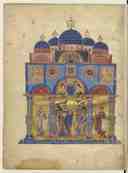
Throughout history, this church has been at the center of the Orthodox faith, serving as the mother church for many Orthodox churches worldwide. The Ecumenical Patriarch, who resides here, is considered the spiritual leader and representative of Eastern Orthodox Christians. Interestingly, while the Ecumenical Patriarchate is highly regarded within Orthodoxy, its official recognition is not recognized by the Republic of Turkey. Nevertheless, the Ecumenical Patriarchate continues to promote the expansion of the Christian faith and Orthodox doctrine, championing ecumenism, interfaith dialogue, charitable work, and the defense of Orthodox Christian traditions. In the 21st century, the Ecumenical Patriarchate faces various challenges. These include ensuring the safety of believers in the Middle East, working towards reconciliation between the Eastern Orthodox and Catholic churches, and advocating for the reopening of the Theological School of Halki, which was closed down by Turkish authorities in 1971. As you explore this landmark, take a moment to soak in its rich history and significance. From its role as the heart of the Byzantine Empire to its position as a beacon of hope and faith for Orthodox Christians, the Ecumenical Patriarchate of Constantinople stands as a testament to the enduring strength and resilience of the Orthodox Church.
打开独立页面 →As you stand here in the district of Fatih, Istanbul, you can't help but admire the commanding view it offers. Positioned at the end of the valley between the fourth and fifth…阅读更多收起
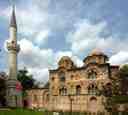
As you stand here in the district of Fatih, Istanbul, you can't help but admire the commanding view it offers. Positioned at the end of the valley between the fourth and fifth hills of Constantinople, the Gül Mosque overlooks the sparkling Golden Horn. Now, let's delve into the intriguing problem of identification that surrounds this remarkable building. Scholars have debated the dedication and construction date of the Gül Mosque, creating an air of mystery. Some believe it may have been the church of the nunnery of Saint Theodosia or the monastery of Christ the Benefactor. In the late 15th century, it was identified as the church of Hagia Theodosia en tois Dexiokratous, thanks to the research of Stephan Gerlach. However, Jules Pargoire challenged this theory at the beginning of the 20th century, proposing that it was the church of Hagia Euphēmia en tō Petriō from the reign of Basil I. More recent investigations by the German archaeologist Hartmut Schäfer shed light on the possible construction period. He estimated that the Gül Mosque was built between the late 11th and early 12th century during the Komnenian period. Schäfer also questioned the belief that this was the church where Hagia Theodosia's body was brought at the end of the Iconoclasm period. The uncertainty surrounding its history only adds to the allure of the Gül Mosque. As you explore its intricate architecture and soak in its peaceful atmosphere, take a moment to appreciate the layers of mystery that shroud this remarkable conversion from a Byzantine church to an Ottoman mosque.
打开独立页面 →Eski Imaret Mosque Stop 3: Welcome to the Eski Imaret Mosque, a truly fascinating landmark with a rich history. This beautiful mosque was actually once a Byzantine church that…阅读更多收起
Eski Imaret Mosque Stop 3: Welcome to the Eski Imaret Mosque, a truly fascinating landmark with a rich history. This beautiful mosque was actually once a Byzantine church that was later converted into a mosque by the Ottomans. It has the distinction of being the only surviving intact 11th-century church in Istanbul, making it a truly remarkable piece of middle Byzantine architecture. The church was traditionally associated with the Monastery of Christ Pantepoptes, which translates to "Christ the all-seeing." This name suggests a deep spiritual significance, as if the church had a direct connection to the eyes of God Himself. Located in Istanbul's Fatih district, specifically in the neighborhood of Zeyrek, this mosque is in a rather humble area. It's surrounded by the old walled city and is just a short distance away from the impressive Zeyrek Mosque. The identification of the Eski Imaret Mosque as the old Pantepoptes church was done by Patriarch Constantius I in the 19th century. However, there have been arguments about its true identity. Some experts, like Cyril Mango, have questioned the church's location as it doesn't provide a complete view of the Golden Horn. Mango suggested an alternative site, which is now occupied by the Yavuz Sultan Selim Mosque, as a possible location for the Pantepoptes Monastery. The history of this place is quite intriguing as well. It was around the year 1087 when Anna Dalassena, the mother of Byzantine Emperor Alexius I Comnenus, built a convent dedicated to Christos Pantepoptes on the summit of one of Constantinople's seven hills. She retired here at the end of her life, following the customs of the imperial family. The convent included the church we see today, which was also dedicated to Pantepoptes. Imagine the historical events that took place here. During the siege of Constantinople in 1204, Emperor Alexios V Doukas Mourtzouphlos even established his headquarters near this very spot. This goes to show the significance and strategic value of this area. The Eski Imaret Mosque is not as well-studied as some other buildings in the city, despite its historical importance. However, it still stands as a testament to the resiliency of Byzantine architecture and the complex layers of history that make Istanbul such a culturally rich city. Now, let's continue our journey to the next stop on our tour, the Zeyrek Mosque. It's just a short walk from here, so let's follow the path and continue exploring the wonders of Istanbul.
打开独立页面 →

再显示 6 个站点显示更少站点expand_moreexpand_less
ş) and a hospice (darüzziyafe). These additional buildings created a center for religious and educational activities, as well as a space for social gatherings and support for the…阅读更多收起
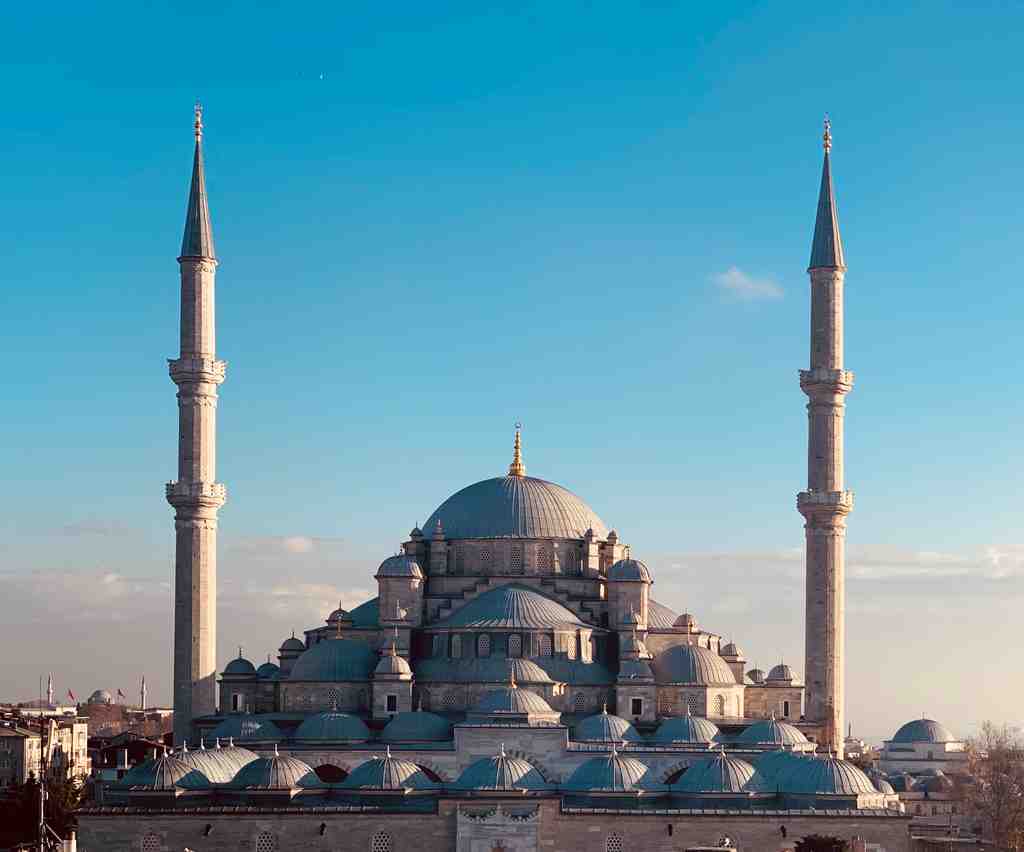
ş) and a hospice (darüzziyafe). These additional buildings created a center for religious and educational activities, as well as a space for social gatherings and support for the community. During the 1766 earthquake, the mosque suffered significant damage and was in need of restoration. In 1771, under the direction of the Ottoman architect Mimar Mehmet Tahir Ağa, the mosque was rebuilt in a different design. This new design incorporated elements of both Ottoman and Baroque architecture, creating a unique blend that showcases the cultural influences of the time. One notable feature of the Fatih Mosque complex is the Sahn-ı Seman Medrese, a theological school that was once an important center for the study of various disciplines including theology, law, medicine, astronomy, physics, and mathematics. It was founded by the renowned Turkic astronomer Ali Qushji, who was invited to the court of Mehmed the Conqueror. Over the centuries, the Fatih Mosque complex has undergone several renovations and restorations to preserve its historical and architectural significance. The most recent restoration took place in 2009 and was completed in 2021, allowing the mosque to reopen to worshippers. Today, the Fatih Mosque stands as a magnificent example of Ottoman architecture and serves as an important religious and cultural landmark in Istanbul. Its grand dome, elegant minarets, and intricate interior decorations continue to captivate visitors from around the world, providing a glimpse into the rich history and architectural heritage of Istanbul. As you explore this remarkable mosque, take a moment to appreciate the centuries of history and the enduring legacy of Mehmed the Conqueror, the great sultan who left his mark on both the city and this mosque.
打开独立页面 →completed in 550 and stood as a magnificent example of Byzantine architecture. It featured a large central dome, supported by four massive piers, and was adorned with beautiful…阅读更多收起
completed in 550 and stood as a magnificent example of Byzantine architecture. It featured a large central dome, supported by four massive piers, and was adorned with beautiful mosaics and intricate marble decorations. The Church of the Holy Apostles became not only a place of worship but also a burial site for the Byzantine emperors and their families. The Imperial Polyándreion, an underground tomb, housed the remains of numerous emperors, including Constantine himself. The splendor of the church and the significance of the burials within it added to its prestige and importance within the city. However, the church's fate took a turn with the fall of Constantinople to the Ottomans in 1453. The city was captured by Mehmed the Conqueror, who converted the church into a mosque. For a brief period, it served as the seat of the Ecumenical Patriarch, before the decision was made to move the patriarchate to the Theotokos Pammakaristos Church. Sadly, the Church of the Holy Apostles fell into disrepair and was ultimately demolished by the Ottomans in 1461. Its destruction made way for the construction of the Fatih Mosque, which stands in its place today. Although the original church no longer stands, its remains and rich history continue to fascinate visitors who come to explore the layers of Istanbul's cultural heritage. As we stand at this historical site, it's fascinating to imagine the grandeur and magnificence that once filled this space. The Church of the Holy Apostles was not only a place of worship but a symbol of imperial power, a resting place for emperors, and a testament to the rich Byzantine history. Its story reminds us of the ever-changing nature of cities and the layers of history that lie beneath our feet.
打开独立页面 →tokos Pammakaristos Church, making it the last pre-Ottoman building to house the Ecumenical Patriarchate. However, in 1591, during the Ottoman period, the church was converted…阅读更多收起
tokos Pammakaristos Church, making it the last pre-Ottoman building to house the Ecumenical Patriarchate. However, in 1591, during the Ottoman period, the church was converted into the Fethiye Mosque, which means "mosque of the conquest". Despite its conversion, the Pammakaristos Church still retains its historical and architectural significance. The Pammakaristos Church is a stunning example of Byzantine architecture, specifically the Palaiologan style. It showcases intricate details, elegant domes, and beautiful archways. As you step inside, you will immediately be captivated by the grandeur and splendor that surrounds you. One of the highlights of the Pammakaristos Church is its collection of Byzantine mosaics. These mosaics depict various religious figures and scenes, telling stories from the Bible and the lives of saints. The incredible craftsmanship and vibrant colors of the mosaics are truly awe-inspiring. Since the conversion into a mosque, the Pammakaristos Church has undergone some changes. However, it has managed to preserve its original beauty and historical significance. Today, it is partly a museum, giving visitors the opportunity to admire the stunning mosaics and learn about the rich history of this remarkable structure. Located in the Çarşamba neighborhood of the Fatih district, inside the walled city of Istanbul, the Pammakaristos Church is surrounded by an old-world charm. As you explore the area, you can immerse yourself in the vibrant atmosphere, taking in the sights, sounds, and flavors of Istanbul. So, come with me as we step back in time and discover the enchanting beauty of the Pammakaristos Church. Let the mosaics transport you to a different era, and let the history of this place captivate your imagination. There is so much to see and learn, and I promise you, this journey will be an unforgettable experience. Are you ready? Let's continue our tour to the next stop!
打开独立页面 →
常见问题
如何开始导览?
购买后,下载 AudaTours 应用并输入您的兑换码。导览将准备好立即开始--只需点击播放并按照 GPS 引导的路线行驶即可。
导览期间我需要互联网吗?
不需要!开始前下载导览并完全离线享受。只有聊天功能需要互联网。我们建议在 WiFi 下下载以节省移动数据。
这是导游带领的团体游吗?
不是--这是自助语音导览。您按照自己的节奏独立探索,通过手机播放音频解说。没有导游,没有团体,没有时间表。
导览需要多长时间?
大多数导览需要 60-90 分钟才能完成,但您完全控制节奏。随时暂停、跳过站点或休息。
如果我今天无法完成导览怎么办?
没问题!导览具有终身访问权限。随时暂停和恢复--明天、下周或明年。您的进度已保存。
有哪些语言可用?
所有导览均提供 50 多种语言版本。在兑换代码时选择您的首选语言。注意:导览生成后无法更改语言。
购买后我在哪里访问导览?
从 App Store 或 Google Play 下载免费的 AudaTours 应用。输入您的兑换码(通过电子邮件发送),导览将出现在您的资料库中,准备下载并开始。
如果您不喜欢该导览,我们将退款。请联系我们 [email protected]
安全结账使用 


