斯德哥尔摩语音导览:古老首都的神秘与传说
想象一下这座城市宏伟的立面,在秘密的过去和未竟的事业上投下长长的阴影。斯德哥尔摩很好地守护着它的故事,但并非所有故事都被锁在石头和议会大门之后。这个自助语音导览邀请您沿着蜿蜒的小巷和历史广场,解锁丑闻、权力斗争和消失的痕迹,而大多数游客只看到光鲜的传统。 在臭名昭著的费尔森谋杀案中,是什么驱使愤怒的人群在光天化日之下撕裂了一位元帅?为什么贵族院的某些雕像似乎仍在默默守护着不安的梦想?什么奇怪的仪式曾让瑞典政治在一个装满选票的袋子上摇摇欲坠? 从高耸的屋顶到闹鬼的鹅卵石街道,每一步都将您带入一个由激烈抱负和挥之不去的神秘交织而成的城市深处。隐藏的斗争、悲剧性的转折,甚至脚下顽固的鹅卵石——斯德哥尔摩的真实面貌正在等待着您。 准备好揭开帷幕了吗?按下播放键,走进斯德哥尔摩最揭秘的时刻。
导览预览
关于此导览
- schedule持续时间 60–80 mins按照自己的节奏
- straighten3.4 公里步行路线跟随引导路径
- location_on
- wifi_off离线工作一次下载,随处使用
- all_inclusive终身访问随时重播,永久有效
- location_on从 贵族院 开始
此导览的景点
Look for a grand rectangular building made of elegant red brick and stone with a green copper roof, elaborate stone decorations, and Swedish flags at its entrance-you’ll find it…阅读更多收起
Look for a grand rectangular building made of elegant red brick and stone with a green copper roof, elaborate stone decorations, and Swedish flags at its entrance-you’ll find it crowned with statues and fronted by a statue of King Gustav Vasa. As you stand before the House of Nobility, let your eyes wander up to the delicate sculptures on the rooftop, their stone gazes aimed out over the city as if keeping an ancient watch. The Riddarhuset, as it’s known in Swedish, rises with a certain pride-a monument not only to architecture, but to centuries of power, tradition, and a touch of drama. Here, you are standing where Sweden’s most influential families once gathered, their stories whispering in the wind. Not just any house, this was the headquarters for Sweden’s noble class-think knights, counts, barons, and the so-called untitled nobility, all united here since the days when Sweden had only one official knight, Sten Sture, back during the Kalmar Union. It’s not only a building but a living memory book, with the family records of the elite kept locked away, their wax seals and ink signatures capturing hopes and rivalries hundreds of years old. Now, imagine the sound of horses’ hooves clattering on cobblestone as splendid carriages rolled up to these steps in the 1600s and 1700s, delivering women in silks and men in velvet cloaks to glittering concerts or stormy political debates. The air would have been thick with candle smoke and perfume, and perhaps, on a special night, the soaring voice of Elisabeth Olin would float through an open window. She’s believed to have sung here in the 1750s, her voice mingling with the music of visiting Italian stars like Giovanni Ansani and Rosa Scarlatti, or the proud tones of the Kungliga Hovkapellet, the royal orchestra. Yet, the walls here have heard more than music. This was once a powerful political chamber for the Riksdag of the Estates, where, between the 17th and 19th centuries, decisions shaping the kingdom were debated. Imagine the tension thickening the room as noble families wrestled over war, taxes, and how much control the king should have. But the stories are not all grand entrances and political intrigue. Listen for the softer tales of those whose names were recorded behind closed doors, each entry a spark of hope for a family’s legacy. Today, the House of Nobility is a guardian of old stories-a private institution where the Assembly of Nobles still gathers every three years, just as they did back in the 1600s. Only now, the drama may be quieter, but the sense of tradition lingers. And do not forget the story woven into the very stones. The first architect, Simon de la Vallée, dreamed up this building but was killed before he could finish it. His son, Jean, took up the plans and saw them through. Just in front of you stands a statue of Gustav Vasa, proud above the words “CLARIS MAIORUM EXEMPLIS”-an invitation to remember the examples set by forefathers. North of the building, you’ll find a park and a statue of another Swedish giant, Axel Oxenstierna. The House of Nobility is more than mere stone-it’s a living echo, full of secrets and songs that belong to Stockholm’s past and present alike. Intrigued by the name, organization or the building? Make your way to the chat section and I'll be happy to provide further details.
打开独立页面 →Look for a detailed old illustration showing a chaotic crowd, men in hats with sticks raised, and a lone figure on the ground-you’ll spot it right in front of you, where people…阅读更多收起
Look for a detailed old illustration showing a chaotic crowd, men in hats with sticks raised, and a lone figure on the ground-you’ll spot it right in front of you, where people once gathered in a fervor at the edge of Riddarhustorget. Now, picture the cobblestones beneath your feet on a hot June day in 1810. The city is buzzing, thick with tension and suspicion, as crowds press against each other, voices rising and muttering with the taste of free spirits-quite literally, for that day, brännvin was flowing through the streets. All of Stockholm seemed on edge, whipped up by rumors and fueled by anger. At the center of it all was Axel von Fersen, the kingdom’s marshal, a man dressed head to toe in the brilliant white regalia of the Seraphim Order, his long grey hair falling over his shoulders just as etiquette demanded. He had refused warnings to stay away; bound by duty, but also-perhaps-a touch of pride, he climbed into a grand carriage crowned in gold and glass, pulled by six shining white horses. The day began with solemn bells, echoing across the city as church after church joined the mournful chorus for the beloved Crown Prince Karl August, whose sudden death in distant Skåne had cast a deep shadow of suspicion. Many believed he hadn’t died from a stroke, as the doctors claimed, but from poison. And the name being whispered behind every hand, scribbled in satirical pamphlets and whispered over drinks? Axel von Fersen. As the royal procession wound through Stockholm’s narrow streets, the mood curdled. Hands gripped stones, shouts of “Murderer!” cut the air, and the glare of the noon sun sparked off the jagged edges of broken glass as projectiles shattered the marshal’s ornate carriage windows. In moments, the spectacle turned savage. The angry mob surged forward, hurling sticks, coins, whatever they could grab. By Hornsgatan, the attack was relentless; by Kornhamnstorg, the violence swelled to a storm as Fersen’s carriage was battered, and on Stora Nygatan the mood was blistering with rage. Staggering, Fersen was dragged from the carriage and into a nearby house-a noisy tavern owned by a police officer named Hultgren. But inside, the threat only grew. As shouts and blows echoed off the timber walls, Fersen’s last hope was a dash across the square towards Bondeska palatset, desperate to reach the protection of soldiers from the Svea Life Guards. Amid the press of bodies, he lost his grip on his companion, called out for help-“Boys, save me!”-but the soldiers, pinned by their orders, would not move. Around him, the crowd roared, feverishly striking him again and again until, in a matter of moments, the man who had served kings lay motionless upon the street, nothing done to save him. What followed was chaos no less shocking. The mob didn’t scatter; for hours they milled under the summer sun, demanding more blood, taunting generals as they tried to restore order with cannon fire, only to be met by showers of stones. It took the threat of loaded muskets and sabers before the crowd finally, reluctantly, broke and the square fell silent. But the violence of that day lingered. For months after, Stockholm whispered of conspiracy, of bribes and hidden plots, blaming everyone from the officers on duty to the government itself. In the end, despite interrogations of nearly a thousand souls, almost no one was ever convicted; only a handful bore any punishment. Years later, the law decided: Karl August had died from natural causes, Fersen and his sister were just rumors’ unlucky victims. Yet, the shame of that day stuck-a moment often described as “the absolute bottom of Swedish dishonor.” And if you listen closely, some say on quiet nights you might yet hear ghostly footsteps in the old house at Stora Nygatan 1, where Fersen’s blood was once spilled. Some even claimed a certain shiny cobblestone-always finding its way back, no matter how many times the paving was redone-marked the place of the marshal’s fall, though now even that mysterious stone has vanished beneath decades of new pavement. As you stand here, imagine the cries, the thunder of feet, and let the shiver of history wash over you-Stockholm hasn’t forgotten what happened on this very ground. Wondering about the background, murder or the later events? Feel free to discuss it further in the chat section below.
打开独立页面 →You’re now standing outside one of the most important buildings in Sweden: the Parliament House, where the country’s biggest decisions are made. If you close your eyes for a…阅读更多收起
You’re now standing outside one of the most important buildings in Sweden: the Parliament House, where the country’s biggest decisions are made. If you close your eyes for a moment, you might imagine the sound of hurried footsteps echoing down stone corridors as politicians, briefcases clutched and papers rustling, rush to crucial debates inside these walls. This is the home of the Riksdag, Sweden’s parliament, perched proudly on the small island of Helgeandsholmen right in the beating heart of Stockholm’s old town. The marble and granite here hold secrets and stories that stretch back nearly 600 years. But the Riksdag as you see it today hasn’t always looked like this. Imagine, for a moment, the year is 1435, and Sweden is a very different place: thick forests cloaked the land and power rested with the nobility, clergy, and city-dwelling burghers. Representatives from these privileged classes gathered in Arboga, in what could be called the distant ancestor of today’s parliament. Centuries later, a new king, Gustav Vasa, shook things up. He invited a new group - the yeoman farmers - giving everyone from city merchants to countryside landowners a seat at the table. But don’t think this was immediate equality. Instead, for hundreds of years, each group stuck to its own, huddled together to debate and negotiate, wrestling for influence. Fast forward to 1866, and you would have seen an explosive moment of change. Sweden was no longer the realm of only noblemen and bishops. The old order broke apart, and the Parliament split into two chambers: an upper one, chosen by city and county leaders, and a lower one, elected directly by ordinary people. Picture two grand rooms with voices rising in heated debate, the air thick with the scent of candle wax and anticipation. But it still wasn’t quite like today. The real shift came about a hundred years later, in 1971, when the Riksdag became one big group - a single chamber with, at first, 350 seats. Suddenly, the tiniest details mattered more than ever. In 1973, a dead tie in a parliamentary vote left Sweden holding its breath, the players manipulating sacks of ballots and flipping coins to determine the nation’s fate. To avoid such dicey drama again, they lowered the number of seats to a slightly awkward 349. Ties are now almost impossible, though perhaps some lawmakers miss the thrill of those razor-edge decisions. Step into the present. When all 349 members gather here, you’d likely see a vibrant mix of faces and hear many different languages in the corridors. Nearly half are women - an impressive figure that places Sweden at the forefront of gender equality in parliaments worldwide. Some parties are even led by women, and five have a majority of female members. Days here can stretch to 66 hours a week for each member, and as you can imagine, coffee is always in high demand, fueling late-night sessions with a mix of exhaustion and adrenaline. Now, imagine a hush falls over the chamber as the Speaker - not the King anymore - rises to nominate a new Prime Minister. Tradition hangs thick in the air, yet drama always lurks under the surface. If most members reject the nominee, the hunt starts again. Even when a Prime Minister is chosen, the government can topple in a single vote of no confidence - a tool used both in suspense-filled crises and everyday political wrangling. Elections stir a feverish energy through Stockholm every four years. Citizens as young as 18 line up to vote, their choices rippling through the city and beyond. The Parliament’s election system is designed so almost every political group gets a chance, as long as it wins at least 4% of the vote. Rivals and allies emerge alike, with coalitions forming and dissolving as leaders strive to find agreement in the ever-changing landscape. Listen closely and you might catch the heavy click of chamber doors swinging open, or the hum of whispers from politicians plotting in the hallways. Sweden’s Parliament is both a living symbol of democracy and the stage for high-stakes drama, past and present intertwined. So, as you stand here today, surrounded by water and history, take a breath - you’re in the center of it all, where decisions shaping every Swedish citizen’s life begin and end. If you're curious about the name, powers and structure or the membership, the chat section below is the perfect place to seek clarification.
打开独立页面 →
再显示 17 个站点显示更少站点expand_moreexpand_less
Pause with me for a moment at the edge of Norrbro, Stockholm’s Northern Bridge. The river churns below your feet, and the square ahead stretches out in refined grandeur, but close…阅读更多收起
Pause with me for a moment at the edge of Norrbro, Stockholm’s Northern Bridge. The river churns below your feet, and the square ahead stretches out in refined grandeur, but close your eyes and listen. Can you imagine the soft echo of boots over stone, and the distant call of waterfowl skimming the surface of Norrström? You’re standing on much more than a passage of stone and arches. Here lies a stage for pageantry, secret midnight walks, and centuries of transformation-a place that has carried the footsteps of royalty, revolutionaries, and everyday Stockholmers. Norrbro connects Gamla stan, the Old Town, with vibrant Norrmalm, but this was not always the way. Go back to the year 1288. Stockholm was a rough patchwork of islands and wood, windblown and wild around the edges. The city’s very first “northern bridge” gets a mention in a royal letter from King Magnus Ladulås-yes, a bridge to Klara Monastery, but likely little more than some planks across the swirl of water, sturdy only if you believed it so. This crossing was vital, and as centuries ticked by, bigger dreams were sketched. Along these banks, wooden bridges creaked under cart wheels. Swayed by the wind and time, they followed shifting paths-sometimes more west, sometimes east-bearing names like Slaktarhusbron and Vedgårdsbron, the Butcher’s Bridge and the Firewood Bridge. By the late 1700s, Stockholm had outgrown its wobbly wood. Enter Carl Fredrik Adelcrantz, an architect with taste for drama, whose vision for Norrbro was grand: a permanent, proud stone bridge. Plans changed, as always-they do in this city. Another architect, Erik Palmstedt, was called in to shape and strengthen the idea. Eventually, in 1787, the first heavy stones were laid by King Gustav III himself, dressed for ceremony, no doubt, his boots clicking on the granite. It took nearly twenty years for the bridge you see today to take shape. The northern section, with its triple stone arches, was finished in 1797. The southern arch rolled out in 1806, and by November 1807, Stockholm had its wonder-the oldest surviving stone bridge in the city. This was no ordinary crossing. At a grand 19 meters wide, it was a marvel for its time-broad enough for crowds, bold enough for ceremony. The granite came from Plommonbacken, chipped from rock on distant Blockhusudden, and ferried into the heart of Stockholm. Pause and imagine Norrbro's heyday: gaslight posts flickering in the dusk-the very first in Stockholm, installed in 1853-casting wild reflections and a sense of modern magic. Later, electric lights blazed here for the first time. The architect Gustaf de Frumerie crafted the earliest permanent arc lamps, their glow a beacon of progress. And don’t miss the Norrbrolejonen-the proud stone lions at the northern anchor of the bridge, sculpted after ancient Egyptian models, their silent paws echoing Roman grandeur outside the Vatican but rooting this place in Swedish imagination. Norrbro was not just for crossing, but for living. Traders and shopkeepers once lined its sides in the famous Norrbrobazaar, their cries mixing with the footfall of Stockholmers strolling wide new sidewalks-the first in the city! Imagine the smells of fresh bread, the chatter of commerce, and laughter of children weaving between the stalls. Whenever the city marked a grand occasion, Norrbro carried the royal landaus and kingly processions. Parades of soldiers have still stomped here, their boots sharp and proud on stone, the crowd’s hearts fluttering in their chests. But by the late 1800s, the city’s rhythms shifted. When the Parliament took root on Helgeandsholmen, the bazaar was swept away. New bridges joined Stockholm’s islands, and Norrbro’s role as everyday crossing point faded, even as it swelled with the gravitas of royal funerals and somber processions: Olof Palme, Prince Bertil, their corteges gliding across this avenue of history. Norrbro has had hard times too. After two centuries, its old bones sagged. Stones slipped, the foundations quivered, and water crept into the Medieval Museum tucked just below your feet, the rumble of traffic above threatening its ancient stories. In 2007, Norrbro closed for a massive rescue-a delicate disassembly and rebirth, the stones numbered and replaced as needed, rusty iron pins stripped away, and modern pipes for water, power, heat and telephones snaked invisibly beneath. 300 steel jet piles were drilled deep into Brunkebergsåsen’s gravelly heart to steady this old bridge for the ages. At the grand reopening in 2010, Sweden’s Crown Princess Victoria donned a blue construction helmet, lifting the very last granite slab into place, her laughter bright as she echoed King Gustav III’s gesture centuries before. Norrbro is now restored, its granite glinting, its balustrade smooth beneath your hand. When you stroll across, you echo centuries of laughter, celebrations, tears, and dreams. Look down at the flowing water, and feel the rush of people and pasts that have crossed here. The bridge is yours-for today, and for always, part of the living heart of Stockholm. To delve deeper into the former bridges, today's bridge or the renovation, simply drop your query in the chat section and I'll provide more information.
打开独立页面 →Directly ahead, you’ll spot a sturdy stone building with a pale golden sign of a black horse above the door-this is the entrance to the Royal Armory. Imagine standing right where…阅读更多收起
Directly ahead, you’ll spot a sturdy stone building with a pale golden sign of a black horse above the door-this is the entrance to the Royal Armory. Imagine standing right where kings once stepped, their boots wet from Stockholm’s icy winters, their cloaks heavy with importance and secrets. The Royal Armory isn’t just a museum-it's a treasure chest of Sweden’s royal history, tucked inside the very heart of the Royal Palace. Picture shelves lined with shimmering armor, swords echoing with old battles, luxurious royal garments, and even a carriage or two. The shelves whisper tales from as far back as 1548, which is when the oldest records of these precious items were written down. The story takes a dramatic turn in 1628. King Gustav II Adolf, after returning from the bloody fields of Poland, didn’t want his war-stained clothes forgotten. He commanded they be kept here forever-a chilling reminder of the costs of power and the memories drenched in both sweat and glory. Since then, the collection began to grow, filling with pieces from victories, tragedies, and everyday royal life. Over the centuries, the collection moved restlessly around Stockholm, never settling for long-first to Queen Christina’s playful summerhouse, then to the grand and boldly named “Arsenalen,” and later even to other majestic palaces. In 1885, the armor and treasures returned home to the palace at last, opening their secrets to anyone curious enough to enter. As you stand here, picture the thunderous hooves of the king’s horse Streiff, whose faded remains were brought here with Gustav Adolf’s bloodied shirts from the fateful Battle of Lützen. Imagine peeking at King Karl XII’s muddy uniform or his wig, battered by wind and long journeys on horseback from Turkey. There’s even the masquerade costume King Gustav III wore on the night a masked ball turned deadly and he was assassinated. But it’s not just battles and kings. Among all these relics, you’ll also find the sapphire blue dress Crown Princess Victoria wore on her 18th birthday and quirky royal children’s toys that rattled through palace corridors centuries ago. Standing outside now, with the golden sign glinting against the stone, remember: this is where centuries of drama, intrigue, and royal spectacle have been carefully gathered and kept-waiting to unfold their stories for you, just a step beyond the door.
打开独立页面 →Look for a grand, elegant hall ahead with tall green columns, golden decorations, immense arched windows, and a lavish ceiling stretching high above-a space filled with light and…阅读更多收起
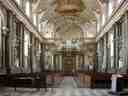
Look for a grand, elegant hall ahead with tall green columns, golden decorations, immense arched windows, and a lavish ceiling stretching high above-a space filled with light and shimmering gold. Here you are, standing before the Royal Chapel, or Slottskyrkan-a hall dripping in history, where golden chandeliers dangle and marble columns rise beside you. Imagine stepping back to 1754: the air is thick with anticipation, candlelight flickers on polished marble, and the royal family arrives in all their splendor to open both this breathtaking chapel and the entire Royal Palace. The king and queen themselves lead the way, but that day, anyone lucky enough to find a seat is welcomed to worship alongside aristocrats, courtiers, and commoners alike. Look up at the high ceilings, and you’ll see the magic of two brilliant architects: Nicodemus Tessin the Younger, who dreamed up the main designs, and Carl Hårleman, who finished the task in lush French Rococo style after Tessin’s death. Their work fills the chapel with drama-glittering gold leaf, dramatic arches, and triumphant roof paintings swirl above. But did you know that neither Hårleman nor the famed French sculptor Jacques-Philippe Bouchardon ever saw the chapel completed? Both died just a year before the grand opening-a touch of bittersweet fate lingers in the air. This wasn’t the first royal chapel on the site. In fact, before a disastrous fire in 1697, the original chapel sat on the palace’s north side. Fire swept through, destroying nearly everything, but a handful of treasures survived-the silver benches, cherub faces, and carved decorations. These relics now rest here, rescued from flames that once threatened to erase a century of royal worship. Tessin faced a puzzle as he rebuilt: the strict geometry of Baroque architecture demanded rows of matching windows, but the grand new chapel had different needs. His clever solution? A mezzanine of smaller, square windows just above the tall main ones-a visual echo of the lost old chapel, still gazing out across the city. Throughout the 1700s, the Royal Chapel was finished into a place of awe, the height of Swedish Rococo. Hårleman’s eye for Parisian luxury translated into every detail-from the colonnades lining your path, to the grand organ above the entrance. And speaking of craftsmanship, Sweden wasn’t yet known for its gilded woodwork or lush furnishings, so the king allowed a lucky few Swedish artisans to copy imported Parisian masterpieces-laying the roots of a future Swedish style as brilliant as anything from France. Take a moment to imagine the sounds echoing in here. Every Sunday and holiday since that first ceremony, hymns have soared from the organ high above, played on pipes that have evolved over centuries. The very first instrument, built in 1754, was both small and mighty, its notes swirling beneath a painted dome and “Laudate Dominum in sanctis” urging you to praise God. Later, as technology advanced, new organs were carefully tucked behind the same historic façade-a feat of engineering and artistry, reconstructed piece by piece even into the late 20th century. But there’s more… hear the soft tread on marble underfoot? That’s Italian white and Sweden’s own green Kolmård marble, holding stories for every step of the royal family, court clergy, and palace staff who gather here for weddings, ceremonies, and solemn moments. Most worshippers actually live all around Stockholm, Solna, and Lovön, united as the royal parish. Notice also the statues along the walls: apostles carved by Norwegian artist Hans Michelsen in the 1800s, standing between Corinthian columns. And gaze at the pulpit, floating above clouds, built by Bouchardon and topped with golden angels. At the altar, a drama frozen in marble: Jesus and John the Baptist, the allegorical figures of Faith and Hope, and the “white lamb” hover above. The large sculpted scene of Christ in the Garden of Gethsemane was started by one master, reworked by another, then finished at last by Johan Tobias Sergel-adding rivalry, lost sketches, and artistic triumph to this quiet space. So when you stand in the Royal Chapel, you’re surrounded by stories of royal fortune and disaster, of artists and architects whose dreams outlived them, and of a living, breathing tradition that carries forward every Sunday. It’s a place where shimmering gold and cool marble remember both tragedy and grand hope-a royal treasure in the very heart of Stockholm.
打开独立页面 →In front of you, standing tall and slender against the sky, is a pale stone pillar-a nearly 30-meter-high obelisk with a pointed top, set on a sturdy square base right at the…阅读更多收起
In front of you, standing tall and slender against the sky, is a pale stone pillar-a nearly 30-meter-high obelisk with a pointed top, set on a sturdy square base right at the center of the square outside the Royal Palace. Imagine stepping onto this cobblestone square more than 200 years ago. The air is crisp, and the entire area hums with excitement as the city gathers around a great new monument. This obelisk-soaring almost 30 meters high-wasn’t just plucked out of ancient Egypt, though it surely has that mysterious aura; instead, its story begins with gratitude, war, and kings. It was the late summer of 1790, and King Gustav III stood before the city’s officials, their faces dappled in the golden light filtering through the windows of the old City Hall. Stockholm had just survived the Russian War of 1788 to 1790, and the city’s citizens-ordinary shopkeepers, craftsmen, bakers, and their families-had been crucial in defending their home. The king, struck by their loyalty and effort, promised them a lasting symbol of gratitude, announcing for the very first time that he would gift them “an Obelisk,” carved from stone shaped by Swedish hands. It would be an enduring reminder that, when faced with peril, the city had stood proud and united. Planning dragged out for years and the king himself never saw the project finished. But his son, Gustav IV Adolf, kept the promise. In 1798, Stockholm’s best engineers and craftsmen, led by Jonas Lidströmer, broke ground at this very spot. Lidströmer was a true Renaissance man-a master mechanic dubbed “his era's Polhem”-and this was his crowning achievement. Imagine the noise and commotion as the pieces took shape: seventeen colossal rings of granite, quarried from the local bedrock, were set one on top of the other, each stone joined with iron clamps. The largest block alone weighed 40 tons, and the monument as a whole was like a giant puzzle, almost trembling under its own weight. When the obelisk was finally ready in October 1800, the city buzzed again. On inauguration day, the square was tightly packed. Soldiers stood in neat lines, forming a square around the obelisk. Inside the ranks, important figures shimmered in uniforms and medals. Suddenly, the crowd parted as King Gustav IV Adolf himself arrived, resplendent on horseback and escorted by elegant cavalrymen. He dismounted, climbed the third step, and with a steady voice, handed this monument over to the grateful city. There’s a little secret detail that sharp-eyed visitors still notice: the name Gustav IV Adolf is carved on the obelisk’s base. After his deposition, every public place with his name was scrubbed clean-except here. So while he was erased elsewhere, his gratitude to Stockholm lived on, untouched, as a quiet defiance against history’s erasure. But Stockholm’s harsh winters and rainy springs weren’t kind to the stone. The iron inside began to rust, cracks spread, and repairs became frequent and increasingly desperate. By 2012, the risk of collapse forced authorities to fence it off. Finally, in 2017, the monument was carefully dismantled. The city couldn’t use the same “Stockholm granite,” so a new obelisk took form from Bohus granite, a beautiful silvery stone, this time with a solid steel heart inside, stronger than ever before. In 2020, to much celebration, the new obelisk was unveiled, virtually identical to the original, standing as both a replica and a brand-new chapter. Even the making of this obelisk had a quirky prequel: before it was built here, a full-size wooden model was assembled just north of the city, so King Gustav III could glimpse its shape from his planned palace in Haga Park. Today, only its stone foundation remains, a ghostly footnote to this remarkable city landmark. So as you look up at the obelisk, imagine centuries of Stockholmers gathering around, each generation layering new stories over the old, united under this silent pillar of granite-a monument built from gratitude, remade from endurance, and standing resolute in the heart of the city. Yearning to grasp further insights on the history, construction and appearance or the inauguration? Dive into the chat section below and ask away.
打开独立页面 →Garden Street is a narrow, cobblestone alleyway with tall, ochre and beige walls rising up close on either side-look just ahead for the old-fashioned lanterns and the gently…阅读更多收起
Garden Street is a narrow, cobblestone alleyway with tall, ochre and beige walls rising up close on either side-look just ahead for the old-fashioned lanterns and the gently curving passage leading west toward the city’s heart. Close your eyes for a moment and listen to the faint echoes of footsteps on these stones-now open them again and picture yourself walking down Trädgårdsgatan, or Garden Street, just as it might have looked over five hundred years ago. In the early 1400s, this was not yet a street, but a series of flourishing vegetable plots. Imagine local families and the palace’s own gardeners tending to lettuces, cabbages, and sweet berries growing in the fresh Stockholm air, all neatly nestled beneath the shadow of the Royal Palace just steps away. On sunny mornings, this alley would have been alive with earthy scents and the hum of garden life, likely interrupted only by the sharp call of market vendors or the low laughter of neighbors sharing news. But there’s more. At first, people didn’t really have a proper name for this small road; it was only known as the “North Alley” or even, quite unromantically, just “the Back Alley.” For centuries its identity shifted with the city itself. In the royal gardens to your right, they once built the famous Bollhuset, a hall for playing lively ball games-imagine shouts and cheers bouncing off the stone and laughter echoing as matches were played just out of view. Sometimes the street was described as “the alley by the archbishop’s house,” depending on who you asked or what you were looking for. As centuries wore on, the story shifted again. When maps finally began to call it Trädgårdsgatan-or Garden Alley-in the 1700s, it felt as though a secret had been revealed, a whisper of its past traced in ink. And in the bustling 19th century, it even briefly became known as Police Alley when a police station opened nearby-suddenly, the quiet laughter of gardeners was replaced with the steady stride of officers. So, as you walk, take a moment to savor the blend of stories hidden in these cobblestones, where royal gardens, secret matches, and even a hint of crime and order have all left their mark.
打开独立页面 →Look just ahead and to your left and you’ll see a narrow, cobbled street lined with tall, colorful old buildings pressed closely together-this is Trångsund, and it stretches up…阅读更多收起
Look just ahead and to your left and you’ll see a narrow, cobbled street lined with tall, colorful old buildings pressed closely together-this is Trångsund, and it stretches up towards the church tower in the distance. As you stand here, imagine Stockholm over four hundred years ago-a maze of tight alleys, echoing with the sound of footsteps and church bells. Trångsund means “Narrow Strait,” and you can easily see why: the street seems squeezed between rows of historic buildings, their facades leaning in like old neighbors whispering secrets. In the past, this part of Gamla stan was even tighter; the giant church you see, Storkyrkan, was once surrounded by a graveyard and a wall that made this street feel like a secret passage. But in 1816, the wall and the graves were cleared away to open things up. Pause a moment and feel the layers of time-above your head in these quiet windows, merchants, priests, and nobility all watched life pass by. Each address hides its own story. The Stock Exchange at number 5 once buzzed with business; at number 10, Sundmanska huset, grand parties and secret meetings unfolded in 1638. Perhaps you’ll sense a shiver as you walk, not from the wind off the stones, but from the weight of centuries pressing in around you. The street is old, narrow, full of echoes-and everyone who passes through adds something to its story.
打开独立页面 →Right in front of you is a narrow, cobblestone alleyway with yellow, orange, and russet buildings, and two black lampposts marking a small iron gate to your left-this is Spektens…阅读更多收起
Right in front of you is a narrow, cobblestone alleyway with yellow, orange, and russet buildings, and two black lampposts marking a small iron gate to your left-this is Spektens Gränd, the Alley of the Spectrum. Imagine standing here over three centuries ago, the stones underfoot new, the air thick with the scents of baking bread and pipe smoke. This little passage-carved out in 1675 when the city was journeying into the future-owes its name to a merchant called Gert Specht, who bought a house here in 1685. Legend has it his family traded goods both mundane and mysterious, and people began whispering the alley carried Specht’s spirit forward in time. Step into one of its two secret courtyards and you might glimpse cast iron lions snarling in silence, their manes catching the morning light, or see the Star of David etched onto an old fence-reminders of the diverse souls that once called this part of town home. In the other courtyard, a stone portal quietly boasts the date 1667, its inscription a puzzle left behind by a vanished hand. At night, children dared each other to find the lamplighter or hear echoes of footsteps from long-gone traders. Though quieter now, Spektens Gränd still feels alive with hidden stories, waiting for you to listen.
打开独立页面 →Look for the striking, tall, deep red building with stepped gables and rows of square windows right in front of you at Stortorget square. As you stand before the proud Schattska…阅读更多收起
Look for the striking, tall, deep red building with stepped gables and rows of square windows right in front of you at Stortorget square. As you stand before the proud Schattska house, let your imagination drift back to 1650, when it first rose here as the home of Johan Eberhard Schantz, royal secretary to the king. This building is hard to miss, with its eye-catching red façade and ornate “step gable” at the top-the style is something borrowed from German and Dutch towns, which gives it a unique aura among Swedish neighbors. Now, look closer at the stone gateway. Carved onto the portal, you’ll spot two Roman-style soldiers-staring out since the age of muskets and plumed hats. Above the door, a gravely carved message whispers (in German): “Commit your way to the Lord; trust in him,” inviting those who pass under to hope for good fortune. Local legend adds a shiver of mystery to your visit. If you count the stones circling each window, you’ll find exactly ninety-four. People claim these stones are silent markers for the ninety-four souls decapitated during the bloody Stockholm Bloodbath of 1520-though historians swear it’s just a myth. Still, it’s hard not to imagine, the echoes of fate and legend tangled in the air of this old square. Step closer, and you just might feel the thrill of Stockholm’s stories brushing past you.
打开独立页面 →To spot Skomakargatan, look ahead for a gently rising, narrow cobblestone street flanked by warm yellow and tan historic buildings, with old-fashioned lamps jutting from the walls…阅读更多收起
To spot Skomakargatan, look ahead for a gently rising, narrow cobblestone street flanked by warm yellow and tan historic buildings, with old-fashioned lamps jutting from the walls as the street leads you further into the heart of Gamla stan. Now, let your imagination take you back in time as you stand here. Picture the clatter of wooden shoes echoing along this very street, for centuries ago Skomakargatan-meaning Shoemaker Street-was alive with the sounds and smells of cobblers at work. Their tiny workshops lined these walls, clusters of leather and tools visible through open windows. This isn’t just any street; it’s one of the oldest in Gamla stan, its name whispered in records as far back as 1337, always tied to the humble but essential shoemakers. In the 16th century, among these busy shops, you would have also found a royal weaving mill, buzzing with women at their looms, and two mysterious guild houses where tradespeople gathered under the watch of St. Olav and the Holy Body of Christ. Wiry men and sturdy women would sweep past you, maybe glancing up as they hurry to prayers or secret meetings. The street itself had power-parts of it used to climb as the “Shoemaker’s Slope” and even had its own gate, “Shoemaker’s Gate,” a passage into the city’s living, breathing heart. But perhaps the most enchanting tale this street has to tell is of beauty itself. Imagine, just over 200 years ago, a country girl named Pilt Carin Ersdotter strolling along Skomakargatan. Newly arrived from Dalarna, she dazzled Stockholm’s citizens with her looks-so much so that it’s said traffic quite literally stopped just to catch a glimpse. One lovesick count tried to woo her at courtly parties, and she was even summoned by the police! Her “crime?” Causing such a stir with her radiance that the street couldn’t go about its business. Yet Carin was not swayed by riches or flattery. She defied every admirer and chose to return to her true love back home, leaving Stockholm sighing in her wake and setting off a flurry of songs and legends. So look around you and let the stones beneath your feet and the golden light on the walls remind you: Skomakargatan holds the echoes of ordinary workers, scheming guilds, and a girl whose beauty brought a city to a standstill.
打开独立页面 →In front of you, you’ll see a striking church with a tall, slim green spire, rising above the rooftops-look for the distinctive copper roof and Gothic design just ahead. Welcome…阅读更多收起
In front of you, you’ll see a striking church with a tall, slim green spire, rising above the rooftops-look for the distinctive copper roof and Gothic design just ahead. Welcome to the German S:ta Gertrud’s Assembly-a place where the past seems to shimmer in the cold Stockholm air. Here, in the heart of the city, imagine the year is 1558; footsteps echo on cobblestones, and voices drift between Swedish and German as merchants and families gather around a newly formed parish just for them. This wasn’t just any church community. It was a refuge, a patch of home in a foreign land, for those with German roots and language. People here could hear prayers said in their own tongue, a comfort that must have felt like gold when winter winds howled outside. Through centuries, the sound of children laughing and the solemn notes of the organ filled these streets. Sometimes, the building itself felt like a living being, growing as the congregation swelled and shifting as Stockholm changed. It also absorbed the Dutch congregation in 1839-more languages, more stories, more warmth pressed into its old stones. But beyond the ceremonies, S:ta Gertrud’s Assembly became a true haven for generations. Imagine the bustling gatherings-music and song drifting beyond the doors, youth groups sharing meals and laughter, the unique Fishermen's friends group with teenagers huddled in winter, or the energy of young adults just beginning to find their place in the world. Every year, on Pentecost, a new crowd of young confirmands would excitedly shuffle in their seats, their eyes wide with dreams and hopes. So as you stand here today, feel the stories pressing close. This church isn’t just a landmark; it’s a living tapestry of voices, belonging, and celebration woven through centuries of community spirit and gentle tradition.
打开独立页面 →Look straight ahead for a long, multi-lane bridge stretching over the water with cars gliding in both directions-Centralbron is right in front of you, linking the heart of…阅读更多收起
Look straight ahead for a long, multi-lane bridge stretching over the water with cars gliding in both directions-Centralbron is right in front of you, linking the heart of Stockholm from north to south. As you pause here, imagine the steady hum of engines surrounding you, just as it has for decades. This is Centralbron, the “Central Bridge,” one of Stockholm’s busiest connections, stretching an incredible 1,200 meters between Norrmalm and Södermalm. Today, you’re standing near the pulsing vein of the city, where 130,000 cars race over the sparkling water every day, shadowed by the paths of rumbling commuter and freight trains. But this grand structure is the result of a century of vision and frustration. Back in the early 1900s, people drew and dreamed dozens of different bridges for central Stockholm, scribbling plans that were endlessly debated, tossed away, and lost to history-more than twenty times! It wasn’t until 1928 that an official plan took hold, but even then, Stockholm’s priorities shifted. When the elegant Västerbron bridge and the now-legendary, tangled Slussen junction opened in 1935, the need for a “central” bridge faded, and the dream slowed. For years the city made do with the awkward Slingerbultsleden, or "The Dodge Route," a temporary patchwork of crooked roads and rickety bridges snaking through Gamla Stan. You can almost imagine the frustrated sighs and the shake of a driver’s head as they navigated the crowded makeshift crossings. When World War II swept across Europe, the city’s hopes for a permanent bridge were once again shelved. But by 1947, the pressure was too much to ignore: Stockholm needed Centralbron. Construction finally began in 1950, burying the city’s old stopgap solutions as steel girders and concrete pillars rose from the soil. The southern stretch of Centralbron, finished in 1959, was a marvel-wide, strong, and built to last, crowned with the promise of a new “central” future. Its companion, the northern bridge, had to wait a little longer. Only after a notorious traffic disaster at Tegelbacken-the “Tegelbacken misery,” a clogged level crossing infamous for snarling traffic-did the city finally finish the northern section. On September 3, 1967, the reinforced concrete lane opened, bending gracefully over the railway and connecting to Klarastrandsleden. But as grand as Centralbron is, it’s not always been loved. Imagine walking along the old city’s beautiful waterfront only to be met by the rumble of cars and trains overhead, the bridge stretched awkwardly through historic scenery. Critics grumble about its “unwieldy and rumbling presence” and dreams of disappearing Centralbron into a tunnel flicker through the city’s imagination-a vision as expensive as it is daring. Billions of kronor have been quoted for such an idea, but for now, the bridge stands firm, its rhythm and roar as much a part of Stockholm as the old cobblestones downtown. Beneath your feet, the city grows and shifts. The Stockholm Metro, which opened beneath this stretch in 1957, runs deep under the bridge, carrying the city’s lifeblood-its people. And above, the old railway, once a bottleneck of frustration, was transformed in 2017 when a magnificent new tunnel-the Citybanan-opened below the surface. Step by step, Stockholm has tried to solve its traffic puzzles, sometimes replacing, sometimes preserving, always adapting. As you gaze across the water, you’re standing atop more than just stone and steel-you’re part of the dazzling, complicated, ever-changing heart of Stockholm itself. Interested in a deeper dive into the background, the southern bridge or the the northern bridge? Join me in the chat section for an insightful conversation.
打开独立页面 →Just ahead of you, Järntorget opens up as a small cobblestone square, surrounded by pale yellow and rosy buildings with tall windows, and in its center you’ll spot a decorative…阅读更多收起
Just ahead of you, Järntorget opens up as a small cobblestone square, surrounded by pale yellow and rosy buildings with tall windows, and in its center you’ll spot a decorative iron well; to find it, look for the sight of people relaxing at outdoor café tables and a column-like fountain right where the square widens. Pause for a moment and take in the energy around you, because you’re standing in the very heart of Stockholm’s oldest trade stories-a place where the voices and footsteps of merchants once echoed over the uneven stones you see underfoot. Imagine the air thick with the mingled scents of grain sacks and iron bars, fish, spice, and warm loaves just arriving by boat from the nearby harbor. Järntorget means “The Iron Square,” and there’s a reason for that. This square is nearly as old as the city itself, having developed from a simple landing place where boats met the southern shoreline. Its earliest days go all the way back to the 1300s, when the ground beneath your feet was part of a gravelly ridge crowning the old town island. Back then, the steep slopes leading down to the water were wilder, with a view over rippling water instead of cafés. Järntorget began as Korntorget, or “Grain Square,” because grain from Swedish fields flowed through this very plaza. But by 1489, as iron became the kingdom’s treasure, the name Järntorget took hold, and from then on, it was iron goods-heavy bars, destined for distant lands-that gave the square its soul. Imagine rows of tall merchant houses crowding close, their attics stuffed with trade goods, shouts of vendors advertising hides, salmon, butter, or barrels of salt and wine arriving from Germany or even England. In the Middle Ages, the square sprawled wider than you see now, encompassing the nooks and alleys that slice east and south from here-like Norra Bankogränd and Södra Bankogränd, which once bustled with wagons and porters racing goods between the harbors at Lake Mälaren and the Baltic. Along these very alleyways, the city’s official scales were housed in the southern building at Number 84, weighing every load, with a careful eye for taxes destined for the King. Fast forward to the era of Sweden’s great power, and the square comes alive with taverns and life-imagine signs creaking above doorways: the Blue Eagle, the Lion, the Sun, the Moon-places where sailors, bankers, and nobility all mingled, celebrating deals or drowning failures. By the late 1600s, grimy medieval houses were replaced with taller, prouder stone buildings, thanks to royal ambitions for a more splendid capital. The most famous of all is right here: Södra Bankohuset on Number 84, with its handsome Renaissance façade, built to inspire trust-after all, it’s the world’s oldest national bank building. Step closer and see if you spot the portal’s design, borrowed from a grand villa in Italy, meant to whisper “strength and stability” to all who entered. Look around and you’ll find more than just echoes of trade. At the center you’ll see the iron well, donated in 1829, inspired by British craftsmanship, once the key to the neighbourhood’s daily life. And don’t miss the statue of Evert Taube, Stockholm’s beloved troubadour-depicted in beret and sunglasses, sheet music in hand, he looks as if he’s striding across the stones towards a favorite haunt just around the corner. Today, people rest their elbows where workers once shouldered barrels and bankers hurried with ledgers. History clings even to the buildings: Number 80 boasts an Art Nouveau façade from the early 1900s, cast-iron columns still glinting above a corner shop where once an ironmonger sold his wares. Look up at Number 85 for a little detail: a crane on the roof, a silent reminder of the square’s cargo-hauling past. Meanwhile, the city’s oldest confectionery, Sundbergs konditori, has sweetened Number 83 since 1785, where the aroma of baking has replaced the smell of iron. So as you stand in the sun or among the shadows, let yourself hear a market in full swing, or the clatter of hooves, the laughter from an old tavern, or the lilt of a wandering song. Järntorget is less about the quiet stones and more about centuries of trade, sweat, and celebration-layer upon layer of Stockholm’s story, wrapped around you in this elegant, lively square.
打开独立页面 →To spot the landmark, look ahead for a cluster of old brick-like buildings with step-gabled roofs and a tall, sharp spire rising above them-it’s an imposing presence, right on the…阅读更多收起
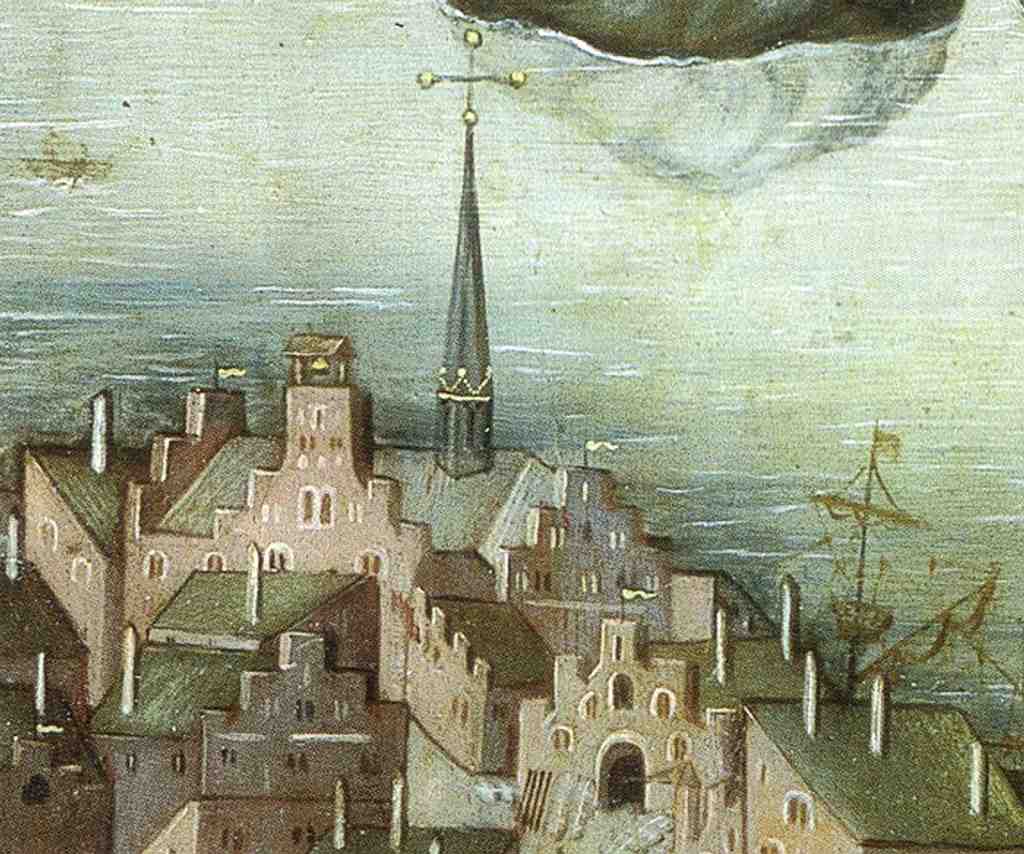
To spot the landmark, look ahead for a cluster of old brick-like buildings with step-gabled roofs and a tall, sharp spire rising above them-it’s an imposing presence, right on the edge of the historic Gamla stan near the water. You are now standing where secrets and stories from Stockholm’s distant past linger in the air. Close your eyes for a second and imagine the early 1300s: the cobbled street beneath your feet is muddy, the bitter scent of wood smoke floats through the chill, and the only soundtrack is the clatter of carts. This is where the Blackfriars-the “black brothers,” Dominican monks in sweeping black mantles with hoods-once made their home. Their order, begun by Dominicus in 1216, only reached Stockholm after decades of searching for the perfect plot. Kings and commoners alike were entangled in their journey. It wasn’t until 1336, when Magnus Eriksson, newly crowned, gifted a piece of the royal estate to the monks, that their dream became reality. Imagine the excitement as the first stones were laid near today’s Prästgatan and Österlånggatan, so close to the old city walls that you could have touched both at once. Just a year after granting the land, the king gave them a handsome pile of coins to help them finish their work. But nothing in old Stockholm was simple-strife between distant bishops and popes meant that it took nearly another decade before the pope finally allowed building to begin. Once finished, the Blackfriars’ convent wasn’t just a spiritual haven. It was the biggest ecclesiastical building in town, playing host to great royal dramas. Picture the darkness inside, stone archways echoing with the prayers of monks-a place even queens found solace. Some say the young Queen Beatrix and her son were laid to rest in its church. When a terrible fire tore through in 1407, flames lighting up the night sky, some monks lost their lives, and the air was thick with despair. Yet, Stockholm rebuilt quickly, stronger and grander. Life in the convent was a rich tapestry: monks hosting weary travelers, the cellar beneath leased out to a jolly wine merchant, the laughter and squabbles from his rowdy guests rising up into sacred halls. In 1479, a rowdy patron drew a knife on the wine man-proof that even sanctuaries could not escape the brawling spirits of Stockholmers. But the Blackfriars’ golden days couldn’t last forever. Come 1528, Gustav Vasa marched in, dissolving the convent as part of his sweeping reforms. The stone walls echoed with silence, while some monks refused to leave at first. Just under twenty years later, the king’s men finished the job: the convent was broken up for stone and timber to reinforce his castle-yet curiously, the deep cellar vaults, echoing with the memories of pilgrims, survived mostly untouched. Here, at Södra Benickebrinken 4, you can still glimpse these medieval archways, now looked after by Stockholm’s Medieval Museum. And although centuries have passed and new buildings like the grand Ehrenstrahlska house now stand here, the spirit of the Blackfriars lingers. Every detail under your feet is stitched with memory: wine-soaked laughter, whispered prayers, and the distant roar of a fire that once changed everything. For further insights on the arrival, in the neighborhood of venus or the demolition, feel free to navigate to the chat section below and inquire.
打开独立页面 →Look to your left for a pale yellow building marked with the number 23 and an old-fashioned street lamp above a simple stone entranceway-this is Ahlström’s maiden cage. Now that…阅读更多收起
Look to your left for a pale yellow building marked with the number 23 and an old-fashioned street lamp above a simple stone entranceway-this is Ahlström’s maiden cage. Now that you’re standing in front of these calm windows on this unremarkable, cobbled street, imagine stepping back into a much wilder chapter of Stockholm’s past. This house, with its sturdy facade, once belonged to Magnus Ahlström, a sea captain known as “Ottoman Gate” for his famously foul language. He bought the place in 1762, convinced that somewhere beneath its stones, hidden in the cellar of a former convent, was a stash of glittering silver-a treasure that, sadly for him, never materialized. Not that he didn’t try to get rid of the house: in 1767, Ahlström advertised it in the papers, describing it as sitting atop a mysterious nunnery cellar where riches were just waiting to be found. Yet buyers were unmoved, and Ahlström’s dream of buried fortune never came true. But Ahlström’s house gained an even stranger kind of fame. During his ownership, it won a scandalous reputation thanks to the lyrics of the iconic Swedish poet and songwriter, Carl Michael Bellman, who sang of it as a notorious brothel-his “Ahlström’s maiden cage.” According to Bellman’s tales, the place was nothing less than a “true temple of Venus,” filled with priestesses-three whole floors of them!-whose occupation was far from holy. It makes for a colorful story, but reality, as ever, was more complicated. While Stockholm’s real brothels didn’t appear until later in the 1800s, the late 1700s city had its own secret systems. Pimps, or “kopplare”, would collect the names of prostitutes, arrange licentious balls, and bring customers and women together in borrowed spaces, sometimes in their own homes. “Maiden cages” like this one were rumored dens of vice, but rarely permanent brothels. It’s possible-perhaps even likely-that Ahlström himself made good money organizing these clandestine meetings, slipping between being an ordinary landlord and an underground matchmaker. Stories swirled around him: one legend tells that sixty “joy girls” from this very spot were sent off to the parliament in Gävle in 1792-a tale utterly lacking in evidence, but irresistible nonetheless. In truth, the census of 1765 reveals a far quieter reality: inside, you’d have found widows, tobacco workers, scribes, a caretaker, a maid, and a journeyman going about their more ordinary lives, while two small taverns bustled on the ground floor whenever night fell. Perhaps sometimes a shadowy deal was struck under the flickering candlelight, or a secret lover’s rendezvous arranged behind the closed doors. But the wild three-story brothel of Bellman’s verse was, it seems, mostly gossip, embroidered by later writers hungry for scandal. Not all the intrigue was so earthy. In 1784, even the king-the flamboyant Gustav III himself, together with Duke Charles-came here on a ghostly treasure hunt, guided by Stockholm’s most famous occultists, to search in vain for the convent’s lost silver. And just next door, from 1789 to 1795, lived Maria Kristina Kiellström-the real-life inspiration for Bellman’s legendary Ulla Winblad-which only added more fuel to the building’s mysterious fire. So as you gaze at these quiet stones, remember: beneath their surface, the stories of lust, longing, greed, and gossip still linger in the crisp Stockholm air.
打开独立页面 →In front of you stands a dramatic, life-sized sculpture in vivid colors and shimmering gold, where you’ll spot a knight in full armor on a rearing horse, thrusting his spear down…阅读更多收起
In front of you stands a dramatic, life-sized sculpture in vivid colors and shimmering gold, where you’ll spot a knight in full armor on a rearing horse, thrusting his spear down into the gaping jaws of a monstrous dragon-look straight ahead for the swirling clash between hero, beast, and a princess standing anxiously to the side. Welcome to one of Stockholm’s greatest treasures, the remarkable Sankt Göran and the Dragon. As you take in the scene, imagine it’s 1489, and this masterpiece has just arrived at Storkyrkan, the Great Church. The air inside is cool, scented with old wood and candle smoke; torchlight flickers across polished armor and the scales of the dragon. The artist, Bernt Notke-or at least, so people believed for centuries-stands back as townsfolk press closer, gasping at the sheer size and drama of his creation. The knight’s spear pierces the great green dragon with a metallic clang, and for a moment, the legend seems more real than ever. The story at your feet is ancient and thrilling: Saint George, or Sankt Göran in Swedish, riding to save a desperate princess from the jaws of evil. But this isn’t just a battle between man and monster-it’s a symbol of hope and struggle that echoed through troubled times. The man who commissioned this statue, Sten Sture the Elder, had just defeated a mighty foe, Denmark’s King Christian I, at Brunkeberg in 1471. Some said this grand sculpture was Sten Sture’s way of telling his victory story-Saint George was Sten Sture, the dragon was King Christian, and the princess, clad in a gown sparkling with the latest Burgundian jewels, was none other than the land of Sweden itself, waiting to be saved. Or so people thought. In the centuries that followed, scholars and artists peered at the knight’s noble face, the princess’s anxious eyes, and wondered about their true meaning. Some insisted this was Stockholm’s great national monument-Sten Sture, massive and heroic, immortalized forever. Others, like the patient art historian Herman Bengtsson, dug a little deeper and found a different tale. To him, this dramatic clash of spear and claw signaled something less about a single battle and more about the never-ending fight between good and evil, the church and its enemies, played out in stone and timber beneath these high, vaulted ceilings. Listen as the horse’s hooves thunder across legend and fact, and notice the careful detail: the knight’s armor bears the water lily, venerable symbol of the noble Sture family, and his sturdy gray horse is draped in intricate golden harness. The princess-some say inspired by Sten Sture’s own wife, Ingeborg-stands to the side, watching the outcome with hope and worry mingled in her poised hands. Yet, in the old stories and prayers of the time, she wasn’t just a damsel: she also symbolized the heavenly church herself, witnessing a last, epic struggle between the forces of darkness and the armies of the just. Even where and how this masterpiece was made remains uncertain, shrouded in mystery. For decades, everyone agreed that Bernt Notke of Lübeck was the genius behind the drama, working alongside a woodcarver named Heinrich Wylsynck for the princess’s hopeful face. But recent arguments have sent experts searching for clues in far-off Burgundy, in the very heart of what is now the Netherlands. The real answer? It still waits, locked in wood and legend. And just like that battle long ago, the story itself has shaped those who visit it. For years, on the anniversary of the victory at Brunkeberg, crowds streamed up from Storkyrkan, carrying sacred fragments and treasures, their footsteps echoing in the early morning as they made their slow, determined way to the crest of the city, determined to keep memories alive. The story’s power didn’t stop here. In 1912, another version of this breathtaking sculpture was cast in bronze and set out in Köpmantorget square, gleaming in the sunlight, at the top of a fountain that whispers with water all year long. There, you can see the legend again, reflecting in the pools and archways just as it has in the hearts of Stockholmers for generations. So stand for a moment and let yourself be pulled into the age-old battle you see before you-the hiss of the dragon, the princess’s breath held tight, the clash of hero and beast-an echo of courage, faith, and myth that has changed and shaped this city through every century.
打开独立页面 →Telegrafgränd is a narrow cobblestone alley tucked between tall, cream-colored buildings-just look straight ahead for a gently rising passageway leading toward the brighter facade…阅读更多收起
Telegrafgränd is a narrow cobblestone alley tucked between tall, cream-colored buildings-just look straight ahead for a gently rising passageway leading toward the brighter facade at the far end. Now, as you stand here in the heart of Gamla stan, take a slow look up the alley-Telegrafgränd has the feeling of a quiet secret, one of Stockholm’s forgotten veins threading through centuries of bustling life. If you slip your hands along the cold stones of the walls, you might imagine the stories carried here, starting back in the Middle Ages. Picture mud and straw on the ground, the air thick with the sharp tang of salt from a warehouse up the lane. This narrow passage wasn't always called Telegrafgränd; it once went by Lindhwidz grend, named for a local skipper, Lindivd, who got caught hauling 100 loads of city muck where he shouldn’t have-imagine the grumbling of townsfolk as piles of moldy rubbish were heaved and trundled past. By the 1600s, enterprising folks from Västervik set up a salt company here, stacking barrels and crates in the shadowy corners. Imagine the raucous laughter of sailors, the clang of iron rings as salts were offloaded and hidden away, all the while the name Saltkompanigränden clung to the alley. Over time, confusion began to swirl-there were just too many “salt” lanes in Stockholm! Residents pleaded with the city to change the name, and eventually, in 1875, a new chapter began: this passage became Telegrafgränd, named after the national telegraph office built just next door. All at once, the alley buzzed with a different kind of energy, a leap from salty trade to electric wires and rapid-fire messages. If you stand by Number 2, you’re looking at a broad and sturdy building designed in the late 1800s simply for the business of communication. Before modern renovations, this very spot hosted a piece of the medieval city wall’s northern defensive tower-imagine guards peering out over snow-dusted streets, listening for the clatter of approaching strangers or the distant echo of a warning horn. Further along, you pass Number 4-6, where elaborate wainscots from grand 1600s rooms were discovered hidden behind plain plaster walls decades later-small souvenirs from another age, carefully preserved and whisked away by the city museum. Across the alley, sturdy medieval stone basements hide beneath more modern facades. At Number 1, thick Y-shaped wall anchors remind you that this place has survived fire, decay, and endless waves of transformation; the upper floor dates from 1652, while the lower stones are probably much older. Imagine workers in 1902 hammering and sawing late into the evening, reshaping the buildings into the forms you see today-the smell of fresh mortar drifting in the crisp night air. Number 5, with its fork-shaped anchors and decorated doors from the 1700s, clings to the silence of the past, its medieval stones holding secrets no one remembers. Each era leaves its traces: the echoes of the city wall, the flutter of papers at the National Archives, the hum of telegraph wires, and the footsteps of salt merchants and city officials-layer by layer, a living palimpsest. Telegrafgränd isn’t a grand avenue, but if you listen closely, you might almost hear the ghosts of all those names, trades, and languages, whispering down the alley just for you.
打开独立页面 →In front of you, Fiskartorget would once have opened up like a broad, bustling square between Brunnsgränd and Nygränd, with the old harbor’s edge nearby-look for an open space…阅读更多收起
In front of you, Fiskartorget would once have opened up like a broad, bustling square between Brunnsgränd and Nygränd, with the old harbor’s edge nearby-look for an open space where several old streets, now filled with houses, once met the busy waterfront. Imagine yourself standing in the heart of medieval Stockholm, right on the southern edge of Våmbafjärdingen. The air is thick with the salty scent of the sea, and every morning the square fills with shouts and laughter as fisherfolk and townspeople pour in from the harbor-called the Allmänningsbron-just steps away. Picture the sturdy wooden posts of the old dock creaking behind you, with boats tied up and baskets overflowing with the freshest catch from the inner archipelago. Instead of the smooth stone or busy streets you see now, the ground beneath your feet buzzed with hundreds of footsteps, the squawk of gulls, and the hum of haggling voices all day long. Fiskartorget was crowded not just with sellers from near and far, but also ringed by strong towers; walls kept the city safe, but here, there was no barrier, only the open breeze and freedom from the sea. From the west, the bustling Köpmangatan led straight here, linking the market to the grand Stortorget. By the 15th century, important stone houses surrounded the space-one, owned by powerful mayor Johan Westfal, peered silently over the market, while others watched quietly from the edges. Imagine, here by the edge of the square, was a well, giving its name to Brunnsgränd. It felt like the beating heart of the city. It all changed in 1525, when a sudden fire swept through, leaving ruin and ash. The busy market never returned-instead, new timber and stone houses grew where the crowds once gathered. Yet, for a few centuries, small wooden stalls and warehouses echoed with Russian words as traders set up shop. When you walk through these narrow streets, listen closely-maybe, on a gusty morning, you’ll still hear the distant shout of a fishmonger or the splash of oars, reminding you of Fiskartorget’s lost, lively days.
打开独立页面 →
常见问题
如何开始导览?
购买后,下载 AudaTours 应用并输入您的兑换码。导览将准备好立即开始--只需点击播放并按照 GPS 引导的路线行驶即可。
导览期间我需要互联网吗?
不需要!开始前下载导览并完全离线享受。只有聊天功能需要互联网。我们建议在 WiFi 下下载以节省移动数据。
这是导游带领的团体游吗?
不是--这是自助语音导览。您按照自己的节奏独立探索,通过手机播放音频解说。没有导游,没有团体,没有时间表。
导览需要多长时间?
大多数导览需要 60-90 分钟才能完成,但您完全控制节奏。随时暂停、跳过站点或休息。
如果我今天无法完成导览怎么办?
没问题!导览具有终身访问权限。随时暂停和恢复--明天、下周或明年。您的进度已保存。
有哪些语言可用?
所有导览均提供 50 多种语言版本。在兑换代码时选择您的首选语言。注意:导览生成后无法更改语言。
购买后我在哪里访问导览?
从 App Store 或 Google Play 下载免费的 AudaTours 应用。输入您的兑换码(通过电子邮件发送),导览将出现在您的资料库中,准备下载并开始。
如果您不喜欢该导览,我们将退款。请联系我们 [email protected]
安全结账使用