
宿务市语音导览:女王之城的传说、十字架与景点
宿务市曾有一座大教堂的钟声阻止了一场叛乱,失落国王的低语在石质走廊中回荡。在每一个镀金祭坛和色彩斑斓的竞技场背后,都隐藏着一个秘密——等待被揭示的斗争、信仰和奇观的隐藏层面。 这个自助语音导览将带您超越明信片般的风景,深入到大多数游客错过的真实历史和不为人知的故事中。 在一个暴风雨的夜晚,什么爆炸性的秘密震撼了圣婴圣殿?在宿务大都会大教堂的阴影下,谁消失得无影无踪?为什么一位被遗忘的运动员的争议在宿务市体育中心引发了混乱? 从烛光教堂到回响的体育场拱门,每一步都追溯这座城市的戏剧性。发现革命在哪里爆发,传说在哪里诞生又被埋葬。聆听塑造宿务灵魂的心跳、丑闻和祈祷。 现在就开始探索,解锁普通人从未见过的层面。
导览预览
关于此导览
- schedule持续时间 30–50 mins按照自己的节奏
- straighten4.1 公里步行路线跟随引导路径
- location_on
- wifi_off离线工作一次下载,随处使用
- all_inclusive终身访问随时重播,永久有效
- location_on从 宿务市体育中心 开始
此导览的景点
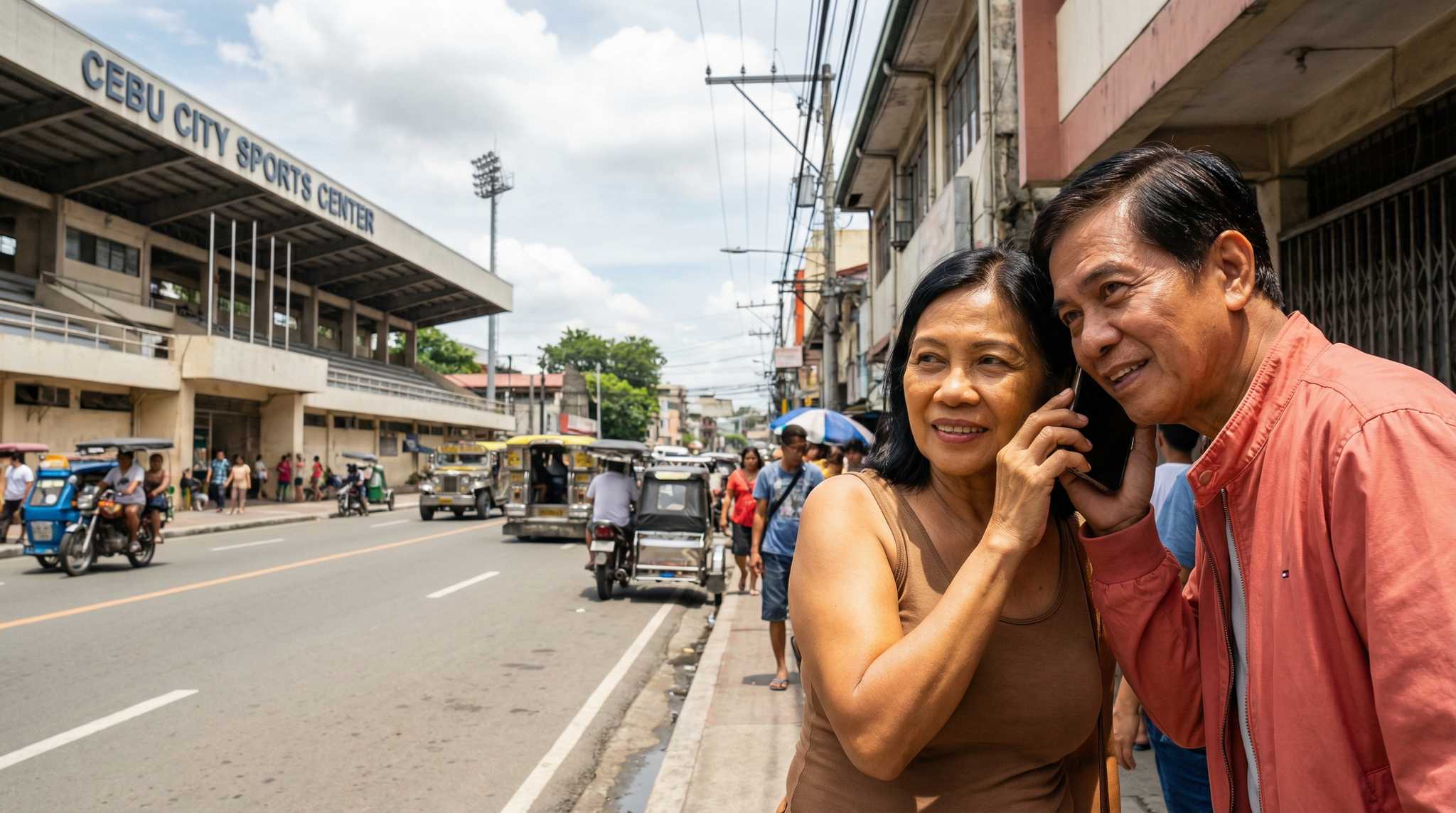
To spot the Cebu City Sports Center, look for a big open stadium with a bright, wavy roof in green, red, and yellow stripes, set right at the heart of the city’s buildings-it’s…阅读更多收起
To spot the Cebu City Sports Center, look for a big open stadium with a bright, wavy roof in green, red, and yellow stripes, set right at the heart of the city’s buildings-it’s impossible to miss that colorful splash! Welcome to the beating heart of Cebu’s athletic spirit: the Cebu City Sports Center! Imagine standing before a stadium that’s worn many hats-school playground, festival ground, and even pandemic battleground. Long ago in the 1960s and 70s, this land was just the Abellana National School’s playground, echoing with the shouts and laughter of students. Back then, it was the Abellana National Stadium, mostly just a grandstand and a field. But as time marched on, the stadium grew old and weary, its seats growing creaky and its track more “vintage” than fast. Then came a whirlwind of excitement in 1992: the city put in a bid to host the 1994 Palarong Pambansa, a massive student games event. Suddenly, bulldozers arrived, and in a matter of months, the aging stadium was transformed, with 160 million pesos poured into shiny new tracks, a grandstand fit for 8,000 fans (or 12,000 if you squeeze in), a new swimming pool to make any fish jealous, and a gym that was ready for slam dunks and cheers. But wait, this sports center is more than just a place to run laps. Since 1996, it’s been the spectacular finale of Cebu’s Sinulog Festival, where crowds dance, drums thunder, and colors fly in a celebration so big that the air practically buzzes. The stadium has even played host to legendary football clashes-like the Philippines battling Singapore under the blazing floodlights, with the home crowd erupting as the final whistle blows and a historic win is sealed. This place knows a thing or two about survival, too. During the pandemic, the field became a lifeboat-an isolation facility saving lives-and when it finally reopened, the city celebrated like marathoners crossing a finish line. These days, the CCSC is prepping for the grand return of the Palarong Pambansa, still facing a quirky land feud with its school neighbor (imagine two siblings fighting over whose turn it is to use the family TV). So whether you’re a champion sprinter, a festival goer, or just here to snap some photos, you’ll feel the pulse of Cebu’s sporting soul right where you stand!
打开独立页面 →To spot Museo Sugbo, look for a sturdy stone building with weathered, light-colored bricks and big black cannons out front, along with a large welcoming doorway decorated with…阅读更多收起
To spot Museo Sugbo, look for a sturdy stone building with weathered, light-colored bricks and big black cannons out front, along with a large welcoming doorway decorated with plants and historical signboards on either side. Now, let’s step back in time together. Imagine standing in front of these thick stone walls under the hot Cebu sun, feeling the long history radiating from every block. At first glance it may just look like a museum, but this place was once the Cárcel de Cebú, the busiest and perhaps most dramatic jail in the Visayas! These stones, believe it or not, were once part of an old church, taken down after a court case, and then given new life as the fortress-like walls of a giant jail, designed back in 1869 by Cebu’s one and only architect, Domingo de Escondrillas. Back in those days, the clang of prison gates echoed across the courtyard, and not just criminals paced these grounds. During the revolution, brave Katipuneros were imprisoned here, some waiting for fate at the nearby Carreta cemetery. In a strange twist, during the early American days, these cells held not just people, but actual horses for the nearby racetrack! (I bet those horses were hoping for early parole.) But as the years ticked by, the jail filled with stories more serious. When the Japanese occupied Cebu in World War II, the air was thick with fear and resistance - tortured guerrillas were held here by the dreaded Kempeitai. Even after the war, accused collaborators did their time within these solid walls. The name shifted as often as the prisoners. From Provincial Jail to Cebu Provincial Detention and Rehabilitation Center, these walls watched as the decades passed, each adding layers of drama, sorrow, and sometimes, hope. When the last cell was emptied in 2004 and the jail moved to a newer home, this site found a new purpose. No more prison food-now it serves as the keeper of Cebuano culture! Walk around the courtyard and you can discover over ten galleries, from old prison cells turned into art halls to memorabilia of local legends. There’s even a mysterious Spanish-era well, called the Well of Good Fortune and Happiness, unearthed like a buried secret during renovations. So look around, breathe in the history, and remember: where you’re standing today, thousands once waited, dreamed, and hoped that someday, someone would hear their story. Now you can!
打开独立页面 →
再显示 8 个站点显示更少站点expand_moreexpand_less
Look ahead for a grand, white-stone church facade with arched doorways, carved saints in alcoves, and a bell tower rising on the right-if you spot this impressive sight bustling…阅读更多收起
Look ahead for a grand, white-stone church facade with arched doorways, carved saints in alcoves, and a bell tower rising on the right-if you spot this impressive sight bustling with visitors, you’ve found the Basilica del Santo Niño! Now, let’s imagine standing here in the heart of Cebu, where the air is thick with the smoky scent of melting candles and the sound of footsteps mingles with excited whispers of visitors-because you’re actually gazing at the oldest church in the entire Philippines. More than four centuries ago, in 1565, two Spanish friars, Fray Andrés de Urdaneta and Fray Diego de Herrera, arrived on these shores with Miguel López de Legazpi. They built this holy place right on the spot where a tiny image of the Child Jesus-the Santo Niño-was uncovered in a humble, burnt hut. Talk about finding treasure where you least expect it! But how did that image get here? Let’s rewind further, to 1521, when Ferdinand Magellan sailed across the wild seas and presented the Santo Niño figure to the queen consort of Rajah Humabon upon her conversion to Christianity-think of it as a royal baptism gift, except this one sparked a tradition that would shape the faith of an entire nation. Over forty years later, after Legazpi and his men razed a village, a soldier named Juan de Camuz discovered the statue hidden away in a box, perfectly preserved despite the devastation-sort of like history’s best game of hide and seek. The first attempt at a church was humble: wood and nipa, little defense against fire, as it tragically burned down within a year. They tried again and again-another with bricks and stones, but even that one ran into problems. Finally, in 1735, the resilient friars decided to go big or go home, gathering stone, help, and know-how from the entire community, parishioners, and even neighboring towns pitched in-imagine the air filled with the clang of tools and chatter about getting the walls just right. By 1740, the Basilica stood strong-and the miraculous Santo Niño was placed in his rightful home, safe at last, to the joy of every Cebuano. Time marched on, and the church became more than just stone and prayer. Pope Paul VI elevated it in 1965, proudly calling it “the symbol of the birth and growth of Christianity in the Philippines.” From then on, families flocked here week after week, rain or shine, to gaze at the glass-encased Santo Niño, light candles in the “dagkutanan,” and join in the vibrant dance of the Sinulog festival every January. If you think Sundays are busy, try squeezing in during Sinulog-3,500 people might crowd into the open-air Pilgrim Center right across from you! Though earthquakes-like the huge one in 2013-tried to bring these walls down, the Basilica’s spirit proved stronger. Restorers carefully tested old stone, cleaned each detail, and, like doctors for ancient buildings, injected lime water to keep the walls standing tall. The belfry and main doors came back to life just in time for Christmas 2014, and by 2016, the bell tower rang out louder than ever. The story of Santo Niño isn’t just about old stones and relics-though the museum here does house centuries-old church treasures, golden chalices, ancient priestly robes, and saintly statues old enough to need their own birthday cakes. It’s a living legacy, wrapped up in Friday devotions, joyful festivals, and an endless tide of hope from Cebuanos and Filipinos everywhere. So, as you stand here, you’re in the presence of a piece of living history-one that has survived fire, earthquake, and centuries of change, all thanks to a tiny statue that brought faith, tradition, and a whole lot of dancing to Cebu. If you listen closely, you might catch the joyful laughter of devotees heading to light a candle for their wishes and gratitude. Wondering about the church complex, location or the devotion to the holy child? Feel free to discuss it further in the chat section below.
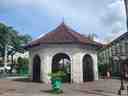
打开独立页面 →Look for a small, octagonal stone building with a red-tiled roof right in the middle of the plaza-if you spot that unique shape and the iron gates on each side, you've found…阅读更多收起
Look for a small, octagonal stone building with a red-tiled roof right in the middle of the plaza-if you spot that unique shape and the iron gates on each side, you've found Magellan's Cross Pavilion! Alright, get ready to step into one of the Philippines' biggest historical hotspots-no, not just because it gets warm under that red-tiled roof! Right in front of you stands the Magellan’s Cross Pavilion, a coral stone kiosk built way back in 1834, smack in the days of Spanish colonial rule. Take a deep breath-you’re about to travel back over 500 years. Imagine April 21, 1521, as Ferdinand Magellan and his crew stepped onto Cebu's shores, the sound of their boots crunching on the cobble as they planted a wooden cross right here. That cross became a symbol-marking the introduction of Christianity to the islands, and, unbeknownst to Magellan, an epic saga that would shape Philippine history. Peek inside and you’ll spot the tindalo-wood cross, which protects the original cross believed to be hidden inside. Why the wood-on-wood armor? Over the centuries, people tried to chip off pieces, believing the cross held miraculous powers. Apparently, nothing says ‘take me home’ like legendary blessings! Even the structure itself has had a rough journey-earthquakes in 2013 cracked its coral walls, and in 2015, pesky termites took a bite out of the cross. But Cebu’s spirit always bounces back! After a spruce-up, the pavilion reopened in 2016, proudly wearing its scars as part of a grand story. Look up when you step inside and you’ll see a stunning mural by Jess Roa and Serry M. Josol, showing Rajah Humabon and his household getting baptized-I bet Magellan didn’t paint that one himself, though. Together with the Basilica next door, the pavilion was officially declared a National Cultural Treasure in 2021. Centuries of faith, drama, and survival-all right here in one humble-looking kiosk. Now that’s history you can touch, though you probably shouldn’t chip off a piece for good luck!
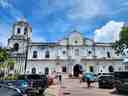
打开独立页面 →To spot the Cebu Metropolitan Cathedral, look ahead for a grand white church with thick stone walls, a tall clock-towered belfry on the left, ornate carvings above the doors, and…阅读更多收起
To spot the Cebu Metropolitan Cathedral, look ahead for a grand white church with thick stone walls, a tall clock-towered belfry on the left, ornate carvings above the doors, and a broad, detailed facade facing the street. Now, standing here before the majestic Cebu Metropolitan Cathedral, you’re taking in the heart and soul of the city’s Catholic tradition-a place that’s survived just about everything history could throw at it. Imagine: it’s the 1500s. Spanish ships pull up on Cebu’s shore, the heat is thick, and Fray Andrés de Urdaneta, Fray Diego de Herrera, and none other than Miguel López de Legazpi step off, dusty from the journey. Their orders? Build a church right by the Spanish fort! It just so happened they arrived on the feast day of Saint Vitalis, so he became the patron of their new church-it’s a bit like arriving on your birthday and getting a cathedral named after you. This wasn’t just any church; it’s the very first cathedral of Cebu, even predating most others in the Philippines except for the Basilica del Santo Niño. Over the centuries, this building has had more lives than a cat! Funds often dried up because money meant for construction got sent off to the Moro wars, or sometimes, a bishop leading the build would die, and the work? Well, it just sat in the tropical sun, occasionally taken over by weeds. One architect after another tried to conquer the tricky, soft ground here. By the 1700s, it must have seemed like the cathedral was determined to play hard to get-typhoons battered it, the money vanished, and every time construction almost picked up steam, something stopped it dead. Workers gathered tens of thousands of stone blocks and cavanes of lime, only for yet another bishop to run out of pesos or get called away. Eventually, it was finished enough by the late 1700s to serve its community, but even then, it was never really “done.” Improvements, expansions, and repairs happened over and over. Picture the facade, squat and tough to stand up to storms, decked out in beautiful Spanish colonial detail. See those thick walls? Those were built to outlast the wildest typhoons and, apparently, centuries of construction mishaps! Right above the doors, there’s a trefoil-shaped pediment-a bit like a giant three-leaf clover-decorated with flowers, sacred monograms, and some fierce carved griffins. Don’t miss the Spanish Royal Coat of Arms, permanently reminding everyone which king helped pay for this beauty. But this cathedral’s luck wasn’t all bad, just dramatic! During World War II, bombers roared overhead and destroyed almost everything except the belfry, facade, and a few stubborn walls. A quick rebuild in the 1950s brought the cathedral back, this time under the watchful eye of architect Jose Maria Zaragosa. Can you feel the triumph? Fast forward, and the cathedral’s been renewed again and again-especially for big anniversaries, visits from important guests, and events like the time the Pope dropped by. There’s even a solemn mausoleum tucked away behind the sacristy, resting place for bishops, cardinals, and even the first Cebuano bishop, Juan Bautista Gorordo. Here’s a fun twist: application is still pending for the cathedral to become a minor basilica, all in honor of Saint Vitalis whose feast matches both the discovery of the Sto. Niño and the archdiocese’s birthday. This isn’t just a monument; it’s a survivor, a witness, and a gathering place for Cebuanos from all walks of life-whether you’re carrying an umbrella in the sun or sneaking in for confession. So, take a moment and marvel at not just what you see, but everything this cathedral has endured: storms, lost treasure, war, and even more bishops than you can count on your fingers. Now that’s heavenly persistence!
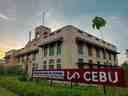
打开独立页面 →Look straight ahead for a large, cream-colored building with black-trimmed windows and a tower on top, standing just behind a big maroon sign that boldly says "CEBU" with…阅读更多收起
Look straight ahead for a large, cream-colored building with black-trimmed windows and a tower on top, standing just behind a big maroon sign that boldly says "CEBU" with “National Museum of the Philippines” written below. Welcome to the grand finale of our journey: the National Museum of the Philippines in Cebu! Picture yourself in front of this striking building, wind ruffling the trees as sunlight glints off its wide windows. It’s not just a pretty face-more like a dramatic actor with a résumé full of twists. Back in 1910, the Aduana, as it was called, was built to be Cebu’s Customs House, designed by the celebrated architect William E. Parsons. If buildings could have egos, this one would boast: “First in Parsons’ plan for Cebu!” It saw ships roll in and goods change hands, with port workers and officials bustling about. Fast forward to 2004 and-plot twist!-the Aduana put on a new hat, becoming Malakanyang sa Sugbo, the Visayan home for Philippine presidents. Presidential visits, quick renovations, and an eviction for the Bureau of Customs followed. Talk about a midlife career change! But this stately structure’s luck seemed to run out after earthquakes in 2012 and 2013 left it battered and empty-a “white elephant,” waiting for a new chapter. For years, it stood lonely, surrounded by caution tape, daring people to guess its fate. But just when you thought its glory days were over-it wasn’t done yet! In 2019, the Aduana was named a National Cultural Treasure. Hammers and hard hats returned, and after a makeover worthy of a movie montage, the building reappeared in 2023 as the National Museum Central Visayas. Now, the old Aduana buzzes again, not with customs officers, but with curious visitors like you, exploring the treasures of Cebu’s story.
打开独立页面 →
常见问题
如何开始导览?
购买后,下载 AudaTours 应用并输入您的兑换码。导览将准备好立即开始--只需点击播放并按照 GPS 引导的路线行驶即可。
导览期间我需要互联网吗?
不需要!开始前下载导览并完全离线享受。只有聊天功能需要互联网。我们建议在 WiFi 下下载以节省移动数据。
这是导游带领的团体游吗?
不是--这是自助语音导览。您按照自己的节奏独立探索,通过手机播放音频解说。没有导游,没有团体,没有时间表。
导览需要多长时间?
大多数导览需要 60-90 分钟才能完成,但您完全控制节奏。随时暂停、跳过站点或休息。
如果我今天无法完成导览怎么办?
没问题!导览具有终身访问权限。随时暂停和恢复--明天、下周或明年。您的进度已保存。
有哪些语言可用?
所有导览均提供 50 多种语言版本。在兑换代码时选择您的首选语言。注意:导览生成后无法更改语言。
购买后我在哪里访问导览?
从 App Store 或 Google Play 下载免费的 AudaTours 应用。输入您的兑换码(通过电子邮件发送),导览将出现在您的资料库中,准备下载并开始。
如果您不喜欢该导览,我们将退款。请联系我们 [email protected]
安全结账使用 


