AudaTours logoAudaTours

特隆赫姆语音导览:从堡垒高塔到木板教堂

语音指南14 景点

在卡尔夫斯金内特整洁的街道之下,野史传说在表面之下嗡嗡作响——从秘密的学生起义到隐藏的房间,以及曾威胁城市命运的沉默大炮。 通过这个自助语音导览探索特隆赫姆,发现那些叛乱酝酿、丑闻震惊校园的角落,以及未解之谜的回响从堡垒城墙后飘出——这远超任何旅游手册所能提及。 政府官员为何几乎在一夜之间,让“反叛电台”的学生之声沉寂?学生社团红色圆形迷宫般的核心,又有哪些故事仍在其中萦绕?灾难性火灾后,“军械库”中又留下了谁的烧焦指纹,永远消失在灰烬中? 感受每一步都将你更深地拉入一个充满大胆思想和不屈能量的鲜活城市。从充满欢声笑语的咖啡馆,走到宁静的鹅卵石阴影中,在层层戏剧与发明中编织你自己的道路。 准备好看看卡尔夫斯金内特隐藏着什么了吗?走进这里,聆听,让特隆赫姆的秘密活起来。

导览预览

map

关于此导览

  • schedule
    持续时间 40–60 mins按照自己的节奏
  • straighten
    3.0 公里步行路线跟随引导路径
  • location_on
  • wifi_off
    离线工作一次下载,随处使用
  • all_inclusive
    终身访问随时重播,永久有效
  • location_on
    从 反叛电台 开始

此导览的景点

  1. Let’s wind the clocks all the way back to 1933. Picture students in sharp suits and dresses, their laughter echoing down the stone halls of Studentersamfundet. Back then, before…阅读更多收起

    Let’s wind the clocks all the way back to 1933. Picture students in sharp suits and dresses, their laughter echoing down the stone halls of Studentersamfundet. Back then, before Radio Revolt had its name, there was the legendary UKE-sender-a special radio broadcast held during the student festival UKA. Every festival year (except when the powers that be put a stop to their fun!) students would scramble to broadcast wild ideas, creative stories, and probably some questionable jokes on air. Imagine the tension in 1977 and 1979 when grumpy officials didn’t give them permission to broadcast, perhaps to save Trondheim from hearing endless accordion music. The spirit of radio stuck around, and after Norway allowed local radio stations in 1982, the students rallied once more! But bureaucracy, as always, had other plans. It took until 1984 for Studentersamfundet to officially get the green light. You can almost hear the nervous tapping of typewriter keys as Lars Steinar Hanssen worked late into the night, drafting the first rules for Trondheim’s very own student radio. Genius or madness? Maybe both! In autumn of 1984, before anyone knew what might happen, the first broadcasts began. No one could foresee just how much this radio would grow. In the beginning, the whole operation was a bit like trying to herd cats-eight permanent team members, plus a revolving door of eager volunteers. Some of them, in the archives, are only listed as “Odd” or “Kari S.”-which, knowing students, could just be someone forgetting their last name after a long night out. They broadcasted just three days a week from a borrowed studio, battling ancient equipment and technical gremlins. Thank goodness for the tech committee, who probably kept everything running with chewing gum and pure willpower. Then came the big changes. In 1988, they teamed up with the student newspaper Under Dusken to form Mediastud AS, the media powerhouse of student Trondheim! They built a sparkling new studio, so modern that I bet it even had more than one switch. The team grew, ideas took flight, and by 1995 student TV was thrown into the mix. Students could now play DJ, journalist, and TV producer-all before lunch. Fast forward: 2008, after a legendary run as Studentradion, it was time for a rebrand. Enter Radio Revolt-the name itself practically shouts: “We’re not your grandma’s radio!” But the world of radio is always on the move. In early 2010, Radio Revolt lost its FM license (for a moment the silence was probably deafening-can you imagine students forced to speak to each other face to face!). But they bounced back onto the airwaves through the internet and DAB radio. Talk about tenacity! If something in Trondheim can survive bureaucracy, government monopolies, and skyrocketing rent prices, it’s definitely student radio. By 2013, Radio Revolt, Under Dusken, and Student-TV had merged into Studentmediene i Trondheim, creating a buzzing, caffeine-fueled media house. The students powered 46 hours of original radio every week, tended entirely by volunteers. If you close your eyes now and concentrate, you might just pick up the faintest echo of alternative rock, quirky talk shows, or a live debate on whether pineapple belongs on pizza. Recently, in 2024, Radio Revolt and all their media friends packed their boxes and moved into brand new headquarters in the Studentersamfundet’s gleaming new building-proof that after all these years, student voices in Trondheim are determined to keep the city tuned in and just a little bit rebellious. So next time you walk by, just remember-behind those doors, someone’s probably laughing into a microphone, plotting the next great radio prank, and keeping Trondheim awake. Welcome to Radio Revolt, where the stories have always been loud, proud, and just a little bit out of tune. To delve deeper into the today, student radio today or the editors, simply drop your query in the chat section and I'll provide more information.

    打开独立页面 →
  2. To spot the Student Society in Trondheim, just look for the huge round, bright red building with plenty of small square windows and a modern glass entrance right in front of…阅读更多收起

    To spot the Student Society in Trondheim, just look for the huge round, bright red building with plenty of small square windows and a modern glass entrance right in front of you. Welcome! Right now, you’re standing before one of Trondheim’s most beloved landmarks and, let’s be honest, probably its quirkiest building-The Student Society, or “Samfundet,” as the cool kids call it. Imagine it’s 1910. Trondheim’s first technical students are buzzing with energy, and just a week after the Norwegian Institute of Technology opened, a handful of these eager souls gathered to dream up a society where students could meet, debate, and, well, party. Fast-forward two wild weeks later, and the very first chapter of Samfundet was born. Back in those early days, Samfundet didn’t have a place to call home. They wandered around loaned spaces, but soon enough, in a twist worthy of a slapstick comedy, they ended up moving into an abandoned circus building. That circus spirit never really left. So, when 1927 rolled around and plans for a permanent home took shape, the new building had a mission: look a bit like a circus, and feel a lot like a maze. Now, take a look up at that round red façade-the one you can’t miss!-it’s as if a circus ringmaster will step out at any moment, top hat and all. By 1929, this curious red house was finished. Locals claimed the only thing more confusing than finding your way here was finding your way OUT. With more than two hundred rooms, forty different levels, and hallways that seem to double back on themselves, the Samfundet is basically Hogwarts for students-except if you ask, nobody knows exactly how many rooms there are! Attempts to map it out have failed as spectacularly as a first-year student’s cooking attempt. Rumor has it, if you don’t get lost at least three times in this maze, you’re not doing it right. Step through those doors on a night out (don’t worry, you can’t miss the big ones over there), and you’ll hear the thumping of bass, the chatter of students in a dozen languages, the smell of waffles and coffee, and the echoing laughter of people who probably just realized they’re late for their next lecture. Inside, you’ll find everything-bars, cafés, restaurants-and stages so legendary they could make your hair stand on end. Samfundet isn’t just for local students. It regularly pulls in global stars, icons whose names light up posters like fireworks: The Sex Pistols, Iggy Pop, Motörhead, Phoenix, Public Enemy-and that’s barely the start. Some of today’s best-loved Norwegian bands found their very first fans right inside these walls, basked in the glow of red spotlights and nerves of steel. But Samfundet is more than just a concert hall; it’s also been an international stage of ideas during the ISFiT festival. Imagine world leaders and Nobel laureates-people like the Dalai Lama or José Ramos-Horta-addressing crowds in these very halls. Not bad for a student club, right? Keeping all this humming are about a thousand volunteers-students who book musicians, haul gear, cook food, manage IT, and even try to stop the building from eating unsuspecting freshmen. They call it “the red round house,” and, as you can imagine, it’s the heart and soul of student life in Trondheim. In recent years, Samfundet hit a growth spurt. With a shiny, spacious new extension finished in 2024, it’s now the eighth biggest nightclub in Norway-clocking in at a whopping 13,000 square meters. You could fit a small Norwegian village in there! So, next time you’re at a wild concert or sipping coffee inside, imagine all the footsteps-students, celebrities, world-changers-echoing in these slightly wonky halls. Step closer, listen for laughter, and maybe ask for directions at the door-unless you’re in the mood for an adventure in the secret maze inside!

    打开独立页面 →
  3. To spot The Armoury, look for a sturdy stone building with small brick-arched windows, heavy wooden doors in the middle, and a couple of old cannons right out front. Now, as you…阅读更多收起

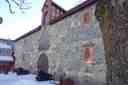
    To spot The Armoury, look for a sturdy stone building with small brick-arched windows, heavy wooden doors in the middle, and a couple of old cannons right out front. Now, as you stand here in front of these mighty old stones, imagine yourself whisked back hundreds of years, where the air smells faintly of gunpowder and history. Welcome to The Armoury - or “Rustkammeret” in Norwegian, which doesn’t mean it’s rusty, despite how cold it looks out here! The word actually comes from the old German for “equipment” and was the place for storing shiny swords, sturdy armor, and early handguns-basically Viking IKEA. The Armoury has been gathering military stories since 1826, which makes it one of Norway's oldest museums. Originally, it held court in a grand old room called “Den historiske våbensal.” Picture dusty sunlight filtering onto rows of swords and helmets, each piece with its own secret, clanging tale. Over the years, the collection grew, gobbling up artillery models and weapons from the local arsenal. By 1932, after a ceremonious reopening, the museum moved into the very bakery of the Archbishop’s Palace-imagine stacks of cannonballs where there used to be freshly baked bread! But The Armoury wasn’t just about collecting cool military stuff. During World War II, as thunder rolled over Europe, this place became central to the resistance in Trondheim. After Norway’s liberation, it buzzed with the arrival of soldiers from Sweden, who helped catalog all the equipment seized from the Nazi occupiers. Walk around, and you might almost hear the clanking of boots echoing through the courtyard as old staff worked late into the night. Of course, not every story is sunshine and medals. In 1983, disaster struck-a fierce fire devoured the old wooden storehouses, destroying an entire wing’s worth of exhibits on the local resistance. But like a true hero in a war movie, The Armoury came back stronger: the museum reopened, revamped and full of fresh stories about the Trøndelag region’s army history and the brave resistance fighters. And don’t worry, the museum isn’t just for generals and historians. Whether you’re into old uniforms, tales of secret missions, or maybe just want to see if you can lift a real sword, The Armoury’s doors are open. Peek inside, and you might feel the past brush right past you. Just remember, the cannons outside haven’t been fired in a while... or have they?

    打开独立页面 →
再显示 11 个站点显示更少站点expand_moreexpand_less
  1. Straight ahead, you’ll spot a massive, grey stone building staring back at you, its walls covered in rows upon rows of carved statues and intricate arches-two tall towers frame a…阅读更多收起

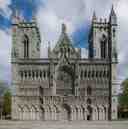
    Straight ahead, you’ll spot a massive, grey stone building staring back at you, its walls covered in rows upon rows of carved statues and intricate arches-two tall towers frame a central rose window like a pair of hands lifting the sky itself. Now, as you stand in front of the breathtaking Nidaros Cathedral, take a deep breath and imagine yourself stepping straight into Norway’s greatest legend. Picture this: it’s the year 1030, and King Olav II has just fallen in battle at Stiklestad. He doesn’t stay just any king-no, Olav soon earns sainthood and the reputation as the heart and soul of Norway. His burial site becomes a destination for pilgrims, and right where you're standing, his legend takes shape in stone and story. As you look up, the enormous face of the cathedral almost hums with history. The walls are decorated with statues of kings, saints, and mysterious faces peering at you with stony eyes. This cathedral took over 230 years to complete, with building starting in 1070 and wrapping up, more or less, by 1300. Of course, like all good things, it couldn’t stop changing. Fires swept through in 1327 and again in 1531, lightning struck, and even as late as the 19th and 20th centuries, the cathedral saw new faces and new stones. The reason behind this Gothic and Romanesque marvel? Saint Olav, of course! After he fell in battle, the site became not just a church, but the very heart of Norwegian royalty and spirituality. The altar was built right over his grave, and the greatest Norwegian royals were buried nearby. For centuries, soon-to-be kings and queens were consecrated here, so you could say it’s Norway’s version of a royal red carpet-just with more stone and much more history. But here’s where the mystery and drama deepen. None of the church Olav Kyrre, St. Olav’s nephew, built still stands. Instead, with each rebuilding, the newer church was built using the foundation of the old one-literally stacking history on top of history. When you see the outlines in the ground plan, you’re peering back through layers of medieval ambition and religious awe. Religion here had its own journey. The cathedral was first the seat of Norway’s Catholic archbishop, then, after the Protestant Reformation hit Norway in 1537, it became a mighty Lutheran symbol. It’s now famous as the world’s northernmost medieval cathedral, which means it’s probably seen more snow than any other church in history. Listen close-you might almost hear the footsteps of pilgrims along the old Pilgrim’s Route, trudging through bog, forest, and city to reach St. Olav’s grave. The cathedral’s octagon, where the original high altar stood, has design hints from English cathedrals, and it once housed Olav’s legendary reliquary casket, shaped like a mini church with dragon heads. Sadly, the casket was melted down for coins, and all that remains is a single femur in a special relic in Oslo-but the current altar still echoes that amazing lost treasure. Inside, two remarkable organs tell the musical history of the place: one built by Steinmeyer in 1930 and restored in 2014, funded by donations (and a generous Norwegian American, Elias Anton Cappelen Smith), and another even older Baroque organ, rescued from the flames and carefully restored in the 1990s. Nidaros Cathedral hasn’t just weathered fire and lightning-it was even rumored to be the target of a black metal band’s bombing plot in the wild 1990s! These stone walls have seen saints, kings, fire, music, and maybe even a little rock-and-roll rebellion. Nowadays, the cathedral still fills with music-thanks to its famous choirs-and plays a centerpiece in the lively Olav’s Wake festival each year. So, as you gaze up at those twin towers and countless statues, remember you’re standing where legends walked, kings kneeled, and thousands came hoping for miracles. And don’t be alarmed if you start to feel tiny-you’re supposed to! After all, Nidaros Cathedral was built to awe, to astonish, and to knit together a whole country’s spirit in one incredible place. Seeking more information about the building and restoration, organs or the tourist attraction? Ask away in the chat section and I'll fill you in.

    打开独立页面 →
  2. To spot Domkirkegården, look for the wide open grassy area around you, dotted with old gravestones and bordered by tall, leafless trees, with the majestic green-roofed spires of…阅读更多收起

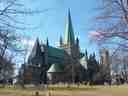
    To spot Domkirkegården, look for the wide open grassy area around you, dotted with old gravestones and bordered by tall, leafless trees, with the majestic green-roofed spires of Nidaros Cathedral rising dramatically right in front of you. Now that you’ve found it, take a deep breath and let your imagination run a little wild-because you’re standing in the middle of 900 years of Trondheim’s history, right under your feet! Domkirkegården isn’t just any ordinary cemetery. This graveyard once wrapped itself around both the mighty Nidaros Cathedral and the lovely Vår Frue Church, and it’s seen almost as much drama as a soap opera-if soap operas had Vikings, bishops, and kings being cheered onto thrones. Long ago, back in the Middle Ages, people started laying their loved ones to rest right here, around the same time as they were building Kristkirken and Mariakirken, at the tail end of the 1000s. It wasn’t just a cemetery-it was the go-to spot for everything important. Court meetings like Frostating and Øreting happened here, and even legendary kingly crowning ceremonies. Imagine the “Gradene” pavilion up in the northeast: a royal seat for a brand-new king to get his official high-fives. Archaeologists still get giddy about the remains they discovered beneath your feet. Fast-forward through time and you’ll find stories of triumph and hardship. The northeast corner was once a resting place for the poor, while the southeast was claimed for Vår Frue’s congregation in the 1800s. There’s even a soldiers’ plot, which wasn’t exclusive-until a very important officer made it so. Through the trees, you’ll spot grave monuments to some of Trondheim’s most notable families-the Angells, the Jenssens, the Thams-names that echo through local history. And if you listen closely (don’t worry, it’s just your imagination), you might almost hear the ghostly debates, heartfelt goodbyes, or even royal proclamations swirling with the wind. Despite all its history, Domkirkegården is still an active resting place and a sort of time capsule for Trondheim. Quite a spot, eh? Let’s not stay too long, though-I hear the occupants prefer peace and quiet!

    打开独立页面 →
  3. Trondheim katedralskole is a grand, long, red-brick building with a slate roof and rows of tall white windows stretching across the facade-look directly ahead for the stately…阅读更多收起

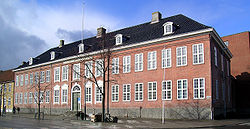
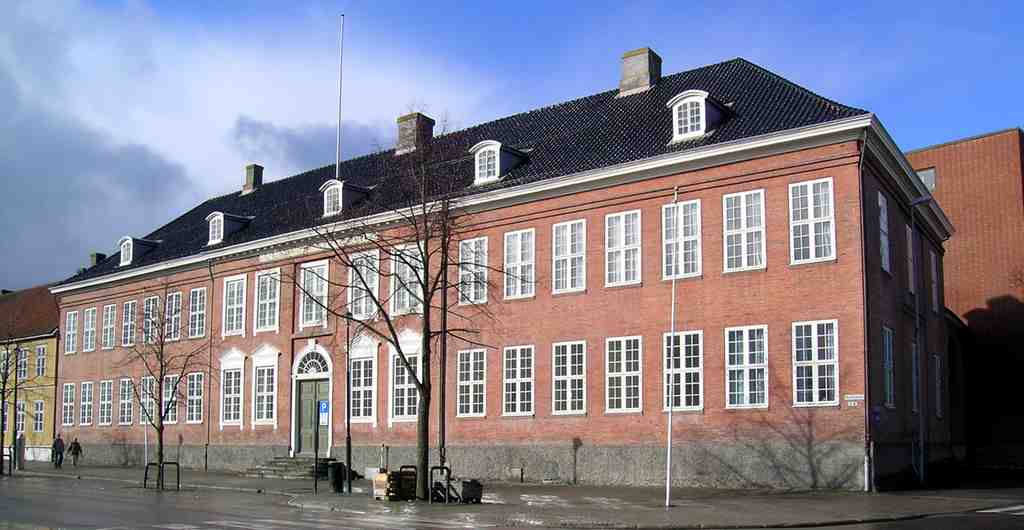
    Trondheim katedralskole is a grand, long, red-brick building with a slate roof and rows of tall white windows stretching across the facade-look directly ahead for the stately entrance set between bare trees on the street. Now, imagine you’re standing in front of one of Norway’s oldest-and honestly, most legendary-schools, Trondheim katedralskole, or as the locals like to call it, “Katta.” This place has more stories than a library at midnight-so let’s peel back the curtain and take a walk through time together. Long before Netflix marathons and electric scooters, Katta’s history was already underway, stretching all the way back to the Middle Ages. Imagine a time when knights and bishops roamed the city, and learning wasn’t just a click away. This very school was shaped not only by priests in long robes, but also by fire, plagues, and debates so long you’d wish for a snooze button. Founded somewhere around the visit of Cardinal Nicolas Breakspear in 1151, no one can quite agree on the exact birthday-hence, the nearly Olympic-level celebration schedule: 700, 800, even 950-year anniversaries! If only we all got that many birthdays. The building you see now, the proud Harsdorff building, has watched over Trondheim since 1786, making it older than Napoleon’s best hat. It was designed by Caspar Fredrik Harsdorff, one of Copenhagen’s top architects, and built with funds from Thomas Angell’s foundations-talk about an early alumni donation. Take a look at those grand windows and disciplined symmetry; this is the country’s first school built with a “central corridor.” And if you had superhero vision, you could peer inside and spot the two marble reliefs by Bertel Thorvaldsen in the upstairs hall. Katta has bounced around five locations before landing here. The 1920s and 30s brought expansions by Carl J. Moe, while the 1960s added a new wing towards Erling Skakkes gate, courtesy of Knut Bergersen. Oh, and let’s not forget the extensive renovations a few years ago-120 million NOK to freshen up classrooms, fix the ventilation, and even install a lift. Fancy, right? Modern Katta is a buzzing beehive, offering all sorts of study programs-from classics like general academics to music, dance, drama, and media and communication. It’s the only school in Trondheim where Latin isn’t dead, but actually on the schedule as an elective. And if that's not enough, there’s an International Baccalaureate department-and rumor has it you can even jet off for a study year in Norfolk, England. Money sometimes literally falls from the ceiling here in the form of old legacies and scholarships: for women in English, for theology students, and even for students down on their luck. No wonder the King himself (yep, Harald V) doles out a special honorary prize here-no other school in Norway can say that. But what about the people who walked these halls? Picture it: kings, poets, war heroes, authors-even some modern celebrities-all learning, daydreaming, scribbling Latin verbs, or maybe sneaking out during lunch. So whenever you read the motto “per ardua ad astra”-through adversity to the stars-just know, at Katta, they really mean it. Who knows, maybe you’ll catch a star-in-the-making coming out that big green door as you stand here today. Fascinated by the history, school today or the famous former students? Let's chat about it

    打开独立页面 →
  4. To spot Trøndelag Teater, look to your right for a large and modern light-brick building with a glass entrance and bright, colorful banners hanging from tall columns out…阅读更多收起

    To spot Trøndelag Teater, look to your right for a large and modern light-brick building with a glass entrance and bright, colorful banners hanging from tall columns out front-almost like the theater is waving at you to come inside. Now, take a deep breath as you stand before the Trøndelag Teater-this place isn’t just a theater, it’s a living stage where over 200 years of history still echo with every performance. Imagine the year is 1816: the city is quieter, the streets lit only by torches and oil lamps, and on this very site, the oldest stage in Scandinavia begins its story. Back then, it was the proud home of local amateur actors, their costumes sewn by hand, nerves prickling backstage as the audience’s conversations drifted through the thick velvet curtains. Soon, traveling Danish theatre troupes waltzed into town, bringing laughter, drama, and their finest mustaches. Just picture the creak of heavy boots on wooden floorboards and foreign voices bouncing off the walls. Some troupes even settled here for years, letting Trondheim’s spirit seep into their shows. The real drama, though, began offstage. Fast forward to the early 1900s-a permanent Norwegian-language theater tries to take hold, but it’s a rocky path, with doors swinging open and shut faster than a confused stagehand during a quick change. It wasn’t until the persistent Sverre Brandt stepped in during 1911 that the theater truly began to find its feet, but alas, it still closed in 1926. You might say running a theater here sometimes felt like herding cats. Very dramatic, talented cats. Now, let’s leap to 1937. Imagine the charismatic Henry Gleditsch as director, his eyes always sparkling with mischief. His satirical plays poked fun at the occupying Nazi authorities during World War II. It was brave, risky work. The stakes? Chillingly real. In 1942, the laughter stopped when Henry was executed by the occupiers-a tragedy that still lingers in the wings. During this time, Trøndelag Teater became much more than a theater; it was a beacon of resistance and hope for artists and locals alike. After the war, stories continued to swirl around the actors who graced this stage, including movie stars with mysterious pasts-like the infamous Kirsten Heiberg, once a film star in Nazi Germany, now puzzlingly cast in Trondheim. Step inside today, and you’ll find the thunder of musical numbers on the main stage, whispers of avant-garde drama in the studio stage, cozy chatter at the Café Theatre, and heartfelt stories in the old auditorium. Every step you take here, you walk with ghosts-bold artists, risk-takers, and storytellers who, for centuries, have refused to ever let the curtains fall. Shall we take a bow before moving to our next stop?

    打开独立页面 →
  5. Look for a large, stately white stone building with rows of tall rectangular windows-it sits proudly at the street corner and is hard to miss! Standing here before you is the…阅读更多收起

    Look for a large, stately white stone building with rows of tall rectangular windows-it sits proudly at the street corner and is hard to miss! Standing here before you is the Frostating Court of Appeal-one of Norway’s pillars of justice! Just imagine how many important decisions have been made behind these stone walls. If you listen closely, you might almost hear the quiet buzz of courtroom whispers and the echoes of footsteps in the corridors. The court’s name harks all the way back to the ancient Frostating, a gathering of chieftains that happened centuries ago on the Frosta peninsula, where the Norse would make laws and settle arguments-not with a sword, thankfully, but with a stern look and a strong voice. Today, the Frostating Court oversees both Møre og Romsdal and Trøndelag counties, handling everything from high-stakes criminal cases to civil squabbles. Judges here come in many varieties: permanent ones with impressive robes, temporary judges who swoop in for a case or two, and even some “extraordinary” judges-think retired legal superheroes called back into action when things get busy. They may not wear capes, but I bet they have some fierce coffee mugs in the office kitchen. Here in the Trondheim courthouse, justice isn’t all drama and banging gavels-there’s also a dedicated team keeping everything running smoothly, from the chief judge to tireless administrators. If someone loses a case in the city courts of Møre og Romsdal or Trøndelag and isn’t happy with the verdict, this is where they come next! If you’re really unlucky-or particularly determined-you might even get your case all the way up to Norway’s Supreme Court. So, as you gaze up at the Frostating Court, picture the centuries of debate, drama, and decision-making that have happened in this very spot-where Norway’s oldest traditions still whisper through modern halls. Welcome to the courtroom crossroads of the north!

    打开独立页面 →
  6. To spot the Vår Frue Church, just look for the tall, sturdy gray stone tower with a clock high up on the front, standing right by the street with its rustic red-roofed nave…阅读更多收起

    To spot the Vår Frue Church, just look for the tall, sturdy gray stone tower with a clock high up on the front, standing right by the street with its rustic red-roofed nave stretching behind. Now, take a deep breath, because if these ancient stones could talk, you’d need both ears wide open! Picture yourself back when this corner of Trondheim was less city and more saga, as you stand before the Vår Frue Church-Our Lady’s Church-one of the city’s oldest survivors. Built way back in the late 1100s by Bjørn Sigvardsson, this church has seen more drama than your favorite soap opera! At first, it was Mariakirken, St. Mary’s Church, but by the 1400s, folks started calling it Vår Frue kirke. Let’s hop through the centuries for a moment. The original stone rows you see echo both Romanesque and Gothic styles; their massive cobbles would have seen knights and farmers, merchants and monks, all seeking shelter and solace. But peaceful? Not always. Fires didn't just knock politely on the door-they barged right in! The church, along with nearly the entire city, was nearly wiped out in 1651, leaving only stubborn walls standing. Imagine the din: people rescuing sacred furniture from flames, gifts pouring in from near and far, hope flickering brighter than the fire itself. But fate (and fire) had more tricks up its sleeve, destroying the rebuilt church again in 1681 and 1708. That’s not just resilience-it’s a full-on medieval comeback tour! Every time flames licked the stones, Trondheim rebuilt, expanded, and redecorated, each era leaving a new fingerprint. The 18th century loved its baroque flair, giving the church a snazzy new tower with a spire, and yes, a bit of a fashion update inside-if only those candlesticks could talk! And did you know this church helped shape Norway’s future? In 1814, with the Constitution of Norway in the making, Vår Frue served as an “election church,” letting locals have a say in the birth of the nation. But time changes tastes, too. In the late 1800s, architect Christian Christie gave the interior a medieval throwback makeover, peeling away Baroque and Rococo flourishes to let the old stones breathe again. You can still see the bare cobblestone outside, thanks to a 1950s renovation that stripped away modern layers. Inside, treasures abound: the grand altarpiece, originally meant for Nidaros Cathedral, carved and painted by master hands; a pulpit from the 1700s, and even a baptismal font from 1898. So, as you stand here, imagine the clash of swords, the crackle of flames, the solemn hush of secrets whispered beneath the arches, and centuries of happiness, fear, and community lingering in the cool, stony air. Vår Frue Church is not just a building-it’s Trondheim’s memory in stone. And hey, after that many fires, even the church deserves a little rest and quiet, don’t you think?

    打开独立页面 →
  7. Take a look at this striking building in front of you-it doesn’t look like a typical old art museum, does it? That’s because you’re actually standing outside what used to be a…阅读更多收起

    Take a look at this striking building in front of you-it doesn’t look like a typical old art museum, does it? That’s because you’re actually standing outside what used to be a city fire station! Once upon a time, this was a place where Trondheim’s bravest raced out to sirens, axes in hand, ready to save the day. Now, instead of fire trucks, it’s bursting with art that’s a little more “smoke and mirrors”-welcome to Kunsthall Trondheim, the city’s vibrant home for contemporary art. Now, imagine the year 2016: the echo of boots and the shimmer of firehoses have faded, and instead, a buzz grows in the old engine bay. Art lovers, curious minds, and locals stroll in, greeting a fresh institution on the Trondheim scene. From the get-go, Kunsthall was on fire-artistically, of course-quickly becoming the hotspot for bold exhibitions and thought-provoking programs. But even before this grand opening, things were heating up next door. From 2013 to 2016, Kunsthall Trondheim operated as a pop-up of sorts, housed in a temporary space led by Helena Holmberg. It was the city’s little art engine that could-and did-with edgy shows and eclectic artist line-ups, all while dreaming of a permanent home. Finally, in October 2016, the art hall found its forever place right here, in this repurposed firehall, and let’s be honest, who wouldn’t want to swap water hoses for paintbrushes? Over the years, the directorship baton has passed hands with all the drama of a well-staged performance. Stefanie Hessler took charge in 2019 and led the charge until 2022, ushering in exhibitions that pushed boundaries and sometimes, buttons. And from 2023 onwards, Adam Kleinman grabbed the director’s hat, promising even more surprises. Word is, he doesn’t make the staff do fire drills, but perhaps the occasional flash mob of artists wouldn’t be out of place. So, what’s been burning bright inside? Step through these glass doors (well, mentally-don’t worry, I won’t set off any alarms) and you’d encounter art that dances across genres, moods, and entire continents. Imagine the year 2013: a show by Tomislav Gotovac, “Straight Line (Stevens-Duke),” mingled with Lotta Lotass and Peter Thörneby probing the night sky. The same year saw a “Self Fashion Show” by Tibor Hajas-nobody walked the runway, but ideas certainly strutted with style. By 2014, an artist named Dan Perjovschi scribbled “Freedom of Expression” straight onto the walls, the paint barely dry before fresh ideas swept in with “Present Stability” and “Water Divide”. Kunsthall Trondheim isn’t afraid to ask weird questions. In 2015’s “Objects That Don’t Fit Together, Words That Suddenly Change Meaning,” the walls practically whispered secrets to each other. And when they decided to host a satellite venue for the Kyiv Biennale, the place hummed with international energy. Jump ahead to 2016 and A K Dolven’s exhibition, “this is a political (painting),” proved that the only thing more combustible than an oil painting is an idea with a message. Every year, the old fire station turns into a crossroads of creativity: “Notes From Underground,” “A New We”-these aren’t just funky names, they’re invitations to peer into new worlds. A personal favorite? In 2020, “Who Wants to Live Forever?” brought together artists like Oreet Ashery and Tabita Rezaire, and I’m pretty sure some visitors stayed so long they nearly tested the title themselves. But the real mystery isn’t just what hangs on the walls; it’s what happens between the people who pass through these doors. Artists and thinkers from all over the globe, from Norway to Nigeria, have left their mark here. Visitors sometimes bump into live performances, stumble upon artist talks, or find themselves weeping, laughing, or scratching their heads in bemusement-which, let’s face it, is the true mark of contemporary art. So while the walls still echo with shouts and alarms from days gone by, nowadays the only thing lighting up this hall is inspiration. Keep your eyes peeled-there might be a fire of imagination burning inside, and you never know when you’ll become a part of Kunsthall Trondheim’s ever-unfolding story. And if you ever smell smoke? Don’t worry, it’s probably just the next big idea catching flame.

    打开独立页面 →
  8. Right in front of you, you'll spot a low, rectangular ruin made of rough-hewn stone blocks, all laid out in neat lines-just look for these ancient stones set inside a modern glass…阅读更多收起

    Right in front of you, you'll spot a low, rectangular ruin made of rough-hewn stone blocks, all laid out in neat lines-just look for these ancient stones set inside a modern glass and gravel floor. Now, let me transport you back more than a thousand years, right to the moment Trondheim was born! Imagine this area filled with the salty air of the fjord, the calls of merchants unloading ships, and the busy clatter of craftsmen. Here stood St. Clement’s Church-Trondheim’s very first church, originally built from timber by King Olav Tryggvason in the year 997. Picture Olav, fiery and tall, hammer in hand, determined to build both a city and a place to speak with his new god. But the church’s story wasn’t a calm one! Just after Olav’s death, the sons of the great Håkon Sigurdsson weren’t interested in keeping it up, so it faded and fell apart. Then, in a twist of drama fit for any soap opera, Svein Håkonsson swept into town in 1015, set the building ablaze, and left it in ashes. But, don’t worry, we’re not finished-along came Olav the Holy, who rebuilt the church and made it a beacon once again. There’s a hint of sadness too. In 1031, Olav the Holy’s own son dug up his father’s body. Picture a torch-lit night: the king lifted from his grave, placed in a shimmering shrine above the church altar. Later, the remains were moved, eventually resting in the splendor of Nidaros Cathedral. The church survived until 1344, when-yep, you guessed it-fire struck again, and it disappeared from history’s pages. For centuries, its real location was a mystery, but in 2016, people got a real-life treasure hunt: archaeologists found these very ruins! Imagine them dusting off stones that hadn’t felt the sunlight for nearly a millennium. Carbon dating muddied the waters, though-it turns out these stones might belong to a second version of the church, perhaps moved here after the original was lost. Talk about an architectural game of hide and seek! So, as you stand here, take in those cool, ancient stones-they’re the silent guardians of a story full of Viking drama, lost kings, and medieval mysteries. What a spot to let your imagination run wild!

    打开独立页面 →
  9. In front of you, look for a modern, blue building with rows of square windows and a wooden entrance marked “Domstoladministrasjonen.” Welcome to The Court Administration! Imagine…阅读更多收起

    In front of you, look for a modern, blue building with rows of square windows and a wooden entrance marked “Domstoladministrasjonen.” Welcome to The Court Administration! Imagine you’re walking through the streets of Trondheim when suddenly you spot this sleek blue building. Inside, things are a bit more dramatic than they look on the outside. Since 2002, this has been the command center for every courtroom in Norway-judges, clerks, and staff all depend on the master plan that starts right here. The people working inside make sure that every courtroom, from the smallest village to the biggest city, runs as smoothly as butter melting on a hot waffle. The Court Administration handles all the tricky stuff-budgets, training, innovation-you name it, they sort it out. If a judge needs a new pen or a court needs a makeover, the request probably bounces through these rooms. And talk about teamwork! This place is run by a director and a board whose members are picked by both the government and parliament. That way, no one gets too much power, and the law stays as fair as a Norwegian summer is long (okay, maybe a little longer). Standing here, you can almost sense the pulse of the nation’s justice system. So as you admire the blue walls, remember: the cool minds in this building make sure Norway’s justice stays calm, collected... and just a little bit quirky.

    打开独立页面 →
  10. Right ahead of you, you’ll spot Stiftsgårdsparken-a peaceful park with a circular fountain in the middle, surrounded by green lawns, flower beds, and towering trees, all set…阅读更多收起

    Right ahead of you, you’ll spot Stiftsgårdsparken-a peaceful park with a circular fountain in the middle, surrounded by green lawns, flower beds, and towering trees, all set against the elegant yellow wooden walls and big windows of Stiftsgården behind. Now, imagine stepping into a scene of royal relaxation! Stiftsgårdsparken actually once hid behind strict gates, shut away from everyday folks like us. For years, it felt as exclusive as the Queen’s secret garden-only instead of corgis, you’d find tales of Norwegian history echoing off those grand yellow walls. But in the 1990s, something magical happened: during a renovation, the park was opened up to the public for the first time, transforming it into a welcoming path between Bispegata and Jomfrugata. They didn’t just toss in some benches and hope for the best; oh no! The designers carefully honored the park’s original layout, keeping its old paths, tall leafy trees, and stately fences. In the middle, a little circular plaza sparkles with a fountain-rumor has it, if you toss a coin in and wish for sunshine, Trondheim will reward you with slightly less rain... maybe. Don’t forget to check out the mighty statue of King Olav V by Harald Wårvik standing dignified among the flowers. And if you notice the open iron gates along the side-those are new, too! They replaced a big fence, finally connecting the park right to the heart of the city’s square, making this green hideaway a place for everyone. Enjoy the calm-royalty never had it this good!

    打开独立页面 →
  11. To spot the Raven’s claw, look straight ahead for an open square bustling with life, surrounded by old wooden buildings and right where the street meets the lively docks-if you…阅读更多收起

    To spot the Raven’s claw, look straight ahead for an open square bustling with life, surrounded by old wooden buildings and right where the street meets the lively docks-if you sniff the air, you might even catch a whiff of the sea and fresh fish. Okay, you’ve made it to the legendary Ravnkloa-Trondheim’s own “claw of the raven”-but don’t worry, there aren’t any giant birds lurking about! Instead, you’re standing at the most famous public square in Trondheim, right at the end of Munkegata, perfectly lined up between the mighty Nidaros Cathedral and the little island of Munkholmen. For centuries, if you wanted to smell fish, hear the shouting of merchants, and maybe catch a joke or two shouted across barrels, this was the place to be. The name Ravnkloa probably comes from a fellow called Peder Raffnklau, noted all the way back in the early 1600s-a time when cod was king and every fish told a story. Imagine the scene in the 1800s: barrels everywhere, fishmongers with rough hands, crowds picking through glistening seafood, the salty breeze mixing with the sound of gulls and gossip. The real fish market officially began right here in 1896-though people had been trading on these cobblestones long before. They even built a special fish hall in 1945, which, like a stubborn old fisherman, just wouldn’t last-getting replaced a couple times before today’s fish hall finally opened its doors in 2000. Here you’ll find the city’s freshest seafood and, on soft summer evenings, crowds peeling shrimp with pink fingers at the outdoor café. Keep your head on a swivel for the sculpture “The Last Viking” by Nils Aas, and a ringing reminder of the past in the form of the old Ravnkloa bell. Nowadays, boats putter back and forth from here to Munkholmen, and you might even spot a traditional rowboat ferrying people across the canal. Everyone from Viking traders to modern foodies has walked this square, so take a breath and let the history-and maybe the fishy aroma-sink in. This is Ravnkloa: noisy, lively, and always one claw ahead of the times!

    打开独立页面 →

常见问题

如何开始导览?

购买后,下载 AudaTours 应用并输入您的兑换码。导览将准备好立即开始--只需点击播放并按照 GPS 引导的路线行驶即可。

导览期间我需要互联网吗?

不需要!开始前下载导览并完全离线享受。只有聊天功能需要互联网。我们建议在 WiFi 下下载以节省移动数据。

这是导游带领的团体游吗?

不是--这是自助语音导览。您按照自己的节奏独立探索,通过手机播放音频解说。没有导游,没有团体,没有时间表。

导览需要多长时间?

大多数导览需要 60-90 分钟才能完成,但您完全控制节奏。随时暂停、跳过站点或休息。

如果我今天无法完成导览怎么办?

没问题!导览具有终身访问权限。随时暂停和恢复--明天、下周或明年。您的进度已保存。

有哪些语言可用?

所有导览均提供 50 多种语言版本。在兑换代码时选择您的首选语言。注意:导览生成后无法更改语言。

购买后我在哪里访问导览?

从 App Store 或 Google Play 下载免费的 AudaTours 应用。输入您的兑换码(通过电子邮件发送),导览将出现在您的资料库中,准备下载并开始。

verified_user
满意保证

如果您不喜欢该导览,我们将退款。请联系我们 [email protected]

安全结账使用

Apple PayGoogle PayVisaMastercardPayPal

AudaTours:语音导览

有趣、经济实惠、自助徒步导览

试用应用 arrow_forward

深受全球旅行者喜爱

format_quote 这次导览是游览这座城市的绝佳方式。故事很有趣,感觉不太照本宣科,我喜欢能够按照自己的节奏探索。
Jess
Jess
starstarstarstarstar
第比利斯导览 arrow_forward
format_quote 这是了解布莱顿的一种可靠方式,感觉不像游客。解说有深度和背景,但并未过度。
Christoph
Christoph
starstarstarstarstar
布莱顿导览 arrow_forward
format_quote 一手拿着羊角面包,零期望地开始了这次导览。这款应用真的很适合你,没有压力,只有你、你的耳机和一些很酷的故事。
John
John
starstarstarstarstar
马赛导览 arrow_forward

无限语音导览

解锁全球每个导览的访问权限

0 导览·0 城市·0 国家
all_inclusive 无限探索