广岛语音导览:艺术、历史的回响与南区隐藏的传说
在这次引人入胜的旅程中,探索广岛南区丰富的历史和充满活力的文化。旅程始于著名的广岛县立广岛工业高等学校,这里创新与传统完美融合。接着,在广岛陆军被服支厂回溯时光,这个地方回响着过去的韧性和故事。最后,在比治山沉浸于大自然和城市全景中,这是一个宁静的公园,非常适合放松和沉思。探索这些迷人的地标,体验南区独特的魅力!
导览预览
关于此导览
- schedule持续时间 40–60 mins按照自己的节奏
- straighten5.8 公里步行路线跟随引导路径
- location_on
- wifi_off离线工作一次下载,随处使用
- all_inclusive终身访问随时重播,永久有效
- location_on从 广岛市漫画图书馆 开始
此导览的景点
To spot the Hiroshima City Manga Library, look ahead for a modern, light-colored building nestled among tall leafy trees, just at the end of a brick walkway lined with…阅读更多收起
To spot the Hiroshima City Manga Library, look ahead for a modern, light-colored building nestled among tall leafy trees, just at the end of a brick walkway lined with bicycles-its entrance is tucked under a small triangular roof, almost waiting for a superhero to burst out at any second. Alright, welcome to the magical gateway of imagination-Hiroshima City Manga Library! Take a slow breath and listen… If you stand quietly, you might hear the soft rustle of leaves above you and the distant hum of bicycle wheels passing by. It’s the perfect setting for a place that’s all about storytelling, don’t you think? Let’s rewind to the 1980s: Hiroshima was dreaming up a new park on the peak of Hijiyama-the “Blue Sky Library,” tucked outdoors for readers who wanted a bit of sunshine in their stories. Back then, no one imagined this spot would become the first-ever public manga-only library in Japan. Imagine the laughter, the curious whispers, and the sound of pages turning under a bright sky. Yet, as years passed, more libraries opened across the city-and this place went from buzzing to a little sleepy. Library books just didn’t want to leave the shelves anymore. Here comes the plot twist-like every good manga! A city council member, maybe with a dramatic cape (just my guess), stood up and shouted, “Let’s give the people what they want-manga!” The city agreed, and pretty soon, the library was bursting at the seams with comics. Manga was so popular that, rumor has it, for every three books lost in the network of Hiroshima libraries, one was-you guessed it-a manga! In 1997, this building flung its doors open, and suddenly, kids to grandparents could dive into a sea of comics, from superheroes to the silliest noodle-eating contests. They didn’t even need the usual complicated book system. Here, everything is lined up just by the artist’s name. Which makes sense-you don’t need a mathematical formula to find your favorite ninja! Did I mention the library sits 70 meters above the city, on the north side of Hijiyama hill? Imagine the panoramic view, the whole city below. Sometimes, if you imagine hard enough, you can see samurai or time travelers peeking out from behind a tree, ready for their next adventure. The neighboring Hiroshima City Museum of Contemporary Art brings in a creative crowd, including those who just can’t resist comic adventures. The library’s collection is wild-over 26,000 books, packed so full that the staff had to borrow space in another building just to store the overflow. Even then, they filled it up, needing to stash even more in a basement vault. It must be the deepest manga treasure chest in the city! In its first year, people borrowed almost 640,000 manga-imagine all those cliffhangers, heroes, and happy endings flying out into the hands of fans. The secret sauce? Everyone comes here. School kids and grandmas, folks in their forties looking for old favorites, and teens searching for a new adventure. In fact, the most enthusiastic readers are in their forties-a perfect age for appreciating both new action and a little nostalgia. And just when books began sprouting legs and wandering off (about a third of all books that went missing were manga!), Hiroshima got clever and introduced an IC tag detection system. Now, losing a book feels harder than dodging a ninja star! So next time you walk past, take a peek inside. With more manga than you could ever dream of-and all that history packed between the shelves-this isn’t just a library. It’s Hiroshima’s own hero’s headquarters, where adventure never ends and you’re always welcome to turn the next page.
打开独立页面 →To spot the Hiroshima City Museum of Contemporary Art, look ahead for a modern white building nestled atop a green hill, right where a winding path seems to lead straight toward…阅读更多收起
To spot the Hiroshima City Museum of Contemporary Art, look ahead for a modern white building nestled atop a green hill, right where a winding path seems to lead straight toward it. Welcome to a place where the present meets the past, with a twist of imagination! You’re now standing before the Hiroshima City Museum of Contemporary Art, where sunlight dances on white curves thanks to its brilliant architect, Kisho Kurokawa. When it opened in 1989, it made history as Japan’s very first public space dedicated entirely to contemporary art-talk about jumping ahead of the curve! Imagine walking up here in the crisp morning air, listening to distant birdsong as you climb, a little out of breath, not just from the hike but from anticipation. Inside, you won’t find dusty old statues. Instead, you’ll meet vivid art that started right after 1945, artwork by living, breathing artists who grapple with Hiroshima’s past and present. Sometimes their pieces feel mysterious, sometimes heartbreaking, sometimes so strange you might laugh out loud. And isn’t that the fun of it? Each gallery whispers stories of the city-its loss, its hope, its resilience-and each creation invites you to see the world through fresh eyes. Plus, this spot is perfect for a break: enjoy the view or catch your breath as you watch the Hijiyama Park trees sway around you. Ready to dive in? Let’s discover where art and history cross paths, just for you!
打开独立页面 →To spot the Mountaineering Virtue of Sanyo, look ahead for a low, modern-looking building with a green roof topped by a unique, spire-like ornament, perched quietly among the…阅读更多收起
To spot the Mountaineering Virtue of Sanyo, look ahead for a low, modern-looking building with a green roof topped by a unique, spire-like ornament, perched quietly among the trees and overgrown shrubs. Alright, time for one of my favorite stops-the Mountaineering Virtue of Sanyo! Imagine you’re standing in front of this curious building: its pale walls and green roof might make it look calm today, but its history is absolutely bursting with action and even a hint of drama. This structure was built all the way back in 1934, dedicated to the famous scholar Rai Sanyo, whose words helped inspire big changes in Japan - he’s basically the cool teacher every student wishes they had. The building wasn’t just a tribute, though-it became a stage for real-life survival and resilience. You see that spire on top? It’s called a “nine-ringed finial,” and it’s no longer perfectly straight or round. That’s not just age talking; in 1945, the atomic bomb exploded nearby, and the intense heat reshaped the metal into an oval, leaning heartbreakingly toward the blast. It’s like a permanent, twisted crown marking what the building survived. Even the cherry tree out front, a trusty Somei Yoshino, holds its own secret: it, too, is a hibaku jumoku-a tree that lived through the atomic bombing. Before all that, this place was meant to honor education and learning. But as World War II heated up, it was suddenly stuffed full of city office records and, let’s be honest, probably a few nervous city workers too! When the bomb hit, windows shattered and the finial bent, but a miracle happened-the precious city records inside were saved. Not everyone was so lucky, though, and some workers were injured or worse. Just days after, the few surviving staff bravely reopened for business here. Later, the building did double duty as a city library-imagine dusty books and quiet readers filling the space where chaos had once broken glass. Eventually, as people moved on, the building closed, but it still stands-unpolished, a little neglected, but fiercely part of Hiroshima’s memory. And here you are, walking where all these stories happened! Not bad for a stroll in the park, right?
打开独立页面 →
再显示 11 个站点显示更少站点expand_moreexpand_less
Right in front of you, you’ll spot Mashirosan stop station as two small, sheltered platforms set in the middle of the road, flanked by railings and nestled among a row of modern…阅读更多收起
Right in front of you, you’ll spot Mashirosan stop station as two small, sheltered platforms set in the middle of the road, flanked by railings and nestled among a row of modern apartment buildings-just look for the brown-roofed stops where the tram tracks cross the street. Welcome to Mashirosan stop station, a place with more stories than your neighbor’s cat has lives! Now, imagine it’s December 1944. The world is in turmoil, but here, the newly opened station buzzes with hope. The cool mountain air from Hijiyama brushes your cheeks, and the clang of the first trams running along these tracks is a promise of progress for Hiroshima. The platforms-low and close to the road-welcome travelers heading off to explore the city or climb the green slopes of Hijiyama, just to the east. But then, just months later on August 6, 1945, life pauses. The atomic bomb devastates Hiroshima, and these rails fall silent. For three long years, the station is frozen in time, the everyday sound of trams replaced by an eerie quiet. It isn’t until 1948 that hope-and trams-return. Once again, the platform becomes a sign of resilience. People gritty with determination and dust crowd these stops, heading toward recovery, rebuilding lives and homes in the shadow of Hijiyama. Through the decades, the Mashirosan stop has transformed. In 1974, its platform was raised and separated from the busy street, so waiting passengers could dodge cars rather than only raindrops! Today, only the bright green 5 tram line rumbles through, but thousands of passengers board and hop off each day, on their way to work, school, or maybe just a quiet stroll to the top of Hijiyama. Look around now: to the west, the Kyobashi River sparkles, while the east rises into the gentle fold of the hill. From here, you’re perfectly placed for adventures to the manga library, museums, or a hamburger at a corner café. Once just a handy tram stop, Mashirosan now sits quietly at the crossroads of Hiroshima’s spirit, a small station with a big heart and an even bigger history. And fun fact: the next time you’re late, just blame the strategic tram stop numbering changes-surely that’s more convincing than blaming your cat!
打开独立页面 →To spot Hijiyama, look ahead for a small, tree-covered hill rising above the surrounding city, right between two rivers-just keep your eyes out for the green heart surrounded by…阅读更多收起
To spot Hijiyama, look ahead for a small, tree-covered hill rising above the surrounding city, right between two rivers-just keep your eyes out for the green heart surrounded by the busy urban landscape! Welcome to Hijiyama, a little green oasis with a giant story, right here in Hiroshima! If you listen closely, you might almost hear the whispers of a thousand years of history swirling among the trees. At 71 meters tall, this hill might not win any mountain-climbing contests, but it sure has been the center of some dramatic moments. There are all sorts of fun mysteries about the name “Hijiyama.” Some say it’s named after a local named Hiji, but others think the hill looks like someone resting their elbow sideways-imagine a mountain doing yoga! Thanks to its unique, crouched shape, at one point people even called it “Gako-san”-the Tucked Tiger Mountain. See? Even the tigers wanted a bit of privacy here. Thousands of years ago, in the Jomon period, this hill wasn’t surrounded by streets but by the sea! It was actually a little island poking out of the water, perfect for early humans to settle. Can you picture canoes gliding where now traffic zooms? Over the centuries, rivers brought so much dirt that the island became part of the land, but that spirit of a secret hideaway never left. Jump to the Middle Ages-a time of samurai, sandals, and strategic hills. Mouri Motonari, that crafty warlord, once thought about making Hijiyama his headquarters. I suppose it’s got a great view, but maybe he decided it would be too much of a climb in armor! Later, Hiroshima Castle was built just north, and the area boomed into a bustling center of trade, right where the Western Road passed through. Through the centuries, life flourished on all sides. Villages popped up by the rivers, new land was made on the south side after epic flood control works, and by the Edo Period, the hill became a planted forest-with trees protected from ruthless woodcutters and even wild boars making the occasional cameo. Old records tell of birds resting here on migrations, and you can still catch rare birds today if you’re lucky. I’ll just warn you though-no tigers anymore, unless you count tired tourists. When modern times rolled around, Hijiyama’s story picked up speed. The army set up a cemetery on the hill in the 1870s, and the city soon turned it into a grand park, now one of Hiroshima’s favorite places for cherry-blossom parties. Picture thousands of trees blooming at once, crowds laughing beneath pink clouds, and lanterns glowing in the spring night air. Just imagine, in August 1945, the atomic bomb exploded only 1.8 kilometers away. On the western side, facing the blast, destruction raged, but the hill’s bulk shielded its eastern slopes, creating a line between life and devastation. Survivors poured up the hill, and even the Manyoin Temple here served as a temporary government office. After the war, the park grew into an art lovers’ dream, with monuments, a public library, and the Hiroshima Museum of Contemporary Art right on top. There’s even a broadcasting tower-once, if you tuned in just right, you could catch technicians racing up the hill with tapes to make sure the evening news made it on air! Fun fact: there’s a moving walkway and escalator called the Skywalk, so you don’t have to conquer the slopes by sheer muscle power alone. There are monuments and mysteries scattered across the park: stone platforms where statues used to stand, a stone engraved with a poem from a visiting journalist during the Sino-Japanese War, and photo boards that explain what happened during the bombing. Each path and viewpoint is layered with memories, from royal visits in the early 1900s to city-wide cherry blossom festivals that light up the spring. Look around, breathe in the fresh air, and try to sense the hum of history-this peaceful hill has seen ancient islands, samurai daydreams, war, rebirth, and laughter beneath blossoms. Now you’re part of the story too. Hope you didn’t spot any tigers along the way! For further insights on the summary, hijiyama park or the hijiyama town / hijiyama honcho, feel free to navigate to the chat section below and inquire.
打开独立页面 →Take a look in front of you: no, it’s not the entrance to an underground superhero headquarters - it’s the Hiroyama Tunnel! You’re standing at the gateway of a tunnel that slices…阅读更多收起
Take a look in front of you: no, it’s not the entrance to an underground superhero headquarters - it’s the Hiroyama Tunnel! You’re standing at the gateway of a tunnel that slices right underneath Hijiyama Park, running boldly east to west through the heart of Hiroshima’s Minami-ku. Now, imagine back to 1993: big hair, bigger dreams, and the day this tunnel first opened. Back then, this was something truly exciting-a cutting-edge shortcut beneath the steep park above! Feel the cool air drifting from the tunnel as cars whoosh through its twin tubes, each one with two lanes leading you either into the city’s glow or out towards quieter neighborhoods. Both tunnels are exactly 259 meters long - not a centimeter more or less. The engineers would have made sure of that! There’s a bit of a mystery too: why two separate tunnels? Simple! That way, each direction gets its own - kind of like having your own personal road, minus the traffic jams. It’s part of the Hijiyama-Shinonome Line, connecting all sorts of people and places across the city. Picture what it took to carve through solid ground back then-giant machines, clatter and dust, anticipation building on both sides. Suddenly, the park above had a neighbor underneath. So, whether you love history, marvels of engineering, or just a good shortcut, the Hiroyama Tunnel has you covered - quite literally! Now, ready to emerge and explore what’s next?
打开独立页面 →To spot the Radiation Impact Research Institute, just look for a low, modern white building with lots of square windows stretching horizontally, and two tall red-and-white towers…阅读更多收起
To spot the Radiation Impact Research Institute, just look for a low, modern white building with lots of square windows stretching horizontally, and two tall red-and-white towers rising behind it-rather hard to miss! You’re now standing in front of a building that holds some of the most powerful stories and deepest mysteries of Hiroshima’s past and future. Imagine the clock striking 8:15 AM on August 6, 1945, when the world changed forever right here in this city. The Radiation Impact Research Institute, or RERF, was born out of that world-shaking event. Its roots reach back to the Atomic Bomb Casualty Commission, which was set up by the U.S. military to understand what happens when human beings face the unimaginable: the atomic bomb. In 1975, Japanese and American scientists joined forces-not in a superhero team-up, but to tirelessly search for answers and hope among the ashes, transforming the organization into what you see before you today. This building might look peaceful and quiet, but the work inside has been anything but. Here, researchers have spent decades studying the effects of radiation, not just on Hiroshima and Nagasaki survivors, but on people everywhere. Their findings have gone around the globe, helping the United Nations and scientists protect people from radiation’s hidden dangers. How’s that for a legacy outlasting concrete walls? And just to keep things spicy, this institute is also a star of modern architecture-recognized for capturing the spirit of a new age out of tragedy. RERF didn’t stop with the past: after Fukushima’s nuclear disaster in 2011, their mission grew even larger, as they turned their focus to broader questions about how radiation affects us all, even in low doses, and even inside our bodies. If these walls could talk, they’d whisper stories of brilliant scientists, heartbroken families, and mysteries solved in cluttered labs. Pretty exciting stuff for a research institute, huh? And now, as they prepare to move to Hiroshima University’s campus, a new chapter is set to begin. But for now, this quiet spot on Hijiyama stands as a reminder that science, compassion, and a bit of international teamwork can change the world, one discovery at a time.
打开独立页面 →In front of you, you’ll see two long rows of old stone gravestones lining a wide path under a tunnel of leafy green trees-the Hiroyama Army Cemetery is easy to spot by its…阅读更多收起
In front of you, you’ll see two long rows of old stone gravestones lining a wide path under a tunnel of leafy green trees-the Hiroyama Army Cemetery is easy to spot by its thousands of upright markers that seem to quietly watch over the walkway ahead. Welcome to the Hiroyama Army Cemetery-a place where history rests, stories sleep, and the wind sometimes seems to whisper secrets among the gravestones. Standing here, if you listen closely enough, you might just hear the far-off echo of boots on gravel, or a bugle’s distant call hidden beneath the rustling trees. Right now, you’re surrounded by a truly unique collection of memories. This remarkable army cemetery was established way back in 1872, when the Hiroshima Chindai base was set up. Originally, these grounds were transformed into a special home for fallen soldiers from across Japan-imagine, this was a time before everyone even used cremation, so relatives would travel far and wide just to visit their loved ones, laying flowers and mourning in person. In those days, journalists showed up, too, writing about each campaign and every battle-some probably even tripped over their own feet, distracted by all the gravestones! As you walk down this avenue, picture more than 3,500 tombstones, lined up row after row-each one is a silent monument to soldiers not just from Japan, but also from faraway places: China, Germany, and France. The graves here cover history from the Satsuma Rebellion of 1877, all the way up through World War II, and the bones of about 4,500 souls rest underneath your feet. Some of the stones in these rows were sculpted with rocks from distant lands, like the San’in region or Shikoku, carried here as heartfelt tributes by family and comrades. Now, here’s a twist you might not expect: in the middle of this leafy, peaceful setting, there was once a tradition known as the “Don”-no, not a mafia boss, but a sizzling noon cannon shot! At exactly 12:00 from the mid-Taisho era until 1928, a blank artillery gun would roar out from the highest hilltop-like a lunch bell you definitely wouldn’t ignore. Maybe the birds still remember the annual shock! As time marched on, the chaos of World War II left its mark here, too. In 1941, the government decided to group the remains together and build a single tower, so many gravestones were pulled up and secretly reburied in deep trenches. During the final months of the war-and the typhoon chaos that followed in 1945-tremendous rain and stormwater washed away graves and carried bones who-knows-where. When American forces occupied Hiroshima, their needs and plans changed this area again, building the Radiation Effects Research Institute (which stands as a legacy of scientific research to this day). Some say, at that time, the city’s leaders debated fiercely with the Americans to protect local traditions and hearts-even as tombstones and relics were secretly moved or reburied by flashlight. It wasn’t until 1955 that a group of passionate citizens, led by one determined woman, decided enough was enough! Roll up your sleeves, everyone: people started digging, cleaning old gravestones with broom and water, painting letters anew, and carefully piecing together names. Their hard work rebuilt the cemetery step by step-and by 1960, a donation-funded chapel was finally completed. Today, what you see is only a fraction of the cemetery’s original size, but the respect and love poured into each stone is truly enormous. And wait-there’s one more surprise tucked into a corner here. The French Cemetery! Here, in 1900, after the Boxer Rebellion, French sailors who died far from home were also laid to rest. Whenever the French navy visited Hiroshima’s port, they’d make a special trip to honor their old friends-a tradition both somber and touching. So as you stand here, take a deep breath, look around, and let yourself imagine all the footsteps, tears, laughter, cannon booms, and quiet prayers that have filled this place over the past 150 years. It’s not just a field of stones; it’s a landscape of memory and enduring spirit-where even today, volunteers sweep the paths, flowers are offered, and the legacy of peace lives on.
打开独立页面 →Right in front of you, you’ll spot a simple brown sign nestled under shady trees at the edge of a leafy slope, just beside the winding path-don’t worry, you’re not about to…阅读更多收起
Right in front of you, you’ll spot a simple brown sign nestled under shady trees at the edge of a leafy slope, just beside the winding path-don’t worry, you’re not about to stumble upon an ancient shellfish restaurant, but something even older! Let’s use our imagination for a second: over 2,000 years ago, this peaceful corner of Hibiyama wasn’t the green hill you see now, but an island floating in Hiroshima Bay. The waves lapped gently at the shoreline right where you’re standing, and people of the Jomon period bustled about, fishing, hunting, and, apparently, having shellfish picnics-quite the seafood fans, if you ask me. The bits and pieces of their meals-mainly clams and other shellfish-became the famous Hibiyama Shell Mound, what’s under your feet right now. If you closed your eyes, you might hear the clang of stone tools made from rock brought all the way from Shikoku and Yamaguchi. Imagine the teamwork: fishing nets splashing, fires crackling, laughter echoing off the water as the village prepared their catch. Over hundreds of years, shells, bones, and even pottery began to pile up layer by layer-nature’s way of leaving us a time capsule. But time isn’t always gentle. Fast forward to Japan’s Meiji era and suddenly, this quiet hillside became a very different place: part military land, full of soldiers and busy with the marches of boots and the clatter of drills. People knew the mound was here, but no one could dig it up to see what secrets it held. It wasn’t until an army expansion project in 1932 accidentally unearthed the first clues. Unfortunately, the mound suffered damage in the process-imagine nearly 2,000 years of history bulldozed for progress! Not long after World War II, archaeology professors bravely started proper excavations. They found layer upon layer-at the bottom, ancient Jomon pottery, and as you went up, different shells, showing how the changing tides and river silt slowly linked Hibiyama to the mainland. Most exciting: over 70% of these shells were clams, which means if you ever find yourself craving shellfish here, you’re only 2,000 years too late! Today, the mound itself is back underground and all you see is this humble sign. But, as you stand under these trees, try to imagine the waves, the smoke, and the stories whispered by the wind-that shell mound is proof that people have made this place home for longer than you might have thought. And who knows, maybe beneath your feet, there’s still a Jomon snack waiting to be discovered! Interested in a deeper dive into the summary, excavated or the location? Join me in the chat section for an insightful conversation.
打开独立页面 →To spot Hakutoku Women’s High School, look for the tall building with blue-tinted glass windows directly ahead, next to a wide entry gate and a sign with bright orange writing…阅读更多收起
To spot Hakutoku Women’s High School, look for the tall building with blue-tinted glass windows directly ahead, next to a wide entry gate and a sign with bright orange writing near the entrance. Now, take a moment to imagine yourself standing here over a century ago, when Hakutoku Women’s High School was just beginning its amazing journey. The school was founded way back in 1908 by Nagai Ryuujun, with a mission: to nurture wise women with a solid foundation in Buddhist values-sort of like a spiritual Hogwarts, but with fewer flying brooms and more philosophy! Over the years, the school name evolved, but the core goal of developing wise, skillful women stayed steady through every twist and turn of Japanese modern history. If you close your eyes and listen, you might almost hear the echoes of bustling footsteps of girls in their crisp new uniforms-this school was the first in the region to adopt stylish ELLE brand uniforms, making the hallways almost feel like a living runway. This is no ordinary school: Hakutoku is famous for its innovative curriculum, like their cutting-edge Food Education Design department, where students can earn a national chef’s license (I guess you could say graduations here are “well done!”). But the past hasn’t always been smooth. During World War II, the school tragically lost its campus-and so many precious lives-when the atomic bomb struck Hiroshima. The old wooden building, just 1.4 kilometers from ground zero, was completely destroyed. Eleven teachers and 374 students, many sent to help with evacuation work, perished in the tragedy. Despite this heartbreak, the school rose from the ashes and reopened in another building, carrying forward the memories of those lost. If you stroll through today, you’ll find a memorial erected in 1959 to honor them-a quiet reminder of courage and loss. Besides its academic achievements, Hakutoku has a rich tradition of top-notch sports and cultural activities. Volleyball is a real crowd-pleaser here; after welcoming a famous coach, they took down a fierce rival and even made it to the national spring tournament-cue the dramatic soundtrack! The school’s table tennis team has also sent players to the national stage, while the Gagaku club brings ancient court music to life; there’s even a bit of showbiz sparkle, as school classrooms have starred in episodes of STU↗Dent!, with students dancing and cooking alongside the idols of STU48. So, from devastated ruins to star-studded classrooms and championship volleys, Hakutoku Women’s High School stands as a place where tradition blends with ambition, history, and a little bit of style-if you listen carefully, you can almost hear the spike of a volleyball or the sizzle in a test-kitchen, echoing down the years.
打开独立页面 →To spot Actor’s School Hiroshima, look for a large, multi-story salmon-pink building with lots of windows and a busy parking area out front-you’ll find it directly ahead of…阅读更多收起
To spot Actor’s School Hiroshima, look for a large, multi-story salmon-pink building with lots of windows and a busy parking area out front-you’ll find it directly ahead of you. Alright, you’ve arrived at one of Hiroshima’s most energetic hotspots, where dreams dance, voices soar, and the next pop star could be rehearsing just behind those glass windows! Actor’s School Hiroshima, or as the locals affectionately call it, ASH, opened its doors in 1999 and has been spinning magic ever since, teaching everything from acting to modeling, and-rumor has it-even how to nail that dramatic pause before the big song. Managed by TSS Production, right inside these very offices, it partners with top agencies like Amuse, Inc. and even opened a branch near Fukuyama Station in 2017, so the talent is spreading faster than you can say “encore!” If you listen closely, you might just hear the faint echo of music and laughter leaking from the rehearsal rooms. Those voices you’re imagining? They could belong to current students, or maybe, just maybe, a star in the making! ASH is famous for forming internal idol groups like SPL∞ASH, MAX♡GIRLS, and the charmingly named peony (after Shimane’s official flower.) These groups perform live, both for local crowds and at dazzling events, giving the students real-world experience-you know, the kind that makes butterflies go wild in your stomach! Twice a year, this place transforms for the “Acts,” ASH’s own recitals, with families and superfans crowding in to cheer and record every step, spin, and solo. And oh, what stars have passed through these halls! Perfume, that iconic girl group, walked these corridors as nervous teens; Babymetal’s Suzuka Nakamoto and Morning Musume’s Riho Sayashi had a friendly rivalry here long before they dominated stadiums; and many others like Anna Yamamoto of =Love and Ruru Dambara of Juice=Juice got their start right behind these walls. ASH’s reputation soared especially in 2021, when three different acts full of ASH graduates took turns storming Tokyo’s Nippon Budokan-fans dubbed it the “Budokan ASH Relay.” If these walls could talk, they’d probably belt out a pop ballad. There’s always a spark of friendly competition, a dash of nerves during auditions, and every now and then, the shudder of stage footsteps as students prepare to chase the spotlight. Who knows, maybe the next legend is warming up their voice right now, just a floor above you. So take in the building, and remember, every superstar has to start somewhere-even if it’s just a shy note in a rehearsal room!
打开独立页面 →To spot Hiroshima Prefectural Hiroshima Technical High School, look for a large grey entrance sign and banners with blue and red writing on a concrete wall along the street, with…阅读更多收起
To spot Hiroshima Prefectural Hiroshima Technical High School, look for a large grey entrance sign and banners with blue and red writing on a concrete wall along the street, with a cluster of light-colored school buildings and a tall radio tower visible just beyond the gate. Welcome, explorer! Right in front of you stands the Hiroshima Prefectural Hiroshima Technical High School-an institution so full of history, it practically rattles its blueprints whenever you walk by! Picture the year 1897: the sound of wooden mallets and metal hammers fills the air as the original Hiroshima Vocational School opens its doors, ready to shape the future with just two departments, woodworking and metalworking. Now fast-forward, and you’re standing here at a school that has survived wars, celebrated sports victories, and even rebuilt itself from ashes. Step into the past as you imagine the streets buzzing with the footsteps and chatter of students in uniform nearly 130 years ago. The school has earned its scars and strength, going through multiple names and curriculums, yet its spirit of craftsmanship hasn’t faded. The original classes were only three years long, with students learning their trade surrounded by scent of sawdust and the clanging of metal in hand-built workshops-definitely a place where you needed more than just sharp pencils! This isn’t just a building-it’s a scrapbook of Hiroshima’s history. In 1945, the school was in the blast radius of the atomic bomb, suffering severe damage. Still, like a stubborn old gear that just won’t quit, it endured, rebuilt, and re-opened its doors so the next generations could solve modern problems and create wonders. And if you think it’s all about nuts and bolts, think again. This school has also been a haven for sports champions, especially in baseball, soccer, and rugby. The cheers from the schoolyard during national championships probably echoed all the way to the Peace Memorial Park! By the 1950s, the technical high school split and reemerged with new departments-machine engineering, electrical engineering, architecture, civil engineering, and applied chemical engineering. The blueprints from that time weren’t just for buildings and bridges but for rebuilding hopes after heartbreak. What’s more, this place is where some of Japan’s brightest athletes and business leaders took their first steps. If you’ve cheered on Japanese soccer or baseball, there’s a good chance a star from Hiroshima Technical High made you shout! These days, the air is filled with the shouts of baseball practice, the metallic clang of workshop tools, and the hopeful footsteps of students on their way to change the world. Every year they celebrate their founding-imagine banners, songs, and a school flag that has survived more drama than most TV shows. Their school motto, “Sincerity, Perseverance, Creativity, and Truth,” isn’t just for show-students here mean business. And let’s not forget about the infamous marathons and relay races along Golden Mountain and the daily hum of lessons in brand-new science rooms, assembly halls, libraries, and clubhouses. From the ashes of war to the glories of championship fields, Hiroshima Technical High School stands as living proof that technical know-how can fuel not just industry, but also dreams, teamwork, and, of course, plenty of friendly rivalry. If these walls could talk, they’d probably give you a math problem, point you to the soccer pitch, and tell you a joke about how much electricity it takes to power a whole lot of ambition! So as you stand here, take a deep breath and picture a century of students, teachers, engineers, artists, and athletes. Quite a lot for one friendly gate to keep track of, don’t you think? If you're keen on discovering more about the history, club or the notable alumni and alumni, head down to the chat section and engage with me.
打开独立页面 →To spot the Hiroshima Minami Police Station, look for a modern, wide, white and gray building with several horizontal rows of windows and the Japanese flag standing proudly in…阅读更多收起
To spot the Hiroshima Minami Police Station, look for a modern, wide, white and gray building with several horizontal rows of windows and the Japanese flag standing proudly in front. Now, let’s step into a world of uniforms and mysteries - welcome to the Hiroshima Minami Police Station! Picture yourself standing among the echoes of history, where sirens once blared through narrow streets, and officers in pressed uniforms hustled in and out, keeping Minami-ku safe. Believe it or not, this very station has roots stretching back to 1904, when it first opened as a humble police substation in Ujina. Yes, it was so long ago that officers probably rode horses more than scooters, and their biggest worry might have been chasing after lost umbrellas instead of digital fraud. As Hiroshima grew, so did the police station, moving and upgrading over the decades. But fate would test its endurance in 1945. On August 6th, the atomic bomb struck. The building was destroyed, and the silence afterwards was deafening. Yet, like a stubborn detective refusing to give up a case, the police force persisted-and the next month, the station was reborn as a temporary post, a quiet symbol of resilience amid the city’s ruins. Through the years, the station shifted names like a master of disguise. It began as the Ujina Substation, became the Ujina Police Station, then the Hiroshima City Ujina Police Station, adapting to new laws and needs. With the sixties came new digs-sleek, modern, and built for a growing, bustling city. They even started helping cover more neighborhoods, so the officers needed extra strong coffee just to keep up! Now, let's fast-forward to very recent history. In 2023, after more than a century of chasing criminals, helping lost children, and keeping the peace, this brand new, shiny headquarters opened right in front of you! Imagine teams of officers fanning out to cover all of Minami-ku, keeping an eye on everything from busy train stations to quiet backstreets (and probably helping a few cats stuck up in trees, too). Today, the station is surrounded by schools, TV studios, and historic sites, making it the neighborhood’s go-to guardian. So, as you stand here, try to picture all the dramas-big and small-that have passed through these doors: the laughter of reunions, the tension of investigations, and the everyday hum of a city that never truly sleeps. And if you listen closely, you might just hear the faint click of handcuffs and the satisfied sigh of one more mystery solved.
打开独立页面 →To spot the Hiroshima Army Clothing Depot, just look ahead for a massive, L-shaped red brick warehouse with weathered shutters and a distinctly old-fashioned, fortress-like…阅读更多收起
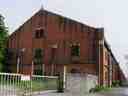
To spot the Hiroshima Army Clothing Depot, just look ahead for a massive, L-shaped red brick warehouse with weathered shutters and a distinctly old-fashioned, fortress-like appearance-it’s hard to miss its imposing structure looming over the street! Now, as you stand before these towering brick walls, let’s peel back the years together. Imagine it’s 1905: workers bustle in and out, sewing machines rumble, and the air is thick with the smell of fabric and leather. This very building, one of Japan’s oldest reinforced concrete warehouses, was built not to store rice or tea, but uniforms, boots, hats, and even army underwear for the Imperial Japanese Army. Don’t forget gloves, socks, water bottles, even soap and little soldier notebooks-all kinds of everyday things needed by a massive army, packed and shipped right from here. Back then, this site covered nearly the whole area of Deshio, swarming with workers-interestingly, most of them were women. In 1924, women even outnumbered men, busy at long rows of machines. The building’s thick brick walls and sturdy concrete bones made it a fortress in more ways than one. Minimum daily wages, by the way, were about 90 sen for women and 1 yen 20 sen for men-nobody was getting rich, but at least there was childcare and medical care for families. But that’s just the peacetime hustle. Jump ahead to August 6th, 1945-the morning the world changed. When the atomic bomb exploded over Hiroshima, the depot was just 2.7 kilometers from the epicenter. The blast twisted the heavy iron doors and blasted the bricks, but this structure would not fall. Instead, right after the bomb, the building became a shelter-a lifeline. Hundreds of injured, dazed people crawled here, turning these storage halls into a makeshift field hospital. Imagine the echo of desperate voices, the smell of burning and dust lingering in the air. Many who couldn’t go on breathed their last within these very walls. After the war, the depot’s purpose kept changing. Classrooms for university students, humble student dorms, government offices, and even a regular old warehouse-with each new use, these bricks absorbed another layer of history. In the late 1990s, the buzz inside faded away, and silence fell as the buildings sat empty, overtaken by time and tangled ivy. The locals even called the nearby shopping street "Ivy Town" because of the green vines clinging to these very walls. Ironically, the depot you see is one of the best surviving examples of early Japanese concrete architecture-remarkably, some brickwork here is almost as old as Japan’s very first reinforced concrete military structures. The walls are thick, the beams are solid, and you can actually spot concrete slabs peeking through the brick exterior if you look closely, a little nod to builder’s secrets from over 100 years ago. These days, you can’t just march inside and poke around. The buildings are off-limits to the public, mainly because you wouldn’t want a piece of brickwork landing on your head-preservation takes funding and time, especially after earthquakes shake things up. In the past, there were dreams to turn it into a museum or an art space, and even hopes to house some of the thousands of colorful origami cranes from the Peace Memorial Park. But for now, the depot is loved as what it is: a monument to survival and memory. And there’s a twist! Just this year, in January 2024, the government decided that these four remaining warehouses would become National Important Cultural Properties. That’s right-they’re officially recognized as treasures of Japanese history, standing guard over all the stories woven through the wars, the peace, the rebuilding. So as you gaze up at this sturdy, quiet relic, picture all the hands that worked here and all the history it’s watched go by. Whether it’s ivy creeping up the side, or the memory of frantic footsteps echoing through empty halls, the Hiroshima Army Clothing Depot still stands, an unlikely hero among bricks, buttons, and the passage of time. If you're curious about the function, history or the status quo, the chat section below is the perfect place to seek clarification.
打开独立页面 →

常见问题
如何开始导览?
购买后,下载 AudaTours 应用并输入您的兑换码。导览将准备好立即开始--只需点击播放并按照 GPS 引导的路线行驶即可。
导览期间我需要互联网吗?
不需要!开始前下载导览并完全离线享受。只有聊天功能需要互联网。我们建议在 WiFi 下下载以节省移动数据。
这是导游带领的团体游吗?
不是--这是自助语音导览。您按照自己的节奏独立探索,通过手机播放音频解说。没有导游,没有团体,没有时间表。
导览需要多长时间?
大多数导览需要 60-90 分钟才能完成,但您完全控制节奏。随时暂停、跳过站点或休息。
如果我今天无法完成导览怎么办?
没问题!导览具有终身访问权限。随时暂停和恢复--明天、下周或明年。您的进度已保存。
有哪些语言可用?
所有导览均提供 50 多种语言版本。在兑换代码时选择您的首选语言。注意:导览生成后无法更改语言。
购买后我在哪里访问导览?
从 App Store 或 Google Play 下载免费的 AudaTours 应用。输入您的兑换码(通过电子邮件发送),导览将出现在您的资料库中,准备下载并开始。
如果您不喜欢该导览,我们将退款。请联系我们 [email protected]
安全结账使用