卡利亚里语音导览:帝国的回响与神圣的街道
在卡利亚里阳光普照的建筑立面之下,隐藏着一个充满秘密的城市,几个世纪以来,权力、信仰和反叛在此碰撞。 这个自助语音导览将揭示那些在悠长走廊和宏伟广场中流传的隐藏故事。避开人群,解开大多数游客从未听过的历史谜团。 在布翁卡米诺监狱高耸的围墙内,谁曾为了一次午夜越狱而冒着一切风险?圣米歇尔教堂巴洛克祭坛后回荡着怎样的古老仪式?市政宫殿中哪项丑闻般的决定一夜之间改变了这座城市的命运? 穿梭于阴暗的角落和金色的街道。驻足于曾经回荡着反抗之声、被遗忘的阴谋永远改变了卡利亚里的地方。让这座城市的过去在你脚下点燃现在。 现在就开始,揭开卡利亚里的层层历史。那些不为人知的故事正在等待着你。
导览预览
关于此导览
- schedule持续时间 40–60 mins按照自己的节奏
- straighten4.6 公里步行路线跟随引导路径
- location_on
- wifi_off离线工作一次下载,随处使用
- all_inclusive终身访问随时重播,永久有效
- location_on从 卡利亚里加尔默罗圣母教堂 开始
此导览的景点
To spot the Church of Our Lady of Mount Carmel, look for a tall, stone façade with a statue of the Virgin Mary above a circular window, along with a row of distinctive narrow…阅读更多收起
To spot the Church of Our Lady of Mount Carmel, look for a tall, stone façade with a statue of the Virgin Mary above a circular window, along with a row of distinctive narrow arched windows high up on the front, and a square bell tower topped with a statue right next to it. Now, step back in time with me, and imagine you’re standing on the very ground where history has woven drama, destruction, and a bit of artistic triumph. The Church of Our Lady of Mount Carmel is like a phoenix in stone - what you see today was born from ruins. The original church, built centuries ago in the 1500s, was a breathtaking blend of Gothic Catalan style. Its pride and joy was the Ripoll Chapel, one of Cagliari’s earliest tastes of the Renaissance. But in 1943, during World War II, bombs rained down and the old church was reduced to rubble - a dramatic twist for any building, really. But the Carmelites, not easily discouraged, salvaged what they could, tucking fragments of the old chapel safely inside the church you see now. The present-day church was built in the 1950s in what’s called Neo-Romanesque style - fancy words for simple, sturdy stonework and those eye-catching stripes and arches. You can spot a bold figure of the Virgin Mary poised above the doorway, and if you gaze up, you’ll find a bronze Madonna crowning the bell tower like she’s keeping watch over all of Stampace. The real magic, though, is inside, where giant mosaics by artist Aligi Sassu shimmer on the walls, bursting with colorful scenes of the Carmelites, prophets, popes, angels, and, of course, the infamous Inferno and Purgatory. It’s a place of memory and wonder, where ancient stones and modern art clash and mingle, and a little bit of wartime grit still lingers in the air - though don’t worry, you’ll only hear church bells ringing these days!
打开独立页面 →Look ahead for a grand white stone building with twin octagonal towers, towering above the arcaded street of Via Roma-this is the Palazzo Civico, Cagliari’s impressive city…阅读更多收起
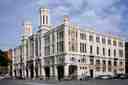
Look ahead for a grand white stone building with twin octagonal towers, towering above the arcaded street of Via Roma-this is the Palazzo Civico, Cagliari’s impressive city hall. Welcome to the Palazzo Civico, or as the locals sometimes call it, Palazzo Bacaredda-quite the tongue-twister, but trust me, it’s worth every syllable! Imagine yourself in the late 19th century: Cagliari’s city councilors are squeezed into their old offices atop the Castello, dreaming of something bigger and brighter. Under Mayor Ottone Bacaredda’s direction, they huddled in a smoky room on December 14, 1896, and finally agreed: it was time to move to a bold, new city hall down here on Via Roma, right across from the bustling harbor. You could almost hear a collective sigh of relief, or maybe the clinking of celebratory glasses. A national competition was launched and, after much drawing and debating, the winning design came from two ambitious northern architects, Crescentino Caselli and Annibale Rigotti-engineers who would go wild for what was then state-of-the-art: reinforced concrete floors, courtesy of a certain engineer Porcheddu (even back then, everyone loved a fancy foundation!). The foundation stone was laid with royal fanfare in 1899-King Umberto I and Queen Margherita themselves attended-even more excitement than when someone brings free gelato to the office. It took a few years-think “Italian time”-but when the Palazzo Civico was finally unveiled in 1907, everyone in Cagliari gasped at its gleaming limestone façade. Look up and spot those two tall, octagonal towers, rising thirty-eight meters, keeping an eye on the city like twin medieval guardians. Overhead, small obelisks perch on each edge, decorated at the base with sculpted heads of the famous “four Moors”-a symbol of Sardinia’s history. Lions and eagles in bronze stand watch, and on the golden-mosaic panels you’ll see allegories of Agriculture, Commerce, and Industry, like a dream team of economic superheroes! Step through those grand arches, and you’d enter a once-splendid courtyard, originally crowned with iron and glass-destroyed sadly during the bombings of 1943. Yes, the palazzo took some hard knocks in World War II. Picture shattered windows, the air thick with dust and hope, as the people of Cagliari patched it back together between 1946 and 1953. Inside, the council chambers are steeped in history and drama. There are enormous paintings by Filippo Figari-scenes of Sardinian and royal pageantry. The Mayor’s office even has a grand Flemish tapestry from 1620, and the Marriage Hall is dotted with local crafts and a beautiful mural on Sardinian weddings-if you ever want to get hitched with style, this is the place. One secret: among the displayed treasures is a centuries-old statue of Saint Augustine, which leaves its glass case once a year for a special parade. So as you stand before this fortress of civic pride, imagine the bustle of decisions, celebrations, and a few heated arguments echoing through its halls-this building is much more than stone and mortar; it’s the throbbing, ever-changing heart of Cagliari. If walls could talk, I’d bet this one would have some pretty juicy stories!
打开独立页面 →To spot the Monument to Carlo Felice, simply look straight ahead to find a tall, bronze statue of a man dressed as a Roman soldier, standing high on a stone pedestal, his arm…阅读更多收起
To spot the Monument to Carlo Felice, simply look straight ahead to find a tall, bronze statue of a man dressed as a Roman soldier, standing high on a stone pedestal, his arm stretched out as if he’s giving directions, framed by palm trees behind him. Now, let’s picture Cagliari nearly 200 years ago: the city buzzed with carriages and the salty Mediterranean breeze, and in the heart of town, people gathered to unveil a new monument to a king and his “road to glory.” That’s right-this mighty figure before you is King Carlo Felice of Savoy, and he’s not just pointing for his health. Legend has it, his outstretched arm was meant to show travelers the way to Porto Torres along the grand “Strada Reale,” the royal road connecting north and south Sardinia. Only there’s a twist-when the statue finally moved here in 1860, thanks to a little mix-up, King Carlo now points in the wrong direction! I guess even royal GPS had its off days. Sculpted in 1830 by Andrea Galassi and cast in bronze at the Royal Arsenal of Cagliari, the king was dressed-somewhat dramatically-as a Roman soldier: helmet gleaming, armor shining, and a toga draped just so. If you walk around the pedestal, look for the inscriptions written by historian Pietro Martini. They were meant to immortalize Carlo Felice, the man who gave Sardinia its backbone and main road…but the story doesn’t end with just stone and metal. Fast forward, and this monument became a true Cagliari celebrity, not just for royal fans but also for football lovers! Whenever the local team, Cagliari Calcio, scored a big win-even their first leap to Serie A in 1964, and the legendary Scudetto in 1970-residents would rush here after a match to give the king a wardrobe change. Out came a giant rossoblù tunic, festive balloons, and sometimes a traditional Sardinian cap in team colors. On Cagliari Calcio’s 100th birthday, he wore a jersey fit for a king! Life hasn’t always been all celebrations, though. In 2012, on the anniversary of the Palabanda uprising, crowds draped the statue in white cloth, sparking debates about what the king really stood for-the old tensions between Sardinia and the Savoys living on in modern memory. Whether loved, questioned, or simply used as a handy landmark for football parties, King Carlo Felice stands as a silent but stylish witness to Cagliari’s ever-changing story.
打开独立页面 →
再显示 11 个站点显示更少站点expand_moreexpand_less
Piazza Yenne is easy to spot-just look ahead for a spacious, bustling open square bordered by lively cafés and elegant old buildings, with a tall stone column and roundabout right…阅读更多收起
Piazza Yenne is easy to spot-just look ahead for a spacious, bustling open square bordered by lively cafés and elegant old buildings, with a tall stone column and roundabout right at the heart of it. Welcome to Piazza Yenne, the true beating heart of Cagliari! Picture yourself here in 1822, as workers lay the very first stone, calling it Piazza San Carlo to honor King Carlo Felice. Not long after, it got a fresh new name for a pretty grand reason-the viceroy, Marquis Ettore Veuillet d’Yenne, really wanted this place to anchor the city, and he got his wish right here beneath your feet! Imagine the cheers and chatter as, in 1860, a statue of Carlo Felice himself was raised nearby, glancing out from its spot on a pedestal designed by famed architect Gaetano Cima. But that’s not all. The viceroy also set a milestone here, marking the start of Sardinia’s Strada Reale-the ancient road to Porto Torres. Over the centuries, Piazza Yenne has seen plenty of changes! In the 1980s, it swung back into action with must-have pedestrian vibes, and the monuments kept on multiplying and disappearing, including a giant bronze-and-granite sculpture by Carlo Loi. Today, after a big makeover in 2017, it’s all about city living-wide-open spaces, chatter from the cafés, and chairs and umbrellas instead of towering gazebos. What a stage for Cagliari’s ongoing city story-just watch out if you try to look dignified like those old statues, because someone will probably spill coffee nearby!
打开独立页面 →To spot the Church of Santa Chiara, look up the short steps in front of you for a pale baroque facade with a double-curved top edge, two rectangular windows, a simple stone…阅读更多收起
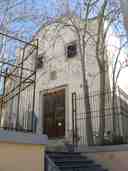
To spot the Church of Santa Chiara, look up the short steps in front of you for a pale baroque facade with a double-curved top edge, two rectangular windows, a simple stone portal, and a pair of leafless trees stretching their branches beside a high iron fence. Now, let’s take a little stroll back in time! Imagine the clatter of footsteps echoing on these old stones as you stand in Stampace, just steps from the heart of Cagliari. The Church of Santa Chiara in front of you might look quiet today, but centuries ago it was alive with whispers and laughter from a bustling community of Clarisse nuns. Founded between the end of the 1200s and the beginning of the 1300s, both the church-originally dedicated to Saint Margaret-and its neighboring monastery sheltered nuns for over 600 years. One can almost hear their prayers drifting through the air, mixing with the city’s daily life. But, as in any good story, peace was interrupted. In 1943, the bombs of World War II thundered over Cagliari, shattering this sacred ground. The monastery was so badly damaged it had to be torn down, leaving only a few stubborn ruins as ghosts of the past. In a twist worthy of any Italian drama, part of the monastery’s ruins became a lively market in the 1950s-and it’s still busy with shoppers today! The church you see was rebuilt in the late 1600s with a baroque style and stands on a little square, its entrance marked by a decorative portal, a tiny niche, and two watchful windows above-if only windows could talk! Peer around and you’ll spot a bell gable and, nearby, a modern elevator, giving people a vertical shortcut and sparing them the 98 steps up Santa Chiara. Inside, there’s a golden altarpiece and a hidden crypt beneath your feet with medieval secrets and ancient graves. So, what’s harder, keeping a secret for centuries underground, or walking all those 98 steps? At least with this tour, you won’t break a sweat!
打开独立页面 →Right in front of you, you’ll spot the grand facade of the Collegiate Church of Sant’Anna with its sweeping stone staircase leading up to a massive Baroque front, framed by two…阅读更多收起
Right in front of you, you’ll spot the grand facade of the Collegiate Church of Sant’Anna with its sweeping stone staircase leading up to a massive Baroque front, framed by two blocky bell towers and crowned with elegant domes. Now as you stand before the towering Baroque facade, let’s crank up your imagination-because this church is as much about grand drama as it is about stone and mortar. The huge steps before you seem to invite everyone-royalty, commoners, and even a few pigeons-up into Cagliari’s main church of the Stampace district, proudly stretching across Via Azuni. Way back in the 1200s, a much humbler Romanesque church stood right about where the grand arms of the Sant’Anna’s transept now rest. It appeared in the diary of Federico Visconti, the archbishop of Pisa, in 1263. As the centuries rolled along, this little church wasn’t just a quiet sanctuary-it got promoted to “collegiata” in 1616 by the local archbishop, making it the social hub of church life. But by the late 1700s, Cagliari’s people felt it was time for something grander. So who did they call? Not the Ghostbusters, but Giuseppe Viana, a gifted architect from Piedmont. Construction kicked off in 1785 with a big ceremonial laying of the first stone--but… well, you know how projects sometimes drag on. (Let’s just say, patience is a real virtue here.) Cash ran out, then more donations rolled in, including from the viceroy Carlo Felice-who made sure there was a chapel dedicated to his favorite, Blessed Amedeo of Savoy. By 1817, the doors finally swung open for a grand, almost-complete inauguration. But the church still needed its main altar, a gorgeous set of golden stuccoes, dramatic wall paintings by Rodolfo Gambini, and a mighty pneumatic organ from Pistoia. That all came about in 1906. Still, the to-do list stuck around, with more tweaks-like finishing the marble staircase in 1937 and popping on the right bell tower in 1938. Now, the Cagliaritani even have a saying about this place-“Sa fabbrica de Sant’Anna,” for something that never seems to get finished. Sadly, just as the church was settling into its new look, disaster struck. In 1943, sirens blared and bombs fell from the sky, devastating this very spot. For years after the war, repairs rolled on, but some of the rich interior never quite returned. The church finally reopened in 1951, a survivor and symbol of steady hope. Out here, the two bell towers stand like silent guardians over the swirling lines of the facade, broken up by columns with fanciful Ionic capitals, all leading your eye to an ornate rose window above the grand door. Inside, you’d find a bright space spread over three areas with soaring domes and chapels on the sides-each one holding treasures, like a 14th-century wooden crucifix, stunning marble altars, and somehow, still more mysteries waiting to be discovered. So while the church might have taken its time, like a chef perfecting a complicated recipe, what stands before you is a feast for the eyes and a monument to perseverance. And hey, if you’re renovating at home, just remember: nothing’s truly finished until Sant’Anna is!
打开独立页面 →To spot the Church of San Michele, just look up ahead and you’ll see a striking Baroque façade with three grand arches, richly decorated columns, and colorful flags fluttering…阅读更多收起
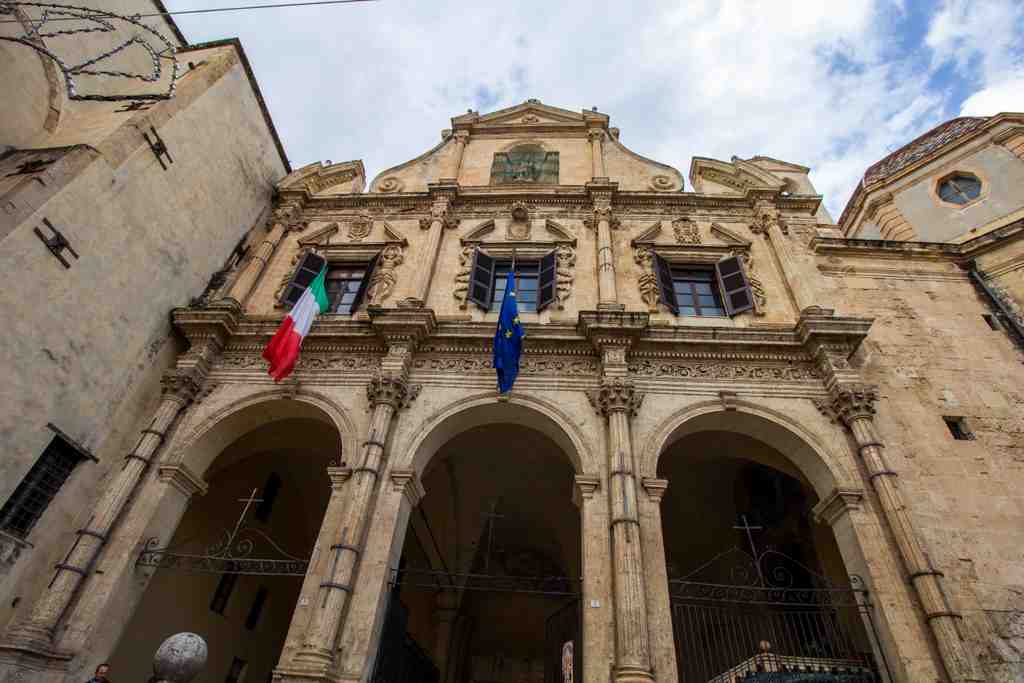
To spot the Church of San Michele, just look up ahead and you’ll see a striking Baroque façade with three grand arches, richly decorated columns, and colorful flags fluttering above-plus, don’t miss the distinctive octagonal dome over to the right! You’ve arrived at one of Cagliari’s most extraordinary landmarks-imagine, right where you’re standing, centuries of intrigue, devotion, and a little bit of drama have unfolded. The air still seems to buzz with stories. Close your eyes for a second and you might almost hear the bustling city of centuries past: footsteps echoing on stone, the distant ring of church bells, whispers of Jesuit priests in bustling robes. Back in the 1500s, the Jesuits swept into Cagliari like spiritual superheroes, setting up schools and dreaming of big things. But by the late 16th century, their first hideout felt more like a cramped broom closet-so, thank heavens for Monsignor Giovanni Sanna! Thanks to his generous donation, they could build a grand new novitiate right here, squeezed between the old city walls and the looming Torre dello Sperone. Construction became something of an adventure: first, there were not enough rooms, then a series of benefactors stepped up to fund chapels, new wings, and finally, the dazzling Baroque church you see now. Work started in 1687 and finished ten whirlwind years later. They didn’t stop, of course-over the next decades, skilled hands kept carving, painting, and polishing, turning San Michele into a sparkling jewel-box brimming with art and marble. If you peek at the façade, you’ll spot not only classical columns and arches, but three shiny coats-of-arms: in the middle the Jesuit “IHS” monogram (you’ll see it repeated everywhere inside-almost as if the Jesuits didn’t want anyone to forget where they worked!), with Sanna’s own wild boar crest to one side, and the whimsical shield of Francesco Angelo Dessì-a goose, crowns, hearts, and more-on the other. Legend has it that one of the grandest pulpits ever-which still stands nearby-was once used by Emperor Charles V himself. If you listen closely, maybe you’ll catch the faint echo of royal prayers mingling with the voices of countless worshippers. Now, picture stepping through those giant arches into an atrium that once welcomed not only priests and novices, but later, soldiers: after the Jesuits were temporarily banned in the late 1700s, the whole novitiate became a military hospital-a transformation that left secret traces inside, like old slate portals topped with the ever-present IHS. Then, of course, there’s the church’s octagonal dome-a nod to the “eighth day” of Catholic teaching, symbolizing eternal renewal. As you approach the sanctuary, your voice might bounce among the rich colored marble, lavish gold, and over two dozen swirling columns. The chapels circle around like a protective embrace, each bursting with paintings and statues: saints like Ignatius of Loyola and Francis Xavier, and masterpieces by Giacomo Altomonte, the master of Sardinian Rococo (who, fun fact, always signed his works “Romanus,” just to keep people guessing). Inside, you will find an irresistible blend of movement and grandeur: gleaming marble, ceiling frescoes, and an altar where the polychrome statue of Saint Michael stands triumphant, his curly hair and gold decoration the envy of every angel in the city. But it’s not all peace and piety-the area saw its share of fiery uprisings. During the 19th century, Jesuits were kicked out by angry crowds, secret archives were burned, and the novitiate was seized by the state. Yet, through all this, traces of the old Jesuit world survive-hidden doorways, lingering symbols, and a sense that every stone remembers. So while San Michele’s façade might seem quiet now, it thrums with a history of hope, faith, music, and mischief. Next time you pass, imagine those swirling capes, the flash of a bishop’s ring, or the silent gaze of Saint Michael surveying all of Cagliari from his marble pedestal. Onward to our next stop-history waits for no one! Interested in a deeper dive into the architecture and works of art, the church hall or the the anti-sacristy? Join me in the chat section for an insightful conversation.
打开独立页面 →To spot the Church of the Santissima Annunziata, look for a light-colored neoclassical facade with tall columns and a striking bell tower topped by a small dome, right where Corso…阅读更多收起
To spot the Church of the Santissima Annunziata, look for a light-colored neoclassical facade with tall columns and a striking bell tower topped by a small dome, right where Corso Vittorio Emanuele meets Viale Merello-if you see a building that looks ready to ring in both saints and emergencies (thanks to the nearby police station), you’ve found it! Now, imagine yourself standing here, where history has swept through like a strong Sardinian wind. If you traveled back in time to the 1600s, you’d find a humble country chapel sitting quietly at this very spot-until a furious storm in 1643 tore it down, leaving just memories and soggy priests behind. But the story didn’t end there; no, like any good Sardinian, this place had resilience. The church rose from the ruins, rebuilt by a group of determined priests known as the Piarists, who filled it with new life, learning, and the sweet scent of candles. On March 25, 1645, the church was dedicated to the Virgin Annunciata, marking a fresh start and drawing in worshippers from all over Cagliari. The biggest attraction? An impressive painting of the Annunciation, said to perform miracles! So many people came to see it that they had to build its own special “super chapel” just to fit everyone-and probably to keep the line down to a manageable level. The church thrived, but life here was not just singing and incense. In the 1800s, the church closed, and the adjacent convent took on a tougher job as a police barracks-if these walls could talk, they’d have tales of prayers and police whistles! In 1911, the Franciscan friars took over, giving the church yet another twist. Soon after, a grand new facade and bell tower were built, bringing some neoclassical pizzazz to the neighborhood. Step inside and imagine the 1920s, when the interior sparkled with fresh stucco, detailed frescoes, and the echo of hymns. That beauty was nearly lost in the 1980s, when moisture damage forced a long closure-think of it as the building taking a much-needed spa break. Ever since, restorations have kept it standing, though some treasures were sadly lost over time. Despite storms, soldiers, and the occasional stubborn leak, this church remains a living symbol of survival and faith. The Annunziata is a place where history never quite leaves, and there’s always a story waiting behind every stone. Not bad for a place that started out as just a little country chapel in a storm.
打开独立页面 →To spot the Villa of Tigellio, look for a wide, open area of ancient, weathered stone foundations and columns nestled between tall, modern apartment buildings-it’s right ahead of…阅读更多收起
To spot the Villa of Tigellio, look for a wide, open area of ancient, weathered stone foundations and columns nestled between tall, modern apartment buildings-it’s right ahead of you, set just below street level, with metal fencing bordering the site. Alright, adventurer, let’s unlock the secrets of the Villa of Tigellio! Close your eyes for a moment and imagine the clang of chisels and the bustle of city life from nearly 2,000 years ago right here in the heart of Cagliari. This site may be called a “villa,” but don’t let the name fool you-the ruins before you are actually the remains of at least three Roman homes, with two still sporting visible foundations. Picture grand entrances, vibrantly painted walls in the “House of the Painted Tablinum,” and lavish decorative stucco in the “House of the Stuccoes,” where the ancient elite hosted friends and maybe even the occasional poetry slam-Roman style! But here's the twist: despite its name, this place had absolutely nothing to do with the famed musician Tigellio. The mix-up happened in the 19th century when curious archaeologists, led by Giovanni Spano, went on a treasure hunt after reading a book from 1865. Tempted by tales of a “Villa di Tigellio” rumored to be hidden near the Buon Cammino hill, they dug deep-only to unearth an entire Roman neighborhood instead. Over the years, the site saw passionate digs in the 1960s and again in the 1980s, each time sharing more clues about daily life in Roman Cagliari. Now, surrounded by the buzz of modern apartments, these stones quietly tell stories of ancient dinners, deals, and dramas! And who knows-maybe the real Tigellio would’ve been flattered at the mix-up. If walls could sing, you might just hear a Roman ballad echoing from these ruins!
打开独立页面 →Right before you, the Roman amphitheater of Cagliari stretches out-a giant carved into the limestone cliffs, half sculpted by human hands and half by nature’s own tools. Imagine…阅读更多收起
Right before you, the Roman amphitheater of Cagliari stretches out-a giant carved into the limestone cliffs, half sculpted by human hands and half by nature’s own tools. Imagine standing in this spot nearly 2,000 years ago, the sun blazing high over the arena, as the proud citizens of Carales flocked to claim their seats. Some 8,000 or maybe 10,000 people could squeeze in here, about a third of the whole city’s population at the time. Now that’s what I call a popular event-move over, rock concerts! Picture the spectacle: roaring crowds, the clash of steel, the thundering feet of animals on sand. The air buzzed with excitement as gladiators from near and far-and even beyond Sardinia-battled for glory, while high above, local VIPs lounged in a special area called the podium. Seats were strictly ordered by social rank. The further up you went, the less important you probably were-so if your view was bad, don’t blame your eyesight, blame your ancestors. Of course, things in the arena weren’t always about sport. Public executions took center stage too. Not exactly a cheerful event, but at least no one complained about the outcome of those matches. When gladiator games fell out of favor-thanks, in no small part, to Christianity-by 438 AD, an emperor finally banned them. No more wild encounters or roaring crowds. The amphitheater drifted into silence and, through the Middle Ages, local conquerors chipped away at its stones, turning it into an ancient rock quarry for their own construction needs. Talk about recycling! Fast-forward to the 1800s: it was so buried that archaeologists like Giovanni Spano had to dig deep, discovering coins, marble slabs, and echoes of forgotten cheers. For a while in the 2000s, modern scaffolding let the amphitheater host concerts-though I bet the ancient lions wouldn’t have appreciated the drum solos. Eventually, those structures were removed to let you see this place in its true, ancient glory. Standing here now, you can almost imagine the crowds, the drama, and maybe the odd ticket scalper peddling ancient popcorn.
打开独立页面 →To spot the National Archaeological Museum of Cagliari, look up the wide set of stairs framed by black railings, leading beneath a canopy of pine trees to a modern building with…阅读更多收起
To spot the National Archaeological Museum of Cagliari, look up the wide set of stairs framed by black railings, leading beneath a canopy of pine trees to a modern building with large stone walls and big windows. Now, imagine you’re standing in front of the gateway to Sardinia’s treasure chest of secrets! The National Archaeological Museum of Cagliari might look modern, nestled serenely among the pine trees, but inside, you’ll find thousands of years packed into four stories of surprises. This museum is the jewel box of Sardinia-if Indiana Jones ever retired, he’d do it here. Let’s rewind to the year 1800. Picture a fancy room in the Viceroy’s palace, lined with shelves groaning under the weight of shiny stones, ancient tools, and maybe the odd dinosaur bone-because who was really keeping track? The museum started as a cabinet of curiosities, where viceroys, knights, and collectors competed to see who could bring home the oddest artifact. Within a few years, the collection grew so wild, it was gifted to the University of Cagliari, which probably said, “Thanks, but where do we put this mummified lizard?” By 1857, they were expanding rooms and carving out new sections, dividing everything from Roman statues to glimmering minerals. As decades passed, the collection grew like a Sardinian sunflower, thanks to passionate donors and thrilling archaeological digs. Important families and adventurous explorers added treasures, and the poor staff were always negotiating for more space. Imagine this: in 1904, after years crammed in various buildings, the museum finally got its own custom-designed home, complete with Roman gardens and enough rooms to get lost in-pardon the pun, but even the statues got their own gallery. In 1993, the treasures moved one last time to this very spot, with halls dedicated to prehistoric axes, mysterious Punic masks, shining Roman coins, and even the ghosts-er, memories-of the ancient Tophet of Tharros. Each floor is like turning the page of an epic book, from the Neolithic age to the Byzantine era. If you hear the faint whispers of the past, don’t worry-it’s probably just the statues comparing notes. And if you’re curious about Sardinia’s most famous giants, head up to the fourth floor: since 2014, the giant statues of Mont’e Prama have been standing guard over the secrets of this magical island.
打开独立页面 →The story starts with Stefano Cardu, a Cagliari native who was something like Indiana Jones, but with more silk and less snakes. In the early 1900s, Cardu traveled through…阅读更多收起
The story starts with Stefano Cardu, a Cagliari native who was something like Indiana Jones, but with more silk and less snakes. In the early 1900s, Cardu traveled through Siam-today’s Thailand-and all across the Indochinese peninsula, China, Japan, and India, collecting treasures that most people only see in movies. In 1914, like a generous uncle returning from around the world, he gifted some of his dazzling finds to the city of Cagliari. Over the years, the collection moved homes a few times before finally nesting here in the Citadel of Museums in 1981. Inside, you can marvel at Buddhist sculptures, intricate ivory carvings, and silverwork that glimmers with stories from the 1600s to the 1800s. Want some adventure? There are Burmese Buddhist relics, delicate Japanese okimono and netsuke from the Meiji era, and porcelain from China’s Ming and Qing dynasties. If that’s not enough, feast your eyes on ancient swords and odd-looking Asian coins-Italy's only collection of Southeast Asian weapons, right under your nose! So, ready to jump continents without leaving Cagliari? Just promise not to try any martial arts moves on the artifacts!
打开独立页面 →The story begins right after 1866, when new laws meant many church treasures flowed into the State’s collection-imagine monks reluctantly waving goodbye to their precious…阅读更多收起
The story begins right after 1866, when new laws meant many church treasures flowed into the State’s collection-imagine monks reluctantly waving goodbye to their precious altarpieces! These masterpieces needed a home, so by the late 1800s, they were displayed in the grand Palazzo delle Seziate. But since 1992, they’ve found their perfect stage here, winding around the old Spanish walls that have seen as much drama as an opera. Inside, you’ll find astounding art from the 1400s all the way to the present. The real show-stoppers? Huge ‘retabli’-that’s a fancy word for enormous, multi-paneled altarpieces, sculpted and painted with loving detail. Many came from the sadly demolished San Francesco di Stampace church. Highlights include Juan Mates’s vibrant Annunciation, Juan Barcelo’s Visitazione, and so many golden wooden arches you’d think you’d stumbled into a gilded forest. Go down a level, and you’re face to face with seventeenth-century works from masters like Domenico Fiasella. And then further down-just when you thought you’d reached rock bottom!-you get scenes from everyday Sardinian life in the 1800s and 1900s: farmers, landscapes, portraits of grumpy old men (or is that just me before my morning coffee?). Don’t miss the temporary ethnographic displays: suitcases stuffed with glittering gold and silver jewels, trays of Spanish-Arab ceramics, and old weapons sharp enough to make any visiting knight nervous. There’s even a quirky twelfth-century Islamic bronze aquamanile, an ancient bronze vessel, with a long-lost twin over in the Louvre. And if you spot a ‘spuligadentes’-a very traditional Sardinian toothpick-just remember, not all museum pieces are meant for testing your lunch. Step inside, and let history’s brushstrokes sweep you away. I promise, it's far from your average rainy day art museum!
打开独立页面 →Ahead of you rises a long, pale stone building on a gentle hill, with a pair of flags flapping above its arched main entrance-look for tall pine trees lining the path and the…阅读更多收起
Ahead of you rises a long, pale stone building on a gentle hill, with a pair of flags flapping above its arched main entrance-look for tall pine trees lining the path and the symmetrical rows of green shutters framing prison windows. Welcome to Buoncammino Prison-the “giant on the hill” that once loomed over Cagliari’s lives, both outside and inside these stout limestone walls! Take a moment to feel yourself standing on one of the city’s ancient hills, known as Colle di San Lorenzo, where the air was once thick not just with pine resin but with secrets, stories, and no small amount of tension. Picture the late 1800s: Cagliari’s population swelling, cholera rumors swirling, and its old prisons-like the ones in the mighty towers of San Pancrazio and the feared Torre dell’Elefante-bursting at the seams. City leaders, desperate to prevent disease, voted to build a new, safer jail right here. By 1855, the first prisoners marched through Buoncammino’s doors, passing a stern military guardhouse, their eyes perhaps catching on the little Romanesque church that gave this hill its hopeful name-Our Lady of the Good Walk. (I suppose for prisoners, any “good walk” wasn’t far enough!) But nothing in Sardinia is ever simple or speedy. Through the endless dance of bureaucracy and debate, this “temporary” jail quietly became the city’s main pen, growing brick by brick for decades until, in 1897, it stretched across 15,000 square meters-Cagliari’s largest structure, more fortress than home. Hundreds moved here from the ancient Torre di San Pancrazio, closing that chapter of Sardinia’s sometimes grim penal history. If you’re wondering why nobody was ever able to escape (not even the most determined or imaginative inmates), you’ll spot the answer in the building’s design: octagonal keeps at each corner, tiny lookout slits, and labyrinth corridors all created a place so secure it inspired the city’s most chilling legend. They say that one of the original architects, stricken with guilt after a relative landed behind these bars, was told: “You were a monster, and you built a monster”-and so overcome with remorse, he ended his own life. That’s the kind of story that makes you shiver, even under the Sardinian sun! Buoncammino’s history is thick with little dramas and big changes. In the early days, hundreds were crammed in-sometimes over a thousand-surviving on just a bowl of soup and a chunk of bread. Girls were taught by nuns, boys by a kindly old inmate-turned-teacher, and the guards paced the wall day and night, rain or shine. When war thundered overhead in 1943, the inmates were rushed away to safer places, only to shuffle back the following year, their world still shaken. But change crept in, sometimes quietly, sometimes not. Prison directors, some colorful characters, pushed for better: classrooms, movies, new beds, hot water-Buoncammino even boasted showers and TV before most local homes! Yet, even as the world advanced, the ancient stones began to crumble and the number of incarcerated outgrew the corridors. By the end, over a century after its founding, life here could be harsh, lonely, and desperately overcrowded-so much so that, after more than 100 years, Buoncammino finally shut its gates in 2014 and sent its last residents to a new jail outside town. Today, Buoncammino is no longer a place of locked doors and heavy footsteps, but one of civic offices, its stories echoing silently through the high-arched halls. So as you take in those pale stones, try to imagine the swirl of lives, rumors, heartbreak, and hope that once filled this place-from desperate escapes foiled, to stirring student lessons, to the laughter of guards at changing shifts. Not one prisoner ever got out without permission-except, perhaps, their stories, which still drift on the Cagliari breeze!
打开独立页面 →
常见问题
如何开始导览?
购买后,下载 AudaTours 应用并输入您的兑换码。导览将准备好立即开始--只需点击播放并按照 GPS 引导的路线行驶即可。
导览期间我需要互联网吗?
不需要!开始前下载导览并完全离线享受。只有聊天功能需要互联网。我们建议在 WiFi 下下载以节省移动数据。
这是导游带领的团体游吗?
不是--这是自助语音导览。您按照自己的节奏独立探索,通过手机播放音频解说。没有导游,没有团体,没有时间表。
导览需要多长时间?
大多数导览需要 60-90 分钟才能完成,但您完全控制节奏。随时暂停、跳过站点或休息。
如果我今天无法完成导览怎么办?
没问题!导览具有终身访问权限。随时暂停和恢复--明天、下周或明年。您的进度已保存。
有哪些语言可用?
所有导览均提供 50 多种语言版本。在兑换代码时选择您的首选语言。注意:导览生成后无法更改语言。
购买后我在哪里访问导览?
从 App Store 或 Google Play 下载免费的 AudaTours 应用。输入您的兑换码(通过电子邮件发送),导览将出现在您的资料库中,准备下载并开始。
如果您不喜欢该导览,我们将退款。请联系我们 [email protected]
安全结账使用