

欧塞尔语音导览:永恒之塔与神圣之石
一座中世纪城市从河岸边凝视着,哥特式石墙和蜿蜒小巷中藏匿着秘密。欧塞尔不仅是用来观赏的,更是用来感受的,表面之下涌动着无数故事。 这个自助语音导览邀请您沿着古老的足迹,穿过圣艾蒂安大教堂,经过标志性的钟楼,进入圣日耳曼修道院的阴影大厅。忘掉那些宣传册吧。在这里,传说和隐秘角落将揭示连当地人也鲜少提及的秘密。 谁在欧塞尔自己的大教堂里公然反抗国王,震惊了整个法国?什么神秘的兄弟会在钟楼内留下了编码标记?哪位修道院长在一个雾蒙蒙的早晨消失了,只留下了一把银钥匙和一片寂静? 漫步于铭记着反抗的拱门之下。徜徉于回荡着禁忌祈祷的修道院回廊。见证充满丑闻、野心和奇迹的街道。这就是欧塞尔真正的脉搏,在每一块石头下等待着。 解锁故事。立即开始您探索这座城市秘密历史的旅程。
导览预览
关于此导览
- schedule持续时间 40–60 mins按照自己的节奏
- straighten4.7 公里步行路线跟随引导路径
- location_on
- wifi_off离线工作一次下载,随处使用
- all_inclusive终身访问随时重播,永久有效
- location_on从 欧塞尔圣欧塞布教堂 开始
此导览的景点
Look at the massive pale stone walls of this church, defined by its steep, sweeping roofline and anchored by a striking octagonal spire with arched openings. When you think of…阅读更多收起
打开独立页面 →Look at the massive pale stone walls of this church, defined by its steep, sweeping roofline and anchored by a striking octagonal spire with arched openings.
When you think of city walls, you think of absolute safety, but in ancient Auxerre, the line between sanctuary and slaughter was drawn right into the earth. If your property sat just outside the city's early Roman fortifications, you were essentially offering an open invitation to every passing marauder. The shifting walls of Auxerre meant that geography was destiny, and unfortunately for the original founders of this church, their geography was terrible. The vulnerable monks who established a monastery here in the seventh century faced frequent, devastating raids with absolutely zero protection from the city defenses.
It got so bad that the surviving monks eventually just abandoned the site entirely. They handed what was left of the smoking ruins over to the Auxerre Cathedral just to rid themselves of the burden.
Take a look at your screen to see the exterior in the app. It wasn't until 1196 that the city expanded its defensive perimeter, finally scooping the Church of Saint-Eusèbe inside the boundaries of safety.
View the exterior of the Church of Saint-Eusèbe, which was originally built outside the city walls before being incorporated into Auxerre's defenses in 1196.Photo: Pline, Wikimedia Commons, CC BY-SA 3.0. Cropped & resized. But being inside the city limits came with its own bizarre problems. Pull up the second image in the app to see the twelfth-century Romanesque bell tower. In 1411, city leaders decided to coordinate their night watchmen by purchasing a state-of-the-art, and wildly expensive, mechanical spring-and-bell clock. They installed it right up in that tower.
There was just one massive oversight.
Because the city's borders had expanded, this church was no longer centrally located. When the shiny new clock rang, its chimes completely failed to reach the other side of town. Half the population could not hear it, rendering the very expensive municipal experiment completely useless. The city stubbornly lived with this failure for decades until they were finally permitted to build a centralized clock tower in 1457.
The church's bad luck did not end there. In the sixteenth century, local parishioners proudly funded stunning Renaissance stained-glass windows to celebrate a community revival. In 1567, violent local uprisings left them smashed to pieces. The devastated parishioners painstakingly raised funds all over again, bought beautiful replacement glass, and installed it. Then, in 1612, a massive hurricane struck Auxerre and shattered the brand new windows.
By the late eighteenth century, the historic priory was dismantled. During the French Revolution, the church suffered the ultimate indignity of being converted into a secular prison. After serving as a jail, the building became the local headquarters for the Decadal Cult. This was the atheistic, ten-day-cycle religion established by the French Republic to replace Christianity. It took until 1801 for the battered building to be restored to Catholic worship.
And yet, the worst architectural crime committed here wasn't by rioters or hurricanes. In 1852, urban planners decided the building needed more symmetry. To perfectly align five lateral side chapels, they completely demolished a magnificent, flawlessly preserved Renaissance chapel. Today, nothing remains of that masterpiece except a single drawing.
Let us leave this bruised survivor behind and head toward the modern bustling heart of the city. We will make our way to Place de l'Arquebuse, which is about a six-minute walk from here.
Observe the 1633 portal featuring high-relief statues of Saint Eusebius, the church's primary patron, and Saint Laurent, its secondary patron.Photo: Pline, Wikimedia Commons, CC BY-SA 3.0. Cropped & resized. 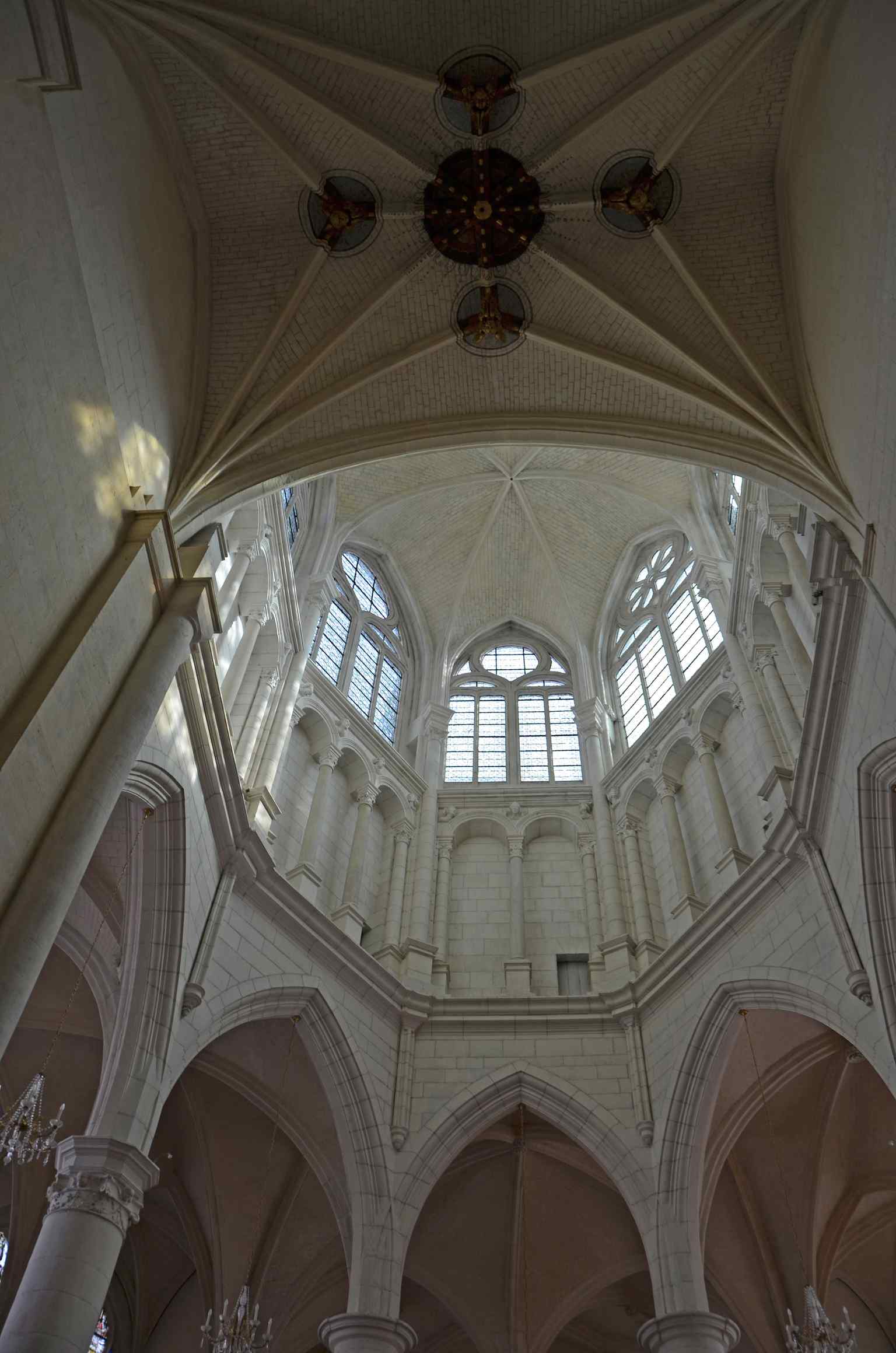
Focus on the Renaissance-style choir, which was rebuilt starting in 1530 after its collapse due to lack of maintenance.Photo: Pline, Wikimedia Commons, CC BY-SA 3.0. Cropped & resized. 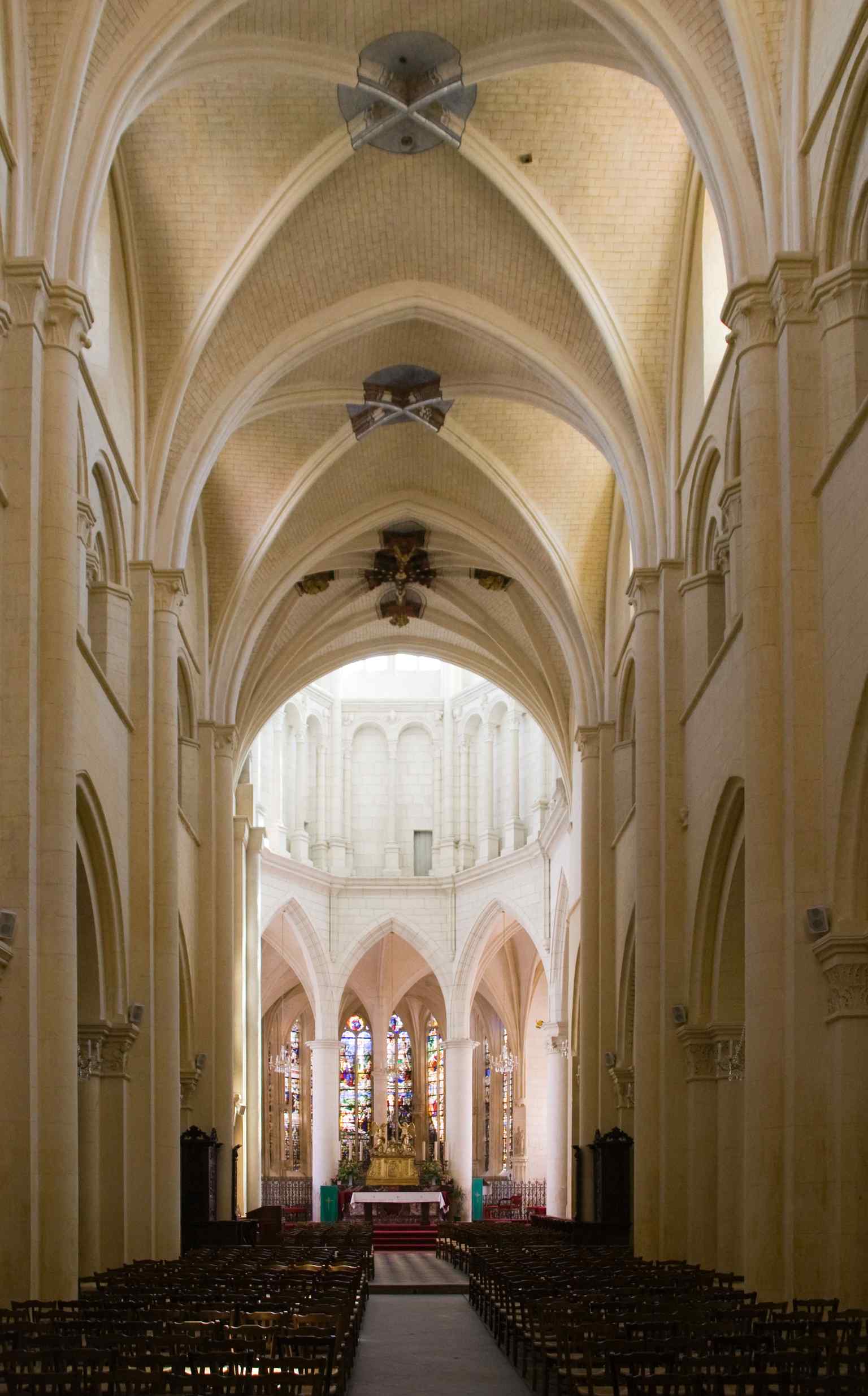
A general view of the interior showcases the church's complex history of continuous rebuilding and architectural evolution.Photo: Cquest, Wikimedia Commons, CC BY-SA 3.0. Cropped & resized. Look to your right and you will see a squarish, two-story stone and brick pavilion topped with a tall, steeply pitched roof and framed by light blue doors. This is the Maison des…阅读更多收起
打开独立页面 →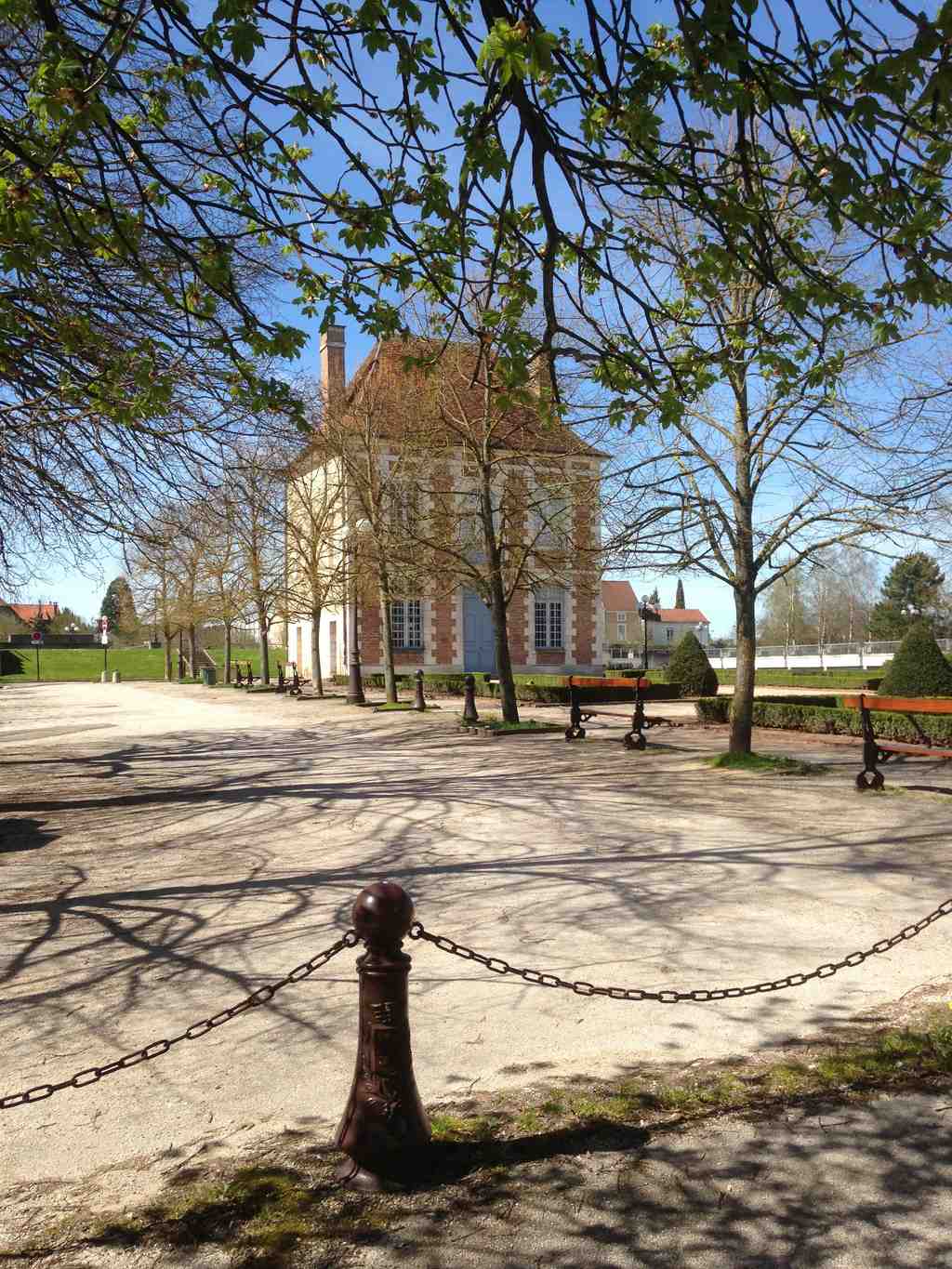
Place de l'ArquebusePhoto: Nano nous, Wikimedia Commons, CC BY-SA 3.0. Cropped & resized. Look to your right and you will see a squarish, two-story stone and brick pavilion topped with a tall, steeply pitched roof and framed by light blue doors. This is the Maison des Arquebusiers, and its name tells you exactly what used to happen here.
An arquebuse was an early, incredibly heavy matchlock firearm. Today, Place de l'Arquebuse is a bustling, thoroughly paved civic center. But for centuries, this was the ragged edge of Auxerre.
Look around this open, orderly space. Picture this modern market square not as a safe civic hub, but as a loud, smoky, unprotected perimeter where armed men fired heavy weapons at wooden birds.
Back in the early 1700s, the local knights of the Arquebuse had to build a temporary wooden shack every time they wanted to hold target practice. They eventually got tired of the carpentry. In 1735, an architect named Guilbert-Latour designed this permanent stone pavilion for them, completely free of charge. The knights took their shooting very seriously. Every June, they held a competition. Whoever shot the wooden target with the greatest precision was crowned King of the Bird, which came with a total exemption from taxes for a year. If you pulled off this feat three years in a row, you were named Emperor, giving you tax exemption for life, a perk that even passed to your widow.
The pavilion also housed an invaluable collection of two hundred royal portraits. But the edge of the city is where the rules of civilization are often tested. During the French Revolution, in September 1792, a battalion of passing soldiers decided these paintings were symbols of tyranny. Despite local officials protesting, the soldiers dragged all two hundred centuries-old masterpieces into this very square, built a massive bonfire, and reduced them to ash. The following year, they even erected a temporary Roman temple right here to celebrate the fall of the monarchy.
In the centuries since, the city expanded, swallowing the square and transforming it from a dangerous boundary into a safe, vital center for the city market. But owning a piece of history is an expensive burden. By 2017, this pavilion was abandoned. The French state actually offered to sell it to the city of Auxerre for exactly one euro. The mayor flatly refused, pointing out that the restoration costs of a classified historical monument would bankrupt the municipality. So, in a very modern twist of fate, this historic military pavilion was eventually sold on an online auction website in 2019 for 245,000 euros.
As for the square itself, millions have been spent and multiple grand architectural plans have been scrapped in a constant struggle to figure out how to revitalize the space, with current hopes resting on a modern gourmet food hall. The struggle over what belongs in the center of a city never really ends.
Let us keep moving. Our next stop is the Church of Saint-Amatre, about a five-minute walk away.
再显示 10 个站点显示更少站点expand_moreexpand_less
To your left is the Church of Saint-Pierre, a massive pale stone structure featuring a symmetrical classical facade with three red doors, flanked by a distinctly asymmetrical,…阅读更多收起
打开独立页面 →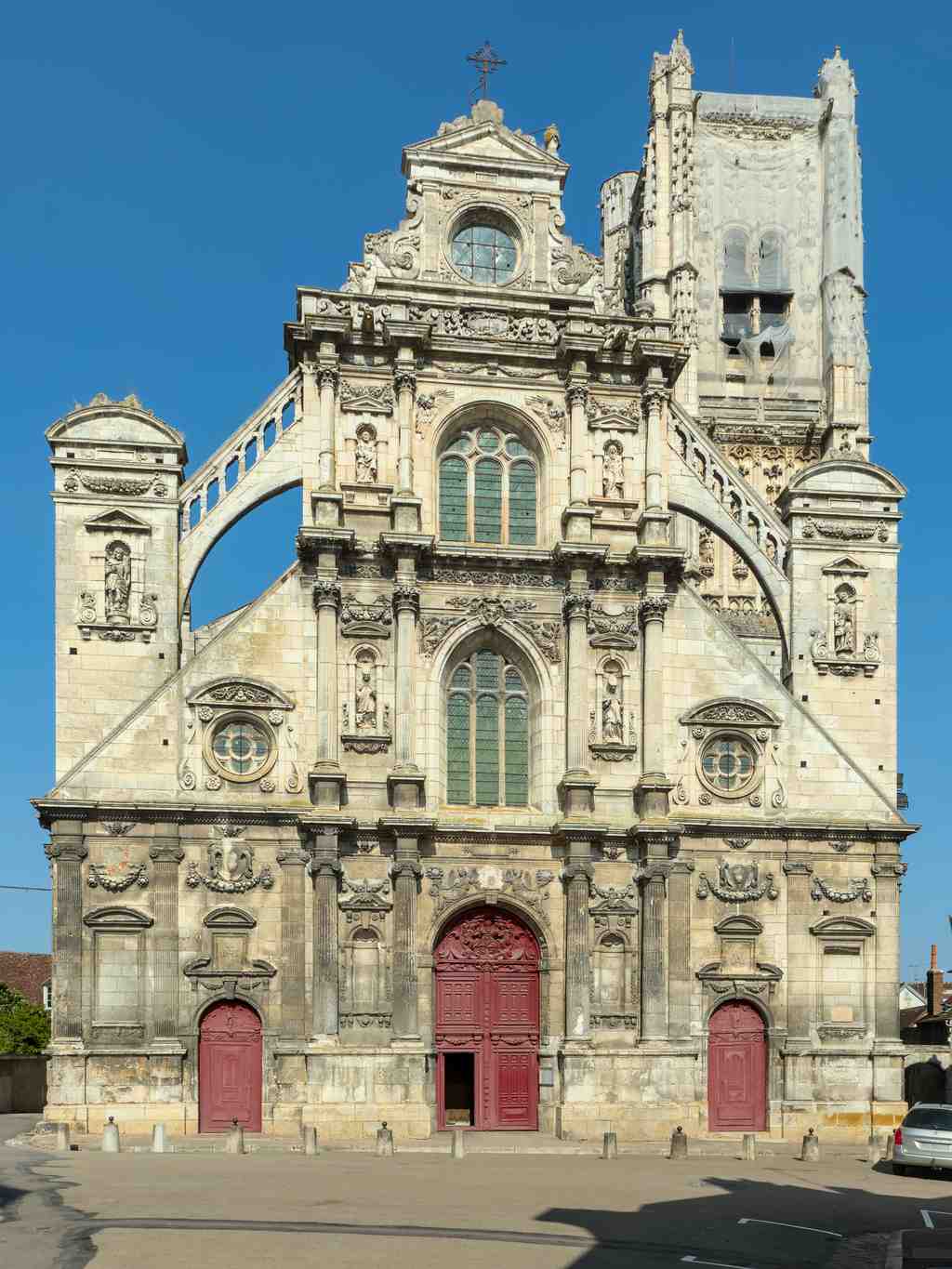
Church of Saint-Pierre in AuxerrePhoto: Chabe01, Wikimedia Commons, CC BY-SA 4.0. Cropped & resized. To your left is the Church of Saint-Pierre, a massive pale stone structure featuring a symmetrical classical facade with three red doors, flanked by a distinctly asymmetrical, square Gothic tower on its right side.
For centuries, this spot sat completely exposed, shivering outside the original fortified perimeter of Auxerre. But cities are living things, constantly expanding their reach. Eventually, Auxerre grew enough to wrap its protective stone arms around its vulnerable suburbs, extending a new medieval wall to finally encompass this very ground.
Long before that wall was built, this site was a bustling transitional zone. Excavations in 2007 peeled back the dirt to reveal a sprawling cemetery from the eighth and ninth centuries. Back then, this area marked the messy shift from Roman Antiquity to the High Middle Ages, a classic pagan to Christian transition where locals sought to bury their dead as close to the sacred church walls as possible. Because it was isolated outside the early city defenses, the vulnerable monks here were sitting ducks. The original church was repeatedly damaged, most notably during the Saracen invasions of the eighth century.
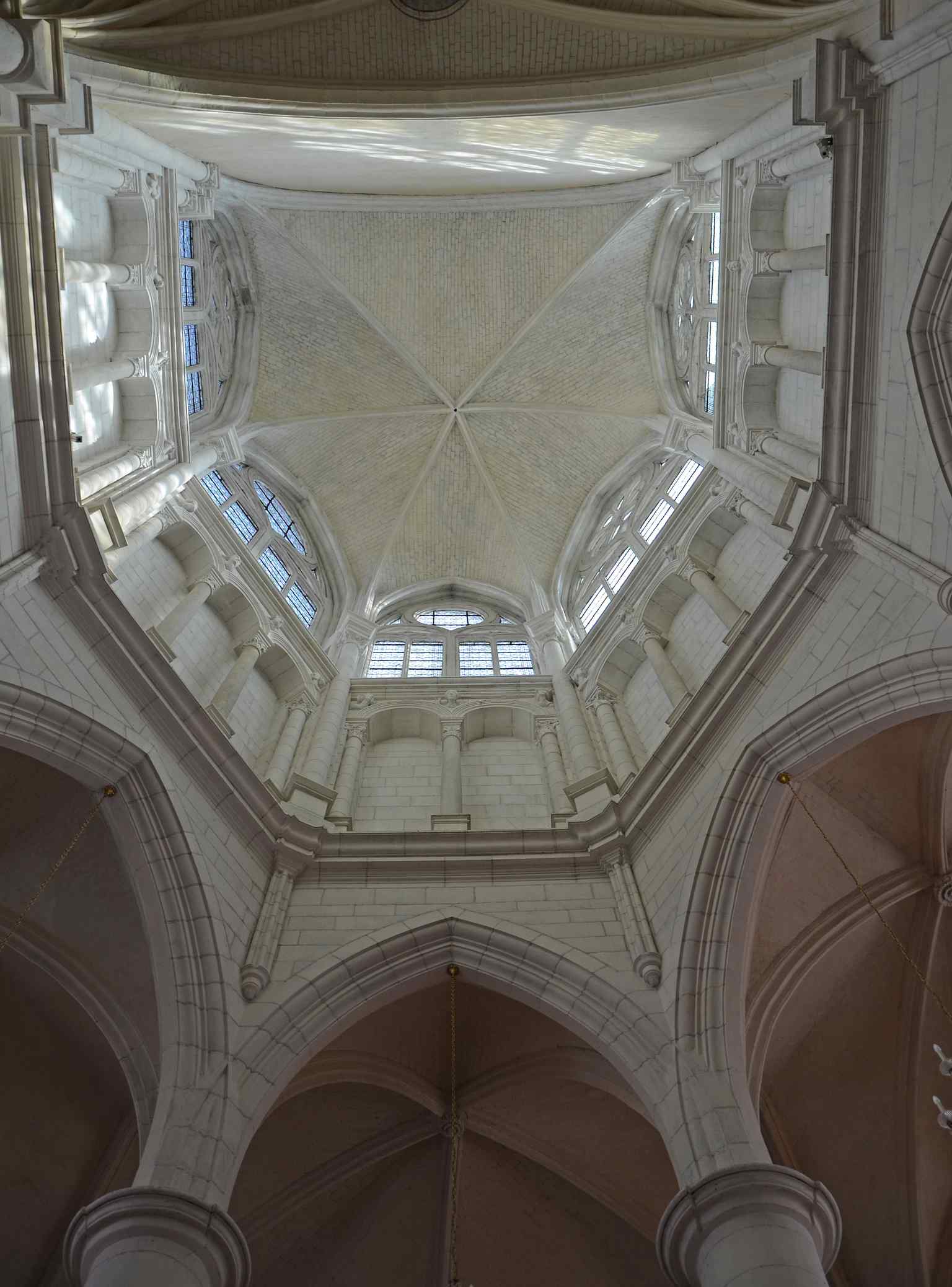
But the real devastation came much later. Because why let foreign invaders have all the fun when you can destroy your own city? In 1567, a wave of violent civil uprisings reached the city. Rebel factions captured Auxerre, setting fire to Saint-Pierre and pillaging it so thoroughly that the unstable medieval ruins eventually had to be demolished. Glance at the app to see the result of the massive rebuilding effort that followed in the seventeenth century. The locals funded it themselves, paying the master masons over four thousand livres, roughly a quarter of a million dollars today, to reconstruct the nave, which is the soaring central hall of the church.
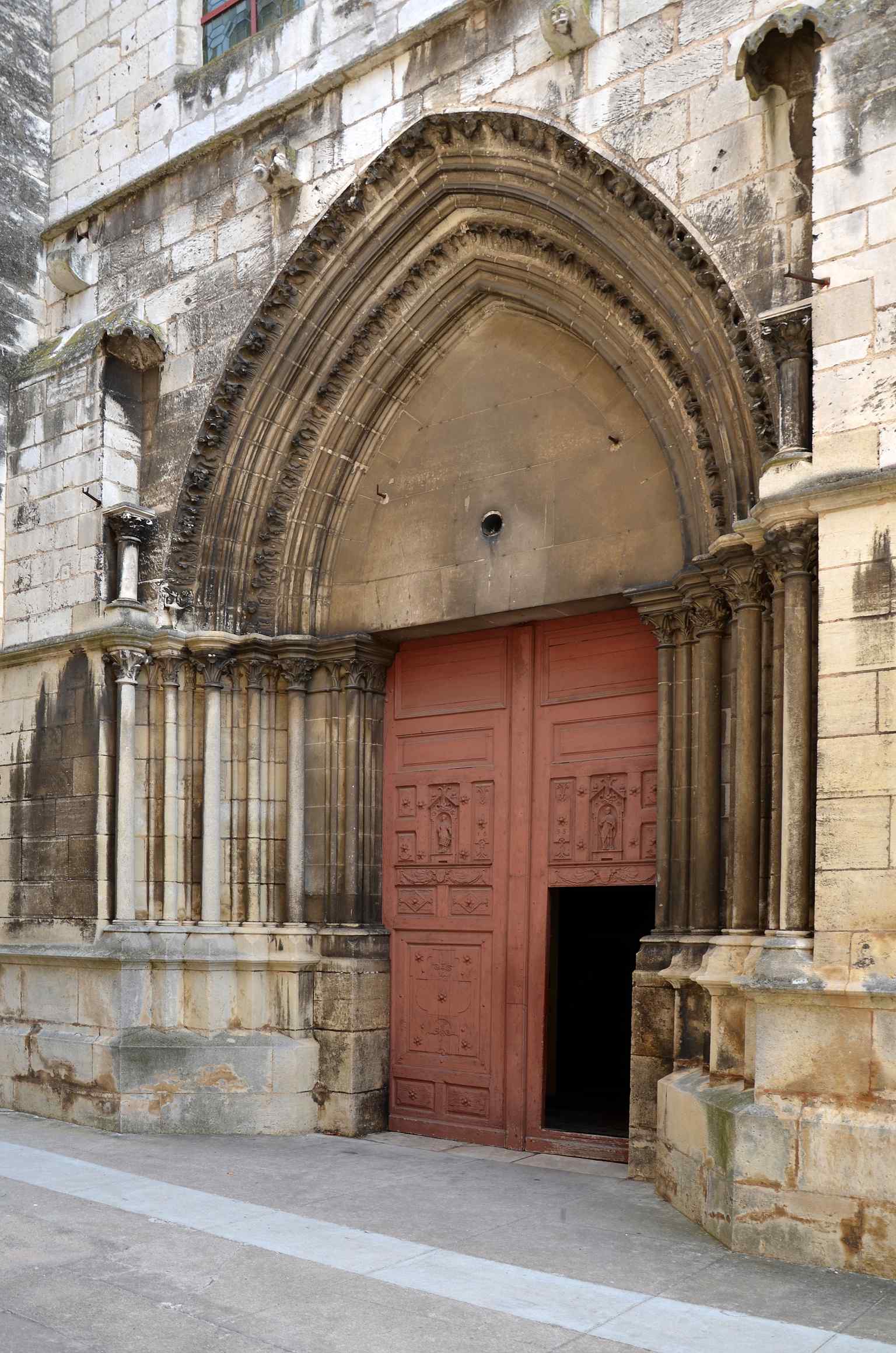
This image shows the entire portal and part of the nave, representing the 17th-century rebuilding efforts funded locally by the parish after the devastation of the Wars of Religion.Photo: Paolo Carnassale, Wikimedia Commons, CC BY-SA 3.0. Cropped & resized. The architects decided to get creative. They took three classical column styles, Ionic, Corinthian, and Composite, and slapped them directly onto the surviving Flamboyant Gothic structure. It is a bizarre architectural mashup of logical classical symmetry and pointy, medieval flying buttresses, those external arched stone supports holding up the upper walls. If you look at the right side of the building on your app, you can see the surviving square Gothic tower from 1530, looking like it belongs to a completely different church.
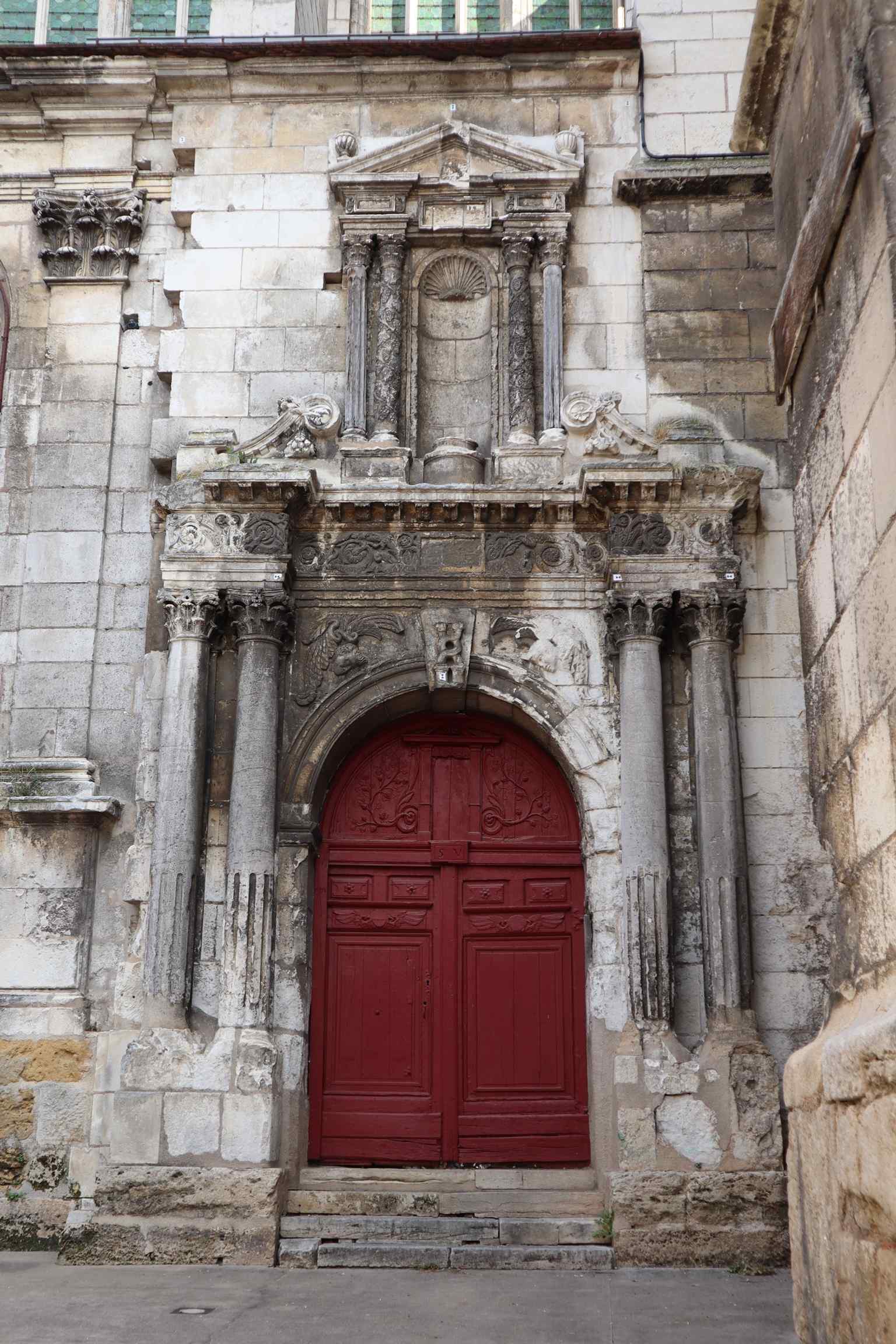
This view includes the square Flamboyant Gothic tower, which was started in 1530 and represents a surviving part of the original medieval edifice.Photo: GO69, Wikimedia Commons, CC BY-SA 4.0. Cropped & resized. By the eighteenth century, the church was fully operational again, but the working-class parishioners were apparently getting a little too comfortable in their newly rebuilt sanctuary. In 1769, the parish had to issue a formal decree banning locals from entering the church wearing hair curlers, casual vests, or work aprons. God demands reverence, and apparently, proper grooming.
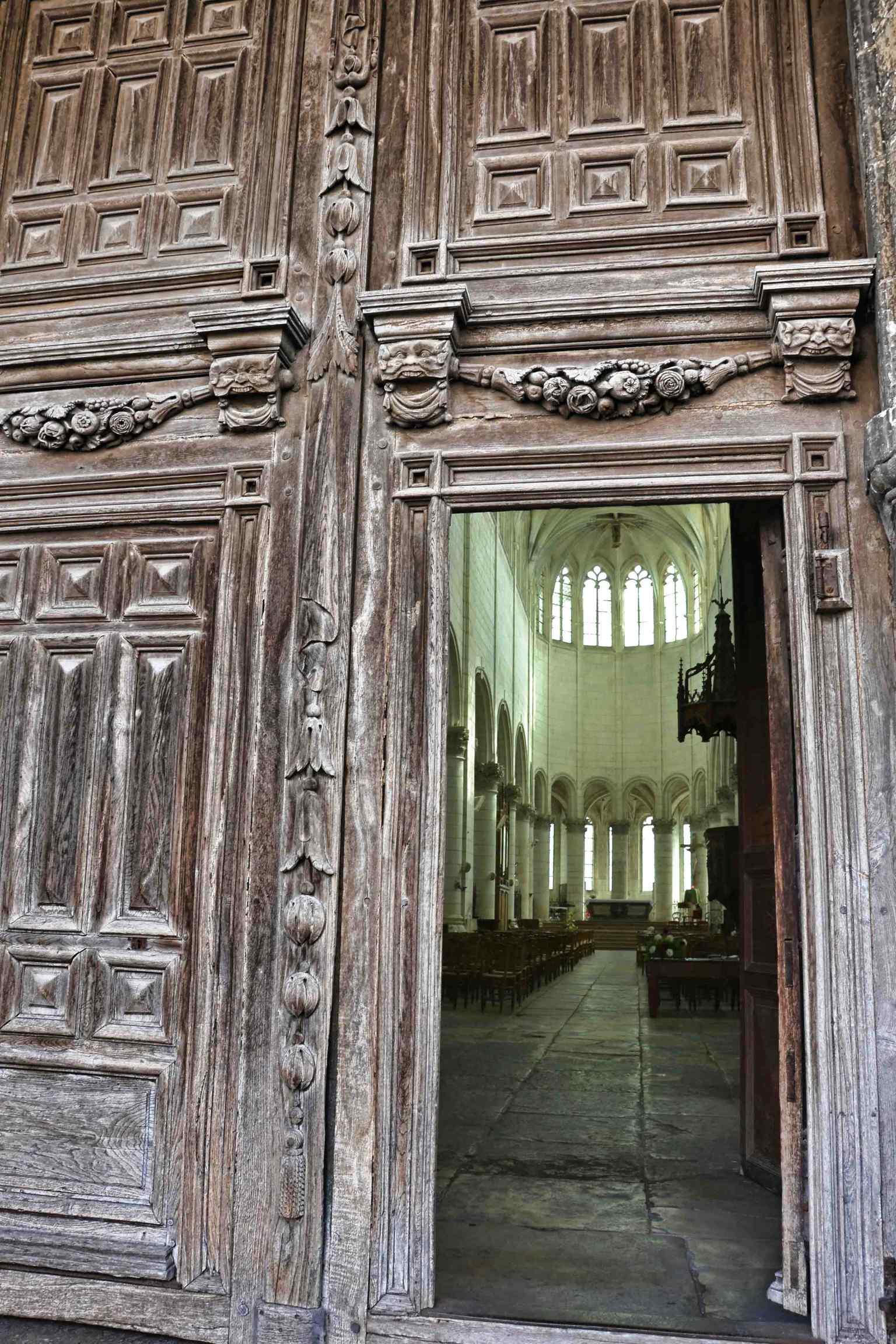
Much later, this modernized church became the daily refuge of Marie Rouget, famously known as the poetess Marie Noël. She sat in these pews wrestling with her internal demons, writing dark, tormented poetry about raw human suffering, before her funeral was held right here in 1967.
The destruction this building suffered back in 1567 was just one chapter in a deeply divided era. Let us walk four minutes down the road to the Protestant church of Auxerre, where we will examine a very different kind of conflict.
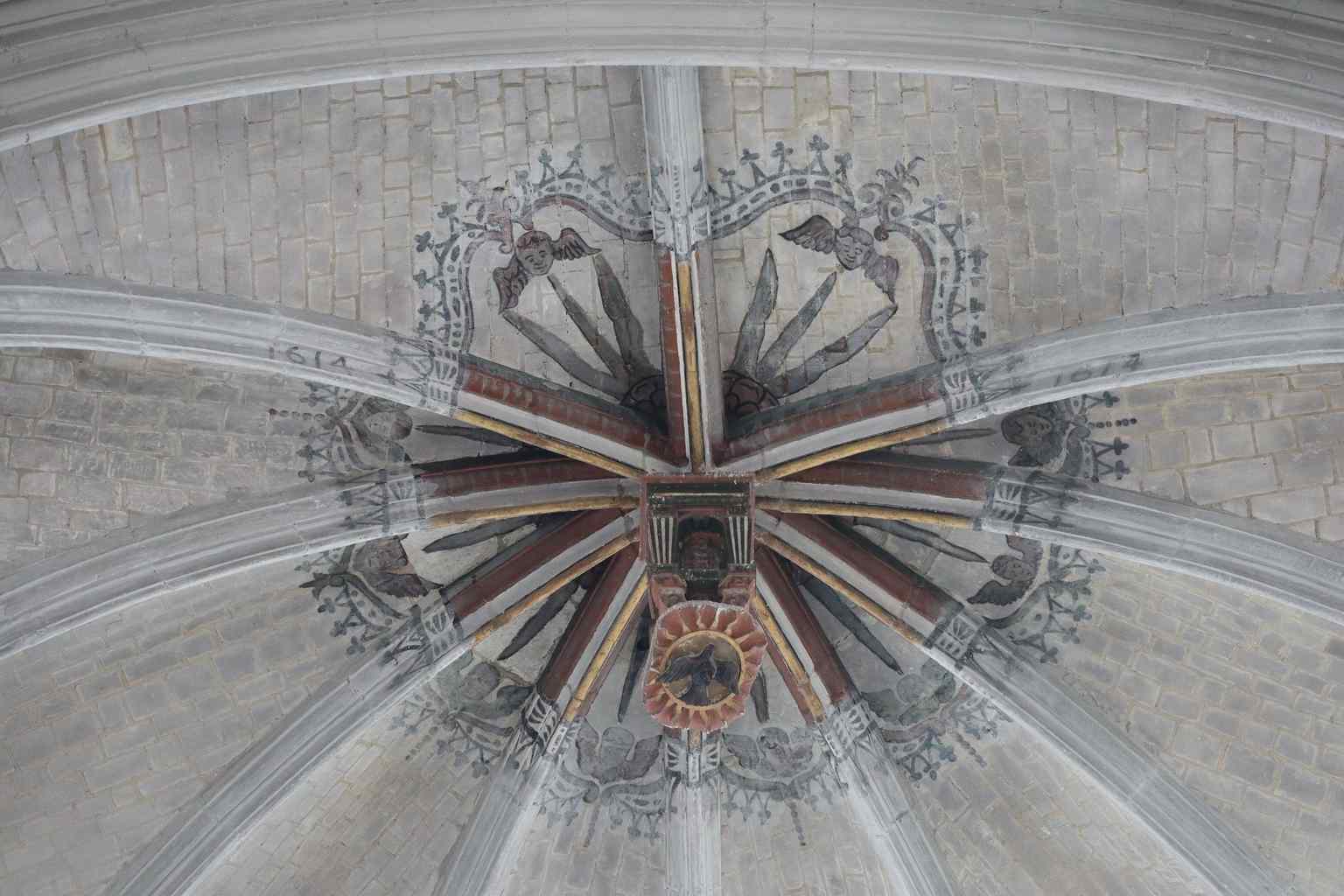
The only available interior view, this is the sacred space where poetess Marie Noël found daily sanctuary and where her funeral was held in 1967.Photo: GO69, Wikimedia Commons, CC BY-SA 4.0. Cropped & resized. Check your screen to see the tall pale stone facade featuring a row of soaring arched windows and a simple rectangular entrance framed by classical masonry. Religious and…阅读更多收起
打开独立页面 →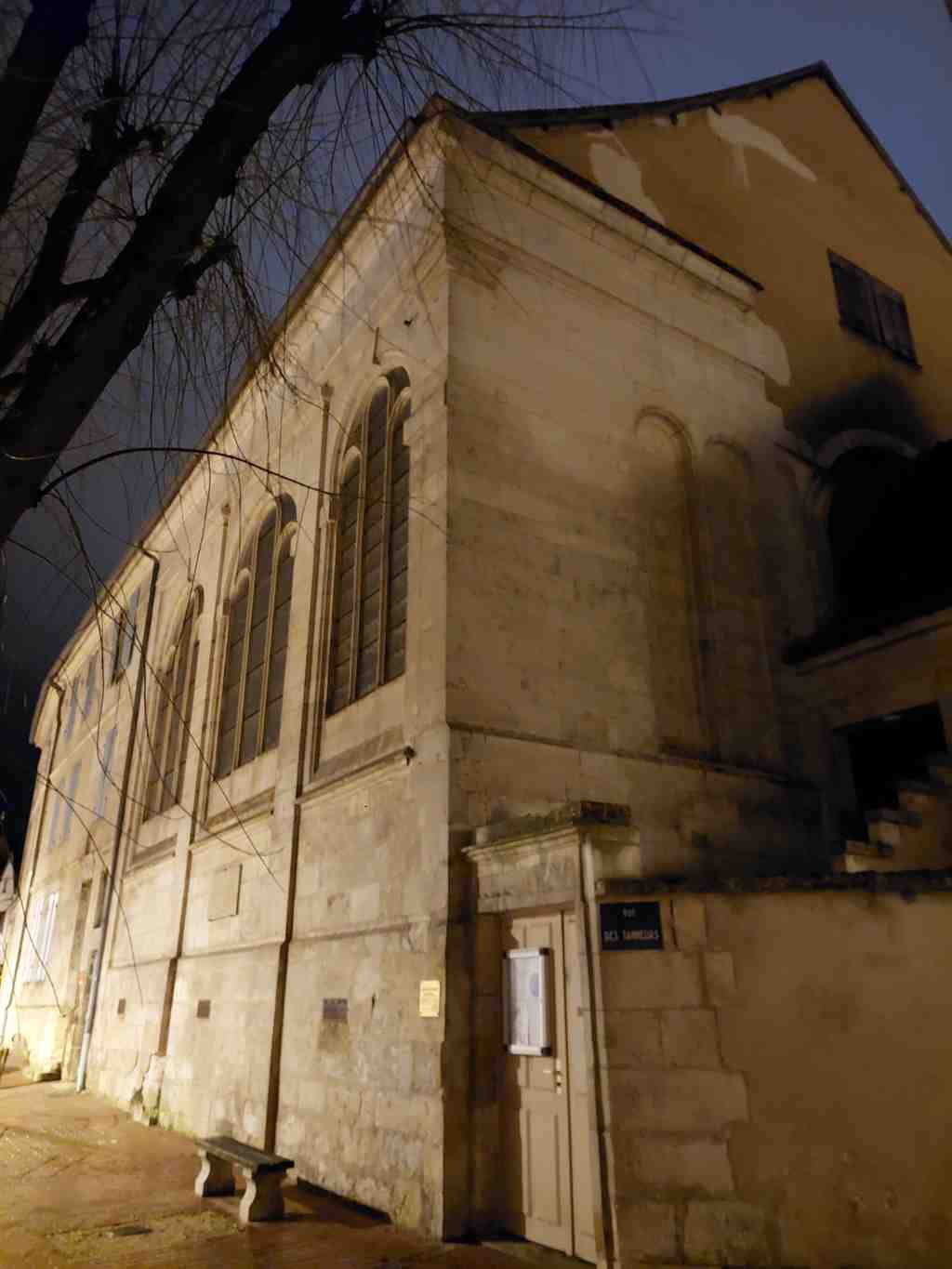
Protestant church of AuxerrePhoto: Hypsibius, Wikimedia Commons, CC BY-SA 4.0. Cropped & resized. Check your screen to see the tall pale stone facade featuring a row of soaring arched windows and a simple rectangular entrance framed by classical masonry.
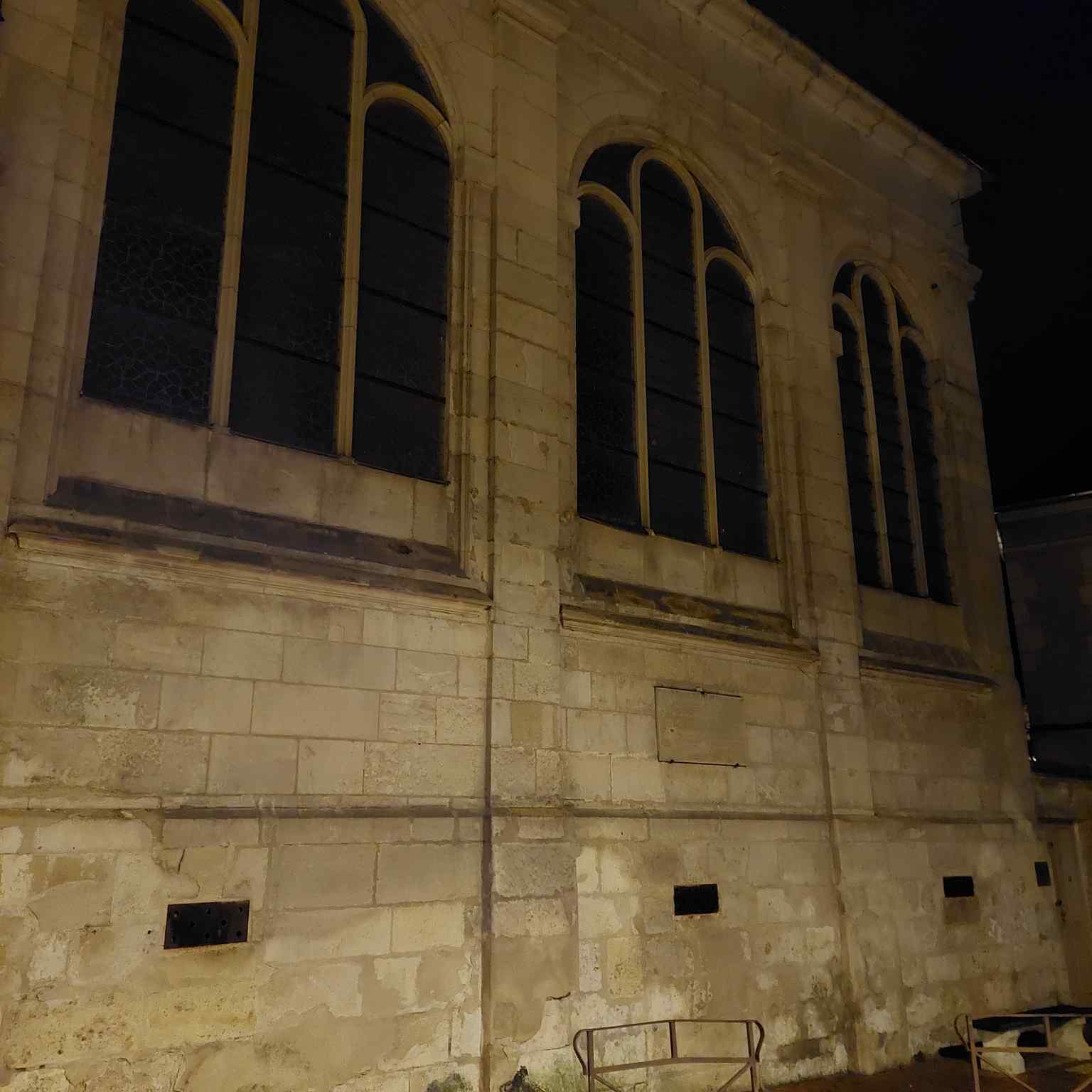
The facade of the Protestant Temple of Auxerre, which originated as the Église Saint-Pèlerin, became a Protestant place of worship in 1866, with parts of its former nave controversially converted into private housing.Photo: Hypsibius, Wikimedia Commons, CC BY-SA 4.0. Cropped & resized. Religious and ideological conflicts have deeply scarred Auxerre's architectural landscape, turning places of worship into literal and figurative battlegrounds over the centuries. This building, now the Protestant church of Auxerre, is a perfect example of how a sanctuary can be repeatedly redefined by whoever holds the keys.
Originally known as the Church of Saint-Pèlerin, local tradition long claimed this was Auxerre's very first cathedral. By the mid-sixteenth century, the atmosphere inside was thick with paranoia. In 1563, a fervent Latin inscription was painted onto the ceiling of the southern chapel. In Gothic script, it begged God to protect the faithful from earthly evils and, specifically, from sudden death. This was not just routine piety. It reflected the deep spiritual anxiety of an era defined by deadly epidemics and the terrifying dawn of the Wars of Religion.
In September 1567, French Protestants, known as Huguenots, seized control of Auxerre. The local Catholic population suffered a profound trauma. When the Catholics finally regained control in April 1568, the city magistrates ordered a desperate measure. They permanently barricaded and sealed the city gate right next to this church to lock down a vulnerable flank against future Protestant raids.
History, however, has an impeccable sense of irony.
During the French Revolution in 1791, the church was confiscated and sold off. It was violently partitioned. The nave, which is the long central hall where the congregation typically stands, was chopped up into private apartments. Yet, the choir, the sacred area originally surrounding the altar, was spared destruction. In 1866, it was officially purchased to serve as a reformed temple. Yes, the exact same Catholic stronghold that was fortified to keep Protestants out in the sixteenth century eventually became the official heart of Protestant worship in Auxerre. You can even see a plaque on the wall detailing this bizarre transition from Catholic church to private housing to Protestant temple.
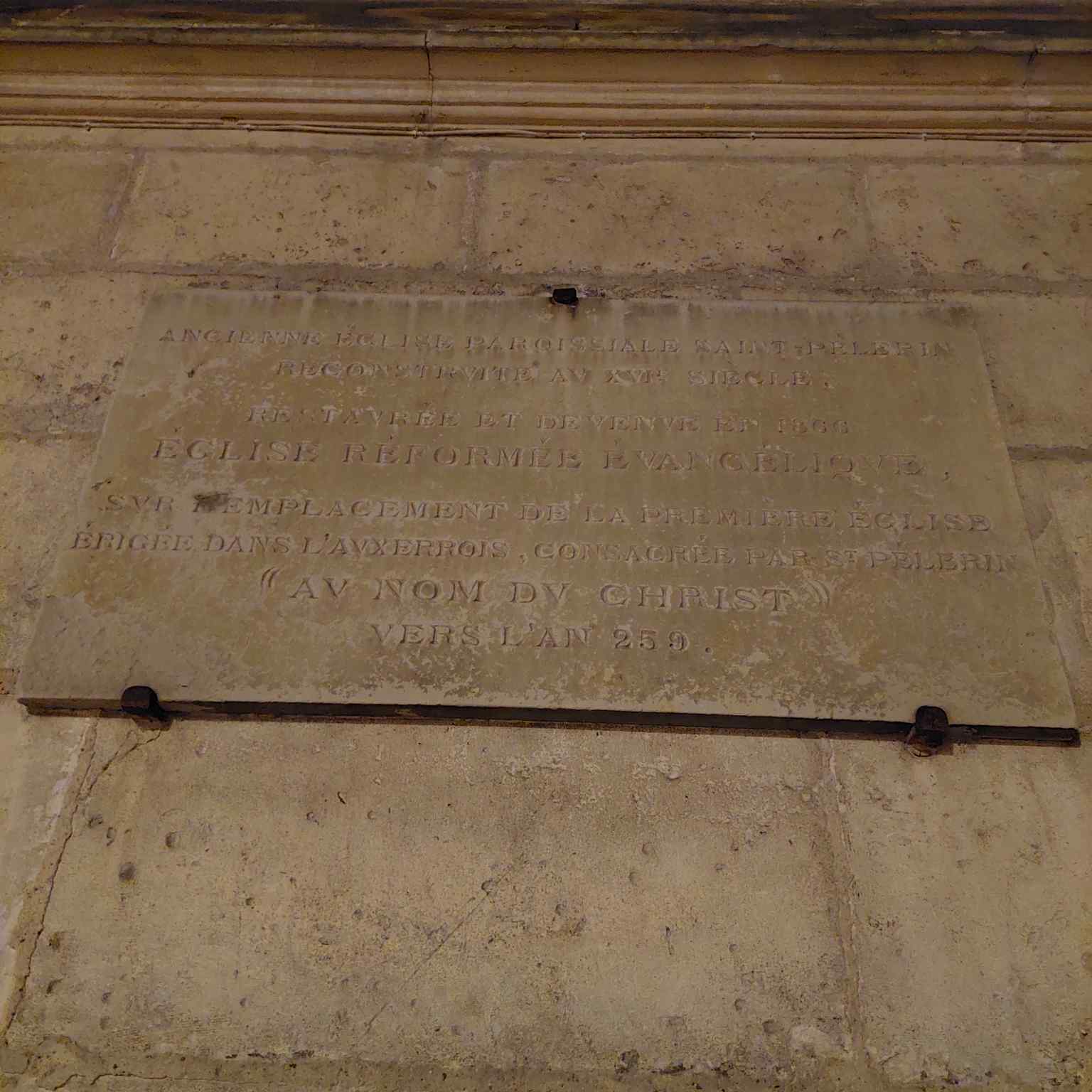
A detail of the plaque on the temple's facade, located on Rue Saint-Pèlerin, chronicles its significant journey from being sold during the French Revolution in 1791 to its re-establishment as a Protestant church in 1866.Photo: Hypsibius, Wikimedia Commons, CC BY-SA 4.0. Cropped & resized. The building's physical foundations are just as contested as its religious ones. In the 1920s, an archaeologist named René Louis excavated the basement and proudly announced he had found a sacred ancient crypt and the original third-century baptistery. For nearly a century, locals revered the space.
Then came the modern archaeologists in 2010. They subjected the foundations to a rigorous study of the soil layers, known as stratigraphy, and completely dismantled the myth. There were no ancient Roman relics. The legendary carolingian stones were just recycled rubble thrown in by medieval builders. And the sacred crypt was actually just a twelfth-century crawlspace, designed to elevate the church floor so it would not flood when the nearby river overflowed.
The line between a sacred sanctuary and practical infrastructure is sometimes just a matter of good storytelling.
Let us keep moving. Our next destination is the Episcopal Palace of Auxerre, which is about a four minute walk away.
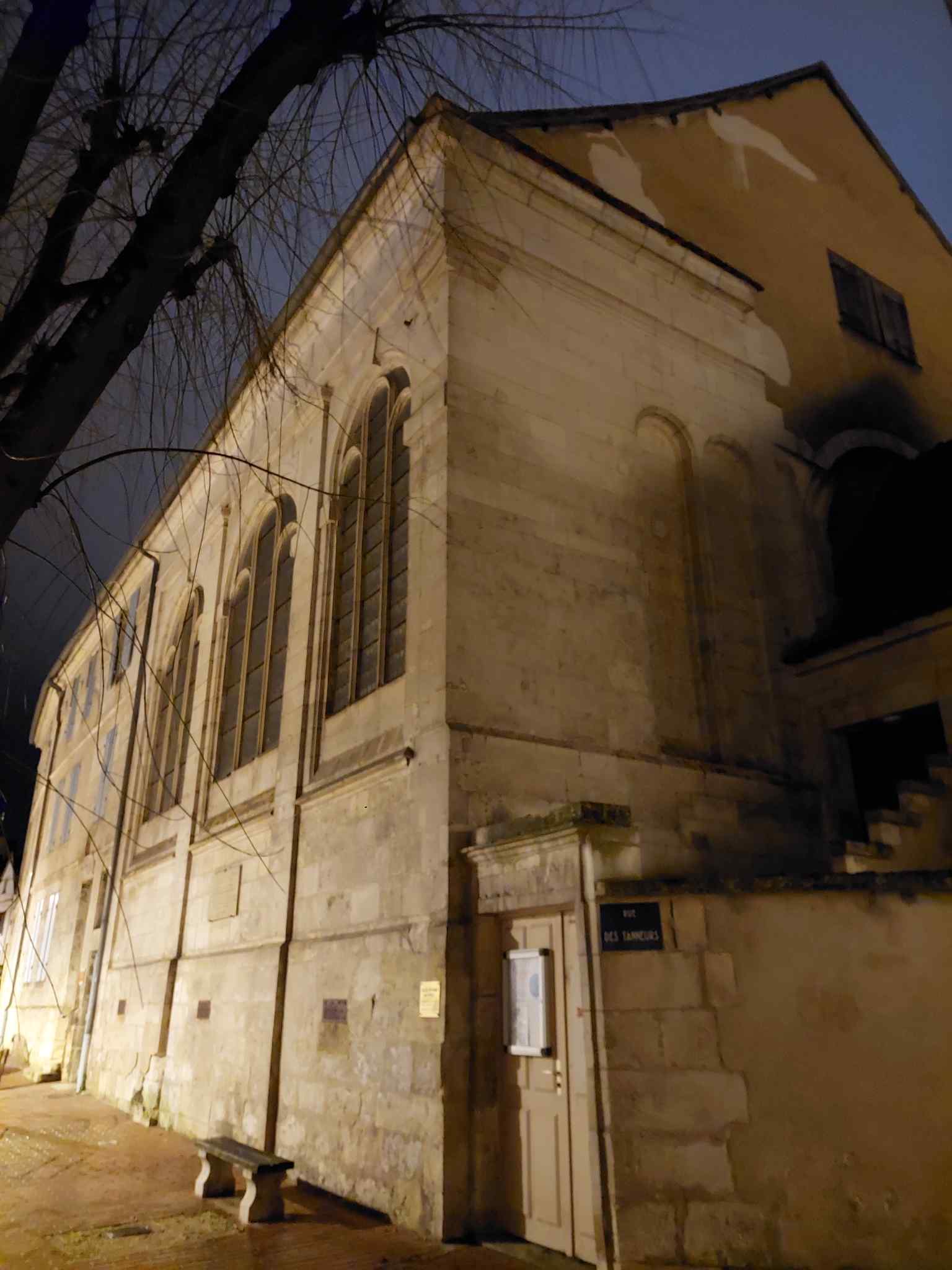
This view of the former Église Saint-Pèlerin highlights its unique transformation; in 1866, it became the official Protestant worship center, ironically 300 years after Catholic authorities barricaded a nearby city gate to defend against Protestant raids.Photo: Hypsibius, Wikimedia Commons, CC BY-SA 4.0. Cropped & resized. To your right are the surviving remains of the church, defined by its rugged limestone masonry, a distinct rectangular footprint, and a solitary weathered archway. Back in the…阅读更多收起
打开独立页面 →
Church of Saint-Pierre-en-Château in AuxerrePhoto: Superbenjamin, Wikimedia Commons, CC BY-SA 4.0. Cropped & resized. To your right are the surviving remains of the church, defined by its rugged limestone masonry, a distinct rectangular footprint, and a solitary weathered archway.
Back in the third century, this was one of the very first churches enclosed within the city's new defensive ramparts. As the city kept redefining its protective borders over the centuries, pulling more of the surrounding settlements inside the walls, the town suddenly found itself with a logistical nightmare, namely, too many churches with the exact same names. To avoid absolute administrative chaos, officials had to start rebranding them. Originally known as the Basilica of the Apostles Peter and James, this particular parish was renamed in the eleventh century as Saint-Pierre-en-Château, purely to distinguish it from another Saint-Pierre located down in the valley.
It was a necessary administrative move, though the church itself had a rather tragic track record for local management. In the eighth century, Bishop Clément went entirely blind and retired to a small claustral house, a restricted residence meant only for clergy, right next to this church. He lived his final years in total darkness. His successor, Bishop Aïdulf, did not fare much better. After helplessly watching secular lords seize the church's properties, the immense stress of the theft reportedly caused Aïdulf to suffer a massive stroke, leaving him completely paralyzed. With nowhere else to go, he was carried into that exact same house to share the agony of isolation with his blind predecessor. Talk about a grim retirement plan.
By the eleventh century, the churchyard here was designated exclusively as a cemetery for children. It became a highly specialized sanctuary of grief, an isolated pocket of mourning for the city's most vulnerable residents.
Yet, this quiet neighborhood parish also harbored serious political muscle. In 1358, the English captured Auxerre, pillaged it, and demanded a massive ransom from the citizens under threat of burning the town to ashes. The Abbey of Saint-Germain emptied its treasuries to pay it off, and local citizens promised to repay them. Among the key figures orchestrating this desperate deal was Pierre Bogard, the priest of Saint-Pierre-en-Château. Bogard was no simple local cleric. He was the Duke's secretary and a procurator at the papal court. He traded in secrets, favors, and high-level espionage, using his parish as a diplomatic base to save the diocese from the English flames.
By 1544, a powerful royal financier named Palamède Gontier built a chapel on the right wing, turning it into a monumental dynastic shrine for his family. But power, much like stone, eventually crumbles. In 1792, during the French Revolution, the entire church was sold off to a local gentleman. He did not want a church. He wanted a stone quarry. He methodically dismantled the nave and sold off its ancient pillars and sculptures as raw building material. Today, only these fifteenth-century elevations remain of a sanctuary that once held the city's deepest sorrows and highest political secrets.
Our next stop involves another site of worship, a lost church born entirely out of an abrupt expulsion from the city center. Let us keep moving forward to the Church of Saint-Renobert.
Notice the massive cylindrical tower of pale stone, topped by an intricate metal spire, standing right beside a highly decorated arched gateway. This is the Auxerre Clock Tower,…阅读更多收起
打开独立页面 →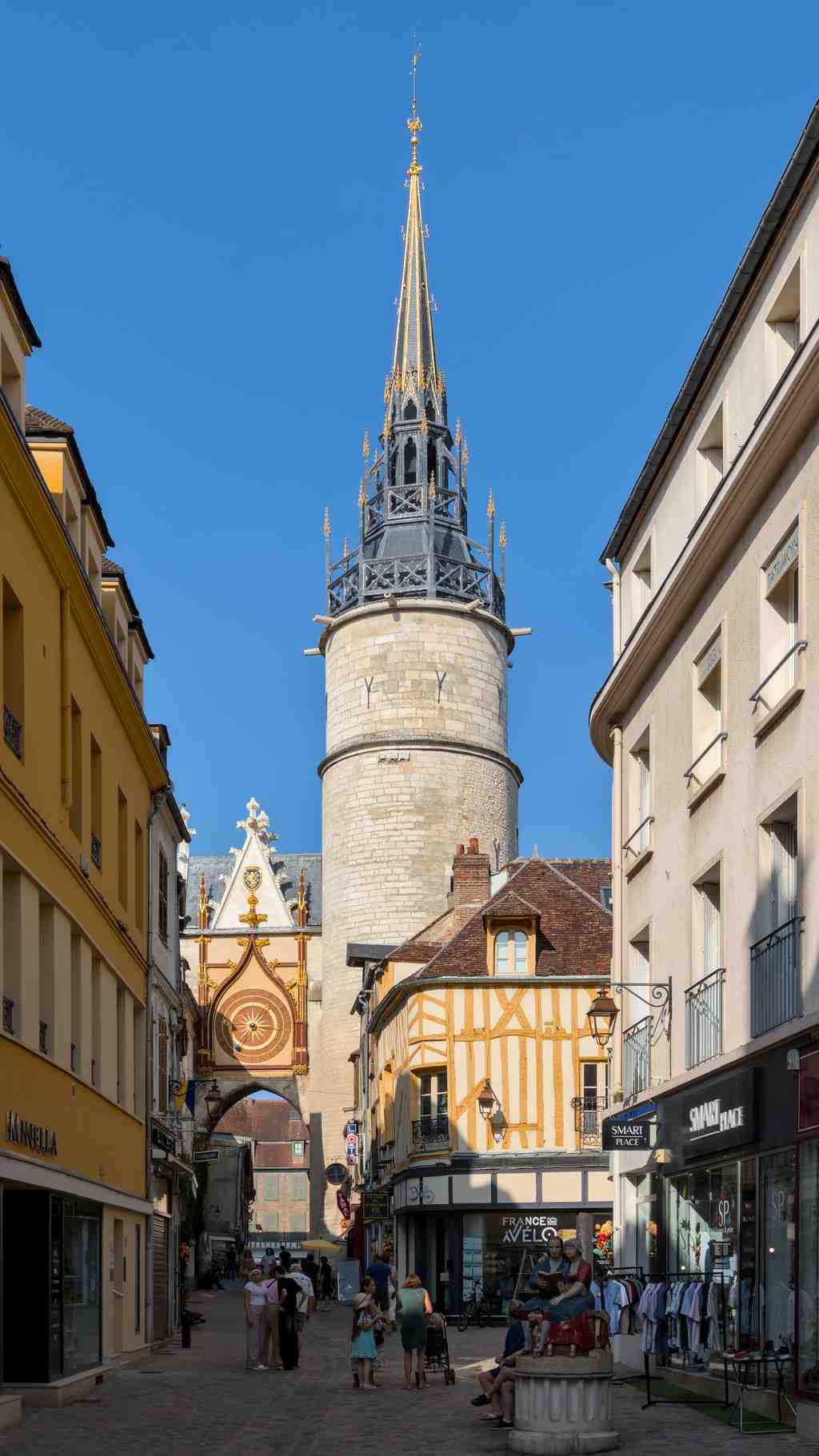
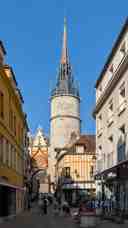
Auxerre Clock TowerPhoto: Pline, Wikimedia Commons, CC BY-SA 3.0. Cropped & resized. Notice the massive cylindrical tower of pale stone, topped by an intricate metal spire, standing right beside a highly decorated arched gateway. This is the Auxerre Clock Tower, built over the old Paris Gate, and it perfectly captures how a growing city asserts control over its people.
Centuries ago, this was the Tour Gaillarde, part of the original defensive ramparts. Back then, it was a brutal, windowless military structure that doubled as a freezing prison. It was the kind of place where people went in and simply stopped existing to the outside world. But as the city expanded beyond these old walls, its center of gravity shifted. The authorities needed a way to regulate this bustling new urban life, to synchronize the defense, the markets, and the citizens. So, in the late fifteenth century, they transformed this grim fortress into a masterpiece of civic order.
Look closely at the magnificent astronomical clock face above the archway. Notice how the dial is divided into two sections of twelve hours, with noon at the top and midnight at the bottom.
The engineering behind this is wonderfully complex. The clock does not just tell the time of day. It features two hands. One carries a golden sun, tracking the solar hours. The other, slightly slower hand, carries a globe that is half-black and half-gold. That is the moon hand. Through a hidden iron rod rotating inside a hollow shaft, that little globe actually turns on its axis to show the current phase of the moon. They meet at the very top for a new moon, and at the bottom for a full moon. It is a brilliant piece of fifteenth-century mechanical problem-solving.
Of course, a monument this tall attracts trouble. During the religious wars of the fifteen hundreds, the city was fiercely contested. A Protestant craftsman, a member of the heavily persecuted Huguenot minority, was hired to repair the clock. As a silent act of defiance against the ruling Catholic authorities, he sealed his statement of faith inside a tin box and hid it at the very top of the spire, inside the weather vane globe. It sat up there, completely undiscovered... for an entire century before another repairman stumbled upon it.
Then came the great fire of 1825. Plumbers were working on the roof, carelessly melting lead. They accidentally set the wooden spire ablaze. The fire raged, raining molten lead down onto the streets below while firefighters desperately used hooks to pull burning timbers inward so they would not crush the surrounding houses. The spire was destroyed and temporarily replaced by a hideous wooden cage that locals absolutely hated, until an architect finally restored the elegant gothic spire you see today in 1890.
Before we move on, I have to mention one of the tower's most eccentric residents. In the late eighteenth century, a quirky bailiff named Guillaume Roussel bought a small apartment built directly into the archway beneath the clock. He was so notoriously odd in his real estate choices and flamboyant clothes that the locals wrote a teasing nursery rhyme about him. That song, Cadet Rousselle, is still sung by French children today.
Our path now takes us deeper into the monumental heart of the city. We are heading to the Saint-Étienne Cathedral, just a four-minute walk from here.
Take in the towering limestone cathedral featuring a single heavily ornamented square tower on its left side and a long array of arched flying buttresses supporting a steep tiled…阅读更多收起
打开独立页面 →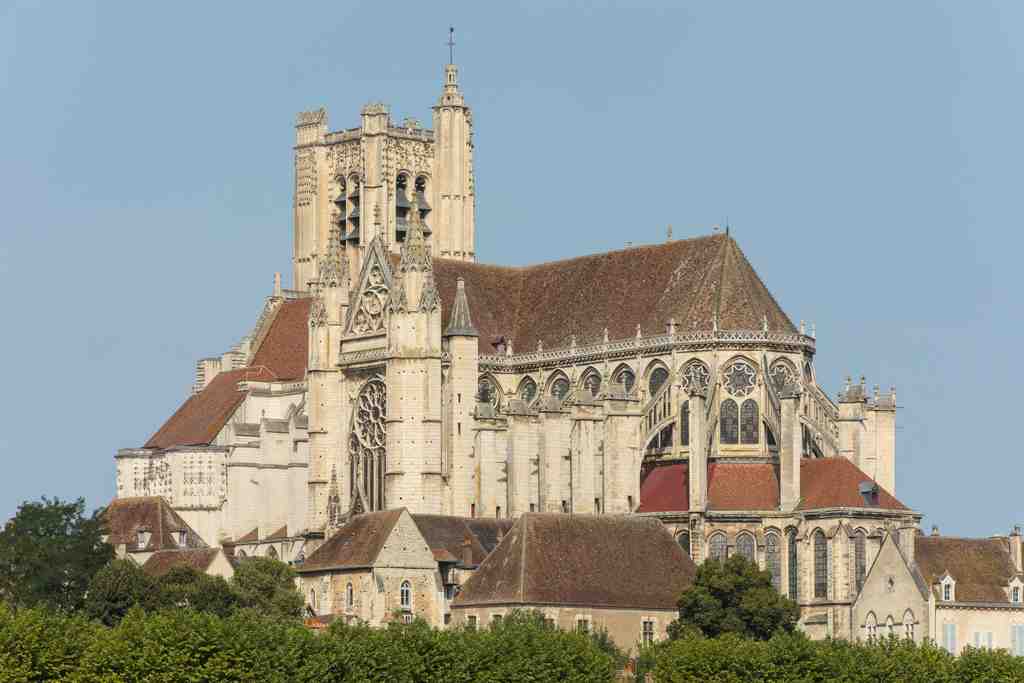
Saint-Étienne Cathedral in AuxerrePhoto: Chabe01, Wikimedia Commons, CC BY-SA 4.0. Cropped & resized. Take in the towering limestone cathedral featuring a single heavily ornamented square tower on its left side and a long array of arched flying buttresses supporting a steep tiled roof on the right. This is Saint-Etienne Cathedral. Or rather, this is the fifth version of Saint-Etienne Cathedral.
This site is a monument to sheer, unyielding stubbornness. The first church here became too small, so Bishop Amatre, who we crossed paths with earlier, laid the stones for a larger sanctuary in the late fourth century. That one burned down. A third sanctuary was built. It burned down too, taking much of the city with it in ten twenty-three. Unfazed, the city built a massive Romanesque church, a heavy, thick-walled style with rounded arches, complete with an underground stone chamber, or crypt, to level out the sloping ground.
But by twelve fifteen, the boundaries of architectural ambition were shifting. A new, soaring style was sweeping northern France. Bishop Guillaume de Seignelay looked at his heavy Romanesque cathedral and decided it just was not grand enough. He wanted pointed arches, massive stained glass, and terrifying heights. He wanted Gothic. So, he began simultaneously tearing down the old church and building the new one right over the crypt.
Then, in twelve twenty, Guillaume got promoted to Bishop of Paris and promptly left.
Without their enthusiastic founder, the local religious chapter was left holding the bag on a colossal construction project. It took over three centuries to finish. If you look closely at the western front, you will notice a glaring asymmetry. The north tower was finally completed in fifteen forty-seven. The south tower? It was never finished. They literally just put a makeshift roof over its massive stone base and called it a day, preferring to spend their remaining funds on a shrine instead.
For centuries, this building was caught in a tug-of-war over who controlled the city, its walls acting as a canvas for whoever held power. In fifteen sixty-seven, Protestant troops sacked the cathedral, taking axes and hammers to the exterior statues and systematically decapitating them. Later, during the French Revolution, the sanctuary was seized, stripped of its religious authority, and rebranded as a Temple of Reason. The revolutionaries were ready to smash the beautiful marble statue of Saint Stephen, the first Christian martyr, depicted dying under a hail of stones.
But someone cleverly pointed out that the dying saint looked an awful lot like Jean-Paul Marat, the famous radical revolutionary who had just been assassinated in his bathtub. The mob squinted, agreed, renamed the statue, and saved a masterpiece. Pure, opportunistic brilliance.
If you want to step inside this survivor, it is open Monday through Saturday from nine in the morning to six in the evening, and Sundays from ten to five.
From this ever-changing center of spiritual authority, we are going to walk five minutes over to the Yonne Departmental Archives, where we will dive into a very different kind of power struggle and a tale of brewing rebellion.
On your right is the Yonne Departmental Archives. It finally settled here at 37 rue Saint-Germain in 1966, ending more than a century of administrative wandering. But do not let…阅读更多收起
打开独立页面 →On your right is the Yonne Departmental Archives. It finally settled here at 37 rue Saint-Germain in 1966, ending more than a century of administrative wandering. But do not let the quiet facade fool you. Inside are the paper trails of a city where secular administration and sacred institutions constantly fought for control.
Take the cadastre of Bertier de Sauvigny, an initiative launched between 1776 and 1791. A cadastre is essentially a comprehensive land registry used to calculate taxes. The government wanted a more equitable tax system, but to speed things up, surveyors used simple metal chains to measure massive blocks of farmland instead of individual plots. And here is the bureaucratic masterpiece. The government forced the poorest local parishes to pay for the surveyors.
The financial burden of this tax-mapping cadastre ignited intense social tension and anger right before the French Revolution. In their official registers of grievances, known as cahiers de doléances, the local parish of Asquins formally documented their outrage. They called it an intolerable injustice that the privileged classes were entirely exempt from these surveying costs. It was secular power pushing its subjects over the edge.
In the aftermath of the Revolution, the state confiscated massive amounts of church property. It fell to the first archives director, Mathieu-Maximilien Quantin, to spend nearly half a century rescuing these sacred records from secular chaos. Pull up the app to see a sixteenth-century ecclesiastical registry he meticulously saved from destruction.
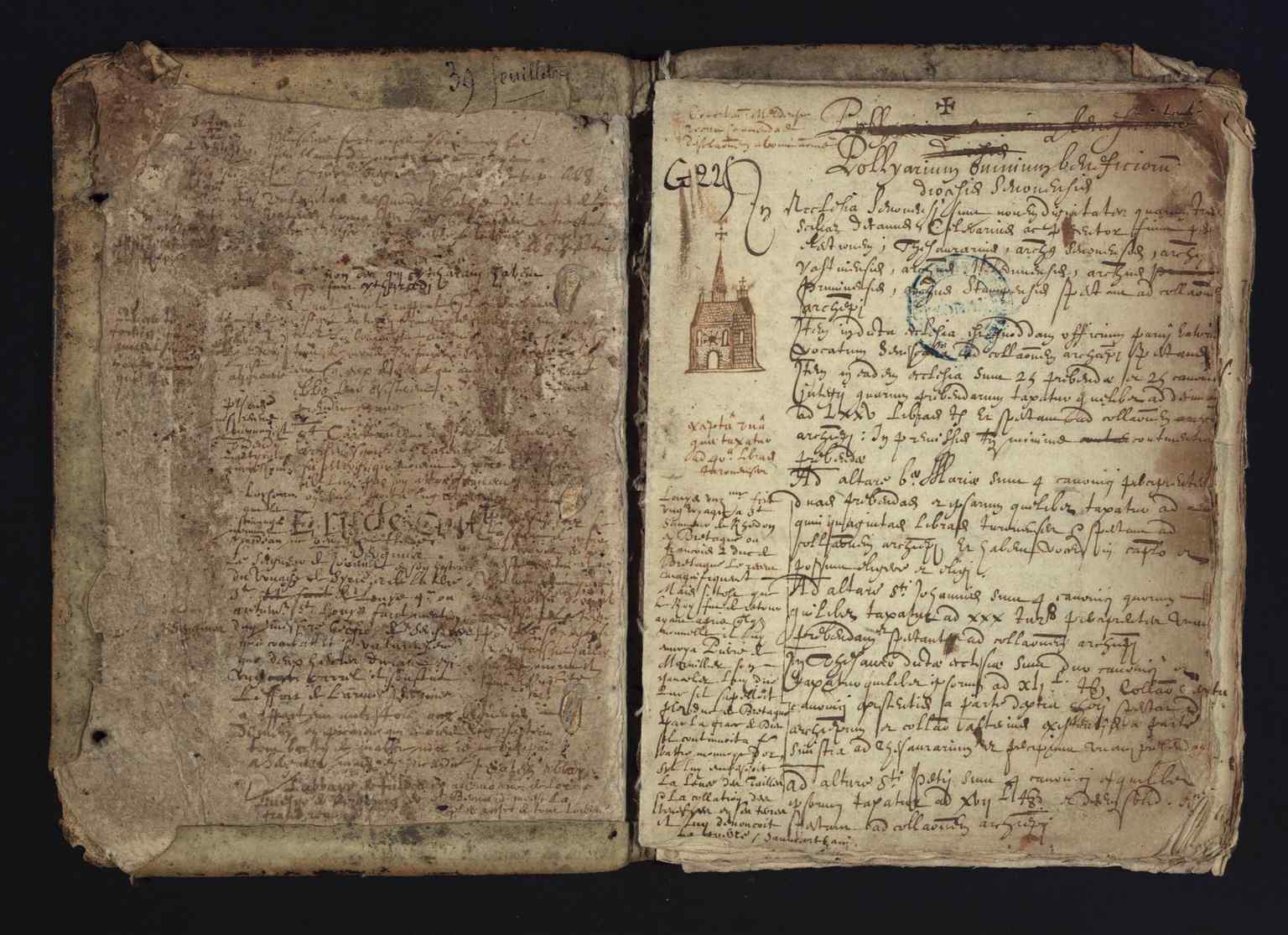
A 16th-century 'Pouille' from the Diocese of Sens, an example of the invaluable ecclesiastical archives meticulously inventoried by the institution's first director, Mathieu-Maximilien Quantin.Photo: Unknown authorUnknown author, Wikimedia Commons, CC BY-SA 4.0. Cropped & resized. Later directors had their own tragic timing. Henri Forestier tirelessly led this institution from 1932 until 1966, advocating for a proper modern building to house these explosive histories... He died unexpectedly the exact same year this building finally opened, never getting to enjoy his life's work.
If you want to dive into these records yourself, they are open Monday, Wednesday, and Friday from 9 AM to 5 PM, Thursdays until 6:30 PM, but locked up tight on Tuesdays and weekends.
Now, let us head toward the Abbey of Saint-Germain for a truly shocking founding story... it is just a seven-minute walk away.

常见问题
如何开始导览?
购买后,下载 AudaTours 应用并输入您的兑换码。导览将准备好立即开始--只需点击播放并按照 GPS 引导的路线行驶即可。
导览期间我需要互联网吗?
不需要!开始前下载导览并完全离线享受。只有聊天功能需要互联网。我们建议在 WiFi 下下载以节省移动数据。
这是导游带领的团体游吗?
不是--这是自助语音导览。您按照自己的节奏独立探索,通过手机播放音频解说。没有导游,没有团体,没有时间表。
导览需要多长时间?
大多数导览需要 60-90 分钟才能完成,但您完全控制节奏。随时暂停、跳过站点或休息。
如果我今天无法完成导览怎么办?
没问题!导览具有终身访问权限。随时暂停和恢复--明天、下周或明年。您的进度已保存。
有哪些语言可用?
所有导览均提供 50 多种语言版本。在兑换代码时选择您的首选语言。注意:导览生成后无法更改语言。
购买后我在哪里访问导览?
从 App Store 或 Google Play 下载免费的 AudaTours 应用。输入您的兑换码(通过电子邮件发送),导览将出现在您的资料库中,准备下载并开始。
如果您不喜欢该导览,我们将退款。请联系我们 [email protected]
安全结账使用 


%20%C3%89glise%20Saint-Pierre%20-%20Ext%C3%A9rieur%20-%2001.jpg)
%20%C3%89glise%20Saint-Pierre%20-%20Int%C3%A9rieur%20-%2006.jpg)


