

巴登语音导览:宫殿、音乐与市场的回响
莫扎特曾在这里的彩绘天花板下演奏,教堂墙壁中隐藏着秘密代码——巴登的历史绝非寻常。 您的自助语音导览将穿梭于鹅卵石街道,揭示大多数游客会忽略的戏剧性、神秘感和宁静之美。揭开巴登市立剧院舞台侧丑闻背后的真相,并在巴登圣斯蒂芬教区教堂感受数百年历史的壁画。 剧院的宏伟大厅里是否曾爆发过骚乱?为什么有些游客声称深夜在罗莱特博物馆听到低语回荡?哪一个褪色的铭文让一位固执的历史学家在城市街道下发现了一个全新的故事? 从阴暗的小教堂漫步到宏伟的音乐厅,再进入秘密的博物馆壁龛。每一站都揭开巴登历史的一层,激发探索的浪潮,将纪念碑变成鲜活的故事。 好奇心在召唤。让巴登向您揭示它的秘密。立即开始您的旅程。
导览预览
关于此导览
- schedule持续时间 40–60 mins按照自己的节奏
- straighten3.9 公里步行路线跟随引导路径
- location_on
- wifi_off离线工作一次下载,随处使用
- all_inclusive终身访问随时重播,永久有效
- location_on从 犹太教堂(巴登) 开始
此导览的景点
To spot the Baden Synagogue, look for a striking blend of old and new-the building combines a white, classically shaped structure with arched windows and a modern, light stone…阅读更多收起
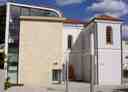
To spot the Baden Synagogue, look for a striking blend of old and new-the building combines a white, classically shaped structure with arched windows and a modern, light stone facade with large glass panels near a quiet courtyard. Alright, get ready for a tale with many twists! Imagine yourself now outside a landmark that’s not just a building, but a survivor with quite a story-like a hero in one of those epic novels. The Baden Synagogue stands as living proof that history can be saved, brick by brick and heart by heart. The journey of the synagogue began in a time when things weren’t so friendly for Jewish families in Baden. Before Emperor Joseph II issued his tolerance edicts in the late 1700s, Jewish people weren’t allowed to settle here, and forget about popping into town for a spa day. But by the 19th century, thanks to those edicts, a small but vibrant Jewish community found its way to Bäckerstraße-known today as Breyerstraße. Their first prayer house was just a modest building, but-like realizing you bought a tent one size too small-they soon outgrew it. Cue Franz Breyer, the town’s own master builder, who designed the impressive new synagogue in 1872-73. Picture the excitement as steel beams and cast-iron columns went up, supporting a two-story sanctuary that quickly became the community’s spiritual anchor. By the early 20th century, people hurried down the street to glimpse the fast-rising western facade, hoping for a sneak peek before the planned grand opening in 1914. Before World War II, Baden’s Jewish community was the third largest in Austria. But in the shadow of the Anschluss in 1938, joy turned to heartbreak when the interior was destroyed and the building was seized. Yet, somehow-thanks in part to its location next to the fire department-it survived the Kristallnacht violence that swept through Austria. After the war, its fate swayed like a leaf in the wind: it served as a Soviet soldiers’ kitchen and then, for a while, sat quiet and empty, nearly demolished in the 1980s. Fast-forward through suspenseful negotiations and a last-minute campaign (with a dash of heroic activism) and the synagogue was saved! Renovations brought a fresh start, blending old soul with new purpose. Since 2005, it’s been open again, offering 75 men’s and 40 women’s seats separated by a screen, with its upper floor hosting lively concerts and community events. These walls pick up the spirit of a community that refused to vanish-so as you stand here, you’re not just seeing history, you’re standing in the middle of a comeback story that keeps getting better. Now, onward to our next stop!
打开独立页面 →To spot Archduke Anton Palace, look for a long, elegant, pale yellow building with rows of tall windows and two grand doorways on Antonsgasse-it’s right in front of you! Let’s…阅读更多收起
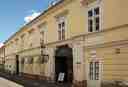
To spot Archduke Anton Palace, look for a long, elegant, pale yellow building with rows of tall windows and two grand doorways on Antonsgasse-it’s right in front of you! Let’s imagine the scene: It’s 1810, and Archduke Anton, a man of fine taste and finer titles, decides to buy this plot from one Philipp von Wetzlar-catchy name, right? Not to be outdone, a certain Joseph Count von Thürheim sets up his own cozy home just behind, surely hoping for the quiet life. But fate, fire, and a bit of drama had other plans. In 1812, a devastating blaze swept through the city, leaving nothing of Anton’s house but a few stubborn walls. Not to worry-Anton was a man who didn’t let a bit of ash get him down. He swept up another burnt-out next-door house and, a few years later, bought Count Thürheim’s spot too. If you think modern renovations are complicated, imagine trying to stitch together three scorched parcels of land, each with its own quirks! While digging out the foundation for a new wing, workers made a spine-tingling discovery: a Roman sarcophagus! Instead of gold or jewels, they found a doctor’s kit-14 bronze, iron, and bone surgical tools hanging on a ring. Talk about a house with serious medical history! This sparked a famous dissertation on skull surgery-definitely not the hobby I’d pick, but hey, the 1800s were wild. The palace you see was finished in 1816, designed with as much symmetry as two grand entrance portals could muster. There’s even a rumor that the staircase railing was made from rifle barrels collected at the Battle of Aspern, a little family tribute to Anton’s brother, the battle’s hero. Today’s façade showcases pilasters, strong horizontal bands, and a sense of calm grandeur-proof that even after chaos and flames, big dreams (and a little sibling rivalry) can build something beautiful.
打开独立页面 →You’ll spot the Protestant Parish Church Baden right ahead by its pale yellow walls, tall pointed steeple with a cross on top, and a small clock just above the arched…阅读更多收起
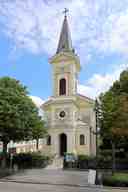
You’ll spot the Protestant Parish Church Baden right ahead by its pale yellow walls, tall pointed steeple with a cross on top, and a small clock just above the arched doorway. Imagine the clatter of boots and the whispers of newcomers in Baden during the busy days of the 1800s, when workers and entrepreneurs from northern Germany poured into the city, bringing their hopes and hymns. There wasn’t always a church here-at first, worshippers squeezed together in private homes, making do with whatever space they could find. Then along came Elise Hötsch, a remarkable woman with a generous heart and a keen sense of what the growing Protestant community needed. She funded the building of this church and the nearby parish house, ensuring that services could finally echo under one beautiful roof. The church opened its doors in 1887, its classical elegance with graceful pilasters and round-arched windows brightening the neighborhood. If you glance inside, you’ll spot artistic touches added not long after-along with an organ built in 1899 by Rieger Orgelbau, designed to wake even the sleepiest parishioner. And near the entrance, a plaque still thanks Elise for her bold generosity. So whether you're admiring the details or listening for music, this church stands as a monument to a community’s faith and the power of a single good deed.
打开独立页面 →
再显示 11 个站点显示更少站点expand_moreexpand_less
Straight ahead, you'll spot the Parish Church Baden-St. Stephan by its grand size, tall pale walls, and, most unmistakably, its striking tower topped with a dark green…阅读更多收起
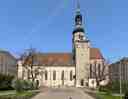
Straight ahead, you'll spot the Parish Church Baden-St. Stephan by its grand size, tall pale walls, and, most unmistakably, its striking tower topped with a dark green onion-shaped dome-an eye-catcher rising above the rooftops at the eastern edge of the old town. Now, let’s step into a tale that spans centuries! Imagine yourself standing here, right on the Pfarrplatz, as the first rays of the morning sun splash gold across old stones worn smooth by centuries of footsteps. In front of you towers St. Stephan, a church whose mighty baroque spire-yes, the one with that curvy onion top-commands the city skyline and could probably be seen by a homesick pigeon coming from Passau. Now, inhale slowly. Can you smell the crisp air? Maybe you catch a distant waft of incense. Behind these walls, history has unfolded in layers like the pages of a much-loved book. But boy, what drama! Back in the centuries when Baden was just a little outpost of the Diocese of Passau, folks might’ve trudged here through muddy lanes, passing by Romanesque arches and perhaps even spooked by the echo of their own footsteps in the crypt. The earliest records talk about a priest in 1220. No one’s sure exactly what he did-but I bet he had a key to the city’s secrets! As power juggled between different religious authorities, Baden fought to be its own parish. By 1312, it finally broke free from Melk Abbey’s grip-aha, independence at last! Yet, squabbles between the Bishops of Passau and Melk kept the poor priests busier than bees in a bonnet. Now, look up at the tower! That isn’t just any old steeple. Underneath sits what’s left of medieval defensive galleries-a little reminder that, sometimes, churches were the safehouse during trouble. Parts of this church have been battered and rebuilt after raids and wars, especially during the Turkish sieges of the 15th and 17th centuries. The fate of the tower? It was capped with that famous baroque onion dome in 1697, after taking some hard knocks-maybe the church wanted a stylish “helmet” in case of future battles! Inside those 55-meter-long, 20-meter-wide walls, there’s a tapestry of history woven with both stone and sound. The church was continually expanded, with gothic arches rising in 1400 over foundations that might go all the way back to the late 1100s. The stone heads tucked under vaults are a rare Romanesque survivor, quietly watching as the centuries parade by. But here’s a twist for music lovers-Mozart himself walked these aisles! The grand organ, originally from Vienna, was (probably) played by both Mozart and, perhaps, a young Beethoven. Just think: in 1791, Mozart’s Ave verum might have echoed through this space for the first time, with the great man himself nodding along from the choir loft. The church’s life wasn’t all high notes, though. It weathered the Black Plague, evidenced by a special altar set up in 1713 as a thank you after the town survived the deadly pestilence. Wars damaged its towers-one was reduced and given a more modest hat in 1827. If you could peel back each layer of paint and stone, you’d find baroque chapels, gothic fonts, and even bits of medieval "murder galleries," each with its own whispered tale of saints, sinners, musicians, and townsfolk. Today, St. Stephan is a heart that beats for Baden: six thousand Catholics gather here, just as their ancestors did, beneath that onion dome. So, take a second, close your eyes, and imagine all these stories swirling in the air around you. And if you hear the bells, know they’re not just marking time-they’re echoing a past where every hour shaped the city you see before you.
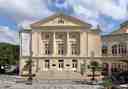
打开独立页面 →To spot the Baden City Theatre, just look straight ahead for a grand cream-colored building with tall columns, large elegant windows, and two small palm trees in front-it's right…阅读更多收起
To spot the Baden City Theatre, just look straight ahead for a grand cream-colored building with tall columns, large elegant windows, and two small palm trees in front-it's right across the open plaza with wide steps leading to its entrance. Now, standing here, you’re about to enter a world where spotlights, drama, and the occasional dramatic diva collision backstage have all played their part! The Baden City Theatre may be all graceful facades and crisp banners today, but its story has more twists than a Shakespearean comedy. Imagine Baden three centuries ago-dukes and duchesses flocking in for a night out, the air buzzing with gossip more thrilling than any play. The city's theatre scene was ignited in 1716 thanks to enthusiastic visits from the imperial family. Back then, actors performed in a rickety barn called the Hellhammer-Stadel. It was so shabby that, in 1774, one hopeful actor named Johann Matthias Menninger went as far as pleading with Emperor Joseph II himself to let him build a brand-new playhouse. Sounded like a great pitch, but the city officials weren’t biting-they wanted to build their own theatre, and by 1775, the first elegant Comoedien Hauß stood here, its sets painted by the famed history painter Mathäus Mutz, who-get this-was paid more for his backdrops than the architect got for the whole building! Picture the social whirl outside, carriages pulling up, and gentlemen strutting into the Redoutensaal, a lavish ballroom added next door in 1799. If you look to the side, you can almost imagine noble visitors enjoying dinners, billiards, and (no surprise) a touch of scandal. The theatre-or “Hoftheater an der Schwechat,” as it was grandly called after its 1812 rebuild-saw it all: summer soirees, boisterous winter shows, and even a fair share of censorship, with over 250 plays banned by nervous officials between 1830 and 1848. These folks clearly liked their drama both on and off the stage! But, all good acts need a refresh. By the late 19th century, the building was falling apart, with creaking floors, constant fire risks, and not much in the way of modern plumbing-or, dare I say, comfort. After several failed architectural competitions (the juries were tougher than theatre critics), the town finally handed things to Fellner & Helmer, Austria’s superstar architects of showbiz. Ten months later, in 1909, the newly minted theatre opened its doors, sparkling with Jugendstil-think art nouveau with a stylish Austrian twist. The grand open gala wasn’t just a party. Beethoven’s “Die Weihe des Hauses” played first, befitting a composer who wrote right here in Baden. Then came “König Ottokars Glück und Ende” and “Die Fledermaus,” composer Johann Strauss’s raucous romp that locals swear was inspired by this very spa town. The theatre has had its dark nights too. During World War II, it was a busy hub for performances, but all went silent in August 1944 after orders from above. After the war, with the Red Army in town, it reopened for business-though getting a standing ovation was sometimes the least of the audience’s worries! In the late 1970s, the whole square got a refresh to modernize the theatre’s surroundings, and for its 500th anniversary in 1977, the hall and its golden balconies sparkled once again. In the modern era, it keeps adapting: new sound systems in 2009, snazzy chairs in 2017, and always, the faint echoes of past applause. Today, the Baden City Theatre seats over 800 and is still the heart of music, laughter, and passionate drama. Directors may come and go-Michael Lakner took the artistic lead in 2017, and the line of talented chiefs dates back to the 1800s-but the stage is always alive, whether for a rollicking operetta, a soulful musical, or the next great emotional monologue. Watch your step on those famous stairs-who knows what old ghosts might be lurking, still hoping for just one more encore! Alright, onward to our next theatrical adventure.
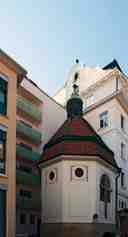
打开独立页面 →To spot the St. Anthony's Chapel in the Herzoghof, look for a small, white octagonal building with a red-tiled pointed roof topped by a little green dome, nestled snugly between…阅读更多收起
To spot the St. Anthony's Chapel in the Herzoghof, look for a small, white octagonal building with a red-tiled pointed roof topped by a little green dome, nestled snugly between taller modern and historic buildings-almost as if it’s hiding in plain sight. Now, as you stand here, let me whisk you back through the centuries to a spot that’s seen almost everything-war, wealth, fire, and faith. Imagine the Herzoghof estate, once belonging to the powerful Babenbergers, echoing with the clip-clop of horses, the hustle of merchants, and-somewhere in the background-a chapel just waiting to be built. The estate’s fortunes changed hands through emperors, counts, and even through the fires of war. In 1683, during the Turkish War, devastation swept through and the building was destroyed. But from these ashes, a determined noblewoman, Countess Katharina von Lamberg, hatched a plan. She wanted to honor Saint Anthony of Padua, and so, in 1708, the first chapel was completed-a real beacon of peace after all that chaos! Picture the old days: on the wall, a Lamberg family crest, a white lamb upon a hill, with a sundial to help the locals tell time before smartphones were a thing. The estate, also called the Herzogbad, became a treat for local nobles and not-so-nobles alike, and eventually even belonged to the city of Baden. Through fire and city-wide disasters, the chapel somehow escaped untouched while all around it turned to ash in the big fire of 1812. Bit dramatic, right? If you listen closely, you might still hear it breathe a sigh of relief! The real plot twist came in 1908, when the entire old complex, chapel and all, was torn down-not by invaders or flames, but by good old Viennese urban planning! What you see now is its stylish, Jugendstil (Art Nouveau) replacement, with the spirit of Saint Anthony still watching over the place. Step inside, and you’d see little angels (Putten) on the altar, golden candlesticks shining, and above all, the Virgin Mary and baby Jesus cozily surrounded by decorative flourishes, preserved from the original 18th-century baroque chapel. Rarely is a mass celebrated here today, but when it happens, you can bet history is listening, too. And if you look closely, maybe you’ll spot some of those old statues-each with their own adventure, frozen in time. Now, how’s that for a chapel with more plot twists than a Netflix series?
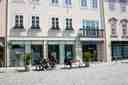
打开独立页面 →To spot Sparkasse Baden, look for the modern glass storefront with the large blue "SPARKASSE" sign to your right, set into the pale historic building with several rows of…阅读更多收起
To spot Sparkasse Baden, look for the modern glass storefront with the large blue "SPARKASSE" sign to your right, set into the pale historic building with several rows of traditional white windows above. Let’s take you back to the 1860s-imagine cobblestone streets echoing with the sounds of horse carriages and the lively chatter of farmers, all needing a safe place for their money and perhaps a loan or two. The Sparkasse Baden was born from a mix of clever people with practical minds and big hearts, hoping to help local farmers and the hard-working middle class handle their finances. The year was 1868; inside a candle-lit meeting room, a group of Christian social thinkers agreed-this town needed self-help and security more than wild speculation. That’s how the Sparkasse’s sturdy, cautious rules came about: only safe loans and rock-solid government bonds for their clients. It turned out to be a lifesaver just a few years later, when the stock market crashed in 1873, pulling the rug out from under banks everywhere. But not Sparkasse Baden! While others folded, this bank stayed standing, and none of their savers lost a gulden. Over the decades, this spot has seen fortunes guarded, loans inked, and the community’s dreams funded. By 2011, Sparkasse Baden even joined forces with Sparkasse Kirchschlag, making it an even bigger force in regional finance. But don’t let all this talk of money fool you-the bank is generous too. Since its first day, it’s poured millions into community projects, supporting everything from the city bus to the theater and even the Römertherme baths. So, next time you step inside, don’t just think of dull paperwork-imagine the century-and-a-half of stories, hopes, and local pride held within these walls, and maybe picture a farmer from 1868 winking at you!
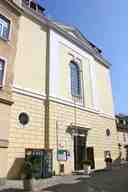
打开独立页面 →To spot the Church of Our Lady Mary the Glorious, just look for a tall, pale yellow and white facade with a large arched window above the entrance, flanked by two circular windows…阅读更多收起
To spot the Church of Our Lady Mary the Glorious, just look for a tall, pale yellow and white facade with a large arched window above the entrance, flanked by two circular windows and tucked into the row of buildings along Frauengasse. Now, imagine stepping back through the centuries to a narrow street echoing with footsteps on cobblestones, the smell of incense just faint in the air. You’re standing outside a church with a story that unfolds like a mystery novel - and a bit of royal drama too! The Frauenkirche-yes, “Church of Our Lady”-was already famous by the 13th century. It first pops up in an old parchment from the Abbey of Heiligenkreuz, clearly making it one of Baden's oldest secrets. In 1285, Leutold von Chreusbach and his wife Offemia had a rather generous day and handed the church and the surrounding estate over to the Augustinian hermits. But the real cloak-and-dagger moment came centuries later. Picture the year 1697, whispers bouncing off these walls as Duke Frederick Augustus the Strong, Elector of Saxony, slipped inside. Here, under these very roof beams, he secretly converted to Catholicism-no papal flashbulbs or TV cameras-just to become King of Poland. Talk about ambition and a bit of religious espionage on the side! The church and its neighboring monastery saw more than their fair share of trouble. In 1812, a devastating fire swept through Baden, leaving these buildings charred and ruined. But Joseph Friedrich Freiherr von Haan saw hope in the ashes and restored both the church and monastery-though by now, only four priests and three lay brothers remained. Ownership ping-ponged until soon Emperor Franz I called this place his own seasonal retreat, and the church itself became his personal chapel. Today you’ll see a building with a touch of baroque flair and a classicist makeover-thanks to architect Johann Nepomuk Amann. With its double-tower facade and gentle colors, this isn’t just a piece of history-it’s a survivor, a stage, and a witness to intrigue, devotion, and a sprinkle of royal mischief.
打开独立页面 →To spot the Arnulf Rainer Museum, just look ahead for a grand, cream-colored building with a long colonnade of tall, white classical columns and a bold, modern sign reading…阅读更多收起
To spot the Arnulf Rainer Museum, just look ahead for a grand, cream-colored building with a long colonnade of tall, white classical columns and a bold, modern sign reading “ARNULF RAINER MUSEUM” glimmering on top. Alright, welcome to a place where splashes of paint meet centuries of spa bubbles, and statues have seen more drama than a soap opera! Right in front of you stands a proud survivor of many lives-the Arnulf Rainer Museum, a building that knows how to reinvent itself. Imagine this: it’s 1821, and the scent of mineral springs is floating in the air. Ladies in elegant dresses arrive to the newly built “Frauenbad,” a dazzling bathhouse dressed in French classicist style. The marble floors would gleam in the sun pouring through the tall windows, while the eight majestic columns outside tried their best to hold up not just the roof, but the reputation of being the finest bathhouse around. Let’s rewind the clock even further: back in the Middle Ages, over 700 years ago, this very spot was home to a “Women’s Church,” built above a spring that possibly even the Romans enjoyed-talk about a timeless spa day! By the late 1200s, noble lords would visit, and later, even emperors like Ferdinand I got in on the action. But don’t get too cozy-this wasn’t always a carefree place. In the 1600s, the Emperor himself had to step in because the nobles tried to claim this as their exclusive VIP club. The solution? Twenty-two strict bathhouse rules! If you disobeyed, you might’ve lost your bath privileges. Talk about drama-these baths saw more legal action than a courtroom. Over the years, fires, renovations, and more than a few leaks tested the resolve of everyone who wanted a soak. In 1812, a fire swept through Baden, and the Frauenbad was partly destroyed, only to rise like a phoenix with a whole new look just a few years later-cue the dramatic music! When it reopened, smooth marble lined the pools, and grand personalities flocked here, from Emperor Franz I of Austria to Saxon princes. But no matter how fancy it looked, the place was never without a quirk: leaks, creaks, and noble complaints soon made everyone realize that even the prettiest bath can have plumbing problems. Fast forward to the twentieth century: through two world wars, the Frauenbad stood steadfast as the city’s only spa. By the 1970s the age of thermal water was over, and in 1973, the last bath was drawn, the doors creaking shut on centuries of steamy gossip. Not for long, though! In 1977, the building took a vow of silence-a museum at last. Now, it’s not just baths and bubbles: since 2009, these marble-finished halls are dedicated to Baden’s own artistic rebel, Arnulf Rainer. If you feel a sudden urge to scribble on a postcard, don’t worry-it’s just Rainer’s spirit. Born right here, he transformed painting with his wild, bold “overpaintings,” mixing surrealism, crosses, and giant masks. The museum is no ordinary art house. Twice a year, the halls buzz with new, ever-changing exhibitions-not just Rainer, but a wild mix of local and international artists, from sculpture and print to photography and performances. There’s even jazz, talks, and that awkward moment when you realize the painting is staring back at you! Through layers of time, marble, and brushstrokes, the museum is still a lively meeting place where the atmosphere shifts with every exhibition. So as you step inside (or just gaze marvelously at its grand façade), picture steam curling through the columns, laughter bouncing off the walls, and a modern masterpiece humming with creative energy. And if you ever feel the pull of a mysterious drip… well, maybe a ghostly bath guest has come to see the latest show!
打开独立页面 →To spot the Beethoven House Baden, look for a slightly weathered, yellowish-orange two-story building with a distinctive tiled roof right on the corner of Rathausgasse, its facade…阅读更多收起
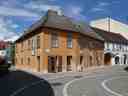
To spot the Beethoven House Baden, look for a slightly weathered, yellowish-orange two-story building with a distinctive tiled roof right on the corner of Rathausgasse, its facade marked by rectangular windows and a sign with Beethoven’s profile hanging over the door. You’re now standing in front of a building with a story that stretches back to the days when Baden was filled with horse carts, busy bakers, and the occasional-well-disappearing owner during the Turkish invasion of 1529! The Beethoven House is no ordinary house; it’s a time capsule where music history was literally scribbled on the window shutters. Once, this quirky old building was home to craftsmen, bakers, locksmiths, and even a copper smith, who, rumor has it, probably never played a single piano note in his life. The house itself dates to the 16th century and has seen so many renovations that it likely doesn’t even recognize itself in the mirror anymore. But, the real headline comes in the 19th century, when Ludwig van Beethoven checked in-not once, not twice, but for three epic summers: 1821, 1822, and 1823. He wasn’t here just for the scenery or the spa cures (though, who could resist a Baden bath?), but to wrestle with one of his biggest musical giants: the Ninth Symphony-Ode to Joy and all that. Imagine the scene: Beethoven in the upstairs apartment, framing his day between a humble sleeping room and a cramped workspace, grumbling over the lack of paper, and, in a burst of desperate inspiration, jotting his genius directly onto the shutters overlooking Rathausgasse. During the early 1800s, this house belonged to Johann Bayer, a copper smith and carriage driver, and his wife Ursula. Their biggest claim to fame? Some half-hidden wall paintings they left behind and, of course, renting out rooms to a stubborn, slightly unkempt tenant named Beethoven. In fact, Beethoven was such a memorable guest-always a bit restless, never staying twice in the same spot-that when he actually wanted to return for a third stay, the landlord made him agree to what I like to call the “Window Clause”: replace any window shutters he used for music notes, because Bayer had already been selling them off as prized Beethoven memorabilia! Picture people outside in the hot summer, hearing faint music and possibly some heavy sighing coming from above. Beethoven’s Ninth, part of Europe’s greatest collective playlist, was put together right here. And he wasn’t just composing that-some of his other works, like Wellington’s Victory and the Missa Solemnis, echoed off these walls, though probably not quite as much as his muttering about missing sheets of paper. As time moved on, the house morphed with the city: after being a copper smith’s domain, it became a bakery around 1870. Imagine, future visitors buying fresh bread in the same spot where symphonies simmered in Beethoven’s mind. Then, in the 20th century, the city of Baden took the baton and transformed the home into a tribute to Beethoven's genius. In 1965, they opened these very rooms-restored, expanded, and waiting for Beethoven fans and the merely curious. The house was thoroughly restored and updated again in 2014. Now, as a museum, it offers three floors of exhibits-one dedicated just to Beethoven’s creative outpourings in Baden. If you walk inside, you’ll find yourself moving through dramatic displays, digital listening rooms, and upstairs, the very rooms where Beethoven found inspiration. There’s a space completely devoted to the famous fourth movement of the Ninth Symphony-imagine how powerful that must feel, standing where that music was born. So, as you gaze up at this unassuming building, know that it’s not just a house-it’s the birthplace of musical miracles, with a few scratched-up shutters and maybe a croissant or two in its colorful past. Now, shall we see what Beethoven left behind for us next?
打开独立页面 →To spot the Green Market, just look for the large green sign above your head that warmly greets you with “Herzlich willkommen Grüner Markt” and is nestled under a glass-and-metal…阅读更多收起
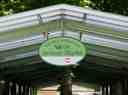
To spot the Green Market, just look for the large green sign above your head that warmly greets you with “Herzlich willkommen Grüner Markt” and is nestled under a glass-and-metal canopy, set at the lively heart of Brusattiplatz. Imagine yourself standing where, centuries ago, grapevines stretched across open ground owned by the Holy Cross Court, far beyond the old city walls. Suddenly, in 1811, this peaceful vineyard’s fate changed-Baden’s markets, cramped and cluttered in the city center, needed a new home. The solution? Bring the sights, smells, and shouts of market day right here! Fruit, fish, meat, and vegetables all jostled for space alongside the weekly market. By the late 1800s, the market squeezed for elbow room, until the city finally bought up the garden and expanded. There was even a wild idea to put a grand new theatre or market hall here-imagine the drama of cabbage rolling across the stage! Instead, it became known as Brusattiplatz in 1936, to honor Mayor Alois Brusatti. By the 1990s, sparkling renovations and a gleaming glass roof brought light to the covered walkways, making the Green Market both a piece of living history and a fresh place to munch on apples-just make sure you don’t accidentally applaud the tomatoes.
打开独立页面 →To spot the Leopoldsbad, look for a light-yellow, single-story building with a red hipped roof; its most striking feature is the set of large Ionic columns holding up a triangular…阅读更多收起
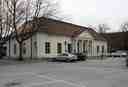
To spot the Leopoldsbad, look for a light-yellow, single-story building with a red hipped roof; its most striking feature is the set of large Ionic columns holding up a triangular pediment that proudly says “Leopoldsbad” above the main entrance. Now, as you stand here, picture yourself standing on the very threshold of a place that once echoed with splashes, laughter, and a fair bit of grumbling! Long before it became home to Baden’s tourist information, Leopoldsbad was known as the Heiligenkreuzerbad, first mentioned way back in 1662. Right from the start, this bathhouse was famous-not for luxury, but for its constant stream of little disasters. Can you imagine dipping your toes into a “thermal” bath only to shiver? Yes, a cold water vein ran straight underneath! And just when the townsfolk hoped their sulphur spring would be a source of health, sometimes the water got a bad reputation and was rumored to be not just chilly-but unhealthy. By 1812, after leaving the hands of the Heiligenkreuz Abbey, Baden gave the bath a makeover. They even tried modern technology-steam, showers, rain and drip baths! But, of course, it quickly went out of style. There was always a new owner or new plan, but always the same cool water. It earned a reputation as the bath for the common folk-people with thinner wallets braved the 24-degree Celsius water, which was colder and cheaper than the other spas in town. Even the name changed, becoming Leopoldsbad in homage to Saint Leopold. Fast forward: the bath toggled between a poor man’s spa, a military bath during World War I, and later a budget spot for the people of Baden. Sometimes it was busy, sometimes closed for years. By 1988, you’d find a flea market inside; in the 90s, the spa director’s office; and today, of course, it welcomes visitors instead of bathers. So, as you gaze up at these neoclassical columns and their ancient, dignified pediment, just imagine the chilly splashes, the laughter, the mishaps-and maybe be glad you’re here for a story, not a cold soak!
打开独立页面 →In front of you stands a grand, pale yellow, U-shaped building with rows of elegant arched windows, a red-tiled roof, and a sweeping driveway leading up to flagpoles and a formal…阅读更多收起
In front of you stands a grand, pale yellow, U-shaped building with rows of elegant arched windows, a red-tiled roof, and a sweeping driveway leading up to flagpoles and a formal garden-just look beyond the cobblestone path and you’ll spot the Sauerhof’s dignified entrance. Now, imagine you’re arriving here not just as a traveler with a smartphone, but as a guest in a place where centuries of drama, comfort, and intrigue ripple through the air. Sauerhof’s story stretches all the way back to the 12th century-so if these stones feel like they’ve seen it all, that’s because they basically have! Picture dusty horse-drawn carriages rumbling up the path and nobility stepping out, trailing rich cloaks and whispers of palace gossip behind them. The property was handed around like a well-worn poker chip among the powerful for hundreds of years. It was owned by knights like Hans der Flens and noblemen such as Hans Röttinger, then snapped up by Emperor Maximilian II as a dazzling residence for his son-eventually future Emperor Rudolf II. You can almost see the royal advisers fussing over which curtains would impress the visiting archdukes the most. In 1583, Georg Saurer von Sauerburg became the new master of the estate, gifting the building its memorable “Sauerhof” name. Back then, the garden featured a small wild bath house built entirely of wood, where the most exclusive guests could relax. It’s even said lunch at the “Sauerhof-Traiterie” was such an event that you’d never know which famed artist or composer you’d be sitting next to-Beethoven, Carl Maria von Weber, and Antonio Salieri were all known to have dined here. Just imagine Beethoven enjoying a quiet holiday spa, perhaps grumbling about the food being too bland or the music playing in the lobby! But don’t let the peaceful setting fool you. In 1683, during the second siege of Vienna, the entire place was destroyed. I suppose you could say the guest reviews were less than glowing that year-“Hotel was razed to the ground, 0 out of 5 stars.” Time and money kept flowing into Sauerhof, and by 1822, it was transformed into a luxurious hotel resort, complete with a fine restaurant and a chapel, surrounded by an English-style garden masterpiece. Throughout the 19th century, ownership changed hands again and again-aristocrats, a military hospital for soldiers, and even, for a short while, the off-duty officers of Archduke Albrecht. Imagine the buzz on those grand staircases at the height of summer, officers swapping stories of campaigns while sipping mineral water and trying to pretend they didn’t miss home. War always had its own plans for grand hotels, though. During both World Wars, Sauerhof was turned into a military hospital-a place where the old luxury must have mixed with the serious hush of recovery and hope. After World War II, everything changed again. Soviet occupation left Sauerhof in ruins, stripped bare, eerily silent. When Austria regained its freedom, the building was a battered shell. And after decades of failed plans (a rheumatism center that never opened, a conservatory for Omani students that never materialized), it became a hotel again-in true Austrian style, re-opening with a flourish and a lineup of ministers for the ribbon cutting. Of course, financial disasters and unexpected owners seemed determined to keep Sauerhof’s history a little spicy-at one point, even an advisor to the Sultan of Oman took charge, although turning it into a college for musicians didn’t work out either. Today, behind that calm façade and the freshly mown grass, there’s a lingering spirit of all those eras-a residence, a palace, a place of healing, a grand hotel, and, just occasionally, a nearly empty building waiting for its next chapter. If only hotels could write their own booking reviews: “Had a few rough centuries, but plenty of stories to share if you’ll listen.”
打开独立页面 →Right in front of you stands a stately yellowish-beige building with a proud corner tower topped by a clock-if you look up, you’ll spot its distinctive Renaissance-style design…阅读更多收起
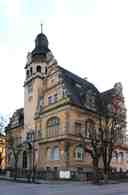
Right in front of you stands a stately yellowish-beige building with a proud corner tower topped by a clock-if you look up, you’ll spot its distinctive Renaissance-style design and the word “Museum” above the arched entrance. Now, let’s dive into the world of the Rollett Museum. Imagine it’s the early 1900s, and the townspeople of Weikersdorf are gathering under clouds of building dust and the sound of chisels and hammers -they’ve just laid the first stone for what will soon become this grand structure, designed with a sense of drama by architect Rudolf Krausz, a man who definitely never took “plain” as an answer. By 1905, this Renaissance-inspired marvel opens as the new town hall, but-plot twist!-just a few years later, Weikersdorf itself is merged into Baden, and the building finds itself as relevant as an umbrella in the desert. What next? Well, the townsfolk saw an opportunity. In 1912, the building’s life as a museum started rolling with a spectacular exhibition, featuring crafts, wine, and industry that would’ve had Instagram buzzing (if only it existed). That year, under the careful gaze of Archduke Rainer, the grand park next door and these ornate halls were filled with everything from snazzy snippers (the local tailors) to shoes, historical treasures, and even ancient memories tucked away in the city archives. But fate had a sense of irony-in 1914, just after the museum officially opened, the world went a bit sideways, and the doors slammed shut for twelve years. Fast forward: WWII sweeps through, and the museum’s treasures are hurriedly shipped off for safekeeping. If only Kaumberg had agreed-these artifacts ended up smack in a war zone anyway, suffering losses and damage. After the war, the whole neighborhood, including the museum, was claimed by the Soviets and cut off by wooden barriers. You can almost picture the tension, the uncertain footsteps along these silent fences. But Baden wasn’t about to let the Rollett Museum fade away. By 1956, restoration began, and a year later, the museum burst back into life, shining once again as the home for city collections and stories. Over the decades, the city poured in millions, modernizing every corner so that by 1995, visitors could once again wander through history in well-lit halls. Now, about those collections: the Rollett Museum is famous for its curios, quirks, and a dash of the macabre. Dr. Anton Rollett, the city’s legendary medical examiner, botanist, and all-around collector-extraordinaire, was the original mastermind. Picture him in the early 1800s, surrounded by jars of preserved creatures, strange minerals, and enough skulls to give Hamlet existential angst. Dr. Rollett made his collection public long before it was fashionable-and after his passing, his family ensured it kept growing, eventually giving loads of treasures to the city, with one condition: the museum must always carry the Rollett name. As you walk past, you might sense the lingering energy of exhibits that have occupied many locations-from the vanished Rollett Villa to the old Augustinian monastery and even a former poorhouse-before finally finding their forever home here. And tucked inside is a legendary skull collection, including one of the most peculiar: the only certain life mask of Napoleon himself, flanked by wax models, busts, and even a plaster cast of the wounded poet Ferdinand Raimund-the latter made by Dr. Rollett after bravely treating the dying Raimund in 1836. If the idea of 119 busts, 78 skulls, and all sorts of wild anatomical wonders doesn’t tickle your curiosity, well, you probably haven’t met the bust of Angelo Soliman, the only clearly identified figure among a group of African busts, or seen objects excavated from prehistoric digs, wine jugs from the cellars of Baden, and even memorabilia of the city’s famous thermal springs. So as you stand here, let the tower’s clock remind you how time swirls and changes-sometimes with a bang, sometimes in the dusty shuffle of museum keepers protecting fragile wonders. Whether you like your museums with a dash of drama or just love odd collections, the Rollett Museum is where Baden’s stories gather, poised to surprise and delight every visitor.
打开独立页面 →


常见问题
如何开始导览?
购买后,下载 AudaTours 应用并输入您的兑换码。导览将准备好立即开始--只需点击播放并按照 GPS 引导的路线行驶即可。
导览期间我需要互联网吗?
不需要!开始前下载导览并完全离线享受。只有聊天功能需要互联网。我们建议在 WiFi 下下载以节省移动数据。
这是导游带领的团体游吗?
不是--这是自助语音导览。您按照自己的节奏独立探索,通过手机播放音频解说。没有导游,没有团体,没有时间表。
导览需要多长时间?
大多数导览需要 60-90 分钟才能完成,但您完全控制节奏。随时暂停、跳过站点或休息。
如果我今天无法完成导览怎么办?
没问题!导览具有终身访问权限。随时暂停和恢复--明天、下周或明年。您的进度已保存。
有哪些语言可用?
所有导览均提供 50 多种语言版本。在兑换代码时选择您的首选语言。注意:导览生成后无法更改语言。
购买后我在哪里访问导览?
从 App Store 或 Google Play 下载免费的 AudaTours 应用。输入您的兑换码(通过电子邮件发送),导览将出现在您的资料库中,准备下载并开始。
如果您不喜欢该导览,我们将退款。请联系我们 [email protected]
安全结账使用 


