墨尔本语音导览:地标与传奇之旅
这座曾自诩为“奇妙墨尔本”的城市,在每一根华丽的柱子和闪烁的玻璃背后都隐藏着戏剧性的故事。仔细审视议会大厦未建成的穹顶、科林斯街120号高耸的塔尖,以及伯克街的熙攘喧嚣——这座城市的外表守护着权力、反叛和重塑的故事。 这个自助语音导览邀请您追随政治家、建筑师和普通市民的足迹,同时发现大多数游客都会错过的曲折故事。 议会中哪场激烈的争论曾威胁要永远改变维多利亚州的命运?在办公室灯光熄灭后,谁又长期萦绕在科林斯街120号?伯克街最繁忙的角落为何隐藏着一个与一位爱尔兰总督有关的秘密? 穿梭于标志性建筑和僻静小巷之间,墨尔本的过去在淘金热的雄心、建筑竞争、丑闻计划和塑造城市灵魂的意想不到的时刻中跃然而出。 准备好深入探索奇妙的墨尔本了吗?点击播放——让隐藏的戏剧性故事自行揭示。
导览预览
关于此导览
- schedule持续时间 40–60 mins按照自己的节奏
- straighten7.2 公里步行路线跟随引导路径
- location_on
- wifi_off离线工作一次下载,随处使用
- all_inclusive终身访问随时重播,永久有效
- location_on从 墨尔本议会大厦 开始
此导览的景点
Now, take a look at that grand colonnaded front. It's like the parliament saying, "Hey, we're here, and we mean business!" You can't miss it when you're strolling up Bourke…阅读更多收起
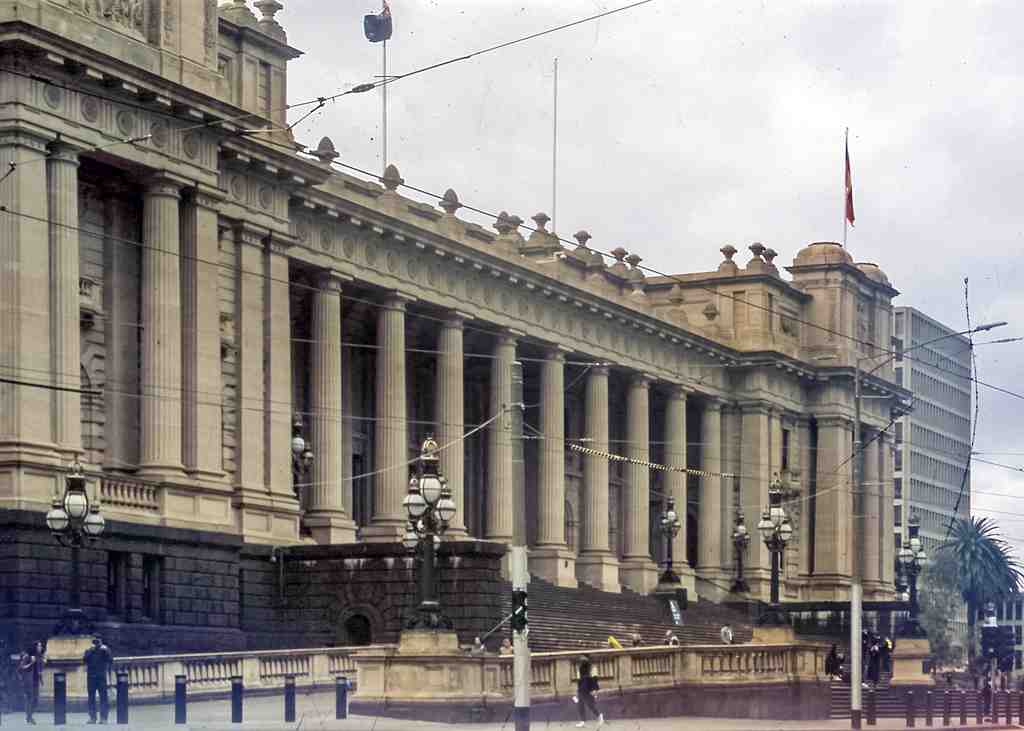
Now, take a look at that grand colonnaded front. It's like the parliament saying, "Hey, we're here, and we mean business!" You can't miss it when you're strolling up Bourke Street. Did you know that construction of this building started way back in 1855? Yeah, they've been working on it for ages, but it's like they decided to keep it a bit mysterious by never completing it. They even had plans for a dome, but it remains one of Melbourne's most famous unbuilt features. I guess they wanted to keep us on our toes! This place has seen some serious history too. Between 1901 and 1927, it was actually the meeting place of the Parliament of Australia, back when Melbourne was the temporary national capital. It's got quite the resume! You see, the Victorian gold rush and population boom back in the day led to a demand for greater democracy. People wanted a space to voice their opinions and have political debates. So, Governor Charles La Trobe asked the Surveyor General Robert Hoddle to find the perfect spot for this new parliament. And guess where they picked? Here, on the eastern hill at the top of Bourke Street, with an amazing view of the whole city. Talk about a prime location! But let me tell you, the journey to create this magnificent building was full of twists and turns. There were multiple architects and designs in the mix, and it seemed like they just couldn't settle on one. It's like they were playing a game of musical chairs, but with architecture. One of the early designs by Henry Ginn appeared in 1851, but then they decided to have a competition. Smith & Pritchard won first prize, but their design got set aside too. It was a whole rollercoaster ride of choices and rejections. Finally, Captain Pasley, the Chief Engineer, came up with a design that was published in 1854. It looked like a graceful Palladian building, similar to the State Library of Victoria. But surprise, surprise, they decided it wasn't quite right either. So, they brought in the dynamic duo, Knight & Kerr, who created a much grander design in 1855. They wanted to make a statement, and boy, did they succeed! Construction began in December 1855, but hey, they didn't build the entire thing all at once. It's like they were playing a game of "Let's build it in stages because it's too massive and expensive." So, they started with the two chambers for the Victorian Legislative Assembly and the Legislative Council. By November 1856, they were ready for business, and the first session of the Victorian Government took place in these new chambers. The excitement was off the charts! But wait, there's more! Construction continued, and the Library and eastern wing were completed in 1860. They wanted this building to be a symbol of pride, so they carefully chose the stone for the exterior. Bluestone was too dark, granite was too expensive, even Carrara marble was considered. In the end, they settled on freestone from Bacchus Marsh. And that's the story of Parliament House, Melbourne. Full of history, debates, and a touch of mystery. So, shall we move on to our next stop? Come on, let's keep this adventure rolling!
打开独立页面 →Now, let me tell you a little secret about this architectural marvel. It was built from 1989 to 1991, and if you look closely, you'll notice that it gives a toast to the fabulous…阅读更多收起
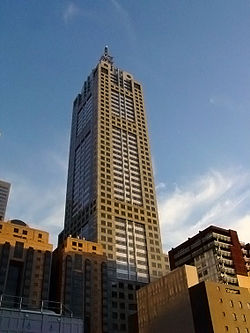
Now, let me tell you a little secret about this architectural marvel. It was built from 1989 to 1991, and if you look closely, you'll notice that it gives a toast to the fabulous Art Deco buildings in New York City, like the Empire State Building and the Chrysler Building. Talk about getting your inspiration from the best, am I right? The designers at Hassell, along with the legendary Daryl Jackson, brought this postmodern beauty to life. And the team of engineers, led by Connell Wagner and Lincolne Scott, made sure it was rock solid and had all the bells and whistles. The exterior of the building screams elegance with its stunning granite façade, impressive setbacks, and a central mast that adds a touch of grandeur. You can't help but stand in awe as you take in all its glory. Now, let's talk tenants! 120 Collins Street is home to some pretty big players in the business world. We're talking Bank of America Merrill Lynch, BlackRock, Mitsubishi, and many more. It's like a who's who of the corporate world up in here! Back in the day, when it was completed in August 1991, this baby held the title of Australia's tallest building for a whopping 14 years! It wasn't until 2005 that the Q1 stole the crown. And if that wasn't enough, the residential Eureka Tower said, "Hold my latte" and became the tallest building in Melbourne in 2006. But hey, don't feel too bad for 120 Collins Street. It's still a superstar, ranking as the fifth-tallest building in Melbourne and the eighth-tallest in all of Australia. Not too shabby, right? So, let's take a moment to appreciate this architectural superstar and snap a picture that will make your friends back home trip over their jaw-drops. Ready? Cheese!
打开独立页面 →Nowadays, Bourke Street is known for its vibrant atmosphere and its iconic pedestrian mall, aptly called the Bourke Street Mall. This dynamic strip, stretching between Swanston…阅读更多收起
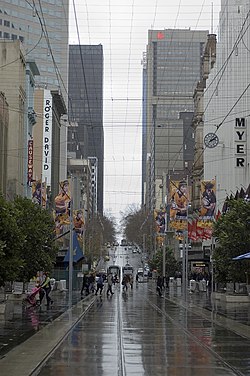
Nowadays, Bourke Street is known for its vibrant atmosphere and its iconic pedestrian mall, aptly called the Bourke Street Mall. This dynamic strip, stretching between Swanston and Elizabeth Streets, is a shopper's paradise. You'll find big-name stores like Myer and David Jones, as well as international brands like H&M and Zara. It's like a retail heaven, where fashion enthusiasts can get their fix! But Bourke Street is not just about shopping and entertainment. It's also a place where history and modernity meet. As you walk along this street, you'll notice the mix of old and new architectural styles. From historic buildings and department stores to sleek office blocks and residential skyscrapers, Bourke Street tells the story of Melbourne's ever-evolving skyline. Oh, and here's a fun fact for you! The street is named after Sir Richard Bourke, an Irish-born British Army officer who served as the Governor of New South Wales. He played a significant role in the development of the Hoddle Grid, the layout of Melbourne's city center. Now, let's continue our adventure and head to our next stop, the iconic Melbourne Town Hall! But before we go, let's take a moment to appreciate the liveliness of Bourke Street. Remember, if someone tells you a place is busy, just say, "Busier than Bourke Street!" It's the ultimate colloquialism for a crowded environment. Join me as we walk down Bourke Street and soak in the energy of this vibrant city!
打开独立页面 →
再显示 11 个站点显示更少站点expand_moreexpand_less
Ah, the State Library Victoria, or as the locals like to call it, the SLV! This place is not just your average library, my friend, it's a true Australian gem! Established back in…阅读更多收起
Ah, the State Library Victoria, or as the locals like to call it, the SLV! This place is not just your average library, my friend, it's a true Australian gem! Established back in 1854, it's not only Australia's oldest public library but also one of the first free libraries in the entire world. Talk about being ahead of the game! Located right here in Melbourne, the SLV has been a hub of learning and discovery for over a century. It's like a treasure trove filled with over five million items! And we're not just talking about books, oh no. They've got everything from manuscripts to paintings, maps to photographs, and even newspapers. It's like a time capsule of Victoria's history. And speaking of history, did you know that the decision to build this marvelous library was made by Governor Charles La Trobe and Sir Redmond Barry? They had big dreams of combining a library, museum, and gallery all under one roof. Quite the ambitious plan, if you ask me! Now, let's get into some architectural talk. The library was designed by the talented architect Joseph Reed, who really knew how to make a statement. Over the years, this place has expanded and grown, covering an entire city block. It's like a labyrinth of knowledge, waiting to be explored. Oh, and here's a fun fact for you. When the library first opened, you had to have clean hands to enter. Yep, no dirty paws allowed! Luckily, they've relaxed those rules since then, so feel free to come in as you are. The SLV is not just a place for bookworms, my friend. It's a cultural hub, hosting art galleries and museum displays. There's even a domed section facing Russell Street that houses the Museum and Gallery. It's the perfect spot to soak in some art and expand your horizons. So, let's take a stroll through the State Library Victoria, shall we? Who knows what treasures we might uncover along the way? Just remember to keep those hands clean!
打开独立页面 →Alright, folks! Gather 'round and let me tell you all about the Queen Victoria Market, or as I like to call it, Vic Market or Queen Vic! This place is a happening spot right here…阅读更多收起
Alright, folks! Gather 'round and let me tell you all about the Queen Victoria Market, or as I like to call it, Vic Market or Queen Vic! This place is a happening spot right here in the heart of Melbourne's central business district. Covering a whopping seven hectares, or 17 acres if you want to get technical, the Queen Victoria Market claims the title of being the largest open-air market in the Southern Hemisphere. Talk about a shopping paradise! It's been around since the 1860s, and officially opened its doors in 1878. That's some serious history right there, folks! Now, the Queen Victoria Market is quite the survivor. It's the last remaining major market in the CBD, still standing tall and bustling with activity. Alongside Prahran Market and South Melbourne Market, it's one of the precious few Victorian-era markets still operating in this vibrant city. This place is not just any old market, my friends. It's got some serious heritage and recognition. In fact, it's listed on both the Victorian Heritage Register and the National Heritage List. Now, that's a fancy way of saying it's a pretty big deal! In fact, it's one of Melbourne's major tourist hotspots, attracting around 10 million visitors every single year. People can't get enough of the Queen Vic Market, and I don't blame 'em! You know what's really fascinating? The Queen Victoria Market stands on the site of the Old Melbourne Cemetery. Yep, you heard that right, folks. It was the first burial ground for the early settlers of this fine city. They started burying folks there way back in 1836. The cemetery eventually closed in 1854, but get this, some burials continued all the way until 1917! And guess what? There were around 10,000 graves on that site at one point. Now, that's a lot of resting places! But let's talk about happier things, shall we? After the cemetery's partial closure, they decided to build some markets around the area to keep up with Melbourne's growing population. The Lower Market was initially set up in 1857 for fruits and veggies, but it didn't quite take off. Turns out, the market gardeners weren't too thrilled about being so close to all those graves. Can't say I blame 'em. Instead, it became a livestock and hay market. They later built a magnificent brick building to house the meat and fish market in 1867, which still stands today as the Meat and Fish Hall. Fast forward to 1876, and the Victorian Government passed an Act to officially reserve and develop the Old Melbourne Cemetery site as markets. A year later, construction began on the corner of Queen and Victoria streets, where the unconsecrated burials of Aboriginal people and executed criminals were laid to rest. The Queen Victoria Market opened its doors in March 1878, and boy, did it grow! They built a whole bunch of new sheds and even added shops along Elizabeth Street. This market was on fire! By 1898, they had carts upon carts loaded with fresh fruits and veggies coming in twice a week during the summer from market gardens outside the city. I tell ya, this place was a hub of activity, and it continues to be to this very day. Now, there's something you should know. In 1920, they expanded the market to Peel Street. But here's the kicker: they built over the section of the old cemetery allocated for Jewish burials and the graves of the first British colonists. You can imagine the uproar that caused, folks! People were protesting left and right, trying to put a stop to it. Some things never change, eh? So, my friends, the Queen Victoria Market is not only a bustling marketplace but also a piece of Melbourne's history. It's got character, charm, and some seriously good bargains. So come on over and experience this market like no other. Who knows, you might just discover a treasure or two. But remember, watch out for any wandering spirits from the old cemetery. Just kidding, folks, I promise you won't see any ghosts lurking about! Alright, let's move onto our next stop. Hop on board and let's keep the adventure going!
打开独立页面 →Ah, Flagstaff Gardens, the oldest park in Melbourne! Established way back in 1862, it's got quite the history. Today, it's one of the most popular parks in the city, drawing in…阅读更多收起
Ah, Flagstaff Gardens, the oldest park in Melbourne! Established way back in 1862, it's got quite the history. Today, it's one of the most popular parks in the city, drawing in residents, office workers, and tourists like yourself. Now, let's talk about the cool stuff here. First off, you've got the gardens themselves, a whopping 18 acres of green space. It's like a slice of nature right in the heart of the city! The park is bounded by William, La Trobe, King, and Dudley streets, giving it a nice little cozy corner. Speaking of corners, on the southeast side, you'll find the entrance to Flagstaff railway station. Diagonally opposite that is the Victorian branch of the Royal Mint, which was established in 1869. The building is quite a looker, with its Victorian Gold Rush boom-period classical styled architecture. Just imagine all that gold flowing through those doors! On the northeast corner, right over William Street, you'll find the famous Queen Victoria Market. It's like a foodie's paradise, with all sorts of goodies to satisfy your taste buds. But let's not forget about the park itself. It's got everything, from extensive lawns and mature trees to flowerbeds and even some wild animals. Keep an eye out for those possums! The southern end boasts gorgeous deciduous trees, while the northern end is home to magnificent eucalyptus trees. You'll also find charming elms shading the pathways, along with some massive Moreton Bay Fig trees. It's a real natural wonderland. Oh, and don't miss the bowling lawn in the north corner. You might catch some friendly competition happening there. Plus, there are tennis courts along William Street. They multi-task as volleyball, handball, and netball courts too. Talk about versatility! And let's not forget about the awesome barbecues nearby. They're electric, so no need to worry about playing with fire. They're a hot spot for office parties, especially in December. Who doesn't love a good office shindig, right? As you wander through the gardens, keep an eye out for the memorials and sculptures sprinkled around. They really bring a sense of history and significance to the place. Flagstaff Gardens is so important that it's been classified by the National Trust of Australia, listed by the Australian Heritage Commission, and even made it onto the Victorian Heritage Register. It's basically a time capsule of Melbourne's historical, archaeological, aesthetic, horticultural, and social heritage. Talk about impressive! Now, before colonization, this high ground was known as Brejerrenywun to the Boonwurrung and Woiwurrung peoples. But when Melbourne was established in 1835, it became the burial site for the colony's first inhabitants. People lovingly called it Burial Hill, and it offered stunning panoramic views of the small colony, the Yarra River, and Port Phillip. On November 11, 1850, something pretty significant happened here. Victoria officially separated from the Colony of New South Wales, and the announcement was made right at Flagstaff Gardens. The townspeople gathered for a massive celebration, complete with a towering bonfire. Can you imagine the excitement in the air? And that's not all! In the late 1800s, a Magnetic Observatory and Weather Station was established here. It was a hub of scientific activity, with researchers like William John Wills (yeah, the famous one from the Burke & Wills expedition) lending a hand. Eventually, the observatory moved to the Kings Domain, but the legacy remains. So, as you stroll through Flagstaff Gardens, take a moment to appreciate the rich history beneath your feet. And don't forget to enjoy the beautiful greenery, the playful animals, and maybe even challenge someone to a friendly game of bowls. Who knows, you might just make some fantastic memories in Melbourne's oldest park!
打开独立页面 →But wait, there's more! In 1916, the Melbourne Mint began minting Commonwealth silver coins. We're talking threepences, sixpences, shillings, and florins. They even created some…阅读更多收起
But wait, there's more! In 1916, the Melbourne Mint began minting Commonwealth silver coins. We're talking threepences, sixpences, shillings, and florins. They even created some rare gems like the 1921/22 overdate threepence, 1923 half-penny, and 1930 penny. Talk about bling bling! But alas, all good things must come to an end. From 1969, coin production moved to the Royal Australian Mint in Canberra, and the Melbourne Mint shifted its focus. The building itself became home to the Royal Historical Society of Victoria and the civil marriage registry. Love was certainly in the air with all the weddings happening here! Fast forward to today, and guess what? The Melbourne Mint, now managed by a self-funded government body, houses the Hellenic Museum. It's a treasure trove of Greek art, history, and culture. So you can surround yourself with the beauty and richness of another ancient civilization. Talk about a cultural journey! But hey, don't worry, we won't leave you empty-handed. If you're looking to take a piece of history home, you can visit Melbourne Mint Pty Ltd on the ground level. They belong to a group of precious metals companies and have some shiny goodies for you. Just remember, they have no historical relationship to the original Royal Mint. It's like a distant cousin twice removed. Now, let's continue our adventure through Melbourne and see what other treasures we can uncover! Don't forget to keep your pockets full of laughter and joy. Onward to our next stop!
打开独立页面 →Now, one of the coolest features of the Rialto Towers was its very own public observation deck, which opened its doors back in 1994. Imagine being able to take in breathtaking…阅读更多收起
Now, one of the coolest features of the Rialto Towers was its very own public observation deck, which opened its doors back in 1994. Imagine being able to take in breathtaking views of Melbourne from way up high! Unfortunately, the observation deck closed its doors on 31 December 2009, but not to worry, my friend. We've still got plenty to explore. But before we move on, let me tickle your funny bone with a great little fact. Did you know that the Rialto Towers was the location of Melbourne's first Tower running event? Yes, that's right! People would race up the stairs of this colossal building, like their own version of the Empire State Building Run-Up. I guess they really wanted to get their blood pumping! Okay, enough about stairs and races. Let's talk about the architecture. The Rialto Towers consists of not just one, but two conjoined towers. The taller South Tower stands tall at 251 meters (823 feet) with a whopping 55 floors, while the slightly shorter North Tower reaches 185 meters (607 feet) with 43 floors. That's a lot of office space, my friend, with a grand total of 84,000 square meters (900,000 square feet)! Now, here's a fun fact for you. The Rialto Towers has a stunning glass curtain wall façade made of beautiful blue-tinted mirrored glass. During the day, it changes color, ranging from its trademark dark blue to a brilliant gold during sunset. Talk about a building that knows how to rock different looks! And speaking of looks, move over Hollywood because we've got our very own star in Melbourne. On Level 55 of the Rialto Towers, you'll find Vue de Monde, a fabulous fine dining restaurant that opened its doors in 2010. And let's not forget the stylish Lui Bar, where you can enjoy a fancy cocktail with sweeping views of the city. Well, my friend, it's time to move on to our next exciting stop. I hope you enjoyed learning about the Rialto Towers and had a chuckle or two along the way. Let's hit the road and continue our adventure through Melbourne!
打开独立页面 →Okay, so let me give you the 411 on this place. Flinders Street railway station is the second busiest train station in the whole of Australia. Can you believe it? It serves the…阅读更多收起
Okay, so let me give you the 411 on this place. Flinders Street railway station is the second busiest train station in the whole of Australia. Can you believe it? It serves the entire metropolitan rail network and connects with a whopping 15 tram routes. Talk about being well-connected! This place has quite the historical significance too. It opened its doors in 1854, making it the oldest railway station in our great country. Yep, we've got some serious old-school vibes going on here. And get this, back in the day, it was known as "Melbourne Terminus," but eventually, it settled on the snazzy name of "Flinders Street." Can't say we blame them! This iconic station stretches over two city blocks and boasts 13 platforms, my friend. It's like a mini-city of its own! Speaking of cities, did you know that people used to think the design for the station got mixed up with one in Mumbai? Imagine that mix-up! Thankfully, we got this beauty right here in Melbourne. Now, keep your eyes peeled for the entrance because it's hard to miss. It's got a dome, an arched entrance, and even a tower with clocks that show the next departure for each line. Meeting someone under the clocks is like a Melbourne tradition! And if you're feeling adventurous, you can always meet someone "on the steps." That's the wide staircase right beneath those famous clocks. Oh, and did I mention that Flinders Street railway station connects with several tram services? Plus, it's responsible for two of Melbourne's busiest pedestrian crossings. So, watch your step, my friend! This place definitely has some serious character, which is why it's a cultural icon of Melbourne. The main building was completed way back in 1909, and it's a sight to behold. I guarantee, once you see it, you won't be able to resist snapping a selfie or two! Alright, my friend, we've got loads more to explore. Hop on the tram, and we'll take off toward our next stop. Ready for the next adventure? Let's go!
打开独立页面 →Now, let me tell you all about the incredible Eureka Tower! Get ready to be amazed! Eureka Tower, standing tall at a height of 297.3 meters (975 feet), is a skyscraper located in…阅读更多收起
Now, let me tell you all about the incredible Eureka Tower! Get ready to be amazed! Eureka Tower, standing tall at a height of 297.3 meters (975 feet), is a skyscraper located in the vibrant Southbank precinct of Melbourne, Australia. Construction of this magnificent tower started in August 2002 and was completed on 1 June 2006. The plaza was finished around the same time, and the tower was officially opened on 11 October 2006. This marvel of architecture was designed by the talented Melbourne firm, Fender Katsalidis Architects. Grocon, or Grollo Australia, worked their magic and brought this vision to life. The impressive Eureka Tower was developed by Eureka Tower Pty Ltd, a joint venture that included Daniel Grollo from Grocon, investor Tab Fried, and one of the tower's architects, Nonda Katsalidis. Quite a dream team, don't you think? Alright, let's talk numbers! This extraordinary tower contains a whopping 556 apartments, all serviced by 13 lifts. That's a lot of spaces to call 'home'! And wait for it...on level 88, you'll find an observation deck. Can you imagine the breathtaking views from up there? And as if that wasn't enough, level 89 boasts a fantastic restaurant, a cool cocktail bar, and, get this, an event space. Talk about having it all under one roof! Did you know that the Eureka Tower hosts the annual Eureka Climb? It's an event that involves climbing up the tower, taking your fitness to new heights! And in 2013, there was even an experiment involving airplants. Who knew a tower could be so versatile, right? Now, let's talk about the design. The Eureka Tower takes inspiration from the historic Eureka Stockade, a rebellion during the Victorian gold rush in 1854. The tower's golden crown is a nod to the exciting gold rush era, and the red stripe represents the blood that was spilt during the revolt. The beautiful blue glass cladding mirrors the color of the stockade's flag, and the white lines symbolize the Eureka Stockade flag's white markings. Look closely, and you'll also notice white horizontal stripes representing surveyor's markings. It's all in the details! And here's a sweet surprise for you. At the base of the tower, there's an art installation resembling a manmade beehive, complete with bees inside a white box. Two regular-sized bees are buzzing around outside the box, but guess who's queen of all the bees? That's right, there's a queen bee residing at the top, adding that final touch of royalty to the tower. It's quite the sight to behold! Back when it was completed, the Eureka Tower proudly held the titles of the tallest residential building in the world, both by the height of its roof and the height of its highest habitable floor. With its 91 storeys, it was one of the few buildings in the world to reach such dizzying heights. Even though it has now been surpassed by a couple of other towers, it still stands tall as the third-tallest building in Australia and the second tallest in Melbourne, right behind Australia 108. Phew! I hope you're as amazed by the Eureka Tower as I am. It truly is a marvel of engineering and design. Now, let's move on to our next stop and continue our adventure through the wonderful city of Melbourne!
打开独立页面 →Designed by the brilliant architect Sir Roy Grounds, this performing arts centre is a complex of theatres and concert halls, located in the beautiful Melbourne Arts Precinct. It's…阅读更多收起
Designed by the brilliant architect Sir Roy Grounds, this performing arts centre is a complex of theatres and concert halls, located in the beautiful Melbourne Arts Precinct. It's like a Disneyland for art lovers, but without the long queues and overpriced hot dogs. Did you know that the construction of this magnificent place began in 1973? Yep, it took a while to complete, but good things are worth the wait, right? The complex opened in stages, with Hamer Hall opening its doors in 1982 and the Theatres Building following suit in 1984. Talk about patience! Now, let's talk about the stars who grace these stages. Major companies like Opera Australia, The Australian Ballet, and the Melbourne Theatre Company regularly put on jaw-dropping performances here. We've got talent dripping off the walls, my friend! But it doesn't stop there. Arts Centre Melbourne also hosts incredible Australian and international performances, with production companies from all over the world showing off their skills. It's a cultural extravaganza! And guess what? This place is listed on the Victorian Heritage Register. That means it's not just artistically significant, but historically too! It's like a triple threat, my friend! Now, let's take a moment to appreciate the site's interesting history. Back in the early 20th century, this area had it all - a permanent circus venue, an amusement park, a cinema, and even a dance hall. It was the life of the party! During World War II, there was a plan to turn this spot into a home for the National Gallery of Victoria and a state theater. But it wasn't until the 1960s that architect Roy Grounds came up with his grand plan, complete with a tall copper spire. Now, the construction of this place wasn't a piece of cake. Grounds had to figure out how to keep the water out while going deep underground. It was like battling an ocean of challenges! But you know what? They did it! The gallery was completed in 1968 and the theatres were added later. Thank goodness for the dedication of the building committee, led by Kenneth Myer, and the first general manager, George Fairfax. These guys were like superheroes of the arts! Oh, and did I mention the concert hall? It's located right by the riverbank, giving it that special waterfront charm. It's like music and nature decided to have a little love affair. So, my friend, soak in the beauty and creativity that surrounds you. This place is a haven for artists, performers, and all those who appreciate the magic they create. Let's move on to our next stop and keep the good times rolling!
打开独立页面 →Ah, Federation Square, or as we locals like to call it, Fed Square! This place is such a hub for arts, culture, and all sorts of exciting events. It's located right on the edge of…阅读更多收起
Ah, Federation Square, or as we locals like to call it, Fed Square! This place is such a hub for arts, culture, and all sorts of exciting events. It's located right on the edge of Melbourne's central business district, at the intersection of Flinders and Swanston Streets. Now, here's a little fun fact for you: Did you know that Fed Square sits on top of busy railway lines? Talk about taking arts and culture to new heights, huh? And guess what? It's just across the road from Flinders Street station, one of Melbourne's most iconic train stations. Fed Square is like a cultural wonderland, with major institutions like the Ian Potter Centre and the Australian Centre for the Moving Image (ACMI). It's also home to the Koorie Heritage Trust, celebrating the Aboriginal and Torres Strait Islander cultures. Oh, and did I mention the awesome cafes and bars sprinkled throughout the place? It's the perfect spot to grab a cappuccino and soak up the vibrant atmosphere. Here's a little history lesson for you: Way back in the day, Melbourne's city grid didn't have a central public square, which was a bit of a bummer. But hey, better late than never, right? In the 1960s, there were some grand plans to create a City Square, but they ended up building it somewhere else. Oops! But fear not, because in the 1990s, our dreams came true! The Gas & Fuel Buildings were demolished, and the railway yards were roofed to create the marvelous Federation Square. It was officially opened in 2001, just in time to celebrate Australia's Federation centenary. Talk about perfect timing! The design of Fed Square is truly unique, with its complex and irregular shapes making it a visual masterpiece. It cost a pretty penny to bring this beauty to life, between $110 and $128 million, to be precise. But hey, can you really put a price on a place that brings so much joy and culture to our city? The open square at Fed Square has a gentle slope, creating an amphitheater-like setup perfect for public events. And if you wander around, you'll find interconnected laneways, stairways, and even a winter garden that leads you all the way to the stunning Yarra River. So, if you're looking for a dose of arts, culture, and maybe even a cheeky cocktail, you've got to stop by Federation Square. It's truly a gem in the heart of Melbourne's buzzing cityscape! Alrighty, up next is the Arts Centre Melbourne, a hub for all things creative and captivating. Let's keep the tour going, my friend!
打开独立页面 →Ah, St Paul's Cathedral, Melbourne! It's quite the magnificent sight, isn't it? This Anglican cathedral is not just any old church, my friend. It's the cathedral church of the…阅读更多收起
Ah, St Paul's Cathedral, Melbourne! It's quite the magnificent sight, isn't it? This Anglican cathedral is not just any old church, my friend. It's the cathedral church of the Diocese of Melbourne, which means it's pretty important in the world of religion here. Designed by the talented William Butterfield, a big-shot English architect, the cathedral was finally completed in 1891. But hold on, the spires took a little longer to finish. They were actually added between 1926 and 1932, following a whole new design by John Barr. Talk about taking your time, right? Now, St Paul's Cathedral proudly stands at the center of Melbourne, right on the corner of Swanston and Flinders Streets. It's like the king of the neighborhood! You can spot it diagonally opposite Flinders Street station, which used to be the go-to spot in 19th-century Melbourne. And guess what? It's still a major transport hub today. But wait, there's more! Just south of the cathedral, across Flinders Street, is Federation Square. It's like the new cool kid on the block, the heart of Melbourne's public life. And if you head even further south, you'll get to Princes Bridge, which takes you to St Kilda Road. So basically, St Paul's Cathedral has the best views from the southern approaches to the city. Not too shabby, huh? But let's not forget the historical significance of this place. St Paul's Cathedral is actually built on the very spot where the first-ever Christian service took place in Melbourne. Way back in 1835. Can you believe it? Before the cathedral, there were other buildings here, like a corn market and St Paul's Parish Church. Gotta love the evolution of this place, right? Anyway, I could talk about St Paul's Cathedral all day, but we've got more stops to visit. Keep those cameras ready, my friend! Let's head to our next destination!
打开独立页面 →Ah, the Melbourne Town Hall, the grand administrative seat of our fair city! It's the place where all the important decisions are made, like where to have our coffee breaks and…阅读更多收起
Ah, the Melbourne Town Hall, the grand administrative seat of our fair city! It's the place where all the important decisions are made, like where to have our coffee breaks and which flavors of ice cream should be available in the cafeteria. Trust me, those are serious matters! Designed by the famous architect Joseph Reed (who must have had a flair for fancy buildings), this magnificent structure was completed way back in 1887. That's before the invention of smartphones, so you can imagine how impressed people were with it at the time. It's also listed on the Victorian Heritage Register, which is like being a VIP in the architectural world. But don't let its official title fool you, the Melbourne Town Hall is not just a place for paperwork and meetings. Oh no, it's also a happening spot for art and culture. You can catch concerts, festivals, theatrical plays, and even exhibitions here. It's like a cultural hub, minus the trendy coffee shops. But hey, we've got plenty of those elsewhere! Now, let me take you on a little journey back in time. Melbourne became an official town in 1842, with Henry Condell as its first Mayor. But it took a while for them to sort out where to have their council meetings. It wasn't until 1854 that the first Town Hall was finally completed. However, it was short-lived because of the gold rush. Talk about bad timing! But fear not, a new and grander Town Hall rose from the ashes. The foundation stone was laid by none other than Prince Alfred, Duke of Edinburgh, who must have been quite the bricklayer in his spare time. The current town hall officially opened in 1870 with a lavish ball, funded out of the Lord Mayor's own pocket. Now that's dedication! Of course, no historic building would be complete without a touch of drama. In 1925, a fire broke out and destroyed a large part of the town hall, including the main auditorium. It's like a real-life blockbuster movie, but without the special effects budget. But don't worry, they rebuilt the hall and made it even bigger, because who doesn't love a good sequel? And here's a fun fact for you Beatles fans out there. In 1964, those four cheeky lads from Liverpool, the Beatles, graced the Melbourne Town Hall with their charming presence. I can only imagine the chaos that unfolded with 20,000 screaming fans outside. Ah, the good old days of Beatlemania! Now, be sure to look up when you're outside the Melbourne Town Hall because you'll see Prince Alfred's Tower. Yes, they named it after the Duke who laid the foundation stone. It even has a fancy clock with a 2.44-meter diameter. I can only assume that it's there to remind everyone when it's time for afternoon tea. And let's not forget about the magnificent concert organ inside the Main Auditorium. It's got a whopping 9,568 pipes! That's enough to blast out some seriously impressive tunes. So, if you ever find yourself here during a concert, be prepared to be blown away, both figuratively and possibly literally. Earplugs might be a good idea! Well folks, that concludes our tour of the Melbourne Town Hall. I hope you've enjoyed this little journey through history and architecture. Now, there are plenty more sights to see in our wonderful city, so let's move on to our next stop. Off we go!
打开独立页面 →
评论
常见问题
如何开始导览?
购买后,下载 AudaTours 应用并输入您的兑换码。导览将准备好立即开始--只需点击播放并按照 GPS 引导的路线行驶即可。
导览期间我需要互联网吗?
不需要!开始前下载导览并完全离线享受。只有聊天功能需要互联网。我们建议在 WiFi 下下载以节省移动数据。
这是导游带领的团体游吗?
不是--这是自助语音导览。您按照自己的节奏独立探索,通过手机播放音频解说。没有导游,没有团体,没有时间表。
导览需要多长时间?
大多数导览需要 60-90 分钟才能完成,但您完全控制节奏。随时暂停、跳过站点或休息。
如果我今天无法完成导览怎么办?
没问题!导览具有终身访问权限。随时暂停和恢复--明天、下周或明年。您的进度已保存。
有哪些语言可用?
所有导览均提供 50 多种语言版本。在兑换代码时选择您的首选语言。注意:导览生成后无法更改语言。
购买后我在哪里访问导览?
从 App Store 或 Google Play 下载免费的 AudaTours 应用。输入您的兑换码(通过电子邮件发送),导览将出现在您的资料库中,准备下载并开始。
如果您不喜欢该导览,我们将退款。请联系我们 [email protected]
安全结账使用