
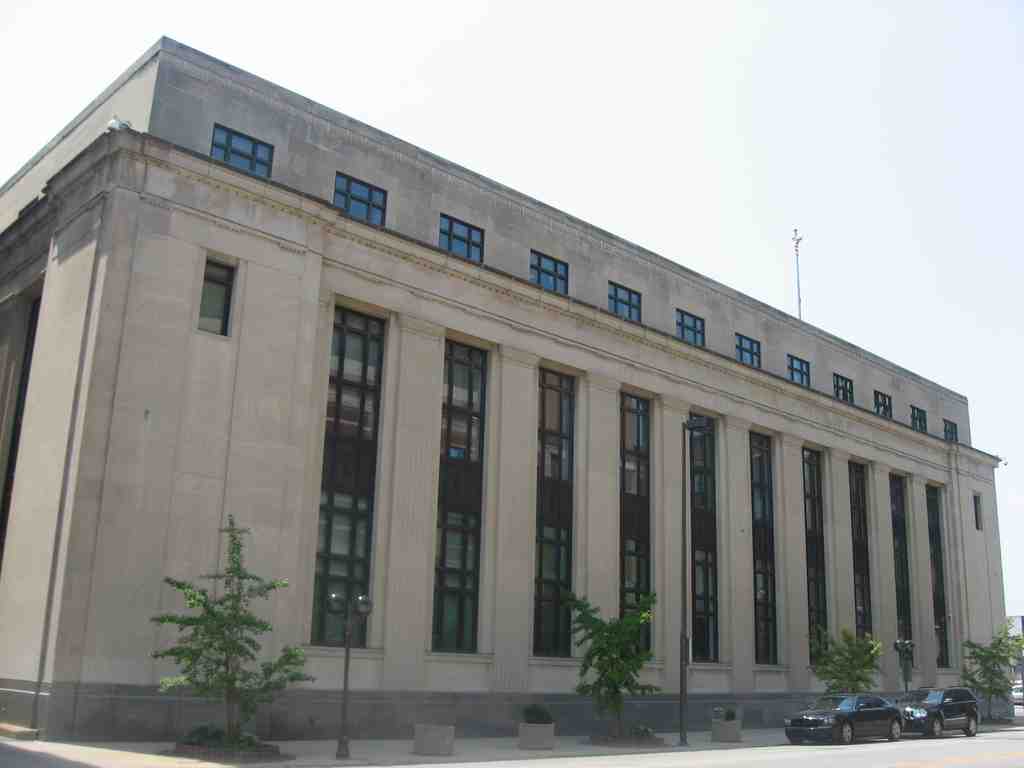
Directly in front of you stands a massive, rectangular block of smooth Indiana limestone resting on a gray Vermont granite base, defined by tall, flat, vertical columns known as pilasters that separate long bands of windows. Take a look at the photo on your device to see the full sweep of that imposing, nearly flat northern facade. This is the Robert A. Grant Federal Building and U.S. Courthouse. Built in the early 1930s, this structure was designed to project absolute, unshakable civic power. In a time when the entire country's economy had collapsed, the federal government decided to drop a literal fortress of permanence right into downtown South Bend.
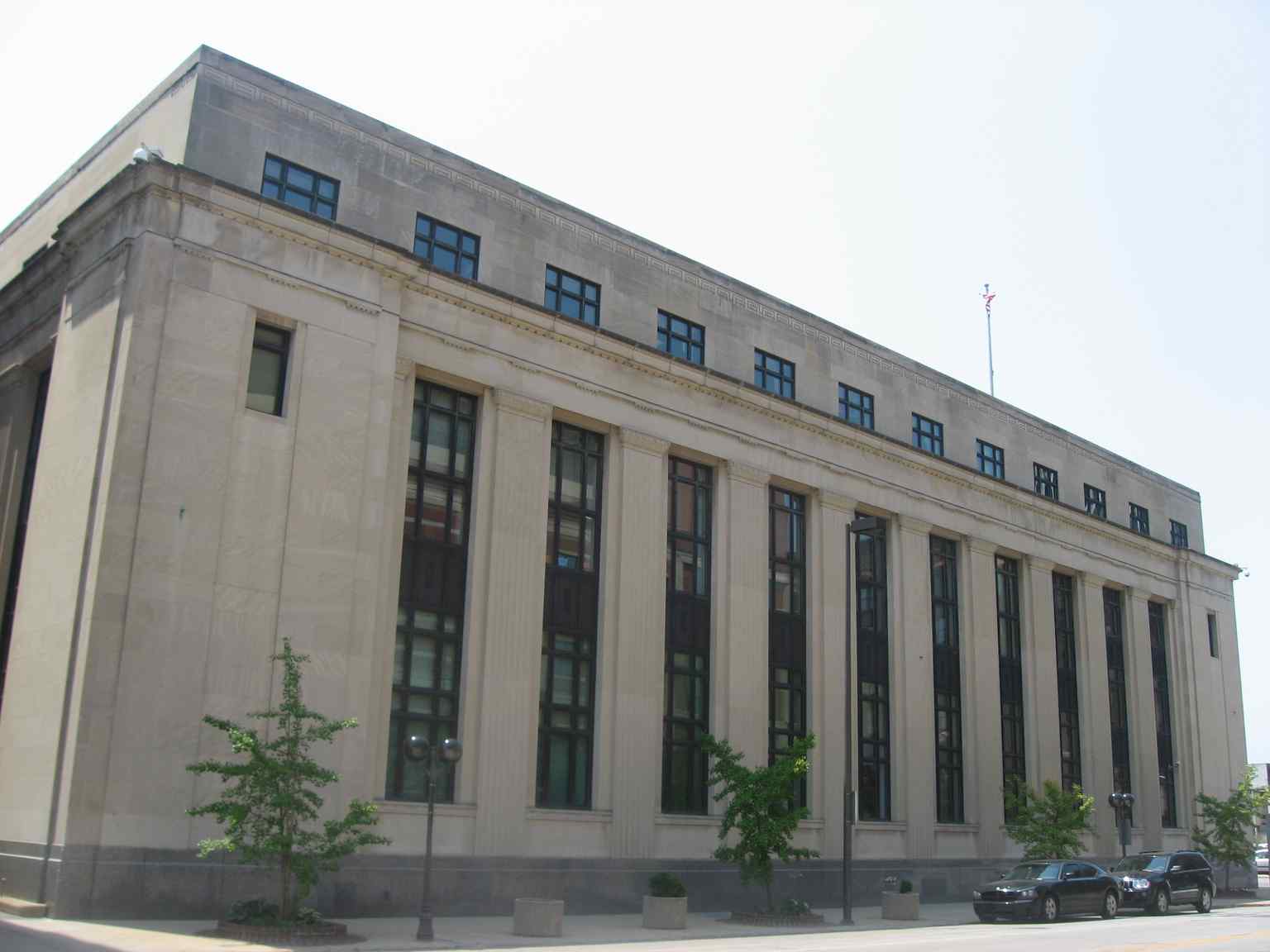
Back in 1930, at the start of the Great Depression, the Treasury Department authorized a million dollars... roughly twenty million dollars today... for a new post office and courthouse. Landing that massive contract was a colossal undertaking for a local architectural firm, Austin and Shambleau. They were a rather bizarre pairing. Ennis Austin was an older former government bureaucrat who knew exactly how to navigate federal red tape. His partner, N. Roy Shambleau, was a younger Canadian immigrant who loved designing sprawling residential homes in the Prairie style of Frank Lloyd Wright. To get the government money, Shambleau had to completely abandon his preferred aesthetic.
He pivoted to a style sometimes called Starved Classicism. It is exactly what it sounds like. They took traditional classical architecture, with all its fancy, carved ornamentation, and starved it... stripping away the frills to leave only sharp, flat, abstract forms. The result is this monumental Art Deco block you see today, with its tight vertical window bands and pared-down bronze details.
The construction itself was a massive financial gamble that paid off for the local workforce. A masonry contractor named James I. Barnes won the bid. During the darkest years of the Depression, taking on this immense public works project was the only thing keeping his crew employed. His success here launched an empire so formidable that when Barnes died suddenly decades later, his seven daughters entirely took over his national construction business.
South Bend desperately needed this symbol of authority. Just a year after the building opened, notorious public enemies John Dillinger and Baby Face Nelson brazenly attacked a nearby bank, making off with thousands of dollars and shooting several people during their escape. Federal agents needed a secure stronghold in a region plagued by daylight shootouts. Today, the courthouse processes high level cybercrimes and nationwide digital conspiracies instead of bank robbers with submachine guns.
In 1992, the building was renamed for Judge Robert A. Grant. He was alive to see the building dedicated to him, a rare honor. Yet history is rarely perfectly clean. Decades later, unsealed court files tied him to controversial decisions regarding institutional secrecy, casting a complicated shadow over the celebrated namesake.
So, we start our journey at a heavily fortified anchor of government power, built on the steady, calculated risk of a federal contract. But our next stop was born from a much riskier, far more unusual venture. We are moving on to the Knights of Pythias Lodge, just a three minute walk away.





