
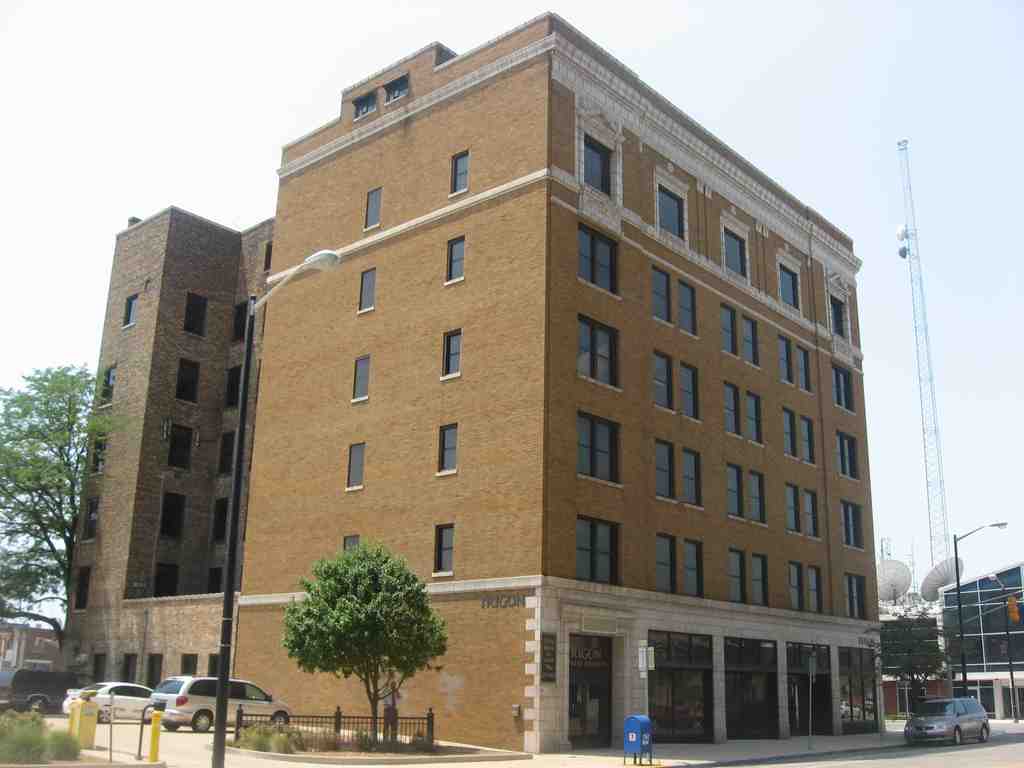
Look to your right at that seven-story rectangular brick structure, anchored by a pale terra-cotta ground floor and crowned with an elaborately decorated top level.
South Bend's Crusade Lodge Number 14 did not play it safe. In 1922, they decided to construct the largest facility in their fraternity's supreme domain, their national network, betting staggering amounts of borrowed money on their own expansion. It was an astonishing wager of capital and ego.
To execute this vision, they hired Austin and Shambleau architects, with N. Roy Shambleau working alongside Walter W. Schneider. Shambleau was a key architect shaping the city's commercial facade, applying the classic Chicago School philosophy to his designs. Check your screen to see how he treated the building like a classical column: dividing it into a base made of terra-cotta, a fired clay used for detailing, an unadorned five-story brick shaft, and a highly elaborate seventh-floor capital.
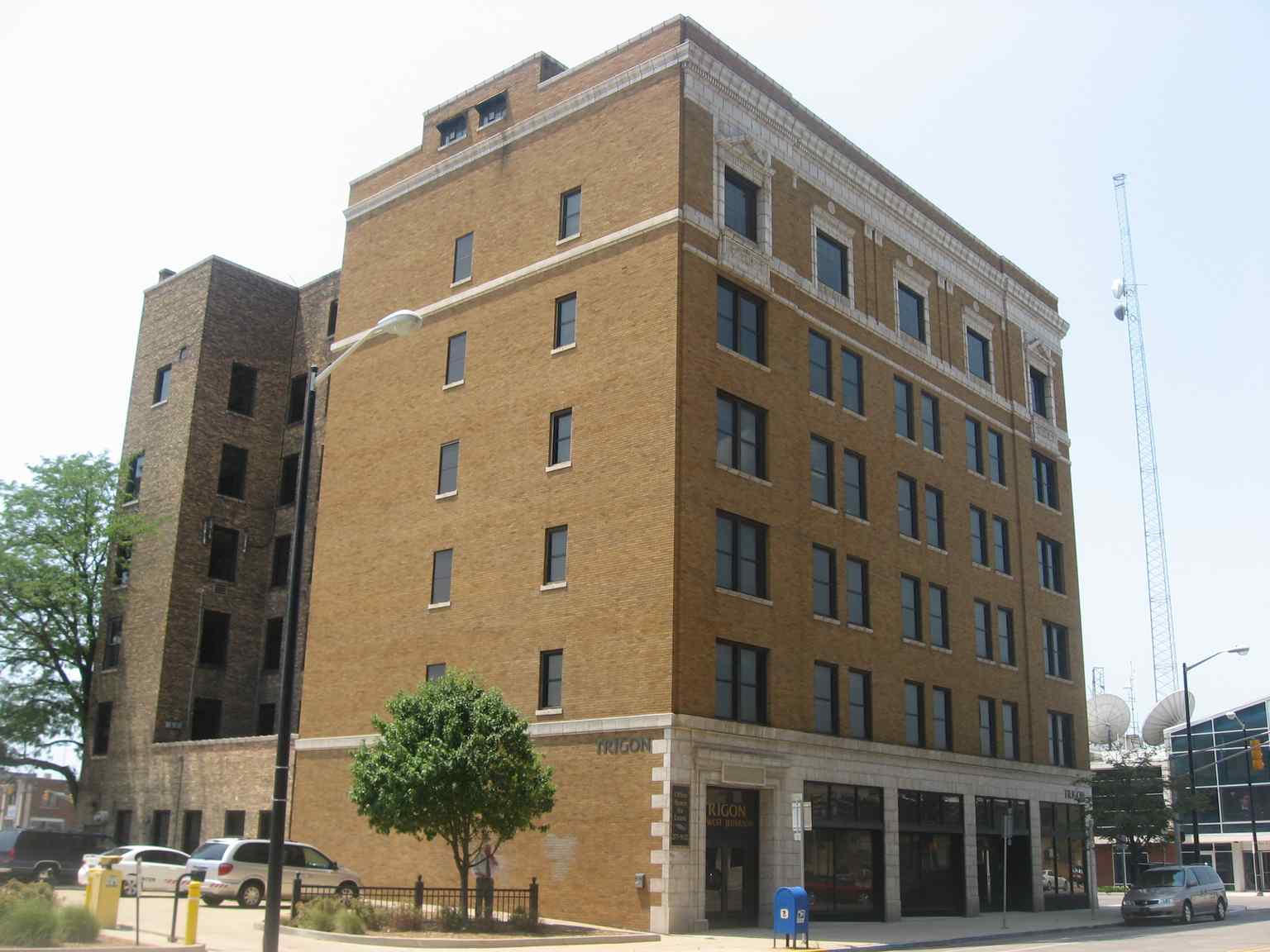
The lodge members actually only occupied those top two floors. To pay off their towering debt, they leased the lower five floors. Ironically for a private men's club during Prohibition, their main tenants were the Federal Court and the District Prohibition Office.
But their bold gamble ultimately failed. When the Great Depression hit, the Knights couldn't sustain the debt. In 1935, an insurance company foreclosed on a 120,000 dollar bond, about 2.7 million dollars today, stripping the fraternity of their headquarters forever.
Modern renovations erased the interior, but the original seventh-floor window frames where they held secret meetings remain. This wasn't the only fraternity building to shape the city's destiny. Let us walk two minutes down the street to the Knights of Columbus-Indiana Club.





