
Sioux Falls Audio Tour: Echoes and Icons of Downtown Legends
A towering vault once sheltered fortunes as secretive as the ambitions shaping Sioux Falls streets. Stone facades whisper of shadowy deals, dramatic courthouse showdowns, and a theater reborn from the ashes of heartbreak. This self-guided audio tour unlocks downtown’s doors, leading you to hidden marvels and overlooked tales most travelers never find. What caused Sioux Falls’ grandest bank tower to double as a fortress during a crisis? Why did nightfall spark ghostly rumors in the State Theatre’s backstage corridors? Who left coded graffiti deep within the courthouse before disappearing for good? Move through echoing lobbies and beneath ornate arches. Each step uncovers stories of rebellion, scandal, rivalry, and redemption. The familiar becomes thrilling, the silent stones speaking louder with every turn. Dare to start uncovering the secrets beneath Sioux Falls’ polished surface. Your adventure into the city’s unruly heart begins now.
Tour preview
About this tour
- scheduleDuration 100–120 minsGo at your own pace
- straighten3.9 km walking routeFollow the guided path
- location_onLocationSioux Falls, United States
- wifi_offWorks offlineDownload once, use anywhere
- all_inclusiveLifetime accessReplay anytime, forever
- location_onStarts at Sioux Falls State Theatre
Stops on this tour
lock_open 3 free previews · 12 unlock with purchase
You’ll spot the Sioux Falls State Theatre by looking for its bold, retro-marquee sign in glowing lights and flashy yellow trim that juts out over the sidewalk on Phillips…Read moreShow less
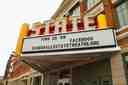
You’ll spot the Sioux Falls State Theatre by looking for its bold, retro-marquee sign in glowing lights and flashy yellow trim that juts out over the sidewalk on Phillips Avenue. Alright, movie buff or not, take in the sight before you-this isn’t just any cinema. The State Theatre is like the grand old storyteller of Sioux Falls, with a face that’s seen almost a century of laughter, romance, popcorn, and, let's be honest, plenty of spilled sodas. Imagine, it’s 1926: crowds in snappy hats and flapper dresses are lining up outside, voices buzzing with excitement. Here’s a tip-if you hear the distant echo of jazz music or the clack-clack of fancy shoes on the sidewalk, you’re not dreaming, that’s just your imagination running away with the past! This theater was a big deal when it opened its doors, thanks to the vision of two cinema pioneers, Finkelstein and Ruben, who wanted to bring movie magic to the Midwest. Back then, movies had no sound-just live music played along. So, picture the opening night: the black-and-white silent film 'Behind the Front' flickering across the giant screen, while the theater itself, designed in the grand Beaux-Arts style by architects Buechner & Orth, shimmered with elegance. Only two years later, the State Theatre embraced the future and switched to sound films. Now, fast-forward to February 1940: it’s Sioux Falls’ own Hollywood moment. 'Gone with the Wind' is coming to the screen, and the entire city is abuzz, with people lined up around the block, eager for tickets-if only movie popcorn was still a nickel! But this old theater wasn’t done making headlines. In 1956, for the grand premiere of 'The Last Hunt,' the red carpet was rolled out-literally. Movie stars Stewart Granger and Russ Tamblyn showed up, local Native American dancers performed and offered blessings, and fans filled every seat. Just imagine that electric atmosphere, the dazzling lights, the thunder of applause, and maybe a few swooning hearts in the crowd. Of course, every great theater faces a bit of drama. The State Theatre’s curtain dropped in 1990 when multiplexes took over, leaving the building silent and the marquee dark. The people of Sioux Falls fought hard to save it, with headlines, protests, and even dreams of wild rock concerts-although that idea lasted only three weeks before packing up. Ownership passed from one enthusiast to another, each one determined to revive the magic. There were deals, debates, desperate renovation projects, and even a looming threat of demolition. But Sioux Falls wouldn’t give up on its beloved theatre. Groups raised millions, patched the roof, and, eventually, brought the State Theatre back to life. In December 2020, after decades of waiting, crowds once again filled the seats for the grand reopening-and just like the first snow in South Dakota, it was a magical moment. So as you stand here, imagine the glamour, the heartache, the hope, and maybe-if you listen closely-the sound of a tap dancer rehearsing backstage. Welcome to the State Theatre, where every day is a chance for a comeback story.
Open dedicated page →You’re looking for a tall, sturdy six-story brown-brick building with lots of detailed trim and a touch of sandstone above the shops near the sidewalk-just glance up and ahead to…Read moreShow less
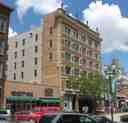
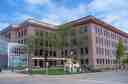
You’re looking for a tall, sturdy six-story brown-brick building with lots of detailed trim and a touch of sandstone above the shops near the sidewalk-just glance up and ahead to spot the grand Carpenter Building holding court on Phillips Avenue. Now, let’s slip back to the Sioux Falls of 1912, when the streets echoed with horse hooves and the night air buzzed with the excitement of a growing city. Picture dusty roads and the smell of fresh cement as Frances G. Carpenter decided that Sioux Falls needed something grander-and, crucially, a lot less flammable-than the notorious old wooden Cataract Hotel, which seemed to have a habit of catching fire just when things got lively. This time, he demanded fireproof walls, and brought in Joseph Schwartz, a man with a taste for bold brickwork and sturdy design. The construction alone cost a whopping $250,000, a fortune at the time! Imagine the clatter of hammers and the shouts of workers as the skeleton of the Carpenter Hotel rose to dominate the skyline. Once it opened on an October day, it immediately became the heart of downtown’s social whirl. Step inside-just in your imagination, unless you’ve got a time machine-and you’d feel the marble under your feet, with a whiff of rich coffee drifting from the dining room. Imagine the laughter spilling out from the ballroom, where folks like Katharine Hepburn, Bob Hope, and Benny Goodman kept the walls humming with stories and swing. Down the hall, radio waves zipped from the original KSOO studio, news traveling out to the prairie. In the 1940s, architect Harold Spitznagel brought a stylish update, with modernist flair and a lobby glistening with green Vitrolight tiles. By the late ‘60s, things got a little more studious as it transformed into a college dorm-probably the first time those marble stairs saw more textbooks than top hats. Today, The Carpenter is still bustling, but now you’ll find boutique shops and apartments filled with new stories. And if you listen close on a special occasion, you might just hear the strains of music drifting from the old ballroom upstairs.
Open dedicated page →To spot the Federal Building and United States Courthouse, just look ahead for a grand, rose-colored stone building with heavy arches, tall windows, and a distinctive turreted…Read moreShow less
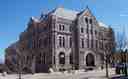
To spot the Federal Building and United States Courthouse, just look ahead for a grand, rose-colored stone building with heavy arches, tall windows, and a distinctive turreted roof, standing like a fortress at the corner of Phillips and Twelfth Streets. Now, take a second to let your eyes travel up the rough, pinkish walls and those mighty Romanesque arches - if this building could talk, it would have quite the story to tell! Picture yourself back in 1891, when Sioux Falls was more prairie than city, and South Dakota had just joined the family of states. The country was expanding west, and the government wanted to prove they were serious about staying. So, what did they do? They sent in the big guns - literally, this house of justice built almost like a castle! Local legend has it that the very first senator from South Dakota, Richard Pettigrew, made sure the courthouse was built from native Sioux quartzite, that beautiful stone you’re seeing now. It’s almost as durable as granite but has a touch of sparkle and translucence when it catches the light, as if the building itself is blushing with pride. The stones were shipped in from Jasper, Minnesota, clattering along the rails and making quite an entrance. Imagine standing here in the 1890s. The United States was trying to bring order after the tensions of the Wounded Knee Massacre. Settlers were nervous, and the city barely existed. The government built this solid, commanding courthouse as a message: we’re here to stay, and so are you. The original building was just two stories and an attic, cleverly designed by Willoughby J. Edbrooke, featuring thick arches, chunky columns, and a big, friendly archway that says: "Come on in! (But only if you have good reason, of course.)" The building didn’t stay the same size for long. Just a couple of decades later, in 1911, the city was growing faster than a tall tale, and so was the courthouse! Under James Knox Taylor’s watch, a third floor was added, and the whole structure stretched east by thirty feet. Sidewalks must have been abuzz as builders hoisted even more quartzite into place, adding shining marble stairs and shiny brass elevator doors. You might say the place got a serious glow up. Fast forward to 1931 - the Roaring Twenties might have fizzled, but not this courthouse. A two-story rear wing arrived, matching the rest of the building so well that passersby were left rubbing their eyes, unsure where the old stopped and the new began. Some say the stoneworkers had a race to see who could find the prettiest piece of quartzite for the new wing… but I won’t confirm any rock rivalries. Inside, there’s a second-floor courtroom where justice still booms, with original oak panels and even some vault doors decorated with mysterious painted murals. The post office once occupied the entry level, sending and receiving letters that crisscrossed the country, before it relocated in 1968, making room for more government offices. Historic features remain: the marble and iron stairs, glowing terrazzo flooring, and the unmistakable air of “official business” that’s hung here for over a century. In 1974, the building was officially listed on the National Register of Historic Places, making sure the folks of Sioux Falls never forget its importance. By 1995, the courthouse threw itself a birthday bash to celebrate its centennial, complete with stories, exhibits, and the unveiling of a historical marker. So, as you stand outside today’s courthouse and listen to the leftover echoes from a hundred years of verdicts and vows, think about everyone who’s come through those arches - hopeful, nervous, determined. Each stone, each arch, and every quirky corner carries a piece of Sioux Falls’ past, patiently waiting for you to notice.
Open dedicated page →
Show 12 more stopsShow fewer stopsexpand_moreexpand_less
To spot the L.D. Miller Funeral Home, just look for the large, white stucco building on the corner with a red-tiled roof, deep red awnings above arched doorways, and a tall…Read moreShow less
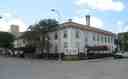
To spot the L.D. Miller Funeral Home, just look for the large, white stucco building on the corner with a red-tiled roof, deep red awnings above arched doorways, and a tall chimney peeking up at the back-it’s hard to miss with its bold sign and striking Spanish Revival charm! Alright, let’s step back into early 1900s Sioux Falls. Imagine horses clip-clopping by as Lee D. Miller opens his humble livery barn and funeral home here-now, that’s not your average neighborly combo! By the 1920s, old Lee must’ve been quite the business magician, merging two rival funeral homes into his own. Things got even livelier when he brought in an all-star sidekick-his wife-who just happened to be the first woman ever licensed as an embalmer in all of South Dakota! That certainly raised some eyebrows and, I imagine, maybe even inspired a few ghost stories along Main Avenue. In 1923 he called in the local wizards of architecture, Perkins & McWayne, who conjured up this very building. Picture it brand new: white stucco gleaming in the sun, red tiles sparkling after a rain, with arched windows that seem to wink at every passerby. The strong Mission Revival style gives it a certain… well, “je ne sais death?”-okay, I’ll see myself out. Step closer and you might spot the beautiful stained glass skylight in the chapel, quietly catching colors-and memories-through every South Dakota sunrise since 1923. So as you stand here, you’re not just looking at a funeral home, but a monument to changing times, powerful women, and a little town’s big history, all told in white walls and red tiles.
Open dedicated page →You’re looking for a large, square building made from pinkish stone blocks, with rows of windows and a modern glass entrance on one corner-it’ll be front and center, standing out…Read moreShow less
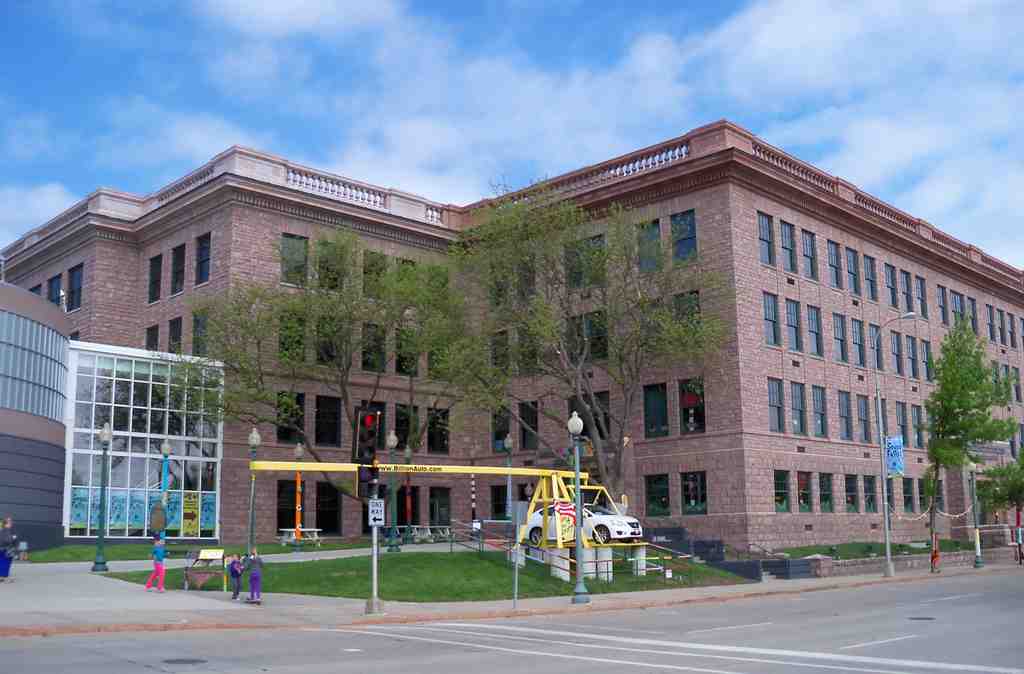
You’re looking for a large, square building made from pinkish stone blocks, with rows of windows and a modern glass entrance on one corner-it’ll be front and center, standing out from everything else around. Ah, welcome! Step right up to the Washington Pavilion of Arts and Science, a place with enough imagination inside to light up all of Sioux Falls. Imagine it’s 1911, and students are rushing through these halls-it was once the proud Washington High School, and if you press your ear to the cool pinkish stone, you just might hear echoes of their footsteps. This stone isn’t just any rock; it’s Sioux Quartzite, the hometown hero of building materials, giving the Pavilion its charming pink glow. There’s even a bit of black rock mixed in-the legendary corson diabase-from an era when people thought magma rock was quartzite. That’s history with a twist! Fast forward to 1999. What was once a place for pop quizzes and prom decorations, gets a dazzling new life. The Washington Pavilion opens, taking the city by storm. Your senses might tingle as you walk in-on the left, the Kirby Science Discovery Center absolutely buzzes with energy across three rollicking floors, filled with hands-on science wonders for young and old. Just imagine the buzz when local kids build rockets here! Step further and you’ll find two grand performing arts centers. Some pretty big acts and even Broadway shows strut their stuff here-plus, the South Dakota Symphony calls this home. But don’t just listen for orchestras-sometimes, you’ll catch the tap of dance shoes or the chorus of a Broadway musical. For those who love art, wander into the Visual Arts Center, where every wall changes with exciting new national, regional, and blockbuster exhibitions-think Warhol and Adams, all the way to local creators. And here’s a secret: on Tuesday and Saturday mornings, and the magical “First Fridays,” you can wander in for free. And, of course, don’t miss the mighty Cinedome, now transforming into the new Sweetman Planetarium as of 2023. Imagine the whir of the projector, and soon, cosmic adventures overhead. The Pavilion’s a place where history, science, music, and art all shake hands-and trust me, their grip is firm and unforgettable!
Open dedicated page →Take a look straight ahead for a striking stone church with two uneven towers standing tall at the corners and impressive steps welcoming you right up front. Now, imagine it’s…Read moreShow less
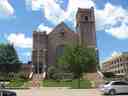
Take a look straight ahead for a striking stone church with two uneven towers standing tall at the corners and impressive steps welcoming you right up front. Now, imagine it’s the year 1907, horses clip-clop along the street, and the aroma of pine beams and fresh-cut quartzite fills the air as the First Congregational Church rises in all its glory. This church isn’t shy-it shows off its unique towers like a pair of old friends who can’t quite agree on who’s taller. Builders wanted it to look grand and solid, a rock in the heart of Sioux Falls where neighbors could find a bit of peace and, perhaps, the best potluck in town. If you peek around the north side, you’ll find a mysterious, tower-like entrance for those who like to make a quieter entrance. In 1955, modern dreams swept in, and a brand-new wing popped up-imagine a curtain wall of glass sparkling under the prairie sun, framed in shiny aluminum. But change has its own sense of humor, and after the 1980s, even this modern wing dressed up in a stone suit to match its 1907 sibling, copying the old and waving goodbye to the future for a while. Through storms, laughter, and even style changes, this church has remained a steady guardian of stories, each stone holding secrets from a century of Sunday mornings in Sioux Falls.
Open dedicated page →If you look up just past the Central Fire Station, you'll spot the CenturyLink Tower rising high-its modern, glassy exterior and layered pink and gray lines make it stand out as…Read moreShow less
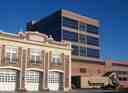
If you look up just past the Central Fire Station, you'll spot the CenturyLink Tower rising high-its modern, glassy exterior and layered pink and gray lines make it stand out as the tallest building around. Alright, here we are at the CenturyLink Tower, where Sioux Falls dares to touch the sky, one story at a time! Imagine standing in the heart of downtown, with eleven bold stories towering 174 feet above you-proudly holding the title of South Dakota’s tallest building. But trust me, it didn’t always look this sleek. When it was first built, the tower wore a bright white stone facade. Unfortunately, it turned out to be more “crumble and tumble” than “modern marvel.” The poor exterior had to be stripped off, and out came today’s sturdy, glassy look. Hidden in all that glass and steel is a bit of a ghost-part of the original building used to house Sioux Falls’ main telephone exchange, and for decades, operators buzzed with messages connecting the city. That little brick section held on until 2011, when it finally made way for a bigger parking lot. CenturyLink moved in, and the building now buzzes as a dispatch center-if you listen closely, you might almost hear faint echoes of old phone calls and laughter in the halls. A funny thing about this place: it once got edged out by the Zip Feed Tower-but now, the CenturyLink Tower claims the crown in style. So stand tall, just like this tower-after all, you’re at the top of South Dakota!
Open dedicated page →You’re looking for a big six-story beige building on the southwest corner of Main Avenue and Ninth Street-just spot the tall limestone structure decorated with four gigantic…Read moreShow less
You’re looking for a big six-story beige building on the southwest corner of Main Avenue and Ninth Street-just spot the tall limestone structure decorated with four gigantic columns at its entrance, and you'll know you've found the Security Bank Building! Now, close your eyes for a second and imagine standing here in the heart of Sioux Falls, but it’s not just today’s buzz-step back roughly a hundred years. Back then, this corner was the city’s Grand Central Station of commerce. New shops popping up, hotels lighting up with fresh signs, and local businesses shooting for the sky-literally, as early-day skyscrapers like this one started to rise. If you squint, you might almost see the well-dressed bankers and office clerks hurrying inside, feeling proud of the city’s biggest, boldest achievement yet. The Security Bank Building, finished in 1916 after a wartime steel shortage paused construction, was the first steel-framed office building in all of South Dakota! Imagine the awe on opening day in 1917-it was an absolute showstopper. But don’t let that stately Classical Revival look fool you. Underneath the grand limestone face and towering columns, there are some wild, dramatic tales buried in the foundation. The story everyone whispers about happened here on a chilly March morning in 1934. Close your eyes again and listen-. A shiny green Packard pulls up, and out jump six members of the infamous Dillinger Gang, Tommy guns in hand. John Dillinger, Baby Face Nelson-real-life legends, or maybe, villains-right here on Main Avenue, aiming for a juicy payday. Can you hear anxious voices? A teller whispers, “Looks like a holdup car…” while a nervous finger jabs the alarm button. Bam! Four gangsters burst through the doors, two others stay out front, peppering the air with bullets-. Panic erupts inside and out. Policeman Hale Keith tries to sneak up, only to be spotted through the glass. A hail of gunfire from Baby Face Nelson knocks him down, and shouts fill the lobby. The city’s bravest officers rush to help but are taken prisoner so quickly, they find themselves lined up facing the wall-talk about “being caught off guard” at work! And here’s the twist-no one was killed in the chaos, even with dozens of bullets zipping around. Instead, the robbers forced thirty folks to march out ahead of them, a human shield between them and the police. Pregnant with drama, the whole crew piles into that Packard getaway car, five hostages clinging to the running boards, white fingers gripping chrome as the car rolls away from the chaos. People watched in awe. Sure, a few maybe thought, “Well, that was more excitement than a bank statement.” The robbers argued later whether to switch cars, finally ditching the battered Packard and their hostages on the edge of town-everyone shaken, but alive. The city never forgot what happened: gunfire peppered the limestone facade, shattered windows, and a sense that even in the humdrum of banking, trouble could swoop by like a storm. And you know what's wild? The loot-$46,000-was never recovered. Makes you wonder if there’s a Dillinger Gang treasure still hiding somewhere out there. Of course, the Security Bank Building has more to its tale than just a shootout. Over decades, it was at the heart of Sioux Falls’ financial world, merging with other banks, expanding across the state, and changing names more often than some people change socks. But through it all, those giant columns stood firm, keeping watch over downtown. So, as you stand in this spot, think of all the people who bustled in and out-bankers, secretaries, bank robbers, and everyday Sioux Fallsians, all adding to this building’s incredible story. And just remember, if you hear any strange bumps coming from inside, it’s probably just the building settling…or someone looking for that missing loot!
Open dedicated page →To spot the Sioux Falls National Bank, just look for the tallest, rectangular, brown-brick building with big windows and cream-colored stone at the base-it stands proudly right at…Read moreShow less
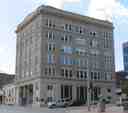
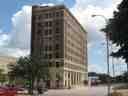
To spot the Sioux Falls National Bank, just look for the tallest, rectangular, brown-brick building with big windows and cream-colored stone at the base-it stands proudly right at the corner and towers above almost everything else around you. Now, let’s spin you back to Sioux Falls in 1917. World War I rumbled in the background, but here, a totally different kind of tower was making history! Picture the city buzzing as cranes hoisted steel beams high, and everyone stared upward, jaws dropped. This was the Sioux Falls National Bank-designed by the famed architects Weary & Alford from Chicago, with a couple of Minneapolis builders, Pike & Cook, making sure every brick stayed put. It shot up nine bold stories, making it the tallest building in all of South Dakota. You could say it was the skyscraper that made the rest look short! And don’t forget, this wasn’t just any old box with windows. Thanks to architect Oscar Wenderoth’s Sullivanesque style-think classy, stylish, and just a little bit unique-it’s still the only building like it left in Sioux Falls. Fast forward, and this “giant among buildings” is now the Hotel on Phillips, standing right here on the National Register of Historic Places, and boasting a spot with the Historic Hotels of America. So whether you’re here to check in, cash in, or just take in the view-this place has stories that truly stack up.
Open dedicated page →Look ahead for a sturdy concrete bridge with three graceful arches crossing over the Big Sioux River, flanked by classic railings and topped with charming old-fashioned light…Read moreShow less
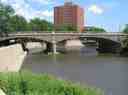
Look ahead for a sturdy concrete bridge with three graceful arches crossing over the Big Sioux River, flanked by classic railings and topped with charming old-fashioned light posts-yep, you can’t miss the Eighth Street Bridge right in front of you! Welcome to a real classic-the Eighth Street Bridge! Picture it: Sioux Falls, 1912. The air is thick with the sounds of early automobiles and the steady beat of horses’ hooves as the brand-new bridge opens up, linking S. Eighth Street over the ever-busy Big Sioux River. Built by N.M. Stark and Company, this concrete triple-arch wonder isn’t just a tough cookie-it’s got serious style! If you glance down, you might notice the pointed tips jutting out at the base-those are called cutwaters, capped like tiny wizard hats to keep the piers safe from the river’s currents. And don’t forget the sidewalks running alongside you, bordered by elegant, neoclassical railings and topped off by those proud, fluted lamp stands standing guard, as if lighting the way for travelers of yesterday and today. In 1977, the bridge got a little freshening up, because hey-even tough bridges need spa days! By 1993, it made it to the National Register of Historic Places, securing its place as both a survivor and a local celebrity-known (rather officially) as South Dakota Dept. of Transportation Bridge No. 50-203-206. Today, cars, bikers, and walkers alike pass over, unknowingly sharing a bit of history each time. So, take a moment to listen for echoes of laughter, footsteps, and engines from more than a century ago-the Eighth Street Bridge has seen it all, and now, so have you!
Open dedicated page →To spot the Orpheum Theater, just look straight ahead for a sturdy two-story building faced in light gray stone, boasting a bold “ORPHEUM” sign above a central metal marquee and…Read moreShow less
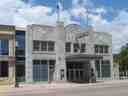
To spot the Orpheum Theater, just look straight ahead for a sturdy two-story building faced in light gray stone, boasting a bold “ORPHEUM” sign above a central metal marquee and flanked by tall, symmetrical pillars-it’s not shy, and it sits right on North Phillips Avenue. Alright, traveler, you’ve just landed in front of the grand old Orpheum Theater, the real star of Sioux Falls-long before cinemas or Netflix, this was where all the drama, laughter, and magic came alive! Close your eyes for a second and picture the year: it’s 1913, the city is bustling, the streets are full of wagons and early automobiles, and construction crews are hammering away to finish this brand-new palace of entertainment. The air smells faintly of fresh marble and sawdust as opening night arrives-October 2, 1913. The Solari Brothers, Frank and Lawrence, are wiping sweat from their brows, having spent $63,200 (a small fortune back then!) to bring the Orpheum to life. You can almost hear the buzz as the velvet ropes are lifted and guests hurry in, coats rustling, up to a thousand people squeezing inside for a taste of the latest vaudeville acts. Did you know they even built a railroad spur right up to the back door? Imagine the clatter of train cars unloading crates of costumes, animal cages, and dazzling stage props, all to make every show an extravaganza. The stage is alive with legends-Jack Benny practicing his jokes backstage, Stan Laurel twirling his cane, and whole families like Eddie Foy and his Seven Little Foys running in circles, children ducking between props. There was so much equipment coming and going, rumor has it, a rogue chicken once made a break for it and tried to join the audience. Talk about dinner theater! The Orpheum changed hands several times, hosting glamorous shows out of Chicago and New York before being bought in 1919 by a snazzy theater company from Minneapolis. The wings on either side of the entrance were alive with all sorts of businesses-tailors, shops, and even apartments up above. It was truly a bustling community hub. But as movies became all the rage, the Orpheum transformed into a cinema in 1927. The silver screen flickered, but the seats gradually emptied. For years, the laughter and applause faded, and the old theater sat quiet, slowly gathering cobwebs. Some said you could almost hear the echoes of applause and whispers backstage, like the walls themselves missed being part of the action. Then, like a show-stopping comeback, the Sioux Falls Community Playhouse burst onto the scene in the 1950s, bringing young actors to tread the boards. Teen Theater and Children’s Theater programs filled the spaces with energy-if you listened closely, you’d hear kids giggling and lines being rehearsed behind thick velvet curtains. The Orpheum was saved, bit by bit, with careful renovation preserving those grand marble walls and tile floors. Bright murals spilled color across the ceilings-some of them original, others restored after decades of hiding beneath peeling paint. By the 1990s and early 2000s, things got dramatic behind the scenes, with dreams of expanding into a giant theater complex nearly overwhelming the Playhouse. Financial troubles loomed, but the city stepped in, buying the Orpheum for $475,000 and a neighboring building for even more to make sure the curtains would rise again. Today, the Orpheum is still decked out with Neoclassical flair and graceful Prairie School lines. The lobbies echo with footsteps, and if you get a chance to peek inside, you’ll see a thousand little stories in every seat and shimmer of tile. The “Orpheum” letters arch proudly above, a beacon for lovers of the stage, and the theater is alive with new productions and laughter. So, the next time you hear voices drifting out the front doors or the faint tap of shoes on tile, just remember-you’re sharing a sidewalk with a century of hopeful performers and delighted audiences. The show goes on!
Open dedicated page →To spot the Zip Feed Tower, look straight ahead for a tall, white, rectangular concrete building that seems to be stubbornly leaning but not quite falling, standing solo above the…Read moreShow less
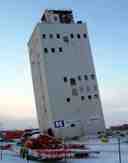
To spot the Zip Feed Tower, look straight ahead for a tall, white, rectangular concrete building that seems to be stubbornly leaning but not quite falling, standing solo above the surrounding rubble and equipment. Now, take a moment and let your imagination rewind the clock. It’s 1957, and right where you stand, the Zip Feed Tower rose up to 202 feet, towering over Sioux Falls as the tallest occupiable structure in South Dakota. For decades, this giant helped feed the region, its grain elevators and feed mill humming with the sound of progress. But every legend has its grand finale. Fast forward to December 2005-by now, the mill had closed, and city planners wanted to pave the way for new shiny offices and shops. Cue the demolition team. Picture a chilly morning, workers nervously circling the Zip, planting their charges, double-checking calculations. Someone probably made a joke about “knocking the old guy off his feet.” Here comes the big show-countdown, then boom! But instead of toppling in a blaze of glory, the Zip Feed Tower simply shrugged, slid straight into its own basement, and leaned defiantly to the side as if to say, “Is that all you’ve got?” The crowd gasped, then chuckled. The building was so tough, it took another two weeks of clang, bang, and wrecking ball swings to finish the job. Today, the spot is a reminder that even concrete giants sometimes have the last laugh. And don’t worry-nothing’s going to fall on your head!
Open dedicated page →
Frequently asked questions
How do I start the tour?
After purchase, download the AudaTours app and enter your redemption code. The tour will be ready to start immediately - just tap play and follow the GPS-guided route.
Do I need internet during the tour?
No! Download the tour before you start and enjoy it fully offline. Only the chat feature requires internet. We recommend downloading on WiFi to save mobile data.
Is this a guided group tour?
No - this is a self-guided audio tour. You explore independently at your own pace, with audio narration playing through your phone. No tour guide, no group, no schedule.
How long does the tour take?
Most tours take 60–90 minutes to complete, but you control the pace entirely. Pause, skip stops, or take breaks whenever you want.
What if I can't finish the tour today?
No problem! Tours have lifetime access. Pause and resume whenever you like - tomorrow, next week, or next year. Your progress is saved.
What languages are available?
All tours are available in 50+ languages. Select your preferred language when redeeming your code. Note: language cannot be changed after tour generation.
Where do I access the tour after purchase?
Download the free AudaTours app from the App Store or Google Play. Enter your redemption code (sent via email) and the tour will appear in your library, ready to download and start.
If you don't enjoy the tour, we'll refund your purchase. Contact us at [email protected]
Checkout securely with 




