
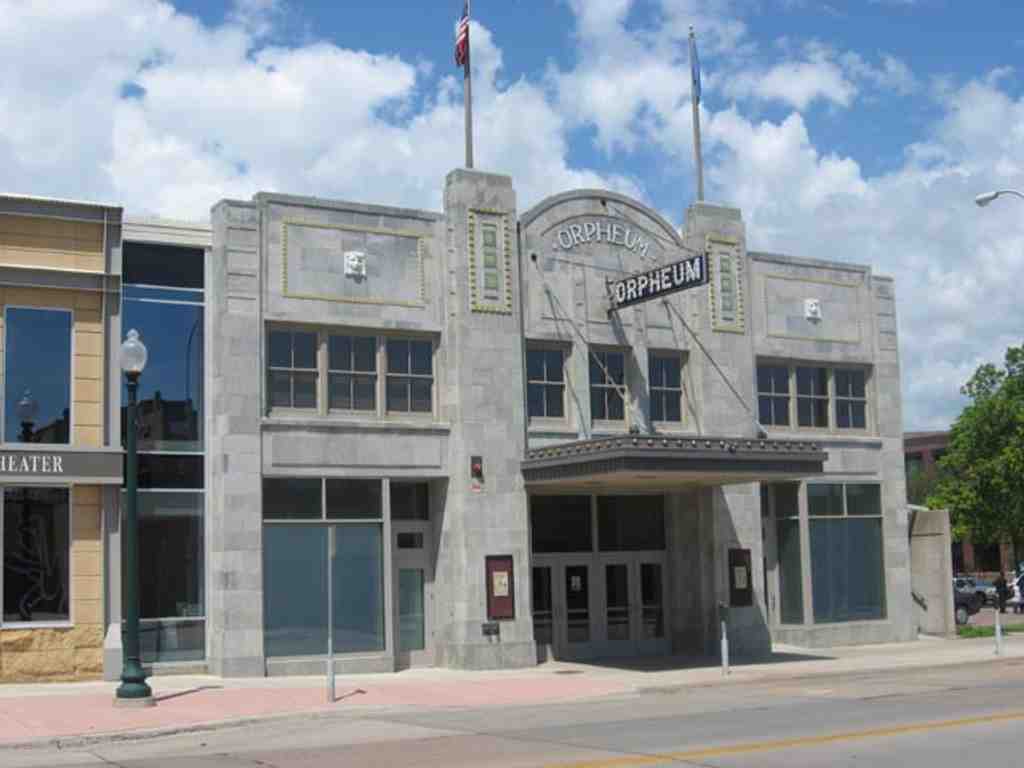
To spot the Orpheum Theater, just look straight ahead for a sturdy two-story building faced in light gray stone, boasting a bold “ORPHEUM” sign above a central metal marquee and flanked by tall, symmetrical pillars-it’s not shy, and it sits right on North Phillips Avenue.
Alright, traveler, you’ve just landed in front of the grand old Orpheum Theater, the real star of Sioux Falls-long before cinemas or Netflix, this was where all the drama, laughter, and magic came alive! Close your eyes for a second and picture the year: it’s 1913, the city is bustling, the streets are full of wagons and early automobiles, and construction crews are hammering away to finish this brand-new palace of entertainment.
The air smells faintly of fresh marble and sawdust as opening night arrives-October 2, 1913. The Solari Brothers, Frank and Lawrence, are wiping sweat from their brows, having spent $63,200 (a small fortune back then!) to bring the Orpheum to life. You can almost hear the buzz as the velvet ropes are lifted and guests hurry in, coats rustling, up to a thousand people squeezing inside for a taste of the latest vaudeville acts. Did you know they even built a railroad spur right up to the back door? Imagine the clatter of train cars unloading crates of costumes, animal cages, and dazzling stage props, all to make every show an extravaganza.
The stage is alive with legends-Jack Benny practicing his jokes backstage, Stan Laurel twirling his cane, and whole families like Eddie Foy and his Seven Little Foys running in circles, children ducking between props. There was so much equipment coming and going, rumor has it, a rogue chicken once made a break for it and tried to join the audience. Talk about dinner theater!
The Orpheum changed hands several times, hosting glamorous shows out of Chicago and New York before being bought in 1919 by a snazzy theater company from Minneapolis. The wings on either side of the entrance were alive with all sorts of businesses-tailors, shops, and even apartments up above. It was truly a bustling community hub.
But as movies became all the rage, the Orpheum transformed into a cinema in 1927. The silver screen flickered, but the seats gradually emptied. For years, the laughter and applause faded, and the old theater sat quiet, slowly gathering cobwebs. Some said you could almost hear the echoes of applause and whispers backstage, like the walls themselves missed being part of the action.
Then, like a show-stopping comeback, the Sioux Falls Community Playhouse burst onto the scene in the 1950s, bringing young actors to tread the boards. Teen Theater and Children’s Theater programs filled the spaces with energy-if you listened closely, you’d hear kids giggling and lines being rehearsed behind thick velvet curtains. The Orpheum was saved, bit by bit, with careful renovation preserving those grand marble walls and tile floors. Bright murals spilled color across the ceilings-some of them original, others restored after decades of hiding beneath peeling paint.
By the 1990s and early 2000s, things got dramatic behind the scenes, with dreams of expanding into a giant theater complex nearly overwhelming the Playhouse. Financial troubles loomed, but the city stepped in, buying the Orpheum for $475,000 and a neighboring building for even more to make sure the curtains would rise again.
Today, the Orpheum is still decked out with Neoclassical flair and graceful Prairie School lines. The lobbies echo with footsteps, and if you get a chance to peek inside, you’ll see a thousand little stories in every seat and shimmer of tile. The “Orpheum” letters arch proudly above, a beacon for lovers of the stage, and the theater is alive with new productions and laughter. So, the next time you hear voices drifting out the front doors or the faint tap of shoes on tile, just remember-you’re sharing a sidewalk with a century of hopeful performers and delighted audiences. The show goes on!




