
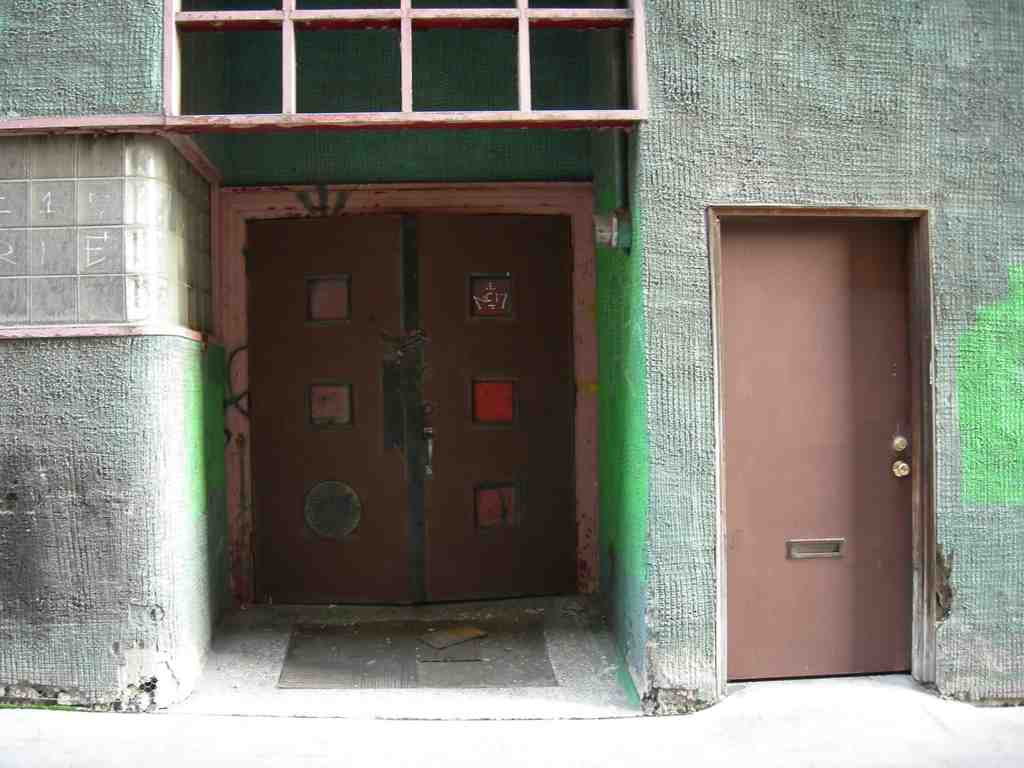
To spot the site of the Wah Mee massacre, look for a set of heavy, weathered double doors tucked into a shadowy alcove beneath a faded, greenish wall; the entryway sits just off the narrow sidewalk and glows with a little air of forgotten secrets.
Alright, hold tight, because the story behind these doors is as dramatic and chilling as any noir film-but sadly, this one was all too real. Imagine yourself here in the heart of Seattle’s Chinatown, back in the days when the Louisa Hotel’s basement pulsed with the secret sounds of high-stakes gambling and late-night laughter. If you close your eyes, you might almost hear the murmur of voices, the clatter of dice, and the faint jazz drifting out from underground clubs. But everything changed on one winter night in February 1983, when these doors became the entryway to a crime that would haunt the city for decades.
The Wah Mee Club was a hidden den, accessible only after passing through not one, but two sets of locked doors, guarded by a small security window-a bit like entering a speakeasy, only the stakes were much higher. Back in the day, this place was famous for attracting wealthy patrons, many of them prominent restaurant owners or members of Chinatown’s old societies. But on February 18th, 1983, as midnight approached, a different kind of night was about to unfold.
Three men-Kwan Fai “Willie” Mak, Keung Kin “Benjamin” Ng, and Tony Ng (no relation!)-entered the Wah Mee. They weren’t just here to play cards. Because they were regulars, the guards let them in without a second thought, a decision with terrible consequences. The doors closed behind them, and, in a few swift, chilling minutes, the calm was shattered. Within the dimly lit club, Willie, Benjamin, and Tony pulled out guns and ordered everyone down. They tied up the staff and patrons, one by one, searching through wallets and pockets for cash as the tension rose in the smoky air.
But what makes this story truly harrowing isn’t just the robbery-it’s what happened next. With all witnesses bound and facedown, the robbers opened fire. Thirty-two shots rang out in the gloom, and by the end, thirteen lives had been stolen, each one connected to the neighborhood and its history. Only one man, Wai Yok Chin, managed to survive. In a feat of quiet heroism, wounded and dazed, he loosened his ropes and staggered out into the alley, bringing word of the massacre into the night.
The aftermath was a mix of horror and heartbreak. The Wah Mee doors were padlocked forever, and police poured over the scene, trying to untangle what had happened. The club never reopened, but soon, the story of what happened here was on everyone’s lips-haunted tour buses even made regular stops, and local legends grew.
The police tracked down the killers quickly. Willie Mak turned himself in, Benjamin Ng was found hiding at his girlfriend’s house, and Tony Ng went on the run, eventually landing on the FBI’s Ten Most Wanted list before Canadian police caught up with him in Calgary. Their trials sounded like something out of a crime show. Life sentences, courtroom drama, even hypnosis-yes, real hypnosis!-to change a witness’ account. In the end, none of the perpetrators would taste freedom in Seattle again.
But that’s not all this old building witnessed. The Louisa Hotel, with its colorful past, held on for a few more decades, slowly falling into disrepair until a Christmas Eve fire in 2013 gutted much of its shell. The Woo family, still the owners, made the tough choice to tear down the damaged parts, but they kept the bones of the building, honoring its place in the Chinatown Historic District. With a blessing by Buddhist monks, the hotel rose from the ashes, reopening in 2019 with new apartments above and fresh faces below.
So, here you stand-outside a quiet set of doors, in an alley that once rang with the sounds of risk, joy, and unspeakable tragedy. It’s a reminder that even the most ordinary places can carry remarkable, sometimes harrowing secrets. And while the Wah Mee massacre remains Washington’s deadliest crime, the resilience of this neighborhood means its history, both dark and bright, will never be forgotten. Keep your eyes-and your heart-open, because every block in this city has a story waiting to be discovered.
For a more comprehensive understanding of the background, massacre or the victims, engage with me in the chat section below.




