
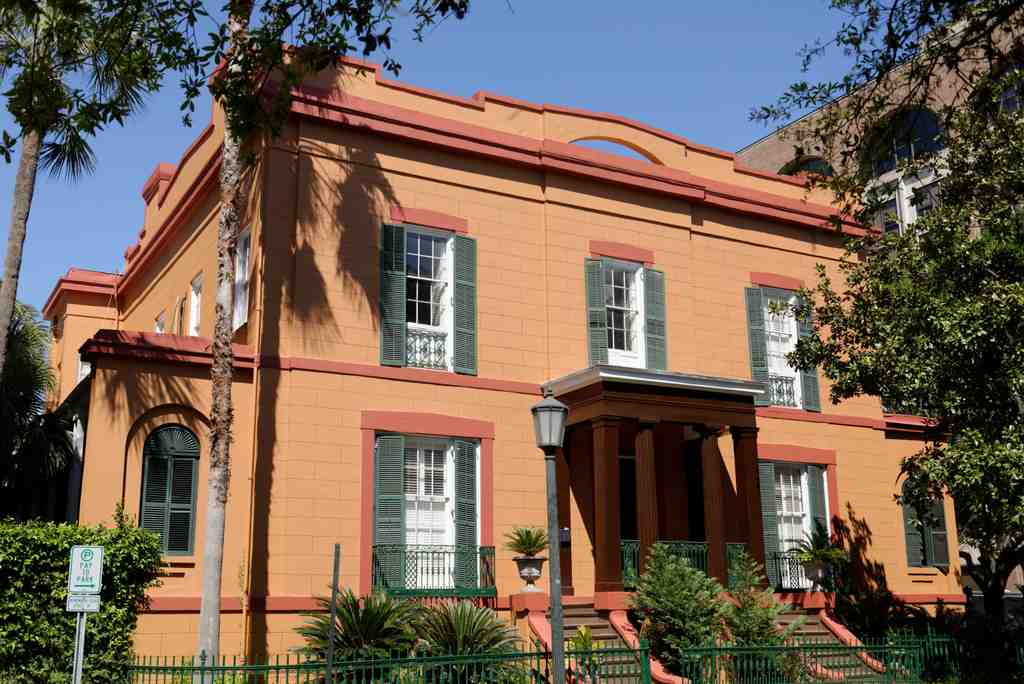
Look right to find a massive, square-shaped mansion finished in vibrant orange stucco, accented by dark green window shutters and a heavy entrance porch with dark wooden columns. This is the Sorrel-Weed House, and let me tell you, it is an absolute architectural heavyweight. It is one of the city's finest examples of Greek Revival architecture, which is a style designed to mimic the grand, symmetrical temples of ancient Greece.
You might notice it shares a bit of architectural DNA with the Owens-Thomas House we visited earlier. Both homes use a clever trick of placing large interior columns inside the foyer, which is the main entrance hall, to firmly separate the formal greeting areas for guests from the private, hidden rooms used only by the family.
This grand estate was the boyhood home of Moxley Sorrel. Before the Civil War began, Moxley was just an ordinary young bank clerk living right here. But when the conflict erupted, he traveled to Virginia and threw himself into the fight. His courage was unmistakable. Despite being wounded three times across major campaigns, he was promoted to brigadier general at just twenty-six years old, making him one of the youngest generals in the entire Confederate army. He was fiercely dedicated, and his peers later praised him as the greatest staff officer they had ever seen.
But a building this old rarely survives without a few scars. People are always trying to shape a property to fit their own legacy. In the mid-twentieth century, a businessman named A.J. Cohen Jr. literally built a large brick addition onto the side of the house so he could open an upscale women's clothing store. For decades, the original, elegant footprint of this mansion was buried under commercial brick.
Then, in nineteen ninety-six, a man named Stephen Bader bought the estate and immediately fired up the bulldozers. He tore away that brick addition to restore the home's original layout. A few years later, a top architectural curator from Colonial Williamsburg came down to inspect the house. He actually confirmed that a Victorian dividing wall and a stairway the new owners had demolished were indeed later additions. By tearing them down, they had successfully resurrected the original, open layout the Sorrel family built. It is a constant tug-of-war here between altering a building for modern use and meticulously peeling back the layers to rescue the past.
If you want to see exactly how much this property has transformed over the decades, take a quick peek at the comparison photo on your screen.
Today, the house operates as a museum and is open daily from eleven in the morning until eleven at night, except Monday through Wednesday when they open a bit later in the evening.
Keep walking, because you are going to love our next stop. Prepare yourself for another Civil War tale, but this one involves scandalous wealth and a high-profile arrest. The Green-Meldrim House is just a quick one-minute walk away.




