
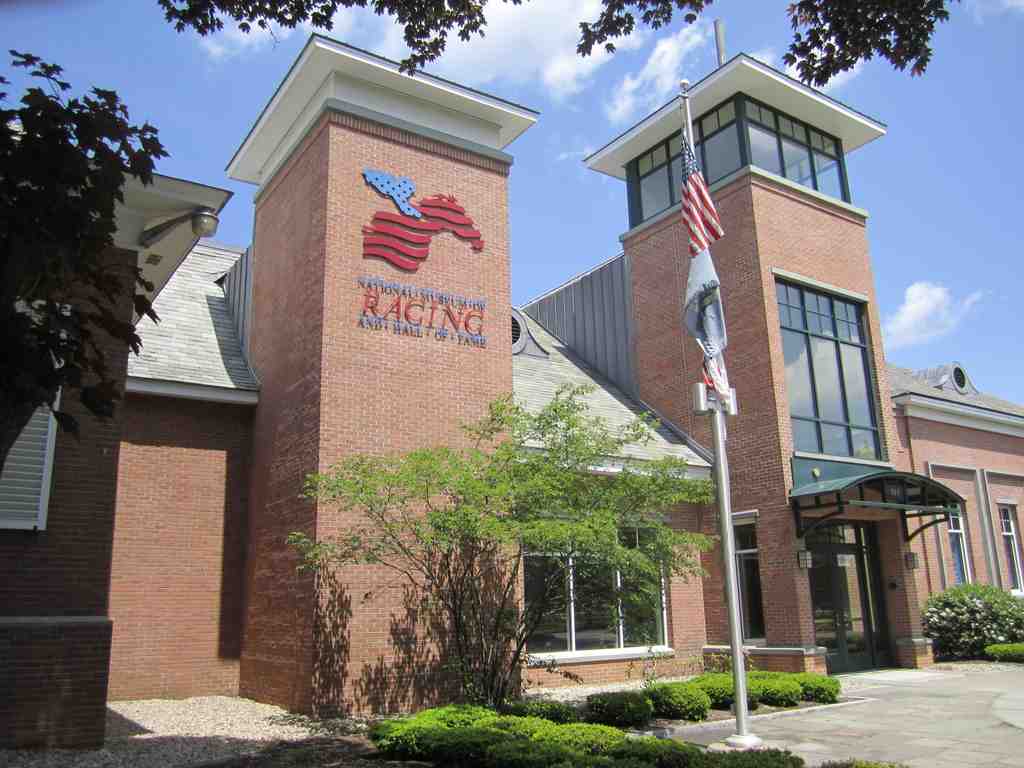
To spot the National Museum of Racing and Hall of Fame, look for the modern red-brick building up ahead with two tall, square towers, big glass windows, and a waving American flag right in front, plus a bright red and blue sign of a thoroughbred horse on the side.
Alright, racing fans-here we are at the legendary National Museum of Racing and Hall of Fame, where every inch of brick and glass practically hums with stories of glorious hoofbeats and historic showdowns. Take a moment and picture it’s Derby Day right here on Union Avenue: the air’s warm, brimming with excitement, and you’re across from the Saratoga Race Course, watching the sunlight bounce off the flagpole and those huge pictorial windows.
This museum galloped onto the scene back in 1950 thanks to some racing-obsessed folks led by Cornelius Vanderbilt Whitney. Their first “stable” wasn’t nearly as grand-just a single room inside the Canfield Casino, filled with early treasures like a horseshoe from the mighty Lexington. It’s said the casino got quieter at night after people started whispering about the luck that horseshoe could bring. Maybe that’s why so many racing fans started showing up? Eventually, the museum got a shiny new home right here in 1955, upgraded with a full-fledged Hall of Fame that honors the fastest, bravest, and cleverest in thoroughbred racing-horses, jockeys, trainers, and even the “pillars of the turf,” those leaders who shaped the sport.
Picture the Hall of Fame committee each year, probably fueled by a hefty dose of Saratoga’s finest coffee, scanning through lists of four-legged and two-legged legends-some with stories more complicated than a tricky photo finish. And the voting? That’s a race all its own! Since 2010, they’ve made it a little less stressful: now voters can pick more than one candidate in a category. So, in 2016, racing queens Rachel Alexandra and Zenyatta both took their place in the Hall together-no need for a tie-breaker! Announcements of new inductees arrive every spring, right on cue for Kentucky Derby Week, and the grand inductions roll around every August, when this city is thick with the smell of sunscreen, hot dogs, and anticipation.
Horses need to be retired at least five years before making the ballot. Of course, there are famous exceptions-Secretariat and Ruffian were whisked into the Hall about as fast as they left the track, thanks to their legendary status and a little rule bending. The museum even has a Review Committee, swapping stories and votes about horses, trainers, and jockeys from every era, always after that next moment of thunderous applause.
Inside, the air changes. You’ll find paintings by famous artists, glittering trophies (including Kelso’s five Jockey Club Gold Cups), and even all three Triple Crown trophies won by Count Fleet. There are whole galleries dedicated to horse racing’s different eras-Colonial times, the wild post-Civil War growth, and those up-and-down years when gambling nearly put the industry out to pasture. There’s a Sculpture Gallery filled with bronzes so lifelike you’d swear the horses might leap off their mounts if the sun hit them just right, plus the Anatomy Room, if you want to get into the nuts and bolts (or bones and muscles, really) of thoroughbreds.
Every year, this place fills with laughter, awe, and maybe a few groans-especially if visitors attempt to sit on any display saddles and discover they’re more artwork than furniture.
So whether you’re a casual fan, a trivia expert, or a dreamer chasing hoofprints, this museum invites you to trot through the ages and meet the legends-both human and equine-who made history right here in Saratoga Springs. And remember, the next time you see a horse give a little extra kick at the finish, maybe they’re just hoping for a spot in this very Hall of Fame someday.
Intrigued by the horses in the hall of fame, jockeys in the hall of fame or the trainers in the hall of fame? Explore further by joining me in the chat section below.


