
Rockford Audio Tour: Echoes of Downtown Legends and Landmarks
Beneath Rockford’s bright city lights lies a shadowy saga of ambition, rivalry, and reinvention waiting to be uncovered. This self-guided audio tour leads you through Rockford’s streets with stories and secrets most wanderers never hear. Unlock the soul of the city as you explore both iconic sites and intriguing backstreets with every step. What desperate act at the legendary Chick House nearly toppled city hall overnight? Why does the Illinois National Guard Armory hold whispers of lost rebellions behind its stone walls? Who vanished during a snowstorm near the BMO Center, leaving clues hidden in plain sight? Feel history rush beneath your feet as you move from whispers of scandal to echoes of triumph. Watch Rockford reveal itself anew through tales of courage, conflict, and the curious twists of fate written into its landmarks. Let the city’s untold stories pull you in. Begin your journey and unlock Rockford’s hidden pulse.
Tour preview
About this tour
- scheduleDuration 30–50 minsGo at your own pace
- straighten2.5 km walking routeFollow the guided path
- location_onLocationRockford, United States
- wifi_offWorks offlineDownload once, use anywhere
- all_inclusiveLifetime accessReplay anytime, forever
- location_onStarts at BMO Center
Stops on this tour
You’re looking at the BMO Center-a massive, rectangular building with a bold red roof, shiny glass walls, and a sign right up front that says “BMO Harris Bank Center,” so just…Read moreShow less
You’re looking at the BMO Center-a massive, rectangular building with a bold red roof, shiny glass walls, and a sign right up front that says “BMO Harris Bank Center,” so just glance for the largest modern-looking glass building in the area with that distinctive red top. Imagine it’s 1981, the air is buzzing with excitement outside what locals fondly nicknamed the “Big Orange Box”-trust me, it wasn’t because of a vitamin C deficiency! On opening night, the legendary Bob Hope cracked jokes on stage, Lynda Carter dazzled the crowd, and everyone was ready for this new arena to rock the heart of downtown Rockford. Not long after, The Rolling Stones rolled into town-literally-because local radio fans lobbied so hard for them with a petition that organizers cut it up and used it as lottery tickets for the hottest $15 seats in town. You can just picture the suspenseful shuffle of names being drawn. Over the years, this place has hosted just about everything: basketball, hockey, indoor football, roaring monster truck rallies, comedy shows echoing off the walls, high school graduations, and more. The Rockford Lightning, Rock River Raptors, and Chicago Rush all once called it home. Now, the Rockford IceHogs rule the rink, serving as a training ground for Blackhawks hockey hopefuls. The competition on the ice can be fierce-watch your step if there’s an IceHogs game, and prepare to hear the sharp scrapes of skates cutting across the ice inside. Massive renovations have kept the magic alive. In 2006, the city poured $23 million into revamping the space, which included plush new seats, expanded locker rooms, and glowing new lights-no more dark corners for hockey fans! In 2013, the upgrades just kept coming, giving every seat a winning view. And if you’re feeling thirsty, rumor has it the Jack Daniels Bar inside got a flashy facelift recently, along with a brand new entryway and a grab & go store for folks who are always running late. So, whether you’re a die-hard sports fan, a music lover, or just here for the monster trucks, the BMO Center’s legacy is as big and bold as its architecture-an orange box packed with Rockford pride and endless stories! Ready to head to our next stop?
Open dedicated page →To spot the Chick House, just look for a three-story brick building with arched windows and a long, green awning stretching across the front, nestled between taller buildings on…Read moreShow less
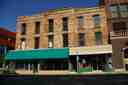
To spot the Chick House, just look for a three-story brick building with arched windows and a long, green awning stretching across the front, nestled between taller buildings on Main Street. Now, imagine yourself standing on a busy street corner in 1857, the air humming with the clip-clop of horses and merchants bargaining nearby. You’re at the heart of old Rockford, right where the Chick House first opened its doors. Built by three ambitious locals with a passion for business-a doctor and two bankers-this place was a beacon of comfort for weary travelers. At first, it went by the rather serious-sounding “Griggs House,” but things took a friendlier turn in 1888, when a man named Thomas Chick bought the property and modestly rebranded it after himself. Nothing like putting your own last name up in lights, right? Picture that green awning just above you-it wasn’t always part of the building, but you can thank Rockford’s city crew in 2004 for wrapping it around the corner to keep out the rain. The red-orange bricks you see rising above were shaped in a time when Italianate style was just starting to edge out the older, stately Greek Revival fashion. That simple, symmetrical shape? Greek Revival. The tall, narrow windows with arched tops? Pure Italianate flair, showing off the style's rising popularity in the 1850s. Even the brick frieze up top seems to wave hello to passersby, challenging the much flashier Richardson Romanesque Stewart Building next door. On the ground floor, signs for office supplies stand where guests once checked in and dined on hearty meals. If you listen closely, you might just catch the echoes of laughter from Sunday diners vying for savory roasts in the early 1900s. In fact, back then, the Chick House and the Nelson House were the top hotels in town-Chick’s rates started at $1.50 per night, while the fancy Nelson was a whole 50 cents pricier. Ballers back in the day! After Thomas Chick’s time, the hotel danced through a string of owners and purposes-one day a hotel, another day an office supply and hardware store. In 1929, it was revived as the Elms Hotel, giving travelers and boarders another place to rest their tired feet until 1951. Then, as businesses came and went and Rockford’s streets bustled on, the old Chick House stood firm. By 2004, the building’s story almost hit a sour note, but the city wasn’t about to let this slice of Rockford’s character crumble. Repairs were done, Plexiglas windows slapped in, and the green awning raised again-a little facelift to keep the old place standing tall through rain and shine. Take a look at those brick walls. You’re looking at one of only three pre-Civil War commercial buildings left in downtown Rockford-and the only one that never lost its original charm. If these bricks had frequent flyer miles, they’d win, having seen guests, grocers, Sunday feasts, and maybe the occasional shoe emergency. And today, the Chick House is rightfully honored as a Rockford Landmark and listed on the U.S. National Register of Historic Places. So, tip your hat to the house that survived over a century-and-a-half of change, and just maybe, imagine arriving for a night in 1902-with a whole $1.50 to spend on some good old-fashioned Rockford hospitality!
Open dedicated page →Ahead of you, you’ll spot a tall, stately stone building with rows of wide windows, standing alongside lower shops and a parking garage-just look for the tallest blocky structure…Read moreShow less
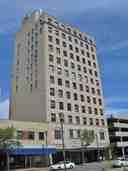
Ahead of you, you’ll spot a tall, stately stone building with rows of wide windows, standing alongside lower shops and a parking garage-just look for the tallest blocky structure on this side of the street. Welcome to the beating heart of Rockford’s history-the West Downtown Rockford Historic District! Imagine, if you will, the sound of old iron horses-no, not motorcycles, but the steam locomotives-whistling through the air and merchants shouting out daily deals along these bustling streets. Back in 1834, before smartphones, Wi-Fi, and even electricity, this spot was nothing but open land, until a fellow with the impressive name of Germanicus Kent decided it was perfect for a little settlement. He called it Kentville, opened a blacksmith shop, a bank, a general store, and a hotel, all right where you’re standing, near the crossroads of State and Madison. It wasn’t long before the first ferry splashed its way across the Rock River here in 1836 and then, just a few years later, Rockford’s first bridge connected the east and west sides. The city grew fast, fueled by its lucky spot smack dab between Chicago and Galena. People wanted to be here. By the 1850s, there were nearly as many houses on the west as there were on the east. And as more folks arrived, rickety wooden buildings slowly gave way to sturdy brick and stone-Rockford was here to stay! Fancy a game of I Spy? See if you can find the Chick House, one of the oldest survivors from all those years ago. The 1880s were good times-a street railway opened and suddenly, everyone wanted to be on the west side. Pharmacy owner John R. Porter started an empire right on this corner. Modern department stores, like D. J. Stewart and J.C. Penney, popped up-shop ‘til you drop was practically invented right here! But the roaring fun was interrupted by the Panic of 1893. The streets got quieter, and buildings went up more slowly. Still, Rockford wasn’t out for the count. The landmark Memorial Hall went up in 1903, dedicated by none other than President Theodore Roosevelt-imagine the crowds cheering as Teddy spoke! Then came the Roaring Twenties-this whole area came alive with new banks, soaring towers like the Talcott Building, and the dazzling Coronado Theatre. Tough times hit again in the Depression, and then during the war, but each decade left its own mark on these walls. Today, as you look around, remember: the structures surrounding you watched more than a hundred years of parades, protests, laughter, and loss. And hey, if these old buildings could talk, they’d probably want to tell you the best spot for ice cream, too. Keep an eye open for all forty-four structures-each one’s got a chapter in Rockford’s story!
Open dedicated page →

Show 5 more stopsShow fewer stopsexpand_moreexpand_less
 5
5Beattie Park Mound Group
Buy tour to unlock all 12 tracksYou’ll spot the Beattie Park Mound Group right ahead-a low, rounded, grassy rise on the open green lawn, just beyond the trees, blending into the landscape like a gentle wave of…Read moreShow less
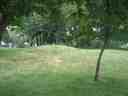
You’ll spot the Beattie Park Mound Group right ahead-a low, rounded, grassy rise on the open green lawn, just beyond the trees, blending into the landscape like a gentle wave of earth. Now, let’s step back in time together-about 1,300 years ago, give or take a few Wi-Fi passwords! Imagine Rockford not filled with cars and concrete, but with dense woods and winding streams, alive with the calls of birds and the burble of the nearby Rock River. The people here, known as the mound builders, weren’t just one tribe or nation; they were a whole patchwork of groups sharing ideas, trading goods, and, occasionally, probably squabbling over whose turn it was to cook dinner. They built these mounds-some you see here, some lost to time-during what historians call the Late Woodland period. These earthen wonders served as sacred spots, places for ceremonies, or even as markers honoring important people or animals. The real mystery is in the shapes! Look closely: one of the mounds was sculpted to look like a turtle-imagine building a giant turtle out of dirt, without a YouTube tutorial! There was also once a bird-shaped mound, lost now under a modern apartment building, and conical mounds here and there, each with its own story. Originally, there were nine rounded mounds, a long earthwork lane, embankments, and two animal effigies. Through centuries of storms, city growth, and a few overzealous construction crews (cough, cough, 1950s parking lot!), many of these symbols faded away. And yet, what survives remains a visible signature of those ancient cultures who called this land home long before Rockford existed. So as you stand here, surrounded by leafy shadows and the gentle curve of earth, you're sharing space with storytellers of the past-who, it turns out, were excellent at leaving unforgettable humps in history.
Open dedicated page →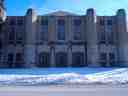 6
6Illinois National Guard Armory
Buy tour to unlock all 12 tracksTo spot the Illinois National Guard Armory, look ahead for a big, fortress-like building with tan brick and impressive stone towers pushing up from each corner-it almost looks…Read moreShow less
To spot the Illinois National Guard Armory, look ahead for a big, fortress-like building with tan brick and impressive stone towers pushing up from each corner-it almost looks like a castle crossed with a vintage movie theater. Alright, here we are, standing before a powerhouse of Rockford history! Imagine: it's 1936, and the sound of hammers and saws fills the air as Bradley & Bradley’s architects and Sjostrom & Sons' builders put up this bold, art deco fortress. The stone on the front was crafted by Benson Stone-the kind of expert craftsmanship that can make a chunk of rock look almost regal. Locals would line up in good weather and bad, filling the armory’s halls until, by 1941, the one-millionth Rockfordian stepped through these very doors. This was no ordinary building. From the outside, those solid towers look like they could withstand anything, and inside, the place pulsed with marching boots and barked orders, especially during World War II and the Cold War, when the Illinois National Guard called it home. By the 1970s, though, things got loud for a new reason. Did you know this stout stone fortress once throbbed with electric guitars and wild crowds? Bands like ZZ Top, KISS, REO Speedwagon, and Fleetwood Mac shook these walls, transforming it from military hub to legendary music venue for Rockford’s rock ‘n’ roll faithful. Bet you didn’t expect to be standing in front of a place that mixed camouflage and glitter! In the late '80s, the building was already showing its age-think leaky roof and cranky windows. The state spent nearly half a million in 1989 fixing it up, just in time for the arrival of the 404th Chemical Brigade. That’s right, Rockford hosted the only brigade in the Army National Guard focused on chemical defense. But in ‘93, the Guard moved out, leaving this hulk of concrete and memories behind. Now, here's where the plot thickens. There were big plans and even bigger drama. The State of Illinois blocked a sale, banking deals fell through, and at one point the building changed hands for-wait for it-a single dollar. That’s not a typo! As if someone could pick up a piece of Rockford history for the price of a cheeseburger. Bankers, politicians, and preservationists all got tangled in the saga. In 1999, the OIC Vocational Institute was struggling, and the state was close to having an empty armory on its hands. Rumors flew about building conditions and there was a courtroom-level showdown about its fate. Then came Sylvia Doyle-Pagel, a Rockford hero of historic preservation. She battled bankers and city council skeptics, fighting for the armory’s protection. Against the odds, she got it placed on the National Register of Historic Places in 2000. Since then, this fortress has stood as a monument not just to soldiers and musicians, but to Rockford’s wild spirit-a place where every brick holds a secret or two. In 2006, the building finally landed with the city, donated so it could keep writing new chapters. So, while the snow crunches under your shoes, look up at those towers and imagine the echoes of history: orders shouted, guitars wailing, deals made, and battles fought-sometimes with pens, sometimes with power chords.
Open dedicated page →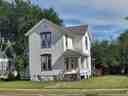 7
7Garrison–Coronado–Haskell Historic District
Buy tour to unlock all 12 tracksTo spot the Garrison-Coronado-Haskell Historic District, look for charming, classic houses like the white wood-sided home in front of you, with a front porch, twin upper windows,…Read moreShow less
To spot the Garrison-Coronado-Haskell Historic District, look for charming, classic houses like the white wood-sided home in front of you, with a front porch, twin upper windows, and a freshly mowed lawn, all nestled among mature trees and neighboring historic homes-you’re right in the heart of Rockford’s living history! Now, take a deep breath-can you almost smell the fresh-cut grass and old wood mingling in the air? This neighborhood is like a time machine set to Rockford’s grand past. Picture it: you’re standing on the northwest side of Rockford, surrounded by over five hundred sturdy homes-nearly half of them built between 1890 and 1900, as if someone pressed pause on a bustling, hopeful era just for you to visit. George Haskell and Thomas Garrison, our two real estate pioneers, once looked over these very streets, planning out house plots where there had only been prairie grass. Garrison’s name, by the way, survives in the Garrison School, still standing proudly as part of this story. But back in the late 1850s, these streets were more ideas than addresses, and development was slow-until the iron thunder of the Galena and Chicago Union Railroad roared through in 1852, putting Rockford on the map and bumping up land values faster than you can say “All aboard!” Only a scattering of houses popped up at first, home to some of Rockford’s earliest families instead of newcomers-perhaps these streets were holding their breath, waiting for just the right boom. And boom it did: by the 1890s, Rockford was growing at lightning speed, factories humming, new families rolling in, houses popping up everywhere until, by the 1930s, the entire district was packed tight, a tapestry of homes and cozy apartments like the famed Valencia Court. Today, most of the buildings you see here contribute to the area’s unmistakable charm-so much so that the district is now listed on the National Register of Historic Places. As you walk these sidewalks, imagine the echoes of laughter and conversation from more than a century ago. If only these front porches could talk… but maybe it’s better they whisper, leaving a bit of Rockford’s mystery for you to discover with every step!
Open dedicated page →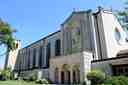 8
8Cathedral of Saint Peter
Buy tour to unlock all 12 tracksTo spot the Cathedral of Saint Peter, look ahead for a large limestone building with tall arched windows, a trio of arched entryways, and a golden mosaic of Saint Peter high on…Read moreShow less
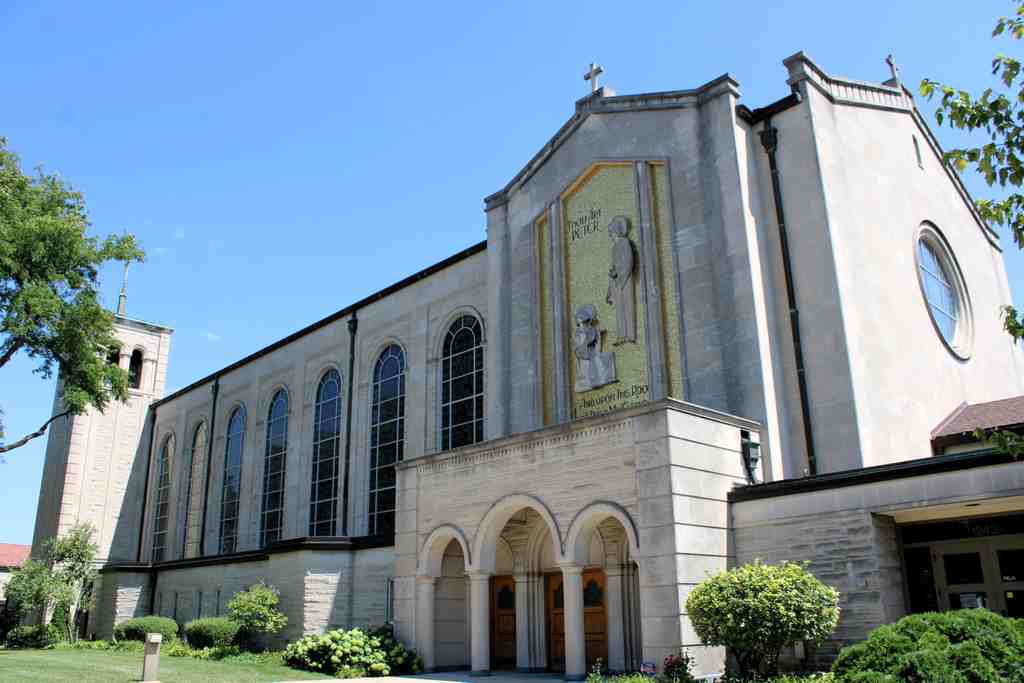
To spot the Cathedral of Saint Peter, look ahead for a large limestone building with tall arched windows, a trio of arched entryways, and a golden mosaic of Saint Peter high on its front wall. You’re now standing before the grand Cathedral of Saint Peter, watching sunlight dance across its pale stone and catching the brightly colored mosaic above the entrance. Imagine the year is 1915-this parish began with the humble St. William's chapel as just a small offshoot on downtown Rockford’s edge. Winds of change kept blowing, and by the 1920s, worshippers were dreaming big on Council Hill, also nicknamed Piety Hill-a perfect place for the faithful, don’t you think? Fast forward to the 1960s, and Bishop Loras Lane blesses the cornerstone. Little did anyone know he was secretly hoping for a massive pyramid-shaped cathedral-seriously, a pyramid! But his grand plans hit two obstacles: sky-high costs and, unfortunately, his own passing, so St. Peter’s church took on the honor instead. In 1970, it became the heart of the diocese and gained its true cathedral status, growing into the beating spiritual heart you see today. Step closer and, if you listen carefully, you might hear the pipes of the Wicks organ echo through the building. This powerhouse from 1978 has 2,707 pipes, some boldly visible, and its music has accompanied countless joyful and solemn moments since. So here you are, in front of a building where every stone and window has its own story-no pyramids, but plenty of history.
Open dedicated page →
Frequently asked questions
How do I start the tour?
After purchase, download the AudaTours app and enter your redemption code. The tour will be ready to start immediately - just tap play and follow the GPS-guided route.
Do I need internet during the tour?
No! Download the tour before you start and enjoy it fully offline. Only the chat feature requires internet. We recommend downloading on WiFi to save mobile data.
Is this a guided group tour?
No - this is a self-guided audio tour. You explore independently at your own pace, with audio narration playing through your phone. No tour guide, no group, no schedule.
How long does the tour take?
Most tours take 60–90 minutes to complete, but you control the pace entirely. Pause, skip stops, or take breaks whenever you want.
What if I can't finish the tour today?
No problem! Tours have lifetime access. Pause and resume whenever you like - tomorrow, next week, or next year. Your progress is saved.
What languages are available?
All tours are available in 50+ languages. Select your preferred language when redeeming your code. Note: language cannot be changed after tour generation.
Where do I access the tour after purchase?
Download the free AudaTours app from the App Store or Google Play. Enter your redemption code (sent via email) and the tour will appear in your library, ready to download and start.
If you don't enjoy the tour, we'll refund your purchase. Contact us at [email protected]
Checkout securely with 


