
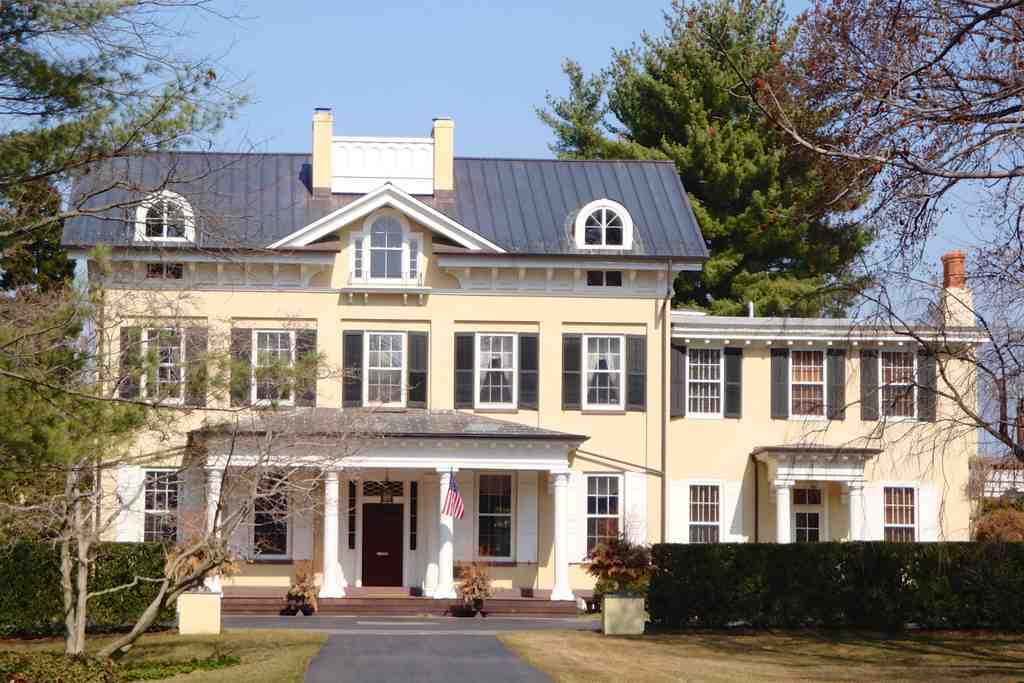
To spot Westland Mansion, look for a large, elegant yellow house with green shutters, white trim, a distinctive dark metal roof, and tall white columns framing the front door, standing proudly behind a manicured lawn and just a touch of American flag flair by the entry.
Welcome to Westland Mansion, where the echoes of American history mix with the chirping of birds and-if you listen closely-the ghostly click of a billiard ball! Picture yourself back in the late 1800s as you admire this stately home. The air is fresh with the scent of pine from those towering trees shading the grounds, and somewhere in the distance, children might be laughing, or perhaps a well-dressed gentleman-none other than Grover Cleveland, former president-tips his hat as he strolls by the pear and cherry orchards lining his backyard.
This mansion was built in 1856 by Robert F. Stockton, a naval commodore who could tell you stories of the high seas and the battle for California during the Mexican-American War. Stockton was a man with politics in his blood; his own grandfather, Judge Richard Stockton, signed the Declaration of Independence. No pressure to keep up family tradition, right? The mansion he built was meant to impress: spacious rooms with high ceilings, elegant marble mantelpieces, twin parlors perfect for sipping tea-or perhaps for arguing about politics late into the night. Surrounding the house, well-tended paths wound through broad lawns and under those enormous pines, and if you ventured out back, you’d stumble upon an orchard alive with pears, cherries, and maybe a few doves fluttering around the dovecote.
Fast-forward to 1897-Grover Cleveland, that famous mustachioed leader who served as America’s 22nd and 24th president (the only one to do it non-consecutively, offering quiz-night fodder forever), retires to Princeton and sets his sights on this mansion. With the help of his friend, Andrew Fleming West-the home’s namesake-Cleveland settles in, bringing new life to the house. He adds a billiard room, because every ex-president needs a good place to practice bank shots, and gives the front a cosmetic makeover in the Italianate style-just for a bit of presidential flair.
During Cleveland’s years here, the mansion is anything but a quiet retirement spot. Princeton students adored him. On his birthday, you might’ve seen a crowd in bowler hats serenading him outside these windows, or after winning a football game, a raucous parade of students leading their cheers right up to his very doorstep. Cleveland himself wasn’t content to simply retire; he served on Princeton’s Board of Trustees, chaired committees, and even delivered a series of lectures that packed the halls. When he wasn’t being an academic titan, he filled his days with billiards and card games with his friends-the self-mockingly named Poverty Club-occasionally pausing their games to debate world affairs.
After Cleveland passed away here in 1908, his widow Frances stayed on, keeping the mansion’s halls full of stories and laughter for many more years. Today, Westland remains a private residence-no tours inside, I’m afraid, unless you’re sneaky with a disguise-but the echoes of history linger in every stone. Whether you imagine it under gaslight or hear a student choir from Princeton drifting in on an autumn breeze, this is a place where American stories live on in yellow walls and shaded lawns.


