
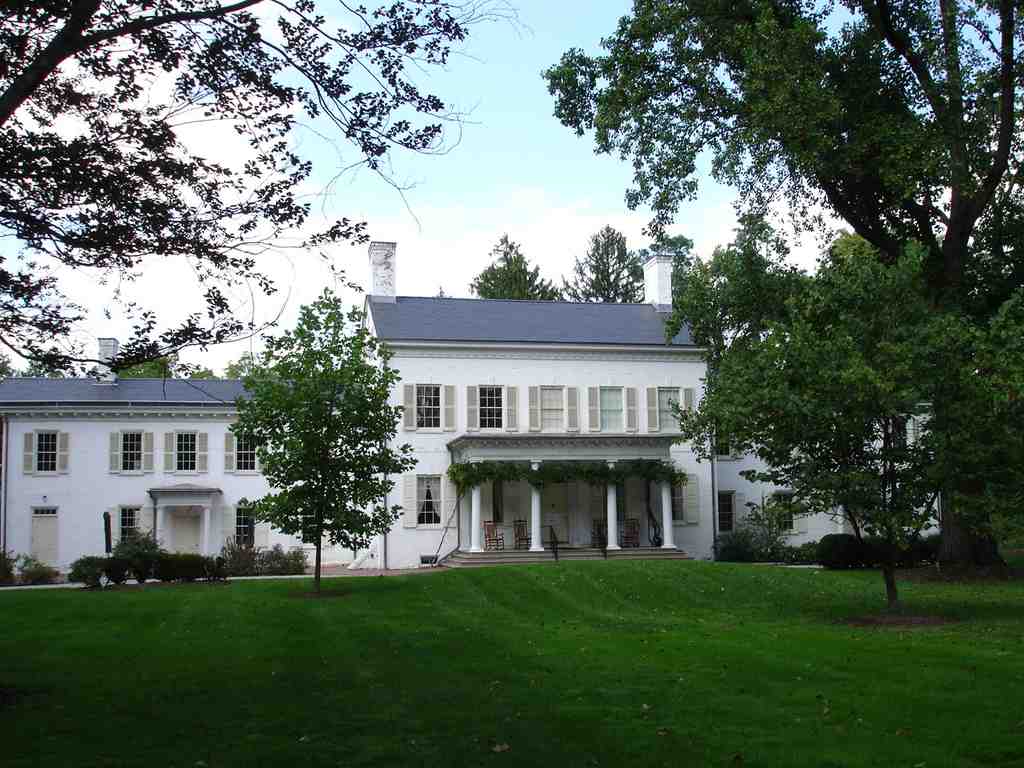
Take a look ahead and you’ll spot Morven: it’s a stately, white brick mansion with green shutters, two wings stretching out on either side, and a welcoming Greek Revival porch right in the center-just look past the trees for those inviting rocking chairs on the front steps.
Now, imagine yourself stepping back in time to the 1700s, when the air was thick with the scent of woodsmoke and wildflowers, and the land was owned by none other than Richard Stockton-a man who was literally granted thousands of acres here by William Penn. Picture old Richard’s grandson, also named Richard (this family loved the name), picking the absolute best spot to build this striking home. He was so inspired, his wife named it Morven, after a legendary Gaelic kingdom-giving a little Irish magic to central New Jersey.
As you stand in front of Morven today, you’re looking at a place where the echoes of history have never faded. Let’s fast forward through generations of Stocktons, each one with their own quirks, dramas, and-let’s be honest-probably a secret or two. One Stockton was a signer of the Declaration of Independence, bravely scribbling his name on a document that could’ve gotten him in a lot of hot water. Who knows-maybe as he relaxed on the porch out front, he rehearsed what he’d say if anyone asked, “So, Richard, feeling independent today?”
Morven didn’t just host the Stocktons; it swung open its doors to commodores, governors, and even Robert Wood Johnson II of Johnson & Johnson. I guess if you invented Band-Aids, you deserved a mansion every now and then! During the 20th century, when Bayard Stockton died, the home was leased to Johnson, and then Governor Walter E. Edge bought it-under one strict condition: when Edge moved on, Morven would go to the State of New Jersey.
Oh, the tension-imagine bureaucrats pacing the floors, worried about all these extra rooms, knowing someday this beautiful house would house not just family, but a whole chapter of state history. For nearly forty years, this was the governor’s mansion, its hallways echoing with political secrets, laughter, and probably a few lost keys.
After its time as a gubernatorial residence, Morven became a museum-a jewel of Princeton, and a storyteller all on its own. Every brick, every creak in the floorboards, whispers the stories of revolution, courage, and the art of really good porch-sitting. So, soak it in and maybe even imagine a Founding Father or two drifting by-you know they’d have some stories to share!


