
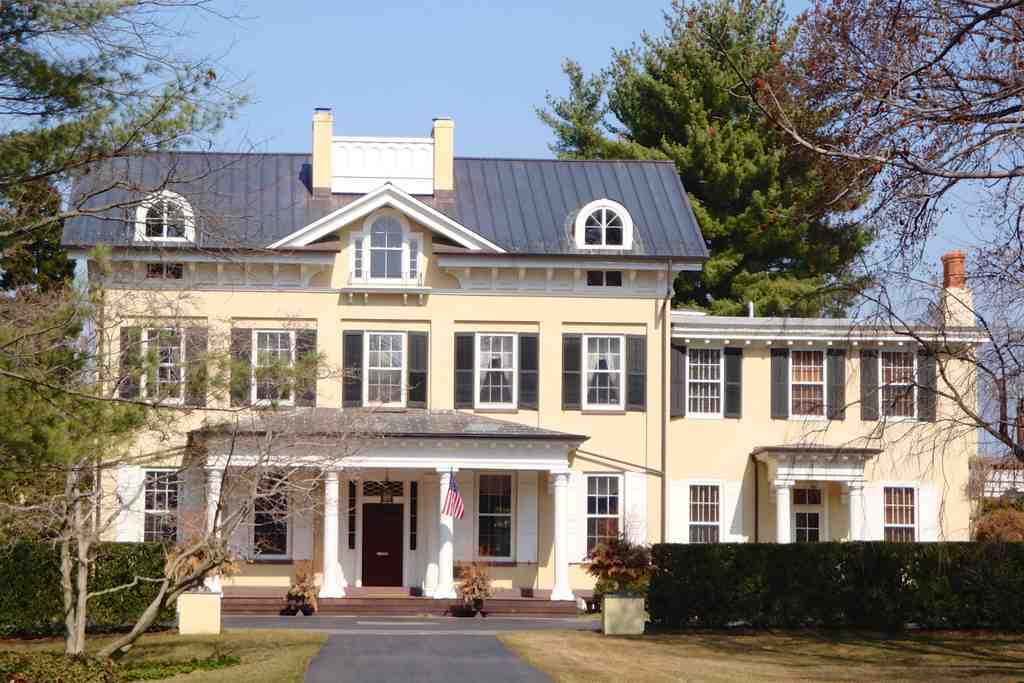
Look ahead for a large, pale yellow mansion with a grand columned porch, dark shutters, and a distinctly symmetrical front-if you spot a stately house with an American flag above the door, you’ve found Westland Mansion.
Take a moment to imagine the gentle crunch of gravel beneath your feet as you stroll up the broad, tree-shaded path toward the impressive yellow stucco façade of Westland Mansion. This grand home-now a serene and private residence-once bustled with the footsteps of one of America’s most famous retirees: Grover Cleveland, the only U.S. president to serve two non-consecutive terms. Yes, that’s right! After the hard-hitting life of politics, Cleveland decided this 2½-story mansion in Princeton’s historic district would make the perfect final chapter for his story…and what a chapter it was.
Imagine the year is 1897, and Cleveland has just left the White House, tired but proud-his mustache perhaps a little grayer, his sense of humor still sharp. He moves into Westland Mansion, which had originally been built in 1856 by Robert F. Stockton, a U.S. senator and naval commodore with quite the family tree-one ancestor even signed the Declaration of Independence! The mansion, inspired by the nearby Morven estate, was known for its spacious parlors, high ceilings, grand marble mantelpieces, and wide lawns shaded by towering pines. Out back, you might have glimpsed an orchard bursting with pear and cherry trees and perhaps heard the gentle murmur of doves from the dovecote.
Cleveland named this peaceful estate “Westland” after his friend Andrew Fleming West, a Princeton professor who helped him buy the home. He got comfortable fast, extending the right side of the house to build a special two-story addition-the lower floor became his billiards room. Fancy a game? It’s said Cleveland loved nothing more than relaxing with friends from the so-called “Poverty Club”-perhaps a bit of presidential irony there! Regular card games and the click of billiard balls filled the halls with laughter and friendly competition.
But Cleveland didn’t just kick back and relax-retirement wasn’t in his nature. Though he never went to college himself, he joined Princeton University’s Board of Trustees and even led a committee to create a graduate school. He lectured at the university to large crowds, so if you listen closely, maybe you can still hear the echo of his thoughtful words-and the roaring applause afterward. On his birthday and after big football games, students would parade up to Westland, filling the air with cheers and song. Cleveland loved the town, keeping up with friends, writing letters, and staying active in both social and political circles.
When Grover Cleveland passed away here in 1908, Princeton lost more than a neighbor-they lost a legend. His widow, Frances, stayed at Westland for many years, filling the house with her own stories and laughter. Today, even though this beautiful mansion isn’t open to the public, visitors like you can still stand outside and imagine the scenes of history-billiards, birthday parades, and the gentle rustle of the orchard beyond the gardens.
So take in the view, and give a little nod to President Cleveland’s favorite spot-it’s the kind of place where history feels like it just stepped out for a stroll.


