
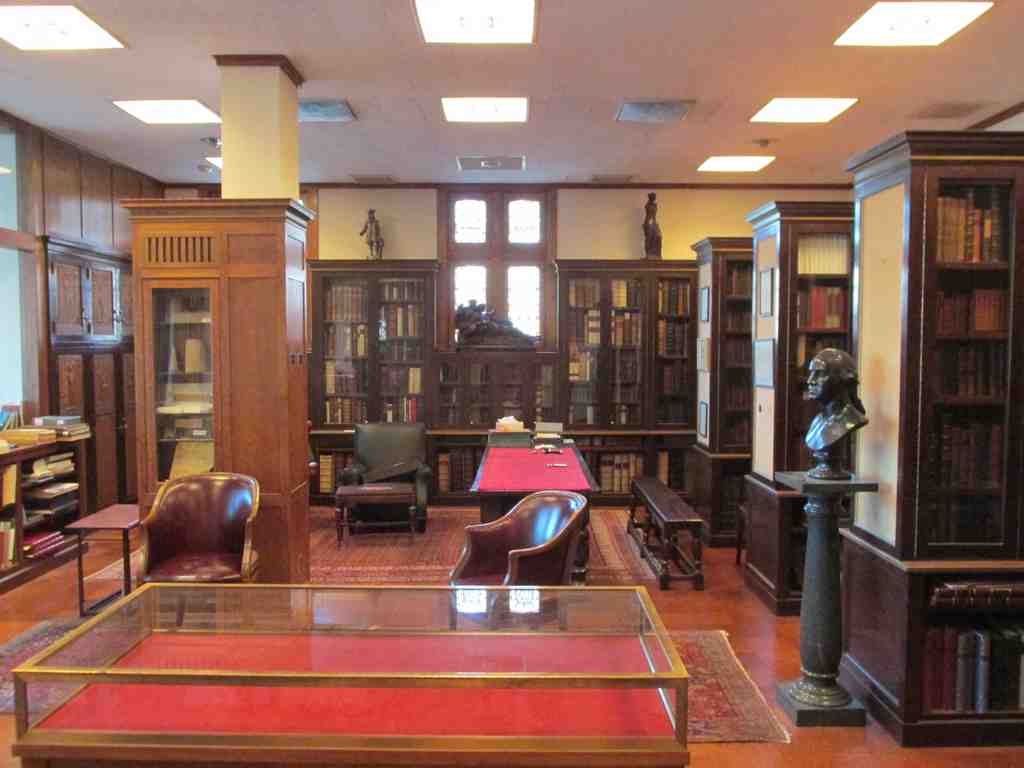
You’ll spot the Scheide Library just ahead inside the grand and welcoming Firestone Library, easily recognized by its warm wood-paneled rooms, shelves packed tight with old books, and the classic scholarly atmosphere-just follow your nose toward that magical smell of aged paper and polished brass.
Welcome, my friend, to a cozy corner of campus where the past whispers and the pages practically turn themselves: the Scheide Library. Imagine for a second you’re stepping into a room lined with wooden shelves, centuries-old books peering out at you like old friends waiting to share their secrets. The sunlight filters through stained glass, casting a hush over the scene. It’s quieter than a mouse in slippers here-after all, you’re surrounded by some of the world’s rarest treasures.
Decades ago, this wasn’t a university library at all. It was a private collection built by three generations of the Scheide family. Each Scheide-William T., John H., and the final collector, William H.-was part book hunter, part treasure keeper. Together they built a literary kingdom. And when William H. Scheide passed away in 2015, his gift to Princeton created a sensation: nobody had ever handed the university a present quite so valuable! This library’s collection still makes other librarians break into a cold sweat of envy.
Now, here’s the jaw-dropper: this little spot is home to all four of the first printed Bibles. Yes, including the legendary Gutenberg Bible-a book so rare it could make Indiana Jones trade in his hat just for a peek. These sacred tomes stand as the only group outside Europe. Add in handwritten music by Bach and Beethoven, Abraham Lincoln’s own scribbles, a copy of the Declaration of Independence, and first editions of Shakespeare and Milton-well, you have a room that could make even the ghost of William Shakespeare feel underdressed.
William H. Scheide wasn’t just a collector, either-he was so passionate about Bach that he started the Bach Aria Group to make sure those soaring cantatas never got dusty. His private collecting was always for the public good, and today, scholars and dreamers alike can dive into these wonders. So, as you stand here, imagine what it’s like to turn one of those ancient pages. It’s a reminder that sometimes, the grandest adventures begin with opening a book.


