
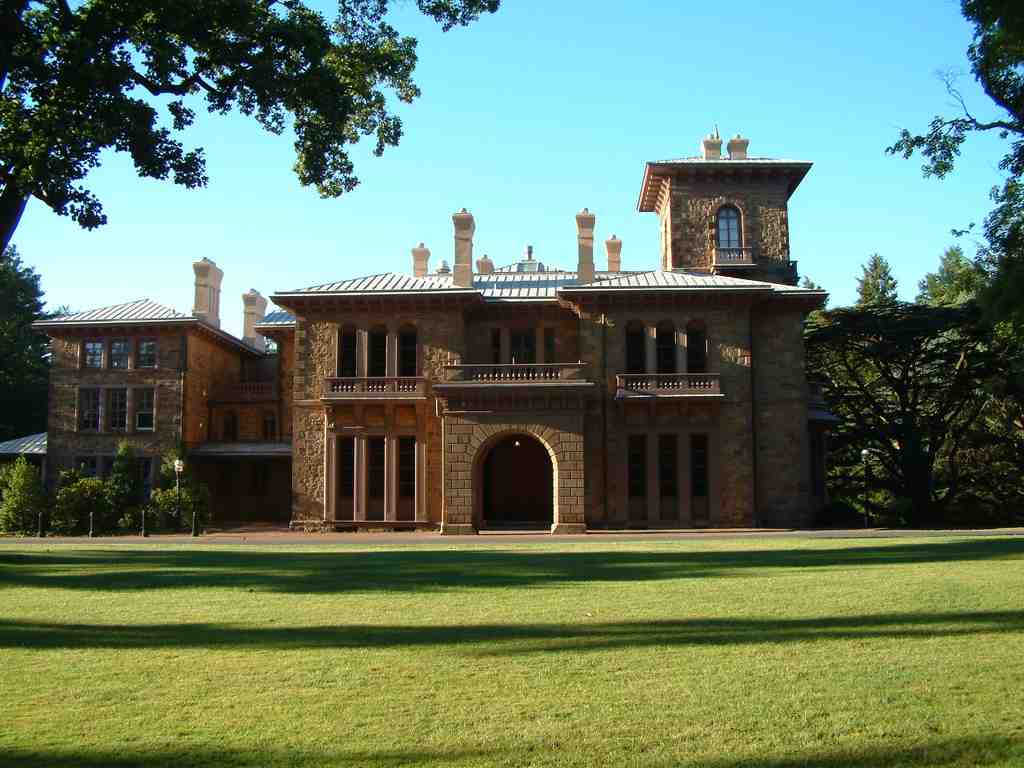
To spot Prospect House, look for a grand, two-story stone mansion with a tall square tower, broad lawns, and elegant balconies-right in front of you, framed by trees and sunlight.
Now, as you stand on this lush green lawn and gaze at the stately Prospect House, imagine yourself in a scene right out of a classic novel. The year is 1851, and the brand-new stone house gleams under the sun, its rustically cut sandstone glowing gold in the afternoon light. Designed by John Notman, who thought America needed a dash of Italian flair, Prospect House is brimming with elegant details: look up to see the wide eaves with ornate brackets and the central porte-cochere beckoning guests inside. The air is alive with anticipation-maybe you catch the faint.
But the story doesn’t start here. Long before Prospect House was built, this very site was a humble farm. Picture George Washington himself making his way up the old farmhouse steps, perhaps enjoying a meal after a long day during the American Revolution. The scene shifts; decades later, the estate transforms as Thomas Fuller Potter dreams of a house fit for a lord. The land, once muddy and horse-trodden, now features landscaped grounds and a home that makes passersby stop and gawk.
By 1878, this impressive property caught the eye of two generous brothers, Alexander and Robert Stuart. With a sweep of their pen, they donated it to Princeton, where it soon became home to the university’s president. One of those presidents was none other than Woodrow Wilson. Imagine him, deep in thought, pacing these rooms or leaning over a balcony as he planned his next big move-eventually leaving Prospect House to become Governor of New Jersey, and then, President of the United States. That’s some serious career advancement! You half expect to hear the clink of dishes from a grand dinner party in the dining room that stretches out the back, a later addition by designer Warren Platner.
And that’s not the only presidential connection-a secluded February day in 1913 saw a secretive yet joyful wedding here, when Frances Cleveland, widow of President Grover Cleveland, married professor Thomas J. Preston, Jr. at Prospect House. Talk about an A-list campus event!
These days, Prospect House isn’t a private mansion or presidential residence-it’s where Princeton’s professors come to relax and chat, and maybe tell a ghost story or two. Recognized as a National Historic Landmark, the house still stands as a reminder that, sometimes, the buildings around us have more drama and character than half the campus plays put together. So take another look and try to imagine the echoes of history in every stone.


