
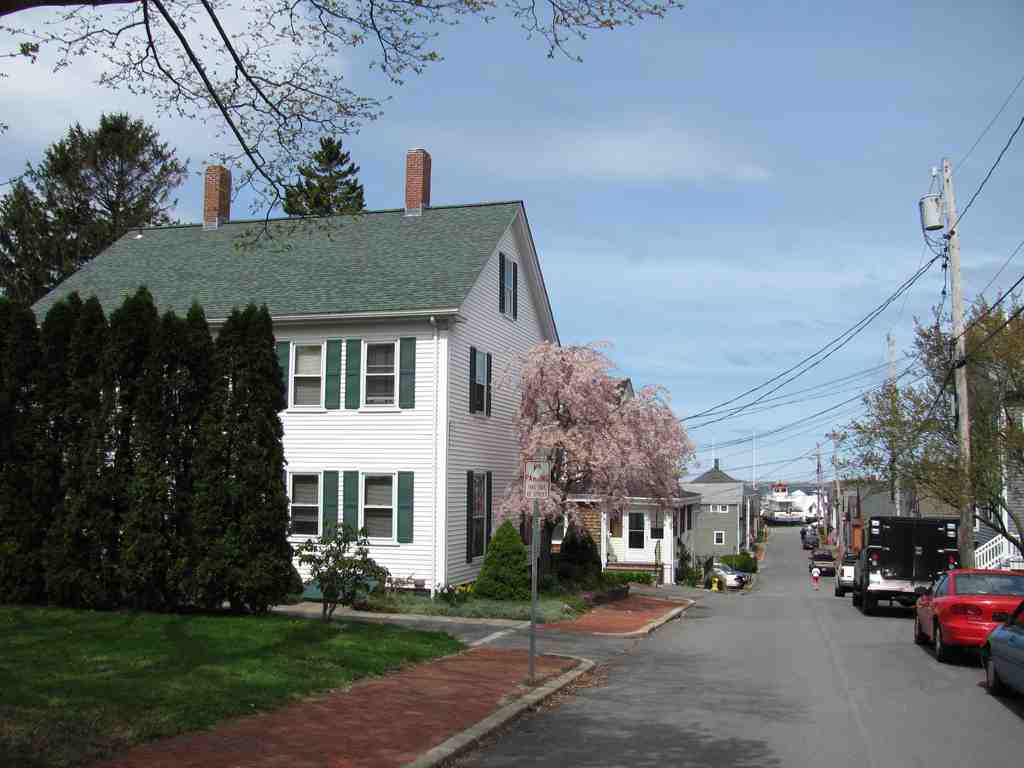
On your left, you will notice a large building clad in white wooden siding, distinguished by its steeply pitched roof and twin red brick chimneys. This is the Bradford-Union Street Historic District, a seven-acre neighborhood revealing a different chapter of Plymouth. We often focus on this town's earliest days, but by the eighteen and nineteen hundreds, it had transformed into a booming maritime center.
In eighteen twelve, Samuel Doten built the first wharf southeast of the mouth of Town Brook. As maritime industries expanded, the people working those ships needed places to live. That is where Alden Harlow saw an opportunity. In the eighteen forties, Harlow developed Bradford Street as a speculative real estate venture. He built a series of vernacular, one-and-a-half-story cottages. Vernacular simply means they were built in a practical, local style rather than a grand architectural tradition, and they featured three-bay fronts, meaning the exterior was evenly divided into three sections for doors and windows.
You can check your screen to see an example of these modest cottages along the street.
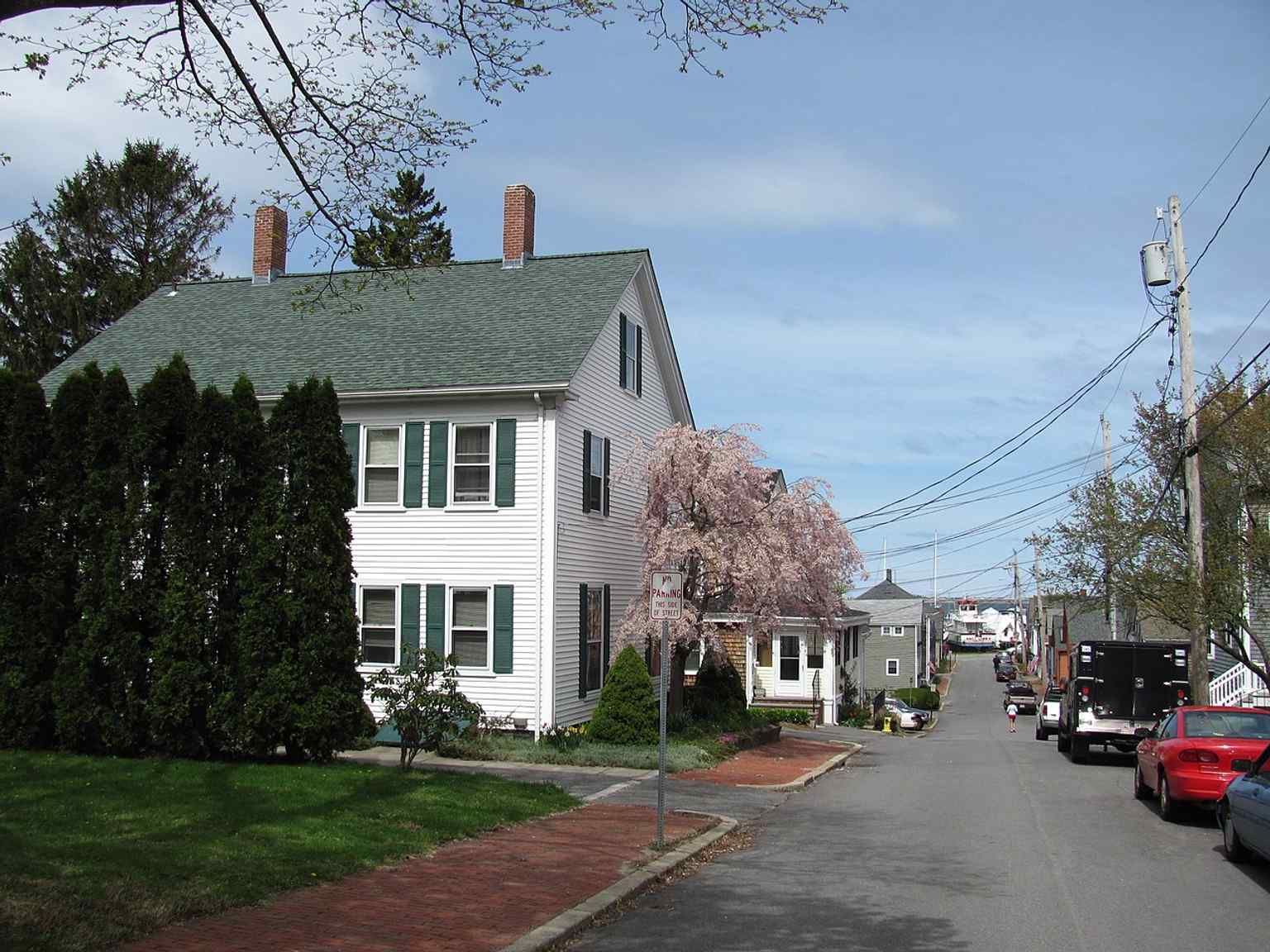
These homes formed a tight community of workers just up the hill from the water. Today, the area is almost entirely residential, with roads funneling down toward the sea just as they did centuries ago. If you plan to look inside the local historical buildings, note they operate Monday through Friday from nine thirty A-M to four P-M, Saturdays until noon, and are closed on Sundays.
The quiet dignity of this working neighborhood remains beautifully preserved in its simple architecture. Take a moment to appreciate the streetscape, and whenever you are ready, we will head to the next stop.





