
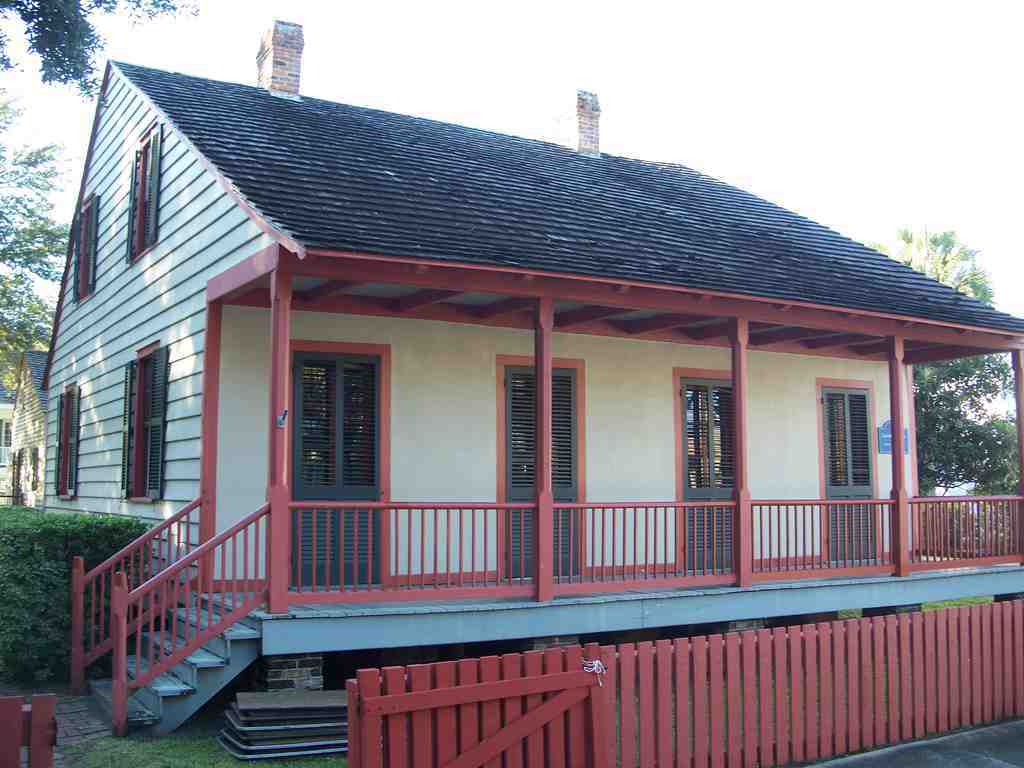
Over on your left is the Lavalle House, a raised cottage featuring a wide front porch with red wooden railings, dark shuttered doors, and a steeply pitched shingle roof. This 1805 French Creole style building was likely introduced to the Gulf Coast by refugees fleeing Santo Domingo. What makes it truly fascinating are the architectural quirks hidden right in the walls. The builders used a highly unusual technique called brick nogging. That means they filled the empty spaces between the wooden framing entirely with masonry bricks to insulate and strengthen the structure. That was extremely rare for wood frame houses back then, but it made perfect sense because the owners also owned a brickyard. The bricks were even stamped with the initial of the brilliant woman who ran the operation, Mariana Bonifay.
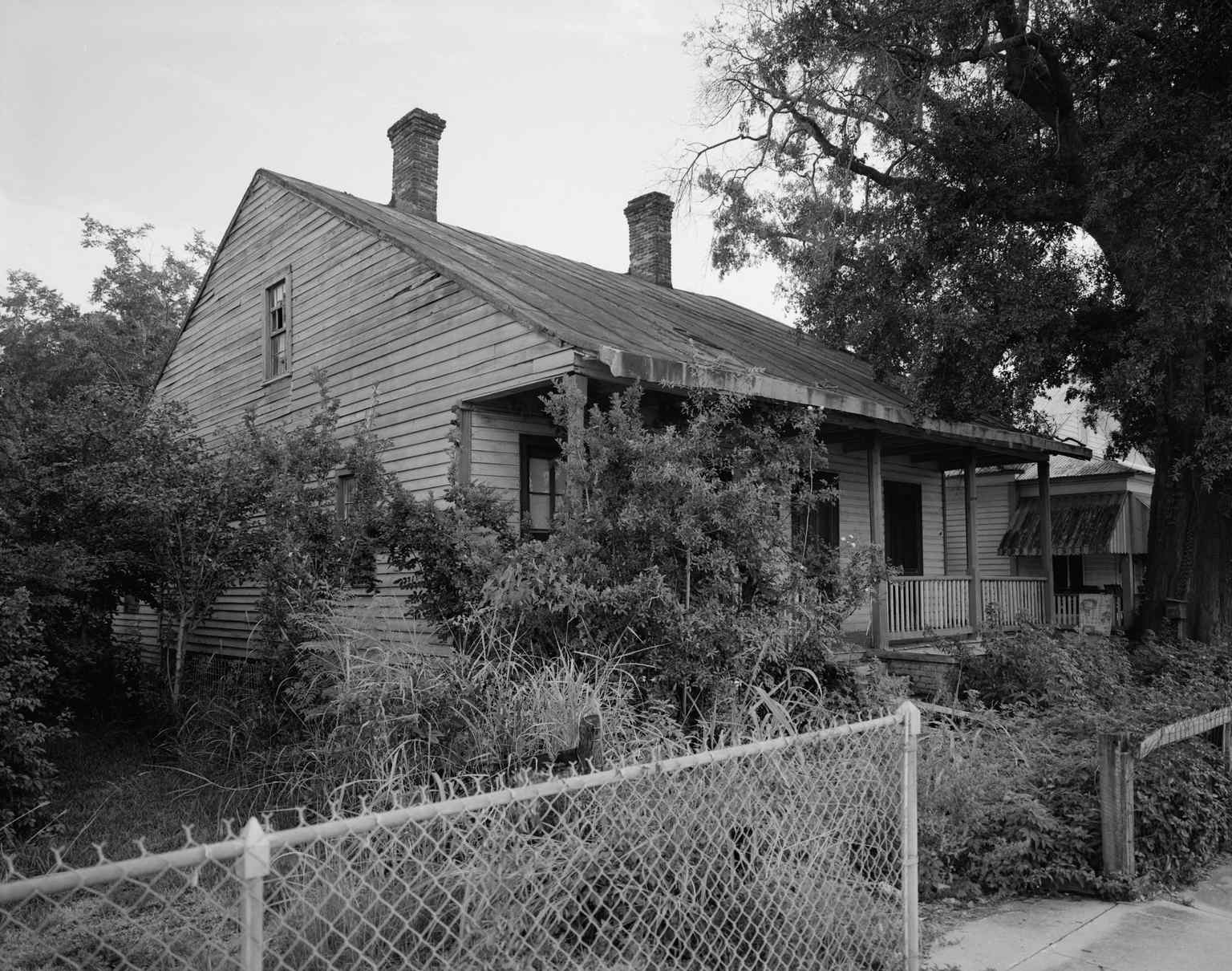
Charles Lavalle is the namesake, but Mariana was the mastermind. Her Spanish soldier husband went missing and his pay abruptly stopped in 1801, so she assumed he had died and teamed up with Lavalle, a younger neighbor and carpenter. Together, they bought empty lots, built homes, and flipped them for profit. Their partnership was romantic, too... they had four children together. But Mariana fiercely refused to marry him. Under the laws of the era, marrying Lavalle would mean giving him legal control of all her property. By choosing to remain a legally recognized widow, she kept total independent control of her massive real estate empire. Originally, this was a two unit duplex with a completely detached kitchen out back, a clever design to prevent cooking fires from destroying the main living space. Pensacola constantly tore itself down and rebuilt anew over the centuries, but this house survived the constant churn. In 1968, preservationists physically moved the entire building to prevent its demolition. The app has a photo slider showing what this place looked like back in 1968. When they restored it, they uncovered a piece of hidden history. Preservationists found remnants of the original nineteenth century paint tucked safely underneath a boxed in roof eave. That discovery revealed the house was initially painted an earthy brownish red, which is exactly the trim color it wears today. Let us head toward the L and N Marine Terminal Building, just a three minute walk away... another incredible structure that had to be physically moved to survive.


